 INNO faseroptische Temperatursensoren ,Temperaturüberwachungssysteme.
- A faseroptischer Temperatursensor in biomedizinischen Instrumenten ist ein Nichtmetall, elektrisch passives Sensorgerät, das Lichtsignale innerhalb einer optischen Faser nutzt, um die Körpergewebe- oder Flüssigkeitstemperatur mit hoher Genauigkeit zu messen – typischerweise ±0,1 °C bis ±0,5 °C.
- Diese Sensoren sind MRT-kompatibel, immun gegen elektromagnetische Störungen, und sicher für den Einsatz im menschlichen Körper während der diagnostischen Bildgebung, chirurgische Eingriffe, und therapeutische Behandlungen.
- Die am weitesten verbreitete Technologie für biomedizinische Zwecke ist die fluoreszierend (Fluoreszenzzerfall) faseroptischer Temperatursensor, Betrieb von +20 °C bis +85 °C mit einer Reaktionszeit von weniger als einer Sekunde.
- GaAs-Halbleiter-Lichtleitersensoren Und Biomedizinische Sonden auf FBG-Basis Darüber hinaus übernehmen sie spezielle Rollen bei der katheterbasierten Überwachung und der thermischen Kartierung von Gewebe.
- Zu den wichtigsten Anwendungen gehören MRT-Wärmeüberwachung, Hochfrequenz- und Mikrowellenhyperthermie, Wärmekontrolle in der Laserchirurgie, Herzkatheter-Temperaturmessung, Und neonatal incubator monitoring.
Inhaltsverzeichnis
- What Is a Fiber Optic Temperature Sensor in Biomedical Instrumentation
- Core Sensing Technologies Used in Biomedical Applications
- Key Advantages Over Conventional Biomedical Temperature Sensors
- Major Biomedical Application Scenarios
- How to Select a Biomedical-Grade Fiber Optic Temperature Sensor
- FAQs About Fiber Optic Temperature Sensors in Biomedical Instrumentation
1. Was ist ein Faseroptischer Temperatursensor in Biomedical Instrumentation

A faseroptischer Temperatursensor in biomedizinischen Instrumenten is a medical-grade temperature measurement device that transmits and receives optical signals through a thin glass or polymer fiber to determine temperature at a specific point on or inside the human body. Unlike conventional electronic thermometers and thermocouples, these sensors contain no metal components at the sensing tip and carry no electrical current to the measurement site. The sensing mechanism relies entirely on the interaction between light and a temperature-sensitive material or structure within the fiber.
Why Biomedical Instrumentation Requires Fiber Optic Sensors
Modern biomedical environments present unique challenges that disqualify most conventional temperature sensors. MRI scanners generate powerful magnetic fields (1.5 T zu 7 T) that make metallic sensors dangerous and unreliable. Radiofrequency (RF) therapeutic equipment produces intense electromagnetic fields that introduce severe noise into electrical sensor readings. Electrosurgical units, microwave ablation systems, and laser delivery devices all create environments where an electrically conductive sensor can cause tissue burns, signal artifacts, or device malfunction. A fiber optic biomedical temperature sensor eliminates all of these risks by being entirely dielectric — no metal, no current, no interference.
Basic Working Principle
Regardless of the specific technology, every biomedical fiber optic temperature sensor follows the same general architecture. A light source (LED or laser diode) sends a signal through an optical fiber to a temperature-sensitive element at or near the probe tip. The temperature at that point changes a measurable optical property — fluorescence decay time, reflected wavelength, or absorption spectrum — and this changed signal travels back through the same or a separate fiber to a photodetector and signal processor. The processor converts the optical change into a calibrated temperature reading displayed on a monitor or recorded by a data acquisition system.
2. Core Sensing Technologies Used in Biomedical Applications
Fluoreszierende faseroptische Temperatursensoren
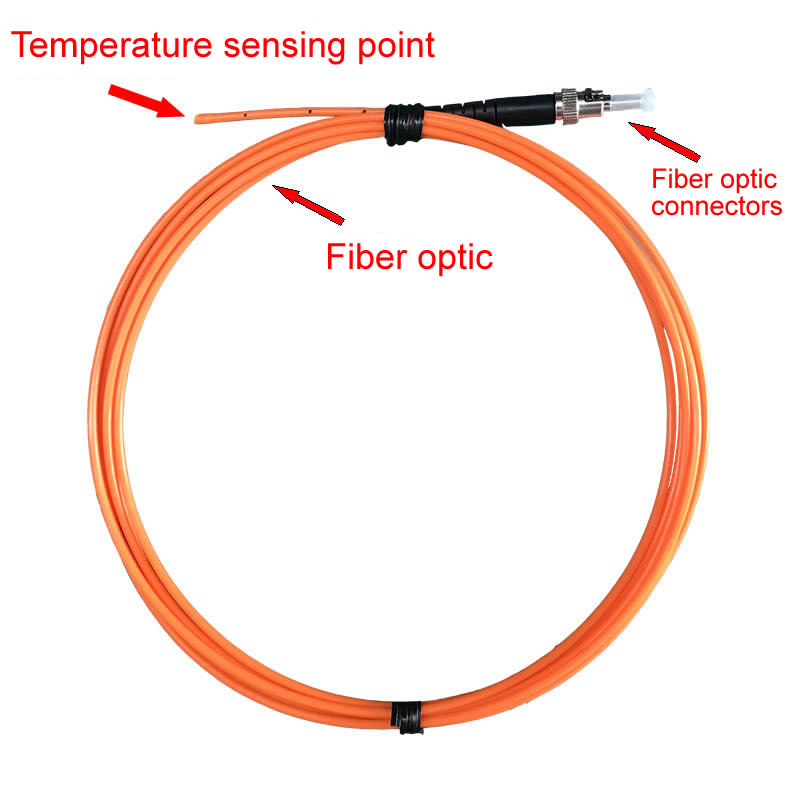
Der Fluoreszierender faseroptischer Temperatursensor (also called a phosphor-tipped or fluorescence lifetime sensor) is the dominant technology in biomedical temperature measurement. A small phosphor crystal — typically a rare-earth-doped material such as magnesium fluorogermanate — is bonded to the tip of a thin optical fiber (typischerweise 0.5 mm to 1.0 mm outer diameter). A pulsed UV or blue light excites the phosphor, which emits fluorescence. The decay time of this fluorescence shortens predictably as temperature increases.
This technology provides a measurement range of +15 °C bis +85 °C for standard biomedical configurations, which fully covers the physiological and therapeutic temperature range encountered in clinical use. Accuracy reaches ±0,1 °C bis ±0,2 °C mit Reaktionszeiten unter 500 Millisekunden. The probe diameter is small enough to pass through needles, catheters, and endoscopic channels. This is the preferred technology for MRI-compatible temperature monitoring, hyperthermia treatment control, Und intraoperative thermal surveillance.
GaAs Semiconductor Fiber Optic Sensors
Galliumarsenid (GaAs) faseroptische Temperatursensoren use a tiny GaAs crystal at the fiber tip. The bandgap absorption edge of GaAs shifts with temperature — as temperature increases, the crystal absorbs longer wavelengths of light. By measuring the spectral shift of the transmitted or reflected light, the system determines the temperature.
GaAs sensors offer a biomedical measurement range of approximately +10 °C bis +300 °C, with the clinical operating window typically limited to +20 °C bis +80 °C. They provide good accuracy (±0.2 °C to ±0.5 °C) und schnelle Reaktion. The main advantage of GaAs sensors is their excellent long-term stability and resistance to photobleaching — the sensing element does not degrade with repeated use, unlike some phosphor materials. These sensors are used in thermal ablation monitoring Und laboratory biomedical research instruments.
Faser-Bragg-Gitter (FBG) Biomedical Sensors
FBG-based biomedical temperature sensors use a Bragg grating inscribed in a thin optical fiber to reflect a specific wavelength that shifts with temperature. In biomedical applications, FBG sensors are particularly valued for their multiplexing capability — multiple sensing points can be placed along a single fiber at precise intervals, enabling multi-point temperature profiling along a catheter, needle, or tissue surface.
Biomedical FBG probes operate across +10 °C bis +100 °C in typical clinical configurations, with accuracy of ±0,1 °C bis ±0,5 °C. They are used in intravascular temperature mapping, thermal dose monitoring during ablation procedures, Und smart surgical needle temperature profiling. The main limitation is that FBG sensors respond to both temperature and strain, so mechanical isolation or compensation is needed for purely thermal measurements in dynamic tissue environments.
Technology Comparison for Biomedical Use
| Technologie | Biomedical Range | Genauigkeit | Sondengröße | MRI Compatible | Multi-Point |
|---|---|---|---|---|---|
| Fluoreszierend (Phosphor) | +15 °C bis +85 °C | ±0,1 °C bis ±0,2 °C | 0.5–1,0 mm | Ja | NEIN (einzelner Punkt) |
| GaAs-Halbleiter | +20 °C bis +80 °C | ±0.2 °C to ±0.5 °C | 0.5–1.5 mm | Ja | NEIN (einzelner Punkt) |
| FBG | +10 °C bis +100 °C | ±0,1 °C bis ±0,5 °C | 0.2–0.5 mm (Faser) | Ja | Ja (gemultiplext) |
3. Key Advantages Over Conventional Biomedical Temperature Sensors

Complete MRI and EMI Compatibility
The single most important advantage of faseroptische Temperatursensoren in biomedical instrumentation is their total immunity to magnetic and electromagnetic fields. Thermoelemente, Thermistoren, and RTDs all contain metal, which creates three problems in MRI environments: the sensor becomes a projectile risk in strong static fields, RF energy can couple into the metal leads causing localized tissue heating and burns, and the MRI’s gradient and RF fields induce electrical noise that corrupts the temperature reading. A fiber optic MRI-compatible temperature sensor beseitigt alle drei Probleme, da es keinerlei leitfähiges Material enthält.
Inhärente elektrische Sicherheit
Denn an der Patientenkontaktstelle gelangt kein elektrischer Strom, Faseroptische Sensoren bieten eine inhärente elektrische Isolierung vom Typ BF oder Typ CF gemäß IEC 60601-1 Standards für Medizinprodukte. Es besteht kein Risiko eines Leckstroms, Mikroschock, oder Defibrillationsimpulsschäden durch den Sensor. Das macht faseroptische Temperaturfühler sicher für Anwendungen mit direktem Herzkontakt, bei denen selbst Leckagen im Mikroamperebereich von herkömmlichen Sensoren tödlich sein können.
Miniatursondengröße
Biomedizinisch faseroptische Temperaturfühler können mit so kleinen Außendurchmessern hergestellt werden 0.3 mm to 0.5 mm, Ermöglicht das Einführen durch 18-Gauge- oder kleinere Injektionsnadeln, Mikrokatheter, und endoskopische Arbeitskanäle. This enables minimally invasive real-time temperature monitoring at sites that are impossible to reach with bulkier conventional sensors.
Chemical and Biological Inertness
Glass optical fiber and the encapsulation materials used in medical-grade probes are chemically inert and biocompatible. They do not corrode in bodily fluids, do not release cytotoxic substances, and can be sterilized using ethylene oxide (EtO), gamma irradiation, or autoclave processes (for reusable probes). Single-use sterile disposable fiber optic temperature probes are available for applications requiring guaranteed sterility.
No Self-Heating Effect
Thermistors and RTDs require a small excitation current that causes self-heating at the sensing element — a significant error source when measuring tissue temperature at high precision. Fiber optic sensors use only light, producing no thermal artifact at the measurement point. This is particularly important in neonatal temperature monitoring Und brain tissue thermal measurement where even 0.1 °C of self-heating error is clinically unacceptable.
4. Major Biomedical Application Scenarios
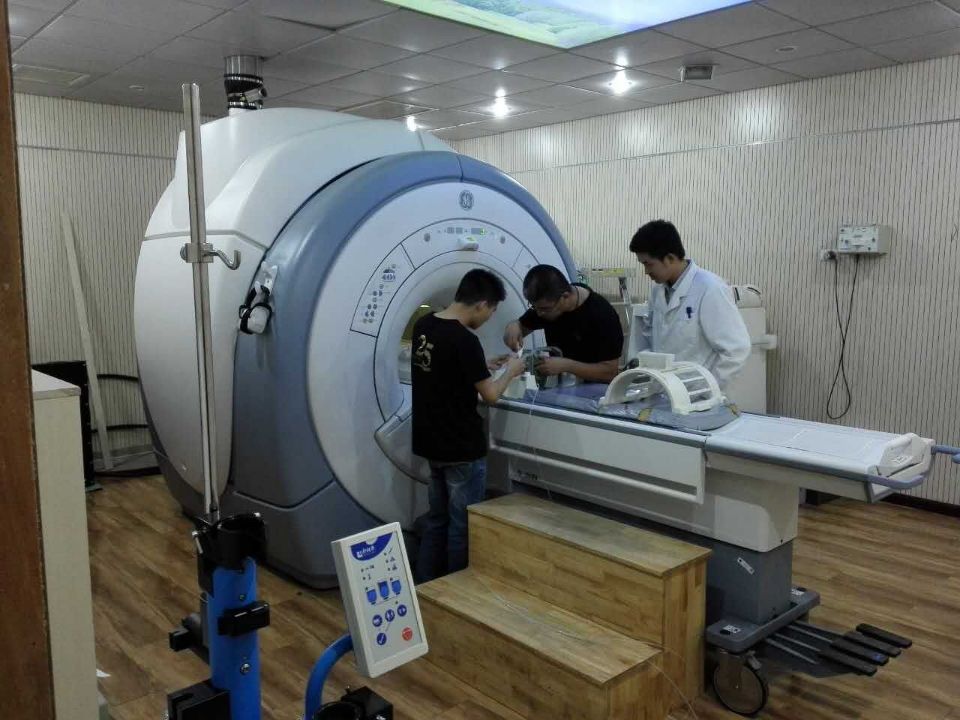
MRI-Guided Procedures and MRI Thermal Monitoring
MRI-compatible fiber optic temperature sensors are essential during MRI-guided focused ultrasound (MRgFUS) Operation, MRI-guided laser interstitial thermal therapy (MRgLITT) for brain tumors, and routine MRI safety compliance testing. During these procedures, real-time tissue temperature must be monitored to verify therapeutic heating reaches the target zone while surrounding healthy tissue remains within safe limits. Fluorescent fiber optic probes inserted through MRI-compatible stereotactic frames or catheters provide continuous, artifact-free temperature data throughout the procedure.
Radiofrequency and Microwave Hyperthermia Treatment
Cancer hyperthermia treatment uses RF or microwave energy to heat tumor tissue to 40–45 °C, enhancing the effectiveness of radiation therapy and chemotherapy. Accurate temperature monitoring within and around the tumor is critical for treatment efficacy and patient safety. Conventional sensors fail in these strong RF/microwave fields. Fluoreszierende faseroptische Temperaturfühler are inserted directly into the tumor via interstitial needles to provide real-time thermal dose mapping during treatment.
Cardiac Catheter and Intravascular Temperature Monitoring
Fiber optic catheter temperature sensors Messung der Blut- und Gefäßwandtemperatur während der Herzkatheteruntersuchung, HF-Herzablation zur Behandlung von Arrhythmien, und Erkennung koronar gefährdeter Plaques. Bei der HF-Ablation, Die Überwachung der Temperatur der Katheterspitze und der Gewebeschnittstelle verhindert eine übermäßige Erwärmung, die zu Dampfstößen führen kann, perforation, oder Verkohlung. FBG-basierte Mehrpunktsonden können den Temperaturgradienten entlang der Länge des Ablationskatheters abbilden und so eine präzisere Läsionskontrolle ermöglichen.
Laserchirurgie und Photodynamische Therapie
Während Laserchirurgie Und Photodynamische Therapie (PDT), Faseroptische Temperatursensoren überwachen die Gewebetemperatur an der Laserabgabestelle, um die Grenzen thermischer Schäden zu kontrollieren. Die Sensoren müssen funktionieren, ohne das therapeutische Laserlicht zu absorbieren oder reflektierende Artefakte zu erzeugen. Fiber optic probes designed for this application use wavelength-selective coatings and are positioned to measure temperature without interfering with the optical treatment beam.
Neonatal and Pediatric Patient Monitoring
Neonatal fiber optic temperature probes are used in incubators and warming beds where electromagnetic compatibility, elektrische Sicherheit, and minimal probe size are essential. Neonates are highly sensitive to temperature fluctuations, and the absence of self-heating and electrical hazard makes fiber optic sensors the safest option for continuous skin or rectal temperature monitoring in this vulnerable population.
Emerging Research Applications
Biomedical research laboratories use fiber optic temperature sensors in perfused organ systems, tissue engineering bioreactors, cryopreservation monitoring, microfluidic thermal control, und Bildgebungsstudien an Kleintieren (Mikro-MRT und Mikro-CT) wo herkömmliche Sensoren die bildgebenden Geräte oder die biologische Probe stören würden.
5. How to Select a Biomedical-Grade Fiber Optic Temperature Sensor

Schritt 1: Bestätigen Sie die klinische Umgebung
Stellen Sie fest, ob der Sensor innerhalb einer MRT-Bohrung betrieben werden muss, innerhalb eines RF/Mikrowellen-Therapiefeldes, in einem Katheterisierungslabor, oder in einer standardmäßigen klinischen Überwachungsumgebung. MRT-Umgebungen erfordern eine völlige Nichtmagnetisierung, nichtleitende Sonden mit MRT-bedingter Zertifizierung. HF-Therapieumgebungen erfordern Sonden, die für bestimmte Leistungspegel und Frequenzen validiert sind.
Schritt 2: Bestimmen Sie die erforderliche Genauigkeit und Reaktionszeit
Eine Hyperthermiebehandlung und Ablationsüberwachung erfordern typischerweise ±0,2 °C Genauigkeit und eine Reaktion in Sekundenbruchteilen. Die allgemeine Patientenüberwachung kann bei langsamerer Reaktion ±0,5 °C akzeptieren. Match the sensor specification to your clinical accuracy requirement — overspecifying adds unnecessary cost.
Schritt 3: Evaluate Probe Geometry and Sterility Requirements
Consider whether you need a needle-insertable probe, a catheter-integrated sensor, a surface skin probe, or an endoscopic-channel-compatible design. Determine if single-use sterile packaging is required (most invasive clinical applications) or if a reusable, sterilizable probe is acceptable (laboratory or surface monitoring).
Schritt 4: Verify Regulatory Compliance
Biomedical fiber optic temperature sensors used for patient contact must comply with IEC 60601-1 (medical electrical equipment safety), relevant biocompatibility standards (ISO 10993), and applicable regional regulatory approvals (FDA 510(k), CE marking under MDR, oder gleichwertig). Confirm that the manufacturer provides the necessary documentation and test reports.
Schritt 5: Assess System Integration
Bewerten Sie, wie sich das Sensorsystem in Ihren bestehenden klinischen Arbeitsablauf integrieren lässt – Signalprozessor-Formfaktor, Anzeigeoptionen, Datenausgabeschnittstellen (analog, RS-232, USB, Ethernet), Alarmfunktionen, und Kompatibilität mit Krankenhausinformationssystemen. Ein Sensor mit hervorragenden Spezifikationen ist nutzlos, wenn er in Ihrer klinischen Umgebung nicht praktisch eingesetzt werden kann.
6. FAQs About Fiber Optic Temperature Sensors in Biomedical Instrumentation
Q1: Warum werden faseroptische Temperatursensoren in der MRT gegenüber Thermoelementen bevorzugt??
Thermoelemente enthalten Metalldrähte, die MRT-Bilder verzerren, Aufgrund der durch HF-induzierten Erwärmung kann es zu einer Gefährdung der Patientensicherheit kommen, und in starken Magnetfeldern verrauschte Messwerte erzeugen. Faseroptische Sensoren sind völlig nichtmetallisch und nicht leitend, Dadurch sind sie vollständig MRT-kompatibel und weisen keine Bildartefakte auf, kein Risiko einer HF-Erwärmung, und keine Signalstörungen.
Q2: Welche Genauigkeit können biomedizinische faseroptische Temperatursensoren erreichen??
The best fluorescent fiber optic sensors used in biomedical applications achieve ±0.1 °C accuracy. Typical clinical-grade systems provide ±0.2 °C to ±0.3 °C. GaAs and FBG sensors generally achieve ±0.2 °C to ±0.5 °C depending on calibration and configuration.
Q3: Can fiber optic temperature probes be used inside the human body?
Ja. Biomedical fiber optic temperature probes are designed for invasive use. They can be inserted through needles, catheters, and endoscopic channels into tissues, body cavities, and blood vessels. Probes intended for invasive use must meet biocompatibility (ISO 10993) and medical device safety standards.
Q4: How small can a biomedical fiber optic temperature probe be?
The smallest commercially available biomedical probes have outer diameters of approximately 0.3 mm to 0.5 mm, ermöglicht den Durchgang durch Standard-Injektionsnadeln (18-gauge or smaller). Catheter-integrated versions are typically 0.5 mm to 1.0 mm in diameter.
F5: Are fiber optic temperature sensors safe for neonatal patients?
Ja. Fiber optic sensors carry no electrical current to the patient, produce no self-heating, and pose no shock or burn hazard. They are among the safest temperature monitoring options for neonates and are used in incubators, warming beds, and during neonatal MRI procedures.
F6: What is the typical response time of a biomedical fiber optic temperature sensor?
Ansprechzeit (Zu 90% of a step change) is typically 200 ms to 500 MS for fluorescent probes and 100 ms to 300 MS for GaAs probes. This is fast enough for real-time monitoring during ablation, hyperthermia, and surgical procedures.
F7: Can these sensors be sterilized?
Reusable fiber optic probes can be sterilized using ethylene oxide (EtO) gas or low-temperature hydrogen peroxide plasma. Some probes are autoclavable. Many clinical applications use single-use sterile probes supplied in sealed packaging to eliminate cross-contamination risk.
F8: How do fiber optic sensors perform during RF ablation procedures?
Faseroptische Temperatursensoren are the standard for RF ablation temperature monitoring because they are unaffected by the ablation RF energy. They accurately measure tissue and catheter tip temperature without signal corruption, enabling precise lesion size control and preventing overheating complications.
F9: Do fiber optic temperature sensors require special calibration for biomedical use?
Biomedical fiber optic sensors are factory-calibrated against traceable temperature standards (typically NIST-traceable). For clinical applications, Gemäß den institutionellen Qualitätsprotokollen wird eine regelmäßige Kalibrierungsüberprüfung mit einem zertifizierten Referenzthermometer und einem kontrollierten Temperaturbad empfohlen.
F10: Wie hoch ist die Lebensdauer einer wiederverwendbaren biomedizinischen faseroptischen Temperatursonde??
Eine gut gewartete wiederverwendbare Sonde hält normalerweise lange 500 Zu 2000 Sterilisationszyklen oder 2–5 Jahre regelmäßiger Nutzung, abhängig von den Handhabungsbedingungen und der Sterilisationsmethode. Die Schnittstelle des Fasersteckers und die Beschichtung der Sondenspitze sind die Komponenten, die am stärksten dem Verschleiß unterliegen. Die Hersteller geben für jedes Produkt spezifische Lebensdauerbewertungen an.
Haftungsausschluss: Die in diesem Artikel bereitgestellten Informationen dienen ausschließlich allgemeinen Bildungs- und Referenzzwecken. Es handelt sich nicht um eine Medizinprodukteberatung, klinische Anleitung, oder behördliche Empfehlung. Spezifische Sensorleistung, Biokompatibilität, und der regulatorische Status variieren je nach Hersteller und Produktmodell. Always consult the manufacturer’s technical documentation and your institution’s biomedical engineering team before selecting or deploying sensors in clinical settings. FJINNO (www.fjinno.net) übernimmt keine Haftung für Entscheidungen, die auf der Grundlage des Inhalts dieses Artikels getroffen werden.

Faseroptischer Temperatursensor, Intelligentes Überwachungssystem, Verteilter Glasfaserhersteller in China
|
 |
 |