 Cảm biến nhiệt độ sợi quang INNO ,hệ thống giám sát nhiệt độ.
1. Giới thiệu: Vai trò quan trọng của Giám sát nhiệt độ máy biến áp
Transformers are the backbone of modern power systems, connecting generation, quá trình lây truyền, and distribution networks. The operational health of transformers is fundamental to grid reliability, industrial productivity, and public safety. Among all the failure mechanisms of transformers, quá nóng is one of the most prevalent and destructive. Excessive temperatures can accelerate insulation aging, trigger thermal runaway, and ultimately lead to catastrophic failures, hỏa hoạn, or blackouts.
To mitigate these risks, accurate and continuous temperature monitoring has become an industry standard. Over the past century, temperature monitoring technologies have evolved from simple mechanical devices to advanced real-time, đa điểm, and intelligent systems. These advancements are driven by the need for higher grid reliability, trạm biến áp kỹ thuật số, bảo trì dự đoán, and the integration of renewable energy sources.
This guide presents a comprehensive review of the đứng đầu 10 transformer temperature monitoring technologies used globally, from classic mechanical solutions to cutting-edge fiber optic systems. Each method is analyzed in depth, covering its working principle, technical strengths, practical advantages, hạn chế, and best-fit scenarios.
2. Industry Background: Why Temperature Monitoring Matters in Transformers
Transformers operate continuously under heavy electrical and thermal stress. The internal temperature, especially at the windings and core, directly determines the lifespan and safe operation of the transformer. According to IEEE and IEC standards, every 6-8°C increase in hotspot temperature can halve the insulation lifetime. Overheating is also a leading cause of transformer failures reported in utility analyses worldwide.
The main goals of transformer temperature monitoring include:
- Ngăn chặn sự cố cách điện và thoát nhiệt
- Cho phép đánh giá tình trạng tài sản theo thời gian thực và bảo trì dự đoán
- Hỗ trợ tự động hóa lưới, chẩn đoán từ xa, và mô hình sinh đôi kỹ thuật số
- Đáp ứng tuân thủ quy định và an toàn bảo hiểm
Modern grids, với sự thâm nhập ngày càng tăng của năng lượng tái tạo, thế hệ phân tán, và cơ sở hạ tầng cũ kỹ, đặt ra yêu cầu cao hơn nữa đối với hệ thống giám sát máy biến áp. Điều này đã thúc đẩy một làn sóng đổi mới công nghệ trong thiết kế cảm biến, phân tích dữ liệu, và tích hợp hệ thống.
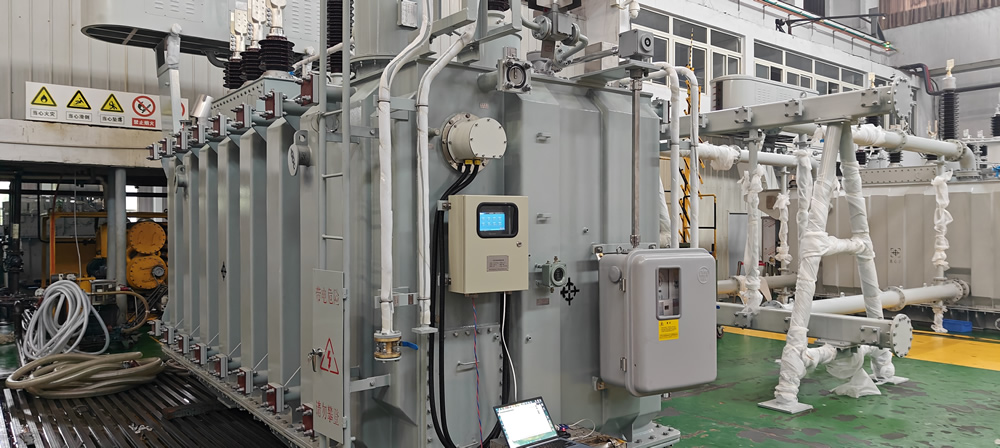
3. Mười phương pháp giám sát nhiệt độ máy biến áp chính
-
Fluorescence Fiber Optic Temperature Monitoring
Nguyên tắc kỹ thuật: Công nghệ sợi quang huỳnh quang sử dụng hiện tượng phân rã huỳnh quang trong tinh thể hoặc thủy tinh pha tạp đất hiếm nằm ở đầu sợi quang. Khi bị kích thích bởi nguồn sáng xung, cảm biến phát ra huỳnh quang, và thời gian phân rã có tương quan trực tiếp với nhiệt độ. Sự phân rã này được đo bằng máy dò quang điện tử, providing a direct, chính xác, và đọc nhiệt độ không bị nhiễu.
Thuận lợi:
- True Winding Hotspot Measurement: Sensors can be embedded directly into transformer windings, providing real-time monitoring of the actual hottest points, rather than relying on indirect oil or surface readings.
- Miễn nhiễm với nhiễu điện từ: As a completely optical system, it is unaffected by strong magnetic fields, điện áp cao, or radio frequencies—making it perfect for high-voltage substations and GIS environments.
- Multipoint and Distributed Capability: A single interrogator can manage dozens of fiber probes, enabling comprehensive multi-location monitoring within one transformer or across several devices.
- Long-term Stability and Reliability: No moving parts, ăn mòn- and moisture-resistant, and unaffected by oil or chemical environment. Service life typically matches or exceeds the transformer itself.
- Non-metallic and Intrinsically Safe: Sensors are glass or polymer-based, eliminating electrical conduction and explosion risks, and making them safe for hazardous areas.
- Phản hồi nhanh và độ chính xác cao: Measurement resolution up to 0.1°C and response time below 1 thứ hai, allowing immediate detection of abnormal temperature rises or hot spots.
- Tích hợp kỹ thuật số: Can be directly integrated with SCADA, DCS, or asset management platforms for real-time diagnostics, báo động, và phân tích dữ liệu.
Hạn chế:
- Requires specialized installation during transformer manufacturing or overhaul; retrofitting old transformers can be complex.
- Initial investment is higher than classic sensors, but justified by superior performance and reduced failure risk.
Ứng dụng điển hình: Power transformer windings, lò phản ứng shunt, GIS, large generator step-up transformers, trạm biến áp kỹ thuật số, and environments with extreme EMI or safety requirements.
Development Trend: With the growth of smart grids, trạm biến áp kỹ thuật số, and the need for predictive maintenance, Công nghệ sợi quang huỳnh quang đang trở thành tiêu chuẩn toàn cầu để giám sát máy biến áp có giá trị cao. Vai trò của nó là mở rộng sang các nguồn năng lượng phân tán và nền tảng quản lý tài sản thông minh.
-
Nhiệt kế điện trở bạch kim (PT100/RTD)
Nguyên tắc kỹ thuật: Cảm biến PT100 sử dụng đặc tính là điện trở của bạch kim tăng tuyến tính theo nhiệt độ. Cấu hình phổ biến nhất là quấn dây bạch kim mỏng trong lõi gốm hoặc thủy tinh., với điện trở là 100 ohm ở 0°C. Sự thay đổi điện trở được đo để xác định nhiệt độ.
Thuận lợi:
- Độ chính xác và độ lặp lại cao: Cảm biến PT100 được biết đến với đầu ra tuyến tính và chính xác, với độ chính xác điển hình lên tới ± 0,1°C sau khi hiệu chuẩn.
- Phạm vi nhiệt độ rộng: Có khả năng đo từ -200°C đến +600°C, phù hợp với hầu hết các môi trường máy biến áp điện.
- Ổn định lâu dài: Bạch kim trơ về mặt hóa học và có độ ổn định cao theo thời gian, ensuring consistent readings for years.
- Industry Standardization: PT100s are globally standardized (IEC 60751), making them easy to integrate and replace.
- Tiết kiệm chi phí: Lower cost than optical or wireless systems, and widely available from multiple vendors.
Hạn chế:
- Cannot be installed inside windings; typically measure only oil, surface, or core temperature.
- Vulnerable to strong electromagnetic interference, especially in high-voltage substations, leading to potential signal errors or failure.
- Requires shielded wiring and careful grounding to avoid induced voltages.
Ứng dụng điển hình: Nhiệt độ dầu máy biến áp, tank surface temperature, nhiệt độ môi trường xung quanh, and auxiliary equipment monitoring.
Development Trend: Remains widely used for oil and ambient monitoring, but for internal winding hotspots, PT100 is gradually being replaced by fiber optic or hybrid approaches in advanced installations.
-
Cảm biến cặp nhiệt điện
Nguyên tắc kỹ thuật: Thermocouples generate a voltage at the junction of two dissimilar metals, thay đổi theo nhiệt độ. This voltage is measured and converted to a temperature reading based on known calibration curves (ví dụ., Loại K, J, T, E).
Thuận lợi:
- Rugged and Simple: No moving parts, xây dựng mạnh mẽ, and can withstand vibration, mechanical shock, và môi trường khắc nghiệt.
- Phạm vi nhiệt độ rộng: Depending on type, can measure from -200°C up to +1800°C.
- Fast Response: Thin wires and junctions enable rapid reaction to temperature changes.
- Low Cost and Easy Replacement: Simple construction makes them inexpensive and easily replaced in the field.
Hạn chế:
- Lower accuracy and sensitivity compared to PT100 or fiber optic systems, đặc biệt ở nhiệt độ thấp.
- Highly susceptible to electromagnetic interference, especially in high-voltage environments.
- Signal degradation over long cable runs, and requires reference junction compensation.
- Cannot be placed inside windings for direct hotspot measurement.
Ứng dụng điển hình: Nhiệt độ dầu máy biến áp, surface measurement, and backup sensing in auxiliary systems.
Development Trend: Still used in legacy systems and cost-sensitive applications, but gradually replaced by more advanced solutions in critical asset monitoring.
-
Hồng ngoại (VÀ) Cảm biến nhiệt độ
Nguyên tắc kỹ thuật: IR sensors measure thermal radiation emitted by objects. The sensor detects infrared energy, converts it into an electrical signal, and calculates temperature based on emissivity and calibration.
Thuận lợi:
- Non-contact Measurement: Can measure the temperature of surfaces remotely, without the need for direct contact or penetration.
- Thời gian phản hồi nhanh: Provides near-instantaneous readings, making it suitable for rapid scanning or alarm applications.
- Safe for Live Equipment: Enables monitoring of energized transformers without physical exposure.
- Adaptable for Multiple Points: Infrared cameras or scanners can map the temperature of entire surfaces or multiple devices.
Hạn chế:
- Cannot measure internal winding or oil temperature; only surface or accessible areas.
- Accuracy depends on correct emissivity settings, độ sạch của bề mặt, và các yếu tố môi trường (bụi, sương mù, màng dầu).
- Không phù hợp để giám sát nhúng liên tục.
Ứng dụng điển hình: Kiểm tra định kỳ bồn biến áp, ống lót, bộ tản nhiệt, và các bộ phận trạm biến áp sử dụng súng hồng ngoại hoặc camera nhiệt.
Development Trend: Được sử dụng ngày càng nhiều trong các chương trình bảo trì dựa trên tình trạng, thường kết hợp với giám sát cáp quang hoặc điện tử để có phạm vi bao phủ toàn diện.
-
Nhiệt kế quay số lưỡng kim
Nguyên tắc kỹ thuật: Những thiết bị cơ khí này sử dụng một cuộn dây làm từ hai kim loại có tốc độ giãn nở khác nhau. Khi nhiệt độ thay đổi, cuộn dây uốn cong, di chuyển một cây kim qua mặt số đã hiệu chỉnh.
Thuận lợi:
- Đơn giản và đáng tin cậy: Không cần nguồn điện bên ngoài hoặc thiết bị điện tử; hoạt động cơ khí miễn nhiễm với sự cố điện.
- Đọc cục bộ trực tiếp: Cung cấp dấu hiệu trực quan về nhiệt độ ngay lập tức cho nhân viên hiện trường.
- Tiết kiệm chi phí: Không tốn kém để sản xuất, install, and maintain.
- Tuổi thọ dài: Thường hoạt động hàng thập kỷ với mức bảo trì tối thiểu.
Hạn chế:
- Không thể ghi hoặc truyền dữ liệu từ xa; no digital output or integration with SCADA.
- Limited accuracy (typically ±2°C or worse) and prone to reading errors if exposed to vibration or mechanical shock.
- Only measures surface or oil temperature, not internal winding hotspots.
Ứng dụng điển hình: Traditional transformers, backup or redundant local indication, and as a reference for electronic systems.
Development Trend: Still used as a backup or in developing regions; increasingly replaced by digital and remote systems in modern substations.
-
Lưới sợi Bragg (FBG) Cảm biến nhiệt độ
Nguyên tắc kỹ thuật: FBG sensors are written into optical fibers as periodic refractive index variations. When light passes through, only a specific wavelength is reflected, and this Bragg wavelength shifts with temperature and strain. By monitoring the wavelength shift, precise temperature readings are obtained.
Thuận lợi:
- Fully Optical, EMI-miễn dịch: Like fluorescence fiber, FBG miễn nhiễm với nhiễu điện từ và RF, thích hợp với môi trường điện áp cao.
- Khả năng ghép kênh: Nhiều FBG có thể được ghi dọc theo một sợi quang, cho phép cảm biến nhiệt độ phân tán trên khoảng cách xa.
- Độ nhạy cao và phản hồi nhanh: Đo nhiệt độ chính xác và nhanh chóng, thích hợp cho việc giám sát động.
- Long Lifespan: Cảm biến dựa trên sợi quang có độ bền cao, chống ăn mòn, và hoạt động đáng tin cậy trong điều kiện khắc nghiệt.
- Cấu trúc nhỏ gọn: Bé nhỏ, nhẹ, và dễ dàng cài đặt trong không gian hạn chế.
Hạn chế:
- Cảm biến FBG nhạy cảm với cả biến dạng và nhiệt độ, vì vậy cần có sự cách ly hoặc bù cơ học để đo nhiệt độ thuần túy.
- Nói chung kém bền hơn khi nhúng liên tục vào bên trong cuộn dây máy biến áp so với đầu dò sợi huỳnh quang; được sử dụng phổ biến hơn cho các ứng dụng bề mặt hoặc phân tán.
- Yêu cầu bộ dò tín hiệu quang học chính xác, có thể thêm độ phức tạp của hệ thống.
Ứng dụng điển hình: Distributed temperature monitoring along transformer tanks, cáp, trạm biến áp, and in research or demonstration projects.
Development Trend: Growing adoption in smart grid projects and environmental monitoring, with ongoing research to improve robustness for transformer windings.
-
Electronic Temperature Transmitters
Nguyên tắc kỹ thuật: These devices use an embedded sensor (typically PT100, thermistor, or thermocouple) connected to an electronic transmitter that converts the signal to a standard analog (4-20ma) or digital (RS485, Modbus) output for remote monitoring.
Thuận lợi:
- Remote Digital Output: Data can be transmitted over long distances, integrated with SCADA, DCS, or digital relay systems.
- Configurable Alarms and Diagnostics: Many transmitters have programmable settings, self-testing, and alarm relay outputs for safety automation.
- Flexible Mounting: Available in immersion, surface, or air-sensing models for various transformer components.
- Industrial Standardization: Compatible with existing control and automation infrastructure.
Hạn chế:
- Electronic modules are still vulnerable to EMI, quá độ, and surge in high-voltage substations.
- No capability for direct winding hotspot monitoring; measures only oil, surface, or ambient temperature.
- Requires auxiliary power and regular calibration checks.
Ứng dụng điển hình: Nhiệt độ dầu, cooling system control, transformer ambient monitoring, and integration into digital substations.
Development Trend: Moving towards smart, networked transmitters with cloud connectivity and self-diagnostics as part of digital grid evolution.
-
Cảm biến nhiệt độ không dây (IoT)
Nguyên tắc kỹ thuật: These sensors use wireless communication (Zigbee, lora, NB-IoT, Wi-Fi, hoặc các giao thức độc quyền) to transmit temperature readings to a central gateway or cloud platform. The sensor itself can be based on thermistor, RTD, or even fiber optic principles.
Thuận lợi:
- Easy Retrofit and Installation: No signal wiring needed, perfect for upgrading existing transformers or remote sites.
- Scalable and Flexible: Additional sensors can be added quickly as monitoring needs grow.
- Real-time Data and Analytics: Data can be uploaded to cloud platforms for visualization, AI diagnostics, và bảo trì dự đoán.
- Integration with SCADA/EMS: Wireless gateways can connect seamlessly to utility enterprise systems.
- Battery or Energy Harvesting: Many models can operate for years on a single battery or use energy from temperature gradients.
Hạn chế:
- Wireless signals can be affected by strong EMI fields, metallic enclosures, or distances inside substations.
- Battery life is limited; periodic maintenance or replacement is required.
- Most sensor nodes measure only surface or oil temperatures, not internal windings.
- Cybersecurity must be managed for critical asset data.
Ứng dụng điển hình: Retrofit temperature monitoring on aged transformers, distributed substations, and hard-to-wire locations.
Development Trend: Rapidly expanding with the IoT revolution, especially for remote monitoring, but not a full substitute for embedded hotspot sensors in critical transformers.
-
Liquid-in-glass Thermometers
Nguyên tắc kỹ thuật: Classic thermometers use the thermal expansion of colored alcohol or mercury in a sealed glass tube. The liquid expands as temperature increases, rising up a calibrated scale.
Thuận lợi:
- Simple and Maintenance-free: No external power, hệ thống dây điện, or electronics; works reliably for decades.
- Direct Visual Reading: Easily viewed by onsite personnel, provides instant indication of oil or ambient temperature.
- Tiết kiệm chi phí: Among the lowest-cost temperature monitoring solutions.
- Unaffected by EMI: Purely mechanical and optical, so immune to electrical interference.
Hạn chế:
- Cannot provide digital, xa, or automated data collection.
- Accuracy is limited (typically ±1–2°C), and reading can be affected by parallax errors or scale fading.
- Mercury-based models are hazardous and being phased out globally.
- Only suitable for oil or ambient, not for internal windings.
Ứng dụng điển hình: Local backup indication, small distribution transformers, and environments where electronic devices are prohibited.
Development Trend: Largely superseded by electronic and optical systems, but still present in legacy installations or as a secondary backup.
-
Simulated Hotspot Algorithms (Thermal Models)
Nguyên tắc kỹ thuật: Rather than direct measurement, these systems estimate the winding hotspot temperature using oil temperature, nhiệt độ môi trường xung quanh, tải hiện tại, and transformer design data. The most common algorithm is based on the IEC 60076-7 thermal model.
Thuận lợi:
- No Need for Complex Installation: Hotspot can be estimated using existing sensors (dầu, môi trường xung quanh) and load data.
- Cost-effective for Retrofits: No need to physically open or modify the transformer.
- Useful for Fleet Monitoring: Enables utilities to analyze large numbers of transformers with minimal investment.
- Cải tiến liên tục: Algorithms can be refined over time with more data or machine learning techniques.
Hạn chế:
- Accuracy depends on the validity of the thermal model and quality of the input data; typically ±5°C or worse compared to direct measurements.
- Cannot detect local abnormal hotspots, suy thoái cách điện, or partial failures that do not affect bulk oil temperature.
- May miss critical faults in aging transformers or under dynamic load conditions.
Ứng dụng điển hình: Fleetwide asset management, older transformers, and as a reference for alarm thresholds and load management.
Development Trend: Increasingly used as a supplement to physical sensors, especially with the growth of big data analytics and digital twin platforms.
-
Integrated Smart Monitoring Systems
Nguyên tắc kỹ thuật: These platforms combine multiple physical temperature sensors (sợi quang, RTD, điện tử, không dây) with advanced software, phân tích, và các giao thức truyền thông. They provide asset health indices, chẩn đoán dự đoán, và khuyến nghị bảo trì.
Thuận lợi:
- Comprehensive Asset View: Monitors not only temperature, but also gas, độ ẩm, trọng tải, phóng điện cục bộ, and other key parameters.
- Bảo trì dự đoán: Uses AI and historical data to forecast failures and optimize maintenance schedules.
- Alarm and Notification Automation: Sends alerts via SMS, e-mail, or control room systems for immediate action.
- Tích hợp liền mạch: Works with utility SCADA, DCS, và nền tảng quản lý tài sản doanh nghiệp.
- Remote and Centralized Monitoring: Operators can monitor hundreds of transformers from a single dashboard.
Hạn chế:
- Higher initial investment and integration complexity.
- Requires regular software updates, cybersecurity management, and skilled personnel for effective operation.
- Dependent on the reliability of all underlying sensors and communication networks.
Ứng dụng điển hình: Large utility fleets, trạm biến áp quan trọng, cây công nghiệp, và trạm biến áp kỹ thuật số.
Development Trend: Moving towards cloud-based asset management, phân tích nâng cao, and integration with digital twins for a fully intelligent grid.
4. In-depth Exploration of Fluorescence Fiber Optic Temperature Monitoring
Why is fluorescence fiber optic temperature monitoring considered the gold standard for transformer hotspots?
Fluorescence fiber optic sensors are uniquely capable of directly measuring the true internal temperature of transformer windings. Unlike oil or surface sensors, which only reflect bulk or ambient conditions, fluorescence fiber can pinpoint the actual hottest spot in real time, even during rapid load changes or abnormal events. This allows for immediate detection of dangerous overheating, supporting faster interventions and reducing catastrophic failure risks.
Hơn nữa, Hệ thống cáp quang miễn nhiễm với các trường điện từ và điện áp cường độ cao có trong các trạm biến áp kỹ thuật số hiện đại—môi trường mà các cảm biến điện truyền thống thường bị hỏng hoặc cho kết quả đọc không chính xác. Cấu trúc phi kim loại của chúng giúp loại bỏ đường dẫn điện, đảm bảo an toàn nội tại ngay cả trong môi trường dễ cháy nổ hoặc điện áp cao.
Với ghép kênh phân tán, một hệ thống có thể giám sát hàng chục điểm trong một hoặc nhiều máy biến áp, cung cấp bản đồ nhiệt toàn diện. Đầu ra kỹ thuật số tích hợp nguyên bản với SCADA, DCS, và hệ thống quản lý tài sản, hỗ trợ tự động hóa, báo động, and advanced analytics. Ổn định lâu dài, bảo trì tối thiểu, và tuổi thọ sử dụng phù hợp với chính máy biến áp càng củng cố thêm vị thế của nó như là chuẩn mực của ngành.
Ưu điểm rộng hơn của việc theo dõi nhiệt độ sợi quang huỳnh quang trong các ngành công nghiệp khác là gì?
Ngoài máy biến áp, fluorescence fiber optic temperature monitoring has found widespread adoption in multiple advanced sectors:
- Medical Imaging (MRI, CT): Fluorescence fiber probes are the only practical solution for real-time temperature monitoring inside magnetic resonance imaging (MRI) môi trường. Their immunity to electromagnetic fields and non-metallic construction prevent image artifacts and ensure patient and equipment safety.
- Dầu, Khí đốt, and Petrochemicals: Fiber optic systems are deployed for distributed temperature sensing (DTS) along pipelines, bể chứa, and refineries. They detect leaks, process upsets, and thermal anomalies over long distances, even in hazardous or explosive atmospheres.
- Rail and Urban Transit: Fiber optic cables embedded in tracks or infrastructure can monitor temperature, nhấn mạnh, and safety conditions in real time, supporting predictive maintenance and reducing service disruptions.
- Trung tâm dữ liệu: In high-density server rooms, fluorescence fiber systems provide granular temperature mapping, ensuring optimal cooling, preventing hotspots, and optimizing energy efficiency.
- Sản xuất chất bán dẫn: Cleanroom and wafer process environments require high-accuracy, EMI-immune temperature control—precisely where fluorescence fiber excels, enabling process stability and yield improvement.
- Nuclear Power: In nuclear reactors and spent fuel storage, fiber optic sensors withstand intense radiation and EMI, delivering safe, chính xác, and long-term temperature monitoring.
- Năng lượng tái tạo: Wind turbine generators, solar inverters, and battery banks increasingly use fiber optic sensors for internal thermal management, supporting longer lifespans and higher safety.
The unmatched combination of immunity to electrical noise, high-density multipoint capability, and resistance to harsh environments positions fluorescence fiber optic technology as a foundation for next-generation industrial monitoring.
What are the key considerations for selecting a transformer temperature monitoring system?
The optimal choice depends on your operational requirements, ngân sách, and risk profile. Key factors include:
- Vị trí đo: Do you need to monitor winding hotspots, dầu, surface, or ambient temperatures?
- Môi trường điện từ: Is your transformer in a high-voltage or EMI-prone setting?
- Integration Needs: Will the data be used for SCADA, DCS, or cloud analytics?
- Maintenance and Service Life: How often can you service or replace sensors?
- Budget and Lifecycle Cost: Consider both upfront and long-term costs, including downtime and potential failure risks.
- Regulatory and Safety Compliance: Are there specific standards or insurance requirements to meet?
Đối với quan trọng, high-value transformers and digital substations, fluorescence fiber optic or hybrid smart monitoring systems are increasingly the preferred solution. For secondary, low-risk, or legacy assets, a mix of PT100, cặp nhiệt điện, or wireless solutions may be appropriate.
How is data from advanced temperature monitoring systems used in asset management?
Modern temperature monitoring systems are not just for alarm and protection—they are crucial components of predictive maintenance and digital asset management. Continuous temperature data feeds into AI algorithms, cặp song sinh kỹ thuật số, and health indices, enabling utilities to:
- Predict insulation aging and remaining lifespan
- Optimize maintenance schedules based on true asset condition
- Reduce unplanned outages by early detection of developing faults
- Support grid automation, chẩn đoán từ xa, and energy efficiency programs
- Meet regulatory and insurance compliance with automated reporting
This data-driven approach is transforming how utilities and industries manage critical infrastructure, giảm chi phí và nâng cao độ tin cậy.
What future trends are shaping transformer temperature monitoring?
The next decade will see continued convergence of fiber optic sensing, IoT wireless, phân tích nâng cao, and cloud-based asset management. Key trends include:
- Wider deployment of fluorescence fiber optic systems in digital substations and distributed energy resources
- Integration of multiparameter sensing (nhiệt độ, độ ẩm, khí đốt, rung động) into unified smart platforms
- Adoption of AI and machine learning for predictive diagnostics
- Growth of cloud and edge computing for real-time, fleetwide monitoring
- Enhanced cybersecurity and data governance for critical infrastructure
Utilities and industries that leverage these trends will gain significant advantages in reliability, hiệu quả, và tuân thủ.
Liên hệ & Tư vấn
If you are planning a new project, upgrading assets, or require technical advice on the best transformer temperature monitoring solution for your needs, đội ngũ chuyên gia của chúng tôi sẵn sàng trợ giúp. Chúng tôi cung cấp tư vấn khách quan, hướng dẫn lựa chọn hệ thống, và hỗ trợ tích hợp cho tất cả các công nghệ cảm biến chính.

Cảm biến nhiệt độ sợi quang, Hệ thống giám sát thông minh, Nhà sản xuất cáp quang phân phối tại Trung Quốc
 |
 |
 |