 Cảm biến nhiệt độ sợi quang INNO ,hệ thống giám sát nhiệt độ.
Tổng quan về giải pháp sợi quang nhiệt độ cao
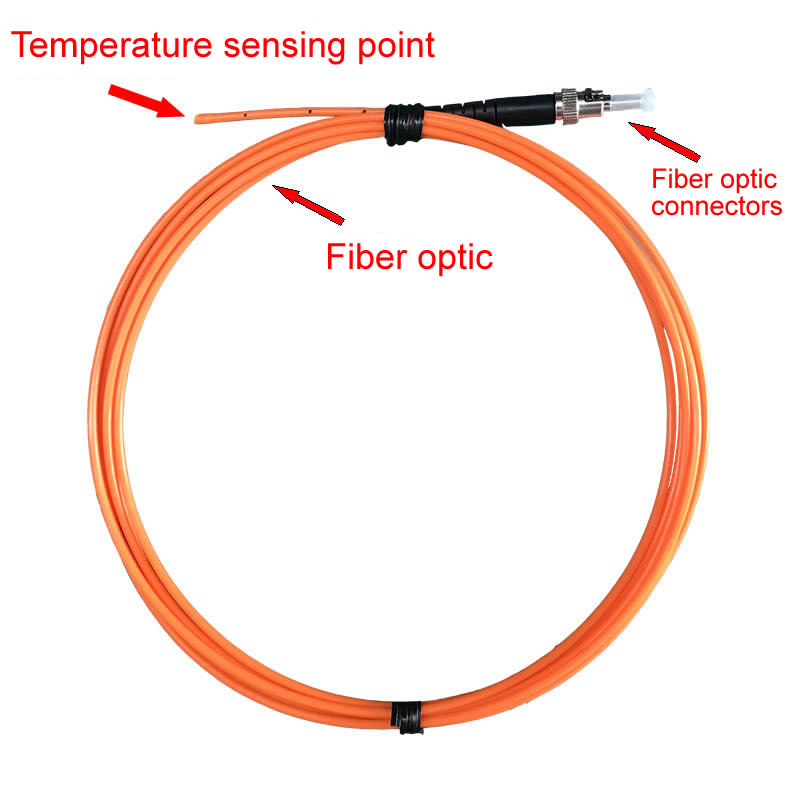
Giải pháp cáp quang nhiệt độ cao là giải pháp toàn diện sử dụng vật liệu cáp quang đặc biệt, công nghệ, và thiết bị để giải quyết cụ thể các nhu cầu về cảm biến và truyền thông cáp quang trong môi trường nhiệt độ cao. Trong nhiều ngành công nghiệp, nghiên cứu khoa học, hàng không vũ trụ và các lĩnh vực khác, Sợi quang thông thường không thể hoạt động ổn định trong môi trường nhiệt độ cao, vì vậy giải pháp này đã xuất hiện. Dưới, chúng tôi sẽ giới thiệu chi tiết về các giải pháp cáp quang nhiệt độ cao từ nhiều khía cạnh.
Sợi quang chịu nhiệt độ cao tạo thành nền tảng cho các giải pháp sợi quang nhiệt độ cao như thế nào?
Sợi quang chịu nhiệt độ cao là thành phần chính của giải pháp sợi quang nhiệt độ cao. The key to the use of high-temperature resistant optical fibers in high-temperature environments lies in their special materials and manufacturing processes, mainly reflected in the fiber core and fiber coating. Fiber optic cores typically use high-temperature glass and ceramic materials, which have excellent high-temperature stability and oxidation resistance, ensuring long-term stable transmission of optical signals in high-temperature environments. Ví dụ, in the high-temperature slag measurement scenario in the steel and metallurgical industries, if ordinary optical fibers are used, their fiber cores may be functionally damaged due to high temperatures, while fiber cores made of this special material can work normally. Lớp phủ sợi quang sử dụng vật liệu chịu nhiệt độ cao như nhôm photphat để bảo vệ lõi sợi quang khỏi các tác nhân bên ngoài. Trong môi trường nhiệt độ cao, có thể có nhiều loại hóa chất, tạp chất, vân vân. Không có lớp phủ chịu nhiệt độ cao để bảo vệ, lõi sợi dễ bị ăn mòn hoặc bị cản trở. Trong khi đó, Sợi quang chịu nhiệt độ cao có nhiều ưu điểm, chẳng hạn như có thể hoạt động trong môi trường nhiệt độ cao, làm cho chúng phù hợp với nhiều lĩnh vực đặc biệt, chẳng hạn như điều hướng, giao tiếp, và điều khiển trong ngành hàng không vũ trụ; Nó cũng có khả năng mất tín hiệu thấp và tốc độ truyền tín hiệu cao, đảm bảo chất lượng và tốc độ truyền tín hiệu; Và nó có khả năng chống ăn mòn và chống nhiễu cao, cho phép nó được sử dụng tự do trong môi trường khắc nghiệt, playing an important role in the measurement and monitoring of temperature, áp lực , flow and other parameters in petrochemical, thermal power generation, nuclear power and other fields.
Làm thế nào cảm biến sợi quang huỳnh quang monitor high temperatures?
What is the principle of using fluorescent fiber optic sensors to monitor high temperatures?
Fluorescence fiber optic sensors monitor high temperatures based on the stable dependence of fluorescence lifetime on temperature. This relationship is not affected by factors such as excitation light intensity, uốn sợi, and joint loss. In this type of sensor, there are specific fluorescent substances, and the fluorescence lifetime of the fluorescent substances will change accordingly when the temperature changes. Ví dụ, in places with complex working environments such as switchgear (nhiễu điện từ cao, nhiệt độ cao, narrow space, vân vân.), it is necessary to accurately monitor the temperature of key connection points to prevent overheating and arc accidents. Fluorescent fiber optic sensors can play a role. Traditional temperature sensors may have inaccurate readings due to electromagnetic interference, but fluorescent fiber optic sensors are not affected by such interference and are therefore more reliable in this environment.
How can fluorescent cảm biến sợi quang achieve high temperature monitoring in different scenarios?
In the field of power, fluorescent lifetime fiber optic temperature sensors perform well in high-temperature monitoring scenarios of equipment such as switchgear and transformers. In the switchgear, sensors can monitor the temperature of critical connection points. Đối với máy biến áp, high temperatures may cause insulation material aging and lead to faults. Cảm biến sợi quang có tuổi thọ huỳnh quang có thể được lắp đặt trong dầu hoặc gần cuộn dây của máy biến áp để theo dõi nhiệt độ, đảm bảo hoạt động bình thường và kéo dài tuổi thọ của máy biến áp. Trong lĩnh vực y tế, chẳng hạn như trong chụp ảnh cộng hưởng từ (MRI) công nghệ, nam châm siêu dẫn phải được làm lạnh đến nhiệt độ cực thấp, và cảm biến nhiệt độ sợi quang có tuổi thọ huỳnh quang có thể được sử dụng để theo dõi hiệu suất của hệ thống làm mát nhằm đảm bảo rằng nam châm ở nhiệt độ chính xác. Đồng thời, Cảm biến này cũng có thể được sử dụng để theo dõi nhiệt độ hoặc trị liệu bằng nhiệt trong y học lâm sàng, có thể theo dõi nhiệt độ của bệnh nhân và đảm bảo sự an toàn và hiệu quả của việc điều trị. Do độ chính xác cao và phản ứng nhanh, it is very suitable for situations that require strict temperature control. In the field of experimental science, in chemical experiments, the temperature of the reactants directly affects the reaction rate and the generation of products. The use of fluorescence lifetime fiber optic sensors can not only monitor accurate temperature in real time, but also avoid measurement errors caused by light sources or electromagnetic interference; In biological research, processes such as cell culture and enzyme reactions require very precise temperature control. Fluorescence lifetime fiber optic sensors are highly suitable for such sensitive environments due to their immunity to electromagnetic interference and chemical inertness; In the development experiments of new materials such as high-temperature superconductors, it is necessary to conduct them under specific temperature conditions. Fluorescence lifetime fiber optic sensors can provide necessary temperature distribution information to help scientists understand the properties of the materials.
What is the role of distributed optical fiber in high temperature monitoring?
How does the principle of distributed optical fiber ensure its effectiveness in high temperature monitoring?
các cáp quang phân tán temperature monitoring device relies on Raman time-domain analysis fiber optic temperature measurement technology to achieve temperature monitoring function based on the backward Raman scattering effect: the interaction between laser pulses and fiber molecules scatters (where Raman scattering is due to the thermal vibration of fiber molecules), producing a Stokes light longer than the wavelength of the light source and an Anti Stokes light shorter than the wavelength of the light source. The intensity of the anti Stokes light signal is related to temperature, while the Stokes light signal is independent of temperature. From the ratio of the anti Stokes optical signal to the Stokes optical signal intensity at any point within the optical waveguide, the temperature at that point can be obtained, and then the optical time domain reflectometry (OTDR) technology can be used to locate the hotspot, thereby achieving distributed measurement of the temperature field along the fiber optic cable.
What are the applications of sợi quang phân tán in different high-temperature scenarios?
In terms of monitoring the operation of power cables, distributed optical fibers, due to their continuous and distributed measurement characteristics, can timely grasp the operating status of power cables by monitoring their temperature values. They can continuously measure temperature and display the temperature change curves of each point on the line and the entire line in real time, avoiding cable failures. Hơn thế nữa, different alarm values (chẳng hạn như 60, 70, 80) can be set for graded alarms in different areas of power cables. There are also various types of alarms, such as constant temperature alarm, differential constant temperature alarm, báo động tốc độ tăng nhiệt độ, vân vân., to prevent fire accidents caused by high temperature at various cable joints in cable trenches. In the chemical industry, it can be applied to temperature monitoring of equipment such as pipelines and storage tanks, to timely detect and deal with potential safety hazards caused by high temperatures, and to ensure the safe operation of chemical production. It can accurately monitor the temperature conditions at various locations of chemical equipment, such as the surface of reaction vessels or around material transfer pipelines. Excellent temperature measurement capabilities can also be utilized in facilities such as tunnels and urban underground pipe galleries, enabling accurate and rapid monitoring of the temperature conditions of these facilities and providing strong guarantees for their safe operation.
What is the principle and application of fiber Bragg grating temperature sensor?
What is the working principle of fiber Bragg grating temperature sensor?
Cảm biến nhiệt độ lưới Bragg sợi sử dụng các đặc tính cảm biến nhiệt độ vốn có của lưới sợi Bragg để đo nhiệt độ. Khi nhiệt độ đo được sử dụng cho cách tử Bragg sợi thay đổi, nó sẽ gây ra những thay đổi tương ứng trong n (chế độ lõi chỉ số khúc xạ hiệu quả) và ∧ (giai đoạn mài) của lưới Bragg sợi, dẫn đến sự trôi dạt λ B (bước sóng của ánh sáng phản xạ). Ngược lại, bằng cách phát hiện sự trôi dạt của λ B, thông tin về nhiệt độ đo được có thể thu được. Cảm biến này sử dụng công nghệ mã hóa bước sóng để loại bỏ ảnh hưởng của sự dao động nguồn sáng và tổn thất hệ thống, làm cho nó phù hợp để theo dõi lâu dài. Hơn thế nữa, một hệ thống cảm biến nhiệt độ bao gồm nhiều lưới Bragg sợi, sử dụng một cáp quang duy nhất, có thể đạt được phép đo gần như phân tán. Ngoài ra, temperature is a factor that directly affects the wavelength variation of fiber Bragg gratings. People often directly apply bare fiber Bragg gratings as temperature sensors. Tuy nhiên, in order to make fiber Bragg gratings have strong mechanical strength and longer lifespan, and to improve their sensitivity to temperature response, they also need to be packaged. Common packaging methods include substrate, ống, and polymer packaging.
What are the applications of fiber Bragg grating temperature sensors in different scenarios?
Monitor and fire alarm the temperature of high-voltage power switchgear, mối nối cáp cao thế, and other locations in power plants, trạm biến áp, và những nơi khác. Because fiber Bragg grating temperature sensors have the characteristics of small size, độ nhạy cao, chống ăn mòn, và khả năng chống nhiễu điện từ, they are very suitable for scenarios that require precise monitoring of the health status of power equipment and complex environments (such as the presence of electromagnetic interference and the possibility of high temperatures). Fiber Bragg grating sensors can also be used for health monitoring of large structures such as buildings, cầu, phi cơ, and ships in other aspects of the industrial field. Ví dụ, in bridges, by installing fiber Bragg grating temperature sensors at key structural locations, temperature changes can be monitored and the structural health of the bridge can be evaluated based on temperature changes (temperature changes may cause stress changes in the bridge structure, vân vân.); It can also be installed around high-temperature components such as engines on airplanes to monitor temperature and evaluate the working status of components.
What are the elements involved in high-temperature fiber optic solutions?
Elements of high-temperature resistant optical fiber materials
As mentioned above, high-temperature resistant optical fiber materials are the foundation. The fiber core adopts high-temperature glass and ceramic materials, and the coating uses high-temperature resistant materials such as aluminum phosphate. These special materials ensure that the basic performance of the fiber is not damaged in high-temperature environments, and are the cornerstone of achieving high-temperature fiber solutions. Without such high-temperature resistant materials, the communication and sensing functions of optical fibers in high-temperature environments will inevitably be greatly reduced, making it impossible to carry out various monitoring and communication tasks in high-temperature scenarios such as metallurgy and aerospace.
High precision sensor technology elements
Sensor technologies including fluorescent fiber optic sensors, cảm biến nhiệt độ cách tử sợi Bragg, vân vân. are an important part of high-temperature fiber optic solutions. Cảm biến sợi quang huỳnh quang, with their precise monitoring of temperature changes (based on the relationship between fluorescence lifetime and temperature) and applicability in different scenarios, as well as the ability of fiber optic grating temperature sensors to accurately and reliably measure temperature using the characteristics of fiber optic gratings (temperature changes cause wavelength drift of reflected light), provide high-precision technical means for temperature monitoring in high-temperature environments. Whether it is temperature monitoring of switchgear in industrial production or measurement of special temperature environments in scientific research experiments, these high-precision sensor technologies are indispensable.
Stable distributed fiber optic monitoring technology elements
Distributed fiber optic monitoring technology is a key component of high-temperature fiber optic solutions. By utilizing its unique Raman scattering effect to monitor temperature conditions over a large area, this technology ensures the ability to detect temperature distribution in long-distance, large-area target regions. Ví dụ, in scenarios such as power cable lines that are several kilometers or even tens of kilometers long, and large-scale pipeline network layouts in the chemical industry, distributed optical fibers can accurately obtain temperature information at various locations, while also providing the function of accurately locating abnormal temperature points. This provides comprehensive and intuitive data support for timely detection and handling of high-temperature related hazards.
What are the advantages and limitations of high-temperature fiber optic solutions?
What are the advantages of high-temperature fiber optic solutions?
Adapting to high temperature environments: The high-temperature resistant optical fibers in the high-temperature fiber solution can work normally at high temperatures, without problems such as light aging, reduced transmission rate, and significant signal attenuation caused by high temperatures like ordinary optical fibers, ensuring the stability and reliability of various applications in high-temperature environments. Ví dụ, when monitoring or communicating near the high-temperature furnace in a steel plant, it can withstand the high temperature environment of the furnace and accurately transmit data and signals.
Khả năng chống nhiễu mạnh mẽ: Fiber optic itself is an electrically insulating material, and fiber optic sensors use optical signals as carriers to transmit signals. Vì thế, the entire high-temperature fiber optic solution has high anti-interference ability, and can perform temperature monitoring, truyền dữ liệu, and other work normally without interference in some strong electromagnetic interference scenarios (such as high-voltage switchgear, near motors, vân vân.). Đồng thời, Vật liệu sợi quang có tính chất hóa học ổn định và khả năng chống ăn mòn tốt, có thể chống lại sự ăn mòn hóa học có thể xảy ra trong môi trường nhiệt độ cao, chẳng hạn như môi trường axit hoặc kiềm mạnh trong các doanh nghiệp hóa chất.
Ưu điểm đo lường phân tán và độ chính xác cao: Cảm biến sợi quang huỳnh quang và cảm biến nhiệt độ cách tử sợi Bragg có thể đạt được phép đo và giám sát nhiệt độ có độ chính xác cao. In the field of experimental science, Cảm biến sợi quang huỳnh quang có thể cảm nhận chính xác những thay đổi nhiệt độ tinh tế trong quá trình thử nghiệm, trong khi cảm biến nhiệt độ cách tử sợi quang có thể đo chính xác sự thay đổi nhiệt độ trong một khu vực nhỏ của thiết bị đóng cắt điện để ngăn ngừa hỏa hoạn; Hơn thế nữa, sợi quang phân tán có thể đạt được phép đo phân tán trên một diện tích lớn, obtaining comprehensive and complete temperature distribution information, providing high-precision and all-round data basis for disaster prevention (such as fires caused by cable overheating, explosions caused by local overheating of chemical equipment, vân vân.).
What are the limitations of high-temperature fiber optic solutions?
Relatively high cost: Due to the need for special materials and manufacturing processes for high-temperature resistant optical fibers, the high investment in research and development of high-precision sensor technology, and the high cost of equipment and systems related to distributed optical fiber monitoring technology, the overall cost of high-temperature optical fiber solutions is much higher compared to traditional solutions used at room temperature or temperature monitoring solutions using ordinary materials. For small businesses with limited budgets or some simple temperature monitoring scenarios, it may be difficult to afford such cost investments.
Some application scenarios are limited: Although high-temperature fiber optic solutions can work well in many high-temperature scenarios, for certain special extreme high temperature and complex environments (such as ultra-high temperature combustion flame centers), existing high-temperature resistant fiber optic materials and sensors may still not fully meet the needs. Trong trường hợp này, further exploration and development of more suitable materials and technological means are still needed. Trong khi đó, optical fiber is a relatively fragile material that may pose a risk of damage in high-temperature environments that require high-intensity mechanical impact. If additional protective measures are not taken, it may affect its functionality and lifespan.

Cảm biến nhiệt độ sợi quang, Hệ thống giám sát thông minh, Nhà sản xuất cáp quang phân phối tại Trung Quốc
 |
 |
 |