 Cảm biến nhiệt độ sợi quang INNO ,Hệ thống giám sát nhiệt độ.
Why Choose Fiber Optic Temperature Sensors?
- ✅ Miễn dịch EMI hoàn chỉnh – Intrinsically insulated with no metallic conductors
- ✅ Ultra-High Voltage Insulation – Withstands >100kV without breakdown
- ✅ High-Precision Point Measurement – ±1°C accuracy, 0.1độ phân giải °C
- ✅ Passive Probe Design – No electrical power required at sensor location
- ✅ Ultra-Fast Response – Real-time temperature updates in <1 thứ hai
- ✅ An toàn nội tại – Zero electrical spark risk in hazardous environments
- ✅ Tuổi thọ phục vụ kéo dài – >25 năm hoạt động không cần bảo trì
- ✅ Tích hợp liền mạch – RS485 Modbus protocol compatibility
Mục lục
- Cảm biến nhiệt độ sợi quang là gì? Giải thích các chức năng cốt lõi
- Why Do High-Voltage Systems Require Fiber Optic Temperature Sensing?
- Cảm biến nhiệt độ sợi quang huỳnh quang hoạt động như thế nào?
- How Do Distributed Fiber Optic Temperature Systems (DTS) Công việc?
- Fluorescent vs Distributed Fiber Optic Temperature Sensors: So sánh hiệu suất
- Installation Methods for Fiber Optic Temperature Sensors
- Các trường hợp ứng dụng toàn cầu: Real-World Fiber Optic Temperature Monitoring
- Typical Application Scenarios for Fiber Optic Temperature Sensors
- How to Select the Right Fiber Optic Temperature Solution
- Câu hỏi thường gặp
- Nhà sản xuất được đề xuất
- Thông tin liên hệ
1. là gì Cảm biến nhiệt độ sợi quang? Giải thích các chức năng cốt lõi
Một cảm biến nhiệt độ sợi quang is a specialized measurement device utilizing optical fiber technology to monitor temperature in challenging industrial environments. Không giống như các cảm biến điện thông thường, these systems employ light transmission through glass fibers to detect thermal changes, offering unique advantages in high-voltage, electromagnetic interference-prone, và những vị trí nguy hiểm.
Two Primary Technology Categories
Fluorescent Fiber Optic Point Temperature Systems
Cảm biến nhiệt độ sợi quang huỳnh quang employ rare-earth fluorescent materials whose luminescence decay characteristics change predictably with temperature. These systems provide discrete-point measurements with exceptional precision, making them ideal for monitoring critical locations such as transformer windings, kết nối thiết bị chuyển mạch, and generator components.
Cảm biến nhiệt độ phân tán (DTS) Hệ thống
Cảm biến nhiệt độ sợi quang phân tán utilizes Raman scattering along continuous fiber optic cables to measure temperature at every meter along distances spanning kilometers. This technology excels in applications requiring comprehensive spatial coverage, such as cable tunnel monitoring, giám sát đường ống, và an ninh vành đai.
Primary Functions and Capabilities
Fiber optic thermometry systems deliver real-time temperature acquisition with continuous data streaming to supervisory control systems. Multi-point configurations enable simultaneous monitoring of dozens of critical locations from a single processing unit. Trend analysis algorithms identify gradual thermal degradation patterns, enabling predictive maintenance scheduling based on actual equipment condition rather than arbitrary time intervals.
2. Why Do High-Voltage Systems Require Fiber Optic Temperature Sensing?
High-Voltage Insulation Requirements
thông thường cảm biến cặp nhiệt điện và đầu dò nhiệt độ điện trở (RTD) contain metallic conductors that create electrical pathways incompatible with high-voltage environments. Even with extensive insulation, these sensors introduce potential failure points and require complex isolation transformers. Đo nhiệt độ sợi quang fundamentally eliminates this challenge through intrinsically non-conductive glass fiber construction capable of withstanding voltages exceeding 100kV without specialized insulation treatments.
Miễn nhiễm nhiễu điện từ
Trạm biến áp, cơ sở công nghiệp, and power generation plants generate intense electromagnetic fields that corrupt electrical sensor signals. Magnetic fields from high-current conductors, chuyển đổi quá độ, and radio frequency interference produce measurement errors and spurious alarms in conventional systems. Cảm biến nhiệt độ sợi quang transmit information as modulated light rather than electrical current, rendering them completely immune to electromagnetic interference regardless of field strength.
Equipment Overheating Mechanisms
Thermal failures in electrical equipment typically originate from several mechanisms. Contact resistance at bolted connections increases due to oxidation, vibration-induced loosening, or inadequate torque application, generating localized heating. Insulation materials degrade through thermal aging, with degradation rates doubling for every 8°C temperature increase above rated levels. Sustained overload operation forces equipment beyond thermal design limits. Cooling system malfunctions reduce heat dissipation capacity, allowing internal temperatures to rise unchecked.
3. Làm thế nào Cảm biến nhiệt độ sợi quang huỳnh quangs Work?

Fluorescence-Based Temperature Measurement Principles
Fluorescent optical fiber temperature sensors exploit the temperature-dependent fluorescence lifetime of rare-earth phosphor materials. When illuminated by excitation light, these materials absorb photons and re-emit light at longer wavelengths through fluorescence. The critical parameter for temperature measurement is fluorescence decay time – the duration required for emission intensity to decrease after excitation cessation.
The fluorescence lifetime exhibits an exponential relationship with absolute temperature, decreasing predictably as temperature rises. This physical phenomenon provides an intrinsic temperature reference independent of light source intensity, tổn thất truyền dẫn sợi quang, or detector sensitivity variations. Measurement accuracy derives from precise timing rather than amplitude measurement, yielding exceptional long-term stability.
Signal Acquisition and Processing Sequence
The measurement cycle initiates when a pulsed LED transmits excitation light through the optical fiber to the probe-mounted fluorescent material. The phosphor absorbs this energy and immediately begins fluorescent emission. As the excitation pulse terminates, fluorescence intensity decays exponentially with a time constant determined by probe temperature. High-speed photodetectors capture this decay waveform, and digital signal processing algorithms calculate the decay time constant with nanosecond precision. Temperature values derive from calibrated lookup tables or polynomial equations relating decay time to absolute temperature.
4. How Do Distributed Fiber Optic Temperature Systems (DTS) Công việc?
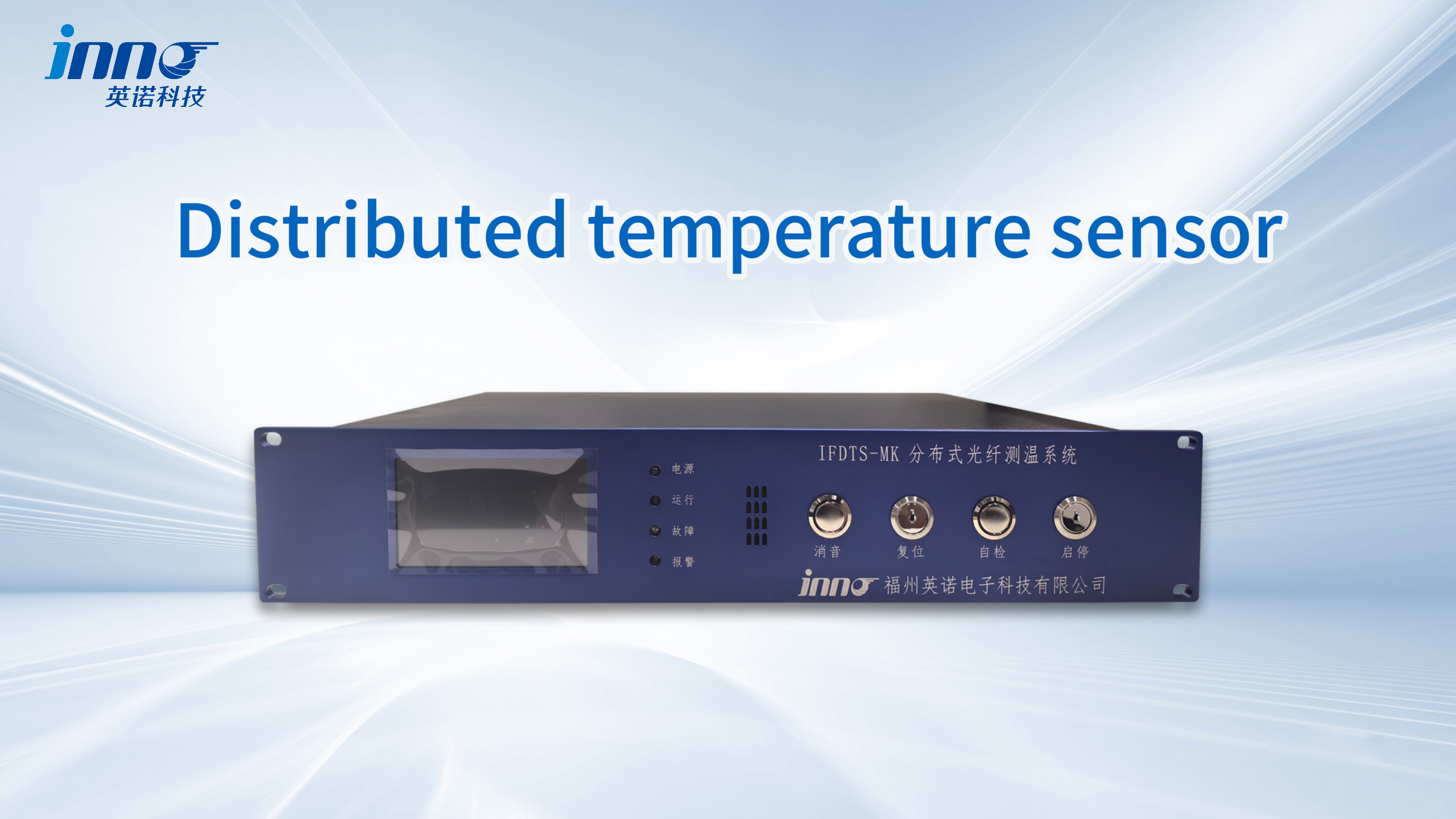
Raman Scattering Temperature Measurement
Hệ thống cảm biến nhiệt độ phân tán employ Raman scattering, an optical phenomenon where laser light interacts with molecular vibrations in the fiber core. A small fraction of transmitted light scatters back toward the source at wavelengths shifted from the incident beam. Tán xạ Raman phản Stokes (bước sóng ngắn hơn) intensity increases with temperature, while Stokes scattering (bước sóng dài hơn) remains relatively temperature-independent.
The ratio of anti-Stokes to Stokes backscattered light intensity provides a temperature measurement independent of fiber losses and laser power fluctuations. Phép đo phản xạ miền thời gian quang học (OTDR) techniques determine the spatial origin of scattered light based on time delay, enabling temperature profiling along the entire fiber length.
Continuous Measurement Advantages
DTS fiber optic monitoring delivers uninterrupted temperature data across kilometer-scale distances with meter-level spatial resolution. Every segment of sensing cable functions as an independent temperature sensor, eliminating blind spots inherent to discrete-point systems. This comprehensive coverage proves invaluable for applications like cable tunnel fire detection, pipeline leak localization, and perimeter intrusion detection where threat location is initially unknown.
5. Fluorescent vs Distributed Fiber Optic Temperature Sensors: So sánh hiệu suất

| Thông số hiệu suất | Cảm biến điểm huỳnh quang | DTS phân phối |
|---|---|---|
| Phương pháp đo | Discrete point precision sensing | Cảm biến phân tán liên tục |
| Sự chính xác | ±1°C | ±1-2°C |
| Nghị quyết | 0.1°C | 0.1-1°C |
| Thời gian đáp ứng | <1 thứ hai | 10-60 Giây |
| Phạm vi nhiệt độ | -40°C đến +260°C | -40°C đến +600°C |
| Dung lượng kênh | 1-64 điểm trên mỗi máy phát | Đo liên tục |
| Khoảng cách đo | 0-80 meters fiber length per point | Lên đến 10-20 Km |
| Độ phân giải không gian | Single point measurement | 0.5-1 mét |
| Ứng dụng điển hình | Critical point precision monitoring | Large-area continuous surveillance |
6. Installation Methods for Fiber Optic Temperature Sensors
Fluorescent Probe Installation Techniques
Surface adhesive mounting employs high-temperature epoxy compounds rated for continuous operation at probe measurement ranges. This method suits applications where mechanical fastening proves impractical due to space constraints or material compatibility. Bolt-fixed installations utilize mechanical clamps or brackets providing positive retention in high-vibration environments. Cài đặt nhúng positions probes in pre-drilled cavities or molded pockets during equipment manufacture, offering optimal thermal coupling and protection.
Distributed Sensing Cable Deployment
DTS temperature monitoring cables route along monitored assets with periodic fixation using cable ties, cái kẹp, or dedicated support structures. Routing design considers minimum bend radius requirements (typically 20mm for standard cables) to prevent optical attenuation. Cable armor selection depends on mechanical protection needs, with options including stainless steel interlocked armor for harsh industrial environments or light-duty jackets for benign installations.
7. Các trường hợp ứng dụng toàn cầu: Real-World Fiber Optic Temperature Monitoring
Nghiên cứu điển hình 1: European 500kV Substation Transformer Monitoring
Vị trí: Major transmission hub in Germany
Thiết bị: Three 350MVA power transformers
Giải pháp: 18 đầu dò sợi quang huỳnh quang per transformer monitoring winding hot spots
Kết quả: Detected abnormal temperature rise in Phase A winding 8 months before predicted failure, enabling scheduled outage for repair and avoiding catastrophic breakdown
Nghiên cứu điển hình 2: Middle East Cable Tunnel DTS Installation
Vị trí: Dubai 220kV transmission corridor
Bảo hiểm: 12 kilometers of underground cable tunnel
Giải pháp: Hệ thống cảm biến nhiệt độ phân tán with 1-meter spatial resolution
Kết quả: Successfully identified three cable joint overheating incidents, preventing fire hazards and service interruptions
Nghiên cứu điển hình 3: Southeast Asian Steel Mill Switchgear Temperature Monitoring
Vị trí: Indonesian steel production facility
Thiết bị: 36 medium-voltage switchgear lineups
Giải pháp: 216 measurement points using cảm biến nhiệt độ sợi quang at busbar connections
Kết quả: Discovered 12 loose connection defects, reducing unplanned outages by 80%
Nghiên cứu điển hình 4: North American Research Facility NMR Magnet Monitoring
Vị trí: University research laboratory in United States
Thiết bị: 9.4 Tesla superconducting NMR spectrometer
Giải pháp: Cảm biến nhiệt độ sợi quang huỳnh quang monitoring cryogenic system and magnet coils
Kết quả: Non-metallic sensors eliminate magnetic field interference, providing accurate temperature data critical for maintaining superconducting conditions and preventing expensive magnet quenches
8. Typical Application Scenarios for Fiber Optic Temperature Sensors
Power Transformer Applications
Giám sát nhiệt độ cuộn dây máy biến áp employs embedded fiber optic probes positioned at calculated hot spot locations. Top oil temperature measurement supplements winding sensors, providing overall thermal loading indication. On-load tap changer contact monitoring detects arcing or excessive wear before catastrophic failure. Bushing connection monitoring identifies developing terminal problems.
High-Voltage Switchgear Monitoring
Thiết bị đóng cắt cách điện bằng khí (GIS) and circuit breaker contact temperature measurement utilizes compact fiber optic thermometry probes immune to SF6 gas and high voltage. Disconnect switch blade monitoring detects alignment issues and contact degradation. Busbar joint surveillance prevents overheating at bolted connections. Cable termination monitoring provides early warning of insulation deterioration.
Cable System Applications
Cable tunnel distributed temperature sensing provides continuous fire detection and thermal overload protection. Cable splice monitoring identifies manufacturing defects and installation problems. Cable tray temperature profiling optimizes loading and detects ventilation blockages. Cable trench monitoring serves dual purposes of fire detection and ampacity management.
Generator and Motor Monitoring
Generator stator winding temperature measurement requires non-metallic sensors compatible with rotating machinery electromagnetic environments. Excitation transformer monitoring prevents insulation failures. Station service transformer surveillance ensures reliable auxiliary power supply. Main transformer cooling system efficiency assessment optimizes heat removal.
Research and Laboratory Applications
NMR spectroscopy temperature control demands non-metallic sensors that won’t distort magnetic fields or introduce measurement artifacts. Cryogenic system monitoring requires sensors functional across extreme temperature ranges. Superconducting magnet protection systems utilize fiber optic sensing for quench detection without electromagnetic interference.
9. How to Select the Right Fiber Optic Temperature Solution
Application-Based Selection Guide
| Kịch bản ứng dụng | Công nghệ được đề xuất | Justification |
|---|---|---|
| Giám sát cuộn dây máy biến áp | Fluorescent point sensing | Độ chính xác cao, phản hồi nhanh, critical point monitoring |
| Cable tunnel surveillance | DTS phân phối | Khoảng cách xa, continuous coverage, phát hiện cháy |
| Nhiệt độ tiếp xúc của thiết bị đóng cắt | Fluorescent point sensing | Multi-point deployment, bản địa hóa chính xác, kích thước nhỏ gọn |
| GIS equipment internal monitoring | Fluorescent point sensing | Excellent insulation, khối lượng nhỏ, SF6 resistant |
| NMR/MRI magnet systems | Fluorescent point sensing | Phi kim loại, no magnetic interference, cryogenic capable |
| Pipeline/tank temperature profiling | DTS phân phối | Large area coverage, temperature distribution visualization |
Key Selection Parameters
Determine measurement point quantity requirements – discrete critical locations favor hệ thống sợi quang huỳnh quang while extensive linear assets suit distributed sensing. Accuracy specifications drive technology selection, with ±1°C precision applications requiring fluorescent technology. Response time constraints influence choice, as sub-second updates necessitate point sensing rather than distributed systems. Communication protocol compatibility ensures integration with existing supervisory control and data acquisition (SCADA) cơ sở hạ tầng.
10. Câu hỏi thường gặp
Cảm biến nhiệt độ sợi quang có thể đạt được độ chính xác nào?
Cảm biến nhiệt độ sợi quang huỳnh quang deliver ±1°C measurement accuracy with 0.1°C resolution and response times under 1 thứ hai. Distributed DTS systems provide ±1-2°C accuracy across distances reaching 20 Km. This precision meets all power equipment temperature monitoring requirements and enables timely detection of abnormal temperature rises.
How many temperature points can one system monitor?
Một đĩa đơn fluorescent fiber optic transmitter hỗ trợ 1-64 configurable temperature measurement channels. Distributed DTS systems achieve continuous temperature sensing along 10-20 Km, equivalent to thousands of discrete measurement points with meter-level spatial resolution.
How do I choose between fluorescent and distributed sensing?
Lựa chọn fluorescent point measurement for critical equipment precision monitoring such as transformer windings and switchgear contacts where fast response and high accuracy are paramount. Chọn Cảm biến nhiệt độ phân tán for large-area surveillance applications like cable tunnels and pipeline corridors requiring comprehensive coverage without blind spots.
Why can fiber optic sensors withstand voltages above 100kV?
Optical fiber consists of pure silica glass, a perfect electrical insulator. Sensor probes contain no metallic components or electrical connections, rendering them inherently incapable of conducting electricity. This fundamental characteristic enables safe installation directly inside high-voltage equipment without specialized insulation barriers.
What is the service life of fiber optic temperature probes?
Đầu dò sợi quang huỳnh quang feature design lifespans exceeding 25 years with no periodic maintenance requirements. Probes contain no electronic components or wear-prone elements. Recommended accuracy verification occurs every 2-3 years through comparison against calibrated reference standards.
Does fiber bending or breakage affect measurements?
Fluorescent sensing: Fiber bending within acceptable radius limits (>20mm) does not affect measurement accuracy. Individual fiber breakage impacts only that specific measurement point while others continue normal operation. DTS phân phối: Fiber breakage prevents measurement beyond the break point.
How does the system reduce false alarm rates?
Temperature monitoring systems employ dual-criteria logic evaluating both absolute temperature thresholds and rate-of-change parameters to filter normal environmental fluctuations. Multi-level alarm configurations (cảnh báo, báo thức, phê bình) differentiate urgency based on temperature rise velocity and magnitude. Typical false alarm rates remain below 3%.
11. Nhà sản xuất được đề xuất

Phúc Châu Đổi mới Điện tử Scie&Công Nghệ Co., Ltd. |
|
| Thành lập: | 2011 |
| Chuyên môn: | Cảm biến nhiệt độ sợi quang, hệ thống giám sát trực tuyến máy biến áp, thiết bị tự động hóa trạm biến áp |
| Chứng chỉ: | CE, RoHS, ISO 9001 |
| Sản phẩm cốt lõi: | • Cảm biến nhiệt độ sợi quang huỳnh quang (-40°C đến +260°C) • Distributed DTS systems (up to 20km range) • Multi-channel fiber optic transmitters (1-64 Kênh) • Temperature monitoring software platforms |
| Hiện diện toàn cầu: | Châu Âu, Trung Đông, Đông Nam Á, Châu phi, Châu Mỹ |
| Thuận lợi: | ✓ 13+ years industry experience ✓ Complete product portfolio ✓ Customization services (1-64 cấu hình kênh) ✓ Factory-direct pricing ✓ 2-3 week standard delivery |
12. Thông tin liên hệ
Request Free Technical Consultation
Our application engineers provide complimentary consultation services including:
- Site-specific temperature monitoring system design
- Sensor quantity and placement optimization
- SCADA system integration planning
- Detailed technical specifications and quotations
- ROI analysis and payback period calculations
| Phương thức liên hệ | Chi tiết |
| web@fjinno.net | |
| WhatsApp/WeChat | +86 135 9907 0393 |
| Điện thoại | +86 135 9907 0393 |
| 3408968340 | |
| Địa chỉ | Khu công nghiệp mạng ngũ cốc Liên Đông U, Số 12 đường Xingye West, Phúc Châu, Phúc Kiến, Trung Quốc |
| Trang web | www.fjinno.net |
Response Commitment: Thắc mắc kỹ thuật được trả lời trong vòng 24 Giờ | Quotation requests processed within 48 Giờ
📞 Contact Us Today for Your Custom Fiber Optic Temperature Solution
Tuyên bố miễn trừ trách nhiệm
Độ chính xác của thông tin: This article provides technical information about fiber optic temperature sensors based on industry standards and manufacturer specifications current as of January 2026. Technical details, thông số kỹ thuật sản phẩm, and pricing are subject to change without notice. Always verify current specifications with manufacturers before procurement decisions.
Trách nhiệm ứng dụng: Implementation of fiber optic temperature monitoring systems requires qualified electrical engineers and technicians familiar with high-voltage equipment safety procedures. The author and publisher assume no liability for equipment damage, thương tích cá nhân, or other consequences resulting from application of information contained herein. Consult licensed professional engineers for site-specific design and installation.
Hiệu suất sản phẩm: Performance specifications cited represent typical values for commercial monitoring systems. Actual performance varies based on installation conditions, yếu tố môi trường, equipment construction, and site-specific parameters. Conduct acceptance testing to verify installed system performance meets application requirements.
Certification Verification: References to certifications and standards compliance indicate general industry practices. Verify specific products under consideration hold appropriate certifications from recognized testing laboratories. Request copies of actual test certificates rather than relying on claimed compliance.
Tư vấn chuyên môn: This information serves educational purposes and does not replace professional engineering consultation. Cài đặt phức tạp, ứng dụng tùy chỉnh, or critical infrastructure projects require detailed engineering studies by qualified specialists.

Cảm biến nhiệt độ sợi quang, Hệ thống giám sát thông minh, Nhà sản xuất cáp quang phân phối tại Trung Quốc
 |
|
 |