 Cảm biến nhiệt độ sợi quang INNO ,hệ thống giám sát nhiệt độ.
- Fiber Optic Temperature Conversion Modules serve as the core components of modern temperature monitoring systems, converting optical signals from fiber optic temperature sensors into standard electrical outputs, widely deployed across power generation, sản xuất chất bán dẫn, and medical equipment industries.
- Optical Temperature Conversion Systems utilize advanced photoelectric conversion technology, offering superior electromagnetic interference immunity, an toàn nội tại, và khả năng truyền dẫn đường dài, khiến chúng trở nên lý tưởng cho cuộn dây máy biến áp, thiết bị chuyển mạch cao áp, and rotating machinery applications.
- Cảm biến nhiệt độ phân tán (DTS) Modules enable continuous temperature measurement across extended distances, with single fiber cables monitoring temperature distribution over vast industrial facilities.
- Point-type Fiber Temperature Converters are specifically engineered for critical measurement points, mang lại độ chính xác cao, phản ứng nhanh, and exceptional long-term stability for precision temperature control systems.
Optical Temperature Converter Tổng quan về công nghệ

MỘT fiber optic temperature conversion module operates on advanced optical principles, serving as the critical interface between cảm biến nhiệt độ sợi quang and industrial control systems. The module employs sophisticated photoelectric conversion technology to accurately decode temperature information from optical signals and output standardized electrical signals compatible with industrial protocols.
Optical temperature measurement systems offer distinct advantages over conventional temperature sensing technologies. The fiber sensors contain no electrical components, providing inherent electrical isolation and explosion-proof characteristics, particularly suitable for high electromagnetic field environments. Optical signal transmission remains immune to electromagnetic interference, ensuring reliable and accurate measurement data across challenging industrial conditions.
Traditional thermocouples and RTDs, while technologically mature, exhibit significant limitations in specialized environments. These conventional sensors are susceptible to electromagnetic interference and may generate measurement errors in high-voltage electrical fields or strong magnetic environments. Fiber optic temperature conversion modules completely eliminate these issues, providing more reliable solutions for industrial temperature monitoring applications.
Distributed Fiber Temperature Systems Technology and Applications

Hệ thống cảm biến nhiệt độ phân tán operate based on Raman and Brillouin scattering effects within optical fibers. When laser pulses propagate through fiber optic cables, they interact with fiber molecules creating scattering effects, where scattered light intensity and frequency correlate directly with temperature at specific fiber locations. các conversion module utilizes precise spectral analysis technology to decode scattered light signals and accurately calculate temperature values along the entire fiber length.
DTS System Nguyên tắc làm việc
DTS fiber optic temperature conversion modules employ advanced time-domain reflectometry technology, measuring round-trip time of scattered light signals to determine precise locations of temperature anomalies. These modules integrate high-performance lasers, spectrometers, and signal processors, providing powerful data processing capabilities and exceptional temperature resolution for long-distance monitoring applications.
Pipeline Leak Detection Applications
In pipeline leak detection applications, distributed fiber temperature systems play crucial roles. When pipeline leaks occur, temperature differences between leaked media and ambient environment create distinct temperature gradient changes along fiber routes. Conversion modules continuously monitor these temperature anomalies and accurately locate leak positions, providing reliable safety protection for pipeline operations.
High-Voltage Cable Monitoring
High-voltage cable temperature monitoring represents another critical application for distributed fiber temperature systems. Local overheating in cables often precedes equipment failures during long-term operations. By installing fiber optics along cable routes, conversion modules continuously monitor temperature distribution across entire cable lines, detecting hot spot anomalies promptly and effectively preventing serious incidents like cable fires.
Point-Type Fiber Temperature Modules Technology and Implementation
Point-type fiber temperature measurement technology primarily includes fluorescence lifetime thermometry and gallium arsenide semiconductor thermometry methods. Fluorescence lifetime thermometry utilizes the linear relationship between rare earth material fluorescence decay time and temperature, offering extremely high measurement accuracy and exceptional long-term stability.
Fluorescence Lifetime Temperature Sensors
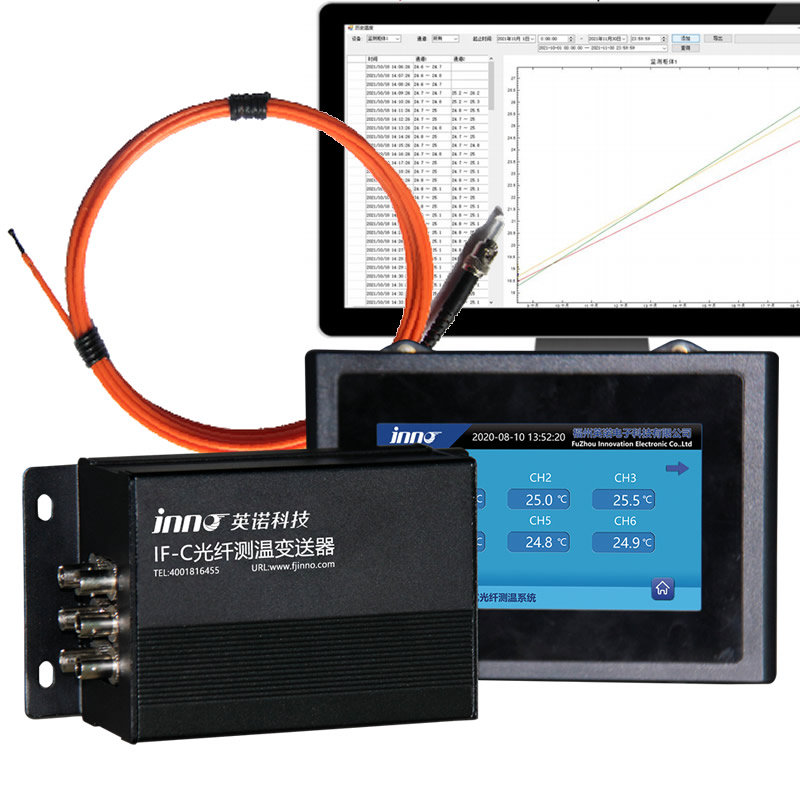
High-precision point-type fiber temperature sensor conversion modules employ precise time measurement and spectral analysis technologies. For fluorescence lifetime thermometry, conversion modules must accurately measure fluorescence signal decay time constants, typically utilizing high-speed sampling and digital signal processing technologies to enhance measurement precision.
Giám sát nhiệt độ cuộn dây máy biến áp
In transformer winding temperature monitoring applications, point-type fiber temperature conversion modules demonstrate unique advantages. Transformer interiors contain strong electrical and magnetic fields where traditional electronic temperature sensors cannot operate normally. Fiber temperature sensors remain completely unaffected by electromagnetic interference, accurately monitoring winding hot spot temperatures and providing reliable protection for transformer safe operations.
Rotating Machinery Bearing Monitoring
Rotating machinery bearing temperature measurement represents a typical application scenario for point-type fiber temperature systems. Bearings are critical motor components where temperature conditions directly affect equipment reliability and service life. Fiber temperature sensors feature compact dimensions for convenient installation in confined bearing locations, trong khi conversion modules provide real-time bearing temperature monitoring and timely anomaly detection.
Interference Resistance Design
Point-type fiber temperature conversion modules demonstrate significant advantages in anti-interference design. Internal modules utilize full optical signal processing, avoiding interference issues associated with electrical signal transmission. Ngoài ra, conversion modules integrate advanced signal filtering and noise suppression algorithms, ensuring stable and reliable temperature measurement results in complex electromagnetic environments.
Temperature Sensor Module Selection and Comparison
Distributed versus point-type fiber temperature systems exhibit distinct differences in technical principles and application scenarios. Distributed systems suit large-scale temperature distribution monitoring with advantages including long measurement distances and high measurement point density, though single-point accuracy remains relatively lower. Point-type systems focus on high-precision temperature measurement at critical locations, featuring fast response speeds and high measurement accuracy, but with relatively limited monitoring ranges.
So sánh công nghệ
Different measurement principle fiber optic temperature conversion modules vary in accuracy and response time characteristics. Raman scattering DTS systems typically provide faster response speeds, thích hợp để theo dõi nhiệt độ động. Fluorescence lifetime temperature systems offer highest accuracy, particularly suitable for precision temperature control applications.
Giám sát nhiệt độ công nghiệp Giải pháp
Trong hệ thống điện, fiber optic temperature conversion modules are extensively applied for monitoring transformers, thiết bị chuyển mạch, và cáp. Transformer oil temperature monitoring systems employ distributed fiber technology, enabling real-time monitoring of internal transformer temperature distribution and timely detection of local overheating phenomena.
Ứng dụng sản xuất chất bán dẫn
Semiconductor manufacturing processes require extremely strict temperature control, Ở đâu fiber optic temperature conversion modules play important roles in wafer processing, lắng đọng màng mỏng, và quá trình khắc. Since semiconductor manufacturing environments contain strong RF fields and chemically corrosive gases, traditional temperature sensors cannot meet requirements.
Medical Equipment Integration
Precision temperature control in medical equipment similarly relies on advanced công nghệ giám sát nhiệt độ sợi quang. High-end medical equipment like MRI machines and radiation therapy systems require extremely high temperature stability. Fiber temperature conversion modules generate no electromagnetic interference, do not affect normal medical equipment operation, while providing precise temperature feedback.
Laboratory Research Environment
Fiber temperature monitoring systems provide precise temperature measurement support for various scientific experiments in laboratory research environments. Low-temperature physics experiments, materials research, and biomedical research all require high-precision temperature control. Fiber temperature conversion modules feature broad temperature ranges and excellent accuracy stability, meeting strict scientific research requirements.
Câu hỏi thường gặp
What are the advantages of fiber optic temperature conversion modules?
Fiber optic temperature conversion modules offer electromagnetic interference immunity, an toàn nội tại, truyền dẫn đường dài, and high-precision measurement characteristics, particularly suitable for temperature monitoring in harsh environments.
How to choose between distributed and point-type systems?
Selection depends on specific application requirements. Hệ thống phân tán suit large-scale temperature distribution monitoring like pipeline and cable line monitoring. Point-type systems suit high-precision temperature measurement at critical locations like transformer windings and motor bearings.
What accuracy can fiber temperature modules achieve?
Hiện đại fiber optic temperature conversion modules typically achieve measurement accuracy within ±0.5-1°C range, covering temperature ranges from -100°C to 300°C. Specific accuracy depends on sensor type and conversion module technology level.
What applications suit fiber temperature systems?
Fiber temperature systems are widely applied in power equipment monitoring, sản xuất chất bán dẫn, thiết bị y tế, and laboratory research. They are particularly suitable for harsh environments including strong electromagnetic interference, điện áp cao, bầu không khí bùng nổ, and chemical corrosion where traditional temperature sensors cannot operate effectively.
Chuyên nghiệp Giám sát nhiệt độ sợi quang Giải pháp
Là một người chuyên nghiệp fiber optic temperature conversion module nhà cung cấp, we provide complete distributed and point-type hệ thống giám sát nhiệt độ sợi quang giải pháp. Our products cover fluorescence lifetime, gali arsenua, and Raman scattering technologies, meeting diverse industry temperature monitoring requirements.
Của chúng tôi fiber optic temperature conversion modules feature compact dimensions, cài đặt thuận tiện, and stable accuracy, widely applied across power, chất bán dẫn, thuộc về y học, và các lĩnh vực nghiên cứu. Professional technical support teams provide customized industrial temperature monitoring solutions, ensuring system reliability and cost-effectiveness.
Để biết thông tin chi tiết về fiber optic temperature conversion module products or technical consultation, contact our professional team. We will recommend the most suitable giám sát nhiệt độ sợi quang technology solutions based on your specific application requirements, providing reliable technical support for your industrial temperature monitoring needs.

Cảm biến nhiệt độ sợi quang, Hệ thống giám sát thông minh, Nhà sản xuất cáp quang phân phối tại Trung Quốc
 |
|
|