 Cảm biến nhiệt độ sợi quang INNO ,hệ thống giám sát nhiệt độ.
Trả lời nhanh: Hệ thống giám sát đường ống sợi quang
- ✓ Công nghệ: Cảm biến sợi quang phân tán (DFOS) – DTS/DAS dual solutions
- ✓ Phạm vi giám sát: 0-30km một đầu, 40-50km dual-end
- ✓ Độ phân giải không gian: 3m with 1-3m positioning accuracy
- ✓ Phạm vi nhiệt độ: -100°C to +550°C measurement capability
- ✓ Thời gian đáp ứng: Đặc trưng 5 seconds measurement cycle
- ✓ Ứng dụng: Oil/gas pipeline leak detection, integrity monitoring, third-party intrusion
- ✓ Các tính năng chính: Real-time continuous monitoring, không cần bảo trì, về bản chất là an toàn
- ✓ nhà sản xuất: Đổi mới Phúc Châu – specialized DFOS solution provider since 2011
- ✓ Chứng chỉ: CN, ROHS, ISO9001, ISO14001, chống cháy nổ
Fiber optic pipeline monitoring systems utilizing cảm biến sợi quang phân tán (DFOS) technology represent the most advanced solution for giám sát tính toàn vẹn đường ống, providing real-time phát hiện rò rỉ and comprehensive security surveillance across 0-30km range with 3m spatial resolution. Với tư cách là chuyên gia nhà sản xuất của hệ thống cảm biến sợi quang, Khoa học điện tử đổi mới Phúc Châu&Công ty công nghệ, Công ty TNHH. delivers complete cảm biến nhiệt độ phân tán (DTS) Và cảm biến âm thanh phân tán (THE) solutions for oil, khí đốt, Nước, and chemical pipelines worldwide since 2011.
Mục lục
- What is Fiber Optic Pipeline Monitoring?
- How Does Distributed Fiber Optic Sensing Work?
- Why Must Pipelines Have Fiber Optic Monitoring Systems?
- What Are the Core Technologies: DTS vs DAS?
- What Are the Key Advantages of Fiber Optic Pipeline Monitoring?
- Thông số kỹ thuật là gì?
- How to Detect Pipeline Leaks Using Fiber Optic Sensing?
- What Pipeline Types Can Use Fiber Optic Monitoring?
- How to Build a Complete Pipeline Monitoring System?
- How Does the System Integrate with Pipeline SCADA?
- What Are the Installation Methods?
- How to Implement Long-Range Pipeline Monitoring?
- What Are Oil & Gas Specific Applications?
- How to Monitor Power Cables with Fiber Optic Sensing?
- Why Choose Fiber Optic Over Conventional Monitoring?
- Cách chọn giải pháp phù hợp?
- Who Is The Best Manufacturer and Solution Provider?
- Câu hỏi thường gặp
- How to Contact for Pipeline Monitoring Solutions?
1. Là gì Fiber Optic Pipeline Monitoring?
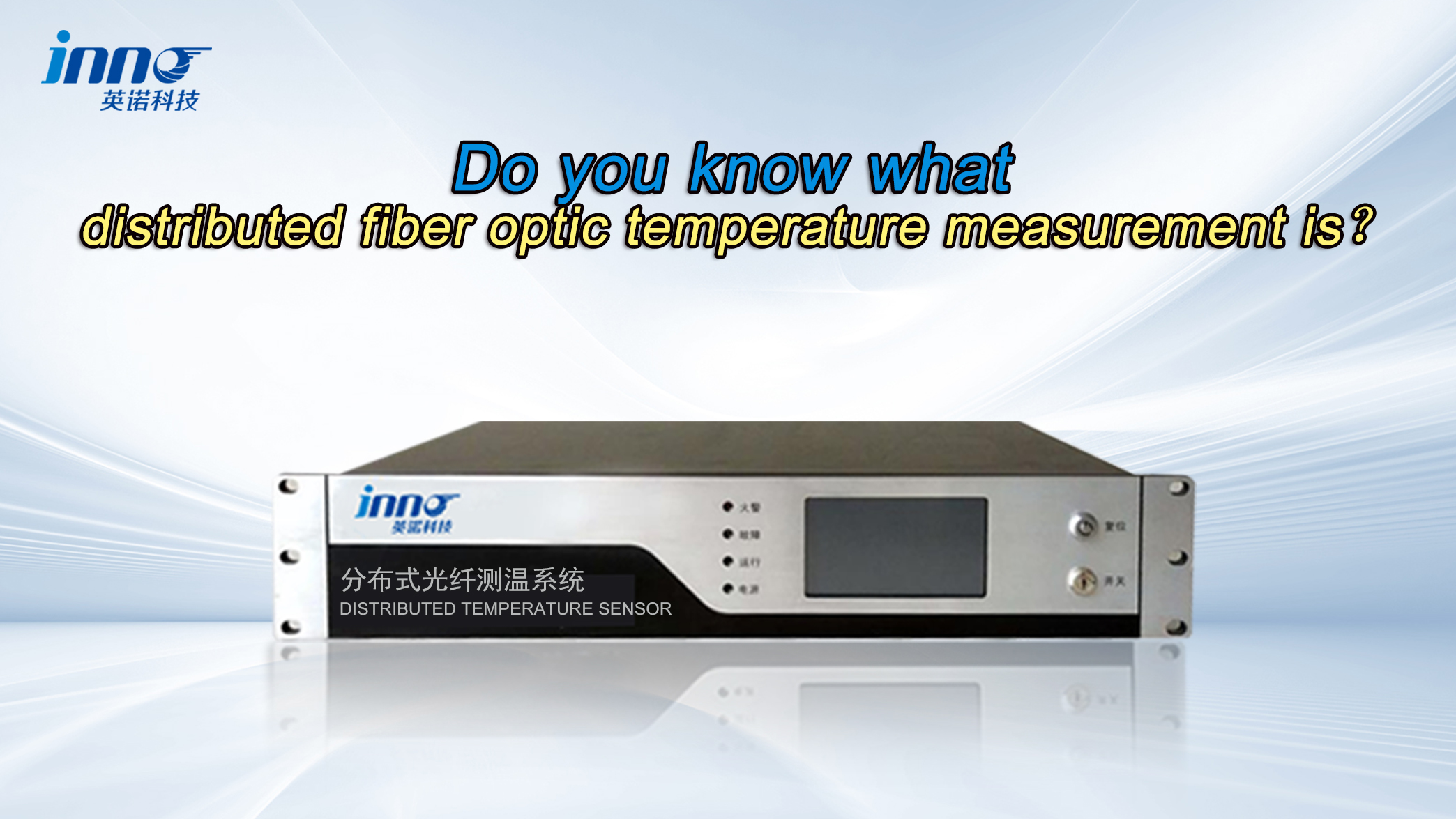
nó là gì vậy? Fiber optic pipeline monitoring is an advanced surveillance technology using cảm biến sợi quang phân tán (DFOS) to provide continuous, real-time monitoring of pipeline conditions across entire lengths. Unlike traditional point sensors that monitor discrete locations, distributed optical fiber sensing transforms the entire fiber optic cable into thousands of sensing points, detecting temperature changes, rung động âm thanh, and mechanical strain with 3m spatial resolution over 0-30km distances.
The technology enables comprehensive giám sát tính toàn vẹn đường ống by continuously measuring multiple parameters simultaneously. Cảm biến nhiệt độ phân tán sợi quang (DTS) detects thermal anomalies indicating leaks or hot spots, trong khi cảm biến âm thanh phân tán sợi quang (THE) identifies vibration signatures from third-party excavation, equipment operation, or pipeline damage. This dual-parameter approach provides complete fiber optic sensing for pipeline protection against all major threat categories.
Thành phần hệ thống cốt lõi
Một sự hoàn chỉnh hệ thống giám sát cáp quang bao gồm:
- DTS/DAS interrogator unit: Analyzes backscattered light signals to measure temperature and acoustic vibrations
- Distributed sensing fiber optic cable: Standard or specialized fiber serving as the continuous sensor
- Data acquisition system: Processes and stores 2000+ alarm records with unlimited PC expansion
- Phần mềm phân tích: Fiber optic sensing data management with GIS visualization and alarm management
- Giao diện truyền thông: Ethernet, RS485, RS232 for SCADA integration
2. How Does Distributed Fiber Optic Sensing Work?
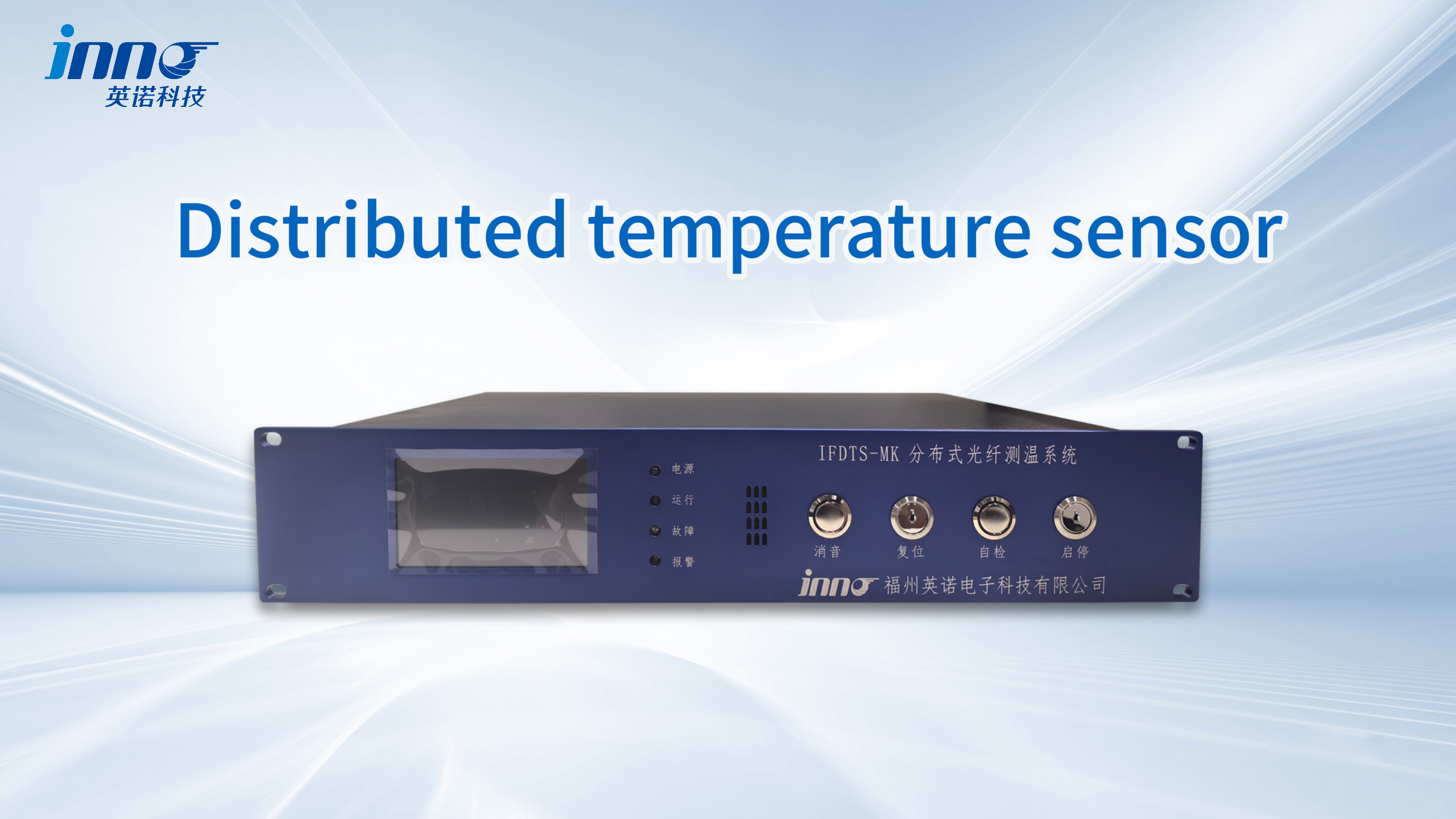
How does the technology operate? Cảm biến sợi quang phân tán operates by transmitting laser pulses through optical fiber and analyzing the backscattered light that returns. When light travels through fiber, a small fraction scatters back due to microscopic variations in the glass structure. This backscattered light carries information about local temperature, sự căng thẳng, and vibration conditions at each point along the fiber.
Three Scattering Mechanisms
Raman Scattering for Temperature Sensing
Cảm biến nhiệt độ phân tán sợi quang uses Raman scattering, where backscattered light shifts to different wavelengths based on molecular vibration. The intensity ratio between anti-Stokes and Stokes components changes predictably with temperature. By analyzing this ratio at each fiber location, cáp quang cảm biến nhiệt độ phân tán measures temperature continuously with 1°C accuracy across -100°C to +550°C range.
Brillouin Scattering for Strain Measurement
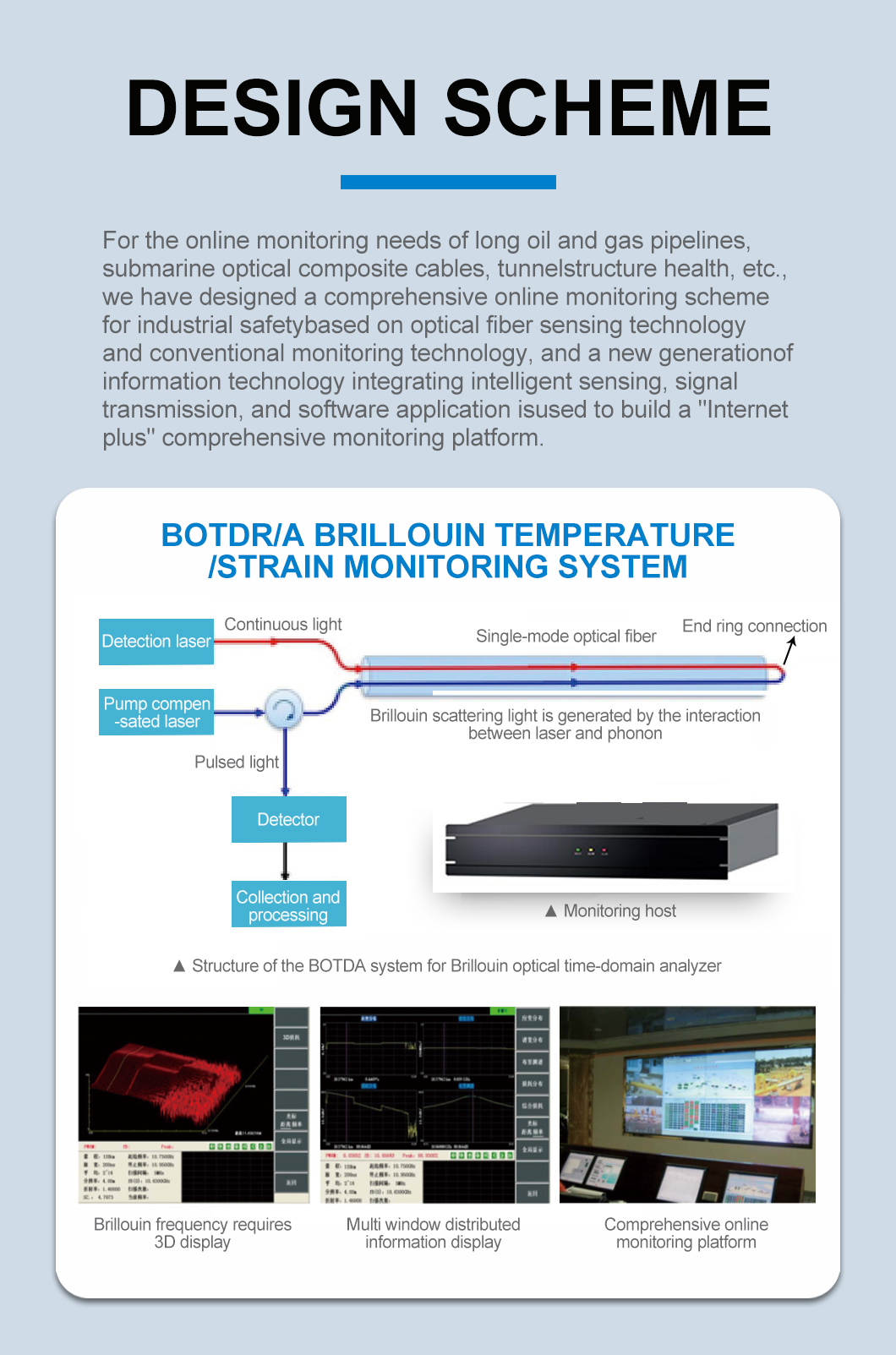
Brillouin scattering produces frequency shifts proportional to mechanical strain and temperature. Fiber optic distributed pressure sensing systems analyze Brillouin frequency to detect pipeline deformation, ground movement, or structural stress, complementing temperature measurements for comprehensive integrity assessment.
Rayleigh Scattering for Acoustic Sensing
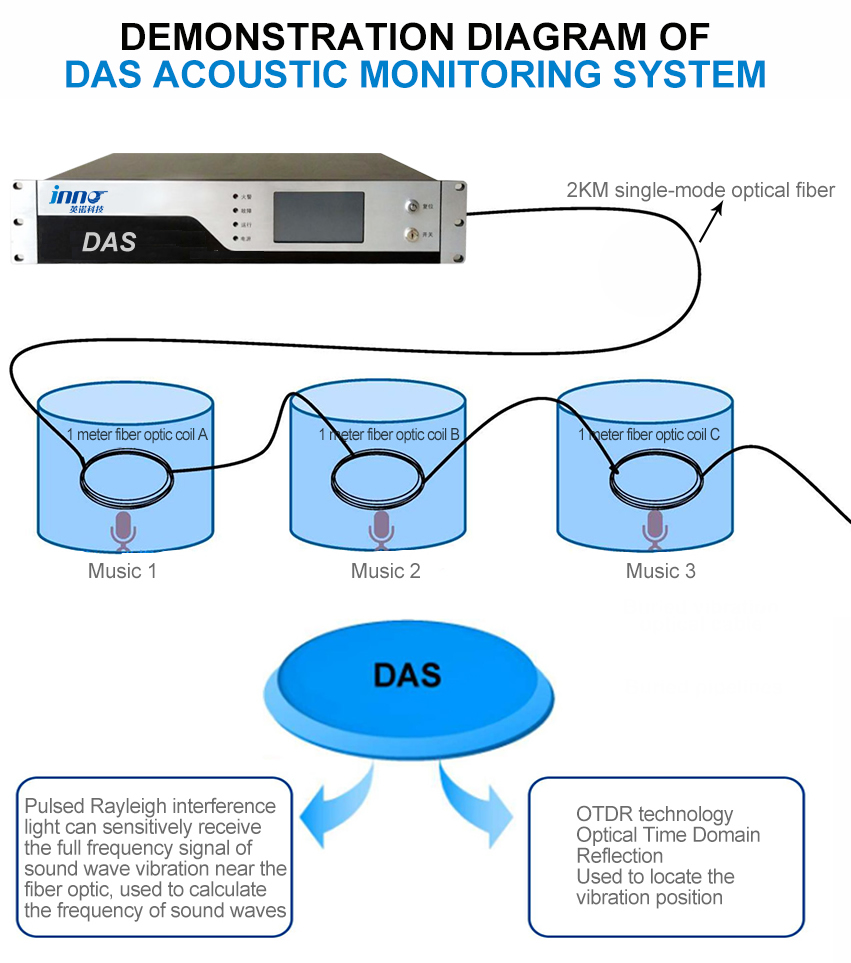
Distributed acoustic sensing fiber optics uses Rayleigh backscatter phase analysis to detect vibrations. Acoustic waves or vibrations create microscopic fiber strain that modulates the backscattered light phase. Distributed acoustic sensing fiber optic cables detect frequencies from 1Hz to 100kHz, enabling identification of leak noise, digging activity, or equipment vibration signatures.
Optical Time Domain Reflectometry (OTDR)
Tất cả distributed fiber optic sensing dfos technologies employ OTDR principles to determine location. By measuring the time delay between transmitted pulse and received backscatter, the system calculates distance to each sensing point. With typical 3m spatial resolution and 1-3m positioning accuracy, operators can precisely locate detected anomalies along 0-30km pipeline sections.
3. Why Must Pipelines Have Hệ thống giám sát sợi quang?

Why is monitoring critical? Pipeline leak detection using distributed fiber optic sensing prevents catastrophic environmental damage, explosive hazards, and massive economic losses. Undetected pipeline failures release hazardous materials, contaminate soil and water, pose public safety risks, and result in costly emergency response, cleanup, hình phạt theo quy định, and business interruption.
Five Critical Monitoring Requirements
1. Early Leak Detection
Detecting leaks with fiber optic sensing enables immediate response before small leaks escalate into major incidents. Fiber optic gas pipeline monitoring detects temperature drops from gas expansion or pressure changes within seconds, trong khi cảm biến âm thanh phân tán hears characteristic leak noise patterns. Early detection limits release volumes to liters rather than thousands of cubic meters.
2. Third-Party Intrusion Prevention
Construction excavation causes 30-40% of pipeline damage incidents. Distributed acoustic sensing fiber optic cables detect digging vibrations hundreds of meters away, providing advance warning before equipment contacts the pipeline. Long-range pipeline monitoring by distributed fiber optic sensing tạo ra sự giám sát an ninh liên tục thay thế các cuộc tuần tra định kỳ tốn kém.
3. Giám sát tính toàn vẹn
Hệ thống giám sát tính toàn vẹn đường ống cáp quang theo dõi sự xuống cấp dần dần trước khi xảy ra hư hỏng. Cảm biến nhiệt độ phân tán xác định thiệt hại lớp phủ, điểm nóng ăn mòn, hoặc lỗi hệ thống làm mát. Cảm biến áp suất sợi quang phát hiện chuyển động mặt đất, lở đất, hoặc biến dạng cấu trúc đe dọa tính toàn vẹn của đường ống.
4. Bảo vệ môi trường
Phát hiện rò rỉ nhanh chóng giảm thiểu tác động môi trường. Cảm biến sợi quang để bảo vệ đường ống giảm thời gian phát hiện trung bình từ giờ hoặc ngày (kiểm tra định kỳ) đến giây (giám sát thời gian thực), hạn chế đáng kể khối lượng ô nhiễm và yêu cầu khắc phục.
5. Tuân thủ quy định
Nhiều khu vực pháp lý bắt buộc phải giám sát đường ống liên tục đối với các khu vực có hậu quả cao. Hệ thống giám sát cáp quang công nghệ đáp ứng các yêu cầu quy định về giám sát thời gian thực, phản ứng báo động ngay lập tức, and comprehensive data logging.
4. What Are the Core Technologies: DTS vs THE?

Sự khác biệt giữa DTS và DAS? Cảm biến nhiệt độ phân tán (DTS) Và cảm biến âm thanh phân tán (THE) represent complementary technologies addressing different threat detection requirements in fiber optic pipeline monitoring.
Cảm biến nhiệt độ phân tán (DTS)
How does fiber optic distributed temperature sensing work? DTS measures temperature continuously by analyzing Raman backscatter intensity ratios. Hệ thống giám sát nhiệt độ sợi quang detects thermal anomalies indicating:
- Gas leaks: Temperature drops from Joule-Thomson cooling during pressure reduction
- Liquid leaks: Temperature changes from evaporative cooling or thermal contrast with surroundings
- Hot spots: Elevated temperatures from coating damage, ăn mòn, or external heat sources
- Cooling failures: Temperature rises indicating pump or heat exchanger problems
DTS systems achieve 1°C accuracy with 0.1°C resolution across -100°C to +550°C range, providing precise thermal profiling for fiber optic gas pipeline monitoring and liquid pipeline applications.
Cảm biến âm thanh phân tán (THE)
How do distributed acoustic sensing fiber optic cables detect vibrations? DAS analyzes Rayleigh backscatter phase variations to measure acoustic vibrations and dynamic strain. Fiber optic distributed acoustic sensing identifies:
- Leak acoustic signatures: Characteristic turbulent flow noise from pipeline breaches
- Third-party activity: Excavation, drilling, or construction vibrations near pipeline
- Equipment operation: Pump vibration, valve operation, or flow changes
- Ground movement: Hoạt động địa chấn, lở đất, or soil settlement
DAS provides frequency response from 1Hz to 100kHz with sensitivity detecting activities 100+ meters from the pipeline.
DTS vs DAS Comparison
| đặc trưng | DTS Technology | DAS Technology |
|---|---|---|
| Thông số đo | Nhiệt độ | Acoustic vibration, dynamic strain |
| Scattering Mechanism | Raman backscatter | Rayleigh backscatter phase |
| Primary Application | Leak detection via thermal anomalies | Third-party intrusion, leak noise |
| Độ phân giải không gian | 3tôi điển hình | 5-10tôi điển hình |
| Thời gian đáp ứng | 5-60 giây | thời gian thực (mili giây) |
| Dải tần số | Static/slow changes | 1Hz to 100kHz dynamic |
| Tốt nhất cho | Gas/liquid leak detection | Security surveillance |
Integrated DTS+DAS Systems
Nhiều Giải pháp cảm biến sợi quang combine both technologies using the same fiber infrastructure. Integrated systems provide comprehensive threat detection—DTS for thermal leak detection plus DAS for security and rapid event detection—maximizing pipeline monitoring fiber optic hiệu quả.
5. What Are the Key Advantages of Fiber Optic Pipeline Monitoring?
Why choose distributed fiber optic sensing over conventional methods? Fiber optic sensor pipeline monitoring delivers compelling advantages over traditional point sensors, kiểm tra định kỳ, or computational pipeline monitoring (CPM) hệ thống.
Ưu điểm kỹ thuật
1. Continuous Spatial Coverage
Long-range pipeline monitoring by distributed fiber optic sensing provides uninterrupted surveillance along entire 0-30km sections. Unlike point sensors monitoring discrete locations every 100m or 1km, distributed optical fiber sensing detects events anywhere along the fiber with 3m resolution, eliminating blind spots where undetected failures could occur.
2. Hoạt động an toàn nội tại
Giám sát sợi quang systems operate with complete electrical passivity in the sensing zone. Glass fiber contains no electrical conductors, generates no heat or sparks, and poses zero ignition risk in explosive atmospheres. This intrinsic safety enables deployment in hazardous classified locations without expensive explosion-proof enclosures or hot work permits during installation.
3. Miễn nhiễm với nhiễu điện từ
Optical signals remain unaffected by electromagnetic fields from power lines, radio transmitters, tia sét, or welding equipment. Thiết bị cảm biến sợi quang maintains accurate measurements in high-EMI environments where electrical sensors produce false alarms or require expensive shielding.
4. Long-Distance Capability
Đơn distributed fiber optic sensing dfos interrogators monitor 30km pipeline sections from one location, with dual-ended configurations extending range to 40-50km. This long reach reduces equipment count, installation costs, and maintenance points compared to systems requiring sensor stations every few kilometers.
5. Cảm biến đa thông số
Trình độ cao hệ thống cảm biến sợi quang implementations measure temperature, acoustic vibration, and strain simultaneously using the same fiber. Multi-parameter data fusion improves detection accuracy and reduces false alarms by correlating multiple threat indicators.
6. Hoạt động không cần bảo trì
Fiber optic cable monitoring requires zero maintenance throughout 20-30 tuổi thọ năm. Passive optical fiber contains no batteries, không có bộ phận chuyển động, and no electronics requiring calibration or replacement. The only recommended maintenance is periodic visual inspection of fiber connections during scheduled facility maintenance.
7. Harsh Environment Performance
Distributed temperature sensing fiber optic cable operates reliably across -100°C to +550°C measurement range. Fiber withstands corrosive environments, độ ẩm cao, nhiệt độ cực cao, and mechanical stress that degrade electrical sensors. System equipment operates 0-40°C with -20°C to -60°C storage capability.
6. Thông số kỹ thuật là gì?
What specifications does the system provide? Understanding technical parameters helps operators specify appropriate hệ thống giám sát cáp quang configurations for specific pipeline applications.
DTS System Technical Parameters
| tham số | Đặc điểm kỹ thuật | Lưu ý ứng dụng |
|---|---|---|
| Loại sợi | Multimode or singlemode selectable | Multimode for DTS, singlemode for DAS |
| Phạm vi đo | 0-30km một đầu | 40-50cấu hình hai đầu km |
| Kênh đo lường | 1/2/4/8 kênh | Multi-channel for multiple pipelines |
| Độ phân giải không gian | 3tôi | Configurable based on range |
| Khoảng thời gian lấy mẫu | 1tôi | Điểm dữ liệu mỗi mét |
| Định vị chính xác | 1-3tôi | Precise event location |
| Thời gian đo | Đặc trưng 5 giây | Adjustable based on application |
| Phạm vi đo nhiệt độ | -100°C to +550°C | Covers all pipeline environments |
| Độ chính xác nhiệt độ | ±1°C | Precise anomaly detection |
| Độ phân giải nhiệt độ | 0.1°C | Sensitive change detection |
| Temperature Alarm Threshold | 85°C (user configurable) | Customizable per application |
System Interface and Power Specifications
| tham số | Đặc điểm kỹ thuật |
|---|---|
| Optical Connector | FC/APC standard |
| Nguồn điện | 12-36VDC, 8tiêu thụ W |
| Nhiệt độ hoạt động | 0-40°C |
| Nhiệt độ bảo quản | -20°C to -60°C |
| Độ ẩm hoạt động | 0-95%RH, không ngưng tụ |
| Giao diện truyền thông | Ethernet, RS485, RS232, đầu ra rơle |
| Lưu trữ dữ liệu | 2000 alarm records onboard, unlimited with PC |
7. How to Detect Pipeline Leaks Using Fiber Optic Sensing?
How does pipeline leak detection using distributed fiber optic sensing work? Detecting leaks with fiber optic sensing employs multiple detection mechanisms based on physical phenomena accompanying pipeline breaches.
Temperature-Based Leak Detection (DTS)
Cảm biến nhiệt độ phân tán sợi quang identifies leaks through thermal signatures:
Gas Leak Detection
High-pressure gas escaping through pipeline breach undergoes rapid expansion causing Joule-Thomson cooling. Natural gas leaks typically create 5-20°C temperature drops extending several meters from the leak point. Fiber optic gas pipeline monitoring detects these temperature anomalies within one measurement cycle (tiêu biểu 5 giây), triggering immediate alarms when temperatures drop below configurable thresholds.
Liquid Leak Detection
Liquid pipeline leaks produce temperature changes through multiple mechanisms: evaporative cooling of volatile products, thermal contrast between leaked fluid and surrounding soil, or heat transfer differences in saturated versus dry ground. Distributed temperature sensing fiber optic cable identifies these thermal patterns, with detection sensitivity depending on product properties, leak rate, và điều kiện môi trường.
Acoustic-Based Leak Detection (THE)
Distributed acoustic sensing fiber optic cables detect leak acoustic signatures:
- Turbulent flow noise: High-velocity fluid escaping through breach creates broadband noise across 100Hz-10kHz range
- Pressure wave propagation: Leak-induced pressure transients travel through pipeline fluid generating acoustic signals
- Soil vibration: Escaping fluid disturbs surrounding soil producing vibrations detectable by DAS
DAS provides faster detection than DTS (milliseconds versus seconds) but requires acoustic coupling between pipeline and sensing fiber.
Tương quan đa thông số
Trình độ cao fiber optic sensing data management systems correlate temperature, âm học, and strain data to reduce false alarms. Confirmed leaks exhibit correlated signatures across multiple parameters, while benign events (temperature variations from weather, vibrations from traffic) affect individual parameters without correlation. This multi-parameter approach achieves >95% detection probability with <1% tỷ lệ báo động sai.
8. What Pipeline Types Can Use Fiber Optic Monitoring?
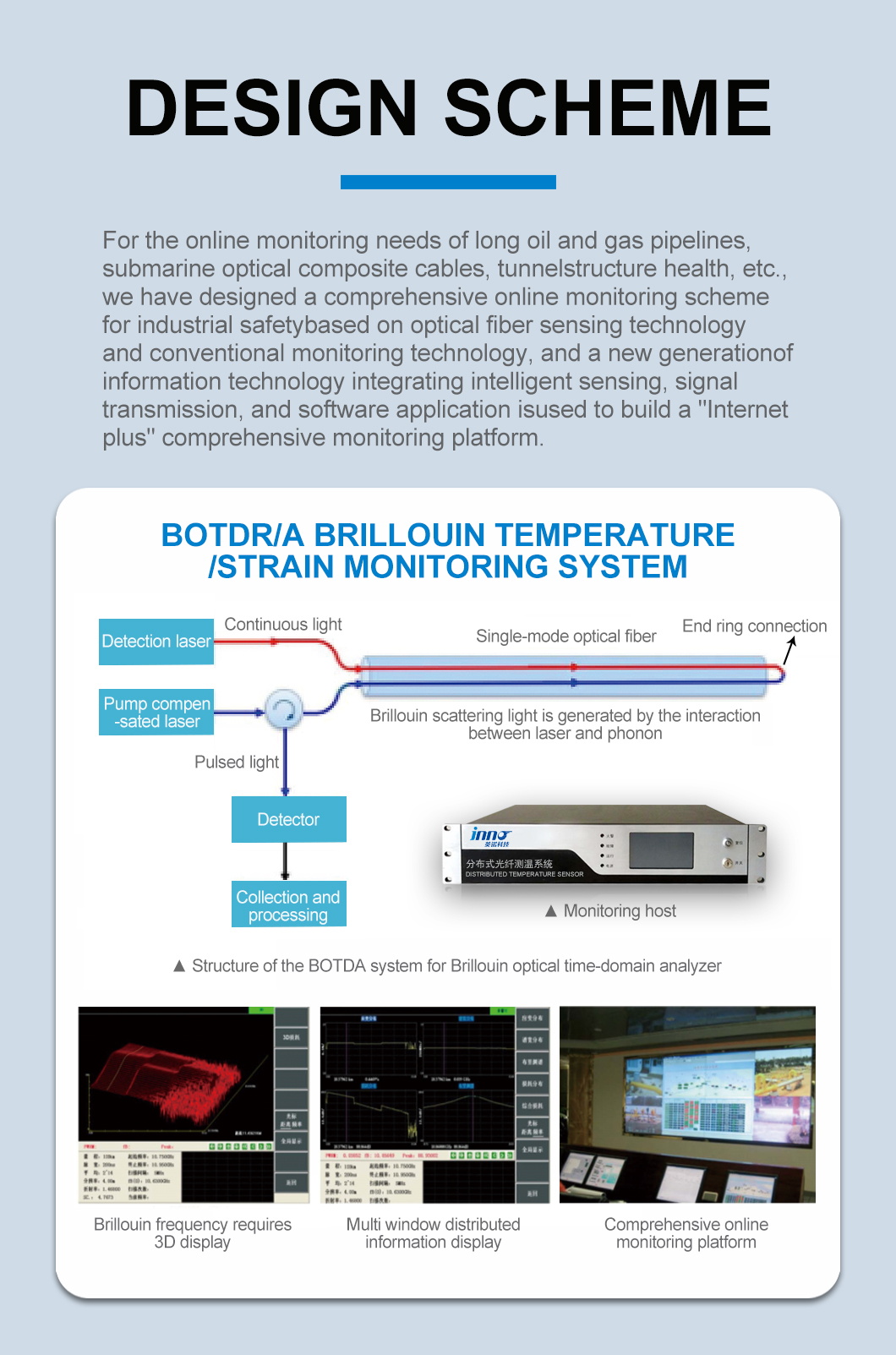
Which pipelines benefit from fiber optic monitoring? Fiber optic pipeline monitoring solutions serve diverse pipeline applications across oil, khí đốt, Nước, hóa chất, and power infrastructure.
Dầu & Gas Pipeline Applications
Natural Gas Transmission Pipelines
Fiber optic gas pipeline monitoring excels at long-distance transmission line surveillance. High-pressure gas leaks produce distinctive thermal signatures from Joule-Thomson cooling, enabling reliable detection with cảm biến nhiệt độ sợi quang phân tán across 30km+ sections. DAS adds third-party intrusion detection protecting against excavation damage.
Crude Oil Pipelines
Crude oil pipeline monitoring combines thermal leak detection with fiber optic pressure sensing to identify pressure changes from flow anomalies. Temperature monitoring also tracks viscous heating in heavy crude pipelines and detects coating damage or corrosion hot spots.
Refined Products Pipelines
Products pipelines carrying gasoline, dầu diesel, and jet fuel benefit from rapid detecting leaks with fiber optic sensing. Volatile product leaks create strong thermal and acoustic signatures enabling sub-minute detection times critical for minimizing environmental impact.
Gas Gathering and Field Pipelines
Upstream gas gathering systems use fiber optic sensor pipeline monitoring to track multiple pipelines from wellheads to processing facilities. Giám sát hệ thống đa kênh 4-8 đường ống song song với bộ dò tín hiệu đơn, giảm chi phí giám sát trên mỗi đường ống.
Đường ống dẫn nước và nước thải
- Cấp nước thành phố: Phát hiện rò rỉ làm giảm thất thoát nước không mang lại doanh thu
- Truyền nước thô: Giám sát hệ thống dẫn nước và vận chuyển đường dài
- Đường ống dẫn nước thải: Phát hiện các vết nứt trước khi nước thải chạm tới bề mặt
- Hệ thống nước công nghiệp: Giám sát nước làm mát và xử lý nước
Đường ống hóa chất và công nghiệp
- Nguyên liệu hóa dầu: Etylen, propylen, và đường ống hóa chất đặc biệt
- Dòng axit và xút: Vận chuyển vật liệu ăn mòn cần được giám sát liên tục
- Đường ống amoniac: Sản phẩm có độc tính cao yêu cầu phát hiện rò rỉ ngay lập tức
- Phân phối dung môi: Hợp chất hữu cơ dễ bay hơi cần bảo vệ môi trường
Hệ thống sưởi và làm mát khu vực
Giám sát nhiệt độ sợi quang theo dõi hiệu suất đường ống sưởi ấm và làm mát của khu vực, phát hiện sự xuống cấp cách điện, rò rỉ van, và tổn thất hệ thống phân phối thông qua việc định hình nhiệt liên tục.
9. How to Build a Complete Pipeline Monitoring System?
Hệ thống giám sát cáp quang toàn diện là gì? Hoàn thành hệ thống giám sát cáp quang Việc triển khai yêu cầu tích hợp cẩn thận phần cứng cảm biến, phần mềm quản lý dữ liệu, và cơ sở hạ tầng truyền thông.
Thành phần kiến trúc hệ thống
Lớp phần cứng
- DTS/DAS interrogator unit: Sơ đẳng thiết bị cảm biến sợi quang phân tích tín hiệu quang tán xạ ngược
- Cáp quang cảm biến: Distributed temperature sensing fiber optic cable hoặc cáp quang cảm biến âm thanh phân phối được lắp đặt dọc theo đường ống
- Kết nối sợi: Đầu nối quang FC/APC, thùng nối, và quản lý sợi
- Năng lượng và môi trường: 12-36nguồn điện VDC, kiểm soát khí hậu nếu cần thiết, dự phòng UPS
Lớp phần mềm
Fiber optic sensing data management phần mềm cung cấp:
- Trực quan hóa thời gian thực: Hồ sơ nhiệt độ và âm thanh được hiển thị dọc theo tuyến đường ống
- Tích hợp GIS: Lớp phủ dữ liệu cảm biến trên hệ thống thông tin địa lý đường ống
- Quản lý báo động: Configurable multi-level thresholds with escalation procedures
- Historical trending: 2000+ alarm records onboard, unlimited PC storage for long-term analysis
- Reporting tools: Automated reports on system health, sự kiện, and performance metrics
Lớp giao tiếp
- Ethernet TCP/IP: High-speed connection to control room networks
- RS485/MODBUS: Integration with pipeline SCADA systems
- RS232 serial: Local terminal or legacy system connectivity
- Đầu ra rơle: Direct hardwired alarm connections to safety systems
- Truy cập từ xa: Secure internet connectivity for remote monitoring and diagnostics
10. How Does the System Integrate with Pipeline SCADA?
How does fiber optic monitoring integrate with existing infrastructure? Seamless integration with pipeline Supervisory Control and Data Acquisition (SCADA) systems enables centralized monitoring and coordinated emergency response.
Hỗ trợ giao thức truyền thông
Ethernet MODBUS-TCP
Hiện đại hệ thống giám sát cáp quang implementations use Ethernet for high-speed data transfer. MODBUS-TCP protocol provides:
- High bandwidth: Complete temperature profiles transmitted every measurement cycle
- Standard networking: Integration using existing IT infrastructure and security policies
- Multiple clients: Simultaneous access from control room, engineering workstations, và những địa điểm xa xôi
- Real-time updates: Sub-second latency for critical alarm transmission
RS485 MODBUS-RTU
Serial communication provides reliable hệ thống cảm biến sợi quang connectivity in industrial environments:
- Long-distance capability: Up to 1200m cable runs without repeaters
- Multi-drop networks: Connect multiple devices on single communication bus
- Noise immunity: Differential signaling resistant to electrical interference
- Legacy compatibility: Works with existing RS485-based SCADA infrastructure
Data Integration Architecture
Fiber optic sensing monitoring data integrates into pipeline control systems through multiple methods:
- Direct SCADA polling: Control system reads temperature and alarm data via MODBUS registers
- OPC server: OPC DA/UA middleware translates fiber optic data to standard industrial automation protocols
- Database integration: Continuous data logging to SQL databases for analysis and reporting
- API interfaces: RESTful APIs enabling custom application development and integration
Alarm Integration and Response
Critical alarms from pipeline monitoring fiber optic systems trigger coordinated responses:
- Đầu ra rơle: Hardwired contacts activate safety shutdown systems or warning beacons
- SCADA alarms: Events appear in control room alarm management systems with priority levels
- Email/SMS notifications: Automated alerts to on-call personnel for immediate response
- Procedure initiation: Alarm triggers predefined emergency response workflows
11. What Are the Installation Methods for Pipeline Monitoring?
Cách lắp đặt giám sát cáp quang trên đường ống? Thích hợp giám sát cảm biến sợi quang lắp đặt cáp đảm bảo chất lượng tín hiệu đáng tin cậy và hiệu suất hệ thống lâu dài.
Phương pháp triển khai cáp quang
Lắp đặt bên ngoài đường ống
gói xoắn ốc: Phương thức kết thúc phổ biến nhất cáp quang cảm biến nhiệt độ phân tán theo mô hình xoắn ốc xung quanh bên ngoài đường ống:
- Khớp nối nhiệt tối ưu: Tiếp xúc trực tiếp với thành ống mang lại khả năng truyền nhiệt tuyệt vời
- Bảo vệ cơ khí: Cáp được bảo vệ bằng lớp phủ đường ống và chôn lấp
- Thời gian cài đặt: Áp dụng trong quá trình xây dựng đường ống hoặc tiếp xúc trong quá trình bảo trì
- Khoảng cách cao độ: Khoảng cách 0,5-1m điển hình cân bằng phạm vi phủ sóng và yêu cầu về chiều dài cáp
Rãnh đồng vị trí
Cáp quang lắp đặt song song với đường ống trong cùng rãnh:
- Cài đặt dễ dàng hơn: Không cần chuẩn bị bề mặt đường ống
- Khả năng trang bị thêm: Có thể được lắp đặt mà không làm lộ đường ống bằng cách sử dụng lỗ khoan định hướng
- Phản ứng nhiệt: Slower than direct contact but adequate for most fiber optic gas pipeline monitoring ứng dụng
- Protection requirements: Cable buried in conduit or armored construction for mechanical protection
Pipeline Internal Installation
Specialized applications install fiber inside pipeline:
- Maximum sensitivity: Direct exposure to product for fastest thermal response
- Installation complexity: Requires pipeline pigging or robotic installation
- Ứng dụng hạn chế: Chủ yếu được sử dụng cho fiber optic well monitoring in production tubing
Optical Connections
FC/APC connector standard ensures reliable optical coupling:
- Angled physical contact: APC polish minimizes back-reflection improving signal quality
- Field-installable: Connectors can be installed during construction or maintenance
- Splice alternatives: Fusion splicing provides permanent low-loss connections
- Protection enclosures: Weatherproof junction boxes protect connections at pipeline boundaries
Cấu hình một đầu và hai đầu
| Cấu hình | Phạm vi | Thuận lợi | Ứng dụng |
|---|---|---|---|
| Một đầu | 0-30km | Cài đặt đơn giản, một điểm truy cập | Đường ống ngắn và trung bình |
| Hai đầu | 40-50km | Phạm vi mở rộng, tính trung bình làm giảm tiếng ồn | Đường ống truyền tải dài |
| Đã lặp | 2x15km | Dự phòng, điểm kết nối duy nhất | Cơ sở hạ tầng quan trọng |
12. How to Implement Long-Range Pipeline Monitoring?
Giám sát đường ống tầm xa bằng cảm biến sợi quang phân tán hoạt động như thế nào? Mở rộng hệ thống giám sát đường ống cáp quang phạm vi phủ sóng vượt quá phạm vi 30km tiêu chuẩn yêu cầu thiết kế và cấu hình hệ thống cẩn thận.
Kỹ thuật mở rộng khoảng cách
Thẩm vấn hai đầu
Kết nối bộ dò tín hiệu với cả hai đầu sợi quang giúp mở rộng phạm vi giám sát:
- Phạm vi tiếp cận mở rộng: 40-50tổng phạm vi km với phạm vi phủ sóng chồng chéo từ mỗi đầu
- Cải thiện độ chính xác: Các phép đo trung bình từ cả hai hướng giúp giảm nhiễu và cải thiện độ chính xác
- Dự phòng: Ngắt sợi đơn vẫn cho phép giám sát từ đầu hoạt động
- Thực hiện: Yêu cầu bộ dò tín hiệu hoặc bộ chia ở đầu đường ống xa có nguồn điện và liên lạc
Multi-Station Cascading
Long-range pipeline monitoring by distributed fiber optic sensing across hundreds of kilometers uses multiple monitoring stations:
- Station spacing: Interrogator units every 25-30km along pipeline route
- Bảo hiểm liên tục: Adjacent zones overlap ensuring no gaps
- Giám sát tập trung: All stations networked to central control via fiber or wireless
- Yêu cầu về nguồn điện: Each station requires 12-36VDC 8W power supply
Spatial Resolution vs Range Trade-off
System configuration balances monitoring distance against spatial resolution:
| Phạm vi | Độ phân giải không gian | Thời gian đo | Ứng dụng |
|---|---|---|---|
| 0-10km | 1tôi | 3-5 giây | High-precision facility monitoring |
| 10-20km | 3tôi | 5-10 giây | Standard pipeline monitoring |
| 20-30km | 5tôi | 10-15 giây | Truyền dẫn đường dài |
| 30-50km (dual-end) | 10tôi | 15-30 giây | Extended range applications |
13. What Are Oil & Gas Specific Applications?
How is distributed fiber optic sensor in oil gas market deployed? The oil and gas industry represents the largest application sector for fiber optic pipeline integrity monitoring system công nghệ.
Upstream Production Applications
Well Monitoring
Fiber optic well monitoring provides comprehensive production surveillance:
- Production profiling: Fiber optics well monitoring measures temperature distribution identifying active production zones and water breakthrough
- Flow monitoring: Temperature variations during production indicate flow rate changes and gas lift performance
- Injection monitoring: Temperature tracking in water or gas injection wells verifies injection profile and detects channeling
- Well integrity: Temperature anomalies identify casing leaks, tubing holes, or annular communication
Hydraulic Fracturing
Distributed fiber optic sensing dfos monitors fracturing operations:
- Treatment monitoring: Real-time temperature and acoustic data tracks fracture fluid placement
- Stage isolation verification: Confirms isolation between fracturing stages
- Fracture geometry: Temperature signatures reveal fracture height and orientation
- Production analysis: Post-frac monitoring identifies productive zones
Midstream Transportation
Long-Distance Transmission Pipelines
Fiber optic gas pipeline monitoring secures cross-country transmission infrastructure:
- Phát hiện rò rỉ: Continuous surveillance across 1000+ km transmission systems using cascaded monitoring stations
- Third-party monitoring: DAS detects unauthorized excavation along pipeline right-of-way
- Flow assurance: Temperature monitoring identifies hydrate formation or wax deposition risks
- Geohazard detection: Strain sensing detects ground movement from landslides or seismic activity
Gathering Systems
Multi-channel systems monitor multiple gathering lines:
- Field surveillance: Single interrogator monitors 4-8 parallel gathering lines
- Cost efficiency: Shared infrastructure reduces per-pipeline monitoring costs
- Production optimization: Temperature data identifies flow restrictions or equipment issues
Downstream Distribution
- Products pipelines: Multi-product pipeline monitoring tracking batch interfaces and contamination
- Terminal operations: Loading rack and storage tank monitoring
- Retail distribution: Service station underground piping leak detection
14. How to Monitor Power Cables with Fiber Optic Sensing?
How does fiber optic sensing for power cable monitoring work? Hệ thống giám sát nhiệt độ sợi quang technology extends beyond pipelines to electrical power cable applications.
Power Cable Monitoring Applications
Cable Tunnel Surveillance
Giám sát nhiệt độ sợi quang provides continuous thermal profiling of underground cable tunnels:
- Overload detection: Temperature rise from excessive current loading provides early warning before insulation damage
- Hot spot identification: Localized heating from loose connections, insulation defects, or damaged cables
- Fire detection: Rapid temperature increase triggers immediate alarms and fire suppression
- Ambient monitoring: Tunnel ventilation effectiveness verified through temperature distribution
Giám sát mối nối cáp
Cable splices and terminations represent common failure points:
- Joint temperature: Continuous monitoring of critical splice locations
- Phân tích so sánh: Temperature differences between phases identify imbalanced loading or failing joints
- Bảo trì phòng ngừa: Trending analysis predicts joint failures before occurrence
Xếp hạng cáp động
Fiber optic sensing for power cable monitoring enables real-time ampacity calculation:
- Real-time capacity: Temperature measurements determine actual cable capacity based on current conditions
- Seasonal variation: Winter cooling increases capacity, summer heat reduces it
- Emergency ratings: Precise temperature knowledge allows safe temporary overload
- Asset utilization: Maximize cable usage without risking damage
Installation Methods
Power cable giám sát cáp quang uses several installation approaches:
- Integrated fiber: Some power cables include dedicated fiber optic elements
- Lashed fiber: Separate fiber cable strapped to power cable exterior
- Conduit installation: Fiber pulled alongside power cable in conduit or duct
- Tunnel mounted: Fiber attached to tunnel walls near cable routes
15. Why Choose Fiber Optic Over Conventional Pipeline Monitoring?
Why is fiber optic sensing superior to point sensors? Comparing distributed optical fiber sensing against conventional monitoring technologies reveals significant operational and economic advantages.
Limitations of Conventional Methods
Point Sensor Systems
Traditional pipeline monitoring uses discrete sensors at fixed intervals:
- Coverage gaps: Leaks occurring between sensor locations go undetected
- Installation costs: Each sensor requires power, hệ thống dây điện, and interface equipment
- Maintenance burden: Regular calibration and battery replacement for hundreds of sensors
- Reliability issues: Multiple failure points as each sensor can malfunction
- Độ nhạy EMI: Electrical sensors produce false alarms in high-interference environments
Periodic Inspection
Manual or aerial pipeline inspection provides only snapshot data:
- Delayed detection: Leaks may persist weeks between inspections
- Weather dependent: Aerial surveys limited by visibility conditions
- Cần nhiều lao động: Requires continuous staffing for patrol operations
- Phạm vi phủ sóng hạn chế: Cannot inspect buried or underwater sections
Computational Pipeline Monitoring (CPM)
Mass balance and pressure analysis methods have inherent limitations:
- Detection threshold: Tiêu biểu 1-5% of flow rate, missing small leaks
- Slow response: Hours required to detect and confirm leaks
- No location: Cannot pinpoint leak position
- False alarms: Flow transients from normal operations trigger false positives
Fiber Optic Advantages
| Tính năng | Conventional Monitoring | Fiber Optic DFOS |
|---|---|---|
| Bảo hiểm | Discrete points every 100m-1km | Continuous every 1-3m |
| Detection Time | Phút đến giờ | Giây (DTS) or milliseconds (THE) |
| Location Accuracy | Between sensor spacing | 1-3m precision |
| BẢO TRÌ | Yêu cầu hiệu chuẩn thường xuyên | Không cần bảo trì 20-30 năm |
| Miễn dịch EMI | Dễ bị nhiễu | Miễn dịch hoàn toàn |
| Hazardous Area | Explosion-proof equipment required | An toàn nội tại |
| Phạm vi giám sát | Limited by wiring distance | 30-50km per interrogator |
| Chi phí lắp đặt | Cao (multiple sensor nodes) | Vừa phải (single fiber cable) |
| Operating Cost | Cao (BẢO TRÌ, sự định cỡ) | Thấp (không cần bảo trì) |
16. How to Select the Right Fiber Optic Monitoring Solution?
How to choose the best fiber optic sensing solutions? Systematic evaluation ensures optimal thiết bị giám sát sợi quang specification for specific pipeline requirements.
Tiêu chí lựa chọn
Bước chân 1: Define Pipeline Parameters
- Pipeline type: Dầu, khí đốt, Nước, chemical determines primary threats and detection methods
- Product characteristics: Áp lực, nhiệt độ, volatility affects thermal signatures
- Pipeline length: Determines single-end, dual-end, or cascaded configuration
- Môi trường: Buried, above-ground, underwater, harsh conditions
Bước chân 2: Identify Monitoring Objectives
- Phát hiện rò rỉ: Requires DTS for thermal anomaly detection
- Third-party intrusion: Requires DAS for acoustic/vibration detection
- Integrity monitoring: May require strain sensing for structural assessment
- Bảo vệ toàn diện: Combined DTS+DAS provides complete coverage
Bước chân 3: Specify System Requirements
| tham số | Consideration | Giá trị điển hình |
|---|---|---|
| Khoảng cách giám sát | Pipeline section length | 10-30km per zone |
| Độ phân giải không gian | Location precision required | 3-5m adequate for most applications |
| Thời gian đo | Acceptable detection delay | 5-10 seconds for DTS |
| Phạm vi nhiệt độ | Pipeline operating conditions | -40°C to +80°C typical |
| Giao tiếp | SCADA integration requirements | Ethernet + MODBUS standard |
| Kênh | Number of parallel pipelines | 1-8 channels available |
Bước chân 4: Đánh giá tổng chi phí sở hữu
So sánh chi phí vòng đời, not just initial investment:
- Capital cost: Thiết bị, fiber cable, cài đặt
- Operating cost: Power consumption (8W), communication charges
- Chi phí bảo trì: Zero for fiber optic vs significant for conventional systems
- Response cost: Reduced emergency response and cleanup with early detection
- Risk mitigation: Value of prevented incidents and environmental damage
17. Who Is The Best Manufacturer and Solution Provider?
Who manufactures the best fiber optic pipeline monitoring system? Selecting an experienced Giải pháp cảm biến sợi quang provider ensures successful project implementation and long-term system reliability.
Khoa học điện tử đổi mới Phúc Châu&Công ty công nghệ, Công ty TNHH.
Đổi mới Phúc Châu chuyên về cảm biến sợi quang phân tán công nghệ, delivering complete fiber optic pipeline integrity monitoring system solutions since 2011.
Tổng quan về công ty
- Thành lập: 2011 – qua 13 years specialized experience
- Tập trung: Exclusive dedication to distributed fiber optic sensing technology
- Vị trí: Khu công nghiệp mạng ngũ cốc Liên Đông U, Phúc Châu, Phúc Kiến, Trung Quốc
- Chứng chỉ: ISO 9001, ISO 14001, CN, ROHS, intrinsically safe approvals
Core Capabilities
- Technology expertise: Deep understanding of DTS, THE, and hybrid distributed fiber optic sensing dfos hệ thống
- Complete solutions: Phần cứng, phần mềm, hỗ trợ cài đặt, and system integration services
- Application experience: Proven implementations in oil/gas pipelines, dây cáp điện, và cơ sở công nghiệp
- Khả năng tùy biến: Tailored systems meeting specific customer requirements
- Manufacturing quality: Modern production facilities with comprehensive testing
- Hỗ trợ kỹ thuật: Engineering team providing pre-sales consultation and post-installation service
Phạm vi sản phẩm
- hệ thống DTS: 1/2/4/8 channel configurations for temperature monitoring
- hệ thống DAS: Acoustic and vibration sensing solutions
- Hệ thống hybrid: Combined DTS+DAS for comprehensive monitoring
- Sensing cables: Cáp quang tiêu chuẩn và chuyên dụng cho nhiều môi trường khác nhau
- Nền tảng phần mềm: Trình độ cao fiber optic sensing data management với sự tích hợp GIS
Lợi ích chính của giám sát đường ống sợi quang
- ✓ Bảo hiểm liên tục: Giám sát thời gian thực cứ sau 1-3m dọc theo toàn bộ chiều dài đường ống 0-30km
- ✓ Phát hiện nhanh: Nhận dạng rò rỉ bên trong 5 giây (DTS) or milliseconds (THE)
- ✓ Vị trí chính xác: 1-3m định vị chính xác để đáp ứng ngay lập tức
- ✓ Không cần bảo trì: 20-30 tuổi thọ năm với yêu cầu hiệu chuẩn bằng không
- ✓ An toàn nội tại: Không có điện hoặc tia lửa điện trong khu vực nguy hiểm
- ✓ Phát hiện nhiều mối đe dọa: Xác định rò rỉ, third-party intrusion, và các vấn đề về tính toàn vẹn
- ✓ Khả năng tầm xa: 30-50km trên mỗi máy dò giúp giảm số lượng thiết bị
18. Câu hỏi thường gặp
Giám sát đường ống cáp quang là gì?
Fiber optic pipeline monitoring công dụng cảm biến sợi quang phân tán (DFOS) công nghệ cung cấp khả năng giám sát đường ống theo thời gian thực liên tục. Hệ thống đo nhiệt độ, rung động âm thanh, và căng dọc theo toàn bộ chiều dài đường ống (0-30km) với độ phân giải không gian 3m, cho phép phát hiện rò rỉ ngay lập tức, third-party intrusion, and integrity threats through analysis of backscattered light in optical fiber.
How does distributed fiber optic sensing work?
Cảm biến sợi quang phân tán works by transmitting laser pulses through optical fiber and analyzing backscattered light using Brillouin, Raman, or Rayleigh scattering principles. Changes in temperature, sự căng thẳng, or vibration alter the backscattered light characteristics, enabling the system to measure these parameters continuously along the entire fiber length with meter-level spatial resolution and 1-3m positioning accuracy.
Sự khác biệt giữa DTS và DAS?
DTS (Cảm biến nhiệt độ phân tán) measures temperature continuously using Raman scattering, ideal for detecting thermal anomalies from leaks or hot spots. THE (Cảm biến âm thanh phân tán) detects vibrations and acoustic signals using Rayleigh scattering, perfect for third-party intrusion detection. DTS provides 5-second response for thermal events while DAS offers millisecond response for acoustic events.
How far can fiber optic monitoring system detect?
Hệ thống giám sát sợi quang detect events across 0-30km with single-end configuration and 40-50km with dual-end configuration. Multi-station cascading extends coverage to hundreds of kilometers. The 3m spatial resolution and 1-3m positioning accuracy remain consistent throughout the entire monitoring range, providing precise event location regardless of distance from interrogator.
Giám sát nhiệt độ sợi quang có thể đạt được độ chính xác nào?
Giám sát nhiệt độ sợi quang achieves ±1°C accuracy with 0.1°C resolution across -100°C to +550°C measurement range. This precision enables detection of subtle temperature changes indicating small leaks or early-stage problems. The accuracy remains stable throughout 20-30 year service life because measurement depends on fundamental optical properties unaffected by aging or environmental conditions.
Do fiber optic sensing systems require maintenance?
KHÔNG, fiber optic sensing systems require absolutely no maintenance trong suốt của họ 20-30 tuổi thọ năm. The passive optical fiber contains no batteries, no electronic components requiring calibration, and no moving parts to wear out. Solid-state interrogator electronics operate maintenance-free. This eliminates ongoing calibration costs, reduces operational expenses, and ensures continuous reliable operation without scheduled maintenance shutdowns.
How to install fiber optic cable monitoring on existing pipelines?
Fiber optic cable monitoring installs on existing pipelines through several methods: (1) Helical wrapping around exposed pipeline during maintenance, (2) Trench co-location using directional boring alongside buried pipeline, (3) Direct burial in separate conduit parallel to pipeline route. FC/APC connectors provide reliable optical connections with weatherproof protection. Installation typically completes in days without disrupting pipeline operations.
What communication protocols does optical fiber monitoring system support?
Optical fiber monitoring systems support multiple industrial protocols: (1) Ethernet MODBUS-TCP for high-speed network integration, (2) RS485 MODBUS-RTU for industrial serial communication up to 1200m, (3) RS232 for local terminal connectivity, (4) Relay outputs for direct alarm connections, (5) OPC DA/UA for SCADA integration. Systems typically include all interfaces enabling flexible integration with existing control infrastructure.
Can the system detect both leaks and third-party intrusion?
Đúng, tích hợp DTS+DAS systems detect both threats simultaneously. DTS identifies leaks through temperature anomalies from gas expansion cooling or liquid thermal signatures. THE detects third-party excavation through vibration signatures from digging equipment. Multi-parameter correlation reduces false alarms by requiring consistent signals across both sensing technologies before triggering alerts.
How does fiber optic sensing data management work?
Fiber optic sensing data management software provides real-time visualization displaying temperature/acoustic profiles along pipeline routes with GIS overlay. Systems store 2000+ alarm records onboard with unlimited PC expansion. Advanced features include historical trending, statistical analysis, báo cáo tự động, and alarm escalation workflows. Data integrates with SCADA systems via MODBUS, OPC, or database connections for centralized monitoring.
Sự khác biệt giữa cảm biến phân tán và điểm?
Cảm biến phân tán biến đổi toàn bộ sợi quang thành hàng nghìn điểm cảm biến liên tục (cứ sau 1-3m) cung cấp phạm vi bao phủ không gian hoàn chỉnh. Cảm biến điểm giám sát các vị trí riêng biệt với khoảng cách giữa các cảm biến nơi các sự kiện không bị phát hiện. Hệ thống phân tán loại bỏ các điểm mù, yêu cầu ít thiết bị hơn, giảm chi phí lắp đặt, và cung cấp vị trí sự kiện chính xác trong khi các cảm biến điểm tạo ra khoảng trống phủ sóng và yêu cầu cơ sở hạ tầng nối dây rộng rãi.
Cách tích hợp với các hệ thống SCADA hiện có?
Tích hợp sử dụng các giao thức công nghiệp tiêu chuẩn: (1) MODBUS-TCP/RTU để SCADA thăm dò trực tiếp dữ liệu nhiệt độ và cảnh báo, (2) máy chủ OPC chuyển dữ liệu cáp quang sang tiêu chuẩn tự động hóa, (3) Kết nối cơ sở dữ liệu để ghi nhật ký liên tục, (4) Đầu ra rơle để tích hợp báo động có dây. Most implementations complete within hours requiring only network configuration and register mapping without custom programming.
What power requirements does the system have?
Interrogator units require 12-36VDC power supply consuming 8W. This low power enables solar or battery backup operation in remote locations. The sensing fiber itself is completely passive requiring zero power. Equipment operates 0-40°C ambient with -20°C to -60°C storage capability. Standard industrial power supplies provide reliable operation with optional UPS backup for critical applications.
What storage capacity exists for alarm data?
Systems include 2000 hồ sơ báo động in onboard memory with configurable retention periods. When connected to PC, storage becomes unlimited with SQL database support for long-term archival. Each record includes timestamp, vị trí, temperature/acoustic values, and alarm type. Automated data export enables offline analysis, regulatory reporting, and integration with asset management systems.
How to implement long-range pipeline monitoring?
Long-range pipeline monitoring uses three approaches: (1) Một đầu for 0-30km sections, (2) Hai đầu for 40-50km with interrogators at both ends providing overlapping coverage and improved accuracy, (3) Multi-station cascading for hundreds of kilometers with monitoring stations every 25-30km networked to central control. Configuration selection balances range requirements against spatial resolution and cost considerations.
19. How to Contact for Pipeline Monitoring Solutions?
How to get fiber optic sensing solutions consultation? Khoa học điện tử đổi mới Phúc Châu&Công ty công nghệ, Công ty TNHH. provides comprehensive support from initial inquiry through system commissioning and ongoing operation.
Complete Solution Services
Partnership with Fuzhou Innovation includes:
- Tư vấn kỹ thuật: Kỹ sư ứng dụng giúp chỉ định cấu hình hệ thống tối ưu cho các yêu cầu đường ống cụ thể
- Thiết kế tùy chỉnh: Các giải pháp phù hợp giải quyết các thách thức giám sát hoặc yêu cầu tích hợp độc đáo
- Tích hợp hệ thống: Hoàn thiện lắp đặt chìa khóa trao tay bao gồm cáp quang, thiết bị, phần mềm, và kết nối SCADA
- Chương trình đào tạo: Đào tạo người vận hành và bảo trì đảm bảo sử dụng hệ thống hiệu quả
- Hỗ trợ vận hành: Khởi động hệ thống tại chỗ, thử nghiệm, và xác minh hiệu suất
- Hỗ trợ kỹ thuật: Hỗ trợ kỹ thuật liên tục trong suốt vòng đời hệ thống
- phụ tùng thay thế: Kiểm kê linh kiện toàn diện đảm bảo thay thế nhanh chóng nếu cần
- Nâng cấp hệ thống: Cập nhật phần mềm và cải tiến phần cứng khi công nghệ tiến bộ
Kinh nghiệm dự án toàn cầu
Đổi mới Phúc Châu đã triển khai thành công hệ thống giám sát đường ống cáp quang trên các ứng dụng đa dạng:
- Trung Quốc: Đường ống dẫn dầu khí chính cho các công ty năng lượng quốc gia
- Trung Đông: Đường ống xuất khẩu dầu thô và khí đốt trong môi trường sa mạc khắc nghiệt
- Đông Nam Á: Natural gas distribution networks and petrochemical facilities
- Châu Âu: District heating systems and chemical plant pipeline monitoring
- Châu Mỹ: Refined products pipelines and power cable installations
Tại sao chọn đổi mới Phúc Châu?
- Chuyên môn chuyên sâu: 13+ years focused exclusively on distributed fiber optic sensing technology
- Độ tin cậy đã được chứng minh: Thousands of successful installations validating system performance
- Dòng sản phẩm hoàn chỉnh: DTS, THE, and hybrid systems covering all monitoring requirements
- Khả năng tùy biến: Engineering team develops solutions for unique applications
- Quality manufacturing: ISO 9001 certified production with comprehensive testing
- Hỗ trợ kỹ thuật: Experienced engineers providing responsive assistance
- Competitive positioning: Direct manufacturer offering optimal value
- Ổn định lâu dài: Established company ensuring ongoing support and parts availability
Thông tin liên hệ
Khoa học điện tử đổi mới Phúc Châu&Công ty công nghệ, Công ty TNHH.
Thành lập: 2011
Địa chỉ: Khu công nghiệp mạng ngũ cốc Liên Đông U, Số 12 đường Xingye West, Phúc Châu, Phúc Kiến, Trung Quốc
E-mail: web@fjinno.net
WhatsApp: +86 135 9907 0393
WeChat (Trung Quốc): +86 135 9907 0393
QQ: 3408968340
Điện thoại: +86 135 9907 0393
Inquiry Process
Bước chân 1: Liên hệ ban đầu
- Liên hệ qua email, WhatsApp, or phone with your pipeline monitoring requirements
- Describe pipeline type (oil/gas/water/chemical), chiều dài, and environment
- Indicate monitoring objectives (phát hiện rò rỉ, third-party intrusion, integrity monitoring)
- Share existing infrastructure (hệ thống SCADA, mạng lưới truyền thông, nguồn điện sẵn có)
Bước chân 2: Technical Consultation
- Receive detailed system proposal with recommended configuration
- Xem xét thông số kỹ thuật, đặc tính hiệu suất, and integration approach
- Discuss customization requirements for unique applications
- Understand certification and regulatory compliance for your region
Bước chân 3: Quotation and Planning
- Receive comprehensive quotation covering equipment, cài đặt, và vận hành
- Review project timeline, lịch trình giao hàng, and payment terms
- Clarify warranty coverage and ongoing support provisions
- Finalize technical specifications and system configuration
Bước chân 4: System Deployment
- Receive equipment with complete documentation and test certificates
- Installation support provided by experienced engineering team
- System commissioning and performance verification testing
- Operator training and handover documentation
Bước chân 5: Hỗ trợ liên tục
- Technical support for operation questions and optimization
- Software updates and system enhancements
- Spare parts availability and rapid replacement service
- Long-term partnership ensuring system effectiveness
Yêu cầu thông tin
Liên hệ Đổi mới Phúc Châu hôm nay để thảo luận về cách hệ thống giám sát đường ống cáp quang can protect your critical infrastructure, reduce operational risks, and provide comprehensive surveillance for oil, khí đốt, Nước, hóa chất, and power cable applications worldwide.
Tuyên bố từ chối trách nhiệm
Thông tin được cung cấp trong bài viết này chỉ nhằm mục đích thông tin chung. Trong khi chúng tôi cố gắng đảm bảo tính chính xác và độ tin cậy, Khoa học điện tử đổi mới Phúc Châu&Công ty công nghệ, Công ty TNHH. không đưa ra bảo đảm hoặc tuyên bố nào về tính đầy đủ, sự chính xác, hoặc độ tin cậy của bất kỳ thông tin nào trong tài liệu này.
Thông số kỹ thuật, đặc tính hiệu suất, và sự phù hợp của ứng dụng phải được xác minh cho các yêu cầu cụ thể của bạn. Thông số kỹ thuật của sản phẩm có thể thay đổi mà không cần thông báo vì chúng tôi liên tục cải tiến cảm biến sợi quang phân tán systems and giám sát sợi quang giải pháp.
Bài viết này không phải là lời khuyên kỹ thuật chuyên nghiệp. For critical pipeline applications, consult with qualified pipeline engineers and conduct proper system design, thử nghiệm, và xác nhận. Installation should be performed by trained personnel following applicable pipeline codes, tiêu chuẩn ngành, và các quy định an toàn.
Tham khảo các tiêu chuẩn, chứng chỉ, và các quy định được cung cấp để hướng dẫn chung. Pipeline monitoring requirements vary by product type, pressure class, thẩm quyền, and application—verify applicable requirements with relevant authorities and industry standards organizations.
Trong khi hệ thống cảm biến sợi quang mang lại lợi thế đáng kể so với các công nghệ giám sát truyền thống, thiết kế hệ thống phù hợp, fiber installation, and integration are essential for reliable giám sát tính toàn vẹn đường ống. Liên hệ với nhóm kỹ thuật của chúng tôi để được hướng dẫn dành riêng cho ứng dụng và các giải pháp tùy chỉnh.
Dữ liệu hiệu suất và thông tin nghiên cứu điển hình thể hiện các kết quả điển hình trong các điều kiện đã nêu. Actual performance may vary based on pipeline characteristics, điều kiện môi trường, chất lượng lắp đặt, và các thông số vận hành.
Nhãn hiệu của bên thứ ba, tên sản phẩm, and company names mentioned are property of their respective owners and are referenced for informational purposes only.
© 2025 Khoa học điện tử đổi mới Phúc Châu&Công ty công nghệ, Công ty TNHH. Mọi quyền được bảo lưu.

Cảm biến nhiệt độ sợi quang, Hệ thống giám sát thông minh, Nhà sản xuất cáp quang phân phối tại Trung Quốc
 |
 |
|