 Cảm biến nhiệt độ sợi quang INNO ,hệ thống giám sát nhiệt độ.
- Fiber optic alarm systems use standard optical cables as continuous sensing elements to detect intrusions, rung động, and acoustic events over distances up to 100 km.
- THE (Cảm biến âm thanh phân tán) captures full acoustic waveforms along the fiber, enabling detailed sound classification and event identification.
- DVS (Cảm biến rung phân tán) detects vibration intensity and location, providing a cost-effective solution for perimeter intrusion detection.
- DAS offers higher sensitivity, broader frequency response, and richer data output compared to DVS.
- DVS is simpler to deploy, requires less processing power, and is well-suited for basic alarm triggering in fence and boundary applications.
- Both technologies are immune to electromagnetic interference, require no electrical power along the sensing path, and deliver real-time monitoring with precise event localization.
- Việc lựa chọn giữa DAS và DVS phụ thuộc vào độ phân giải phát hiện được yêu cầu, ngân sách, môi trường, và sự phức tạp của việc phân loại mối đe dọa cần thiết.
Mục lục
- 1. Hệ thống báo động sợi quang là gì
- 2. ĐÓ như thế nào (Cảm biến âm thanh phân tán) Tác phẩm
- 3. DVS như thế nào (Cảm biến rung phân tán) Tác phẩm
- 4. Sự khác biệt chính giữa DAS và DVS
- 5. Các ứng dụng điển hình của hệ thống báo động sợi quang
- 6. Cách chọn giữa DAS và DVS
- 7. Cân nhắc cài đặt và triển khai
- 8. Ưu điểm và hạn chế của hệ thống báo động sợi quang
- 9. Câu hỏi thường gặp (Câu hỏi thường gặp)
1. một là gì Hệ thống báo động sợi quang

MỘT hệ thống báo động cáp quang là giải pháp giám sát an ninh sử dụng cáp quang làm cảm biến phân tán để phát hiện các nhiễu loạn vật lý dọc theo toàn bộ chiều dài của chúng. Không giống như các hệ thống báo động điện tử thông thường dựa vào các cảm biến riêng biệt được đặt tại các điểm cố định., Một cảm biến sợi quang phân tán biến mỗi mét cáp thành một phần tử cảm biến tích cực. This means a single fiber cable can monitor perimeters, hàng rào, đường ống, và cơ sở hạ tầng quan trọng trên khoảng cách từ vài trăm mét đến hơn 100 km - tất cả từ một đơn vị thẩm vấn duy nhất.
Nguyên lý hoạt động dựa trên việc phân tích ánh sáng tán xạ ngược trong sợi quang. Khi một sự kiện bên ngoài như sự xâm nhập, rung động, hoặc thay đổi áp suất xảy ra gần cáp, nó gây ra những nhiễu loạn vi mô trong sợi làm thay đổi đặc tính của tín hiệu ánh sáng phản xạ. Đơn vị thẩm vấn ở đầu điều khiển đo lường những thay đổi này trong thời gian thực, xác định vị trí chính xác của sự kiện, và kích hoạt cảnh báo khi vượt quá ngưỡng xác định trước.
Tại sao hệ thống báo động sợi quang đang trở nên phổ biến
Hệ thống báo động truyền thống sử dụng dây đồng, tia hồng ngoại, hoặc các rào cản vi sóng dễ bị nhiễu điện từ, sét đánh, and environmental degradation. MỘT fiber optic intrusion detection system eliminates these vulnerabilities entirely because optical fiber is a dielectric material — it carries light, not electrical current. This makes the sensing cable inherently immune to EMI, RFI, and lightning damage. Ngoài ra, fiber optic systems do not generate any electromagnetic signature themselves, making them virtually undetectable by intruders and ideal for high-security installations.
2. ĐÓ như thế nào (Cảm biến âm thanh phân tán) Tác phẩm
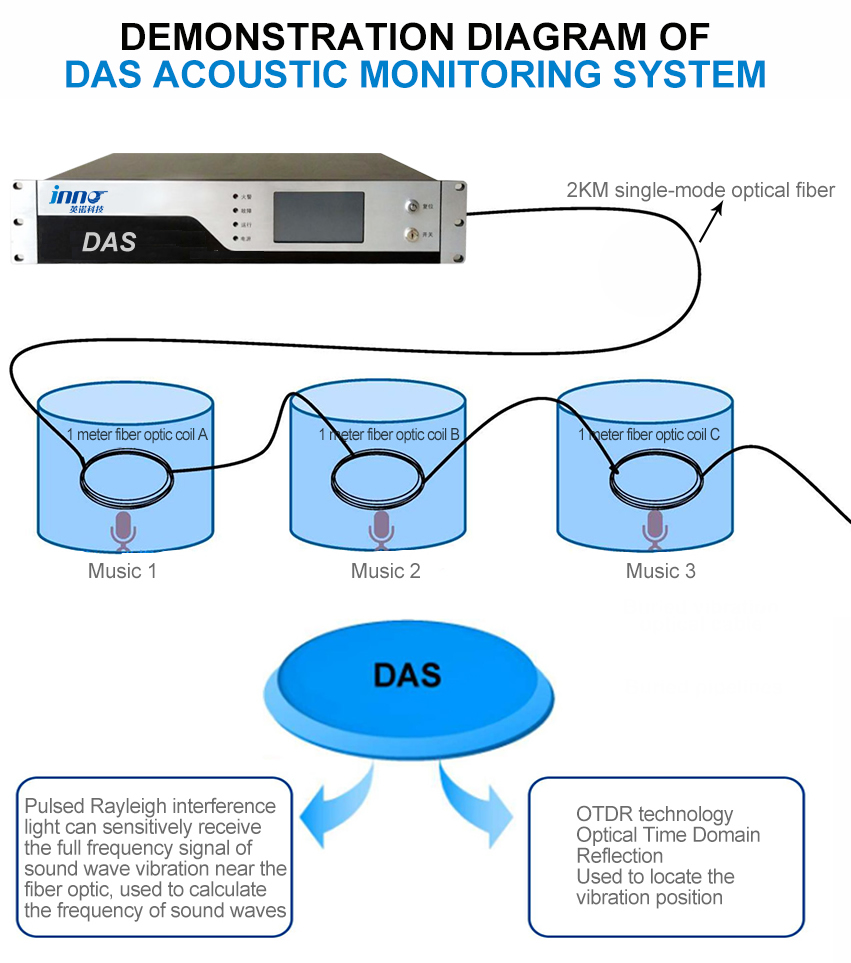
THE (Cảm biến âm thanh phân tán) is an advanced fiber optic sensing technology that converts a standard single-mode optical fiber into an array of thousands of virtual microphones. The system works by injecting short, coherent laser pulses into the fiber and analyzing the phase of the Rayleigh backscattered light returning from every point along the cable.
The Phase-Sensitive OTDR Principle
DAS systems use a technique known as phase-sensitive optical time-domain reflectometry (Φ-OTDR). As the laser pulse travels down the fiber, naturally occurring impurities in the glass scatter a tiny fraction of the light back toward the source. When an acoustic wave or vibration hits the fiber, it causes localized strain that shifts the phase of this backscattered light. By comparing successive phase measurements at each point along the fiber, the DAS interrogator reconstructs a full acoustic waveform — capturing not just whether an event occurred, but the actual sound signature of the event.
Key Capabilities of DAS Technology
MỘT DAS fiber optic sensing system typically offers a frequency response ranging from sub-hertz to several kilohertz, spatial resolution as fine as 1 mét, and sensing distances up to 50–100 km depending on the interrogator model. Because DAS captures true acoustic data, it enables sophisticated signal classification using pattern recognition algorithms. This means the system can distinguish between a person walking along a fence, a vehicle driving on a nearby road, an animal brushing against the cable, and an actual cutting or climbing attempt — significantly reducing false alarm rates.
3. Làm sao DVS (Cảm biến rung phân tán) Tác phẩm

DVS (Cảm biến rung phân tán) is a closely related but technically simpler fiber optic monitoring technology. Like DAS, DVS relies on Rayleigh backscattering within the optical fiber. Tuy nhiên, rather than measuring the precise phase of the returned light to reconstruct acoustic waveforms, DVS primarily analyzes the intensity changes of the backscattered signal.
Intensity-Based Detection Approach
When a vibration event occurs near the cáp cảm biến sợi quang, it alters the interference pattern of the backscattered light, causing fluctuations in signal intensity at the corresponding location. các DVS interrogation unit monitors these intensity variations in real time and identifies the position and magnitude of the disturbance. While DVS does not capture the full acoustic waveform, it reliably detects the presence, vị trí, and relative strength of vibration events.
Practical Performance of DVS Systems
Khác biệt DVS perimeter detection system provides spatial resolution in the range of 5 ĐẾN 10 meters with a sensing range of up to 40–60 km. The frequency response is generally narrower than DAS, often limited to several hundred hertz. DVS is highly effective for applications where the primary requirement is knowing that a disturbance occurred and where it happened, without the need for detailed acoustic classification. This makes it a practical, lower-cost alternative for many perimeter security scenarios.
4. Sự khác biệt chính giữa DAS và DVS

While DAS and DVS are both distributed fiber optic sensing technologies that use the same basic optical fiber infrastructure, they differ significantly in measurement approach, data richness, and suitability for various applications. Understanding these differences is essential for selecting the right technology for a given security requirement.
Phương pháp đo
The most fundamental difference lies in what each system measures. DAS measures the phase of the Rayleigh backscattered light, providing a quantitative, linear representation of the acoustic field along the fiber. DVS đo cường độ của ánh sáng tán xạ ngược, cung cấp dấu hiệu định tính về hoạt động rung. Về mặt thực tế, DAS cung cấp cho bạn dạng sóng để bạn có thể nghe và phân tích, trong khi DVS đưa ra cảnh báo cho bạn rằng có điều gì đó đã xảy ra.
Độ nhạy và độ phân giải
Hệ thống DAS thường cung cấp độ nhạy cao hơn và độ phân giải không gian tốt hơn DVS. Hiệu suất cao máy thẩm vấn DAS có thể đạt được độ phân giải không gian 1 mét và phát hiện các nhiễu loạn ở cấp độ biến dạng nano. Hệ thống DVS thường hoạt động với độ phân giải 5–10 mét và yêu cầu nhiễu lớn hơn một chút để kích hoạt phát hiện đáng tin cậy. Dành cho các ứng dụng yêu cầu bản địa hóa sự kiện chính xác và khả năng phân loại tín hiệu có biên độ thấp, DAS là sự lựa chọn ưu việt.
Phân loại sự kiện và giảm cảnh báo sai
Because DAS captures true acoustic data, nó hỗ trợ nâng cao thuật toán phân loại sự kiện that can differentiate between threat and non-threat events. This is a major advantage in environments with high background noise or frequent benign activities near the sensing cable. DVS, with its intensity-based approach, has more limited classification capability and may produce higher false alarm rates in complex environments.
System Cost and Complexity
DAS interrogation units are more complex and typically more expensive than DVS units. The processing requirements for phase demodulation and waveform analysis are also higher. For projects with tight budgets or straightforward detection requirements, Một DVS alarm system offers a compelling balance of performance and cost efficiency.
Frequency Response and Data Output
Hệ thống DAS cung cấp đáp ứng tần số băng thông rộng, thường xuyên từ bên dưới 1 Hz lên tới 10 kHz trở lên, cho phép phát hiện nhiều hiện tượng âm thanh. Đáp ứng tần số DVS hẹp hơn, thường đủ để phát hiện các rung động cơ học nhưng không phù hợp để ghi lại các dấu hiệu âm thanh chi tiết. Dữ liệu đầu ra từ DAS lớn hơn đáng kể, yêu cầu nhiều băng thông lưu trữ và xử lý hơn.
5. Ứng dụng điển hình của Hệ thống báo động sợi quang
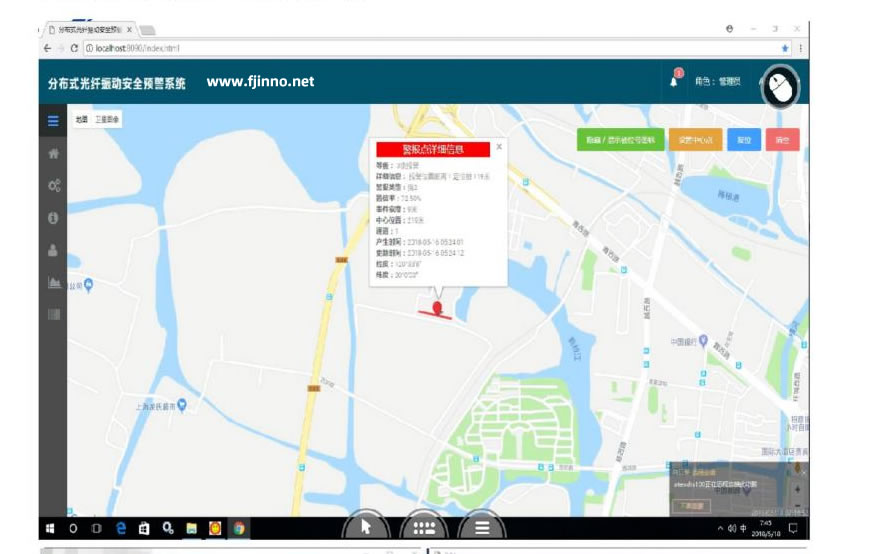
Cả công nghệ DAS và DVS đều được triển khai trên nhiều ứng dụng giám sát và bảo mật. Việc lựa chọn giữa chúng thường phụ thuộc vào yêu cầu cụ thể của từng trường hợp sử dụng.
Bảo mật ngoại vi và phát hiện xâm nhập
Hệ thống an ninh chu vi sợi quang được sử dụng rộng rãi để bảo vệ căn cứ quân sự, cơ sở chính phủ, sân bay, trung tâm dữ liệu, nhà tù, và các khu công nghiệp. The sensing cable is typically mounted on or buried alongside the perimeter fence. When someone attempts to climb, cut, or breach the fence, the resulting vibrations are immediately detected and located. DAS-based systems excel in this application due to their ability to classify the type of intrusion activity, trong khi DVS fence-mounted sensors provide reliable basic detection at lower cost.
Pipeline and Utility Monitoring
Fiber optic pipeline monitoring systems use DAS or DVS cables installed alongside oil, khí đốt, and water pipelines to detect third-party interference, unauthorized excavation, rò rỉ, and equipment impacts. DAS is particularly effective here because it can identify the acoustic signature of different types of machinery and activities near the pipeline right-of-way.
Border and Critical Infrastructure Protection
Long-range hệ thống báo động cáp quang phân tán được triển khai dọc theo biên giới quốc gia, tuyến đường sắt, hành lang đường cao tốc, và xung quanh các nhà máy điện, trạm biến áp. Khả năng giám sát chu vi hàng chục km từ một điểm mà không có thiết bị điện tử hoạt động tại hiện trường khiến công nghệ cáp quang trở nên phù hợp đặc biệt để bảo vệ cơ sở hạ tầng mở rộng và từ xa.
Bảo mật cáp viễn thông
Cáp quang tạo thành một phần của mạng viễn thông có thể được giám sát bằng DAS hoặc DVS để phát hiện giả mạo, nỗ lực truy cập trái phép, hoặc thiệt hại do tai nạn từ các hoạt động xây dựng gần đó. Ứng dụng này tận dụng hiện có hạ tầng cáp quang mà không cần thêm cáp cảm biến.
6. Cách chọn giữa DAS và DVS
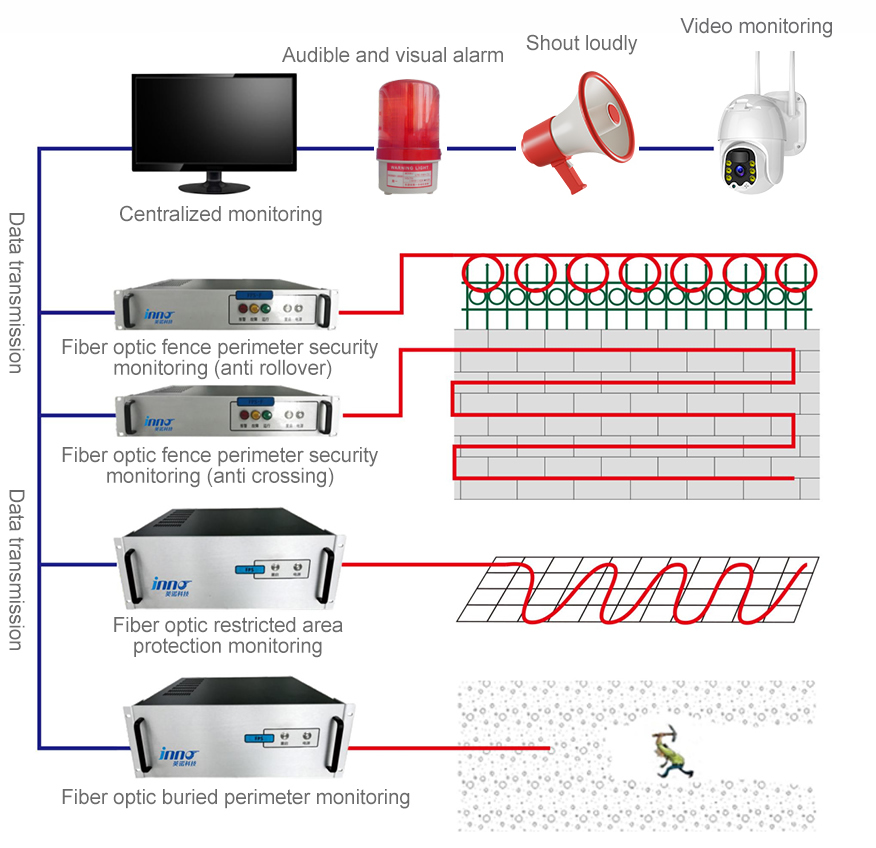
Lựa chọn công nghệ phù hợp cho một hệ thống báo động cáp quang requires careful evaluation of several factors related to the project environment, performance expectations, và hạn chế về ngân sách.
Define Your Detection Requirements
Start by determining what types of events you need to detect and whether event classification is important. If you need to distinguish between different intrusion types — such as walking, đào bới, chuyển động của xe, and cable cutting — a DAS-based alarm system with acoustic classification capability is the appropriate choice. If your primary need is simple zone-based alerting when any significant vibration occurs, Một hệ thống DVS will meet the requirement effectively.
Consider the Operating Environment
In environments with high background noise from traffic, industrial machinery, or weather, DAS provides better false alarm filtering due to its waveform-level analysis. In quieter, more controlled environments such as fenced compounds or indoor facilities, DVS can perform well without the added complexity of acoustic processing.
Evaluate Distance and Resolution Needs
For very long monitoring distances exceeding 50 km or requirements for meter-level spatial precision, DAS is generally the better-suited technology. For shorter perimeters under 20 km where 5–10 meter localization accuracy is acceptable, DVS offers a practical and economical solution.
Budget and Total Cost of Ownership
The interrogation unit is the most significant cost component. DAS units carry a higher upfront price, but may reduce long-term operational costs through fewer false alarms and lower verification workload. DVS units are less expensive initially and simpler to maintain, making them attractive for budget-sensitive projects.
7. Cân nhắc cài đặt và triển khai
Proper installation is critical to the performance of any distributed fiber optic alarm system. Several key factors should be addressed during the planning and deployment phases.
Cable Selection and Routing
Both DAS and DVS systems can operate with standard single-mode cáp quang, although purpose-designed sensing cables with enhanced sensitivity coatings or ruggedized jackets are recommended for outdoor and buried installations. The cable route should be planned to maintain good acoustic coupling with the ground or structure being monitored while avoiding excessive exposure to environmental noise sources.
Mounting Methods
Đối với các ứng dụng gắn trên hàng rào, cái cáp cảm biến sợi quang is typically attached directly to the fence fabric using cable ties or specialized clips at regular intervals. For buried applications, cáp được đặt trên nền cát ở độ sâu 20–40 cm để đảm bảo khả năng nối đất đáng tin cậy. Trong một số ứng dụng, cáp được lắp đặt bên trong ống dẫn hoặc cơ sở hạ tầng ống dẫn hiện có.
Vị trí và kết nối của bộ dò tín hiệu
các Đơn vị thẩm vấn DAS hoặc DVS được cài đặt một cách an toàn, vị trí kiểm soát khí hậu ở một đầu của tuyến cáp quang. Nó kết nối với mạng giám sát thông qua Ethernet hoặc đường truyền cáp quang. Nguồn điện, bảo vệ môi trường, và an ninh vật lý của địa điểm thẩm vấn cần được lên kế hoạch cẩn thận.
Cấu hình vùng và ngưỡng cảnh báo
Sau khi cài đặt, sợi cảm biến được chia thành các vùng báo động hợp lý, mỗi cái đều có ngưỡng phát hiện và cài đặt độ nhạy có thể cấu hình độc lập. Điều này cho phép người vận hành điều chỉnh hệ thống phù hợp với điều kiện địa phương, giảm báo động phiền toái ở khu vực ồn ào, and increase sensitivity in critical areas. Proper zone tuning during commissioning is one of the most important steps in achieving reliable system performance.
8. Ưu điểm và hạn chế của hệ thống báo động sợi quang

Thuận lợi
Fiber optic alarm systems offer several compelling advantages over conventional electronic security technologies. The sensing cable is completely passive, requiring no electrical power in the field, which eliminates the need for field power supplies, pin, or solar panels. The fiber is immune to electromagnetic interference, making it suitable for deployment near high-voltage power lines, trạm biến áp, and heavy industrial environments. A single fiber cable can monitor extremely long distances — up to 100 km — from one central interrogation point, dramatically reducing the amount of equipment and infrastructure compared to point-sensor solutions. The system provides continuous, distributed detection with no gaps between sensors, and it delivers real-time localization of events with meter-level accuracy in DAS systems.
Hạn chế
No technology is without limitations. Fiber optic sensing cables can be sensitive to environmental factors such as wind, heavy rain, and temperature fluctuations, which may increase background noise levels and require careful threshold tuning. The interrogation units represent a significant single point of investment, and spares planning should be considered for critical installations. Fiber splices and connectors along the cable route can introduce signal loss and should be minimized. Ngoài ra, proper installation and commissioning require specialized knowledge, and ongoing performance depends on maintaining cable integrity over time.
9. Câu hỏi thường gặp (Câu hỏi thường gặp)
Q1: What is the maximum monitoring distance of a fiber optic alarm system?
Hầu hết các hệ thống DAS và DVS hiện đại đều có thể giám sát cáp quang ở khoảng cách 40 ĐẾN 100 km từ một đơn vị thẩm vấn. Phạm vi chính xác phụ thuộc vào mô hình bộ dò tín hiệu, chất lượng sợi, và độ phân giải không gian cần thiết. Đối với chu vi rất dài, nhiều bộ thẩm vấn có thể được triển khai để mở rộng phạm vi phủ sóng tổng thể.
Q2: Hệ thống báo động cáp quang có thể hoạt động với cáp quang hiện có không?
Đúng. Cả hai công nghệ DAS và DVS đều có thể hoạt động trên cáp quang đơn mode tiêu chuẩn, bao gồm cả sợi dự phòng trong cơ sở hạ tầng cáp viễn thông hoặc tiện ích hiện có. Tuy nhiên, Cáp cảm biến được thiết kế có mục đích có thể mang lại độ nhạy và độ tin cậy tốt hơn cho các ứng dụng bảo mật chuyên dụng.
Q3: Hệ thống DAS giảm cảnh báo sai như thế nào?
DAS ghi lại toàn bộ dạng sóng âm thanh của các sự kiện được phát hiện, cho phép hệ thống áp dụng các thuật toán phân loại tín hiệu. These algorithms analyze the frequency content, khoảng thời gian, and pattern of each event to differentiate genuine intrusion attempts from benign activities such as animal movement, gió, and vehicle traffic.
Q4: Is DVS less accurate than DAS?
DVS typically offers coarser spatial resolution than DAS — around 5 ĐẾN 10 meters compared to 1 meter for DAS. Tuy nhiên, DVS is highly reliable for detecting and locating vibration events. The trade-off is in classification depth rather than detection reliability. For many applications, DVS accuracy is fully adequate.
Q5: What types of threats can a fiber optic perimeter alarm detect?
Fiber optic alarm systems can detect a wide range of threats including fence climbing, fence cutting, digging or tunneling near the cable, walking or running along the perimeter, vehicle approach and impact, and cable tampering. DAS systems can further classify these events by their acoustic signature.
Q6: Do fiber optic alarm systems require power along the sensing cable?
KHÔNG. The fiber optic sensing cable is entirely passive and requires no electrical power along its length. All active electronics are contained in the interrogation unit at the control center. This is one of the most significant advantages of distributed fiber optic sensing over conventional electronic alarm systems.
Q7: How are fiber optic alarm systems affected by weather?
Strong wind, heavy rain, and hail can generate vibrations on exposed fence-mounted cables, potentially increasing background noise levels. Modern DAS and DVS systems use adaptive filtering and threshold adjustment to minimize weather-related false alarms. Buried cable installations are largely unaffected by surface weather conditions.
Q8: Can DAS and DVS systems be integrated with CCTV and access control?
Đúng. Most fiber optic alarm systems provide standard output interfaces and support integration with video management systems, Nền tảng SCADA, access control systems, and centralized security management software. Khi báo động được kích hoạt, the system can automatically direct PTZ cameras to the event location for visual verification.
Q9: What maintenance does a fiber optic alarm system require?
Fiber optic alarm systems require relatively low maintenance. Routine tasks include periodic inspection of the cable route for physical damage, checking fiber splice and connector quality using an OTDR, verifying interrogator performance, and reviewing alarm thresholds based on seasonal environmental changes.
Q10: How long does a fiber optic sensing cable last in outdoor environments?
High-quality outdoor-rated fiber optic cables with appropriate jacket materials are designed for service lives of 20 ĐẾN 30 years or more. The actual lifespan depends on environmental conditions, chất lượng lắp đặt, and protection from mechanical damage. UV-resistant and armored cable options are available for harsh environments.
Tuyên bố từ chối trách nhiệm: Thông tin được cung cấp trong bài viết này chỉ nhằm mục đích thông tin và giáo dục chung. Mặc dù mọi nỗ lực đã được thực hiện để đảm bảo tính chính xác, FJINNO (www.fjinno.net) không đưa ra bảo đảm hoặc tuyên bố nào về tính đầy đủ, độ tin cậy, or suitability of the content for any particular application. Thông số sản phẩm, performance parameters, and technical details may vary depending on specific models, cấu hình, và điều kiện hoạt động. Readers are advised to consult directly with qualified engineers and system integrators before making any purchasing or deployment decisions. FJINNO shall not be held liable for any loss, hư hại, or consequence arising from the use of or reliance on the information contained herein.

Cảm biến nhiệt độ sợi quang, Hệ thống giám sát thông minh, Nhà sản xuất cáp quang phân phối tại Trung Quốc
 |
 |
 |