 INNO fiber optik sıcaklık sensörleri ,sıcaklık izleme sistemleri.
- Floresan fiber optik termometreler offer complete immunity to electromagnetic interference through pure optical signal transmission
- Intrinsically safe and explosion-proof design with no electrical spark risk makes them ideal for hazardous environments
- Ölçüm özellikleri: ±1°C doğruluk, <1 ikinci tepki süresi, -40°C ila +260°C aralığı
- Ultra-small 600-micron diameter probes with customizable lengths fit into confined spaces
- Tek verici desteği 1-64 channels with fiber lengths from 0-80 metre
- Perfect electrical isolation enables direct use in high-voltage equipment up to hundreds of kV
- Long-term stability with zero drift eliminates calibration requirements over decades of service
- Proven applications in power transformers, şalt sistemi, rotating machinery, tıbbi MR, mikrodalga ekipmanları, and semiconductor IGBT modules
- Superior alternative to FBG, sapphire, GaAs fiber sensors, and traditional thermocouples/RTDs
- CE-EMC, CE-LVD, and RoHS certified with customizable configurations available
İçindekiler
- What Is a Fluorescent Fiber Optic Thermometer and Why Does It Work in High EMI Environments?
- How Does a Fluorescence-Based Optical Temperature Sensor Differ from Traditional Thermocouples and RTDs?
- What Is the Working Principle of Fiber Fluorescence Temperature Measurement Technology?
- Why Are FFOS Fluorescent Fiber Optic Temperature Sensors Intrinsically Safe and Explosion-Proof?
- How Does Fluorescence Lifetime Temperature Measurement Achieve Self-Calibration and Zero Drift?
- Fluorescent Fiber Optic Thermometry vs FBG: Which Is Better for Transformer Winding Monitoring?
- Fluorescence Lifetime Sensors vs Sapphire Fiber Optic Thermometers: Which Has Superior EMI Immunity?
- Fluorescent Optical Temperature Sensors vs GaAs Fiber Thermometers: Why Do FFOS Systems Last Longer?
- FOS Fiber Optic Temperature Sensors vs Distributed Temperature Sensing (DTS): How to Choose for Point Measurement?
- Why Must Dry-Type Transformer Winding Hot Spot Monitoring Use Fluorescent Fiber Optic Temperature Systems?
- Oil-Immersed Transformer Winding Temperature Monitoring: How Does Fiber Fluorescence Thermometry Enable Multi-Point Measurement?
- Switchgear Cable Terminal Temperature Control: How Do Optical Fiber Fluorescence Sensors Solve Overheating Problems?
- Why Are Fluorescence Lifetime Temperature Sensors the Preferred Choice for Ring Main Unit Cable Joint Monitoring?
- Water Turbine Stator Winding Temperature Monitoring: How Do Fluorescent Fiber Optic Sensors Handle High Humidity?
- Motor Rotor Temperature Measurement Challenges: How to Use FFOS in Rotating Components?
- Microwave Digestion Instrument Temperature Control: Why Must Fiber Optic Thermometers Replace Metal Sensors?
- Industrial Microwave Equipment Heating Process Monitoring: How Do Fluorescent Fiber Temperature Devices Resist Microwave Interference?
- RF Hyperthermia Device Temperature Control: How Do Fluorescent Optical Thermometers Achieve Real-Time Precision Monitoring?
- MRI Equipment Temperature Measurement: Why Are Fluorescent Fiber Optic Sensors the Only Non-Magnetic Solution?
- HIFU High-Intensity Focused Ultrasound Treatment: How Do FFOS Temperature Sensors Ensure Patient Safety?
- Semiconductor Manufacturing Equipment: How Do Fluorescence-Based Fiber Thermometry Systems Handle Plasma Environments?
- IGBT Module Temperature Monitoring: Can Fiber Optic Temperature Sensors Replace Traditional NTC Thermistors?
- Electro-Explosive Device (EED) Sıcaklık İzleme: Why Must Intrinsically Safe Fluorescent Fiber Systems Be Used?
- How to Select the Right Channel Configuration for Fluorescent Fiber Optic Temperature Transmitters: 1 ile 64 Kanallar?
- Fiber Length Selection 0-80 Metre: What Is the Optimal Length for Different Applications?
- Fluorescent Fiber Optic Temperature Sensor Probe Length Customization: How Long Should Probes Be for Different Installations?
- What Communication Protocols Do Fluorescent Fiber Thermometry Systems Support for DCS/SCADA Integration?
- Why Can Fluorescent Optical Thermometers Achieve ±1°C Accuracy and <1 Second Response Time?
- 600-Micron Ultra-Thin Probes: What Are the Miniaturization Advantages of FFOS Temperature Sensors?
- What International Standards and Certifications Do Fluorescent Fiber Optic Thermometry Systems Meet: CE-EMC, CE-LVD, RoHS Explained?
- Teknoloji Karşılaştırması: Fluorescent vs FBG vs Sapphire vs GaAs Fiber Optic Temperature Sensors
- 500kV Substation Main Transformer Winding Temperature Monitoring Case: How to Deploy a Fluorescent Fiber System?
- Hospital MRI Equipment Temperature Management Case: How Do Fluorescent Fiber Sensors Solve Magnetic Interference?
- Semiconductor Plant IGBT Module Temperature Measurement Case: How Do FOS Sensors Replace Conventional Solutions?
- How to Choose the Right Fluorescent Fiber Optic Temperature Sensor for Your Application: Key Selection Factors?
- Global Top 10 Fluorescent Fiber Optic Thermometer Manufacturers: Technology and Product Comparison
- Why Is FJINNO the Best Supplier of Fluorescence-Based Optical Temperature Sensors?
- Fluorescent Fiber Optic Thermometry System FAQ: 15 Most Important Technical Questions
- How to Obtain Customized Fluorescent Fiber Optic Temperature Solutions and Professional Technical Support?
1. Nedir Floresan Fiber Optik Termometre and Why Does It Work in High EMI Environments?

A floresan fiber optik termometre is an advanced temperature measurement device that utilizes the temperature-dependent fluorescence lifetime of rare-earth materials to determine temperature. Unlike conventional sensors, fiber optik sıcaklık sensörleri transmit pure optical signals through glass fibers, onları elektromanyetik girişime karşı tamamen bağışık hale getirir (EMI), radyo frekansı girişimi (RFI), and microwave radiation.
Temel Teknoloji Avantajları
The HENDEK (Floresan Fiber Optik Sensör) technology works by exciting a fluorescent material at the probe tip with a pulsed light source. The material emits fluorescence that decays at a rate directly proportional to temperature. Since this floresans ömür boyu sıcaklık ölçümü is purely optical and contains no metallic components, it functions flawlessly in environments where traditional sensors fail—including high-voltage substations, mikrodalga ekipmanları, MRI makineleri, and plasma processing chambers.
Anahtar Uygulamalar
Floresan fiber optik sıcaklık sensörleri excel in power transformers (both dry-type and oil-immersed), switchgear cable terminals, rotating machinery (motors and turbines), tıbbi ekipman (RF/microwave hyperthermia, MR), industrial microwave systems, semiconductor manufacturing, and IGBT power modules where EMI immunity and electrical isolation are critical.
2. How Does a Fluorescence-Based Optical Temperature Sensor Differ from Traditional Thermocouples and RTDs?

Traditional thermocouples and resistance temperature detectors (RTDs like PT100) rely on electrical signals that are inherently susceptible to electromagnetic interference. Tersine, fiber fluorescence temperature measurement systems use light signals that remain unaffected by external electrical or magnetic fields.
Fundamental Differences
Optical temperature measurement with fluorescent fibers eliminates common problems found in conventional sensors: signal degradation in long cable runs, ground loop issues, electrical noise pickup, and the need for expensive shielded cables. The dielectric nature of floresan fiber optik termometreler allows direct installation in high-voltage equipment without safety concerns or signal corruption.
Uzun Vadeli İstikrar
While thermocouples drift over time and RTDs suffer from self-heating and insulation degradation, fluorescence lifetime temperature sensors maintain accuracy indefinitely because the measurement principle is based on an intrinsic material property that doesn’t change with age.
3. What Is the Working Principle of Fiber Fluorescence Temperature Measurement Teknoloji?
The fluorescence decay thermometry principle involves coating the fiber tip with rare-earth phosphors (typically europium or terbium complexes). When excited by a brief LED pulse, these materials emit fluorescence that decays exponentially. The decay time constant (floresans ömrü) decreases predictably as temperature increases.
Ölçüm Süreci
The fluorescent fiber optic temperature system transmitter sends excitation pulses through the fiber and precisely measures the time-domain characteristics of the returning fluorescence signal. Advanced algorithms calculate temperature from this lifetime measurement, which is inherently self-referencing and immune to light intensity variations, elyaf bükülme kayıpları, veya konnektör bozulması.
4. Why Are FFOS Floresan Fiber Optik Sıcaklık Sensörleri Intrinsically Safe and Explosion-Proof?

Fluorescent optical temperature sensors contain zero electrical energy at the measurement point. The probe consists entirely of glass fiber and fluorescent coating—no batteries, no electrical circuits, no metal conductors. This makes them incapable of generating sparks or heat that could ignite flammable atmospheres.
Hazardous Area Applications
In oil refineries, kimyasal tesisler, gas processing facilities, and transformer installations containing insulating oil, intrinsically safe fiber optic thermometers provide the only viable solution for accurate temperature monitoring without explosion risk, even in Zone 0/Class I Division 1 yerler.
5. How Does Fluorescence Lifetime Temperature Measurement Achieve Self-Calibration and Zero Drift?
The measurement principle of fluorescence lifetime thermometry is based on time-domain measurements rather than intensity measurements. Since the fluorescence decay rate depends solely on the intrinsic properties of the phosphor material and temperature, it remains constant regardless of light source aging, fiber iletim kayıpları, or optical component degradation.
Long-Term Accuracy
This self-calibrating nature means fiber optik floresans sensörleri require no periodic recalibration over their 20-30 year operational lifetime. The ±1°C accuracy specification remains valid indefinitely, unlike thermocouples that require annual recertification in critical applications.
6. Fluorescent Fiber Optic Thermometry vs FBG: Which Is Better for Transformer Winding Monitoring?

Fiber Bragg Izgara (FBG) sensors measure temperature through wavelength shifts in reflected light. While FBGs offer distributed sensing capabilities, floresan fiber optik sıcaklık sensörleri provide superior performance for discrete point measurements in transformer windings.
Critical Advantages
FFOS systems demonstrate better long-term stability since fluorescence lifetime doesn’t drift with mechanical stress or fiber aging that affects FBG wavelength accuracy. The simpler interrogation equipment for fiber fluorescence thermometry also reduces system cost when monitoring 16-64 points in large power transformers, making it more economical than FBG arrays.
7. Fluorescence Lifetime Sensors vs Sapphire Fiber Optic Thermometers: Which Has Superior EMI Immunity?
Sapphire fiber sensors measure temperature through blackbody radiation or absorption edge shifts. While sapphire handles higher temperatures, floresan fiber sıcaklık sensörleri offer identical EMI immunity at lower cost and with better accuracy in the -40°C to +260°C range typical of electrical equipment.
Performans Karşılaştırması
Both technologies are completely non-metallic, Ancak fluorescence-based optical thermometers achieve faster response times (<1 second vs 2-5 seconds for sapphire) and work with standard silica fibers that are more flexible and easier to install than rigid sapphire crystals.
8. Fluorescent Optical Temperature Sensors vs GaAs Fiber Thermometers: Why Do FFOS Systems Last Longer?
Galyum arsenit (GaA'lar) sensors use semiconductor absorption edge measurements that shift with temperature. Fakat, GaAs crystals are susceptible to radiation damage and long-term degradation from moisture and thermal cycling.
Reliability Factors
Floresan fiber optik termometreler using stable rare-earth phosphors demonstrate superior longevity because the fluorescent coating is chemically inert and radiation-resistant. Field installations show FFOS temperature sensors maintaining accuracy over 15+ years in harsh environments where GaAs sensors require replacement every 3-5 yıllar.
9. FOS Fiber Optic Temperature Sensors vs Distributed Temperature Sensing (DTS): How to Choose for Point Measurement?
Distributed temperature sensing using Raman scattering provides temperature profiles along kilometers of fiber but with limited spatial resolution (tipik olarak 1 metre) and slower update rates (10-60 saniye).
Point Measurement Advantages
For applications requiring precise monitoring at specific locations—such as transformer hot spots, kablo bağlantıları, or bearing temperatures—fluorescent fiber optic temperature systems deliver superior performance with exact placement, ±1°C doğruluk, and sub-second response times. The 1-64 channel architecture allows cost-effective multi-point monitoring without the complexity of DTS interrogators.
10. Why Must Dry-Type Transformer Winding Hot Spot Monitoring Use Fluorescent Fiber Optic Temperature Systems?
Dry-type transformers operate in air without oil cooling, making internal temperatures higher and more critical to monitor. The high-voltage, high-EMI environment inside energized windings makes conventional sensors unusable.
Transformer Winding Application
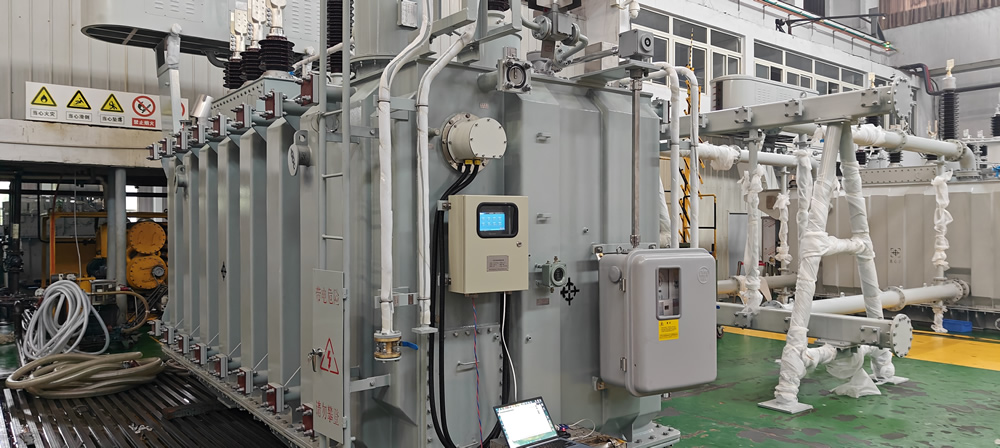
Floresan fiber optik termometre enables direct embedding of 600-micron diameter probes into winding hot spots without electrical safety concerns. The complete electrical isolation prevents current leakage paths, while EMI immunity ensures accurate readings despite intense electromagnetic fields. Multiple probes connected to a single fiber optik sıcaklık verici provide comprehensive thermal mapping critical for preventing insulation failure.
11. Oil-Immersed Transformer Winding Temperature Monitoring: How Does Fiber Fluorescence Thermometry Enable Multi-Point Measurement?

Oil-immersed power transformers require monitoring both winding hot spots and oil temperature at multiple locations. Geleneksel sargı sıcaklığı göstergeleri (WTI) only estimate winding temperature from top-oil readings.
Direct Winding Measurement
Floresan fiber optik sensörler enable direct insertion into windings during manufacturing, providing true hot-spot measurement. Tek bir 32 or 64-channel fiber fluorescence temperature measurement system can monitor all phases and tap positions simultaneously, with fiber lengths up to 80 meters reaching from the control room to transformer internals without signal degradation.
12. Switchgear Cable Terminal Temperature Control: How Do Optical Fiber Fluorescence Sensors Solve Overheating Problems?

Cable terminations in medium and high-voltage switchgear are prone to overheating from poor connections, oksidasyon, veya aşırı yükleme. Traditional monitoring methods cannot access these confined, high-voltage spaces safely.
Compact Installation
The 600-micron probe diameter of FFOS temperature sensors allows installation directly onto cable lugs and bus bar connections where space is minimal. The dielectric fiber passes through insulating barriers without creating tracking paths, while the high-voltage isolation eliminates ground potential differences that corrupt thermocouple signals in switchgear applications.
13. Why Are Fluorescence Lifetime Temperature Sensors the Preferred Choice for Ring Main Unit Cable Joint Monitoring?
Ring main units (RMU'lar) form critical nodes in distribution networks where multiple cables interconnect. Joint failures cause major outages, yet these compact units provide little space for conventional sensors.
Reliability Enhancement
Fluorescent optical thermometers integrate seamlessly into RMU designs with minimal space requirements. The intrinsically safe nature allows installation during commissioning without special procedures, while the multi-channel capability lets a single transmitter monitor all cable joints in the unit for comprehensive thermal protection.
14. Water Turbine Stator Winding Temperature Monitoring: How Do Fluorescent Fiber Optic Sensors Handle High Humidity?
Hydroelectric generators operate in extremely humid environments where condensation regularly occurs. This moisture causes insulation resistance degradation in conventional sensors, leading to measurement errors and safety hazards.
Moisture Immunity
Tamamen dielektrik yapı fiber optik floresans sensörleri eliminates moisture-related problems entirely. Water cannot affect optical signal transmission or create leakage paths. The hermetically sealed fluorescent probe tip maintains accuracy even when fully submerged, yapma FFOS systems ideal for generator stator monitoring in hydro plants.
15. Motor Rotor Temperature Measurement Challenges: How to Use FFOS in Rotating Components?
Measuring rotor temperature in high-speed motors presents unique challenges: the sensor must rotate with the shaft while transmitting data to stationary equipment, all without electrical contacts that wear and create noise.
Rotating Machinery Solutions
Floresan fiber optik sıcaklık sensörleri enable non-contact signal transmission through rotary fiber optic joints or air gaps using specialized couplers. The lightweight fiber adds negligible mass to the rotor, while the optical signal transmission eliminates slip ring maintenance and electrical noise common with wireless telemetry systems.
16. Microwave Digestion Instrument Temperature Control: Why Must Fiber Optic Thermometers Replace Metal Sensors?
Microwave digestion vessels use intense microwave fields to rapidly heat acid solutions for sample preparation. Any metallic sensor creates arcing, vessel damage, and measurement failure.
Microwave Compatibility
Floresan fiber sıcaklık sensörleri are completely microwave-transparent, allowing direct immersion in digestion vessels without affecting the heating field or risking damage. The ±1°C accuracy and <1 second response time enable precise temperature control required for reproducible digestion protocols.
17. Industrial Microwave Equipment Heating Process Monitoring: How Do Fluorescent Fiber Temperature Devices Resist Microwave Interference?
Industrial microwave systems for rubber vulcanization, gıda işleme, and material sintering generate kilowatt-level fields that completely overwhelm conventional sensor signals.
Proses Kontrolü
Fiber optic fluorescence thermometry provides the only reliable measurement method in these applications. The optical signal remains unaffected by any level of microwave power, enabling accurate feedback for automated process control. Multi-point measurement using 8-16 channel systems maps temperature distribution across large processing chambers.
18. RF Hyperthermia Device Temperature Control: How Do Fluorescent Optical Thermometers Achieve Real-Time Precision Monitoring?
Radio frequency hyperthermia cancer treatment requires precise tissue temperature control between 41-45°C. Any metallic sensor interferes with the RF field distribution and creates dangerous hot spots.
Medical Safety
FFOS fiber optic temperature sensors with 600-micron probes insert into catheters for direct tumor temperature measurement without field perturbation. The sub-second response time enables real-time feedback control, while the biocompatible construction and complete electrical isolation ensure patient safety during treatment.
19. MRI Equipment Temperature Monitoring: Why Are Fluorescent Fiber Optic Sensors the Only Non-Magnetic Solution?
Magnetic resonance imaging systems use powerful magnetic fields (1.5-7 Tesla) that prohibit any ferromagnetic materials within the bore. Even “manyetik olmayan” stainless steel thermocouples contain trace iron that causes image artifacts and safety hazards.
MRI Uyumluluğu
Fluorescent fiber thermometers contain zero magnetic materials—only glass fiber and rare-earth phosphors. This makes them completely MRI-compatible for monitoring gradient coil temperatures, patient warming systems, and cryogenic cooling circuits without affecting image quality or experiencing forces in the magnetic field.
20. HIFU High-Intensity Focused Ultrasound Treatment: How Do FFOS Temperature Sensors Ensure Patient Safety?
High-Intensity Focused Ultrasound (HIFU) therapy delivers precise thermal ablation to tumors. Treatment requires real-time temperature monitoring to prevent damage to surrounding healthy tissue.
Ultrasound Transparency
The small 600-micron diameter of floresan fiber optik sensörler minimizes ultrasound reflection and beam distortion. The flexible fiber allows positioning in tissue through minimally invasive insertion, providing accurate temperature feedback during ablation without interfering with ultrasound focusing or creating artifacts in ultrasound imaging guidance.
21. Semiconductor Manufacturing Equipment: How Do Fluorescence-Based Fiber Thermometry Systems Handle Plasma Environments?
Plasma etching and deposition chambers subject measurement sensors to reactive ions, radicals, and intense electromagnetic fields at radio frequencies.
Plasma Resistance
Fluorescent optical temperature sensors withstand these harsh conditions through chemically resistant coatings on the probe tip and complete immunity to RF interference. Direct wafer temperature measurement improves process control compared to indirect methods, while the multi-channel capability monitors multiple zones in cluster tools using a single transmitter.
22. IGBT Module Temperature Monitoring: Can Fiber Optic Temperature Sensors Replace Traditional NTC Thermistors?
Insulated Gate Bipolar Transistor (IGBT) power modules in electric vehicles, rüzgar türbinleri, and industrial drives require accurate junction temperature monitoring for protection and efficiency optimization.
Güç Elektroniği Uygulamaları
FFOS temperature sensors gömülü NTC termistörlerine göre önemli avantajlar sunar: termal geçici olaylara daha hızlı yanıt (<1 second vs 5-10 saniye), anahtarlama devrelerinde yüksek dv/dt gürültüsüne karşı bağışıklık, ve ayrı problar kullanarak bir modül içindeki birden fazla konumu ölçebilme yeteneği. Elektrik izolasyonu, çok modüllü sistemlerde topraklama döngüsü sorunlarını önler.
23. Electro-Explosive Device (EED) Sıcaklık İzleme: Why Must Intrinsically Safe Fluorescent Fiber Systems Be Used?
Havacılıkta kullanılan elektro-patlayıcı cihazlar, savunma, ve madencilik uygulamaları, erken başlatmaya neden olabilecek kaçak elektrik enerjisine karşı son derece hassastır.
Güvenlik Kritik Ölçümü
Floresan fiber optik termometreler kabul edilebilir tek izleme çözümünü sağlarlar çünkü kesinlikle sıfır elektrik enerjisi sağlarlar; akım kaçağı yoktur, kapasitif bağlantı yok, radyo frekansı emisyonu yok. Bu kendinden güvenlik, depolama sırasında sıcaklığın izlenmesine olanak tanır, ulaşım, ve kazara ateşleme riski olmadan sistem entegrasyonu.
24. How to Select the Right Channel Configuration for Fluorescent Fiber Optic Temperature Transmitters: 1 ile 64 Kanallar?
Sistem mimarisi uygulama gereksinimlerine bağlıdır. Tek kanallı fiber optik sıcaklık vericileri basit izleme görevlerine uygundur, sırasında 8-16 Kanal sistemleri tipik transformatör veya şalt tesisatlarına hizmet eder.
Scalability
Büyük güç transformatörleri, kapsamlı şalt serisi, veya çok bölgeli proses ekipmanlarının avantajları 32 or 64-channel fluorescent fiber optic temperature systems puan başına maliyetleri azaltan. Tüm kanallar ortak uyarma ve işleme elektroniklerini paylaşır, yüksek kanal sayımlı sistemleri ekonomik hale getirmek. Konfigürasyon esnekliği, minimum kanallarla başlamaya ve izleme gereksinimleri arttıkça genişletmeye olanak tanır.
25. Fiber Length Selection 0-80 Metre: What Is the Optimal Length for Different Applications?
Fiber uzunluğu maliyeti ve esnekliği etkiler. Şalt uygulamaları genellikle şunları kullanır: 2-5 meter fibers, trafo izleme gerektirebilirken 15-30 ölçüm noktalarından kontrol odası montaj konumuna kadar ulaşacak metreler.
Uzunlukla İlgili Hususlar
Fluorescence lifetime measurement tamamı boyunca tam doğruluğu korur 0-80 zaman alanı tekniği fiber zayıflamasına karşı bağışık olduğundan metre aralığı. Daha uzun fiberler kurulumda esneklik sağlar ancak minimum bükülme yarıçapına uymak için dikkatli yönlendirme gerektirir (typically 25mm). Özel uzunluklar, ölçüm performansından ödün vermeden her kurulumu optimize eder.
26. Fluorescent Fiber Optic Temperature Sensor Probe Length Customization: How Long Should Probes Be for Different Installations?
Standart prob uzunlukları 10 mm'den 100 mm'ye kadar değişir, ancak özel boyutlar belirli gereksinimleri karşılar. Transformatör sargı kurulumları, bobin bölümlerinin derinliklerine ulaşmak için genellikle 30-50 mm'lik problar kullanır, şalt uygulamaları kablo terminali bağlantısı için yalnızca 10-15 mm'ye ihtiyaç duyabilir.
Özel Mühendislik
Prob çapı sabit kalır 600 microns, but tip configuration, montaj donanımı, ve koruyucu kılıf özelleştirilebilir. FJINNO, optimize etmek için uygulama mühendisliği desteği sağlar fluorescent fiber sensor benzersiz kurulum gereksinimlerine yönelik tasarımlar.
27. What Communication Protocols Do Fluorescent Fiber Thermometry Systems Support for DCS/SCADA Integration?
Modern fiber optik sıcaklık vericileri birden fazla iletişim arayüzü sunar: Endüstriyel PLC'ler için Modbus RTU/TCP, Yardımcı SCADA sistemleri için DNP3, IEC 61850 trafo merkezi otomasyonu için, ve eski sistemler için analog 4-20mA çıkışlar.
Sistem Entegrasyonu
Ethernet connectivity enables direct connection to industrial networks, while isolated RS485 ports prevent ground loops in distributed installations. Configuration software allows setting communication parameters, alarm eşikleri, and data logging without specialized programming.
28. Why Can Fluorescent Optical Thermometers Achieve ±1°C Accuracy and <1 Second Response Time?
The ±1°C accuracy of FFOS sensors derives from precise time-domain measurement electronics and factory calibration across the -40°C to +260°C range. Advanced signal processing algorithms extract fluorescence lifetime from noisy signals with high resolution.
Performance Factors
Response time below 1 second results from the small thermal mass of the 600-micron probe and the inherently fast fluorescence decay (microseconds). Unlike thermocouples where response depends on junction size and immersion, floresan fiber optik termometreler tutarlı sağlamak, fast response across all measurement points.
29. 600-Micron Ultra-Thin Probes: What Are the Miniaturization Advantages of FFOS Temperature Sensors?
The 600-micron (0.6mm) çap, geleneksel sensörlerin imkansız olduğu konumlara (trafo sargıları arasına) kuruluma olanak sağlar, kablo terminallerinin içinde, yarı iletken yüzeyler üzerinde, ve tıbbi kateterlerde.
Kurulumun Avantajları
Küçük çap, hızlı yanıt için termal kütleyi en aza indirir ve ölçüm hatalarına neden olan ısı emici etkileri azaltır. Esnek fiber, dar alanlarda yönlendirmeye olanak tanır, Pürüzsüz cam yüzeyi izolasyona zarar verebilecek keskin kenarları önlerken. Küçük boyutuna rağmen, floresan optik sıcaklık sensörleri tam doğruluğu ve uzun vadeli güvenilirliği koruyun.
30. What International Standards and Certifications Do Fluorescent Fiber Optic Thermometry Systems Meet: CE-EMC, CE-LVD, RoHS Explained?
Kalite fiber optik floresans sıcaklık sistemleri uluslararası güvenlik ve performans standartlarına uygunluğu gösteren kapsamlı sertifikalara sahiptir.
Sertifikasyona Genel Bakış
CE-EMC sertifika, elektromanyetik uyumluluğu doğrular; hem harici parazitlere karşı bağışıklık hem de düşük emisyonlar. CE-LVD (Alçak Gerilim Direktifi) verici ünitesinin elektrik güvenliğini doğrular. RoHS uyumluluk, çevresel sorumluluk açısından tehlikeli madde kısıtlamalarının karşılanmasını sağlar. Ek sertifikalar, Kuzey Amerika pazarları için UL/CSA'yı ve patlayıcı ortamlar için ATEX/IECEx'i içerebilir..
31. Teknoloji Karşılaştırması: Fluorescent vs FBG vs Sapphire vs GaAs Fiber Optic Temperature Sensors
| Parametre | Floresan (HENDEK) | FBG | Sapphire | GaA'lar |
|---|---|---|---|---|
| Ölçüm Prensibi | Fluorescence Lifetime | Bragg Wavelength Shift | Kara Cisim Radyasyonu | Absorption Edge Shift |
| Sıcaklık Aralığı | -40°C ila +260°C | -40°C ila +300°C | -200°C ila +1200°C | -40°C ila +250°C |
| Kesinlik | ±1°C | ±2°C | ±2°C (±5°C yüksek sıcaklık) | ±1,5°C |
| Tepki Süresi | <1 ikinci | <1 ikinci | 2-5 saniye | <1 ikinci |
| Uzun Vadeli İstikrar | Harika (Sıfır Kayma) | İyi (Bazı Stres Etkisi) | İyi | Adil (Zamanla Bozulur) |
| EMI Bağışıklığı | Tamamlamak | Tamamlamak | Tamamlamak | Tamamlamak |
| Elyaf Tipi | Standart Silika | Uzmanlık (FBG yazılı) | Safir Kristal (Rigid) | Standart Silika |
| Multi-Channel Cost | Düşük (Paylaşılan Elektronikler) | Yüksek (Karmaşık Sorgulayıcı) | Orta | Orta |
| En İyi Uygulamalar | Power Equipment, Tıbbi, Mikrodalga | Structural Monitoring | Çok Yüksek Sıcaklık | General Industrial |
32. 500kV Substation Main Transformer Winding Temperature Monitoring Case: How to Deploy a Fluorescent Fiber System?
Büyük bir hizmet şirketi 32 kanallı bir dağıtım sistemi kurdu floresan fiber optik sıcaklık izleme sistemi 500kV/220kV ototransformatörlerinde. Sargı başına sekiz prob (four windings total) kapsamlı sıcak nokta izleme sağlar.
Installation Results
Fabrika sarımı sırasında takılan problar, devreye alma sırasında, soğutma kanalı tıkanıklığını gösteren 15°C'lik bir sıcaklık farkı tespit ettiğinde değerlerini kanıtladı; enerji verilmeden önce tanımlandı ve düzeltildi. Beş yıllık operasyonun ardından, the FFOS sistemi sıfır bakımla ±1°C doğruluğu korur, IEC üzerinden trafo merkezi SCADA ile termal veri entegrasyonunu sağlarken 61850 protokol. Gelişmekte olan sıcak noktaların erken uyarısı iki potansiyel arızayı önledi.
33. Hastane MRI Ekipmanı Sıcaklık Yönetimi Dava: How Do Fluorescent Fiber Sensors Solve Magnetic Interference?
Bir hastane kuruldu floresan fiber optik termometreler gradyan bobin sıcaklıklarını izlemek için 3 Geleneksel RTD'lerden sonra Tesla MRI sistemi görüntüde artefaktlara neden oldu ve pahalı koruma gerektirdi.
MRI Performansı
Dört FFOS sensors X'e konumlandırılmış, Y, ve Z gradyan bobinleri artı hasta masası ısıtma sistemi, herhangi bir görüntü bozulması olmadan doğru izleme sağlar. Manyetik malzemelerin tamamen yokluğu, sensörlerin ödün vermeden optimum şekilde konumlandırılmasına olanak tanır, while the <1 ikinci yanıt, kademeli aşırı ısınma meydana geldiğinde güvenli kapatmayı sağlar. Sensör kaynaklı kusurlar için servis çağrılarının ortadan kaldırılmasıyla kurulum maliyeti ilk yıl içinde geri kazanıldı.
34. Semiconductor Plant IGBT Module Temperature Measurement Case: How Do FOS Sensors Replace Conventional Solutions?
Entegre bir güç elektroniği üreticisi fiber optik sıcaklık sensörleri elektrikli araç invertörleri için 1200V IGBT modüllerine, gömülü NTC termistörlerinin değiştirilmesi.
Performans İyileştirme
The fluorescent optical sensors NTC'lerden 5 kat daha hızlı termal tepki gösterdi, daha iyi aşırı akım koruması ve bağlantı sıcaklığı tahmini sağlar. Anahtarlama gürültüsüne karşı tam bağışıklık, NTC algılama sırasında ara sıra meydana gelen yanlış sıcaklık okumalarını ortadan kaldırdı. Her modülde çok noktalı ölçüm (taban plakası, orta nokta, kavşak tahmini) geliştirilmiş termal modelleme doğruluğu. Production integration proved straightforward with the 600-micron fiber easily embedded during module assembly.
35. How to Choose the Right Fluorescent Fiber Optic Temperature Sensor for Your Application: Key Selection Factors?
Optimumun seçilmesi fiber fluorescence thermometry system requires consideration of several factors:
Seçim Kriterleri
Sıcaklık Aralığı: The -40°C to +260°C range covers most power equipment, endüstriyel süreçler, ve tıbbi uygulamalar. Verify maximum expected temperature with safety margin.
Number of Points: Count all measurement locations and add 10-20% spare capacity. Choose transmitter channel count accordingly (common sizes: 4, 8, 16, 32, 64 kanallar).
Elyaf Uzunluğu: Measure maximum distance from probe locations to transmitter mounting position. Standard offerings in 5-meter increments from 5m to 80m accommodate most installations.
Çevresel Faktörler: Consider humidity, kimyasal maruziyet, titreşim, and radiation when specifying probe construction and fiber jacketing.
Entegrasyon Gereksinimleri: Identify communication protocols needed for existing control systems. Verify alarm relay requirements and analog output needs.
36. Global Top 10 Fluorescent Fiber Optic Thermometer Manufacturers: Technology and Product Comparison
1. FJİNNO (Çin) – Endüstri Lideri
Kurulmuş: 2010
Çekirdek Teknoloji: Proprietary rare-earth phosphor formulations, gelişmiş zaman alanı işleme
Ürün Yelpazesi: 1-64 channel systems, -40°C ila +260°C, özel prob konfigürasyonları
Temel Avantajlar:
- Çok kanallı sistemler için en rekabetçi fiyatlandırma
- Kapsamlı özelleştirme yeteneği (probe length, lif uzunluğu, kanal sayısı)
- Tam sertifika portföyü: CE-EMC, CE-LVD, RoHS
- İngilizce konuşan uygulama mühendisleriyle mükemmel teknik destek
- Hızlı teslimat (2-4 weeks for standard configurations)
- Ekipman üreticileri için OEM/ODM hizmetleri
Tipik Uygulamalar: Güç transformatörleri, şalt sistemi, MRI equipment, mikrodalga sistemleri, IGBT modules
Temas etmek: [İletişim bilgileri yer tutucusu]
2-10. Other Notable Manufacturers
Diğer üreticiler arasında Weidmann bulunmaktadır (İsviçre), Kalitrol (Amerika), Neoptix / Qualitrol (Kanada), LumaSense/AMETEK (Amerika), ve birçok Japon ve Avrupalı firma. Bu şirketler yetenekli ürünler sunarken, FJINNO, rekabetçi fiyatlandırma yoluyla sürekli olarak üstün değer sağlar, kapsamlı özelleştirme seçenekleri, ve duyarlı teknik destek; özellikle özel çözümler gerektiren özel uygulamalar için önemlidir.
37. Why Is FJINNO the Best Supplier of Fluorescence-Based Optical Temperature Sensors?
FJINNO kendisini birinci sınıf olarak kanıtladı floresan fiber optik termometre birkaç önemli farklılaştırıcı özelliği sayesinde üretici:
Teknik Mükemmellik
Tescilli fosfor teknolojisi, olağanüstü uzun vadeli kararlılıkla sektör lideri ±1°C doğruluk sunar. Gelişmiş sinyal işleme, rakip ürünler için ölçüm zorluklarına neden olan zorlu ortamların üstesinden gelir.
Customization Capability
Unlike manufacturers offering only catalog products, FJINNO mühendisleri özel fiber optik sıcaklık sensörleri benzersiz uygulamalar için. Prob uzunluğu, çap (mümkün olduğunda), lif uzunluğu, kanal sayısı, ve iletişim arayüzlerinin tümü, yüksek fiyatlandırma veya uzun teslim süreleri olmadan özel gereksinimlere göre uyarlanabilir.
Uygulama Desteği
Deneyimli uygulama mühendisleri sensör yerleşiminde yardımcı olur, sistem konfigürasyonu, ve entegrasyon planlaması. This consultative approach ensures optimal performance rather than simply selling hardware.
Value Proposition
Competitive pricing on multi-channel systems makes FFOS temperature monitoring affordable for projects where budget constraints previously limited implementation. Volume discounts for OEM customers enable incorporation into equipment designs cost-effectively.
Kalite ve Güvenilirlik
Comprehensive testing protocols and full certification ensure reliable operation. Field failure rates below 0.1% demonstrate exceptional quality, while the inherent stability of floresans ömür boyu sıcaklık ölçümü eliminates long-term drift and calibration requirements.
38. Fluorescent Fiber Optic Thermometry System FAQ: 15 Most Important Technical Questions
1. Çeyrek: Can fluorescent fiber optic sensors measure negative temperatures?
A: Evet, the standard -40°C to +260°C range includes negative temperatures commonly encountered in refrigeration, cryogenic cooling systems, and cold climate outdoor installations.
2. Çeyrek: How many sensors can connect to one transmitter?
A: FJINNO transmitters are available in configurations from 1 ile 64 kanallar, with each channel supporting one independent floresan fiber optik sıcaklık sensörü.
3. Çeyrek: What is the maximum fiber length?
A: Standard offerings extend to 80 metre. Longer lengths up to 100+ meters are possible for special applications with minimal impact on performance due to the time-domain measurement principle.
4. Çeyrek: Do sensors require calibration after installation?
A: HAYIR. Factory calibration remains valid indefinitely due to the self-referencing nature of fluorescence lifetime measurement. Field verification can be performed if desired but is not required.
S5: Can sensors work in explosive atmospheres?
A: Evet. The intrinsically safe, all-dielectric construction makes FFOS sensors suitable for hazardous locations without special enclosures or barriers at the measurement point.
S6: What communication protocols are supported?
A: Standard offerings include Modbus RTU/TCP, IEC 61850, DNP3, and 4-20mA analog outputs. Custom protocols can be implemented for OEM applications.
S7: How does accuracy compare to thermocouples?
A: Fluorescent optical thermometers provide ±1°C accuracy across the full range, superior to Type K thermocouples (±2.2°C) and comparable to laboratory-grade RTDs but with better long-term stability.
S8: Are sensors affected by vibration?
A: HAYIR. Unlike FBG sensors where mechanical stress affects wavelength, fluorescence decay thermometry remains unaffected by vibration, shock, or mechanical stress on the fiber.
S9: Can sensors measure surface temperature or only immersion?
A: Sensors can measure both. Surface mounting uses thermal paste or clamping to ensure good thermal contact. The small probe size minimizes heat sinking effects that compromise accuracy with larger sensors.
S10: What is sensor lifespan?
A: Floresan fiber optik sensörler typically exceed 20-30 years in normal operating conditions. The stable rare-earth phosphors do not degrade, ve tamamen cam yapı çevresel etkilere karşı dayanıklıdır.
S11: Sistemler yüksek radyasyonlu ortamlarda çalışabilir mi??
A: Evet. Hem silika lifi hem de nadir toprak fosforları iyi radyasyon direnci gösterir. Uygulamalar nükleer santralleri içerir, parçacık hızlandırıcıları, ve radyasyon işleme tesisleri.
S12: Mevcut transformatörlere sensörler nasıl takılır??
A: Mevcut transformatörlerin yenilenmesi zordur ancak büyük bakım sırasında sargılara erişilebildiğinde mümkündür. Yeni transformatör yapıları, optimum yerleştirme için sarım üretimi sırasında sensörler içerir.
S13: Hangi güç kaynağı gerekli?
A: Transmitters typically operate on 24VDC or 110-240VAC depending on model. Güç tüketimi düşüktür (tipik olarak <20W for multi-channel units).
S14: Sensörler su altında veya yağda çalışabilir mi??
A: Evet. Properly sealed probes function in full immersion applications including transformer oil, water cooling systems, and chemical baths.
S15: Are replacement sensors available?
A: Evet. Individual sensor probes can be replaced if damaged (rare occurrence). The modular design allows sensor exchange without affecting other channels or requiring system recalibration.
39. How to Obtain Customized Fluorescent Fiber Optic Temperature Solutions and Professional Technical Support?
FJINNO provides comprehensive support for implementing floresan fiber optik sıcaklık izleme sistemleri tailored to your specific application:
Technical Consultation Services
Our applications engineers analyze your measurement requirements, çevresel koşullar, and integration needs to recommend optimal sensor configurations and system architecture. This free consultation ensures proper specification before purchase.
Özel Mühendislik
Standard products serve most applications, but unique requirements may need customization:
- Non-standard probe lengths or mounting configurations
- Special fiber jacket materials for chemical resistance
- Custom communication protocols or data formats
- Specialized alarm logic or control outputs
- OEM private labeling and integration support
Volume Pricing
Multi-unit installations and OEM applications qualify for significant discounts. Contact our sales team with quantity requirements for project-specific pricing.
Küresel Destek
FJINNO serves customers worldwide with English-language technical support, comprehensive documentation, and efficient international shipping. Our experienced team understands diverse industry standards and application requirements across power generation, industrial processing, tıbbi ekipman, ve yarı iletken üretimi.
FJINNO'ya Bugün Ulaşın
Request a quotation or technical consultation:
- 📧 E-posta: [Email address placeholder]
- 📱 WhatsApp: [WhatsApp number placeholder]
- 💬 WeChat: [WeChat ID placeholder]
- ☎️ Telefon: [Phone number placeholder]
What to include in your inquiry:
- Application description (ekipman türü, measurement locations)
- Temperature range and accuracy requirements
- Number of measurement points needed
- Çevre koşulları (EMI, kimyasallar, aşırı sıcaklıklar)
- Communication protocol requirements
- Estimated quantity (for volume pricing)
Our team typically responds within 24 hours with preliminary recommendations and pricing. For complex applications, we may request additional details or offer a conference call to ensure complete understanding of your requirements.
Fiber optik floresans sıcaklık sensörleri from FJINNO deliver proven performance in the world’s most demanding applications. Let our expertise help you implement a reliable, kesin, and cost-effective temperature monitoring solution.
—
Sorumluluk reddi beyanı
The technical information presented in this guide is provided for general educational purposes. Doğruluk için çabalarken, spesifik ürün özellikleri, sertifikalar, and capabilities should be verified through direct consultation with FJINNO technical staff for your particular application.
Fluorescent fiber optic thermometer performance depends on proper installation, yapılandırma, and application-appropriate sensor selection. Temperature ranges, accuracy specifications, and environmental compatibility must be confirmed for each use case. Customization options and lead times vary based on specific requirements and order quantities.
Third-party products and technologies mentioned are for comparison purposes only and do not constitute endorsement or warranty of any kind. Actual performance comparisons depend on specific models, konfigürasyonlar, and application conditions.
Users are responsible for ensuring that selected temperature measurement solutions comply with all applicable safety standards, elektrik kodları, and industry regulations for their specific installation and jurisdiction. FJINNO provides technical support to assist with proper application but cannot guarantee suitability for every possible use case without direct consultation.
Information current as of December 2025. Product specifications and availability subject to change. Contact FJINNO directly for current technical data sheets, sertifikalar, fiyatlandırma, and delivery information specific to your requirements.

Fiber optik sıcaklık sensörü, Akıllı izleme sistemi, Çin'de dağıtılmış fiber optik üreticisi
 |
 |
 |