 INNO fiber optic na mga sensor ng temperatura ,mga sistema ng pagsubaybay sa temperatura.
- Mga sensor ng temperatura ng fluorescent fiber optic magbigay ng pinakamainam na solusyon para sa microwave hyperthermia monitoring na may kumpletong kaligtasan sa pagkagambala sa microwave
- All-dielectric na konstruksyon na walang mga bahaging metal, probe diameter kasing liit 600μm angkop para sa iba't ibang mga medikal na aplikasyon
- Nakakamit ±0.5°C katumpakan ng pagsukat sa loob ng saklaw ng temperatura ng katawan ng tao na may ≤0.5 segundong oras ng pagtugon
- Sinusuportahan ang isang aparato 4-16 channel sabay-sabay na pagsubaybay sa temperatura para sa real-time na saklaw ng lugar ng paggamot
- Certified sa ISO9001, CE, Mga pamantayan ng RoHS, kasama ang UL, ATEX at iba pang mga sertipikasyon na magagamit ayon sa mga kinakailangan ng customer
- Napakahusay na biocompatibility na may 20-taong disenyong walang maintenance para sa pangmatagalang maaasahang operasyon
Talaan ng mga Nilalaman
1. Bakit Nangangailangan ang Microwave Hyperthermia Equipment ng Espesyalista Mga Sensor ng Temperatura ng Fiber Optic?

Ang mga kagamitan sa hyperthermia ng microwave ay bumubuo ng matinding mga field ng microwave sa panahon ng operasyon, paglikha ng mga natatanging hamon para sa mga sistema ng pagsubaybay sa temperatura. Ang mga protocol ng paggamot ay karaniwang nangangailangan ng tumpak na kontrol sa temperatura sa loob ng makitid na mga therapeutic window, pagpapanatili ng mga target na lugar sa pagitan ng 41-45°C. Ang katumpakan na ito ay kritikal dahil ang mga pagkakaiba-iba ng temperatura ay direktang nakakaapekto sa pagiging epektibo ng paggamot at kaligtasan ng pasyente.
Ang malakas na electromagnetic na kapaligiran na nilikha ng microwave hyperthermia device ginagawang hindi mapagkakatiwalaan ang mga maginoo na electronic temperature sensor. Ang mga sensor na naglalaman ng metal ay nakakaranas ng sapilitan na mga alon, electromagnetic interference, at hindi sinasadyang mga epekto ng pag-init na nakakasira sa mga pagbabasa ng temperatura. Medical practitioners require real-time, accurate temperature data to adjust power output and ensure optimal treatment delivery. Only sensors specifically designed for high-EMI environments can provide the reliability needed for safe, effective hyperthermia therapy.
Critical Temperature Control Requirements
Therapeutic effectiveness depends on maintaining consistent temperatures across treatment zones. Mga sensor ng temperatura ng fiber optic enable continuous monitoring without electromagnetic interference, allowing clinicians to verify that all targeted tissue reaches therapeutic temperatures while surrounding areas remain within safe limits. The narrow therapeutic window demands measurement systems with both high accuracy and rapid response capabilities.
2. Magagamit ba ang Tradisyunal na Thermocouple Temperature Probes para sa Microwave Hyperthermia Monitoring?

Thermocouples consist of two dissimilar metals joined together, generating voltage proportional to temperature differences. Habang malawakang ginagamit sa mga pang-industriyang aplikasyon, ang kanilang metalikong konstruksyon ay gumagawa ng mga ito sa panimula na hindi tugma sa mga kapaligiran ng microwave. Ang mga wire na metal ay kumikilos bilang mga antenna, sumisipsip ng enerhiya ng microwave at bumubuo ng init na hiwalay sa aktwal na temperatura ng tissue na sinusukat.
Ang epekto ng antenna na ito ay nagiging sanhi ng mga pagbabasa ng thermocouple upang magrehistro nang mas mataas kaysa sa aktwal na mga temperatura, pag-render ng data sa klinikal na walang silbi. Ang sapilitan na mga agos na dumadaloy sa mga metal na lead ay maaari ding lumikha ng localized na pag-init sa punto ng pagsukat, posibleng magdulot ng pinsala sa tissue. Ang mga likas na limitasyong ito ay gumagawa ng mga thermocouple na hindi angkop para sa pagmamanman ng temperatura ng microwave hyperthermia mga aplikasyon kung saan ang katumpakan at kaligtasan ay pinakamahalaga.
3. Do Thermistor Temperature Sensors Function Properly in Microwave Environments?

Ang mga thermistor ay nag-aalok ng mataas na sensitivity at compact size, making them popular for many temperature measurement applications. Gayunpaman, their metal lead wires and metallic packaging components suffer from the same electromagnetic interference problems as thermocouples when exposed to microwave fields. The metal leads pick up microwave energy, causing measurement errors and potential safety concerns.
Even thermistors marketed as “maliit” o “low-profile” contain sufficient metallic material to interact with microwave radiation. The resulting interference compromises measurement accuracy precisely when reliable data is most critical. Para sa medical temperature monitoring systems operating in microwave or RF environments, thermistors cannot provide the interference-free performance required for patient safety and treatment efficacy.
4. Can Infrared Temperature Measurement Meet Microwave Hyperthermia Equipment Monitoring Requirements?
Infrared thermometry measures surface temperatures by detecting thermal radiation emitted from objects. While useful for non-contact surface measurements, this technology cannot monitor internal tissue temperatures during hyperthermia treatment. The technique only captures data from the outermost surface layer, providing no information about temperature distribution within deeper tissues where therapeutic effects occur.
Hyperthermia treatments specifically target subsurface tissues, requiring temperature monitoring at various depths to ensure uniform heating throughout the treatment volume. Infrared temperature sensors cannot penetrate tissue to measure these critical internal temperatures. Bukod pa rito, surface cooling techniques often used during treatment create temperature gradients that make surface measurements unrepresentative of actual target tissue temperatures. This fundamental limitation disqualifies infrared thermometry for comprehensive pagsubaybay sa temperatura ng hyperthermia mga aplikasyon.
5. Ano ang Prinsipyo ng Paggawa ng Fluorescent Fiber Optic Temperature Sensors?
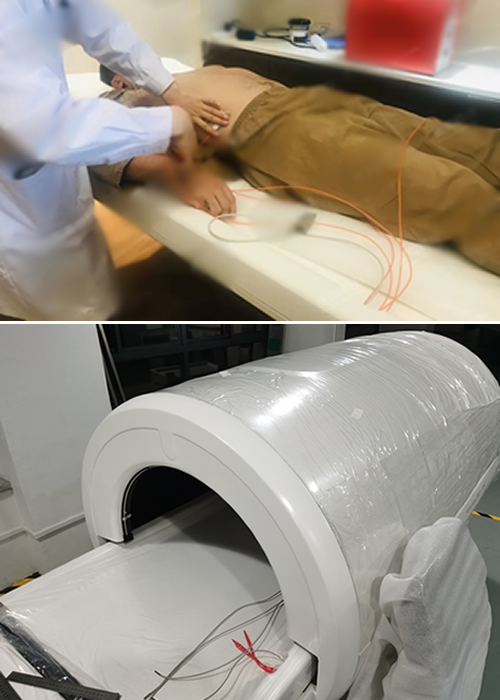
Ang mga fluorescent fiber optic temperature sensor ay gumagamit ng mga rare-earth na fluorescent na materyales na nagpapakita ng mga katangian ng optical na umaasa sa temperatura. Kapag nasasabik ng liwanag sa mga tiyak na wavelength, ang mga materyales na ito ay naglalabas ng fluorescence na may mga katangian ng pagkabulok na mahuhulaan na nag-iiba sa temperatura. Ang sensor probe ay naglalaman ng isang maliit na kristal ng fluorescent na materyal sa dulo ng hibla, habang ang hibla mismo ay nagsisilbing isang magaan na gabay upang magpadala ng parehong paggulo at paglabas ng mga signal.
Ang sistema ng pagsukat ng temperatura ng fluorescent fiber nagpapadala ng mga pulso ng liwanag ng paggulo sa pamamagitan ng optical fiber sa dulo ng probe. Ang fluorescent na materyal ay sumisipsip ng enerhiya na ito at naglalabas ng liwanag sa ibang wavelength, na may oras ng pagkabulok na bumababa habang tumataas ang temperatura. Sa pamamagitan ng tumpak na pagsukat sa buhay ng fluorescence, kinakalkula ng system ang temperatura na may mataas na katumpakan. Ang prinsipyo ng pagsukat na ito ay hindi nangangailangan ng mga de-koryenteng bahagi sa sensing point, inaalis ang lahat ng alalahanin sa electromagnetic interference.
All-Optical Signal Processing
Ang buong chain ng pagsukat ay gumagamit ng mga optical signal ng eksklusibo, mula sa paggulo hanggang sa pagtuklas. Ang all-optical approach na ito ay nagbibigay ng kumpletong immunity sa mga electromagnetic field ng anumang lakas o dalas. Ang probe ng temperatura ng fiber optic naglalaman lamang ng optical glass at fluorescent na materyal, parehong ganap na transparent sa microwave radiation. Ang pangunahing kalamangan sa disenyo na ito ay ginagawang perpekto ang mga fluorescent fiber optic sensor para sa mapaghamong mga electromagnetic na kapaligiran kabilang ang microwave hyperthermia, RF ablation, at mga aplikasyon ng MRI.
6. Paano Gawin Fluorescent Fiber Temperature System Makamit ang Kumpletong Microwave Immunity?
Ang kumpletong microwave immunity ay nagmumula sa all-dielectric construction ng fluorescent fiber optic na mga sensor ng temperatura. Ang bawat bahagi sa daanan ng pagsukat ay binubuo ng mga hindi konduktibong materyales: optical fiber (fused silica glass), pabahay ng probe (ceramic o polimer), at sensing element (fluorescent na kristal). Nang walang anumang mga metal na bahagi upang makipag-ugnayan sa mga electromagnetic field, ang mga sensor na ito ay nakakaranas ng zero interference mula sa microwave radiation.
Ang optical fiber ay nagpapadala ng impormasyon bilang mga light signal na naglalakbay sa salamin, ganap na nakahiwalay sa mga panlabas na impluwensya ng electromagnetic. Ang enerhiya ng microwave ay dumadaan sa mga dielectric na materyales nang hindi nagdudulot ng mga alon, pagbuo ng init, o nakakaapekto sa optical properties ng system. Ang disenyong ito ay nagbibigay-daan sistema ng pagsubaybay sa temperatura ng hibla upang gumana nang mapagkakatiwalaan sa lakas ng field ng microwave na ganap na hindi paganahin ang mga maginoo na electronic sensor.
Pagpapatunay sa High-Power Microwave Environment
Ang pagsubok sa operational hyperthermia equipment ay nagpapatunay na ang mga fluorescent fiber sensor ay nagpapanatili ng katumpakan ng pagsukat anuman ang antas ng lakas ng microwave. Ang mga sensor ay nagbibigay ng matatag, paulit-ulit na pagbabasa kung ang microwave generator ay gumagana sa minimum o maximum na output. Tinitiyak ng pagkakapare-pareho ng pagganap na ito ang maaasahang pagsubaybay sa temperatura sa buong mga session ng paggamot habang nagsasaayos ang mga antas ng kuryente upang mapanatili ang mga target na temperatura.
7. What Technical Advantages Do All-Dielectric Fiber Temperature Probes Offer for Microwave Hyperthermia?
Ang all-dielectric construction ay nagbibigay ng maraming benepisyo na lampas sa electromagnetic immunity. Ang kawalan ng mga sangkap na metal ay nag-aalis ng anumang panganib ng pag-init ng probe mula sa pagsipsip ng microwave, pinipigilan ang potensyal na pinsala sa tissue sa punto ng pagsukat. Mga probe ng temperatura ng fiber optic mananatiling thermally neutral, pagsukat ng temperatura ng tissue nang hindi nagdaragdag ng init o gumagawa ng mga artifact sa larangan ng paggamot.
Ang maliit na diameter na makakamit gamit ang lahat-ng-dielectric na disenyo ay nagpapaliit sa pag-alis ng tissue at trauma sa panahon ng paglalagay ng probe. Probes kasing liit 600μm diameter maaaring iposisyon sa mga sensitibong lugar na may kaunting invasiveness. Ang flexible fiber construction ay nagbibigay-daan sa mga probe na umayon sa anatomical structures at manatili sa posisyon sa buong paggamot nang hindi nagdudulot ng kakulangan sa ginhawa sa pasyente.. Ang mga praktikal na kalamangan na ito ay umaakma sa pangunahing electromagnetic immunity upang lumikha ng isang perpektong solusyon para sa pagsubaybay sa temperatura ng medikal na hyperthermia.
Pangmatagalang Katatagan at Pagiging Maaasahan
Ang mga dielectric na materyales ay lumalaban sa kaagnasan, atake ng kemikal, at pagkasira ng biyolohikal na kapaligiran. Mga sensor ng temperatura ng fluorescent fiber maintain calibration accuracy over years of service without drift or performance degradation. The stable optical properties of the sensing materials ensure consistent measurements throughout the sensor lifetime, reducing maintenance requirements and eliminating recalibration needs.
8. What Measurement Accuracy Can Fiber Optic Temperature Sensors Achieve Within Human Body Temperature Range?
Moderno fluorescent fiber optic na mga sensor ng temperatura achieve ±0.5°C accuracy across the full range of temperatures encountered in hyperthermia applications. This precision level meets clinical requirements for therapeutic temperature control, enabling reliable differentiation between effective treatment temperatures and potentially harmful thermal levels. The accuracy specification applies throughout the measurement range relevant to human body temperatures, from baseline physiological temperatures through therapeutic hyperthermia levels.
This level of precision supports real-time treatment adjustments based on measured temperature data. Clinicians can confidently increase or decrease power output knowing that temperature readings accurately reflect tissue conditions. Ang fiber temperature measurement system maintains this accuracy specification regardless of electromagnetic field strength, probe positioning, or environmental conditions, providing consistent performance across diverse clinical scenarios.
Calibration and Traceability
Factory calibration references certified temperature standards traceable to national metrology institutes. Ang bawat isa sensor ng temperatura ng fiber optic ships with calibration documentation detailing accuracy verification across the specified temperature range. The stable optical measurement principle eliminates calibration drift, maintaining accuracy throughout the sensor’s operational lifetime without field recalibration requirements.
9. What Practical Value Does a 600 Micron Diameter Fiber Probe Provide for Microwave Hyperthermia Applications?
Ang 600μm diameter fiber temperature probe represents a significant advancement in minimally invasive temperature monitoring. This small diameter approaches the size of standard medical needles, allowing probe insertion with minimal tissue trauma and patient discomfort. The compact form factor enables multiple probe placement for comprehensive temperature mapping without significant anatomical disruption.
Small diameter probes access confined spaces and follow curved anatomical pathways that larger sensors cannot reach. In body cavity applications, the flexibility and compact size of fiber optic probes allow positioning adjacent to target tissues without interfering with applicator placement or treatment delivery. The minimal cross-section reduces acoustic artifacts in ultrasound imaging, maintaining visualization capability during image-guided procedures.
Multi-Point Monitoring Capability
The small probe diameter enables deployment of multiple temperature sensors throughout the treatment volume. Practitioners can position probes at critical locations to verify uniform heating, identify hot spots, and monitor temperature gradients. This multi-point capability provides comprehensive thermal mapping impossible with larger, more invasive sensor technologies.
10. What Core Components Make Up a Microwave Fiber Optic Temperature Monitoring System?
Isang kumpleto microwave fiber optic temperature monitoring system consists of four primary components working together to deliver accurate, real-time temperature measurements. Ang arkitektura ng system ay naghihiwalay sa mga elemento ng sensing na nakalantad sa kapaligiran ng microwave mula sa mga elektronikong kagamitan sa pagpoproseso na matatagpuan sa isang protektadong lugar.
Mga Bahagi ng System
Mga probe ng temperatura ng fiber optic nagsisilbing mga elemento ng sensing na nakaposisyon sa mga lokasyon ng pagsukat sa loob o katabi ng lugar ng paggamot. Ang mga probe na ito ay naglalaman ng fluorescent sensing material at kumokonekta sa mga optical fiber na nagpapadala ng mga light signal sa processing unit. Ang mga diameter ng probe ay mula sa 600μm hanggang 1.0mm depende sa mga kinakailangan sa aplikasyon, na may mga haba na naka-customize para sa partikular na anatomical access na mga pangangailangan.
Ang mga optical fiber cable magbigay ng landas ng komunikasyon sa pagitan ng mga probe at electronics. Ang mga cable na ito ay naglalaman ng isa o higit pang mga optical fiber na protektado ng isang medikal na grade outer jacket. Ang karaniwang haba ng cable ay umaabot hanggang 10 metro, nagbibigay-daan sa kakayahang umangkop sa pagpoposisyon ng kagamitan habang pinapanatili ang integridad ng signal. Tinitiyak ng all-glass fiber construction ang kumpletong electromagnetic immunity sa buong landas ng signal.
Ang console ng pagsukat ng temperatura ng fluorescent fiber naglalaman ng optical excitation source, optika ng pagtuklas, elektronikong pagpoproseso ng signal, at user interface. Ang yunit na ito ay bumubuo ng mga pulso ng liwanag ng paggulo, sinusukat ang mga katangian ng pagkabulok ng fluorescence, kinakalkula ang mga temperatura, at nagpapakita ng real-time na data. Suporta sa mga modernong console 4-16 channel sabay-sabay na pagsubaybay, nagbibigay-daan sa komprehensibong pagmamapa ng temperatura gamit ang isang device.
Ang koneksyon ng data ay nagbibigay-daan sa pagsasama sa kagamitan ng hyperthermia at mga sistema ng impormasyon sa ospital. Kasama sa mga karaniwang interface ang mga analog na output, mga protocol ng digital na komunikasyon, at koneksyon sa network para sa malayuang pagsubaybay at pag-archive ng data. Ang sistema ng pagsubaybay sa temperatura nagbibigay ng mga output ng alarma upang ma-trigger ang mga interlock na pangkaligtasan kapag lumampas ang temperatura sa mga naka-program na limitasyon.
11. How Does Multi-Channel Fluorescent Fiber Temperature Monitoring Achieve Full Treatment Area Coverage?
Multi-channel fluorescent fiber temperature systems enable simultaneous monitoring at multiple locations, providing comprehensive thermal mapping of treatment areas. A single console with 4-16 mga independiyenteng channel supports probe positioning at strategic locations to characterize temperature distribution throughout the target volume and surrounding tissues. This spatial temperature data reveals heating uniformity and identifies areas requiring power adjustment.
Each channel operates independently with dedicated optical paths and signal processing, ensuring that measurements from different locations do not interfere with each other. The system updates all channel readings simultaneously at rates up to 2 Hz, providing real-time thermal imaging data. Clinicians can identify temperature gradients, verify that all target tissue reaches therapeutic levels, and confirm that surrounding structures remain within safe temperature limits.
Strategic Probe Placement
Effective temperature monitoring requires thoughtful probe positioning based on treatment planning and anatomical considerations. Typical configurations place probes at the treatment center, periphery locations, and reference positions in uninvolved tissue. Ang multi-channel fiber temperature monitoring capability allows comprehensive coverage without multiple separate instruments, streamlining setup and data management.
12. Paano ba 0.5 Pangalawang Oras ng Pagtugon sa Mga Fiber Temperature Sensor na Tumutulong sa Pagkontrol sa Paggamot?
Ang ≤0.5 second response time of fluorescent fiber optic sensors enables real-time treatment control and rapid response to temperature changes. When microwave power increases, the sensor detects resulting temperature rise within half a second, allowing immediate feedback for power adjustment algorithms. This rapid response prevents temperature overshoot and maintains stable conditions throughout treatment.
Fast response time proves particularly valuable during treatment initiation when temperatures rise rapidly as microwave energy begins heating tissue. Ang sensor ng temperatura ng fiber optic tracks this dynamic heating phase accurately, providing data for automatic or manual power control to achieve target temperatures efficiently without excessive overshoot. Ganun din, during power reductions or treatment conclusion, the sensor quickly confirms temperature decreases.
Enhanced Safety Through Rapid Detection
Should unexpected hot spots develop or equipment malfunctions occur, the fast response time enables rapid detection and intervention. Ang fiber temperature monitoring system can trigger immediate power reduction or shutdown within seconds of detecting excessive temperatures, minimizing exposure to potentially harmful thermal levels. This safety capability relies on sensors that respond quickly enough to detect and report temperature excursions before tissue damage occurs.
13. Paano Natutugunan ng Medical Fiber Temperature Probes ang Mga Pamantayan sa Biocompatibility na Medikal na Grado?
Medical fiber optic temperature probes utilize materials specifically selected and tested for biocompatibility according to ISO 10993 mga pamantayan. The probe construction employs medical-grade optical fibers with biocompatible outer jackets approved for tissue contact. Probe tip materials consist of inert ceramics or medical polymers that do not elicit adverse biological responses during clinical use.
Manufacturers conduct comprehensive biocompatibility testing including cytotoxicity, sensitization, irritation, and systemic toxicity evaluations. These tests verify that all materials in tissue contact meet requirements for the intended duration and type of tissue exposure. For probes designed for extended implantation, additional testing confirms suitability for long-term tissue contact applications.
Sterilization Compatibility
Medikal fiber temperature probes withstand standard sterilization methods including ethylene oxide (EtO) and gamma irradiation without performance degradation. The optical components and biocompatible materials maintain their properties through sterilization cycles, ensuring reliable measurements after sterilization. Single-use disposable probes ship pre-sterilized, while reusable designs support multiple sterilization cycles for multi-patient use.
14. Anong Mga Espesyal na Kinakailangan ang Umiiral para sa Mga Fiber Optic Sensor sa RF Hyperthermia Equipment Temperature Monitoring?
RF hyperthermia equipment operates at lower frequencies than microwave systems but generates equally challenging electromagnetic environments for temperature sensors. The same all-dielectric construction that provides microwave immunity also ensures reliable operation in RF fields. Mga sensor ng temperatura ng fluorescent fiber optic perform identically across the frequency spectrum from RF through microwave ranges, making them suitable for all electromagnetic hyperthermia modalities.
RF applicators often require multiple temperature monitoring points to verify uniform heating across large treatment volumes. The multi-channel capability of fiber temperature systems supports the extensive monitoring needed for RF hyperthermia applications. Probe configurations for RF applications may emphasize longer probes for deep tissue access and robust construction to withstand repositioning during treatment optimization.
Integration with RF Control Systems
Moderno RF hyperthermia system incorporate automatic power control based on temperature feedback. Ang sistema ng pagsubaybay sa temperatura ng fiber optic provides analog or digital outputs compatible with RF generator control inputs, enabling closed-loop temperature regulation. This integration allows the RF system to automatically adjust power output to maintain target temperatures, improving treatment consistency and reducing operator workload.
15. Paano Nakakamit ng Fluorescent Fiber Temperature Systems ang Data Integration sa Microwave Hyperthermia Devices?
Integration between fluorescent fiber temperature monitoring systems and hyperthermia equipment occurs through multiple connectivity options. Analog voltage or current outputs provide real-time temperature data to hyperthermia device control systems, enabling automatic power regulation based on measured temperatures. These outputs scale proportionally to temperature, allowing simple integration with analog control circuits.
Digital communication interfaces including RS-232, RS-485, and Ethernet enable more sophisticated data exchange. Ang sistema ng pagsubaybay sa temperatura can transmit detailed information including individual channel temperatures, katayuan ng alarma, and system diagnostics to the hyperthermia controller or external monitoring computers. Some systems support standard medical device communication protocols for integration with hospital information systems.
Real-Time Data Display and Recording
Integrated systems display temperature data alongside hyperthermia equipment parameters, providing operators with comprehensive treatment monitoring from a unified interface. Temperature trends, alarm events, and power adjustments appear together in synchronized timeline displays. Ang fiber temperature system logs all data with timestamps, creating permanent treatment records for quality assurance and clinical documentation.
16. Anong mga Kundisyon ang Dapat Matugunan ng mga Fiber Optic Temperature Sensor na Compatible sa MRI?
MRI compatibility requires complete absence of ferromagnetic materials and minimization of conductive components that could interact with MRI magnetic fields or RF pulses. Mga sensor ng temperatura ng fiber optic inherently meet these requirements through their all-dielectric construction containing no metals or magnetic materials. The sensors operate reliably inside MRI bores without causing image artifacts or experiencing measurement interference from MRI fields.
MRI-compatible pagsubaybay sa temperatura enables real-time thermal imaging during MRI-guided interventions. The fiber sensors provide quantitative temperature measurements complementing MRI thermometry techniques, offering validation data and monitoring at locations beyond MRI thermal imaging coverage. This combination delivers comprehensive thermal monitoring during MRI-guided procedures including focused ultrasound treatments and other thermal therapies.
MRI Safety Certifications
MRI-compatible mga sensor ng temperatura ng hibla undergo testing according to ASTM standards for MRI device safety. Testing confirms that sensors do not heat, move, or malfunction in MRI magnetic fields up to 3 Tesla or higher. Safety labeling indicates the field strengths and MRI configurations where the sensors are safe for use, supporting regulatory compliance for MRI-guided procedures.
17. Anong Mga Pagkakaiba ang Umiiral sa Pagitan ng Surface at Cavity Fiber Temperature Probe Configuration Solutions?
Surface temperature monitoring applications use fiber optic probes with shallow penetration designs optimized for skin or mucosal surface contact. These configurations often incorporate flat or curved contact surfaces that conform to body contours while maintaining consistent thermal contact. Adhesive mounting options secure surface probes in position throughout treatment, preventing displacement that could compromise measurement locations.
Cavity applications require longer, more flexible probes that navigate anatomical passages and position sensing elements adjacent to internal target tissues. Fiber temperature probes for cavity use feature atraumatic tips and flexible shafts that follow curved paths without tissue damage. Probe lengths extend from 15cm to 50cm or more depending on anatomical access requirements, with diameter selections balancing minimal invasiveness against mechanical robustness.
Application-Specific Probe Selection
Manufacturers offer probe families optimized for different anatomical applications. Esophageal probes for cardiac ablation monitoring, rectal probes for pelvic hyperthermia, and interstitial needle probes for direct tissue insertion represent specialized configurations. Each design addresses specific clinical requirements including insertion depth, positioning stability, and patient comfort while maintaining the core temperature measurement performance.
18. Paano Pinagana ng Mga Fiber Optic Sensor ang Mga Sistema ng Alarm sa Limitasyon ng Temperatura sa Hyperthermia Equipment?
Fluorescent fiber temperature monitoring systems include programmable alarm capabilities for patient safety. Operators configure high and low temperature limits for each monitoring channel, with the system continuously comparing measured temperatures against these thresholds. When any channel exceeds programmed limits, the system activates visual and audible alarms while simultaneously sending alarm signals to connected equipment.
Alarm outputs can trigger automatic safety responses in integrated hyperthermia systems. Common implementations include automatic power reduction when temperatures approach upper limits and treatment shutdown if critical thresholds are exceeded. Ang fiber temperature system oras ng pagtugon ng alarma, combined with the sensor’s fast response, enables intervention within seconds of threshold violations, minimizing exposure to excessive temperatures.
Alarm Configuration Flexibility
Advanced systems support multiple alarm levels for staged responses. Warning alarms at temperatures below critical limits alert operators to trends requiring attention, while critical alarms at higher thresholds trigger automatic safety actions. Different alarm settings can apply to different monitoring channels, recognizing that acceptable temperature ranges may vary by anatomical location. Time-delay settings prevent nuisance alarms from brief, clinically insignificant temperature excursions.
19. Anong Mga Sertipikasyon ng Medikal na Device at Pamantayan sa Kalidad ang Nalalapat sa Fluorescent Fiber Temperature Monitoring System?
Propesyonal sistema ng pagsubaybay sa temperatura ng fiber optic for medical applications meet comprehensive quality and safety standards. ISO9001 certification demonstrates manufacturer commitment to quality management throughout design, produksyon, at mga proseso ng serbisyo. This certification ensures consistent product quality and continuous improvement practices.
Pagmarka ng CE indicates compliance with European Medical Device Regulation (MDR) kinakailangan, confirming that devices meet safety and performance standards for medical use in European markets. The CE marking process includes technical documentation review, risk analysis, and quality system assessment by notified bodies. RoHS certification verifies compliance with restrictions on hazardous substances, ensuring environmental safety.
Manufacturers can provide UL certification for North American markets, demonstrating compliance with electrical safety standards. ATEX or IECEx certifications are available for applications in potentially explosive atmospheres where flammable anesthetics or oxygen-enriched environments exist. Kinukumpirma ng mga sertipikasyong ito ang intrinsically safe na operasyon na walang kakayahang makabuo ng sparks o sobrang init.
Suporta sa Custom na Sertipikasyon
Ang mga kilalang tagagawa ay nakikipagtulungan sa mga customer upang makakuha ng mga karagdagang sertipikasyon na kinakailangan para sa mga partikular na merkado o aplikasyon. Kasama sa suportang ito ang pagbibigay ng teknikal na dokumentasyon, data ng pagsubok, at impormasyon ng disenyo na kailangan para sa mga pagsusumite ng regulasyon. Nauunawaan ng mga tagagawa na may karanasan sa mga merkado ng medikal na aparato ang mga kinakailangan sa sertipikasyon at mga produkto ng disenyo na nasa isip ang pagsunod sa regulasyon, pag-streamline ng proseso ng pag-apruba para sa pagsasama ng mga customer fiber temperature systems sa kanilang mga medikal na kagamitan.
20. Paano Pumili ng Propesyonal na Supplier ng Sensor ng Temperatura ng Medikal na Fiber Optic at Suporta sa Teknikal?

Pagpili ng mapagkakatiwalaan supplier ng fiber optic temperature sensor nangangailangan ng pagsusuri ng maraming salik na lampas sa mga pangunahing detalye ng produkto. Ang karanasan sa paggawa sa mga medikal na aplikasyon ay nagpapakita ng pag-unawa sa mga kinakailangan sa kalidad, pagsunod sa regulasyon, and clinical needs. Suppliers with established track records in medical device markets bring valuable expertise to product selection and implementation.
Technical support capabilities prove critical for successful system integration and ongoing operation. Comprehensive support includes application engineering assistance for probe selection and placement, integration guidance for connecting with hyperthermia equipment, and responsive troubleshooting when issues arise. Suppliers should provide detailed technical documentation, mga sertipiko ng pagkakalibrate, and user training to ensure proper system operation.
Quality and Reliability Factors
Manufacturing quality directly impacts measurement reliability and system longevity. Look for suppliers with ISO9001 certification and established quality control processes including incoming material inspection, in-process testing, and final product validation. Long warranty periods and low failure rates indicate confidence in product quality and manufacturing processes.
Mga Kakayahang Pag-customize
Medical applications often require customized probe configurations, cable lengths, or interface specifications. Suppliers with in-house design and manufacturing capabilities can develop custom solutions meeting unique application requirements. This flexibility proves valuable for specialized procedures or novel treatment approaches requiring non-standard temperature monitoring solutions.
Mga Madalas Itanong
What makes fiber optic sensors better than traditional sensors for hyperthermia monitoring?
Mga sensor ng temperatura ng fiber optic offer complete immunity to electromagnetic interference through all-dielectric construction, eliminating the measurement errors and safety concerns associated with metal-containing sensors in microwave and RF environments. The technology provides ±0.5°C accuracy with 0.5 second response time while maintaining biocompatibility for medical applications.
Can one monitoring system work with different hyperthermia equipment types?
Oo. Fluorescent fiber temperature monitoring systems function reliably across all electromagnetic hyperthermia modalities including microwave, RF, and other heating technologies. The same system works with different equipment manufacturers through standard analog and digital interface options.
How many temperature points can be monitored simultaneously?
Moderno multi-channel fiber temperature systems suporta 4-16 simultaneous monitoring channels in a single console. This capability enables comprehensive temperature mapping throughout treatment volumes and surrounding tissues using one integrated system.
Do the fiber sensors require calibration or maintenance?
The stable optical measurement principle eliminates calibration drift over the sensor’s 20-year design life. Sensors ship factory-calibrated and maintain accuracy throughout their operational lifetime without field recalibration requirements. The systems require no routine maintenance beyond basic cleaning of reusable probes between uses.
What probe sizes are available for different clinical applications?
Fiber temperature probes are available in diameters from 600μm hanggang 1.0mm with lengths from 10cm to 50cm or more. Surface contact probes, cavity probes, and interstitial needle configurations address diverse anatomical access requirements across different treatment sites.
How quickly can the system detect temperature changes?
Ang ≤0.5 second response time enables real-time tracking of temperature changes during treatment. This rapid response supports effective power control and safety monitoring, detecting temperature excursions quickly enough for timely intervention.
Professional Fiber Optic Temperature Monitoring Solutions
Fuzhou Innovation Electronic Scie&Tech Co., Ltd. ay nagdadalubhasa sa fluorescent fiber optic na mga sensor ng temperatura and monitoring systems since 2011. Our products serve medical device manufacturers and clinical facilities worldwide, providing reliable temperature monitoring solutions for hyperthermia, MRI, and other demanding electromagnetic environments.
Contact Our Technical Team
Our application engineers provide expert guidance for sensor selection, pagsasama ng system, at pagsunod sa regulasyon. Nag-aalok kami:
- Custom probe configurations for specific anatomical applications
- Multi-channel monitoring systems with 4-16 kapasidad ng channel
- Complete integration support with hyperthermia equipment
- Certification assistance for medical device approvals
- Responsive technical support throughout product lifecycle
Manufacturer: Fuzhou Innovation Electronic Scie&Tech Co., Ltd.
Itinatag: 2011
Email: web@fjinno.net
WhatsApp/WeChat/Phone: +86 13599070393
QQ: 3408968340
Address: Liandong U Grain Networking Industrial Park, No.12 Xingye West Road, Fuzhou, Fujian, Tsina
Website: www.fjinno.net
Disclaimer
This technical guide provides general information about fiber optic temperature monitoring technology for microwave hyperthermia and related medical applications. The information presented is based on current technology capabilities and industry standards as of December 2025. Habang nagsusumikap kami para sa katumpakan, tiyak na mga pagtutukoy ng produkto, mga sertipikasyon, and capabilities may vary by model and application.
Medical device applications must comply with applicable regulatory requirements in their jurisdictions. Users are responsible for ensuring that temperature monitoring systems meet all relevant standards and obtain necessary approvals for their intended use. This document does not constitute medical advice, treatment recommendations, or regulatory guidance.
Product selection should be based on specific application requirements, clinical protocols, at mga pangangailangan sa pagsunod sa regulasyon. Makipag-ugnayan sa aming technical team para sa mga detalyadong detalye, dokumentasyon ng sertipikasyon, at gabay na tukoy sa aplikasyon. Ang mga katangian ng pagganap na binanggit sa gabay na ito ay kumakatawan sa mga tipikal na halaga sa ilalim ng mga karaniwang kundisyon at maaaring mag-iba batay sa mga partikular na configuration at operating environment.

Sensor ng temperatura ng fiber optic, Intelligent na sistema ng pagsubaybay, Ibinahagi ang tagagawa ng fiber optic sa China
 |
 |
 |