 INNO fiber optic na mga sensor ng temperatura ,mga sistema ng pagsubaybay sa temperatura.
- Fluorescence Fiber Optic Temperature Sensor – ±1°C katumpakan | Complete electrical isolation | EMI immune | Lifetime calibration-free | Mataas na boltahe & malakas na kapaligiran ng magnetic field
- PT100/PT1000 Platinum RTD – ±0.15°C high precision | Industry standard | Good linearity | Requires 3/4-wire configuration for lead resistance compensation
- Ibinahagi ang Temperature Sensing (DTS) – Kilometers of continuous monitoring | 0.5-2m spatial na resolusyon | Pipeline & cable monitoring
- Fiber Bragg Grating (FBG) Sensor – Wavelength encoded | Multi-point multiplexing | EMI resistant | Sabay-sabay na pilay & pagsukat ng temperatura
- Gallium Arsenide (GaAs) Fiber Sensor – Semiconductor absorption edge | ±0.5°C accuracy | Compact probe design
- Wireless Temperature Sensor – No wiring installation | May baterya | Rotating equipment suitable | Periodic battery replacement required
- Infrared Temperature Sensor – Pagsusukat na walang contact | Mabilis na tugon | Mataas na temperatura & moving targets | Emissivity dependent
- Thermocouple (K/J/T/E Types) – Malawak na hanay ng temperatura | Mababang gastos | Mabilis na tugon | Cold junction compensation required, pangmatagalang drift
- NTC Thermistor – Mataas na sensitivity | Maliit na sukat | Mababang gastos | Non-linear, narrow range (-50~150°C)
- IC Temperature Sensor – Digital output | I²C/SPI interface | High integration | Range limited -55~125°C
Talaan ng mga Nilalaman
- Fluorescence Fiber Optic Temperature Sensor
- PT100/PT1000 Platinum RTD Sensor
- Ibinahagi ang Temperature Sensing (DTS)
- Fiber Bragg Grating (FBG) Sensor
- Gallium Arsenide (GaAs) Sensor
- Wireless Temperature Sensor
- Infrared Temperature Sensor
- Thermocouple Temperature Sensor
- NTC Thermistor Sensor
- IC Temperature Sensor
- How to Choose the Right Temperature Sensor
- Get Professional Temperature Sensing Solutions
1. Fluorescence Fiber Optic Temperature Sensor ⭐ Editor’s Top Pick

What is Fluorescence Fiber Optic Temperature Sensing Technology?
Ang fluorescence fiber optic temperature sensor operates on the principle of temperature-dependent fluorescence decay in rare earth materials. When excited by UV or blue light, rare earth phosphors emit fluorescence with a decay time that varies predictably with temperature. This absolute measurement method eliminates the need for calibration throughout the sensor’s lifetime.
Unlike conventional electrical sensors, ang fluorescence temperature sensor gumagamit ng liwanag bilang medium ng pagsukat, transmitted through optical fiber. The sensing element contains no electronic components, making it inherently immune to electromagnetic interference and electrically isolated from the measurement system.
Why Fluorescence Fiber Optic is the Best Choice for High Voltage Power Equipment
The complete electrical isolation provided by mga sensor ng temperatura ng fiber optic makes them uniquely suited for high voltage applications. The glass fiber offers dielectric strength exceeding 100kV, allowing direct installation in transformer windings and switchgear without expensive isolation barriers.
In strong electromagnetic fields found inside transformers and generators, ang sensor ng fluorescence delivers accurate measurements unaffected by EMI that would cause false readings in conventional RTD or thermocouple systems. The intrinsically safe design eliminates spark risks in hazardous locations without requiring explosion-proof housings.
Teknikal na Pagtutukoy
- Katumpakan ng Pagsukat: ±1°C
- Saklaw ng Temperatura: -40°C hanggang +260°C
- Oras ng Pagtugon: <1 pangalawa
- Diameter ng Probe: 1-5mm customizable
- Haba ng hibla: 0.5m to 80m+
- Electrical Isolation: >100kV dielectric withstand
- Pag-calibrate: Lifetime calibration-free
- Pagpapanatili: Zero maintenance required
Global Application Cases
Kaso 1: German 330kV Substation
A major German utility retrofitted 120 mga transformer ng kuryente with fluorescence fiber optic winding temperature monitoring systems, replacing aging PT100 installations. Pagkatapos 5 taon ng operasyon, the system maintains zero-fault record with no calibration required, pagbabawas ng mga gastos sa pagpapanatili sa pamamagitan ng 75% compared to the previous RTD system.
Kaso 2: Chinese Wind Farm
A 150-turbine wind farm deployed 64-channel fluorescence temperature monitoring for gearbox and bearing surveillance. The system successfully predicted three major failures through early temperature trend analysis, preventing catastrophic breakdowns and saving over $2 million in repair costs.
Kaso 3: US Hospital MRI Equipment
A 3.0T MRI system uses fluorescence fiber optic sensors as the only viable temperature monitoring solution in the intense magnetic field environment. FDA-certified for medical applications, the system has operated for 8 years without interference or calibration needs.
Kaso 4: Saudi Oil Storage Tank
In a classified hazardous area, intrinsically safe fiber optic sensors monitor temperature without requiring isolation barriers or explosion-proof enclosures. The system operates reliably in 50°C ambient conditions with zero spark risk.
Mga Karaniwang Aplikasyon
- Mga Power Transformer: Winding hot spot, nangungunang langis, ilalim ng langis, bushing conductor temperature
- Mataas na Boltahe Switchgear: Busbar joints, mga contact, mga koneksyon sa cable
- Mga Generator: Stator windings, rotor, bearings
- Wind Turbines: Gearbox, bearings, generator windings
- Energy Storage: Lithium battery pack thermal management (walang panganib sa spark)
- Induction Heating: Workpiece temperature in strong electromagnetic fields
- Microwave Equipment: Industrial and medical microwave systems
- MRI/NMR: Strong magnetic field environment monitoring
FJINNO Fluorescence Fiber Optic Temperature Solutions
FJINNO manufactures complete sistema ng pagsubaybay sa temperatura ng fiber optic from single-channel to 64-channel configurations. Our sensors feature probe diameters from 1mm to 5mm, with CE, UL, and RoHS certifications. Optional ATEX/IECEx explosion-proof certification available. Factory-direct pricing with full OEM/ODM customization services.
2. PT100/PT1000 Platinum RTD Temperature Sensor
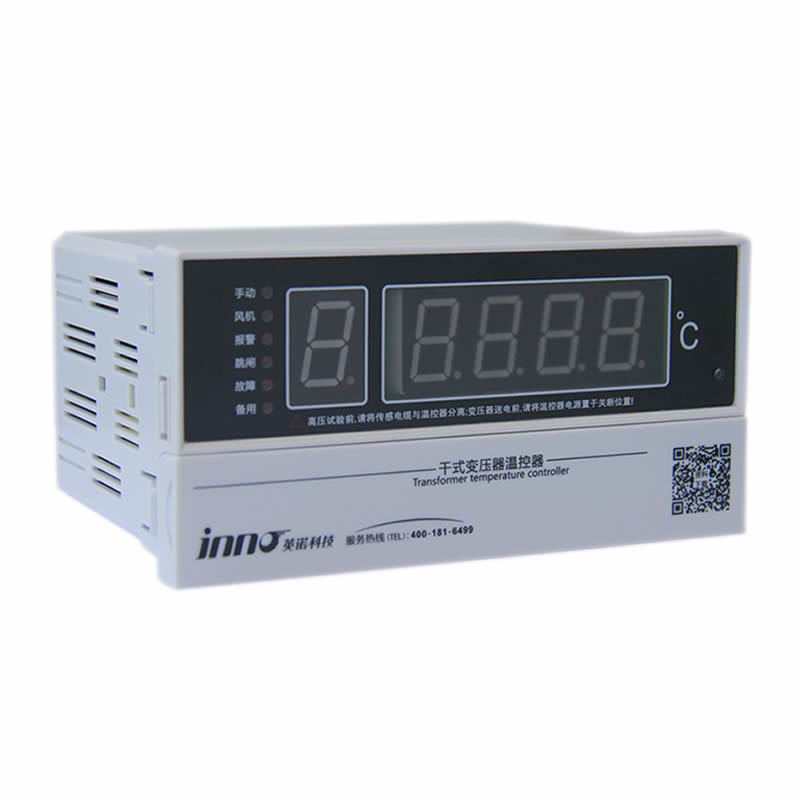
PT100 Working Principle
Ang PT100 temperature sensor exploits the positive temperature coefficient of platinum metal resistance. At 0°C, the standard resistance measures exactly 100Ω, increasing linearly with temperature. This predictable relationship enables accurate temperature calculation through simple resistance measurement.
PT100 Technical Specifications and Accuracy Classes
- Class AA: ±(0.1+0.0017|t|)°C – Laboratory precision
- Klase A: ±(0.15+0.002|t|)°C – Industrial high accuracy
- Klase B: ±(0.3+0.005|t|)°C – General industrial use
- Mga kable: 2-alambre (economy), 3-alambre (pamantayan), 4-alambre (katumpakan)
PT100 Advantages
Ang platinum RTD sensor offers excellent linearity and high accuracy conforming to IEC 60751 international standards. Good interchangeability allows sensor replacement without system recalibration. The measurement range extends from -200°C to +850°C, covering most industrial applications.
PT100 Practical Limitations
Copper lead wire resistance affects measurement accuracy, requiring 3-wire or 4-wire configurations for compensation. Mga sensor ng RTD are susceptible to EMI interference in electrically noisy environments. Periodic calibration every 1-2 years is necessary to maintain accuracy. High voltage insulation becomes complex and expensive. Response time typically ranges from several seconds, slower than thermocouples.
PT100 in Transformer Temperature Measurement
Mga sensor ng PT100 serve well for measuring transformer top oil and bottom oil temperatures in conventional applications. Gayunpaman, winding temperature measurement presents significant technical challenges:
- High Voltage Insulation: Requires expensive high-voltage insulation bushings
- EMI Interference: Copper wiring susceptible to transformer internal electromagnetic fields
- Oil Aging: Long-term oil immersion degrades insulation
- Pagpapanatili: Calibration requires transformer shutdown
These limitations explain why transformer winding hot spot monitoring increasingly adopts fluorescence fiber optic technology, eliminating high voltage insulation complexity, EMI interference, and reducing lifecycle maintenance costs.
Global Application Cases
Kaso 1: European Pharmaceutical GMP Validation
A pharmaceutical facility deployed 200+ PT100 Class A sensors for GMP temperature validation, maintaining FDA 21 CFR Part 11 compliance with comprehensive annual calibration records.
Kaso 2: Japanese Food Processing Plant
Pasteurization temperature control using platinum resistance thermometers achieving ±0.2°C accuracy with 4-20mA signals integrated into PLC systems.
Mga Karaniwang Aplikasyon
- Mga sistema ng HVAC
- Food processing temperature control
- Pharmaceutical GMP validation
- Laboratory precision measurement
- Temperatura ng langis ng transformer (non-winding)
- General industrial process control
3. Ibinahagi ang Temperature Sensing (DTS) Sistema

DTS Technology: Raman Scattering Principle
Ibinahagi ang temperatura sensing employs optical time-domain reflectometry (OTDR) combined with Raman scattering analysis. Laser pulses transmitted through fiber generate temperature-dependent Stokes and anti-Stokes Raman backscatter. The intensity ratio enables temperature calculation, while time-of-flight determines spatial location along the fiber.
DTS System Technical Parameters
- Distansya ng Pagsukat: 1-40km
- Spatial na Resolusyon: 0.5m / 1m / 2m
- Katumpakan ng Temperatura: ±1-2°C
- Saklaw ng Temperatura: -40°C hanggang +600°C
- Oras ng Pagtugon: Segundo hanggang minuto
- Sampling Interval: Programmable
DTS Unique Advantages
Distributed fiber optic temperature monitoring provides kilometer-scale continuous coverage without multiple discrete sensors. Early fire detection capabilities enable rapid response. Precise leak location identification and complete pathway temperature profiling make DTS ideal for pipeline and tunnel monitoring.
Global Application Cases
Kaso 1: Qatar 80km Oil Pipeline
Full-length Pag-detect ng leak ng DTS with 1m spatial resolution successfully detected two leak events, preventing environmental disasters and production losses.
Kaso 2: Chinese Metro Line 15
A 35km tunnel equipped with distributed temperature sensing for fire warning, integrated with fire suppression systems for automated emergency response.
Kaso 3: Norwegian Hydroelectric Dam
Concrete internal temperature and seepage monitoring using DTS fiber optic cables pagbibigay 15 years of continuous operational data for structural integrity assessment.
Mga Karaniwang Aplikasyon
- Power cable tunnel monitoring
- Long-distance oil/gas pipeline leak detection
- Dam seepage temperature monitoring
- Subway tunnel fire warning
- Storage tank perimeter surveillance
- Coal mine spontaneous combustion detection
4. Fiber Bragg Grating (FBG) Sensor ng Temperatura
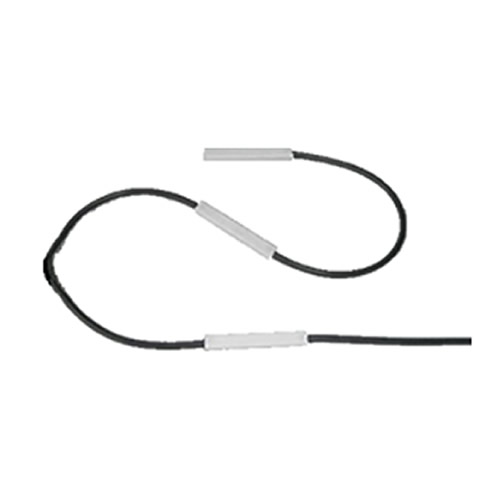
Teknolohiya ng FBG: Wavelength-Encoded Measurement
Fiber Bragg grating sensor contain periodic refractive index modulations that reflect specific wavelengths. Temperature changes shift the Bragg wavelength predictably, enabling precise measurement immune to optical power fluctuations. This wavelength encoding allows multiple FBG sensors multiplexed on a single fiber.
FBG Technical Specifications
- Katumpakan ng Temperatura: ±0.5-1°C
- Saklaw ng Temperatura: -40°C hanggang +300°C
- Wavelength Resolution: 1pm
- Multiplexing: 10-50 gratings per fiber
- Oras ng Pagtugon: Milliseconds
Global Application Cases
Kaso 1: Hong Kong-Zhuhai-Macao Bridge
The 6.7km undersea tunnel employs 500+ Mga sensor ng FBG para sa structural health monitoring, simultaneously measuring temperature and strain for real-time safety assessment.
Kaso 2: Boeing 787 Mga Composite na Materyal
Wing internal fiber optic strain and temperature monitoring during flight testing, meeting FAA certification requirements for composite aircraft structures.
Mga Karaniwang Aplikasyon
- Bridge structural health monitoring
- Aerospace composite materials
- Oil well downhole monitoring
- Mga linya ng paghahatid ng matalinong grid
- Containment ng nuclear power plant
5. Gallium Arsenide (GaAs) Fiber Temperature Sensor
Prinsipyo ng Pagsukat ng GaAs
Mga sensor ng temperatura ng Gallium arsenide samantalahin ang agwat ng banda ng semiconductor na nakasalalay sa temperatura. Ang wavelength ng gilid ng pagsipsip ay predictably nagbabago sa temperatura, pagpapagana ng spectroscopic measurement sa pamamagitan ng direktang band gap na materyales.
Mga Teknikal na Parameter ng GaAs
- Katumpakan: ±0.5°C
- Saklaw: -200°C hanggang +250°C
- Probe Size: 0.5-2mm
- Response: Milliseconds
- Radiation Resistance: Mahusay
Global Application Cases
Kaso 1: CERN Particle Accelerator
Mga sensor ng GaAs subaybayan ang mga cryogenic na temperatura pababa sa -200°C sa mataas na radiation na kapaligiran kung saan nabigo ang mga kumbensyonal na sensor.
Mga Karaniwang Aplikasyon
- Mga eksperimento sa cryogenic physics
- Semiconductor manufacturing
- Medical equipment monitoring
- Nuclear radiation na kapaligiran
6. Wireless Temperature Sensor
Mga Uri ng Wireless Technology
Mga wireless na sensor ng temperatura gumamit ng iba't ibang protocol kabilang ang 2.4GHz WiFi/Zigbee, 433/868/915MHz Sub-GHz, Long-range LoRa/LoRaWAN, NB-IoT/LTE-M cellular, at mga komunikasyong mababa ang enerhiya ng Bluetooth BLE.
Teknikal na Pagtutukoy
- Katumpakan: ±1-2°C
- Saklaw: -40°C hanggang +125°C
- Distansya ng Transmisyon: 10m hanggang 10 km (nakadepende sa protocol)
- Battery Life: 1-10 taon
Global Application Cases
Kaso 1: Sentro ng Data ng Singapore
2000+ mga wireless na sensor ng temperatura na may mga LoRa gateway na nakamit 15% pag-optimize ng enerhiya sa pamamagitan ng matalinong pamamahala sa paglamig.
Kaso 2: German Cold Chain Logistics
Container temperature tracking using NB-IoT wireless sensors maintaining GDP certification compliance throughout transportation.
Mga Karaniwang Aplikasyon
- Switchgear contact temperature (CT-powered)
- Rotating kiln monitoring
- Cold chain logistics tracking
- Smart building HVAC
- Warehouse environmental monitoring
7. Infrared Temperature Sensor
Infrared Measurement Principle
Infrared temperature sensors measure thermal radiation according to the Stefan-Boltzmann law, where radiated energy relates to the fourth power of absolute temperature. Emissivity correction and atmospheric attenuation compensation ensure measurement accuracy.
Mga Teknikal na Parameter
- Saklaw: -50°C to +3000°C
- Katumpakan: ±1-2% of reading or ±2°C
- Oras ng Pagtugon: 10ms-1s
- Distance-to-Spot (D:S): 8:1 sa 120:1
- Spectral Range: 0.8-14μm
Global Application Cases
Kaso 1: Chinese Steel Mill
Continuous casting slab infrared temperature monitoring at 1200°C controls rolling speed automatically for quality optimization.
Kaso 2: US Glass Manufacturing
Furnace temperature control at 1500°C using dual-color infrared sensors with 10-year fault-free operation records.
Mga Karaniwang Aplikasyon
- Steel smelting temperature
- Glass furnace control
- Conveyor product inspection
- Electrical equipment thermal scanning
- Plastic extrusion temperature
8. Thermocouple Temperature Sensor
Thermocouple Working Principle
Mga Thermocouple generate voltage through the Seebeck effect when dissimilar metals form a junction. Temperature difference between the measurement junction and reference junction produces proportional electromotive force.
Common Thermocouple Types
Uri K (Chromel-Alumel)
- Saklaw: -200°C hanggang +1350°C
- pagiging sensitibo: 41μV/°C
- Katumpakan: ±1.5°C or ±0.4%
- Mga kalamangan: Most widely used, cost-effective
- Mga Limitasyon: Oxidation in air at high temperatures
Type J (Iron-Constantan)
- Saklaw: 0°C to +750°C
- pagiging sensitibo: 52μV/°C
- Mga kalamangan: Reducing atmosphere suitable
- Mga Limitasyon: Iron wire oxidizes easily, being phased out
Type T (Copper-Constantan)
- Saklaw: -200°C to +350°C
- pagiging sensitibo: 43μV/°C
- Mga kalamangan: Low temperature precision, corrosion resistant
Type R/S (Platinum-Rhodium)
- Saklaw: 0°C to +1600°C
- Katumpakan: ±1°C
- Mga kalamangan: High temperature stability, precious metal construction
- Mga Limitasyon: Expensive
Thermocouple Practical Issues
Mga Thermocouple suffer from low accuracy (±1-2.5°C), requiring cold junction compensation. Long-term drift reaches ±2-5°C annually, necessitating frequent calibration and replacement. EMI susceptibility causes measurement errors in electrically noisy environments.
Global Application Cases
Kaso 1: German Automotive Plant
Engine exhaust temperature monitoring using Type K thermocouple arrays with annual calibration replacement cycles.
Mga Karaniwang Aplikasyon
- Industrial furnace control
- Engine exhaust temperature
- Plastic injection molding
- Heat treatment processes
- Boiler flue gas temperature
9. NTC Thermistor Temperature Sensor
NTC Working Principle
Mga thermistor ng NTC exhibit negative temperature coefficient behavior in semiconductor ceramic materials. Resistance decreases exponentially with temperature according to the Steinhart-Hart equation.
Mga Teknikal na Parameter
- Saklaw: -50°C hanggang +150°C
- Katumpakan: ±0.2-1°C
- B-Value: 2500-5000K
- Standard Resistance: 1kΩ-100kΩ at 25°C
NTC Advantages and Limitations
Mataas na sensitivity (-3% to -5%/°C) and small packaging enable cost-effective solutions. Gayunpaman, severe non-linearity requires linearization circuits, narrow temperature range limits applications, and self-heating effects impact accuracy.
Mga Karaniwang Aplikasyon
- Home appliance temperature control
- Automotive battery management
- Consumer electronics
- Small HVAC systems
- Charger thermal protection
10. IC Temperature Sensor
IC Temperature Sensor Technology
IC temperature sensors exploit PN junction forward voltage temperature characteristics, providing analog voltage/current outputs or digital interfaces (I²C/SPI/1-Wire).
Common IC Sensor Models
Analog na Output:
- LM35: 10mV/°C, 0-100°C
- LM335: 10mV/K, -40~+100°C
- AD590: 1μA/K current output
Digital Output:
- DS18B20: 1-Wire, ±0.5°C
- TMP102: I²C, ±0.5°C
- TMP117: I²C, ±0.1°C high precision
Teknikal na Pagtutukoy
- Saklaw: -55°C hanggang +125°C
- Katumpakan: ±0.1-2°C (model dependent)
- Resolusyon: 0.0625-0.5°C
- Power Supply: 2.7-5.5V
- Interface: Analog/I²C/SPI/1-Wire
Mga Karaniwang Aplikasyon
- Electronic equipment internal monitoring
- Server room temperature
- Power management systems
- IoT smart devices
- PC motherboard temperature
11. How to Choose the Right Industrial Temperature Sensor

Selection Decision Matrix: 5 Key Factors
Salik 1: Electrical Environment
- Mataas na Boltahe (>1kV): Fluorescence fiber optic (only viable option)
- Malakas na EMI: Fluorescence / FBG / DTS
- Hazardous Areas: Fluorescence (intrinsically ligtas) / RTD na hindi tinatablan ng pagsabog
- Pangkalahatang Pang-industriya: PT100 / Thermocouple / Wireless
Salik 2: Number and Distribution of Measurement Points
- 1-10 Concentrated Points: Fluorescence multi-channel / PT100 / Thermocouple
- 10-50 Distributed Points: Fluorescence 64-channel / FBG / Wireless
- Continuous km-Scale: DTS
- Single Point High Precision: PT100 Class AA / Fluorescence
Salik 3: Accuracy and Long-Term Stability
- ±0.15°C Ultra-High Precision: PT100 Class AA
- ±0.5-1°C High Precision: Fluorescence / GaAs / FBG
- ±1-2°C Standard Precision: Thermocouple / Wireless / Infrared
- Lifetime Calibration-Free: Fluorescence (unique)
- Annual Calibration Acceptable: PT100 / Thermocouple
Salik 4: Saklaw ng Temperatura
- -200°C Cryogenic: GaAs / Type T Thermocouple / PT100
- -40 to +260°C Standard: Fluorescence / PT100
- +260 to +1000°C: Type K/N Thermocouple
- +1000 to +1600°C: Type R/S Thermocouple
- >+1600°C: Infrared pyrometer
Salik 5: Kabuuang Halaga ng Pagmamay-ari
- 20+ Years Investment: Fluorescence (zero maintenance, lowest TCO)
- 5-10 Years Medium-Term: PT100 (requires annual calibration)
- Low Initial Budget: Thermocouple (high maintenance costs)
- Temporary Projects: Wireless / Equipment rental
Industry-Specific Application Guides
Power Industry: Mga transformer, Switchgear, Mga Generator
Application Requirements:
- High voltage electrical isolation (10kV-500kV)
- Strong electromagnetic field environment (transformer internal)
- Long-term maintenance-free (20-30 year lifespan)
- Mataas na pagiging maaasahan (grid safety critical)
Recommended Solutions:
- Transformer Winding Hot Spot: Fluorescence fiber optic (6-12 puntos)
- Temperatura ng Langis: Fluorescence / PT100
- Switchgear Busbar Joints: Fluorescence / Wireless (CT-powered)
- Generator Stator: Fluorescence multi-channel
Langis & Gas: Mga Pipeline, Mga reaktor, Storage Tanks
Recommended Solutions:
- Long Pipeline (>1km): Ipinamahagi ang DTS
- Reactor Critical Points: Fluorescence (intrinsically ligtas) / Explosion-proof PT100
- Storage Tank Stratification: Fluorescence multi-point
- General Process Control: Thermocouple / PT100
Renewable Energy: Hangin, Solar, Imbakan
Recommended Solutions:
- Wind Turbine Gearbox/Bearings: Fluorescence (vibration resistant)
- Imbakan ng Enerhiya ng Baterya: Fluorescence (walang panganib sa spark, multi-channel)
- Inverter Cooling: PT100 / IC sensors
- PV Modules: Wireless / Infrared inspection
12. Get Professional Temperature Sensing Solutions
FJINNO – Fluorescence Fiber Optic Temperature Sensing Experts


Company Background
Itinatag sa 2011, FJINNO brings 14 years of specialized manufacturing experience in fluorescence fiber optic temperature sensing technology. Serving 500+ industrial customers globally with annual production capacity exceeding 10,000 mga sistema.
Mga Sertipikasyon & Qualifications
- Pagmarka ng CE (European Union)
- UL listing (Hilagang Amerika)
- RoHS environmental compliance
- Optional ATEX/IECEx explosion-proof certification
- ISO 9001 quality management system
Serye ng Produkto
- Single-channel to 64-channel systems
- Probe diameters: 1mm / 2mm / 3mm / 5mm
- Fiber lengths: 0.5m – 80m+ (magagamit ang mga custom na haba)
- Protection rating: IP67 / IP68
- Output interfaces: RS485 / 4-20mA / Modbus TCP
Service Capabilities
1. Free Technical Consultation
- Application scenario assessment
- Sensor selection recommendations
- System design solutions
- Installation guidance
2. OEM/ODM Customization
- Custom probe dimensions
- Custom fiber lengths
- Custom channel quantities
- Hitsura & packaging customization
- Firmware development
- Private label branding
3. Distributor Support
- Regional exclusive distribution policies
- Technical training programs
- Mga materyales sa marketing
- After-sales technical support
4. Complete Solutions
- Mga sensor + Transmitters + Software
- Pagsasama ng system
- Pag-install & pagkomisyon
- Operations training
Impormasyon sa Pakikipag-ugnayan
📧 Email: web@fjinno.net
📱 WhatsApp/WeChat: +86-135-9907-0393
🌐 Website: www.fjinno.net
🏢 Factory Address:
Liantou U Valley IoT Industrial Park
No.12 Xingye West Road
Fuzhou, Lalawigan ng Fujian, Tsina
⏰ Business Hours:
Monday-Saturday 8:00-18:00 (GMT+8)
24-hour email response
Available Resources
- Product technical manuals (PDF)
- Application case white papers
- Installation video tutorials
- Certification documents
Consultation Services
- 1-on-1 application engineer support
- Free solution design
- Remote installation guidance
- On-site commissioning (large projects)
Delivery Process
- Requirements communication (1-2 araw)
- Solution design (2-3 araw)
- Sample testing (opsyonal, 7-10 araw)
- Batch production (standard products 5-7 araw, kaugalian 15-20 araw)
- International express (DHL/FedEx 3-5 araw)
Disclaimer
Ang teknikal na impormasyon, mga pagtutukoy ng produkto, and application cases provided in this article are for reference purposes only. Actual product performance may vary depending on manufacturer, modelo, at operating environment.
About Technical Parameters
Temperature sensor technical parameters differ across brands and models. Parameters listed represent typical industry values. Refer to manufacturer official technical documentation for specific specifications.
About Application Cases
Global application cases mentioned are based on publicly available information and industry experience. Actual project technical solutions and implementation results may vary due to site-specific conditions.
About Product Selection
Temperature sensor selection requires comprehensive consideration of measurement range, mga kinakailangan sa katumpakan, mga kondisyon sa kapaligiran, badyet, at mga kakayahan sa pagpapanatili. Professional engineering guidance is recommended for selection decisions.
About Certifications and Standards
Different countries and regions have varying certification requirements for industrial temperature sensors. Select products with appropriate certifications according to project location regulatory requirements.
About Installation and Use
Temperature sensor installation, mga kable, pagkakalibrate, and maintenance should be performed by qualified professionals following manufacturer instructions. Improper operation may result in measurement errors or equipment damage.
Contact Professional Technical Support
For technical questions or project consultation needs, contact FJINNO technical team directly (web@fjinno.net) for professional guidance tailored to your specific requirements.
Huling Na-update: 2026
FJINNO – Professional Fluorescence Fiber Optic Temperature Sensing Technology, Your Trusted Industrial Temperature Monitoring Solutions Provider

Sensor ng temperatura ng fiber optic, Intelligent na sistema ng pagsubaybay, Ibinahagi ang tagagawa ng fiber optic sa China
 |
 |
|