 INNO เซ็นเซอร์วัดอุณหภูมิใยแก้วนำแสง ,ระบบตรวจสอบอุณหภูมิ.
- การเพิ่มขึ้นของอุณหภูมิน้ำมันหม้อแปลงเป็นสัญญาณแรกสุดที่สามารถวัดได้ของการเสื่อมสภาพของฉนวนและความเสียหายของขดลวด — จะต้องได้รับการตรวจสอบอย่างต่อเนื่อง, ไม่ได้ตรวจสอบเป็นระยะ
- ระบบตรวจสอบอุณหภูมิน้ำมันที่สมบูรณ์ประกอบด้วยเซ็นเซอร์อุณหภูมิ, หน่วยควบคุม, วงจรแจ้งเตือน, และวงจรตัดวงจรอัตโนมัติ
- อุณหภูมิน้ำมันสูงสุดและอุณหภูมิจุดร้อนที่คดเคี้ยวเป็นจุดตรวจวัดที่แตกต่างกันสองจุด - ทั้งสองจุดจำเป็นสำหรับการป้องกันความร้อนโดยสมบูรณ์
- เมื่ออุณหภูมิน้ำมันเกินขีดจำกัดที่กำหนดไว้, ระบบจะขับเคลื่อนทริปคอยล์ของเซอร์กิตเบรกเกอร์และตัดการเชื่อมต่อหม้อแปลงโดยอัตโนมัติ
- การป้องกันสองขั้นตอน — สัญญาณเตือนอุณหภูมิสูงตามด้วยการทริปอุณหภูมิเกิน — ช่วยให้ผู้ปฏิบัติงานมีหน้าต่างตอบสนองก่อนตัดการเชื่อมต่ออัตโนมัติ
- เซ็นเซอร์วัดอุณหภูมิไฟเบอร์ออปติกจะวัดอุณหภูมิจุดร้อนของขดลวดโดยตรงภายในถังหม้อแปลงโดยไม่มีตัวนำโลหะในน้ำมัน
- ไออีซี 60076 กำหนดระดับอุณหภูมิและขีดจำกัดอุณหภูมิที่เพิ่มขึ้นที่อนุญาต ซึ่งกำหนดว่าจะต้องตั้งค่าเกณฑ์การเดินทางที่ใด
- การตรวจสอบออนไลน์แบบเรียลไทม์จะตรวจจับความผิดปกติของความร้อนหลายชั่วโมงหรือหลายวันก่อนที่จะลุกลามไปสู่การป้องกันหรือความล้มเหลวจากภัยพิบัติ
สารบัญ
- เหตุใดอุณหภูมิน้ำมันหม้อแปลงจึงสูงขึ้น และทำให้เกิดความเสียหายอะไรบ้าง?
- ระบบตรวจสอบอุณหภูมิน้ำมันหม้อแปลงประกอบด้วยอะไรบ้าง?
- ควรติดตั้งเซ็นเซอร์วัดอุณหภูมิบนหม้อแปลงที่ไหน?
- การตรวจสอบอุณหภูมิน้ำมันจะใช้งานเซอร์กิตเบรกเกอร์โดยอัตโนมัติได้อย่างไร?
- อะไรคือความแตกต่างระหว่างการเดินทางของสัญญาณเตือนและการเดินทางฉุกเฉินในการป้องกันหม้อแปลงไฟฟ้า?
- เกณฑ์การเดินทางของเบรกเกอร์อัตโนมัติถูกกำหนดไว้สำหรับอุณหภูมิน้ำมันหม้อแปลงอย่างไร?
- เหตุใดหม้อแปลงจึงต้องมีการตรวจสอบออนไลน์แบบเรียลไทม์แทนที่จะตรวจสอบเป็นระยะ?
- คำถามที่พบบ่อย: การตรวจสอบอุณหภูมิน้ำมันหม้อแปลง
1. เหตุใดอุณหภูมิน้ำมันหม้อแปลงจึงสูงขึ้น และทำให้เกิดความเสียหายอะไรบ้าง?
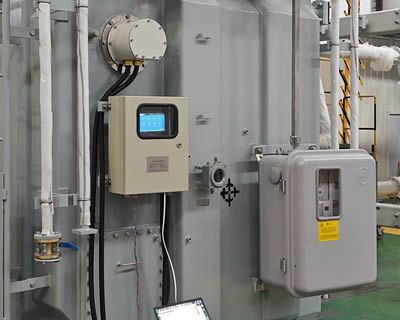
หม้อแปลงไฟฟ้าทุกตัวจะสร้างความร้อนเป็นผลพลอยได้จากการทำงานตามปกติ. การสูญเสียแกนกลางจากฮิสเทรีซิสแม่เหล็กและกระแสไหลวนทำให้เกิดภาระความร้อนพื้นฐานที่สม่ำเสมอโดยไม่คำนึงถึงโหลดที่เชื่อมต่ออยู่. การสูญเสียทองแดงในขดลวดปฐมภูมิและขดลวดทุติยภูมิจะเพิ่มส่วนประกอบความร้อนที่ขึ้นกับโหลดซึ่งเพิ่มขึ้นตามกำลังสองของกระแส. ภายใต้สภาวะการทำงานปกติ, น้ำมันหม้อแปลงจะดูดซับความร้อนนี้และถ่ายโอนไปยังพื้นผิวถังและหม้อน้ำทำความเย็น, รักษาอุณหภูมิการม้วนภายในซองการออกแบบ.
Problems begin when the heat input exceeds the cooling system’s capacity to dissipate it. Blocked radiator fins, พัดลมระบายความร้อนล้มเหลว, ปั๊มน้ำมันที่ถูกยึดในหน่วยระบายความร้อนด้วยน้ำมันแบบบังคับ, หรือสภาวะโอเวอร์โหลดอย่างต่อเนื่องล้วนลดระยะขอบระหว่างการสร้างความร้อนและการกำจัดความร้อน. อุณหภูมิน้ำมันสูงขึ้น, และด้วยอุณหภูมิของการหมุนแต่ละครั้งที่แช่อยู่ในน้ำมันนั้น.
ผลของ Arrhenius ต่ออายุการใช้งานของฉนวน
ฉนวนของขดลวดหม้อแปลง — โดยส่วนใหญ่เป็นกระดาษคราฟท์ที่ชุบด้วยน้ำมัน — จะเสื่อมสภาพตามกฎหมายอัตราของ Arrhenius. ทุกๆ 6–8 °C ของอุณหภูมิของขดลวดที่ต่อเนื่องจะสูงกว่าระดับความร้อนที่กำหนดของฉนวน, อายุการใช้งานที่คาดหวังของฉนวนจะลดลงประมาณครึ่งหนึ่ง. หม้อแปลงกำลังทำงาน 20 °C เหนืออุณหภูมิน้ำมันสูงสุดที่กำหนดเป็นเวลานานจะทำให้อายุการใช้งานของฉนวนนานหลายปีในหน่วยสัปดาห์. ความเสียหายสะสมและไม่สามารถย้อนกลับได้: once cellulose insulation has thermally degraded, no maintenance procedure restores its dielectric strength.
Failure sequence without temperature protection
In the absence of การป้องกันความร้อนของหม้อแปลงไฟฟ้า, the degradation sequence moves through predictable stages. Insulation brittleness increases, reducing its ability to withstand the mechanical forces of through-fault currents. Dissolved gas levels in the oil rise — detectable by Dissolved Gas Analysis (ดีจีเอ) — as paper and oil begin to decompose thermally. ในท้ายที่สุด, a routine fault current or switching transient that the transformer would otherwise have survived without consequence causes an inter-turn short circuit or a winding-to-tank flashover, resulting in a catastrophic failure that takes the unit out of service for months and requires complete rewinding or replacement.
2. ระบบตรวจสอบอุณหภูมิน้ำมันหม้อแปลงประกอบด้วยอะไรบ้าง?

ก transformer oil temperature monitoring system is an integrated protection chain. Each component in the chain must function correctly for the system to deliver reliable automatic protection.
เซ็นเซอร์อุณหภูมิ
The sensing layer measures the actual temperature at the critical points in the transformer. Dial-type oil thermometers with micro-switch contacts are the traditional solution for top oil temperature measurement on the transformer tank. Resistance temperature detectors (RTD) — typically Pt100 elements — provide accurate analogue signals compatible with electronic monitoring systems. เซ็นเซอร์อุณหภูมิไฟเบอร์ออปติก using fluorescence decay principles are increasingly deployed for direct winding hot spot measurement inside the transformer tank, where their immunity to electromagnetic interference and the absence of metallic conductors in the oil make them the safest and most accurate available option.
Temperature controller and monitoring unit
ที่ transformer temperature controller receives signals from all sensors, displays measured values locally, compares them against configured alarm and trip thresholds, and drives output relays when thresholds are exceeded. Modern units incorporate data logging to store temperature histories with timestamps, RS-485 or Ethernet communication ports for SCADA integration, and configurable relay outputs for cooling system control as well as alarm and trip signalling.
Alarm and trip relay circuit
หน้าสัมผัสรีเลย์เอาท์พุตจากตัวควบคุมอุณหภูมิจะต่อเข้ากับโครงร่างการป้องกันสถานีย่อย. หน้าสัมผัสรีเลย์สัญญาณเตือนจะขับเคลื่อนเครื่องแจ้งเตือนด้วยเสียงหรือภาพในห้องควบคุม. หน้าสัมผัสรีเลย์การเดินทางจะต่อแบบอนุกรมกับ คอยล์ทริปเบรกเกอร์ — เมื่อผู้ติดต่อปิด, มันเพิ่มพลังให้กับทริปคอยล์และเบรกเกอร์จะเปิดขึ้น, ถอดหม้อแปลงออกจากแหล่งจ่าย.
การควบคุมระบบทำความเย็น
ที่สุด ระบบตรวจสอบอุณหภูมิหม้อแปลง ควบคุมอุปกรณ์ทำความเย็นด้วย. เมื่ออุณหภูมิของน้ำมันเพิ่มขึ้นตามขั้นตอนที่กำหนด, ตัวควบคุมจะเปิดพัดลมระบายความร้อนเพิ่มเติมหรือสตาร์ทปั๊มหมุนเวียนน้ำมันโดยอัตโนมัติ, เพิ่มความสามารถในการทำความเย็นก่อนที่จะถึงเกณฑ์การแจ้งเตือน. This staged cooling response reduces the frequency of alarm events and extends transformer service life by keeping the operating temperature as low as practical.
3. ควรติดตั้งเซ็นเซอร์วัดอุณหภูมิบนหม้อแปลงที่ไหน?

Correct sensor placement is the foundation of effective การตรวจสอบอุณหภูมิหม้อแปลง. Measuring at the wrong location gives a reading that does not represent the thermal stress the insulation is actually experiencing.
Top oil temperature measurement
ที่ อุณหภูมิน้ำมันสูงสุด sensor — a dial thermometer or RTD element — is installed in a purpose-built pocket on the transformer tank cover, immersed in the oil at the highest point of the tank. Because hot oil rises, อุณหภูมิน้ำมันสูงสุดแสดงถึงน้ำมันที่ร้อนที่สุดในวงจรทำความเย็น และให้การบ่งชี้ทางอ้อมที่ดีที่สุดเกี่ยวกับความเค้นจากความร้อนของขดลวดในกรณีที่ไม่มีเซ็นเซอร์ของขดลวดโดยตรง. ไออีซี 60076-2 ระบุตำแหน่งการวัดและขนาดกระเป๋าเพื่อการสอบเทียบ.
การวัดอุณหภูมิจุดร้อนที่คดเคี้ยว
ที่ อุณหภูมิจุดร้อนที่คดเคี้ยว คืออุณหภูมิสูงสุดที่ใดก็ได้ในชุดขดลวด. มันเกิดขึ้นที่จุดประมาณหนึ่งในสามถึงหนึ่งในสี่ของความสูงของขดลวดจากด้านบนในการออกแบบหม้อแปลงส่วนใหญ่, โดยที่การรวมกันของการสร้างความร้อนในท้องถิ่นและความเร็วการไหลของน้ำมันที่ลดลงนั้นรุนแรงที่สุด. การวัดอุณหภูมินี้โดยตรงต้องมีเซ็นเซอร์ติดตั้งอยู่ภายในถังหม้อแปลง, ระหว่างตัวนำที่คดเคี้ยว.
เหตุใดจึงใช้ไฟเบอร์ออปติกเซนเซอร์ในการตรวจวัดจุดร้อนที่คดเคี้ยว
เซ็นเซอร์อุณหภูมิไฟเบอร์ออปติก เป็นวิธีการที่กำหนดขึ้นสำหรับการวัดจุดร้อนที่คดเคี้ยวโดยตรงในหม้อแปลงจุ่มน้ำมัน. หัววัดการตรวจจับซึ่งเป็นเส้นใยนำแสงเส้นผ่านศูนย์กลางเล็กที่มีองค์ประกอบฟลูออเรสเซนต์อยู่ที่ส่วนปลาย จะถูกแทรกระหว่างตัวนำขดลวดในระหว่างการผลิตหม้อแปลงไฟฟ้าหรือการกรอกลับ. เนื่องจากโพรบไม่มีตัวนำที่เป็นโลหะ, มันไม่แนะนำเส้นทางปัจจุบันเพิ่มเติม, ไม่มีความเสี่ยงต่อการลัดวงจรระหว่างทางเลี้ยว, และไม่มีสัญญาณรบกวนทางแม่เหล็กไฟฟ้าเข้าสู่สัญญาณการวัด. สายไฟเบอร์จะออกจากถังผ่านต่อมกันน้ำมันที่สร้างขึ้นโดยเฉพาะ และเชื่อมต่อกับหน่วยสอบสวนที่ติดตั้งอยู่ที่ด้านนอกถัง. การตรวจจับด้วยไฟเบอร์ออปติกเรืองแสงให้ความแม่นยำในการวัดที่ ±1 °C และมีอายุการใช้งานของโพรบที่ยาวนานกว่า 30 ปีภายใต้การแช่น้ำมันอย่างต่อเนื่อง.
การอ้างอิงอุณหภูมิโดยรอบ
ก เซ็นเซอร์อุณหภูมิโดยรอบ mounted in the shade adjacent to the transformer provides the reference reading used to calculate temperature rise above ambient — the parameter that IEC 60076 uses to define the thermal limits rather than absolute temperature, since absolute temperature varies with site altitude and climate.
4. การตรวจสอบอุณหภูมิน้ำมันจะใช้งานเซอร์กิตเบรกเกอร์โดยอัตโนมัติได้อย่างไร?
การทำงานของเบรกเกอร์อัตโนมัติเพื่อตอบสนองต่ออุณหภูมิที่สูงเกินของหม้อแปลงเป็นตรรกะการป้องกันที่ตรงไปตรงมาซึ่งใช้งานผ่านหน้าสัมผัสรีเลย์และคอยล์ทริปในตัวของเบรกเกอร์. การทำความเข้าใจเส้นทางสัญญาณจะให้ความกระจ่างว่าเหตุใดระบบจึงเชื่อถือได้ และเหตุใดจึงตอบสนองได้เร็วกว่าการแทรกแซงด้วยตนเอง.
เส้นทางสัญญาณการเดินทาง
เมื่อตัวควบคุมอุณหภูมิพิจารณาว่าอุณหภูมิน้ำมันหรือขดลวดที่วัดได้เกินที่กำหนดไว้ เกณฑ์การเดินทางเกินอุณหภูมิ, มันจ่ายพลังงานให้กับรีเลย์เอาท์พุต. หน้าสัมผัสเปิดตามปกติของรีเลย์นั้นจะปิด, เติมวงจรไฟฟ้ากระแสตรงที่ไหลผ่าน คอยล์ทริปเบรกเกอร์. ทริปคอยล์จะสร้างแรงแม่เหล็กที่ปล่อยกลไกสปริงโหลดของเบรกเกอร์, and the breaker opens its main contacts within 50–100 milliseconds of the trip coil being energised. The transformer is isolated from the supply before any further thermal damage can occur.
Trip coil supervision
In well-designed protection schemes, ที่ trip coil circuit is continuously supervised by a trip circuit supervision (TCS) relay that monitors the continuity of the trip coil and its associated wiring. If the trip coil burns out or a wire breaks, the TCS relay raises an alarm immediately — before the protection system is called upon to operate. This supervision function is essential because a failed trip circuit is a silent defect that only reveals itself at the worst possible moment.
Lockout relay integration
สำหรับหม้อแปลงที่สำคัญ, ที่ temperature trip output is typically wired to a lockout relay (86 relay in ANSI nomenclature). The lockout relay seals in its operated state and prevents automatic re-energisation of the transformer after a temperature trip. An operator must physically reset the lockout relay at the switchboard after investigating and resolving the thermal fault — a deliberate design choice that prevents the transformer from being reconnected to a fault condition by automatic reclosure schemes.
5. อะไรคือความแตกต่างระหว่างการเดินทางของสัญญาณเตือนและการเดินทางฉุกเฉินในการป้องกันหม้อแปลงไฟฟ้า?
Two-stage thermal protection is standard practice for การตรวจสอบอุณหภูมิของหม้อแปลงไฟฟ้ากำลัง. The two stages serve different purposes and drive different responses.
เวที 1 — High temperature alarm
ที่ high temperature alarm is the first stage, set at a temperature that indicates the transformer is operating outside its normal range but has not yet reached a level that demands immediate disconnection. When this threshold is crossed, the monitoring system activates an audible or visual alarm in the control room, initiates maximum cooling (switching on all available fans and oil pumps), and logs the event with a timestamp. The transformer remains in service. Operations staff are expected to investigate the cause — a blocked radiator, a failed cooling fan, an overload condition — and take corrective action within the time available before the second-stage threshold is reached.
เวที 2 — Overtemperature trip
ที่ overtemperature trip is the second stage, set at a temperature above which continued operation would cause rapid and irreversible insulation damage. When this threshold is crossed, the monitoring system immediately drives the circuit breaker trip coil. No operator action is required or expected — the system disconnects the transformer automatically. The time between the Stage 1 alarm and the Stage 2 trip gives operators a defined window to attempt a load reduction or cooling restoration before the automatic disconnection occurs. In most utility and industrial protection settings, this window is between 10 และ 30 minutes depending on how widely the two thresholds are separated.
Cooling failure alarm
A third alarm output — sometimes called the cooling failure alarm — is triggered when a cooling fan or pump motor fails regardless of the current oil temperature. This alarm alerts maintenance staff to restore cooling capacity before the thermal headroom is consumed, providing the earliest possible warning of a developing overtemperature condition rather than waiting for the temperature itself to rise.
6. เกณฑ์การเดินทางของเบรกเกอร์อัตโนมัติถูกกำหนดไว้สำหรับอุณหภูมิน้ำมันหม้อแปลงอย่างไร?
Threshold setting is an engineering task, not a default configuration exercise. The correct values depend on the transformer’s insulation thermal class, its cooling method, the site ambient temperature, and the load profile it serves.
ไออีซี 60076 temperature limits
ไออีซี 60076-2 (อุณหภูมิที่เพิ่มขึ้นสำหรับหม้อแปลงแช่ของเหลว) defines the maximum allowable temperature rise above a 40 °C reference ambient for each thermal class. For a standard Class A (mineral oil, ONAN cooling) หม้อแปลงไฟฟ้า, the maximum top oil temperature rise is 60 K and the maximum average winding temperature rise is 65 เค, giving a maximum top oil temperature of 100 °C และอุณหภูมิขดลวดเฉลี่ยสูงสุดที่ 105 °C ณ 40 อุณหภูมิอ้างอิง °C. จุดที่คดเคี้ยวได้รับอนุญาตให้ขึ้นไปได้ 78 K เหนือบรรยากาศ — กำลังถึง 118 °C — ภายใต้สภาวะโหลดที่พิกัด.
การตั้งค่าการเตือนและการเดินทางที่ใช้งานได้จริง
ในทางปฏิบัติ, ที่ high temperature alarm สำหรับน้ำมันบนโดยทั่วไปจะตั้งไว้ที่ 85–90 °C, โดยมีอุณหภูมิต่ำกว่าขีดจำกัด IEC 10–15 °C ซึ่งทำให้ระบบทำความเย็นมีเวลาตอบสนอง. ที่ overtemperature trip สำหรับน้ำมันด้านบนโดยทั่วไปจะตั้งไว้ที่ 95–100 °C. สำหรับ อุณหภูมิจุดร้อนที่คดเคี้ยว วัดโดยตรงด้วยเซนเซอร์ไฟเบอร์ออปติก, โดยทั่วไปการปลุกจะตั้งไว้ที่ 110 °C และทริปที่อุณหภูมิ 120–125 °C, สะท้อนถึงค่าฮอตสปอตที่อนุญาตสูงกว่าใน IEC 60076-7 (คู่มือการโหลด).
การปรับเปลี่ยนเฉพาะไซต์
หม้อแปลงไฟฟ้าที่ติดตั้งในพื้นที่สูงจะมีความหนาแน่นของอากาศลดลง ซึ่งทำให้การระบายความร้อนของการพาความร้อนลดลง. ไออีซี 60076-2 specifies a derating factor that reduces the allowable temperature rise for every 500 m above 1000 m altitude. Transformers in arctic climates with maximum ambient temperatures significantly below 40 °C may have their alarm thresholds adjusted upward to avoid nuisance alarms during legitimate maximum-load operation. All threshold adjustments must be documented in the protection settings record and reviewed whenever the transformer’s load profile changes significantly.
7. เหตุใดหม้อแปลงจึงต้องมีการตรวจสอบออนไลน์แบบเรียลไทม์แทนที่จะตรวจสอบเป็นระยะ?
Manual inspection of transformer oil temperature — a technician reading the dial thermometer on the tank during a site visit — is the minimum baseline practice. It is not adequate protection for any transformer whose failure would cause significant production loss, supply interruption, or safety risk.
The time gap problem
A transformer can move from normal operating temperature to a critical overtemperature condition in under an hour under the right combination of load increase and cooling failure. A weekly inspection schedule leaves a 168-hour window during which this transition can occur, progress through the insulation damage phase, and reach catastrophic failure without any external indication. Real-time online monitoring closes this window completely — the system is evaluating every temperature reading against its alarm thresholds on a continuous basis, every minute of every day.
Load-correlated trending
ก continuous transformer temperature monitoring system accumulates a temperature history correlated with the load current at every point in time. This dataset reveals patterns that no periodic inspection can identify: a transformer that consistently reaches 88 °C on weekday afternoons when load peaks, or a unit whose temperature response to a given load level has been creeping upward over six months as a cooling radiator gradually silts up. Both patterns are actionable maintenance intelligence. Neither is visible from a monthly dial reading.
Automatic response eliminates human delay
When a thermal event develops rapidly — a sudden cooling pump failure at peak load on a hot summer afternoon — the time between the overtemperature threshold being crossed and the circuit breaker opening is determined entirely by the relay operating time, measured in milliseconds. No human operator can match that response speed. ที่ automatic circuit breaker operation driven by the online monitoring system is the only protection mechanism fast enough to intervene before serious insulation damage accumulates in a rapid overtemperature event.
คำถามที่พบบ่อย: การตรวจสอบอุณหภูมิน้ำมันหม้อแปลงด้วยการทำงานของเบรกเกอร์อัตโนมัติ
1. What is the difference between top oil temperature and winding hot spot temperature?
อุณหภูมิน้ำมันสูงสุด is the temperature of the hottest oil in the transformer tank, measured at the top of the tank where heated oil accumulates. It is an indirect indicator of winding thermal stress and is the standard measurement point on most transformer installations. Winding hot spot temperature คืออุณหภูมิสูงสุด ณ จุดใดๆ ภายในตัวนำขดลวด — ซึ่งจะสูงกว่าอุณหภูมิน้ำมันด้านบนเสมอ เนื่องจากความร้อนที่เพิ่มขึ้นในตัวนำและการไหลของน้ำมันหล่อเย็นในท้องถิ่นลดลง. ไออีซี 60076-7 ใช้อุณหภูมิฮอตสปอตเป็นพารามิเตอร์หลักสำหรับการคำนวณโหลดหม้อแปลงและการประเมินอายุการใช้งานของฉนวน. การวัดอุณหภูมิฮอตสปอตโดยตรงต้องใช้เซ็นเซอร์ โดยทั่วไปคือ หัววัดไฟเบอร์ออปติก — ติดตั้งระหว่างตัวนำขดลวดภายในถัง.
2. หม้อแปลงชนิดใดที่ต้องตรวจสอบอุณหภูมิน้ำมัน?
หม้อแปลงไฟฟ้าแบบแช่น้ำมันใดๆ ที่มีการบรรทุกโหลดซึ่งการหยุดชะงักจะทำให้การปฏิบัติงานมีนัยสำคัญ, การเงิน, หรือการรับประกันผลกระทบด้านความปลอดภัย การตรวจสอบอุณหภูมิน้ำมันพร้อมการป้องกันอัตโนมัติ. ซึ่งรวมถึงหม้อแปลงไฟฟ้ากำลังในสถานีไฟฟ้าย่อย, หม้อแปลงไฟฟ้าโรงงานอุตสาหกรรมป้อนอุปกรณ์กระบวนการต่อเนื่อง, หม้อแปลงจ่ายไฟของศูนย์ข้อมูล, หม้อแปลงบริการที่จำเป็นของโรงพยาบาล, และหม้อแปลงแรงดึงในการใช้งานทางรถไฟ. โดยทั่วไปแล้วหม้อแปลงไฟฟ้าระบบจำหน่ายบนเครือข่ายสาธารณะจะได้รับการป้องกันโดยรีเลย์กระแสเกินและข้อผิดพลาดของดินมากกว่าการตรวจสอบอุณหภูมิ, แต่หม้อแปลงไฟฟ้าแบบติดตั้งบนแผ่นและเครือข่ายขนาดใหญ่ในเขตเมืองที่มีความหนาแน่นสูงได้รวมเอาการตรวจสอบอุณหภูมิเป็นส่วนหนึ่งของโปรแกรมการตรวจสอบสภาพมากขึ้น.
3. รีเลย์อุณหภูมิน้ำมันเชื่อมต่อกับคอยล์ทริปเบรกเกอร์อย่างไร?
ที่ รีเลย์อุณหภูมิน้ำมัน — whether a mechanical bimetallic device in a traditional dial thermometer or an electronic output relay in a digital temperature controller — provides a volt-free contact output. This contact is wired in series with the station battery DC supply and the คอยล์ทริปเบรกเกอร์. When the relay contact closes, DC current flows through the trip coil, which releases the breaker mechanism and opens the main contacts. The circuit is entirely independent of the AC supply voltage, so the protection operates correctly even during a supply voltage depression or disturbance.
4. What communication protocols do transformer monitoring systems support?
ทันสมัย transformer temperature monitoring units typically support RS-485 with Modbus RTU as the baseline communication interface, which is natively compatible with the majority of SCADA and energy management systems. ไออีซี 61850 is increasingly specified for new substation installations, with protocol conversion gateways mapping Modbus data to IEC 61850 GOOSE messages or MMS reports. Ethernet TCP/IP and 4G cellular interfaces are available for remote monitoring of transformers in locations without wired control room infrastructure.
5. Can transformer oil temperature monitoring integrate with SCADA or BMS?
ใช่. The temperature controller outputs measured values and alarm states as Modbus registers over RS-485 or Ethernet. ก ระบบสกาด้า or building management system (บีเอ็มเอส) with a Modbus driver polls these registers and displays temperature trends, ประวัติการปลุก, and cooling system status on the operator HMI. Integration requires only standard Modbus configuration — no bespoke software development is needed for most industrial SCADA platforms.
6. What is thermal runaway in a transformer and how does automatic protection prevent it?
หนีความร้อน ในหม้อแปลงไฟฟ้าเกิดขึ้นเมื่อความร้อนที่เกิดจากฟอลต์ภายใน — โดยทั่วไปเป็นการลัดวงจรระหว่างเทิร์นหรือกระแสหมุนเวียนผ่านขดลวดที่เสียหาย — เกินความสามารถของระบบทำความเย็นในการกระจายความร้อน, ทำให้อุณหภูมิสูงขึ้นอย่างต่อเนื่องแทนที่จะเข้าสู่สมดุลใหม่. เมื่ออุณหภูมิสูงขึ้น, ความต้านทานข้อบกพร่องอาจลดลง, การเพิ่มกระแสไฟลัดและการสร้างความร้อนเพิ่มเติมในวงจรการเสริมแรงในตัวเอง. อัตโนมัติ เบรกเกอร์วงจรอุณหภูมิเกินสะดุด ขัดจังหวะวงจรนี้โดยการถอดหม้อแปลงก่อนที่สภาวะควบคุมจะถึงจุดที่ฉนวนพังทลายและถังแตก.
7. มาตรฐาน IEC และ IEEE ใดที่ใช้กับการป้องกันความร้อนของหม้อแปลง?
มาตรฐานเบื้องต้นคือ ไออีซี 60076-2 (ขีดจำกัดอุณหภูมิที่เพิ่มขึ้นสำหรับหม้อแปลงจุ่มของเหลว), ไออีซี 60076-7 (loading guide and hot spot temperature calculations), และ ไออีซี 60255 (measuring relays and protection equipment) for the relay and trip circuit requirements. ในทวีปอเมริกาเหนือ, อีอีอี C57.91 is the equivalent loading guide and thermal model standard. NFPA 70B covers the maintenance requirements for electrical equipment including transformer thermal protection systems.
8. What is the normal operating oil temperature range for a power transformer?
For a standard mineral-oil-immersed transformer with ONAN (natural oil, natural air) cooling operating at rated load in a 40 °C โดยรอบ, ที่ normal top oil temperature should not exceed 95–100 °C under IEC 60076-2 ขีดจำกัด. ในทางปฏิบัติ, a well-loaded but not overloaded transformer in a temperate climate typically operates with top oil temperatures in the 60–80 °C range during peak load periods and significantly lower during off-peak hours. Sustained operation above 85 °C under normal load conditions (not a short-term emergency overload) warrants investigation of the cooling system performance.
9. Is fiber optic temperature monitoring suitable for sealed oil-immersed transformers?
หัววัดอุณหภูมิแบบไฟเบอร์ออปติก are fully compatible with sealed, hermetically-sealed, and conservator-type oil-immersed transformers. The fiber cable exits the transformer tank through an oil-tight compression gland that maintains the tank seal integrity. The probe itself — an optical fiber with a fluorescent sensing element at the tip — is chemically inert in transformer mineral oil and synthetic ester fluids, and its mechanical profile is small enough to be routed between winding conductors without disturbing the winding geometry or reducing the oil flow cross-section.
10. How do I know if my transformer needs an automatic temperature protection system?
พิจารณา automatic transformer temperature monitoring หากมีเงื่อนไขใด ๆ ต่อไปนี้: the transformer is more than 10 years old and has not had a recent DGA oil test; the load it supplies is critical to production, ความปลอดภัย, or public supply continuity; previous thermographic surveys or oil tests have indicated elevated temperature or accelerated ageing; the transformer operates in a high-ambient environment or has a history of cooling system issues; or your insurance or compliance framework requires documented thermal protection. If you are unsure whether your installation warrants an automatic system, ติดต่อทีมวิศวกรที่ Fuzhou Innovation Electronic Scie&บริษัท เทค จำกัด, บจ. — established 2011, with over a decade of experience in power equipment temperature monitoring solutions. Reach us at เว็บ@fjinno.net or WhatsApp/WeChat +8613599070393.
ข้อสงวนสิทธิ์: The information in this article is provided for general educational purposes only and does not constitute engineering advice for any specific installation. Transformer protection settings, ตำแหน่งเซ็นเซอร์, และข้อกำหนดการปฏิบัติตามจะต้องกำหนดโดยวิศวกรไฟฟ้าที่มีคุณสมบัติตามมาตรฐานระดับชาติและนานาชาติที่เกี่ยวข้องและเอกสารประกอบของผู้ผลิตหม้อแปลงไฟฟ้า. ฝูโจวนวัตกรรมวิทยาศาสตร์อิเล็กทรอนิกส์&บริษัท เทค จำกัด, บจ. ไม่รับผิดชอบต่อการตัดสินใจบนพื้นฐานของข้อมูลทั่วไปที่มีอยู่ในบทความนี้เท่านั้น.

เซ็นเซอร์อุณหภูมิไฟเบอร์ออปติก, ระบบตรวจสอบอัจฉริยะ, จำหน่ายผู้ผลิตใยแก้วนำแสงในประเทศจีน
 |
 |
 |