 INNO เซ็นเซอร์วัดอุณหภูมิใยแก้วนำแสง ,ระบบตรวจสอบอุณหภูมิ.
1、 Classification of temperature sensors
Temperature sensors are the core part of temperature measuring instruments, with a wide variety of types that can be classified according to different standards.
1.1 Classification by measurement method
Contact temperature sensor: This type of sensor requires direct contact with the object being measured to obtain temperature information. Common contact temperature sensors include thermocouples and thermistors. Thermocouples use the thermoelectric potential difference between two different metals to measure temperature. ตัวอย่างเช่น, in some industrial furnaces, thermocouples are directly inserted into the furnace to come into contact with high-temperature objects, and the temperature value is obtained through the thermoelectric potential difference; Thermistor is a sensor whose resistance changes with temperature, and its resistance has a specific functional relationship with temperature. It is commonly used in temperature monitoring and other fields of electronic devices.
Non contact temperature sensor: This type of sensor typically uses infrared radiation to measure the temperature of an object, without the need for direct contact with the object. Infrared temperature sensors are representative of this, which use the infrared radiation emitted by objects to measure their temperature. ตัวอย่างเช่น, when measuring the surface temperature of a high-temperature furnace, there is no need to touch the furnace, and temperature readings can be obtained by receiving its infrared radiation. This method is suitable for measuring the surface temperature of moving objects, small targets, and objects with small heat capacity or rapid temperature changes (ชั่วคราว), and can also be used to measure the temperature distribution of temperature fields.
1.2 Classification by Sensor Material and Electronic Component Characteristics/
เทอร์โมคัปเปิ้ล: Based on the principle of thermoelectric effect, it uses the thermoelectric potential difference between two different metals to measure temperature. Thermocouples made of different materials are suitable for different temperature ranges. ตัวอย่างเช่น, K-type thermocouples can measure temperatures ranging from -200 ℃ถึง 1300 ℃, and are commonly used in industry for temperature measurement in high-temperature environments, such as temperature monitoring in steel smelting processes.
เครื่องตรวจจับอุณหภูมิความต้านทาน (RTD): measures temperature based on the principle of resistance changing with temperature. พูดโดยทั่วไป, RTDs are more linear than thermocouples, and their resistance increases with temperature. Common RTDs include platinum resistors (พอต100, Pt10, ฯลฯ), among which Pt100 has a resistance value of 100 ohms at 0 ℃ and has high accuracy. It is commonly used for precise temperature measurement in laboratories and industries.
IC temperature sensor (integrated temperature sensor): Integrating temperature sensing elements, expansion circuits, compensation circuits, ฯลฯ. on a small chip, it has the advantages of good linearity, ตอบสนองอย่างรวดเร็ว, and standardized export. IC temperature sensors include two types: analog output and digital output. ตัวอย่างเช่น, AD590 is a current output temperature sensor from Analog Devices Inc. in the United States, with a supply voltage range of 3-30V, an output current of 223 μ A (-50 ℃) -423 μ A (150 ℃), and a sensitivity of 1 μ A/℃.
1.3 Classification by Working Principle
Expansion thermometer: made based on the principle of thermal expansion and contraction of objects, commonly used to measure temperature changes over a large range. ตัวอย่างเช่น, in common mercury thermometers, mercury expands when heated and rises in the capillary tube of the thermometer, indicating temperature based on the height of the mercury column.
Special type
Pressure and temperature sensor: a multifunctional sensor that can simultaneously measure temperature and pressure, used in some hydraulic systems, air conditioning and refrigeration systems that require simultaneous monitoring of temperature and pressure.
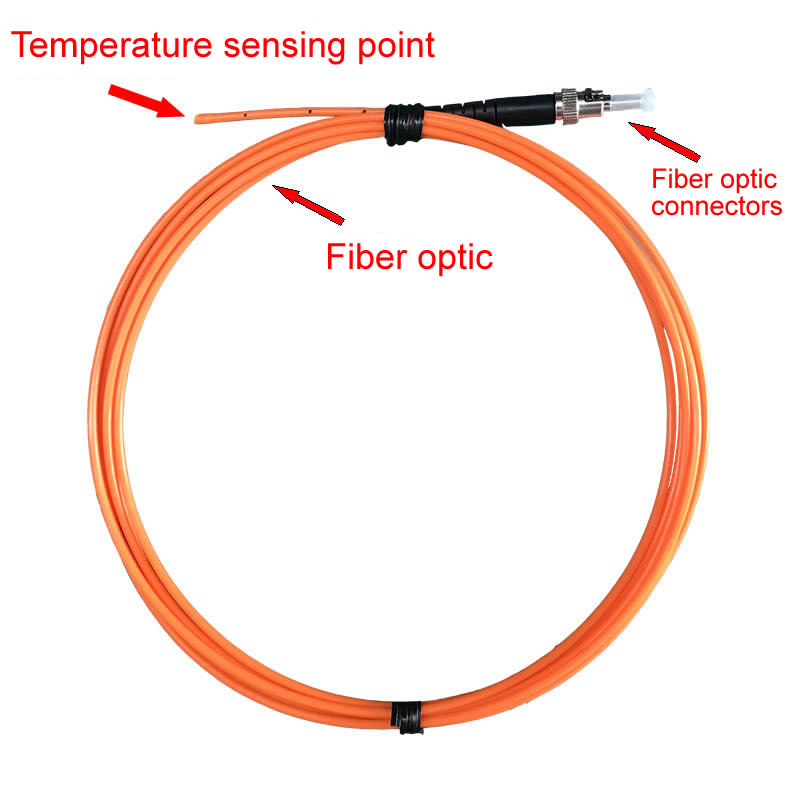
เซ็นเซอร์อุณหภูมิไฟเบอร์ออปติก: uses the properties of the optical signal in the fiber optic to measure temperature. This includes fluorescent fiber temperature sensors, distributed fiber temperature sensors, fiber Bragg grating temperature sensors, ฯลฯ. Fiber optic temperature sensors have the advantages of high sensitivity, ขนาดเล็ก, น้ำหนักเบา, easy bending, ไม่มีการรบกวนทางแม่เหล็กไฟฟ้า, ไม่มีการรบกวนทางแม่เหล็กไฟฟ้า, and good corrosion resistance. They are particularly suitable for temperature detection in harsh environments such as flammable, ระเบิด, พื้นที่แคบ, and highly corrosive gases, ของเหลว, and radiation pollution.
Logic output temperature sensor: Set a temperature range, and once the temperature exceeds the specified range, an alarm signal will be issued to turn on or off fans, air conditioners, เครื่องทำความร้อน, or other control devices. ตัวอย่างเช่น, in some computer server rooms, if the temperature exceeds the set range, the logic output temperature sensor will trigger the air conditioning to turn on or off.

2、 ลักษณะของ เซนเซอร์วัดอุณหภูมิไฟเบอร์ออปติกฟลูออเรสเซนต์
Fluorescent fiber optic temperature sensor is a sensor that uses fluorescent materials to undergo changes in fluorescence intensity or wavelength under temperature changes, และส่งสัญญาณผ่านใยแก้วนำแสงเพื่อให้สามารถตรวจจับอุณหภูมิได้.
มีความแม่นยำสูง: วัสดุฟลูออเรสเซนต์มีความไวต่อการเปลี่ยนแปลงของอุณหภูมิเป็นพิเศษ, making fluorescent fiber temperature sensors have high measurement accuracy. Because small changes in temperature can cause significant changes in fluorescence intensity or wavelength, accurate temperature values can be obtained by precisely measuring these changes. ตัวอย่างเช่น, in the field of medical diagnosis, fluorescent fiber optic temperature sensors can provide more accurate measurement results than traditional thermometers for detecting subtle changes in human body temperature.
การตอบสนองอย่างรวดเร็ว: able to quickly respond to temperature changes, monitor temperature changes in real time, และตอบกลับทันที. This is very important in some situations where real-time temperature monitoring is required, such as in energy management systems, for temperature monitoring of power equipment. Once the equipment temperature rises abnormally, sensors can quickly provide feedback information to take timely measures.
ความต้านทานไฟฟ้าแรงสูง: ผลิตภัณฑ์วัดอุณหภูมิไฟเบอร์ออปติกฟลูออเรสเซนต์มีความต้านทานไฟฟ้าแรงสูง, มีความต้านทานแรงดันไฟฟ้ามากกว่า 100KV. ช่วยให้สามารถวัดอุณหภูมิได้โดยตรงในสภาพแวดล้อมที่มีไฟฟ้าแรงสูง. ตัวอย่างเช่น, ในการตรวจสอบอุณหภูมิของอุปกรณ์ในสถานีไฟฟ้าแรงสูงพิเศษ, when facing high voltage environments exceeding 100KV, the end of the fluorescent fiber can make zero distance contact with the equipment for temperature measurement without being affected by high voltage, ช่วยให้มั่นใจได้ถึงการทำงานปกติของงานวัดและให้การสนับสนุนข้อมูลอุณหภูมิที่สำคัญสำหรับการทำงานอย่างปลอดภัยของอุปกรณ์ไฟฟ้า.
ความสามารถในการป้องกันการรบกวนที่แข็งแกร่ง: Traditional temperature sensors can be affected by interference signals, while fluorescent fiber temperature sensors are not affected by interference signals and can work normally in complex electromagnetic environments. In environments with strong electromagnetic interference, such as near substations or large motor equipment, fluorescent fiber optic temperature sensors can stably measure temperature without measurement errors caused by electromagnetic interference like traditional electronic temperature sensors.
ความมั่นคงในระยะยาว: วัสดุเรืองแสงมีความทนทานและเสถียรภาพสูง, และเซ็นเซอร์สามารถรักษาเสถียรภาพประสิทธิภาพสูงตลอดการใช้งานในระยะยาว. This means that in long-term temperature monitoring tasks, such as long-term temperature monitoring of large infrastructure such as bridges and dams, there is no need to frequently replace sensors or calibrate them.
Wide range of applicable environmental temperatures: เหมาะสำหรับอุณหภูมิสิ่งแวดล้อมที่หลากหลาย, จากต่ำไปลบไป่ตู้ไปสูงไปหลายร้อยองศา. Whether it is temperature monitoring of scientific research equipment in the extremely cold Arctic region or temperature measurement near high-temperature industrial furnaces, fluorescent fiber optic temperature sensors can work normally.
Flexibility and Scalability: สามารถเลือกและออกแบบวัสดุฟลูออเรสเซนต์ของเซนเซอร์ได้ตามความต้องการจริงเพื่อให้ตรงตามการใช้งานเฉพาะด้านต่างๆ. วัสดุเรืองแสงที่แตกต่างกันมีลักษณะการเรืองแสงที่อุณหภูมิแตกต่างกัน, และสามารถเลือกวัสดุเรืองแสงที่เหมาะสมที่สุดเพื่อสร้างเซ็นเซอร์ตามสถานการณ์การใช้งานเฉพาะได้, เช่น การวิจัยทางชีวการแพทย์, industrial process monitoring, ฯลฯ. สามารถขยายจำนวนหรือช่วงของจุดตรวจสอบได้ตามต้องการ.

3、 หลักการของ เซ็นเซอร์อุณหภูมิใยแก้วนำแสงแบบกระจาย
ใยแก้วนำแสงแบบกระจาย เซ็นเซอร์อุณหภูมิเป็นเซ็นเซอร์ที่ใช้เทคโนโลยีการตรวจจับใยแก้วนำแสงแบบกระจายเฉพาะเพื่อวัดหรือตรวจสอบการกระจายเชิงพื้นที่และข้อมูลเวลาตามเส้นทางการส่งผ่านใยแก้วนำแสง.
หลักการขึ้นอยู่กับเอฟเฟกต์การกระเจิง
การกระเจิงของเรย์ลีห์: เมื่อแสงถูกส่งผ่านใยแก้วนำแสง, การกระเจิงของเรย์ลีห์เกิดขึ้นเนื่องจากความไม่สม่ำเสมอของกล้องจุลทรรศน์ภายในเส้นใย, such as small changes in density, องค์ประกอบ, ฯลฯ. The intensity of Rayleigh scattering light is related to temperature, and temperature changes can cause changes in the microstructure of optical fiber materials, resulting in changes in the intensity of Rayleigh scattering light. อย่างไรก็ตาม, temperature measurement based solely on Rayleigh scattering has relatively low sensitivity, and in practical applications, it is often necessary to combine other scattering effects to improve measurement accuracy.
รามันกระจัดกระจาย: This is a commonly used scattering effect in distributed fiber optic temperature sensors. Raman scattering light is divided into Stokes light and anti Stokes light, and their intensity ratio has a specific functional relationship with temperature. เลเซอร์ที่ส่งผ่านเส้นใยจะทำปฏิกิริยากับโมเลกุลในเส้นใยเพื่อสร้างการกระเจิงแบบรามาน, และการเปลี่ยนแปลงของอุณหภูมิจะส่งผลต่อระดับพลังงานการสั่นสะเทือนของโมเลกุล, จึงเปลี่ยนอัตราส่วนความเข้มของแสงสโตกส์และแสงป้องกันสโตกส์. โดยการวัดอัตราส่วนความเข้มนี้, สามารถคำนวณค่าอุณหภูมิได้. ตัวอย่างเช่น, ในการตรวจสอบอุณหภูมิท่อส่งน้ำมันทางไกลบางแห่ง, เซ็นเซอร์อุณหภูมิไฟเบอร์ออปติกแบบกระจายตามการกระเจิงแบบรามันสามารถใช้วางไฟเบอร์ออปติกตามแนวท่อและตรวจสอบอุณหภูมิที่ตำแหน่งต่าง ๆ ของท่อแบบเรียลไทม์, ป้องกันอันตรายด้านความปลอดภัยที่เกิดจากอุณหภูมิน้ำมันสูงหรือต่ำ.
การกระเจิงของบริลลูอิน: ความถี่ของการกระเจิงของแสงบริลลูอินจะเปลี่ยนไปตามอุณหภูมิและความเครียด. ในเซ็นเซอร์วัดอุณหภูมิใยแก้วนำแสงแบบกระจาย, temperature information is obtained by measuring the frequency drift of Brillouin scattering light. การกระเจิงของบริลโลอินมีความไวต่อทั้งอุณหภูมิและความเครียด, and in practical applications, special techniques are needed to distinguish the effects of temperature and strain, such as using special fiber structures or measurement methods.
Application of Optical Time Domain Reflectometry (โอทีอาร์) เทคโนโลยี
Measurement principle: OTDR technology is an essential equipment for fault location and diagnosis in fiber optic communication, and also plays an important role in distributed fiber optic temperature sensors. It injects a light pulse into the fiber and detects the intensity of backscattered light in the fiber over time (distance). Due to temperature changes affecting the scattering characteristics in optical fibers, the intensity of backscattered light changes. By analyzing the distribution of backscattered light intensity, temperature distribution information along the length direction of the optical fiber can be obtained.
ความละเอียดเชิงพื้นที่: The spatial resolution of OTDR systems is generally on the order of meters. This means that it can distinguish temperature changes at a certain distance (เป็นเมตร) on the fiber optic cable. ตัวอย่างเช่น, in the structural health monitoring of large bridges, by combining distributed fiber optic temperature sensors with OTDR technology, temperature changes in different parts of the bridge (every few meters) can be monitored, thereby determining whether there are abnormal thermal stresses in the bridge structure.
The relationship between measurement accuracy and spatial resolution: There is generally a mutual constraint between the measurement accuracy and spatial resolution of a system. โดยปกติ, to improve spatial resolution, a certain level of measurement accuracy may be sacrificed, and vice versa. This is because when improving spatial resolution, it is necessary to analyze the backscattered light signal more finely, which may be affected by factors such as noise, thereby reducing measurement accuracy.
4、 การประยุกต์ใช้ของ เซ็นเซอร์วัดอุณหภูมิตะแกรงไฟเบอร์แบรกก์
Fiber Bragg grating temperature sensors have a wide range of applications in multiple fields.
Oil and gas exploration field
In the process of oil and gas extraction, the underground environment is complex, with harsh conditions such as high temperature, แรงดันสูง, and strong corrosion. Fiber Bragg grating temperature sensors can be installed on underground equipment or pipelines to monitor temperature changes in real time. ตัวอย่างเช่น, in the production string of an oil well, sensors can timely detect temperature increases caused by changes in formation temperature or frictional heating during the production process, providing a guarantee for safe production. ขณะเดียวกัน, by monitoring the temperature distribution, the mining process can be optimized and the mining efficiency can be improved.
สาขาการบินและอวกาศ
In the aerospace industry, there are extremely high requirements for the reliability and safety of equipment. The characteristics of fiber Bragg grating temperature sensors, such as small size, น้ำหนักเบา, fast response time, strong resistance to electromagnetic interference and corrosion, make them very suitable for temperature monitoring in aircraft engines, aviation electronic equipment, ฯลฯ. Installing fiber optic grating temperature sensors around high-temperature components such as combustion chambers and turbines in aircraft engines can monitor temperature in real-time and ensure that the engine operates within a safe temperature range. นอกจากนี้, in the thermal protection system of spacecraft, sensors can monitor temperature changes, providing data support for the performance evaluation and optimization of thermal protection materials.
Medical diagnosis field
Accurate temperature control is crucial in medical devices such as magnetic resonance imaging (เอ็มอาร์ไอ) อุปกรณ์, laser therapy equipment, ฯลฯ. Fiber Bragg grating temperature sensors can monitor the temperature of critical parts of equipment, preventing damage to patients and the equipment itself caused by overheating. ในเวลาเดียวกัน, in some minimally invasive medical surgeries, fiber optic grating temperature sensors can enter the human body through tiny fiber optic probes to monitor the temperature of tissues around the surgical site, providing guarantees for the safety and effectiveness of the surgery.
Industrial process control field
In various industrial production processes, such as chemical, metallurgical, and power industries, temperature is a key control parameter. Fiber Bragg grating temperature sensors can be used to monitor the temperature of equipment such as reaction vessels, เตาหลอม, และมอเตอร์. ตัวอย่างเช่น, in the chemical reaction kettle of chemical production, sensors can monitor the reaction temperature in real time to ensure that the reaction proceeds under optimal temperature conditions, improving product quality and production efficiency. ในระบบไฟฟ้า, temperature monitoring of high-voltage equipment, สายเคเบิล, ฯลฯ. in substations can timely detect potential fault hazards and avoid power accidents.
5、 Comparison of Three Types of Fiber Optic Temperature Sensors
In terms of measurement principles
เซนเซอร์วัดอุณหภูมิไฟเบอร์ออปติกฟลูออเรสเซนต์: measures temperature based on the change in fluorescence intensity or wavelength of fluorescent materials under temperature changes. When fluorescent materials are affected by temperature changes, their fluorescence characteristics will also change. เซ็นเซอร์อุณหภูมิใยแก้วนำแสงฟลูออเรสเซนต์ทั่วไปมีแหล่งกำเนิดแสง, ใยแก้วนำแสง, วัสดุเรืองแสง, และเครื่องวิเคราะห์สเปกตรัม. แหล่งกำเนิดแสงจะสร้างแสงกระตุ้นที่ความยาวคลื่นหนึ่ง, ซึ่งถูกส่งไปยังวัสดุเรืองแสงผ่านใยแก้วนำแสง. The fluorescent material absorbs the excitation light and emits a fluorescence signal with a specific wavelength, which is then transmitted back to the spectrometer for detection through the optical fiber. สามารถกำหนดค่าอุณหภูมิได้โดยการวัดความเข้มหรือความยาวคลื่นของสัญญาณเรืองแสง.
เซ็นเซอร์อุณหภูมิใยแก้วนำแสงแบบกระจาย: mainly based on scattering effects in optical fibers (เช่น การกระเจิงของเรย์ลีห์, รามันกระจัดกระจาย, การกระเจิงของบริลลูอิน) and optical time domain reflectometry (โอทีอาร์) technology to achieve temperature measurement. By injecting light pulses into the optical fiber, the intensity, ความถี่, and other characteristics of backscattered light can be detected as a function of time (distance). Since temperature affects these scattering characteristics, temperature distribution information along the length direction of the optical fiber can be obtained.
เซ็นเซอร์วัดอุณหภูมิตะแกรงไฟเบอร์แบรกก์: Utilizing the photosensitivity of fiber optic materials to form a spatial phase grating in the fiber core for temperature measurement. ตะแกรงไฟเบอร์แบรกก์ (เอฟบีจี) is a type of fiber with a periodically changing refractive index. เมื่ออุณหภูมิเปลี่ยนแปลง, the Bragg wavelength of the grating shifts, enabling temperature measurement.
In terms of performance characteristics
ความแม่นยำในการวัด
เซนเซอร์วัดอุณหภูมิไฟเบอร์ออปติกฟลูออเรสเซนต์: It has high measurement accuracy because fluorescent materials are very sensitive to temperature changes and can accurately reflect small temperature changes.
เซ็นเซอร์อุณหภูมิใยแก้วนำแสงแบบกระจาย: Its measurement accuracy is affected by various factors, such as the complexity of scattering effects and the resolution of OTDR technology. ในการใช้งานจริง, the accuracy of distributed fiber optic temperature sensors based on Raman scattering is generally around 1-2 ℃, but with the development of technology, the accuracy is also constantly improving.
เซ็นเซอร์วัดอุณหภูมิตะแกรงไฟเบอร์แบรกก์: มีความแม่นยำสูง, ตัวอย่างเช่น, some fiber Bragg grating temperature sensors that use special packaging and measurement techniques can achieve an accuracy of 0.02 ℃.
ความเร็วในการตอบสนอง
เซนเซอร์วัดอุณหภูมิไฟเบอร์ออปติกฟลูออเรสเซนต์: With fast response speed, it can monitor temperature changes in real time and respond immediately, making it advantageous in situations where rapid temperature response is required.
เซ็นเซอร์อุณหภูมิใยแก้วนำแสงแบบกระจาย: The response speed depends on the emission frequency of the light pulse and the signal processing speed. พูดโดยทั่วไป, it can meet the temperature monitoring needs in most practical applications, but may be slightly slower compared to fluorescent fiber optic temperature sensors.
เซ็นเซอร์วัดอุณหภูมิตะแกรงไฟเบอร์แบรกก์: With fast response time, it can quickly sense temperature changes and output corresponding wavelength offset signals.
ความละเอียดเชิงพื้นที่
เซ็นเซอร์อุณหภูมิใยแก้วนำแสงแบบกระจาย: It has unique distributed measurement capabilities and can measure temperature distribution along the length of the fiber optic cable. The spatial resolution is generally on the order of meters (when using OTDR technology), and some systems that use advanced technologies (such as OFDR) can achieve millimeter level spatial resolution.
เซนเซอร์วัดอุณหภูมิไฟเบอร์ออปติกฟลูออเรสเซนต์: Although it can achieve distributed measurement, it mainly focuses on temperature measurement at multiple discrete points, and its spatial resolution is not as good as that of distributed fiber optic temperature sensors, which can continuously measure temperature distribution along the fiber optic.
เซ็นเซอร์วัดอุณหภูมิตะแกรงไฟเบอร์แบรกก์: It usually measures the temperature at a specific location and does not have the continuous spatial resolution characteristics of distributed fiber optic temperature sensors.
ความสามารถในการป้องกันการรบกวน
เซนเซอร์วัดอุณหภูมิไฟเบอร์ออปติกฟลูออเรสเซนต์: It is not affected by interference signals and can work normally in complex electromagnetic environments. This is because its measurement principle based on optical signals has a natural immunity to electromagnetic interference.
เซ็นเซอร์อุณหภูมิใยแก้วนำแสงแบบกระจาย: It also has good anti-interference ability because fiber optic itself is an insulator, and measurement is based on the optical signal in the fiber optic, which is not easily affected by external electromagnetic interference.
เซ็นเซอร์วัดอุณหภูมิตะแกรงไฟเบอร์แบรกก์: It has strong resistance to electromagnetic interference, and due to its optical properties based on grating structure for temperature measurement, it also has good resistance to interference such as chemical corrosion and vibration in the environment.
Applicable temperature range
เซนเซอร์วัดอุณหภูมิไฟเบอร์ออปติกฟลูออเรสเซนต์: suitable for a wide range of environmental temperatures, จากต่ำสุดลบ Baidu ไปจนถึงสูงถึงหลายร้อยองศาเซลเซียส, and can adapt to temperature measurement needs in various extreme temperature environments.
Distributed fiber optic temperature sensors: Different types of distributed fiber optic temperature sensors have different temperature ranges, but they can generally cover a wide temperature range, such as common industrial and environmental temperature ranges from -50 ℃ถึง 150 ℃.
เซ็นเซอร์วัดอุณหภูมิตะแกรงไฟเบอร์แบรกก์: It can work normally in both high and low temperature environments, ตัวอย่างเช่น, it can be used for temperature measurement range of -200 ℃ -800 ℃, depending on factors such as the material and packaging of the fiber Bragg grating.
In terms of application areas
เซนเซอร์วัดอุณหภูมิไฟเบอร์ออปติกฟลูออเรสเซนต์: widely used for real-time temperature monitoring and control in fields such as medical diagnosis and energy management. ในด้านการแพทย์, it can be used for precise measurement of human body temperature and monitoring of organ temperature inside the body; In terms of energy management, temperature monitoring of power equipment, thermal pipelines, ฯลฯ. can be carried out.
Distributed fiber optic temperature sensors: widely used in stress, ความเครียด, and temperature monitoring of large structures (such as pipelines, offshore oil platforms, บ่อน้ำมัน, เขื่อน, embankments, สะพาน, อาคาร, อุโมงค์, สายเคเบิล, ฯลฯ), การตรวจจับการรั่วไหล (liquid or natural gas pipelines, กระบวนการทางอุตสาหกรรม, เขื่อน, รถถัง, ฯลฯ), การขนส่ง (ice detection on road surfaces, railway monitoring, ฯลฯ), safety systems (fire or overheating temperature detection, การตรวจสอบสายไฟ, signal eavesdropping monitoring, garbage disposal station monitoring, landslide monitoring, ฯลฯ), การสื่อสารใยแก้วนำแสง (fiber optic cable production online control, fiber optic cable maintenance, work cable strain monitoring, fiber optic impurity measurement, ฯลฯ), environmental measurement (ความร้อน, การระบายอากาศ, and air conditions, long-term temperature measurement of external oceans, forests, and outdoor places), ฯลฯ. The application.
เซ็นเซอร์วัดอุณหภูมิตะแกรงไฟเบอร์แบรกก์: It has been widely used in various environmental monitoring fields such as oil and gas exploration, การบินและอวกาศ, medical diagnosis, and industrial process control. Used for temperature monitoring of downhole equipment and pipelines in the oil and gas industry; Temperature monitoring for aircraft engines, aviation electronic equipment, ฯลฯ. ในสาขาการบินและอวกาศ; Used in the medical field for temperature control of medical equipment and temperature monitoring of surgical sites; Used in the industrial field for temperature monitoring of various equipment and production processes.

เซ็นเซอร์อุณหภูมิไฟเบอร์ออปติก, ระบบตรวจสอบอัจฉริยะ, จำหน่ายผู้ผลิตใยแก้วนำแสงในประเทศจีน
|
 |
 |