 INNO เซ็นเซอร์วัดอุณหภูมิใยแก้วนำแสง ,ระบบตรวจสอบอุณหภูมิ.
- การตรวจจับอุณหภูมิใยแก้วนำแสงเรืองแสง works by measuring how fast a phosphor material stops glowing after a light pulse — the cooler the target, the slower the glow fades; the hotter it gets, the faster it fades.
- This time-based measurement principle is inherently immune to signal loss from fiber bending, อายุของตัวเชื่อมต่อ, or light source degradation — giving buyers long-term accuracy without frequent recalibration.
- Three mainstream fiber optic temperature technologies exist: อายุการใช้งานเรืองแสง, ตะแกรงไฟเบอร์แบรกก์ (เอฟบีจี), และ รามันกระจัดกระจาย. Each serves different project requirements, and choosing the wrong one is a costly mistake.
- This article explains the fluorescence mechanism in plain business language, compares it with alternative fiber optic approaches, and shows procurement professionals exactly what to verify on a supplier datasheet before placing an order.
- Published by ฟจินโน, a fluorescence fiber optic thermometry manufacturer since 2011, this guide helps B2B buyers make technology-informed purchasing decisions with confidence.
สารบัญ
- Why Procurement Professionals Need to Understand the Underlying Technology
- The Fluorescence Decay Principle — Explained Without the Physics Jargon
- Why Time-Based Measurement Beats Intensity-Based Measurement
- Three Fiber Optic Temperature Technologies Buyers Will Encounter
- Fluorescence Lifetime Sensing vs. ตะแกรงไฟเบอร์แบรกก์ (เอฟบีจี)
- Fluorescence Lifetime Sensing vs. การตรวจจับอุณหภูมิแบบกระจายรามาน
- When Fluorescence Is the Clear Winner — And When It Is Not
- How to Read a Fiber Optic Temperature Sensor Datasheet
- Five Red Flags That Reveal a Weak Supplier
- Matching the Right Technology to Your Project Scope
- Real-World Deployment Scenarios Where Fluorescence Sensing Delivers
- Questions Your Engineering Team Should Ask Before You Sign
- คำถามที่พบบ่อย (คำถามที่พบบ่อย)
1. Why Procurement Professionals Need to Understand the Underlying Technology

If you are sourcing a ระบบวัดอุณหภูมิใยแก้วนำแสง, you will encounter multiple competing technologies — all marketed under similar-sounding names. Suppliers offering fluorescence-based systems, ระบบเอฟบีจี, and Raman systems will each claim superior performance, and their datasheets will look convincingly similar at first glance. Without a working understanding of how each technology functions, procurement teams risk selecting a system that is technically mismatched to the project environment, overpaying for capabilities they do not need, or underspecifying a system that fails in the field.
This article is not written for laboratory researchers. It is written for project buyers, procurement engineers, and sourcing managers who need to understand just enough about การตรวจจับอุณหภูมิใยแก้วนำแสงเรืองแสง เพื่อประเมินข้อเสนอของซัพพลายเออร์อย่างมีวิจารณญาณ, ถามคำถามที่ถูกต้อง, และหลีกเลี่ยงข้อผิดพลาดราคาแพง.
2. The Fluorescence Decay Principle — Explained Without the Physics Jargon

ที่ปลายสุดของทุกๆ หัววัดอุณหภูมิไฟเบอร์ออปติกเรืองแสง, มีวัสดุฟอสเฟอร์ชิ้นเล็กๆ ซึ่งเป็นสารที่เรืองแสงได้ในเวลาสั้นๆ เมื่อโดนแสง. กระบวนการวัดทำงานในสามขั้นตอนง่ายๆ.
ขั้นตอนที่หนึ่ง: ชีพจรของแสงเดินทางลงไปตามเส้นใย
เครื่องดีมอดูเลเตอร์ (เครื่องดนตรีหลัก) จะส่งแสงวาบสั้นๆ ผ่านสายเคเบิลใยแก้วนำแสงไปยังปลายโพรบ. ซึ่งคล้ายกับแฟลชกล้อง โดยจะเปิดเพียงเสี้ยววินาทีแล้วดับลง.
ขั้นตอนที่สอง: สารเรืองแสงเรืองแสงแล้วจางหายไป
เมื่อพัลส์แสงกระทบกับสารเรืองแสง, สารเรืองแสงจะดูดซับพลังงานและเริ่มเรืองแสง (เรืองแสง). ทันทีที่ชีพจรแสงหยุดลง, สารเรืองแสงจะไม่มืดลงทันที แต่จะค่อยๆ จางลง, เหมือนแสงระเรื่อของหลอดไฟหลังจากที่คุณปิดสวิตช์.
ขั้นตอนที่สาม: ความเร็วที่จางลงจะบอกอุณหภูมิให้คุณทราบ
นี่คือข้อมูลเชิงลึกที่สำคัญ: ความเร็วที่แสงเรืองแสงจางลงนั้นเชื่อมโยงโดยตรงกับอุณหภูมิ. ที่อุณหภูมิต่ำกว่า, แสงเรืองรองจางลงอย่างช้าๆ. ที่อุณหภูมิสูงขึ้น, มันจางหายไปอย่างรวดเร็ว. เครื่องดีโมดูเลเตอร์จะวัดความเร็วการเฟดนี้ — ในทางเทคนิคเรียกว่า อายุการใช้งานของฟลูออเรสเซนต์สลายตัว — และแปลงเป็นการอ่านค่าอุณหภูมิที่แม่นยำ.
เหตุใดผู้ซื้อจึงควรสนใจเรื่องนี้?
เพราะการวัดขึ้นอยู่กับจังหวะเวลา (แสงเรืองรองจะจางหายไปเร็วแค่ไหน), ไม่ได้อยู่ที่แสงที่ส่องสว่างแค่ไหน. ความแตกต่างนี้มีผลกระทบในทางปฏิบัติอย่างมาก. หากสายไฟเบอร์งอ, ขั้วต่อสกปรก, หรือแหล่งกำเนิดแสงอ่อนลงเล็กน้อยตลอดอายุการใช้งานหลายปี, the brightness of the return signal may decrease — but the fade speed remains unchanged. นี่หมายถึงก fluorescence lifetime fiber optic temperature sensor stays accurate year after year without recalibration, even as the optical path degrades naturally with age.
3. Why Time-Based Measurement Beats Intensity-Based Measurement
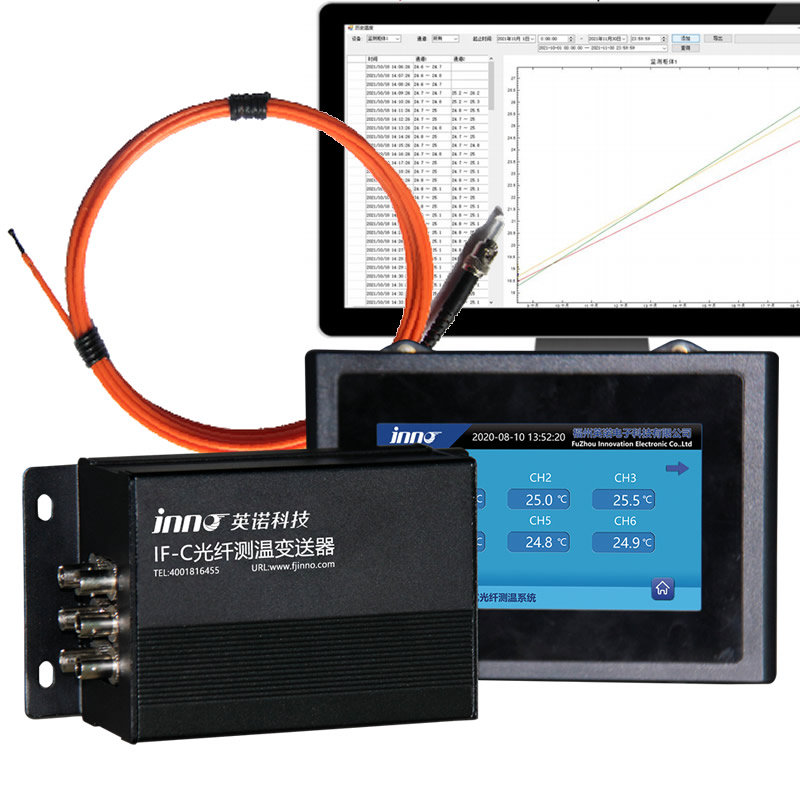
Some older or lower-cost fiber optic temperature systems measure temperature by looking at the brightness (ความเข้ม) of the fluorescence rather than its decay speed. This approach is simpler and cheaper to build, but it introduces a fundamental weakness: anything that reduces signal brightness — fiber bending, dirty connectors, สายเคเบิลยาว, or LED aging — is misinterpreted as a temperature change.
For a B2B buyer, the practical difference is significant. หนึ่ง intensity-based fiber optic temperature sensor may require recalibration every 6–12 months and is prone to false readings if the installation is disturbed during maintenance. ก fluorescence decay lifetime sensor typically holds its calibration for 2–3 years or more and is virtually unaffected by routine disturbances to the fiber path. When evaluating supplier proposals, always confirm whether the system uses lifetime-based or intensity-based measurement. This single question can separate a reliable long-term investment from a maintenance headache.
4. Three Fiber Optic Temperature Technologies Buyers Will Encounter
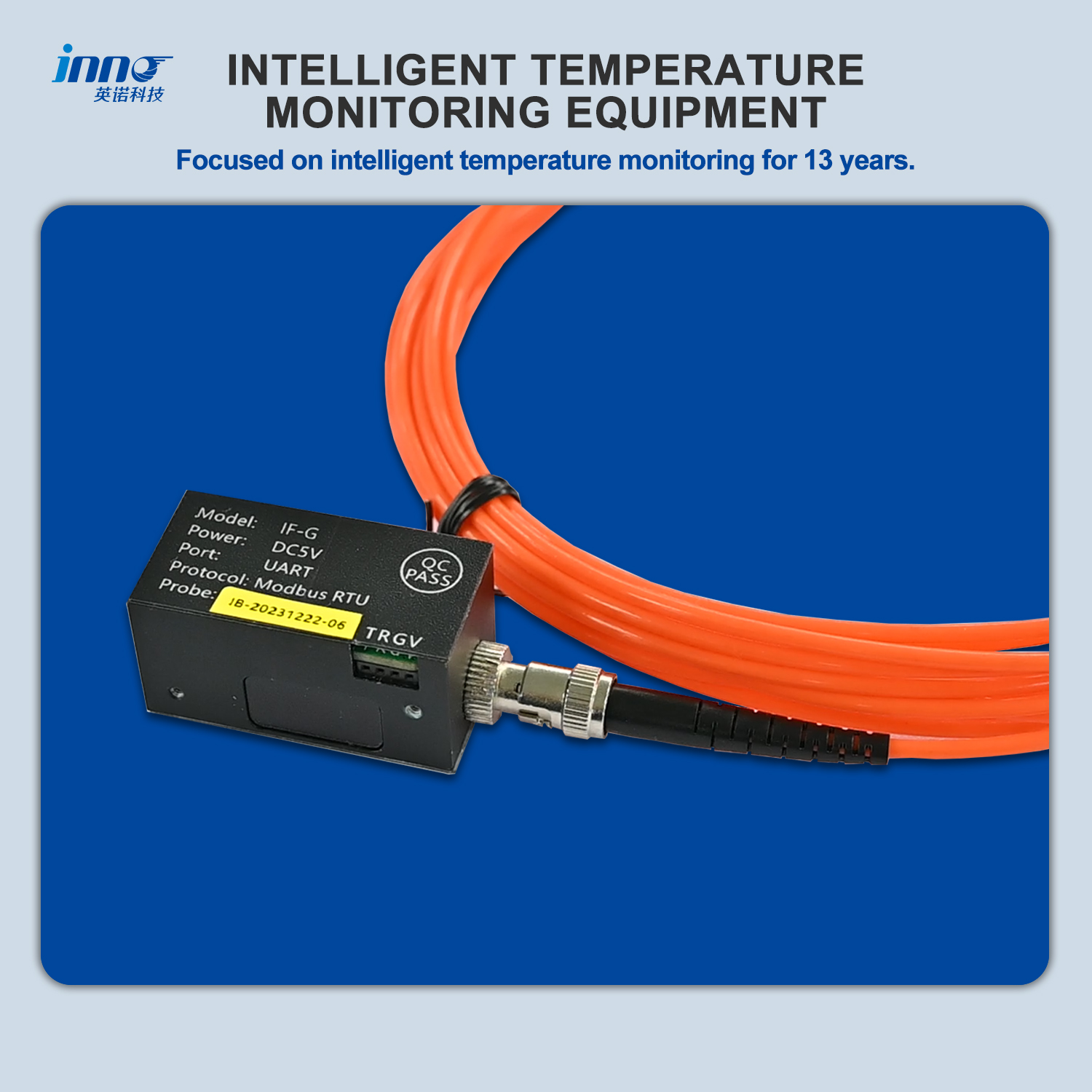
When sourcing optical fiber temperature measurement systems, procurement teams will encounter three mainstream technologies. Each has a fundamentally different operating principle, and each is optimized for a different type of project.
Fluorescence Lifetime Sensing
Point-measurement technology. Each probe measures temperature at one specific location. Ideal for monitoring discrete hotspots on transformers, หน้าสัมผัสสวิตช์เกียร์, battery cells, และขดลวดมอเตอร์. ให้ความแม่นยำสูง (±1 องศาเซลเซียส), ตอบสนองอย่างรวดเร็ว (ภายใต้ 1 ที่สอง), and complete electrical isolation.
ตะแกรงไฟเบอร์แบรกก์ (เอฟบีจี) การตรวจจับ
Quasi-distributed technology. Multiple sensing points (gratings) are written into a single fiber, allowing dozens of measurement points along one cable. Commonly used for structural health monitoring of bridges, ท่อ, and large civil structures. Less commonly used for high-voltage electrical equipment because FBG fibers can be sensitive to strain and require wavelength-stable interrogators.
การตรวจจับอุณหภูมิแบบกระจายรามาน (ดีทีเอส)

Fully distributed technology. Measures temperature continuously along the entire length of a fiber — potentially covering kilometers. Used for pipeline leak detection, การตรวจจับไฟในอุโมงค์, และการรักษาความปลอดภัยปริมณฑล. Accuracy is lower than point sensors (typically ±1–2 °C), and spatial resolution is measured in meters rather than millimeters.
5. Fluorescence Lifetime Sensing vs. ตะแกรงไฟเบอร์แบรกก์ (เอฟบีจี)
B2B buyers sometimes receive competing proposals from เซนเซอร์ไฟเบอร์ออปติกเรืองแสง suppliers and เซ็นเซอร์ FBG suppliers for the same project. Understanding the fundamental differences helps you evaluate whether the proposed technology is appropriate.
การแยกไฟฟ้า
ก หัววัดอุณหภูมิไฟเบอร์ออปติกเรืองแสง is completely passive at the sensing point — only light reaches the probe tip. FBG sensors are also passive, but the interrogator typically requires a broadband light source and high-resolution spectrometer, making the demodulation hardware more complex and expensive.
Sensitivity to Strain
FBG sensors are inherently sensitive to both temperature and mechanical strain. If the fiber is stretched or compressed — common in vibrating environments like motor windings or transformer tanks — the strain signal mixes with the temperature signal, introducing errors. Fluorescence sensors measure only temperature and are unaffected by mechanical strain on the fiber.
ต้นทุนต่อจุดวัด
For projects with fewer than 20–30 measurement points concentrated in a small area, fluorescence-based systems are typically more cost-effective. FBG systems become competitive when a project requires 50 or more measurement points distributed along a single long fiber run.
Buyer Takeaway
If your project involves high-voltage equipment, strong EMI, การสั่นสะเทือน, or a moderate number of discrete hotspot locations, fluorescence is almost always the better fit. If your project involves measuring temperature profiles along very long structures, FBG or Raman may be more appropriate.
6. Fluorescence Lifetime Sensing vs. การตรวจจับอุณหภูมิแบบกระจายรามาน

Raman DTS and fluorescence point sensors are complementary rather than competing technologies in many cases. อย่างไรก็ตาม, some suppliers position Raman DTS as a replacement for fluorescence sensing, which can lead to poor project outcomes.
Precision vs. ความคุ้มครอง
ก เครื่องวัดอุณหภูมิไฟเบอร์ออปติกเรืองแสง delivers ±1 °C accuracy at a specific point. A Raman DTS system delivers ±1–2 °C accuracy averaged over a spatial resolution window of 0.5–2 meters. For detecting a hotspot on a single busbar bolt or a specific battery cell, Raman resolution is far too coarse.
เวลาตอบสนอง
Fluorescence sensors respond in under 1 ที่สอง. Raman DTS systems typically require 30 seconds to several minutes of signal averaging to achieve acceptable accuracy, making them unsuitable for applications where temperature changes rapidly.
System Complexity and Cost
Raman DTS interrogators are significantly more expensive than fluorescence demodulators and require specialized fiber installation over long distances. For localized monitoring tasks, ก ระบบวัดอุณหภูมิไฟเบอร์ออปติกเรืองแสง delivers superior performance at a fraction of the cost.
7. When Fluorescence Is the Clear Winner — And When It Is Not
No technology is perfect for every application. Honest guidance helps buyers avoid both over-engineering and under-engineering their monitoring systems.
Fluorescence Is the Clear Winner When:
The project requires high-accuracy point measurement (±1 °C or better) in environments with strong electromagnetic interference, ไฟฟ้าแรงสูง, explosion risk, or confined spaces. Typical examples include transformer winding hotspot monitoring, การตรวจจับอุณหภูมิหน้าสัมผัสสวิตช์เกียร์, การตรวจสอบความร้อนของเซลล์แบตเตอรี่, และ การวัดอุณหภูมิข้อต่อสายเคเบิล.
การเรืองแสงอาจไม่เหมาะที่สุดเมื่อใด:
โครงการนี้ต้องการโปรไฟล์อุณหภูมิอย่างต่อเนื่องในระยะทางที่เกินหลายร้อยเมตร (รามันดีทีเอสดีกว่า), หรือเมื่อมากกว่านั้น 100 จำเป็นต้องมีจุดตรวจจับตามโครงสร้างเชิงเส้นเดี่ยว (FBG อาจจะประหยัดกว่า). การรับรู้ขอบเขตเหล่านี้แสดงให้เห็นถึงความซื่อสัตย์ของซัพพลายเออร์และช่วยให้ผู้ซื้อเชื่อถือคำแนะนำ.
8. How to Read a Fiber Optic Temperature Sensor Datasheet

เอกสารข้อมูลสินค้าของซัพพลายเออร์เป็นเครื่องมือหลักในการเปรียบเทียบผลิตภัณฑ์, แต่ไม่ใช่ทุกแผ่นข้อมูลที่นำเสนอข้อมูลในลักษณะเดียวกัน. ต่อไปนี้เป็นข้อกำหนดสำคัญที่ควรมุ่งเน้นและความหมายสำหรับโครงการของคุณ.
ช่วงการวัด
โดยทั่วไป –40 °C ถึง +260 °C สำหรับมาตรฐาน หัววัดไฟเบอร์ออปติกเรืองแสง. Confirm that the stated range covers your worst-case operating conditions with margin. Some suppliers quote the phosphor material’s theoretical range rather than the tested system range — always ask for system-level specifications.
ความแม่นยำและความละเอียด
ความแม่นยำ (±1 องศาเซลเซียส) tells you how close the reading is to the true temperature. ปณิธาน (0.1 องศาเซลเซียส) tells you the smallest change the system can detect. Both matter, but accuracy is the specification that affects your process control decisions. Ask whether the stated accuracy applies across the full temperature range or only at a single calibration point.
เวลาตอบสนอง
Defined as the time to reach 90% of a step temperature change. For most fluorescence optical fiber temperature sensors, this is under 1 ที่สอง. Be cautious of datasheets that quote response time without specifying the measurement condition (in air, in oil, หรือสัมผัสกับโลหะ).
ความยาวเส้นใยสูงสุด
ระยะห่างจากเครื่องดีมอดูเลเตอร์ถึงโพรบที่ไกลที่สุด. มาตรฐานคือ 30–80 เมตร. หากการติดตั้งของคุณต้องใช้เวลาดำเนินการนานขึ้น, ยืนยันข้อกำหนดด้านประสิทธิภาพตามระยะทางที่ต้องการจริง, ไม่ใช่แค่ระยะทางที่กำหนดสูงสุดเท่านั้น.
จำนวนช่อง
โดยทั่วไปแล้ว เครื่องดีมอดูเลเตอร์หนึ่งเครื่องสามารถตรวจสอบได้พร้อมกันกี่จุด 1 ถึง 64. สิ่งนี้ส่งผลโดยตรงต่อต้นทุนต่อจุดและพื้นที่ชั้นวางของคุณ.
9. Five Red Flags That Reveal a Weak Supplier
หลังจากประเมินการโต้ตอบการจัดหาหลายร้อยรายการใน เซ็นเซอร์อุณหภูมิใยแก้วนำแสง ตลาด, รูปแบบบางอย่างบ่งชี้ซัพพลายเออร์ที่อาจส่งมอบน้อยไปอย่างสม่ำเสมอ.
ธงแดง 1: ไม่มีการผลิตภายในองค์กร
หากซัพพลายเออร์เป็นบริษัทการค้าที่จำหน่ายผลิตภัณฑ์ของผู้ผลิตรายอื่น, คุณจะสูญเสียการเข้าถึงการสนับสนุนทางเทคนิคโดยตรง, การปรับแต่ง, และความรับผิดชอบที่มีคุณภาพ. ถามเสมอว่าซัพพลายเออร์ผลิตเครื่องดีโมดูเลเตอร์หรือไม่, โพรบ, หรือทั้งสองอย่าง.
ธงแดง 2: การกล่าวอ้างความถูกต้องที่คลุมเครือ
งบเช่น “ความแม่นยำสูง” หรือ “การวัดที่แม่นยำ” หากไม่มีค่า ±เฉพาะในช่วงอุณหภูมิที่กำหนดจะไม่มีความหมาย. ผู้ผลิตที่มีชื่อเสียงเผยแพร่ตัวเลขความแม่นยำที่ผ่านการทดสอบแล้วพร้อมความสามารถในการตรวจสอบย้อนกลับของการสอบเทียบ.
ธงแดง 3: ไม่มีโครงการอ้างอิงในอุตสาหกรรมของคุณ
ซัพพลายเออร์ที่ไม่เคยใช้งานก ระบบตรวจสอบอุณหภูมิใยแก้วนำแสงเรืองแสง ในแอปพลิเคชันเฉพาะของคุณ (พลัง, การจัดเก็บพลังงาน, ทางอุตสาหกรรม) อาจไม่เข้าใจข้อจำกัดในการติดตั้งและข้อกำหนดด้านสิ่งแวดล้อมเฉพาะสำหรับภาคส่วนของคุณ.
ธงแดง 4: ไม่มีความสามารถในการปรับแต่ง
ทุกโครงการมีความยาวโพรบแตกต่างกันเล็กน้อย, วัสดุเปลือก, เส้นทางสายเคเบิล, และข้อกำหนดโปรโตคอลการสื่อสาร. ซัพพลายเออร์ที่เสนอเฉพาะการกำหนดค่าแค็ตตาล็อกคงที่อาจบังคับให้คุณต้องประนีประนอมกับคุณภาพการติดตั้ง.
ธงแดง 5: ไม่มีการสนับสนุนด้านวิศวกรรมหลังการขาย
ระบบตรวจสอบอุณหภูมิจำเป็นต้องได้รับการสนับสนุนทางเทคนิคเป็นครั้งคราว — ความช่วยเหลือในการทดสอบเดินเครื่อง, การกำหนดค่าโปรโตคอล, และการตรวจสอบการสอบเทียบ. หากซัพพลายเออร์ไม่สามารถให้การสนับสนุนด้านวิศวกรรมระยะไกลในภาษาและเขตเวลาของคุณได้, ปัญหาหลังการซื้อจะกลายเป็นปัญหาของคุณเพียงอย่างเดียว.
10. Matching the Right Technology to Your Project Scope
ข้อผิดพลาดในการจัดซื้อจัดจ้างที่พบบ่อยที่สุดคือการเลือกเทคโนโลยีก่อนที่จะกำหนดข้อกำหนดของโครงการทั้งหมด. ก่อนที่จะขอใบเสนอราคาสำหรับ ระบบวัดอุณหภูมิใยแก้วนำแสง, ทีมงานโครงการของคุณควรกำหนดจำนวนจุดการวัดแยกที่ต้องการอย่างชัดเจน, ระยะห่างทางกายภาพระหว่างเซ็นเซอร์ที่ไกลที่สุดและห้องตรวจสอบ, สภาพแวดล้อม ณ ตำแหน่งการตรวจจับ (อุณหภูมิสุดขั้ว, ระดับอีเอ็มไอ, ระดับแรงดันไฟฟ้า, การสัมผัสสารเคมี), โปรโตคอลการสื่อสารที่จำเป็นสำหรับการรวมเข้ากับ SCADA หรือ DCS ที่มีอยู่, และการติดตั้งเป็นการสร้างใหม่หรือดัดแปลง. Providing these details in your RFQ ensures that suppliers propose the correct technology — fluorescence, เอฟบีจี, or Raman — rather than defaulting to whatever product they happen to sell.
11. Real-World Deployment Scenarios Where Fluorescence Sensing Delivers
ฝูโจวนวัตกรรมวิทยาศาสตร์อิเล็กทรอนิกส์&บริษัท เทค จำกัด, บจ. (ฟจินโน) has been manufacturing fluorescence optical fiber thermometry systems เนื่องจาก 2011. Over more than a decade of project delivery, certain deployment scenarios have consistently demonstrated the strongest return on investment for B2B buyers.
หม้อแปลงไฟฟ้า
หัววัดอุณหภูมิแบบไฟเบอร์ออปติก embedded in transformer windings during manufacturing provide direct hotspot temperature data that oil-top thermometers and thermal imaging cannot replicate. This data enables load optimization and prevents insulation degradation.
ปานกลาง- and High-Voltage Switchgear
Continuous contact temperature monitoring with เซนเซอร์ไฟเบอร์ออปติกเรืองแสง detects progressive resistance increases at busbar joints months before thermal failure occurs, ช่วยให้สามารถบำรุงรักษาตามแผนแทนการปิดระบบฉุกเฉิน.
การจัดเก็บพลังงานแบตเตอรี่ลิเธียมไอออน
การตรวจสอบความร้อนระดับเซลล์ด้วยระบบไฟฟ้าแบบพาสซีฟ หัววัดอุณหภูมิแบบใยแก้วนำแสง ให้ข้อมูลที่สำคัญด้านความปลอดภัยที่จำเป็นในการตรวจจับสารตั้งต้นที่หนีความร้อนโดยไม่ทำให้เกิดความเสี่ยงในการติดไฟในกรอบหุ้มแบตเตอรี่.
มอเตอร์อุตสาหกรรมและเครื่องกำเนิดไฟฟ้า
การตรวจสอบอุณหภูมิของขดลวดสเตเตอร์ในเครื่องจักรแบบหมุนขนาดใหญ่ที่ทำงานใกล้กับไดรฟ์ความถี่แปรผัน, โดยที่ EMI ทำให้เซ็นเซอร์ทั่วไปไม่น่าเชื่อถือ.
12. Questions Your Engineering Team Should Ask Before You Sign
ก่อนที่จะสรุปคำสั่งซื้อสำหรับก ระบบตรวจจับอุณหภูมิใยแก้วนำแสงเรืองแสง, ผู้เชี่ยวชาญด้านการจัดซื้อควรตรวจสอบให้แน่ใจว่าทีมวิศวกรของตนได้ยืนยันคำตอบสำหรับคำถามที่สำคัญเหล่านี้แล้ว: ซัพพลายเออร์ใช้อายุการใช้งานของฟลูออเรสเซนต์หรือการวัดความเข้มของฟลูออเรสเซนต์หรือไม่ และพวกเขาสามารถอธิบายความแตกต่างได้หรือไม่? What is the system-level accuracy across the full operating temperature range, not just at a single calibration point? What is the expected probe lifespan under your specific operating conditions? Can the demodulator firmware be updated in the field, or must the unit be returned to the factory? What warranty terms apply to the probes, the demodulator, and the fiber cables separately? Gathering these answers before contract execution prevents disputes and ensures the delivered system matches your technical expectations.
13. คำถามที่พบบ่อย (คำถามที่พบบ่อย)
ไตรมาสที่ 1: What is fluorescence decay lifetime, and why does it matter for temperature measurement?
Fluorescence decay lifetime is the time it takes for the phosphor glow at the probe tip to fade after a light pulse. This fade time changes predictably with temperature, forming the basis of the measurement. เพราะมันขึ้นอยู่กับจังหวะมากกว่าความสว่าง, การอ่านมีภูมิคุ้มกันต่อการสูญเสียสัญญาณจากการแก่ของเส้นใย, ดัด, หรือขั้วต่อสกปรก — ซึ่งเป็นสาเหตุว่าทำไม ไฟเบอร์ออปติกเซนเซอร์อายุการใช้งานเรืองแสง เก็บการสอบเทียบได้นานกว่าทางเลือกอื่นที่อิงตามความเข้มมาก.
ไตรมาสที่ 2: อะไรคือความแตกต่างระหว่างการตรวจจับไฟเบอร์เรืองแสงและการตรวจจับไฟเบอร์ FBG?
การตรวจจับใยแก้วนำแสงเรืองแสง วัดอุณหภูมิ ณ จุดแยกโดยใช้หลักการสลายตัวของสารเรืองแสง และมีภูมิคุ้มกันต่อความเครียดทางกล. การตรวจจับ FBG ใช้การเปลี่ยนแปลงความยาวคลื่นในแสงเลเซอร์ที่สะท้อนโดยตะแกรงที่เขียนลงในไฟเบอร์ และมีความไวต่อทั้งอุณหภูมิและความเครียด. สำหรับการตรวจสอบฮอตสปอตไฟฟ้าแรงสูง, โดยทั่วไปแล้วควรใช้ฟลูออเรสเซนต์.
ไตรมาสที่ 3: ระบบเรืองแสงและระบบ Raman DTS สามารถใช้ร่วมกันในโครงการเดียวกันได้หรือไม่?
ใช่. Many large-scale projects use Raman DTS for distributed cable or pipeline monitoring over long distances and fluorescence point sensors for precise hotspot monitoring on specific equipment. The two technologies are complementary.
ไตรมาสที่ 4: How do I know if a supplier’s datasheet accuracy claim is trustworthy?
Ask for third-party calibration certificates traceable to national metrology standards. Reputable manufacturers of ระบบวัดอุณหภูมิใยแก้วนำแสง provide calibration reports showing tested accuracy at multiple temperature points across the full rated range.
คำถามที่ 5: What phosphor materials are used in fluorescence fiber optic probes?
The most common phosphor materials are rare-earth doped compounds and GaAs (แกลเลียมอาร์เซไนด์) เซมิคอนดักเตอร์. Rare-earth phosphors are widely used for industrial temperature ranges (–40 °C to +260 องศาเซลเซียส), while GaAs probes are used for some specialized applications. ซัพพลายเออร์ของคุณควรสามารถระบุวัสดุที่โพรบของตนใช้.
คำถามที่ 6: ระบบไฟเบอร์ออปติกเรืองแสงเป็นเรื่องยากสำหรับทีมบำรุงรักษาของเราในการทำงานหรือไม่?
เลขที่. เมื่อติดตั้งและใช้งานแล้ว, ก ระบบตรวจสอบอุณหภูมิใยแก้วนำแสงเรืองแสง ทำงานโดยอัตโนมัติ. เครื่องดีมอดูเลเตอร์จะอ่านค่าผ่านโปรโตคอลมาตรฐาน (โมดบัส, 4–20 มิลลิแอมป์) ไปยังระบบควบคุมที่มีอยู่ของคุณ. การบำรุงรักษาตามปกติประกอบด้วยการตรวจสอบสายไฟเบอร์ด้วยสายตาเป็นระยะๆ และการตรวจสอบการสอบเทียบเป็นครั้งคราว โดยไม่จำเป็นต้องมีทักษะด้านการมองเห็นแบบพิเศษ.
คำถามที่ 7: เราต้องการช่องการวัดกี่ช่อง?
ขึ้นอยู่กับจำนวนจุดอุณหภูมิแยกที่โครงการของคุณต้องการ. ตัวเดียว เครื่องถอดรหัสอุณหภูมิใยแก้วนำแสง รองรับ 1 ถึง 64 ช่อง. สำหรับโครงการที่มีมากกว่า 64 คะแนน, สามารถเชื่อมต่อเครื่องดีโมดูเลเตอร์หลายเครื่องเข้าด้วยกันบนบัสการสื่อสารที่ใช้ร่วมกันได้.
คำถามที่ 8: สามารถติดตั้งหัววัดเรืองแสงในหม้อแปลงที่เติมน้ำมันได้หรือไม่?
ใช่. หัววัดอุณหภูมิไฟเบอร์ออปติกเรืองแสง ออกแบบมาสำหรับการใช้งานหม้อแปลงไฟฟ้าที่เข้ากันได้กับน้ำมันและเฉื่อยทางเคมี. โดยทั่วไปจะมีการติดตั้งในระหว่างการผลิตหม้อแปลงไฟฟ้า, ฝังอยู่ในโครงสร้างขดลวดโดยตรง. การติดตั้งเพิ่มเติมบนหม้อแปลงที่มีอยู่ยังสามารถทำได้ในการกำหนดค่าบางอย่าง.
คำถามที่ 9: จะเกิดอะไรขึ้นหากสายไฟเบอร์เสียหายโดยไม่ตั้งใจ?
สายไฟเบอร์ที่เสียหายจะทำให้ช่องสัญญาณที่ได้รับผลกระทบสูญเสียสัญญาณ, ซึ่งเครื่องดีโมดูเลเตอร์รายงานว่าเป็นสัญญาณเตือนข้อผิดพลาด. เครื่องดีมอดูเลเตอร์และช่องอื่นๆ ทั้งหมดยังคงทำงานตามปกติ. สามารถเปลี่ยนสายเคเบิลและโพรบที่เสียหายแยกกันได้โดยไม่ส่งผลกระทบต่อส่วนที่เหลือของระบบ.
คำถามที่ 10: ฉันจะเริ่มการสนทนากับ FJINNO เกี่ยวกับโครงการของฉันได้อย่างไร?
ติดต่อ ฝูโจวนวัตกรรมวิทยาศาสตร์อิเล็กทรอนิกส์&บริษัท เทค จำกัด, บจ. (ฟจินโน) ทางอีเมลได้ที่ เว็บ@fjinno.net, ทาง WhatsApp หรือโทรศัพท์ที่ +86 135 9907 0393, หรือผ่านทางเว็บไซต์ของบริษัทได้ที่ www.fjinno.net. แบ่งปันขอบเขตโครงการของคุณ, measurement point count, และสภาพแวดล้อมในการทำงาน, and the engineering team will provide a technology recommendation and budgetary proposal at no cost.
About the Manufacturer
ฝูโจวนวัตกรรมวิทยาศาสตร์อิเล็กทรอนิกส์&บริษัท เทค จำกัด, บจ. (ฟจินโน) has been designing and manufacturing fluorescence optical fiber thermometry systems เนื่องจาก 2011. The company serves B2B customers across the power utility, การจัดเก็บพลังงาน, พลังงานหมุนเวียน, and industrial manufacturing sectors in more than 30 ประเทศ.
ที่อยู่: สวนอุตสาหกรรมเครือข่าย Liandong U Grain, No.12 ถนนซิงเย่ตะวันตก, ฝูโจว, ฝูเจี้ยน, จีน
อีเมล: เว็บ@fjinno.net
วอทส์แอพพ์ / วีแชท / โทรศัพท์: +86 135 9907 0393
คิวคิว: 3408968340
เว็บไซต์: www.fjinno.net
ข้อสงวนสิทธิ์: ข้อมูลที่ให้ไว้ในบทความนี้มีวัตถุประสงค์เพื่อให้ข้อมูลและการศึกษาทั่วไปเท่านั้น. ในขณะที่ฝูโจวนวัตกรรมวิทยาศาสตร์อิเล็กทรอนิกส์&บริษัท เทค จำกัด, บจ. (ฟจินโน) makes every effort to ensure the accuracy and completeness of the content, no representation or warranty, โดยชัดแจ้งหรือโดยนัย, is made regarding the accuracy, ความน่าเชื่อถือ, or completeness of the information. ข้อมูลจำเพาะของผลิตภัณฑ์, technology comparisons, and application suitability may vary depending on specific project conditions. This content does not constitute professional engineering advice. Buyers should conduct independent due diligence and consult directly with FJINNO or qualified engineers before making procurement decisions. FJINNO shall not be liable for any loss or damage arising from reliance on the information presented herein.

เซ็นเซอร์อุณหภูมิไฟเบอร์ออปติก, ระบบตรวจสอบอัจฉริยะ, จำหน่ายผู้ผลิตใยแก้วนำแสงในประเทศจีน
 |
 |
 |