 INNO เซ็นเซอร์วัดอุณหภูมิใยแก้วนำแสง ,ระบบตรวจสอบอุณหภูมิ.
- การตรวจสอบเซอร์กิตเบรกเกอร์คืออะไร?
- เหตุใดเซอร์กิตเบรกเกอร์จึงต้องการการตรวจสอบออนไลน์แบบเรียลไทม์?
- ประเภทความผิดปกติทั่วไปในเซอร์กิตเบรกเกอร์มีอะไรบ้าง?
- พารามิเตอร์การตรวจสอบที่สำคัญสำหรับเซอร์กิตเบรกเกอร์คืออะไร?
- เหตุใดอุณหภูมิจึงเป็นตัวบ่งชี้การเตือนล่วงหน้าที่สำคัญที่สุด?
- เหตุใดเทคโนโลยีไฟเบอร์ออปติกจึงเหมาะที่สุดสำหรับการตรวจสอบอุณหภูมิของเซอร์กิตเบรกเกอร์?
- อะไรคือส่วนประกอบของระบบตรวจสอบอุณหภูมิไฟเบอร์ออปติกของเซอร์กิตเบรกเกอร์?
- ควรติดตั้งเซนเซอร์วัดอุณหภูมิที่ไหนและอย่างไรในเซอร์กิตเบรกเกอร์?
- ข้อมูลจำเพาะของระบบตรวจสอบอุณหภูมิไฟเบอร์ออปติกฟลูออเรสเซนต์ FJINNO
- กลยุทธ์การตรวจสอบแตกต่างกันอย่างไรในเซอร์กิตเบรกเกอร์ประเภทต่างๆ?
- คำถามที่พบบ่อย (คำถามที่พบบ่อย)
1. การตรวจสอบเซอร์กิตเบรกเกอร์คืออะไร?
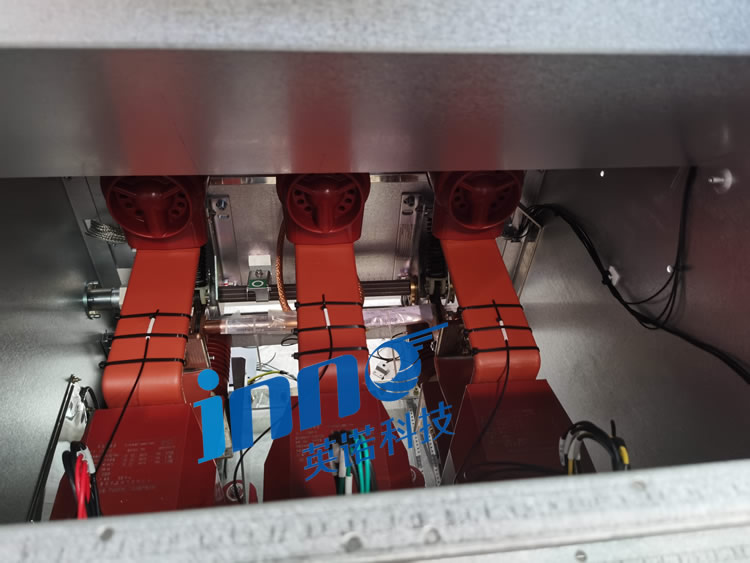
การตรวจสอบเบรกเกอร์เป็นไปอย่างต่อเนื่อง, การสังเกตและการวิเคราะห์แบบเรียลไทม์ของพารามิเตอร์การทำงานของเซอร์กิตเบรกเกอร์เพื่อประเมินสภาพของมัน, ตรวจจับข้อบกพร่องที่กำลังพัฒนา, and support condition-based maintenance decisions. Unlike periodic manual inspection, a circuit breaker monitoring system employs sensors, data acquisition hardware, and analytics software to provide uninterrupted visibility into the electrical, ความร้อน, เครื่องกล, and dielectric condition of the breaker throughout its service life.
Circuit breakers serve as the primary protective devices in power transmission and distribution networks. Their fundamental function is to interrupt fault currents and isolate sections of the grid during overload or short-circuit events. Because this protective action must occur reliably within milliseconds, any latent degradation in the breaker’s contacts, ฉนวนกันความร้อน, gas system, or operating mechanism can have severe consequences — from a failure to trip during a fault, leading to cascading outages, ถึงการทำลายอุปกรณ์ที่เป็นภัยพิบัติและอันตรายด้านความปลอดภัย. การตรวจสอบเซอร์กิตเบรกเกอร์มีอยู่เพื่อขจัดความเสี่ยงเหล่านี้โดยการแปลงการย่อยสลายภายในที่มองไม่เห็นให้กลายเป็นสิ่งที่มองเห็นได้, ข้อมูลที่สามารถดำเนินการได้.
โดยทั่วไประบบตรวจสอบเซอร์กิตเบรกเกอร์ที่ทันสมัยจะติดตามพารามิเตอร์รวมถึงอุณหภูมิหน้าสัมผัส, กิจกรรมการปล่อยบางส่วน, ความหนาแน่นของก๊าซ SF₆ และปริมาณความชื้น, เวลาทำงานเชิงกลและลักษณะการเดินทาง, โหลดปัจจุบัน, และสถานะการเชื่อมต่อบัสบาร์. โดยเชื่อมโยงกระแสข้อมูลเหล่านี้และวิเคราะห์แนวโน้มในช่วงเวลาหนึ่ง, ระบบจะระบุความผิดปกติที่บ่งบอกถึงข้อผิดพลาดที่เกิดขึ้นเป็นเวลานานก่อนที่จะลุกลามไปสู่ความล้มเหลว ช่วยให้ทีมบำรุงรักษาสามารถเข้าไปแทรกแซงในเวลาที่เหมาะสมที่สุด, ไม่เร็วเกินไป (สิ้นเปลืองทรัพยากร) หรือสายเกินไป (เสี่ยงต่อความล้มเหลว).
FJINNO’s circuit breaker monitoring approach centers on fluorescent fiber optic temperature sensing — the parameter most directly correlated with contact degradation and thermal overload. By monitoring temperature in real time with EMI-immune fiber optic sensors, FJINNO enables early fault detection at the point where it matters most.
2. เหตุใดเซอร์กิตเบรกเกอร์จึงต้องการการตรวจสอบออนไลน์แบบเรียลไทม์?
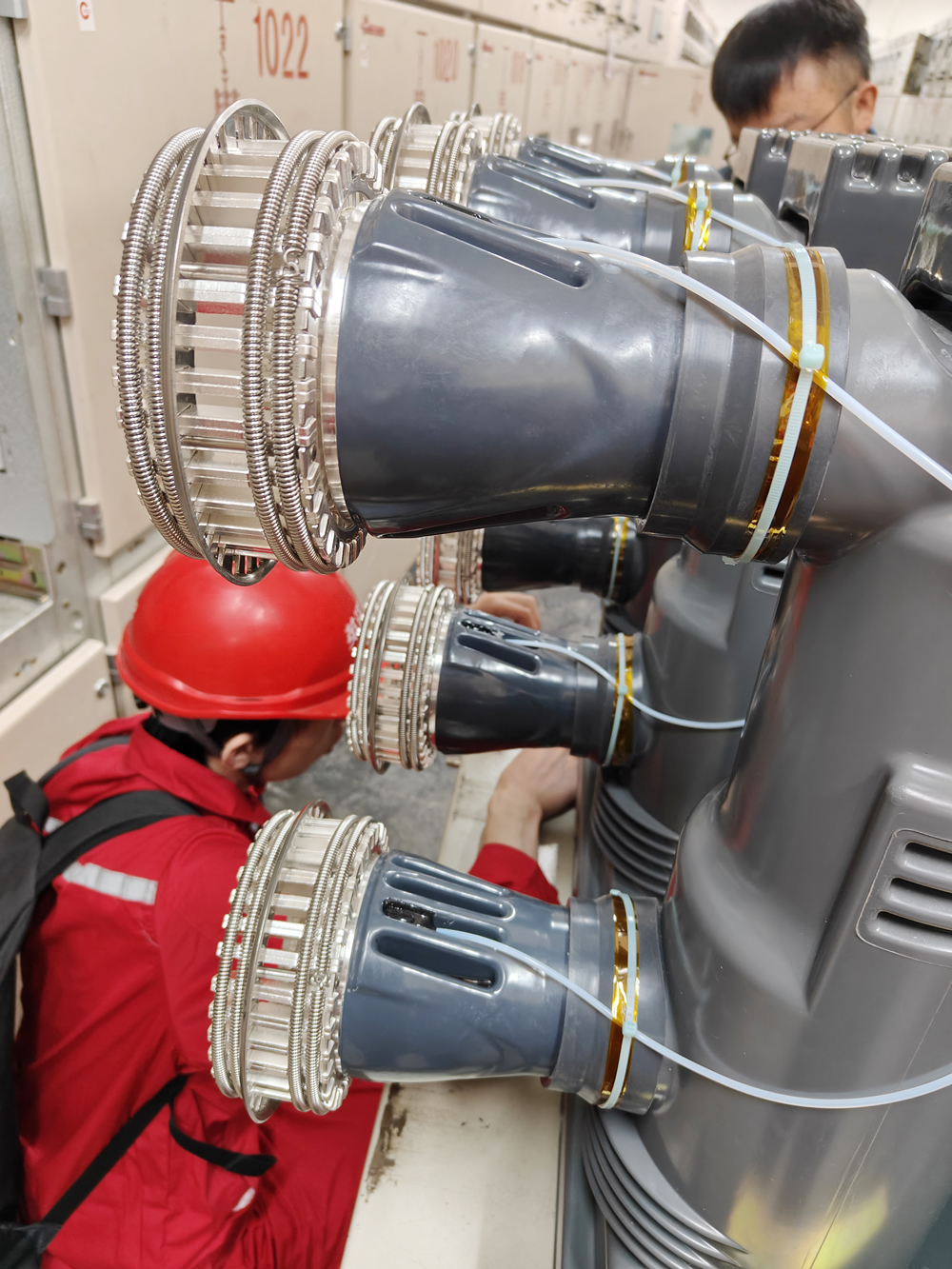
Traditional circuit breaker maintenance follows time-based or operation-count-based schedules: breakers are inspected or overhauled after a fixed number of years or switching operations, regardless of actual condition. While this approach provides a baseline level of reliability, it has fundamental limitations that make it inadequate for modern grid requirements.
The first limitation is the inability to detect inter-maintenance degradation. Faults such as contact erosion, การเสื่อมสภาพของฉนวน, and gas leaks develop progressively between scheduled inspections. A breaker may pass inspection and begin degrading the following day, with the fault remaining invisible until the next scheduled outage — which could be years away. During this interval, the breaker continues to serve as a critical protection device while harboring a latent defect that could cause it to fail precisely when it is needed most.
The second limitation is the cost and operational disruption of offline inspection. Inspecting a high-voltage circuit breaker requires taking it out of service, which may require complex switching procedures, load transfers, and coordination with system operators. For critical breakers that cannot be easily de-energized, inspection opportunities are infrequent and brief. Real-time online monitoring eliminates this constraint by providing continuous condition assessment without removing the breaker from service.
The third limitation is the absence of trend data. A single-point inspection reveals the breaker’s condition at one moment in time but provides no information about the rate or direction of change. Real-time monitoring generates continuous time-series data that reveals whether a parameter is stable, improving, or deteriorating — and at what rate. This trend information is essential for predicting remaining useful life and scheduling maintenance with precision.
The economic argument is equally compelling. Unplanned circuit breaker failures result in direct costs (การเปลี่ยนอุปกรณ์, emergency repair labor, and energy not supplied) and indirect costs (contractual penalties, regulatory scrutiny, and reputational damage). Industry data indicates that the cost of a single unexpected breaker failure in a transmission substation can exceed the cost of monitoring the entire breaker population in that substation for a decade. Real-time circuit breaker monitoring transforms maintenance from a reactive expense into a predictive investment.
3. ประเภทความผิดปกติทั่วไปในเซอร์กิตเบรกเกอร์มีอะไรบ้าง?
Understanding the specific failure mechanisms that affect circuit breakers is essential for designing an effective monitoring strategy. Circuit breaker faults can be categorized into five primary types, each with distinct physical causes, progression characteristics, and monitoring signatures.
1、Thermal Overload and Contact Overheating
As a circuit breaker ages and accumulates switching operations, the contact surfaces degrade through erosion, pitting, และออกซิเดชัน. This degradation increases the contact resistance, which in turn causes localized resistive heating (P = I²R). The resulting temperature rise accelerates further oxidation and material loss, creating a positive feedback loop. If undetected, thermal overload progresses to contact welding, ความเสียหายของฉนวน, and ultimately flashover or fire. Temperature monitoring is the most direct method of detecting this fault type, as the temperature rise is measurable before any other symptom becomes apparent.
2、Contact Erosion and Wear
Every interruption of load current or fault current causes arc erosion of the breaker’s contacts. The arc generated during current interruption vaporizes contact material, progressively reducing the contact mass and altering the contact geometry. As contacts erode, the effective contact area decreases, contact pressure distribution becomes uneven, and contact resistance increases. In SF₆ breakers, severe contact erosion can also generate metallic particles that contaminate the gas and compromise its dielectric strength. Monitoring contact temperature, mechanical travel characteristics, and switching operation counts provides insight into the progression of contact wear.
3、Insulation Degradation and Partial Discharge
Circuit breakers contain various solid and gas insulation systems that can degrade over time due to thermal stress, ความเครียดทางไฟฟ้า, ความชื้นเข้า, and chemical contamination. As insulation deteriorates, การปลดปล่อยบางส่วน (พีดี) activity increases — small electrical discharges that occur within voids, along surfaces, or at interfaces where the electric field exceeds the local breakdown strength. PD activity further erodes the insulation, creating a progressive failure path that can eventually lead to complete dielectric breakdown. Partial discharge monitoring detects this degradation at an early stage, while temperature monitoring identifies the thermal consequences of insulation failure.
4、SF₆ Gas Leakage and Contamination
SF₆ gas circuit breakers rely on the dielectric and arc-quenching properties of sulfur hexafluoride gas. Gas leakage through aging seals, ปะเก็น, or weld defects reduces the gas density below the level required for reliable arc interruption and insulation. นอกจากนี้, moisture ingress into the SF₆ compartment, or contamination from arc byproducts and metallic particles, degrades the gas quality even if the density remains adequate. Gas density monitoring and moisture analysis are essential for detecting these faults, while temperature monitoring provides complementary information about the thermal effects of reduced gas performance.
5、Mechanical Failure and Operating Mechanism Defects
The mechanical operating mechanism of a circuit breaker — whether spring-operated, hydraulic, or pneumatic — must reliably store and release energy to open and close the breaker within specified time limits. Mechanical failures include linkage wear, ความเหนื่อยล้าในฤดูใบไม้ผลิ, damper deterioration, latch malfunction, and lubrication degradation. These faults manifest as changes in operating time (slow operation), incomplete travel, or failure to operate. Mechanical condition monitoring typically involves timing analysis, travel measurement, coil current analysis, และการตรวจสอบการสั่นสะเทือน. Temperature monitoring of mechanism components can also reveal abnormal friction or bearing degradation.
These five fault categories are not independent. ในทางปฏิบัติ, faults often interact and cascade: contact erosion leads to increased temperature, which accelerates insulation degradation, which increases partial discharge, ซึ่งทำให้ฉนวนเสื่อมคุณภาพลงไปอีก. ระบบตรวจสอบเซอร์กิตเบรกเกอร์ที่ครอบคลุมจะติดตามพารามิเตอร์หลายตัวพร้อมกันเพื่อบันทึกการโต้ตอบเหล่านี้ และประเมินสภาพของเบรกเกอร์แบบองค์รวม.
4. พารามิเตอร์การตรวจสอบที่สำคัญสำหรับเซอร์กิตเบรกเกอร์คืออะไร?
An effective circuit breaker monitoring system tracks a range of parameters that collectively characterize the breaker’s electrical, ความร้อน, อิเล็กทริก, และสภาพทางกล. The selection and prioritization of these parameters depend on the breaker type, ระดับแรงดันไฟฟ้า, การวิพากษ์วิจารณ์, and the specific failure modes most relevant to the application. The following parameters form the foundation of a comprehensive circuit breaker monitoring strategy.
อุณหภูมิ
Temperature is the most fundamental and universally applicable monitoring parameter for circuit breakers. It provides direct indication of contact resistance changes, สภาวะความร้อนเกินพิกัด, การกระจายกระแสผิดปกติ, and insulation thermal aging. Temperature monitoring points include the stationary contacts, การย้ายที่อยู่ติดต่อ, busbar connection joints, การสิ้นสุดสายเคเบิล, and arc chamber components. Fiber optic temperature sensors are the preferred technology for this application due to their immunity to electromagnetic interference and inherent electrical isolation.
การปลดปล่อยบางส่วน (พีดี)
Partial discharge monitoring detects incipient insulation degradation by measuring the small electrical discharges that occur when insulation begins to fail. PD activity is measured using ultra-high-frequency (ยูเอชเอฟ) เซ็นเซอร์, แรงดันดินชั่วคราว (เตฟ) เซ็นเซอร์, or acoustic emission sensors. PD data provides early warning of dielectric failures that, if left unaddressed, can progress to complete insulation breakdown and flashover.
SF₆ Gas Density and Moisture
For SF₆ circuit breakers, gas density is a critical safety parameter. The breaker’s arc interruption capability and dielectric withstand strength are directly proportional to the SF₆ gas density. Density sensors compensate for temperature variations to provide true mass-density readings. Moisture content monitoring is equally important, as excessive moisture degrades the gas’s dielectric properties and produces corrosive byproducts that attack internal components.
Mechanical Operating Characteristics
Mechanical monitoring encompasses operating time measurement (close time, open time, close-open time), contact travel analysis, operating coil current signature analysis, and motor current monitoring. These measurements reveal the condition of the operating mechanism, linkage system, dampers, and energy storage components. Changes in timing or travel characteristics indicate developing mechanical faults that could result in slow operation or failure to operate.
Load Current
Continuous load current measurement serves two purposes in circuit breaker monitoring. อันดับแรก, it provides the baseline for correlating temperature measurements with actual loading conditions — enabling the system to distinguish between normal temperature rise due to high load and abnormal temperature rise due to contact degradation. ที่สอง, it tracks cumulative current loading and switching duty, which are key inputs for estimating remaining contact life and scheduling maintenance.
Busbar and Connection Status
Monitoring the condition of busbar connections and cable terminations at the breaker terminals is essential because these joints are common failure points. Loose or corroded connections increase resistance, generate heat, and can lead to thermal failure. Temperature monitoring at these points, combined with load current data, provides effective detection of deteriorating connections.
ในบรรดาพารามิเตอร์การตรวจสอบทั้งหมด, temperature is the one that provides the earliest indication of the widest range of fault types. Contact overheating, connection degradation, insulation thermal aging, and mechanical friction all produce measurable temperature signatures before other symptoms appear. This is why FJINNO’s circuit breaker monitoring strategy prioritizes high-accuracy fiber optic temperature measurement as the foundation upon which other monitoring parameters are layered.
5. Why Is Temperature the Most Critical Early Warning Indicator for Circuit Breakers?

While circuit breaker monitoring encompasses multiple parameters, temperature occupies a unique and central position in the monitoring hierarchy. This is not arbitrary — it is grounded in the physics of circuit breaker degradation and the practical requirements of early fault detection.
The relationship between contact degradation and temperature is governed by a straightforward physical principle. When a circuit breaker’s contacts degrade — through erosion, ออกซิเดชัน, carbon buildup, or mechanical misalignment — the electrical contact resistance increases. Because the breaker continuously carries load current, any increase in contact resistance directly increases the power dissipated as heat at the contact interface, following the relationship P = I²R. This localized heating raises the contact temperature above its normal operating baseline. The temperature rise is proportional to the increase in contact resistance, making it a quantitative indicator of degradation severity.
What makes temperature particularly valuable as an early warning indicator is the temporal relationship between temperature change and other fault manifestations. In most degradation scenarios, the temperature at the affected component begins to rise measurably weeks or months before other symptoms — such as increased partial discharge, gas decomposition products, or mechanical changes — become detectable. This is because the thermal effect is a first-order consequence of resistance increase, while other effects are secondary or tertiary consequences that require further degradation progression to become measurable.
Consider the degradation sequence for a typical contact overheating fault. As contact resistance increases, the local temperature rises. This elevated temperature accelerates oxidation of the contact surfaces, which further increases resistance — creating the positive feedback loop described earlier. As the temperature continues to rise, the insulation adjacent to the hot contact begins to thermally age, which may eventually produce partial discharge activity. If the breaker uses SF₆, the elevated temperature can accelerate gas decomposition and moisture generation. ในที่สุด, if the mechanical components are affected by the heat, operating characteristics may change. Throughout this sequence, the temperature rise is the first measurable symptom and remains the most sensitive indicator of fault severity.
There is also a practical advantage to temperature monitoring: it is directly interpretable. A measured temperature of 105°C at a contact rated for 90°C immediately communicates the severity and urgency of the situation. Other parameters — such as partial discharge magnitude in picocoulombs or gas moisture content in ppm — require expert interpretation and contextual analysis. อุณหภูมิ, ในทางตรงกันข้าม, can be evaluated against absolute thresholds defined in standards such as IEC 62271 and IEEE C37, making alarm setting and response decision-making straightforward.
6. เหตุใดเทคโนโลยีไฟเบอร์ออปติกจึงเหมาะที่สุดสำหรับการตรวจสอบอุณหภูมิของเซอร์กิตเบรกเกอร์?
The internal environment of a circuit breaker presents extreme challenges for temperature measurement. High voltage potentials, intense electromagnetic fields during switching operations, พื้นที่จำกัด, และความจำเป็นในการใช้งานแบบอัตโนมัติในระยะยาวทำให้เทคโนโลยีการตรวจจับอุณหภูมิแบบเดิมๆ ส่วนใหญ่ไม่ได้รับการพิจารณา. การตรวจจับอุณหภูมิด้วยไฟเบอร์ออปติก — โดยเฉพาะการตรวจจับด้วยไฟเบอร์ออปติกแบบฟลูออเรสเซนต์ — จัดการกับทุกความท้าทายเหล่านี้ไปพร้อมๆ กัน.
เส้นใยนำแสงนำพาแสง, ไม่ใช่สัญญาณไฟฟ้า. การรบกวนทางแม่เหล็กไฟฟ้าจากการสลับส่วนโค้ง, กระแสรถบัส, และอุปกรณ์ที่อยู่ติดกันไม่มีผลกระทบต่อสัญญาณการวัด, ขจัดปัญหาเสียงรบกวนและข้อผิดพลาดที่รบกวนเซ็นเซอร์อิเล็กทรอนิกส์ในสภาพแวดล้อมของเบรกเกอร์.
เซนเซอร์ไฟเบอร์ออปติกเป็นแบบไดอิเล็กทริกสมบูรณ์ — ไม่มีเส้นทางนำไฟฟ้าระหว่างจุดสัมผัสไฟฟ้าแรงสูงที่กำลังวัดและอุปกรณ์ตรวจสอบที่ต่อสายดิน. This eliminates the need for complex insulation barriers and provides natural galvanic isolation at any voltage level.
Fluorescent fiber optic sensors contain no active electronic components, แบตเตอรี่, or moving parts. The measurement principle is based on the temperature-dependent decay time of a phosphor material — an intrinsic physical property that does not drift or degrade. No periodic recalibration is required.
The sensing element is typically a few millimeters in diameter, small enough to be mounted directly on contacts, บัสบาร์, and arc chamber components in the confined spaces inside a circuit breaker without obstructing operation or gas flow.
Fiber optic sensor materials are compatible with SF₆ gas, insulating oils, and the arc byproducts present inside circuit breakers. They do not outgas, corrode, or contaminate the breaker’s internal environment.
The fluorescence decay-time measurement principle provides inherent long-term stability because it depends on an intrinsic material property rather than signal amplitude. Sensor readings remain accurate over decades of continuous operation without drift.
Conventional alternatives — thermocouples, RTD, and infrared sensors — each fail in one or more of these critical requirements. Thermocouples and RTDs introduce conductive elements into the high-voltage environment, creating insulation risks and EMI susceptibility. Infrared sensors require a line of sight to the target surface, which is typically unavailable inside an enclosed breaker. Wireless electronic sensors require batteries (which have limited life and are unsuitable for sealed SF₆ compartments) and remain susceptible to EMI during breaker operations. Fluorescent fiber optic sensing is the only technology that satisfies all requirements simultaneously, which is why it has become the standard for high-voltage circuit breaker temperature monitoring.
FJINNO’s fluorescent fiber optic temperature sensors are specifically engineered for circuit breaker applications. With ±1°C accuracy, เวลาตอบสนองภายใต้ 2 วินาที, and a measurement range of -40°C to +200°C, they provide the precision and reliability required for early detection of contact overheating and thermal anomalies in SF₆, ว่างเปล่า, and oil circuit breakers.
7. อะไรคือส่วนประกอบของระบบตรวจสอบอุณหภูมิไฟเบอร์ออปติกของเซอร์กิตเบรกเกอร์?
A complete fiber optic temperature monitoring system for circuit breakers consists of three functional layers: the sensing layer, the signal processing layer, and the data management and integration layer. Each layer performs a distinct function, and together they form an end-to-end monitoring architecture that transforms physical temperature at the breaker’s critical points into actionable information in the operator’s control system.
Fluorescent fiber optic temperature sensors installed on contacts, บัสบาร์, arc chambers, และการสิ้นสุดสายเคเบิล. Convert local temperature into an optical signal.
➔📡Layer 2: การประมวลผลสัญญาณ
Fiber optic signal demodulator (edge device) receives optical signals, extracts temperature data, performs threshold comparison, and generates local alarms.
➔🖥️Layer 3: Data Management
สกาด้า / ดีซีเอส / asset management software receives temperature data via Modbus, ไออีซี 61850, or DNP3.0 for centralized display, กำลังมาแรง, and diagnostics.
ชั้น 1 — Fluorescent Fiber Optic Temperature Sensors
The sensing layer consists of fluorescent fiber optic temperature probes installed at each monitoring point within the circuit breaker. Each probe contains a phosphor sensing element bonded to the tip of an optical fiber. When excited by a pulse of light from the demodulator, the phosphor fluoresces, and the decay time of this fluorescence is a precise function of the local temperature. The probe is connected to the demodulator via an optical fiber cable that provides both the excitation light path and the return fluorescence signal path. Because the fiber is entirely dielectric, it can safely route from the high-voltage contact through the breaker’s insulation system to the grounded demodulator without compromising the breaker’s dielectric integrity. FJINNO sensors feature a compact probe design that allows direct mounting on stationary contacts, moving contact arms, ที่หนีบบัสบาร์, and arc chamber walls using high-temperature adhesive or mechanical fixation.
ชั้น 2 — Fiber Optic Signal Demodulator (Edge Device)
The signal processing layer is the fiber optic demodulator unit, which serves as the intelligent edge device of the monitoring system. The demodulator performs several critical functions: it generates the optical excitation pulses sent to each sensor, receives the returning fluorescence signals, applies the decay-time measurement algorithm to calculate temperature for each channel, compares the measured temperatures against configurable alarm thresholds, and outputs the processed data to the supervisory layer. FJINNO demodulators support multi-channel configurations (4, 8, 16, หรือ 24 ช่อง) to accommodate different breaker configurations and can simultaneously monitor all three phases plus busbar and mechanism points from a single unit. The demodulator includes local display, relay alarm outputs, and digital communication interfaces including Modbus RTU/TCP, ไออีซี 61850 MMS และห่าน, และ DNP3.0.
ชั้น 3 — Supervisory Software and SCADA Integration
The data management layer receives temperature data from the demodulator and presents it within the utility’s or industrial facility’s existing supervisory control system. Integration is achieved through standard communication protocols, allowing the temperature data to appear alongside other breaker monitoring parameters, protection system data, and operational data in the control room. Advanced implementations include trend analysis, rate-of-change alarms, thermal modeling, and predictive diagnostics that combine temperature data with load current and ambient temperature to assess the breaker’s thermal health trajectory. FJINNO provides optional companion software for standalone monitoring applications where SCADA integration is not required, offering dashboard visualization, การจัดการสัญญาณเตือน, การจัดเก็บข้อมูลในอดีต, และการสร้างรายงาน.
8. ควรติดตั้งเซนเซอร์วัดอุณหภูมิที่ไหนและอย่างไรในเซอร์กิตเบรกเกอร์?
The effectiveness of a circuit breaker temperature monitoring system depends critically on the placement of temperature sensors at the locations where thermal faults originate and develop. Sensor placement must be guided by an understanding of the breaker’s internal thermal architecture and the specific failure modes being targeted. The following table identifies the critical monitoring points, the fault types each location addresses, and the deployment considerations for each.
| การตรวจสอบสถานที่ | Target Fault Type | Deployment Notes |
|---|---|---|
| Stationary Contacts (Fixed Contacts) | Contact resistance increase, การกัดเซาะของการสัมผัส, carbon buildup | Sensor mounted on the contact finger assembly or contact support structure as close to the current-carrying interface as the design permits. This is the single most important monitoring point in any circuit breaker. |
| Moving Contacts (Mobile Contacts) | Contact misalignment, uneven wear, การมีผลผูกพันทางกล | Sensor mounted on the moving contact arm or tulip assembly. Fiber routing must accommodate the contact travel stroke without mechanical stress on the fiber. FJINNO sensors use flexible fiber leads designed for this application. |
| Arc Chamber / Interrupter | Arc erosion accumulation, nozzle degradation, dielectric weakening | Sensor installed on the arc chamber wall or nozzle support structure. Monitors the thermal condition of the interrupting assembly, which is subject to extreme thermal stress during fault current interruption. |
| Busbar Connection Joints | Connection loosening, การกัดกร่อน, plating degradation | Sensor mounted directly on the bolted or clamped busbar connection at each phase terminal. These joints are common failure points due to thermal cycling and mechanical vibration over time. |
| การยุติสายเคเบิล | Termination degradation, crimp loosening, อายุของฉนวน | Sensor mounted at the cable-to-breaker interface. Particularly important for breakers connected via XLPE or oil-filled cable systems where termination quality is critical. |
| Operating Mechanism Components | Bearing wear, การเสื่อมสภาพของการหล่อลื่น, abnormal friction | Sensor mounted on mechanism housing or bearing points. Provides supplementary information on mechanical health by detecting abnormal heat generation from friction or failed lubrication. |
For a typical three-phase circuit breaker installation, the minimum recommended sensor deployment consists of one sensor per phase on the stationary contacts and one sensor per phase on the busbar connections — six sensors total. A comprehensive deployment adds sensors on the moving contacts, arc chambers, และการสิ้นสุดสายเคเบิล, bringing the total to 12–18 sensors per breaker. FJINNO multi-channel demodulators are configured to support these deployment densities, with 16-channel and 24-channel models accommodating full monitoring of a single breaker or partial monitoring of multiple breakers from a single unit.
9. FJINNO Fluorescent Fiber Optic Temperature Monitoring System — Technical Specifications
The following specifications describe FJINNO’s fluorescent fiber optic temperature monitoring system as configured for circuit breaker applications. The system consists of the fluorescent fiber optic temperature sensor probes and the multi-channel signal demodulator. All specifications are validated under the operating conditions typical of high-voltage circuit breaker environments.
เซนเซอร์วัดอุณหภูมิไฟเบอร์ออปติกฟลูออเรสเซนต์
| พารามิเตอร์ | ข้อมูลจำเพาะ |
|---|---|
| หลักการวัด | เวลาสลายตัวของฟลูออเรสเซนต์ |
| ช่วงการวัด | -40°ซ ถึง +200°ซ (extended range available to +300°C) |
| ความแม่นยำ | ±1°ซ (over full range) |
| ปณิธาน | 0.1องศาเซลเซียส |
| เวลาตอบสนอง | < 2 วินาที |
| เส้นผ่านศูนย์กลางของโพรบเซนเซอร์ | ≤ 3 มม |
| Fiber Cable Length | ขึ้นไป 100 ม (มาตรฐาน); extended lengths on request |
| ทนต่ออิเล็กทริก | การแยกไฟฟ้าอย่างสมบูรณ์ (all-dielectric construction) |
| ภูมิคุ้มกันอีเอ็มไอ | Fully immune — no electromagnetic interference susceptibility |
| Chemical Compatibility | Compatible with SF₆, mineral oil, silicone oil, dry air |
| อายุการใช้งาน | > 20 ปี (no recalibration required) |
Multi-Channel Fiber Optic Signal Demodulator
| พารามิเตอร์ | ข้อมูลจำเพาะ |
|---|---|
| Channel Options | 4 / 8 / 16 / 24 ช่อง |
| อัตราการสุ่มตัวอย่าง | 1 sample per second per channel |
| โปรโตคอลการสื่อสาร | Modbus RTU, Modbus TCP, ไออีซี 61850 (เอ็มเอ็มเอส & ห่าน), DNP3.0 |
| Alarm Outputs | Configurable relay contacts (2-stage or 4-stage alarm) |
| แสดง | Local LCD display with channel-by-channel readout |
| การจัดเก็บข้อมูล | Internal memory for historical data logging |
| อุณหภูมิในการทำงาน | -40°ซ ถึง +70°ซ |
| พาวเวอร์ซัพพลาย | 85–265 V AC or 110/220 V DC (wide-range input) |
| ระดับการป้องกัน | IP65 (outdoor installation capable) |
| การติดตั้ง | DIN rail, panel mount, or wall mount |
10. กลยุทธ์การตรวจสอบแตกต่างกันอย่างไรในเซอร์กิตเบรกเกอร์ประเภทต่างๆ?

Circuit breakers are manufactured in diverse configurations, each with distinct insulating media, interrupting principles, and construction designs. While the core monitoring objective — early detection of developing faults — remains constant, the specific monitoring strategy must be adapted to the characteristics and dominant failure modes of each breaker type.
SF₆ Gas Circuit Breakers
SF₆ breakers are the most widely deployed type in high-voltage transmission systems (72.5 กิโลโวลต์ขึ้นไป). Their primary monitoring requirements include contact temperature monitoring (to detect contact degradation and resistance increase), SF₆ gas density monitoring (to detect leakage and ensure adequate arc-quenching capability), gas moisture content monitoring (to prevent corrosive byproduct formation), and partial discharge monitoring (to detect insulation degradation). The sealed gas compartment makes fiber optic temperature sensors particularly valuable, as they can be installed inside the sealed compartment without penetrating the gas boundary or introducing leak paths. FJINNO sensors are fully compatible with SF₆ gas and do not produce outgassing or contamination.
Vacuum Circuit Breakers
Vacuum breakers are predominant in medium-voltage distribution systems (1 กิโลโวลต์ถึง 40.5 กิโลโวลต์). Their primary monitoring focus is contact erosion (tracked through switching operation counts and contact temperature), vacuum integrity (loss of vacuum results in failure to interrupt), and operating mechanism condition. Because the vacuum interrupter is a sealed unit, โดยทั่วไปการวัดอุณหภูมิแบบสัมผัสโดยตรงต้องใช้เซ็นเซอร์ที่จุดเชื่อมต่อภายนอกหรือขั้วด้านบนและด้านล่างของขวดสุญญากาศ. ความแตกต่างของอุณหภูมิระหว่างขั้วต่อด้านบนและด้านล่างเป็นตัวบ่งชี้ทางอ้อมของสภาพการสัมผัสภายใน. สามารถติดตั้งไฟเบอร์ออปติกเซนเซอร์ขนาดกะทัดรัดของ FJINNO ได้ที่จุดเชื่อมต่อเหล่านี้เพื่อให้การตรวจสอบความร้อนอย่างต่อเนื่อง.
เซอร์กิตเบรกเกอร์น้ำมัน
เบรกเกอร์วงจรน้ำมันใช้น้ำมันแร่เป็นทั้งตัวกลางที่เป็นฉนวนและตัวกลางในการดับอาร์ค. ในขณะที่ถูกแทนที่โดยส่วนใหญ่ด้วยเทคโนโลยี SF₆ และเทคโนโลยีสุญญากาศในการติดตั้งใหม่, เบรกเกอร์น้ำมันจำนวนมากยังคงให้บริการอยู่ทั่วโลก. ข้อกำหนดในการตรวจสอบรวมถึงอุณหภูมิสัมผัส (ตรวจสอบผ่านเซ็นเซอร์ไฟเบอร์ออปติกซึ่งอยู่ที่หน้าสัมผัสรองรับเหนือระดับน้ำมัน), oil quality analysis (ความเป็นฉนวน, ความชื้น, ก๊าซละลาย), และลักษณะการทำงานทางกล. Temperature monitoring is particularly important because oil circuit breakers are susceptible to carbonization of the oil near overheating contacts, which degrades the oil’s insulating and arc-quenching properties.
Dead-Tank Circuit Breakers
Dead-tank breakers house the interrupters inside a grounded metal tank, which is common in North American utility practice. The grounded tank provides natural shielding but also makes internal access for inspection difficult. Monitoring points include the bushing current connections (where current transfers from the external buswork through bushings into the tank), the internal interrupter contacts, and the operating mechanism. Fiber optic sensors can be routed through the bushing or through dedicated fiber feedthroughs in the tank wall to reach internal monitoring points. FJINNO provides application-specific fiber routing solutions for dead-tank configurations.
Live-Tank Circuit Breakers
Live-tank breakers mount the interrupters on insulating columns at line potential, typical in European and Asian transmission practice. The interrupters are exposed to ambient weather conditions, and the high-voltage location of the interrupters means that all sensor connections must be fully insulated from ground. Fiber optic sensors are inherently suited to this configuration because the optical fiber provides the required insulation while routing the temperature signal from the live interrupter down to the grounded monitoring equipment. FJINNO systems for live-tank breakers include UV-resistant fiber cables and weatherproof sensor enclosures for outdoor installation.
Independent Pole Operated Breakers (IPOB) เทียบกับ. Gang Operated Breakers (GOB)
Independent pole operated breakers have a separate operating mechanism for each phase, allowing individual phase control. Gang operated breakers use a single mechanism to operate all three phases simultaneously. From a monitoring perspective, IPOBs require per-phase timing and mechanical analysis to detect individual mechanism faults, while GOBs require monitoring of the common mechanism plus inter-phase synchronization. Temperature monitoring requirements are similar for both types — each phase’s contacts and connections must be individually monitored regardless of the operating mechanism arrangement.
11. คำถามที่พบบ่อย (คำถามที่พบบ่อย)
What is a circuit breaker monitoring system?
A circuit breaker monitoring system is a real-time condition monitoring solution that continuously tracks critical parameters such as temperature, การปลดปล่อยบางส่วน, SF₆ gas density, ลักษณะการทำงานทางกล, and load current. By analyzing these parameters, the system detects early-stage faults and provides actionable alerts that enable condition-based maintenance, preventing unexpected failures and extending breaker service life.
Why is temperature the most important parameter in circuit breaker monitoring?
Temperature is the earliest and most direct indicator of contact degradation, เพิ่มความต้านทานการสัมผัส, and thermal overload. When contact resistance increases due to erosion, ออกซิเดชัน, หรือคลาย, the resulting power dissipation (P = I²R) causes a measurable temperature rise at the contact. This temperature change is typically detectable weeks or months before other fault symptoms appear, making it the most valuable early warning parameter for preventing catastrophic failures in circuit breakers.
Why is fiber optic temperature sensing preferred for circuit breaker monitoring?
Fiber optic sensors are inherently immune to electromagnetic interference (อีเอ็มไอ), ให้การแยกไฟฟ้าที่สมบูรณ์, require no calibration or maintenance, and offer long-term measurement stability. These properties make them uniquely suited for the high-voltage, high-EMI environment inside circuit breakers, where conventional electronic sensors such as thermocouples, RTD, and wireless sensors cannot operate reliably. Fluorescent fiber optic sensing is the only technology that satisfies all of these requirements simultaneously.
What types of circuit breakers can be monitored with fiber optic temperature sensors?
Fiber optic temperature sensors can be deployed in all major circuit breaker types, including SF₆ gas circuit breakers, เบรกเกอร์วงจรสุญญากาศ, oil circuit breakers, and both live-tank and dead-tank configurations. The sensor’s compact size (≤ 3 เส้นผ่านศูนย์กลางมม), full dielectric construction, and chemical compatibility with SF₆ and insulating oil allow installation directly on contacts, บัสบาร์, and arc chambers inside the breaker.
Where should temperature sensors be installed in a circuit breaker?
The critical temperature monitoring points in a circuit breaker are the stationary contacts, การย้ายที่อยู่ติดต่อ, arc chambers, busbar connection joints, การสิ้นสุดสายเคเบิล, and operating mechanism components. For a minimum deployment, sensors should be placed on the stationary contacts and busbar connections of each phase (six sensors total). A comprehensive deployment adds moving contacts, arc chambers, และการสิ้นสุดสายเคเบิล, bringing the total to 12–18 sensors per breaker.
Can fiber optic sensors be retrofitted into existing circuit breakers?
ใช่. FJINNO fluorescent fiber optic temperature sensors are designed for both new installations and retrofit applications. The compact probe design and flexible fiber cable allow installation during scheduled maintenance outages without structural modifications to the breaker. For SF₆ breakers, sensors can be installed during a gas-down maintenance event and do not require permanent gas boundary penetrations. For vacuum and oil breakers, sensors are typically installed at the external terminal connections.
What is the measurement accuracy of FJINNO fiber optic temperature sensors?
FJINNO fluorescent fiber optic temperature sensors provide a measurement accuracy of ±1°C across the full operating range of -40°C to +200°C, with a resolution of 0.1°C and a response time of less than 2 วินาที. The measurement principle (เวลาสลายตัวของฟลูออเรสเซนต์) is inherently stable and does not drift over time, so no periodic recalibration is required. The specified accuracy is maintained over the entire sensor service life of more than 20 ปี.
How does the monitoring system integrate with existing SCADA systems?
FJINNO fiber optic signal demodulators support standard industrial communication protocols including Modbus RTU, Modbus TCP, ไออีซี 61850 (MMS และห่าน), และ DNP3.0. These protocols enable seamless integration with existing SCADA, ดีซีเอส, or dedicated asset management platforms. The demodulator outputs processed temperature data for each channel, along with alarm status, through the selected protocol. For facilities without SCADA, FJINNO provides optional standalone monitoring software with dashboard visualization, การจัดการสัญญาณเตือน, and historical trending.
Protect Your Circuit Breakers with FJINNO Fiber Optic Temperature Monitoring
Get real-time visibility into contact temperature, connection health, and thermal anomalies with our fluorescent fiber optic monitoring system — designed for SF₆, ว่างเปล่า, and oil circuit breakers.
ข้อสงวนสิทธิ์: The information provided on this page is for general informational and educational purposes only. FJINNO makes every effort to ensure the accuracy and completeness of the information presented, but does not guarantee that it is free from errors. ข้อมูลจำเพาะของผลิตภัณฑ์อาจเปลี่ยนแปลงได้โดยไม่ต้องแจ้งให้ทราบล่วงหน้า. The mention of third-party companies, สินค้า, or trade names is for reference purposes only and does not imply endorsement or affiliation. All trademarks and trade names mentioned are the property of their respective owners. For the latest product specifications and application guidance, กรุณาติดต่อ FJINNO โดยตรง.

เซ็นเซอร์อุณหภูมิไฟเบอร์ออปติก, ระบบตรวจสอบอัจฉริยะ, จำหน่ายผู้ผลิตใยแก้วนำแสงในประเทศจีน
 |
 |
 |