 Vihisi joto vya INNO fiber optic ,mifumo ya ufuatiliaji wa joto.
Njia kuu za ufuatiliaji wa joto la transfoma ni pamoja na kipimo cha jadi cha thermometer, kipimo cha joto la optic ya nyuzi za umeme, kipimo cha joto la optic iliyosambazwa, na kipimo cha joto cha nyuzinyuzi optic.
1、 Mbinu ya Ufuatiliaji Joto la Transfoma
(1) Kipimo cha thermometer ya jadi
Kanuni na Mbinu
Thermometer ya jadi ni njia ya moja kwa moja ya kupima joto la transfoma. Kwa mfano, katika transfoma iliyozamishwa na mafuta, thermometer inaweza kuingizwa kwenye uso wa mafuta ya transformer ili kufuatilia joto la uso wa mafuta kwa wakati halisi, ambayo ni moja wapo ya njia kuu za sensorer mtawala wa joto kwa transfoma iliyozamishwa na mafuta. Kwa kipimo cha joto cha transfoma ya aina kavu, tatu au nne sensorer PT100 hutumiwa, hasa kwa kupima joto la vilima au cores za chuma. Njia hii inategemea kanuni ya upanuzi wa joto na contraction, ambayo kioevu (kama vile zebaki au pombe) au chuma (kama vile vipande vya bimetallic) katika thermometer hubadilisha kiasi au sura na mabadiliko ya joto, kwa hivyo kuonyesha thamani inayolingana ya joto kwenye kiwango cha thermometer.
Katika maombi ya vitendo, Sensor ya PT100 ni sensor ya kawaida ya upinzani wa joto, na thamani yake ya upinzani huongezeka kwa mstari na ongezeko la joto. Katika ufuatiliaji wa joto la transformer, thamani ya upinzani ya PT100 inapimwa, na mzunguko wa uongofu sambamba hutumiwa kubadilisha thamani ya upinzani katika thamani ya joto, na hivyo kupata joto la vilima vya transformer au msingi wa chuma. Aina hii ya sensor ina usahihi wa juu na utulivu mzuri, ambayo inaweza kukidhi mahitaji ya msingi ya ufuatiliaji wa joto la transformer.
mapungufu
Njia ya jadi ya kipimo cha thermometer ina vikwazo fulani. For the temperature distribution inside the transformer, a single oil level thermometer can only reflect the overall oil temperature and cannot accurately obtain the hot spot temperature inside the winding. Aidha, this contact measurement method may be subject to interference from the internal electromagnetic field of the transformer, which can affect the accuracy of the measurement. Aidha, the installation position of the thermometer can also affect the measurement results. If the installation position is improper, it may not accurately reflect the true temperature condition of the transformer.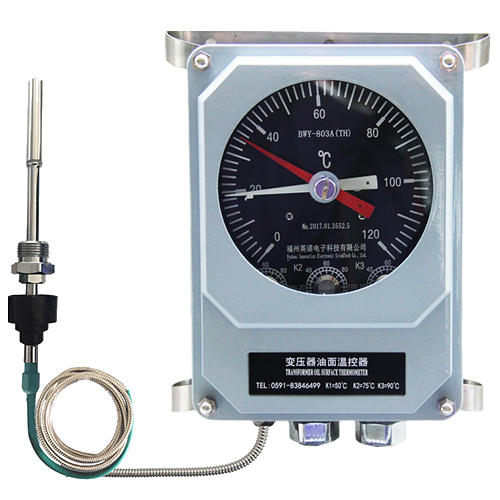
(2) Wireless temperature measurement solution
Kanuni na Mbinu
Katika ufuatiliaji wa joto la transformer, wireless temperature measurement solutions are suitable for specific scenarios such as transformer joints, surface temperature monitoring, nk. Taking the Ankerui temperature measurement system as an example, when factors such as loose transformer nuts or small washer area cause high contact resistance at the connection port, resulting in temperature changes at the transformer inlet and outlet, a wireless temperature measurement solution can be used. By installing ATE400 at the inlet and outlet of the transformer and adsorbing ATE100M on the surface of the transformer, these devices can collect temperature data and then transmit the collected temperature data wirelessly to the ARTM Pn display terminal. This wireless transmission method avoids the trouble of wiring and has good adaptability to the complex external environment of transformers.
mapungufu
The wireless temperature measurement scheme also has certain limitations. Wireless signals may be subject to interference from the surrounding environment, such as electromagnetic interference, obstacles, nk., which can affect the stability and accuracy of signal transmission. Aidha, wireless devices require battery power, and if the battery is low or faulty, it may cause interruptions in temperature data collection and transmission. Aidha, the cost of wireless devices is relatively high, and for large-scale transformer temperature monitoring systems, the overall construction cost will increase.
(3) Fiber optic measurement system
Kanuni na Mbinu
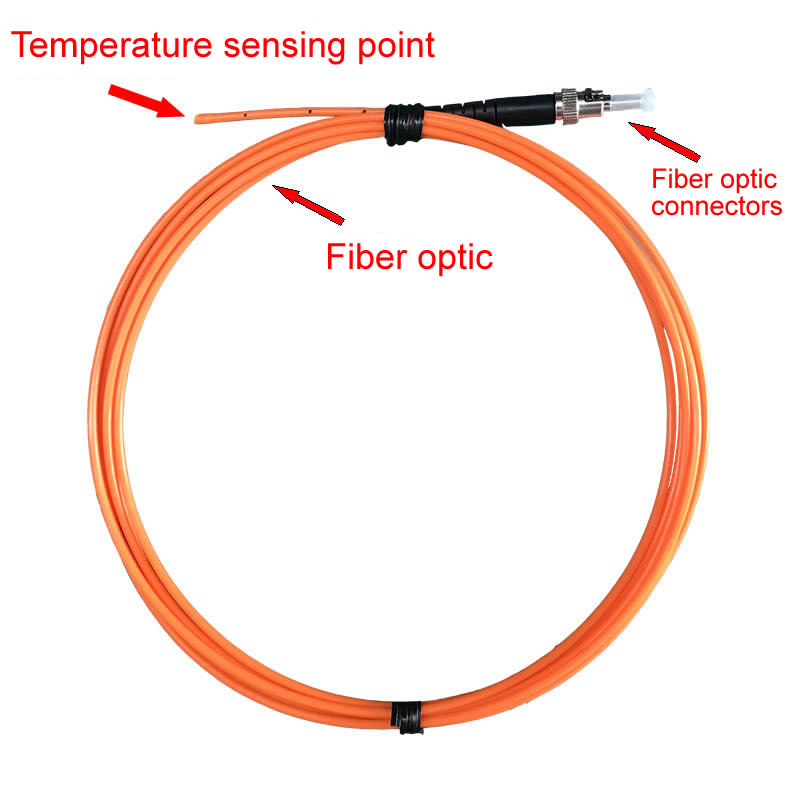
Fiber optic measurement systems have unique advantages in transformer temperature monitoring. The fiber measurement system based on Raman effect is one of them. In the production process of transformers, the fiber is encapsulated and laid along the winding, and the length of the fiber can reach 250m. The measurement principle is to use laser to irradiate short light pulses into the optical fiber, and the photons of the light pulses scatter on the molecules of the glass fiber. When the temperature rises, the wavelength of the backscattered photons will change, and this wavelength shift is proportional to the temperature difference. Kwa hiyo, reliable multi-point temperature measurement can be carried out on transformers. This method can achieve temperature monitoring of the entire winding area inside the transformer, clarifying the location and intensity of temperature rise.
There are also some fiber optic measurement systems based on other principles, such as fluorescent fiber optic temperature measurement systems, fiber optic iliyosambazwa mifumo ya kipimo cha joto, and fiber optic grating temperature measurement systems, each with different working principles and characteristics, which will be introduced in detail in the following content.
faida
Fiber optic measurement systems have many advantages compared to other measurement methods. Kwanza, optical fibers have good insulation properties and can operate safely and reliably in transformer environments with high voltage and strong electromagnetic fields. Pili, optical fiber itself is a passive component that does not generate electromagnetic interference and is not affected by external electromagnetic interference, ensuring the accuracy of measurement data. Aidha, the fiber optic measurement system can achieve distributed measurement and obtain temperature information at different positions inside the transformer, which helps to comprehensively understand the temperature distribution of the transformer.
2、 Advantages of using fluorescent optical fiber for transformer temperature monitoring
(1) Strong anti-interference ability
Anti electromagnetic interference characteristics
Fluorescent optical fibers have excellent electromagnetic interference resistance in transformer temperature monitoring. In the operating environment of transformers, there is a strong electromagnetic field, and traditional electrical temperature measuring instruments are susceptible to electromagnetic interference, leading to a decrease in measurement accuracy or even temperature measurement failure. The fluorescence fiber optic temperature measurement system adopts fluorescence fiber optic temperature sensing technology, and the temperature hotspot of the fluorescence sensor ya joto ya fiber optic used in its transmitter is not electrically connected to the measurement signal receiving part. This characteristic enables fluorescent optical fibers to operate normally in special environments such as high voltage and strong electromagnetic interference, without measurement errors caused by electromagnetic interference. It can measure the temperature of transformers with high precision and stability for a long time, and accurately monitor their temperature changes, whether they are oil immersed transformers or dry transformers.
Anti other interference
In addition to being resistant to electromagnetic interference, fluorescent optical fibers can be safely used in almost any environment without being affected by EMI (kuingiliwa kwa sumakuumeme), RF (kuingiliwa kwa masafa ya redio), MRI (magnetic resonance imaging interference), microwave interference, immune electromagnetic interference, and microwave interference. Kwa mfano, in some complex power equipment operating environments, there may be multiple sources of interference, such as radio equipment, radio frequency interference generated by other electrical equipment, nk. Fluorescent optical fibers can be used for temperature monitoring without being affected. This anti-interference ability makes the fluorescence fiber optic temperature measurement system widely applicable in complex electromagnetic environments such as substations.
(2) Intrinsic safety characteristics
Safety without electrical connections
In the fluorescence fiber optic temperature measurement system, due to the lack of electrical connection between the temperature hotspot and the measurement signal receiving part, this characteristic makes it inherently safe. In high-voltage equipment environments such as transformers, the absence of electrical connections avoids safety hazards caused by electrical faults, such as leakage and short circuits. Even in extreme situations such as transformer failures, such as short circuits causing arcs, fluorescent optical fibers will not be damaged or cause secondary accidents due to electrical connections, ensuring the safety of the monitoring system itself and the safety of the transformer equipment and surrounding environment.
Suitable for hazardous environments
This intrinsic safety feature makes the mfumo wa kipimo cha joto cha nyuzi za fluorescent suitable for various hazardous environments. Kwa mfano, katika transfoma iliyozamishwa na mafuta, there is flammable transformer oil. If electrically connected temperature measuring equipment is used, once an electrical fault occurs and sparks are generated, it may cause a fire or even an explosion. The fluorescent fiber optic temperature measurement system, due to the lack of electrical connections, does not generate electrical sparks and can safely monitor temperature inside oil immersed transformers, greatly improving the safety of transformer operation.
(3) High precision and high stability
Kipimo sahihi cha joto
The fluorescence fiber optic temperature measurement system can achieve accurate temperature measurement. Its probe adopts special materials and structural design, which can accurately sense temperature changes and convert them into measurable signals. Kwa mfano, its fiber optic probe has no metallic material and is completely non-metallic in structure, while the fiber optic sensing probe is made of rare earth materials. The characteristics of this material and structure make fluorescent optical fibers highly sensitive to temperature changes, enabling precise measurement of temperature at different locations inside the transformer. Whether it is the temperature of the winding hotspot or other parts, high measurement accuracy can be achieved, meeting the accuracy requirements for transformer temperature monitoring.
Long term stable work
The fluorescence fiber optic temperature measurement system has the ability to operate stably for a long time. Due to its resistance to various external interference factors and the use of materials with good stability, temperature monitoring can be continuously and stably carried out during long-term transformer operation. Unlike some traditional temperature measuring devices, which may experience a decrease in measurement accuracy or equipment failure over time or changes in the environment. Kwa mfano, in long-term operating substations, the fluorescent fiber optic temperature measurement system can work stably for many years, providing reliable temperature data for the safe operation of transformers.
(4) Probe performance advantages
Small diameter probes have strong applicability
The diameter of the fluorescent fiber probe can be made smaller, such as 2.5mm (smaller diameters can be customized). Small diameter probes have strong applicability in transformer temperature monitoring, especially in some limited space locations, such as the narrow space inside the transformer winding. Small probes can be installed and arranged more easily without causing significant impact on the original structure of the transformer. Wakati huo huo, a small diameter probe is also beneficial for improving measurement accuracy, as it can be closer to the measured area and reduce interference from the surrounding environment on the measurement results.
Advantages of probe materials
The materials used in fluorescent fiber optic probes have multiple advantages. If the probe has no metallic substance and is completely non-metallic in structure, this material characteristic makes the probe have good insulation performance and can work safely in high-voltage transformer environments. And the probe made of rare earth materials performs well in high temperature resistance, wear resistance, na vipengele vingine. Wakati wa uendeshaji wa transfoma, especially in high-temperature environments, the probe material can maintain stable performance and will not deform or be damaged due to high temperatures, thereby ensuring the accuracy and reliability of temperature measurement.

3、 Faida za Distributed Fiber Optic for Transformer Temperature Monitoring
(1) Distributed measurement capability
Continuous dynamic monitoring
The distributed fiber optic temperature measurement online monitoring system adopts advanced OTDR (Optical Time Domain Reflectance) technology and Raman scattering light’s sensitivity to temperature, which can detect temperature changes at different positions along the fiber optic cable and achieve truly distributed measurement. It can provide continuous dynamic monitoring of temperature change signals at every 0.5 meters point within a range of more than ten kilometers. This is very meaningful for transformer temperature monitoring, as the temperature distribution inside the transformer is not uniform and there may be local hotspots. Distributed optical fibers can accurately obtain temperature information from these different locations, thus comprehensively understanding the temperature field distribution inside the transformer. Kwa mfano, in large transformers, temperature differences may occur in different parts of the winding due to different current densities and other reasons. Distributed optical fibers can monitor these temperature differences in detail, providing more comprehensive temperature data support for the safe operation of transformers.
Accurate positioning
Distributed optical fibers can not only measure temperature, lakini pia kwa usahihi Machapisho ya eneo la anomalies joto. Based on OTDR technology, the echo time of the scattered signal can be determined by using high-speed data acquisition to measure the corresponding fiber position of the scattered signal. When there is an abnormal temperature rise in a certain part of the transformer, the distributed fiber optic temperature measurement system can accurately indicate the location of the abnormal temperature, which helps to quickly locate the fault point and take timely measures for maintenance or adjustment. Kwa mfano, when faults such as inter turn short circuits occur in transformer windings, causing local high temperatures, distributed optical fibers can quickly determine the specific location of the fault, greatly reducing the time for fault diagnosis.
(2) Adapt to multiple environments
Kuingilia kati kwa sumakuumeme
The mfumo wa kipimo cha joto cha fiber optic iliyosambazwa has strong resistance to electromagnetic interference in transformer environments. Wakati wa uendeshaji wa transfoma, there is a strong electromagnetic field, and distributed optical fibers use optical signals for temperature measurement and transmission, without generating mutual electromagnetic interference with power cables. This enables it to operate stably and accurately in transformer environments with high voltage and strong electromagnetic interference. Distributed optical fibers can effectively monitor temperature in both substations and industrial environments, unaffected by electromagnetic fields.
Suitable for hazardous locations
The distributed fiber optic temperature measurement system is also suitable for hazardous areas such as flammable and explosive. Due to its use of optical signal transmission and the absence of hazardous factors such as electric sparks, temperature monitoring can be safely carried out in environments with flammable substances such as oil immersed transformers. Aidha, distributed optical fibers have characteristics such as corrosion resistance, which can adapt to the possible chemical corrosion environment around transformers. Kwa mfano, in some chemical enterprises, distributed optical fibers can work stably for a long time to ensure the temperature monitoring needs of transformers.
(3) Measurement performance advantages
High precision and high resolution
The distributed fiber optic temperature measurement system has high measurement accuracy and temperature resolution. Its typical temperature resolution reaches 0.5 ℃, temperature accuracy is 1 ℃, and spatial resolution can reach up to 0.5m. This high-precision and high-resolution feature enables it to accurately detect small temperature changes inside the transformer. Kwa mfano, during normal operation of a transformer, although the overall temperature is relatively stable, there may be some small local temperature fluctuations. Distributed optical fibers can accurately measure these fluctuations and promptly detect potential safety hazards.
quick response
The response speed of this system is very fast, with a minimum measurement time of 3 seconds per measurement. This feature enables distributed optical fibers to capture changes in the internal temperature of transformers in a timely manner. When a sudden fault occurs in the transformer, kusababisha ongezeko kubwa la joto, the distributed fiber optic temperature measurement system can quickly respond, obtain temperature change information in a short period of time, and issue an alarm signal. This rapid response capability helps to improve the safety of transformers and reduce the possibility of accidents caused by high temperatures.
(4) System flexibility and compatibility
Flexible alarm settings
Mfumo wa kipimo cha joto la nyuzi optic uliosambazwa una unyumbulifu mkubwa. Inaweza kuweka maadili mbalimbali ya kengele ya joto katika ngazi yoyote, na ina njia nyingi za kengele kwa tofauti ya halijoto isiyobadilika. Vigezo vya kengele vinaweza kuwekwa katika maeneo tofauti kulingana na mahitaji ya wateja. Kwa mfano, maadili tofauti ya kengele yanaweza kuwekwa kulingana na safu halisi ya usalama wa joto katika hatua tofauti za uendeshaji au sehemu tofauti za kibadilishaji. Kwa sehemu muhimu kama vile vilima, viwango vya joto vya chini vya kengele vinaweza kuwekwa, wakati kwa sehemu kama vile casings za transfoma, viwango vya joto vya juu vya kengele vinaweza kuwekwa, ambayo inaweza kufuatilia kwa usahihi zaidi na kuonya juu ya hali ya joto ya transformer.
Utangamano mzuri
The host of the distributed fiber optic temperature measurement system is an open communication protocol that provides a communication interface to connect with the workstation. It can be linked with other control devices such as PCs and fire alarm systems through RS232, RS485, relay zilizojengwa ndani, RJ45, or other industrial protocols for sound and light alarms, with accurate and complete signal output. This compatibility enables the distributed fiber optic temperature measurement system to be easily integrated into existing transformer monitoring systems, working together with other devices to ensure the safe operation of transformers.
4、 Faida za Fiber Bragg Grating for Transformer Temperature Monitoring
(1) Good linear relationship and measurement accuracy
The linear relationship between reflection wavelength and temperature
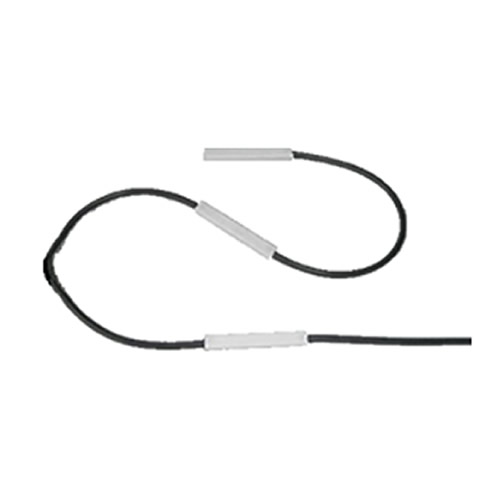
Fiber Bragg Grating (FBG) is a light sensing component made on optical fibers that only reflects specific wavelengths. The reflected wavelength has an excellent linear relationship with temperature. The determination coefficient of linear fitting between the reflection wavelength of fiber Bragg grating and temperature is relatively high, which makes it possible to accurately calculate the temperature change value by measuring the change in the reflection wavelength of fiber Bragg grating. Katika ufuatiliaji wa joto la transformer, this linear relationship can improve the accuracy of temperature measurement. Kwa mfano, when the temperature of the transformer winding changes, fiber Bragg gratings can accurately reflect the increase or decrease in temperature based on the change in reflected wavelength, providing reliable data support for temperature monitoring of transformers.
Accurate measurement adapted to harsh environments
Fiber Bragg grating sensors are suitable for long-term monitoring in harsh environments. Inside the transformer, the environment is complex and there are factors such as high voltage and strong electromagnetic field. Hata hivyo, due to its optical properties, fiber Bragg grating sensors are not affected by electromagnetic interference and can accurately measure temperature. And during the operation of transformers, they may be affected by various factors such as vibration and temperature fluctuations. Fiber Bragg grating sensors can maintain stable performance in such harsh environments and continuously and accurately monitor temperature changes.
(2) Reusability and multi-sensor series connection
Reusable features
Fiber Bragg grating sensors have the advantage of being reusable. Fiber Bragg grating sensors with different wavelengths can be engraved at different positions on the optical fiber, and each sensor is encoded with the reflected wavelength of the light when the fiber Bragg grating is engraved. This means that multiple fiber Bragg grating sensors can be integrated on a single optical fiber, and through wavelength division multiplexing technology, hadi 20 fiber Bragg grating sensors can be connected in series on a single optical fiber. Katika ufuatiliaji wa joto la transformer, this reusability can achieve temperature monitoring of multiple parts of the transformer. Kwa mfano, fiber Bragg grating sensors can be installed at different positions of the high-voltage winding and low-voltage winding of the transformer. These sensors can be connected through a single optical fiber to obtain temperature information from multiple positions, reducing the use of optical fibers and system complexity.
Efficient sensor networking
Based on the reusability of fiber Bragg gratings, efficient sensor networking topologies can be constructed. Multiple fiber Bragg grating sensors are connected in series on a single fiber optic cable for centralized management and data acquisition. Compared with other temperature measurement methods, this networking approach is more concise and efficient. In the transformer monitoring system, fiber Bragg grating sensors can be flexibly arranged according to the structure and temperature monitoring requirements of the transformer, na mtandao wa sensor unaofaa unaweza kujengwa ili kufikia ufuatiliaji wa kina na ufanisi wa joto la ndani la transformer..
(3) Faida za utendaji wa vitambuzi
Ukubwa mdogo na nyepesi
Sensorer za grating za Fiber Bragg zina sifa za saizi ndogo na uzani mwepesi. Hii inahakikisha kwamba haitakuwa na athari kubwa juu ya muundo wa transformer wakati imewekwa ndani. Kwa mfano, katika nafasi nyembamba ya windings ya transformer, Sensorer za nyuzi za Bragg zinaweza kusanikishwa kwa urahisi bila kubadilisha mali ya umeme na mitambo ya vilima. Sensorer ndogo na nyepesi pia ni rahisi kupachika katika mchakato wa utengenezaji wa transfoma, ambayo inaweza kuunganishwa vizuri na transformer na kufikia ufuatiliaji wa muda mrefu na imara wa joto la transformer.
Utulivu wa muda mrefu
Fiber Bragg grating sensors exhibit good stability during long-term operation. Due to its light based sensing principle, it is not affected by external electromagnetic interference, chemical corrosion, na mambo mengine, and can operate continuously and stably throughout the operating life cycle of the transformer. In the long-term temperature monitoring process, there will be no performance degradation, measurement error increase or other problems, providing reliable guarantee for the temperature monitoring of transformers.
(4) Compatibility and Security
Compatibility with transformer oil
Fiber Bragg grating sensors have good compatibility with transformer oil. After relevant experimental evaluation, according to GB/T16927.1-19 “High Voltage Testing Techniques Part 1 General Test Requirements”, the oil test results of the oil sample before and after the test were qualified after being placed in an oil temperature of 105 ° C for 168 masaa, and there was no cracking phenomenon in the fiber Bragg grating sensor and related materials. Katika maombi ya vitendo, this means that fiber Bragg grating sensors can be safely installed inside oil immersed transformers, and will not have any impact on the performance of transformer oil due to long-term contact with transformer oil, nor will their performance decrease due to interaction with transformer oil, ensuring the normal operation of transformers.
Resistance to breakdown and creepage performance
Fiber Bragg grating sensors have good resistance to breakdown and creepage performance. It has undergone strict test evaluations such as 1575kV lightning impulse, 1525kV operational impulse, 400kV power frequency withstand voltage, and DC10-20kV 5-minute DC withstand test, and has successfully passed the above tests. This feature enables fiber Bragg grating sensors to work safely and reliably in high-voltage transformer environments, without breakdown or creepage due to high voltage, improving the safety of transformer temperature monitoring systems.

Sensor ya joto ya fiber optic, Mfumo wa ufuatiliaji wa akili, Kusambazwa fiber optic mtengenezaji nchini China
 |
 |
|