 Vihisio vya joto vya macho vya INNO fibre ,Mifumo ya ufuatiliaji wa joto.
Jedwali la yaliyomo
- Kwa nini Transfoma za Nguvu Zinahitaji Ufuatiliaji wa Joto la Fiber Optic
- Manufaa Muhimu ya Ufuatiliaji wa Joto la Fiber Optic kwa Transfoma
- Kuelewa Teknolojia ya Sensor ya Joto ya Fiber Optic kwa Transfoma
- Hatua 1: Kupanga Mfumo wako wa Ufuatiliaji wa Joto la Transfoma
- Hatua 2: Kuchagua Sensorer za Joto za Fiber Optic za Kulia
- Hatua 3: Kuamua Pointi Bora za Usakinishaji wa Sensor
- Hatua 4: Mbinu za Ufungaji na Mbinu Bora
- Hatua 5: Kuweka Vifaa vya Kuhoji na Kupata Data
- Hatua 6: Kuunganishwa na Mifumo ya Ufuatiliaji ya Transfoma
- Hatua 7: Kusanidi Vizingiti vya Kengele na Mifumo ya Arifa
- Hatua 8: Uthibitishaji na Uagizaji wa Mfumo
- Mahitaji ya Matengenezo na Urekebishaji
- Uchunguzi wa Utekelezaji wa Ulimwengu Halisi
- Kuchagua Mtengenezaji wa Sensa ya Joto ya Fiber Optic
- Maswali Yanayoulizwa Mara Kwa Mara
Kwa nini Transfoma za Nguvu Zinahitaji Ufuatiliaji wa Joto la Fiber Optic
Transfoma za nguvu zinawakilisha mojawapo ya vipengele muhimu na vya gharama kubwa katika mifumo ya nguvu za umeme. Mali hizi muhimu kwa kawaida hugharimu mamilioni ya dola, na maisha ya huduma yanayotarajiwa 30-40 miaka ikitunzwa ipasavyo. Hata hivyo, kushindwa kwa transfoma kunaweza kusababisha kukatika kwa janga, kusababisha hasara kubwa za kiuchumi na hatari zinazoweza kutokea kwa usalama.
Udhibiti wa joto ni jambo moja muhimu zaidi katika transfoma afya na maisha marefu. Kulingana na viwango vya IEEE, kuzeeka kwa insulation ya transfoma huharakisha kwa kasi kwa hali ya joto huongezeka-kwa kila 6-8 ° C kupanda juu ya joto lilipimwa, maisha ya insulation kawaida ni nusu. Hii inafanya kuwa sahihi, ufuatiliaji wa joto wa kuaminika ni muhimu kwa kibadilishaji bora uendeshaji na matengenezo.
Mapungufu ya Mbinu za Jadi za Ufuatiliaji wa Halijoto
Kawaida Ufuatiliaji wa joto la Transformer mbinu zinakabiliwa na mapungufu makubwa:
- Viashiria vya Hali ya Upepo (Wti): Hizi hutumia mifano ya joto kukadiria joto la vilima kulingana na vipimo vya juu vya mafuta na mzigo wa sasa. Wakati inatumika sana, wanatoa makadirio yaliyokokotwa pekee badala ya vipimo vya moja kwa moja, kwa usahihi kwa kawaida ±5-10°C chini ya hali zinazobadilika.
- Ugunduzi wa joto la kupinga (RTS): Hizi zinaweza tu kuwekwa kwenye mifuko ya mafuta, sio moja kwa moja kwenye vilima, kuunda mwinuko muhimu wa halijoto kati ya sehemu ya kipimo na mtandao-hewa halisi.
- Thermografia ya infrared: Imepunguzwa kwa vipimo vya uso wa nje, haiwezi kutambua maeneo-hotspots ya ndani ambapo hitilafu muhimu kwa kawaida huanzia.
- Uingiliaji wa umeme: Sensorer za kawaida za kielektroniki huathiriwa na sehemu kali za sumakuumeme zilizopo kwenye transfoma, inayoongoza kwa makosa ya kipimo na vifaa vinavyowezekana uharibifu.
Vikwazo hivi mara nyingi husababisha mazoea ya upakiaji ya kihafidhina ambayo hayatumii uwezo wa transfoma, au kinyume chake, maeneo ya moto yasiyotambulika ambayo yanaweza kusababisha kushindwa mapema.
Suluhisho la Ufuatiliaji wa Joto la Fiber Optic
Kihisio cha joto la macho ya Fiber teknolojia imeibuka kama kiwango cha dhahabu cha ufuatiliaji wa joto la transfoma, kutoa uwezo ambao njia za kawaida haziwezi kuendana:
- Kipimo cha Hotspot ya moja kwa moja: Sensorer za optic za nyuzi zinaweza kuingizwa moja kwa moja ndani ya vilima vya transformer wakati wa utengenezaji au retrofit, kupima halijoto halisi ya mtandao-hewa badala ya makadirio.
- Kamilisha kinga ya EMI: Bila vipengele vya metali, Joto la joto la macho ya nyuzi ni kinga kabisa kwa kuingiliwa kwa umeme, kutoa usomaji wa kuaminika bila kujali upakiaji wa transformer.
- Usahihi wa hali ya juu: Kisasa Mifumo ya kipimo cha joto cha macho ya nyuzi kufikia usahihi wa ±1°C au bora zaidi, ikilinganishwa na ± 5-10 ° C kwa mbinu za kawaida chini ya hali ya nguvu.
- Uwezo wa hatua nyingi: Moja Mfumo wa ufuatiliaji wa joto la fiber optic unaweza kupima kadhaa au hata mamia ya pointi kwa wakati mmoja, kuwezesha ramani ya kina ya mafuta ya jiometri tata za kibadilishaji.
- Data ya Wakati Halisi: Ufuatiliaji unaoendelea na nyakati za majibu ya haraka hunasa matukio ya muda mfupi ya halijoto ambayo vipimo vya mara kwa mara vinaweza kukosa, muhimu wakati wa hali ya upakiaji.
Faida hizi hufanya Kuhisi joto la fiber optic suluhisho linalopendekezwa kwa transfoma muhimu, hasa katika vituo vidogo vya usambazaji, maombi ya kuongeza jenereta, na mipangilio ya viwanda ambapo kuegemea ni muhimu.
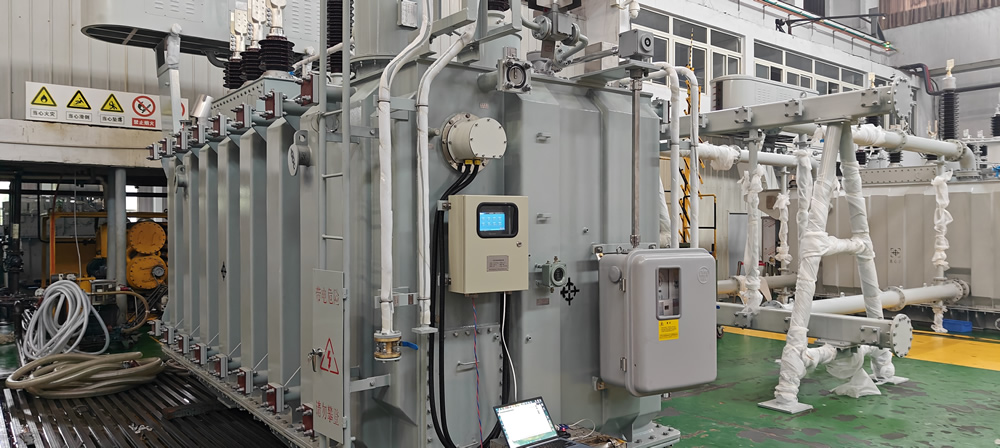
Nguvu ya kisasa transformer iliyo na mfumo wa ufuatiliaji wa joto la fiber optic, kuonyesha vifaa vya uelekezaji na ulizi wa nyuzi.
Manufaa Muhimu ya Ufuatiliaji wa Joto la Fiber Optic kwa Transfoma
Utekelezaji mifumo ya kipimo cha joto cha nyuzi macho kwa nguvu transfoma hutoa faida nyingi zinazoonekana ambazo huathiri moja kwa moja uaminifu wa uendeshaji, mazoea ya matengenezo, maisha ya mali, na utendaji wa kifedha.
Uhai wa Kibadilishaji Uliopanuliwa
Sahihi Ufuatiliaji wa joto huwezesha waendeshaji kuzuia matukio ya uharibifu ya joto na kuboresha upakiaji ndani ya mipaka salama:
- Ugani wa maisha ya kibadilishaji cha kawaida cha 5-15 miaka kupitia usimamizi bora wa mafuta
- Ugunduzi wa mapema wa mifumo ya kupokanzwa isiyo ya kawaida kabla ya uharibifu wa insulation kutokea
- Kupunguza kasi ya kuzeeka kwa mafuta kupitia udhibiti sahihi zaidi wa upakiaji
- Data ya kihistoria ya halijoto huwezesha tathmini sahihi ya maisha iliyosalia
Kwa transfoma muhimu yenye thamani ya mamilioni ya dola, kuongeza maisha ya huduma kwa hata miaka michache inawakilisha manufaa makubwa ya kifedha na matumizi ya mtaji yaliyoahirishwa.
Kuongezeka kwa Uwezo wa Kupakia
Upepo wa moja kwa moja kipimo cha joto inaruhusu huduma kwa usalama kuongeza uwezo wa transfoma:
- Uwezo wa kawaida huongezeka 10-15% ikilinganishwa na upakiaji wa kihafidhina kulingana na mifano ya joto
- Kujiamini kwa kutumia ukadiriaji wa dharura wa muda mfupi katika vipindi muhimu
- Uwezo wa upakiaji unaobadilika kulingana na halisi viwango vya joto vilivyopimwa badala ya mawazo ya hali mbaya zaidi
- Upoaji ulioboreshwa udhibiti kulingana na halijoto ya wakati halisi Takwimu
Uwezo huu ulioongezeka unaweza kuahirisha uboreshaji wa miundombinu ya gharama kubwa na kutoa unyumbufu muhimu wakati wa vipindi vya mahitaji ya juu au hali za dharura..
Ugunduzi wa makosa ya mapema
Sensorer za joto za macho ya nyuzi inaweza kutambua masuala yanayoendelea kabla ya kuendelea hadi kushindwa kwa janga:
- Kugundua baridi iliyozuiwa ducts kupitia joto la ndani huongezeka
- Utambulisho wa kuzorota kwa miunganisho ya umeme kupitia mifumo ya kupokanzwa isiyo ya kawaida
- Onyo la mapema la kuvunjika kwa insulation kupitia ukuzaji wa eneo-hotspot
- Utambuzi wa baridi kushindwa kwa mfumo kwa njia ya joto mifumo ya majibu
Utambulisho wa mapema wa masuala haya huruhusu uingiliaji kati wa matengenezo uliopangwa badala ya urekebishaji wa dharura au uingizwaji baada ya kushindwa kutokea..
Mazoezi ya Utunzaji Ulioboreshwa
Data ya kina ya halijoto huwezesha mpito kutoka kwa matengenezo kulingana na wakati hadi kulingana na hali:
- Uwekaji kipaumbele wa matengenezo kulingana na historia halisi ya mkazo wa joto
- Ukaguzi unaolengwa unaoongozwa na hitilafu za halijoto
- Kupunguza shughuli zisizo za lazima za matengenezo ya kuzuia
- Tathmini sahihi zaidi ya afya ya transfoma kwa usimamizi wa meli
Mbinu hizi za matengenezo zilizoboreshwa kwa kawaida hupunguza gharama za matengenezo kwa 15-25% wakati huo huo kuboresha kuegemea na kupanua mali maisha.
Usalama ulioimarishwa na Ulinzi wa Mazingira
Kuzuia kushindwa kwa mafuta ya transfoma kuna faida kubwa za usalama na mazingira:
- Kupunguza hatari ya kushindwa kwa janga ambayo inaweza kusababisha moto au milipuko
- Kuzuia uvujaji wa mafuta na umwagikaji unaohusishwa na matukio ya kukimbia kwa joto
- Kuimarishwa kwa usalama wa wafanyikazi kupitia ufuatiliaji wa mbali ambao hupunguza mahitaji ya ukaguzi
- Kupunguza hatari ya uharibifu wa dhamana kwa vifaa vya karibu wakati wa matukio ya kushindwa
Manufaa haya ni muhimu hasa kwa transfoma zilizo katika maeneo nyeti kwa mazingira au maeneo yenye watu wengi ambapo hatari za usalama zimeongezeka..
Nyaraka na Uchanganuzi wa Kina
Kisasa Mifumo ya ufuatiliaji wa joto la nyuzi kutoa uwezo mkubwa wa usimamizi wa data:
- Halijoto kamili historia ya madai ya udhamini na nyaraka za bima
- Uchanganuzi wa hali ya juu wa uboreshaji wa utendaji wa mafuta
- Kuunganishwa na afya ya mali mifumo ya usimamizi kwa tathmini ya kina ya hali
- Data muhimu kwa muundo wa kibadilishaji cha siku zijazo na uboreshaji wa vipimo
Utajiri huu wa data inabadilisha ufuatiliaji wa joto kutoka kwa utendaji rahisi wa ulinzi hadi zana muhimu ya usimamizi wa mali yenye manufaa ya kiutendaji na ya kimkakati.
Kurudi kwenye uwekezaji
Kesi ya kifedha kwa Ufuatiliaji wa joto la fiber optic inalazimisha. Uchunguzi wa kifani katika huduma zote ulimwenguni umerekodi:
- Vipindi vya ROI kwa kawaida huanzia 2-4 miaka kwa transfoma muhimu
- Akiba ya kuzuia kushindwa kwa $500,000 kwa $3 milioni kwa kuepukwa kushindwa kubwa (ikiwa ni pamoja na gharama za uingizwaji, Jibu la dharura, na athari za kukatika)
- Akiba ya kuahirisha uwezo wa $1-2 milioni kwa kila kituo kidogo ambapo uboreshaji wa transfoma unaweza kuahirishwa kupitia upakiaji ulioboreshwa
- Akiba ya matengenezo ya $15,000-$25,000 kila mwaka kwa transfoma kubwa kupitia mbinu za msingi wa hali
Faida hizi za kifedha hufanya Ufuatiliaji wa joto la fiber optic uwekezaji mzuri, hasa kwa transfoma kubwa ya nguvu katika matumizi muhimu.
Kuelewa Teknolojia ya Sensor ya Joto ya Fiber Optic kwa Transfoma
Kabla ya kutekeleza fiber optic Mfumo wa Ufuatiliaji wa Joto Kwa transfoma za nguvu, ni muhimu kuelewa teknolojia tofauti zinazopatikana na faida zake mahususi kwa matumizi ya transfoma.
Teknolojia ya Msingi ya Kuhisi Halijoto ya Fiber Optic
Mbili kuu teknolojia ya sensor ya joto ya fiber optic inatawala ufuatiliaji wa kibadilishaji soko, kila mmoja akiwa na sifa zake tofauti:
Kuoza kwa fluorescence (GaAs) Teknolojia
Teknolojia hii hutumia wakati wa kuoza wa fluorescence unaotegemea joto wa gallium arsenide (GaAs) nyenzo za semiconductor kwenye ncha ya nyuzi za macho:
- Kanuni ya kufanya kazi: Wakati wa kusisimka na mapigo nyepesi, nyenzo za GaAs hutoa fluorescence na wakati wa kuoza ambao unahusiana haswa na halijoto kamili..
- Upeo wa kipimo: Kwa kawaida -40°C hadi +250°C, bora kwa matumizi ya transfoma.
- Usahihi: ±0.5°C au bora zaidi katika safu ya kipimo.
- Faida muhimu:
- Vipimo vya uhakika na usahihi wa juu
- Kabisa kipimo cha joto kinachohitaji hakuna calibration
- Ufungaji rahisi na utunzaji mdogo wa nyuzi
- Imethibitishwa utulivu wa muda mrefu katika mazingira ya transfoma
- Mapungufu:
- Kila sehemu ya kuhisi inahitaji nyuzi zake
- Uwezo mdogo wa kutambua kusambazwa
- Bora kwa: Muhimu ufuatiliaji wa eneo-hotspot katika maalum, maeneo yanayojulikana kama vile maeneo yenye vilima, risasi inatoka, na viungo vya msingi.
Fiber Bragg Grating (FBG) Teknolojia
Sensorer za FBG tumia gratings zilizoandikwa kwenye msingi wa nyuzi zinazoakisi urefu maalum wa mawimbi ya mwanga kulingana na halijoto:
- Kanuni ya kufanya kazi: Mabadiliko ya joto husababisha mrebe muda wa kupanua au mkataba, kuhamisha urefu wa wimbi la mwanga ulioakisiwa sawia na halijoto.
- Upeo wa kipimo: Kwa kawaida -40 ° C hadi +300 ° C na nyuzi maalumu na ufungaji.
- Usahihi: Kwa kawaida ±1°C baada ya kusawazisha.
- Faida muhimu:
- Sensorer nyingi (20+ vidokezo) kwenye nyuzi moja
- Uwezo bora wa kuzidisha kwa ufuatiliaji wa kina
- Idadi ya nyuzi zilizopunguzwa kwa usakinishaji changamano
- Halijoto iliyochanganywa na uwezo wa kuhisi matatizo
- Mapungufu:
- Inahitaji urekebishaji wa awali na fidia ya halijoto
- Usindikaji wa ishara ngumu zaidi na tafsiri ya data
- Bora kwa: Maombi yanayohitaji pointi nyingi za kipimo, ramani ya kina ya mafuta, na ufuatiliaji wa halijoto/shida ya pamoja.
Kusambazwa kwa joto la joto (DTS)
Mifumo ya DTS hupima joto mfululizo kwa urefu wote wa nyuzi ya macho:
- Kanuni ya kufanya kazi: Kulingana na Raman au Brillouin kutawanyika nyuma, ambapo mwanga uliotawanyika unaotegemea halijoto huchambuliwa ili kubaini wasifu wa halijoto.
- Upeo wa kipimo: Kwa kawaida -40 ° C hadi +300 ° C kulingana na mipako ya nyuzi.
- Azimio la anga: 0.5 kwa 2 mita za kawaida, Na umbali wa kipimo hadi 30km.
- Faida muhimu:
- Inayoendelea wasifu wa joto pamoja na nyuzi nzima urefu
- Hakuna haja ya kuamua mapema pointi za kipimo
- Maelfu ya pointi za kipimo zenye ufanisi na nyuzi moja
- Inafaa kwa miundo mikubwa au ngumu ya transfoma
- Mapungufu:
- Ubora wa chini wa anga ikilinganishwa na vihisi vya uhakika
- Gharama ya juu kwa vifaa vya kuhojiwa
- Ufungaji mgumu zaidi na tafsiri ya data
- Bora kwa: Transfoma kubwa zinazohitaji ramani ya kina ya mafuta, na programu ambapo maeneo ya mtandao-hewa hayajulikani mapema.
Kuchagua Teknolojia Bora Zaidi kwa Maombi Yako
Chaguo bora la teknolojia inategemea mambo kadhaa maalum kwako Ufuatiliaji wa Transformer mahitaji:
| Sababu | Kuoza kwa fluorescence (GaAs) | Fiber Bragg Grating (FBG) | Kusambazwa kuhisi (DTS) |
|---|---|---|---|
| Idadi ya pointi za kipimo zinazohitajika | 1-8 vidokezo | 8-40 vidokezo | Profaili inayoendelea (maelfu ya pointi) |
| Ukubwa wa transformer na utata | Ndogo hadi kati | Kati hadi kubwa | Jiometri kubwa au ngumu |
| Aina ya ufungaji | Kiwanda au retrofit | Kimsingi kiwanda | Uelekezaji wa kiwanda au uso |
| Mahitaji ya usahihi | Juu zaidi (± 0.5 ° C.) | Juu (± 1 ° C.) | Wastani (± 2 ° C.) |
| Mazingatio ya bajeti | Gharama ya chini ya vifaa vya awali | Gharama ya wastani ya mfumo | Gharama ya juu ya vifaa |
| Ugumu wa ufungaji | Rahisi zaidi | Wastani | Ngumu zaidi |
Huduma nyingi hutekeleza mbinu za mseto, kwa kutumia sensorer za uhakika (Fluorescence au FBG) kwa maeneo yenye joto inayojulikana na DTS kwa ramani pana ya mafuta ya transfoma kubwa. Kushauriana na uzoefu Watengenezaji wa sensor ya joto ya nyuzi kama vile FJINNO inaweza kusaidia kubainisha mchanganyiko bora wa teknolojia kwa meli yako mahususi ya transfoma.

Ulinganisho wa kuona wa msingi tatu Kuhisi joto la fiber optic teknolojia zinazotumika katika matumizi ya transfoma, kuonyesha muundo wa sensor na tofauti za usakinishaji.
Hatua 1: Kupanga Mfumo wako wa Ufuatiliaji wa Joto la Transfoma
Utekelezaji mzuri wa optic ya nyuzi Mfumo wa Ufuatiliaji wa Joto huanza na upangaji wa kina unaoshughulikia mahitaji ya kiufundi, malengo ya uendeshaji, na vifaa vya utekelezaji.
Fafanua Malengo na Mahitaji ya Ufuatiliaji
Anza kwa kuweka wazi kile unachohitaji kukamilisha na yako Mfumo wa Ufuatiliaji wa Joto:
- Malengo ya Msingi: Amua ikiwa unalenga kupanua transformer maisha, kuongeza uwezo wa kupakia, kuboresha mazoea ya matengenezo, au mchanganyiko fulani wa malengo haya.
- Tathmini ya Uhakiki: Tathmini umuhimu wa kimkakati wa kibadilishaji(s) kuweka vipaumbele vya utekelezaji na kuamua viwango vinavyofaa vya uwekezaji. Fikiria vipengele kama:
- Gharama ya uingizwaji na wakati wa kuongoza
- Mzigo umetolewa na upungufu unapatikana
- Masuala ya kuegemea kihistoria
- Umri na hali kuhusiana na maisha yanayotarajiwa
- Mahitaji ya Udhibiti: Tambua yoyote mamlaka husika za udhibiti au viwango vya ufuatiliaji wa halijoto katika mamlaka yako.
- Mahitaji ya Ujumuishaji wa Data: Bainisha jinsi data ya halijoto itaunganishwa na usimamizi uliopo wa mali, SCADA, au hali mifumo ya ufuatiliaji.
Kuandika mahitaji haya hutoa msingi wa vipimo vya mfumo na inaongoza uteuzi wa teknolojia maamuzi.
Kusanya Taarifa Muhimu za Transfoma
Kusanya maelezo ya kina kuhusu transformer(s) kufuatiliwa:
- Nyaraka za Kubuni: Kusanya michoro ya muundo wa transfoma, hasa maelezo ya vilima na mipangilio ya mfumo wa baridi.
- Vikomo vya Joto: Hati iliyobainishwa viwango vya halijoto kutoka kwa karatasi ya jina au hati za mtengenezaji:
- Wastani joto la vilima kupanda
- Kupanda kwa joto la mtandao-hewa
- Juu Joto la mafuta kupanda
- Darasa la joto la mfumo wa insulation
- Data ya Kihistoria: Kusanya historia yoyote inayopatikana data ya joto kutoka kwa mifumo iliyopo ya ufuatiliaji.
- Inapakia Wasifu: Changanua mifumo ya kawaida ya upakiaji na utambue vipindi vya kilele vya upakiaji au tofauti za msimu.
- Taarifa za Upatikanaji: Sehemu za ufikiaji wa hati, bandari zinazopatikana, na vikwazo vya kimwili vinavyoweza kuathiri usakinishaji.
Taarifa hii ni muhimu kwa ajili ya kuamua mojawapo uwekaji wa sensor na kuanzisha kengele inayofaa vizingiti.
Mazingatio ya Muda wa Ufungaji
Amua wakati unaofaa na mbinu ya usakinishaji:
- Uainishaji Mpya wa Transfoma: Kwa vitengo vipya, sensorer ya joto ya macho ya fiber inapaswa kutajwa wakati wa mchakato wa ununuzi na imewekwa wakati wa utengenezaji kwa uwekaji bora ndani ya vilima.
- Chaguzi za Retrofit: Kwa transfoma zilizopo, kutathmini uwezekano wa kurejesha pesa:
- Uratibu uliopangwa wa kukatika
- Fursa za ukarabati wa kiwanda
- Chaguzi za ufungaji zisizo vamizi
- Mahitaji ya Kukatika: Andika vikwazo vyovyote vya uendeshaji kuhusu muda wa kukatika au muda.
- Uratibu na Kazi Nyingine: Tambua fursa za kuchanganya Ufungaji wa sensor ya joto na shughuli zingine za matengenezo au uboreshaji.
Upangaji wa mapema wa muda wa usakinishaji unaweza kupunguza sana gharama na kupunguza athari za utendakazi.
Bajeti na Mipango ya Rasilimali
Tengeneza bajeti ya kina na mpango wa rasilimali:
- Vipengele vya mfumo: Bajeti ya vipengele vyote vya mfumo:
- Sensorer za joto la optic na probes
- Nyuzi za macho na malisho
- Vifaa vya hali ya ishara na kuhojiwa
- Ufuatiliaji wa programu na vipengele vya kuunganisha
- Vifaa vya ufungaji na vifaa
- Rasilimali za Ufungaji: Amua ikiwa usakinishaji utafanywa na:
- Mtengenezaji wa transfoma (kwa vitengo vipya)
- Maalum Sensor ya macho ya nyuzi wakandarasi wa ufungaji
- Wafanyakazi wa kiufundi wa ndani na mafunzo sahihi
- Usaidizi Unaoendelea: Bajeti ya matengenezo, calibration, na msaada wa kiufundi.
- Mahitaji ya Mafunzo: Mpango wa mafunzo ya wafanyakazi wa uendeshaji na matengenezo.
Upangaji wa kina wa bajeti husaidia kuzuia mshangao wa katikati ya mradi na kuhakikisha kuwa vipengele vyote muhimu vinahesabiwa.
Tathmini ya Hatari na Kupunguza
Tambua hatari zinazowezekana na uandae mikakati ya kupunguza:
- Hatari za Kiufundi: Masuala ya utangamano, changamoto za ufungaji, au matatizo ya ujumuishaji.
- Hatari za Uendeshaji: Athari zinazowezekana kwenye upatikanaji au utendaji wa kibadilishaji.
- Hatari za Ratiba: Ucheleweshaji wa utoaji wa vifaa, Usakinishaji, au kuagiza.
- Mikakati ya Kupunguza: Tengeneza mbinu mahususi za kushughulikia kila hatari iliyotambuliwa.
Udhibiti wa hatari unaoendelea huongeza uwezekano wa kutekelezwa kwa ufanisi na usumbufu mdogo.
Orodha ya Kuhakiki ya Mipango
Tumia orodha hii kuhakikisha upangaji wa kina:
Hatua 2: Kuchagua Sensorer za Joto za Fiber Optic za Kulia
Kuchagua kufaa vihisi joto vya nyuzi macho kwa programu yako ya kibadilishaji ni muhimu kwa utendaji wa mfumo, Kuegemea, na thamani ya muda mrefu. Mchakato huu wa uteuzi unapaswa kuzingatia uwezo wa kiufundi na vipengele vya utekelezaji wa vitendo.
Vigezo Muhimu vya Uteuzi kwa Programu za Transfoma
Tathmini uwezo sensorer ya joto ya macho ya fiber kinyume na vigezo hivi muhimu:
Kiwango cha Joto na Usahihi
Hakikisha sensorer zilizochaguliwa hukutana na mahitaji maalum ya transformer Programu tumizi:
- Safu ya Uendeshaji: Sensorer zinapaswa kufunika safu kamili ya joto ya kibadilishaji operesheni, kwa kawaida kutoka -40°C hadi angalau +150°C kwa vitengo vya kawaida na hadi +180°C kwa hali ya upakiaji mwingi..
- Usahihi: Tafuta usahihi wa ±1°C au bora zaidi katika safu ya uendeshaji, hasa katika viwango vya joto muhimu karibu 110-140 ° C ambapo kuzeeka kwa joto huharakisha.
- Azimio: 0.1Ubora wa °C unahitajika kwa uchanganuzi wa mwenendo na ugunduzi wa hila wa hitilafu.
- Utulivu: Utulivu wa muda mrefu na drift ndogo zaidi ya miaka ya uendeshaji ni muhimu kwa ufuatiliaji wa maisha ya transfoma.
Uimara wa mazingira
Mazingira ya transfoma yanahitajika, inayohitaji sensorer iliyoundwa kwa hali mbaya:
- Utangamano wa Mafuta: Sensorer lazima ziendane na kibadilishaji mafuta ya madini, maji ya asili ya ester, au maji ya kuhami sintetiki bila kuharibika kwa miongo kadhaa.
- Upinzani wa kemikali: Lazima ihimili mfiduo kwa Mafuta ya Transformer viungio, Gesi zilizofutwa, na bidhaa za kuzeeka.
- Nguvu ya Dielectric: Nyenzo zote lazima zihifadhi mali zinazofaa za dielectri katika mazingira ya juu-voltage.
- Kudumu kwa Mitambo: Lazima ihimili mtetemo, Baiskeli ya mafuta, na matatizo ya kimwili ndani ya transformer.
- Maisha yanayotarajiwa: Muda wa maisha ya sensor unapaswa kuendana au kuzidi maisha ya kibadilishaji yaliyobaki, kawaida 25+ Miaka.
Mazingatio ya Ufungaji na Uingizaji
Vipengele vya utekelezaji wa vitendo huathiri kwa kiasi kikubwa mafanikio ya mfumo:
- Kipengele cha Fomu: Ukubwa wa sensor na umbo lazima ziendane na nafasi zinazopatikana za usakinishaji ndani ya kibadilishaji.
- Njia ya ufungaji: Zingatia ikiwa vitambuzi vitasakinishwa kiwandani wakati wa ujenzi au kuwekwa upya kwa vitengo vilivyopo.
- Chaguzi za Kulisha: Tathmini chaguzi za kupenya kwa ukuta wa tanki ambazo hudumisha uadilifu wa muhuri wa mafuta na nguvu ya dielectric.
- Usimamizi wa Fiber: Zingatia uelekezaji wa nyuzi, mapungufu ya radius ya bend, na njia za ulinzi ndani na nje ya kibadilishaji.
- Uunganisho: Hakikisha utangamano na vifaa vya kuhoji vilivyochaguliwa na upatikanaji wa viunganishi vinavyofaa.
Vyeti na Uzingatiaji wa Viwango
Thibitisha kuwa vitambuzi vinakidhi viwango na vyeti vinavyohusika vya sekta hiyo:
- Viwango vya IEEE: Kuzingatia IEEE C57.91 kwa upakiaji wa transformer na ufuatiliaji wa joto.
- Viwango vya IEC: Kuzingatia viwango husika vya IEC kwa ufuatiliaji wa transfoma na vifaa vya umeme.
- Usalama wa Nyenzo: Uthibitisho kwamba nyenzo zote zinaendana na mifumo ya kuhami ya transfoma.
- Uhakikisho wa Ubora: ISO 9001 cheti kwa michakato ya utengenezaji.
- Mahali pa Hatari: Vyeti vinavyofaa ikiwa vimesakinishwa katika maeneo hatarishi yaliyoainishwa.
Msaada na Nyaraka
Usaidizi wa kina ni muhimu kwa utekelezaji wenye mafanikio wa muda mrefu:
- Nyaraka za Ufungaji: Miongozo ya kina ya usakinishaji mahususi kwa programu tumizi za transfoma.
- Vyeti vya Urekebishaji: Data ya urekebishaji ya mtu binafsi na ufuatiliaji kwa kila kihisi.
- Msaada wa kiufundi: Upatikanaji wa msaada wa kiufundi wa kitaalam kwa usakinishaji na utatuzi wa shida.
- Masharti ya Udhamini: Udhamini wa kina unaofaa kwa programu za kibadilishaji cha maisha marefu.
- Chaguzi za Urekebishaji / Ubadilishaji: Taratibu wazi za kushughulikia maswala yoyote ya kihisi ambayo yanaweza kutokea.
Ulinganisho wa Chaguzi Zinazoongoza za Sensor ya Joto ya Fiber Optic kwa Transfoma
Jedwali hapa chini linalinganisha vipimo muhimu vya sensorer za joto za fiber optic kawaida kutumika katika matumizi ya transfoma:
| Uainishaji | Sensor ya Kibadilishaji Kawaida | Joto la Juu Sensor | Suluhisho la Retrofit |
|---|---|---|---|
| Kiwango cha joto | -40° C hadi +200 ° C. | -40°C hadi +300°C | -40° C hadi +180 ° C. |
| Usahihi | ± 0.5 ° C. | ± 1.0 ° C | ± 1.0 ° C |
| Wakati wa Kujibu | < 1 Pili | < 1 Pili | 1-2 Sekunde |
| Kipenyo cha sensor | 0.8 – 1.2 mm | 1.2 – 2.0 mm | 2.0 – 3.0 mm |
| Ufungaji wa Kawaida | Kiwanda kimeunganishwa | Kiwanda kimeunganishwa | Urejeshaji wa shamba |
| Maisha yanayotarajiwa | 25+ Miaka | 25+ Miaka | 20+ Miaka |
| Mojawapo ya Maombi | Mpya Nguvu za Nguvu | Miundo ya joto la juu | Transfoma zilizopo |
Uchaguzi unapaswa kutegemea maalum yako aina ya transformer, mbinu ya ufungaji, na malengo ya kuangalia. Watengenezaji wanaoongoza kama FJINNO kutoa mwongozo maalum wa uteuzi kulingana na mahitaji yako mahususi ya programu.
Mapendekezo ya Uteuzi wa Vitendo
Kulingana na uzoefu wa tasnia, mapendekezo haya ya vitendo yanaweza kusaidia ongoza uteuzi wako mchakato:
- Kwa Transfoma Mpya: Bainisha vitambuzi vilivyosakinishwa kiwandani na muunganisho wa vilima vya moja kwa moja kwa utendakazi bora. Jumuisha maelezo ya kina ya sensor katika hati za ununuzi wa transfoma.
- Kwa Miradi ya Retrofit: Fikiria ufumbuzi usio na uvamizi ambao unaweza kusakinishwa wakati wa kukatika kwa mipango bila marekebisho makubwa ya transfoma. Chaguzi za kupachika sumaku au gundi zinaweza kutoa data muhimu bila kuhitaji ufikiaji wa ndani.
- Kwa Mali Muhimu: Tekeleza isiyohitajika sensorer katika pointi muhimu za kipimo ili kuhakikisha ufuatiliaji unaoendelea hata kama vitambuzi binafsi vinakumbana na matatizo.
- Kwa Usambazaji wa Meli-Pana: Sawazisha kwenye jukwaa moja la teknolojia ya kihisi ili kurahisisha matengenezo, Usimamizi wa sehemu za vipuri, na mafunzo ya wafanyakazi.
- Kwa Kuunganishwa na Mifumo Iliyopo: Thibitisha uoanifu na yako ya sasa ufuatiliaji majukwaa kabla ya kukamilisha uteuzi wa sensor ili kuepuka changamoto za muungano.
Kufanya kazi na uzoefu Watengenezaji wanaobobea katika utumaji wa transfoma wanaweza kurahisisha kwa kiasi kikubwa mchakato wa uteuzi na kuhakikisha utendakazi bora wa mfumo.

Tofauti aina za vihisi joto vya nyuzi macho vilivyoboreshwa kwa kibadilishaji Programu tumizi, kuonyesha mambo mbalimbali ya fomu kwa ajili ya ufungaji wa kiwanda na matukio ya kurejesha.
Hatua 3: Kuamua Pointi Bora za Usakinishaji wa Sensor
Uwekaji wa kimkakati wa fiber optic sensorer za joto ni muhimu kwa ufuatiliaji bora wa transfoma. Lengo ni kuweka vitambuzi katika maeneo ambayo hutoa taarifa muhimu zaidi ya halijoto huku vikibaki kupatikana kwa urahisi kwa usakinishaji.
Maeneo ya Msingi ya Ufuatiliaji wa Halijoto
Maeneo haya yanawakilisha muhimu zaidi pointi za ufuatiliaji katika transfoma za nguvu:
Maeneo ya Winding Hotspot
Vipimo muhimu zaidi ni maeneo yenye vilima, ambapo joto la juu zaidi hutokea:
- Diski ya Juu/Zamu ya Kila Awamu: Kawaida 2/3 juu kutoka chini katika sehemu ya juu zaidi ya msongamano wa kila vilima.
- Zamu ya Mwisho ya Kila Upepo: Ambapo vilima hutoka kwa uongozi, mara nyingi eneo la joto la juu.
- Maeneo ya Mtiririko wa Mafuta Uliozuiliwa: Maeneo ambapo nafasi ya mifereji ya kupozea imepunguzwa au mtiririko umezuiwa.
- Nafasi nyingi za Radi: Kwa windings kubwa, sensorer katika nafasi tofauti za radial hutoa joto la thamani habari ya gradient.
Ufuatiliaji wa sehemu-hewa yenye vilima hutoa data muhimu zaidi kwa usimamizi wa halijoto na tathmini ya maisha. Kwa transfoma na mipangilio tata ya vilima, uundaji wa hali ya joto wakati wa muundo unaweza kutambua maeneo muhimu zaidi ya sehemu kuu.
Alama za Kuongoza za Kutoka
Miunganisho ya risasi na sehemu za kutoka mara nyingi hupata halijoto ya juu:
- Viunganisho vya Turret: Ambapo vilima huunganishwa na vichaka au njia za kutoka.
- Gusa Miunganisho ya Kibadilishaji: Viunganisho kwa kichagua kibadilishaji bomba, hasa katika nafasi za bomba zilizokithiri.
- Viungo vya Juu vya Sasa: Viunganisho vyovyote vinavyobeba mkondo kamili wa vilima.
- Insulation ya risasi: Maeneo ambayo insulation ya risasi inaweza kuzuia mtiririko wa mafuta baridi.
Maeneo haya ni muhimu sana kwa ugunduzi wa mapema wa shida za muunganisho ambazo zinaweza kusababisha hitilafu mbaya ikiwa hazijatambuliwa..
Pointi za Ufuatiliaji wa Joto la Mafuta
Mkakati vipimo vya joto la mafuta hutoa muktadha wa vilima joto:
- Mafuta ya Juu: Karibu juu ya tank, kawaida karibu na kurudi kwa radiator.
- Mafuta ya Chini: Katika hatua ya baridi zaidi, kawaida karibu na usambazaji wa radiator.
- Kuingia/Kutoka kwa Vifaa vya Kupoeza: Katika radiator au mlango wa baridi na plagi.
- Njia za Mtiririko wa Mafuta: Katika njia kuu za mtiririko wa mafuta ndani ya muundo wa vilima.
Vipimo vya joto la mafuta vinasaidia vilima data ya joto, kutoa maarifa juu ya utendaji wa mfumo wa kupoeza na tabia ya jumla ya joto.
Vipengele vya Msingi na Muundo
Kufuatilia vipengele muhimu vya miundo kunaweza kutambua hali maalum za kushindwa:
- Viungo vya Msingi: Particularly at multistep lap joints where eddy current heating may occur.
- Core Clamping Structures: Areas where stray flux may induce heating in metallic components.
- Magnetic Shunts: Components designed to control flux paths that may experience heating.
- Tank Walls: Areas near high-current components where eddy currents may cause localized heating.
These measurements can identify issues not revealed by conventional monitoring, such as core problems or stray flux heating.
Determining the Optimal Number of Sensors
The appropriate number of Ufuatiliaji wa joto points depends on several factors:
| Aina ya Transfoma | Minimum Recommended | Ufuatiliaji wa Kina | Key Locations |
|---|---|---|---|
| Transformer ya usambazaji (<10 MVA) |
3-5 Vihisio | 6-10 Vihisio | Mafuta ya juu, one hotspot per phase |
| Kibadilishaji cha Nguvu za Kati (10-100 MVA) |
6-9 Vihisio | 12-18 Vihisio | Top/bottom oil, two hotspots per phase, key leads |
| Transformer Kubwa ya Nguvu (>100 MVA) |
9-12 Vihisio | 20-30 Vihisio | Multiple points per phase, all leads, oil flow paths |
| Jenereta Hatua ya Juu Transformer |
12-15 Vihisio | 24-36 Vihisio | Dense coverage of all critical areas due to high importance |
| HVDC Converter Transformer |
15-20 Vihisio | 30-40 Vihisio | Additional focus on valve windings and areas exposed to harmonics |
These recommendations should be adjusted based on specific transformer design, umuhimu, mifumo ya upakiaji, na vikwazo vya bajeti. Kwa transfoma muhimu, more comprehensive monitoring provides greater diagnostic capability and risk reduction.
Sensor Placement Strategies Based on Installation Type
Installation constraints significantly influence optimal sensor placement:
Ufungaji wa kiwanda (Transfoma mpya)
For new transformers with sensors installed during manufacturing:
- Direct Winding Integration: Sensors can be embedded directly between disc windings or within the conductor insulation.
- Lead Embedding: Sensors can be integrated within lead insulation structures.
- Custom Routing: Kamba za macho za nyuzi can be routed through dedicated paths with appropriate protection.
- Optimal Placement: Working with the transformer manufacturer allows placement at the theoretical hotspot locations identified during design.
Factory installation offers the most comprehensive monitoring capability with optimal sensor placement. Detailed placement instructions should be included in transformer specifications.
Ufungaji wa Retrofit (Transfoma Zilizopo)
For existing transformers requiring non-invasive or minimally invasive approaches:
- Oil Pocket Sensors: Utilize existing thermometer wells and oil pockets where available.
- Ufuatiliaji wa Uso wa Nje: Strategic placement on tank walls near expected internal hotspots.
- Bushing Collar Sensors: Placement at bushing collars to monitor lead exit areas.
- Limited Internal Access: When transformer is opened for maintenance, limited sensor installation may be possible at accessible locations.
While retrofit installations typically cannot access the true winding hotspots, strategically placed sensors still provide valuable information beyond conventional monitoring systems.
Factory Refurbishment Opportunities
When transformers undergo factory refurbishment or repair:
- Partial Winding Access: During rewind operations, sensors can be installed in critical winding sections.
- Lead Replacement: When leads are replaced or repaired, sensors can be integrated into the new insulation.
- Cooling Modification: During cooling system upgrades, additional access for sensor placement may be available.
- Internal Inspection: Even without major work, internal inspection outages may allow limited sensor placement.
Factory refurbishment represents an excellent opportunity for comprehensive sensor installation in existing transformers, combining the benefits of factory precision with extended monitoring of aging assets.
Documenting Sensor Placement
Thorough documentation of sensor placement is essential for data interpretation and future reference:
- Detailed Placement Diagrams: Create detailed drawings showing exact sensor locations with references to transformer design coordinates.
- Sensor Identification System: Implement a clear naming convention that identifies the location and function of each sensor.
- Photographs: When possible, document installation with photographs before components are assembled.
- As-Built Records: Update documentation to reflect any changes made during actual installation.
- Digital Records: Maintain electronic records accessible to maintenance and engineering personnel.
This documentation is invaluable for interpreting temperature data, utatuzi wa matatizo, and planning future monitoring enhancements.

Cross-sectional diagram of a power transformer showing optimal fiber optic temperature sensor placement locations for comprehensive thermal monitoring.
Hatua 4: Mbinu za Ufungaji na Mbinu Bora
Usanikishaji sahihi wa fiber optic temperature sensors is critical for accurate measurement, Kuegemea kwa muda mrefu, and transformer integrity. Different approaches are required depending on whether installation occurs during manufacturing or as a retrofit to existing units.
Ufungaji wa Kiwanda Wakati wa Utengenezaji
Inasakinisha sensors during transformer manufacturing offers optimal placement and integration:
Mchakato wa Ujumuishaji wa Upepo
For direct integration into vilima vya transformer:
- Coordination with Manufacturer: Provide detailed installation specifications to the transformer manufacturer during the design phase.
- Sensor Preparation: Sensors should be pre-tested and calibration-verified before installation begins.
- Positioning During Winding: As disc windings are constructed, sensors are positioned at predetermined locations between discs or within the conductor insulation.
- Secure Attachment: Sensors must be securely attached without damaging insulation or restricting oil flow.
- Fiber Routing: Optical fibers are carefully routed through the winding structure with proper bend radius management and abrasion protection.
- Kupunguza Mkazo: Adequate strain relief must be provided to prevent tension on sensors during thermal cycling and winding movement.
- Protection During Assembly: Fibers must be protected during subsequent assembly operations to prevent damage.
This process requires close collaboration between the sensor supplier and transformer manufacturer to ensure proper installation without compromising transformer design or performance.
Lead and Structural Integration
For monitoring leads, Viunganisho, na vipengele vya muundo:
- Lead Integration: Sensors are incorporated within the lead insulation structure during lead fabrication.
- Pointi za unganisho: Sensors are positioned at critical connection points between windings and leads.
- Vipengele vya Msingi: Sensors are attached to core laminations or clamping structures at predetermined locations.
- Oil Flow Paths: Sensors are positioned within major oil flow channels to monitor ufanisi wa baridi.
- Tank Wall Mounting: Internal sensors may be mounted to tank walls at locations where external hotspots are anticipated.
These locations often provide valuable diagnostic information beyond the primary winding hotspots.
Fiber Management and Feedthrough
Proper management of optical fibers from internal sensors to external equipment:
- Fiber Bundling: Individual fibers are bundled and protected within suitable tubing or conduit.
- Routing Path: Fibers are routed to avoid areas of mechanical stress, high electric field, or physical hazards.
- Tank Penetration: Specialized oil-tight optical feedthroughs are installed in the transformer tank wall.
- Feedthrough Types:
- Epoxy-sealed multi-fiber penetrations
- Individual fiber compression fittings
- Pre-assembled multi-channel feedthroughs
- External Protection: Nje ya tanki, fibers are protected within appropriate conduit to the monitoring equipment.
- Connector Termination: Fibers are terminated with appropriate optical connectors for connection to interrogation equipment.
The tank penetration must maintain oil seal integrity while providing reliable optical transmission for decades of service.
Retrofit Installation for Existing Transformers
Installing monitoring on existing transformers requires different approaches:
Uwekaji wa Uso wa Nje
Non-invasive monitoring using external sensors:
- Modeling ya mafuta: Computational fluid dynamics (CFD) modeling to identify external locations corresponding to internal hotspots.
- Surface Preparation: Careful cleaning and preparation of mounting surfaces.
- Sensor Attachment: Using appropriate adhesives, magnetic mounts, or mechanical attachments.
- Thermal Contact: Ensuring good thermal contact with tank surface using thermal compounds if necessary.
- Ulinzi wa Mazingira: Providing weather protection and UV shielding for exposed components.
- Correlation Factors: Developing correlation factors between external measurements and estimated internal temperatures.
While not as accurate as direct internal measurements, nje sensors provide valuable trending information without requiring transformer opening.
Oil Pocket Integration
Utilizing existing thermowell and oil access points:
- Access Point Inventory: Identifying available thermometer wells, sampling ports, and other access points.
- Custom Probe Design: Designing probes to fit existing openings while maintaining oil seals.
- Sealing Solutions: Implementing appropriate sealing methods to prevent oil leaks.
- Depth Adjustment: Kuweka sensors at optimal measurement depths within oil.
- Retrofitting Valves: Katika hali nyingine, installing specialized valves that allow sensor insertion without draining oil.
This approach provides direct oil temperature measurement without major transformer modifications.
Limited Internal Access During Maintenance
Installing sensors during scheduled internal inspections:
- Maintenance Coordination: Planning sensor installation to coincide with scheduled internal inspections or repairs.
- Accessible Locations: Identifying winding, kuongoza, and structural locations accessible during partial disassembly.
- Limited Winding Access: Installing sensors on outer winding surfaces or accessible lead connections.
- Quick-Connect Systems: Using specialized quick-connect fiber optic systems to minimize installation wakati.
- Hati: Thorough documentation of installed locations for future reference.
This approach provides a compromise between optimal placement and minimal outage impact.
Critical Installation Best Practices
Regardless of installation method, these best practices should be followed:
Usimamizi wa Cable ya Fiber Optic
- Radi ya chini ya bend: Maintain manufacturer-specified minimum bend radius (typically 30mm or greater) katika pointi zote.
- Kupunguza Mkazo: Provide adequate strain relief at all transition points and connections.
- Protection from Abrasion: Use appropriate tubing or conduit to protect fibers from abrasion.
- Expansion Loops: Include service loops to accommodate thermal expansion and mechanical movement.
- Clear Identification: Implement clear fiber identification and labeling systems.
Electrical and Dielectric Considerations
- Maintain Dielectric Strength: Ensure sensor installation does not compromise insulation systems.
- Clearance Distances: Maintain appropriate clearances to energized components.
- Electric Field Management: Avoid creating high electric field concentration points.
- Grounding Considerations: Ensure proper grounding of any metallic components.
Oil System Integrity
- Kuzuia Uvujaji wa Mafuta: Ensure all penetrations and fittings maintain oil-tight seals.
- Moisture Prevention: Minimize exposure time during installation to prevent moisture ingress.
- Utangamano wa nyenzo: Use only materials compatible with transformer insulating fluid.
- Cooling Flow: Avoid obstructing oil flow paths or cooling ducts.
Documentation and Verification
- Installation Records: Maintain detailed records of all installation steps and sensor locations.
- Photographic Documentation: Take photographs during installation when possible.
- Continuity Testing: Verify optical continuity before and after each installation step.
- Final Verification: Conduct comprehensive system verification before returning transformer to service.
Pre-Installation and Installation Checklists
Use these checklists to ensure thorough preparation and execution:
Orodha ya Hakiki ya Usakinishaji wa Awali
Installation Execution Checklist
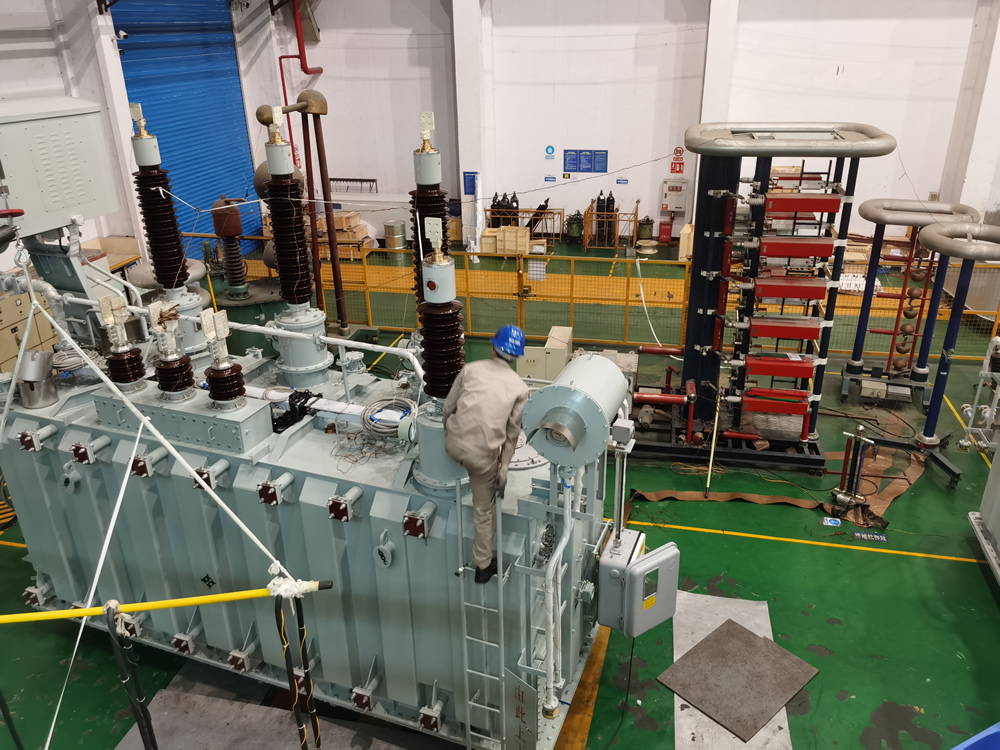
Ufungaji wa fiber optic temperature sensors during transformer manufacturing, showing careful placement between winding discs and proper fiber routing.
Hatua 5: Kuweka Vifaa vya Kuhoji na Kupata Data
ya sensorer ya joto ya macho ya fiber installed in transformers must connect to appropriate interrogation equipment that converts optical signals into temperature measurements. Properly setting up this equipment is essential for accurate, reliable monitoring.
Selecting Appropriate Interrogation Equipment
The interrogation system must match your sensor technology and monitoring mahitaji:
Fluorescence Decay Systems
For GaAs or similar fluorescence-based sensors:
- Hesabu ya Kituo: Select systems with appropriate channel capacity for your sensor deployment (kawaida 4, 8, au 16 Njia).
- Kasi ya Kipimo: Consider update rate requirements, kawaida 1-10 seconds per channel is sufficient for Ufuatiliaji wa Transformer.
- Vipimo vya Usahihi: Verify system accuracy meets or exceeds ±1°C across the operating range.
- Optical Power: Ensure sufficient optical power for the fiber lengths deployed.
- Aina za Kiunganishi: Confirm compatibility with your selected sensor connectors (typically ST or FC).
Fiber Bragg Grating Systems
For FBG-based sensor networks:
- Safu ya Wavelength: Must accommodate all FBG sensors in your network with appropriate wavelength spacing.
- Azimio: Kawaida 1-5 pm wavelength resolution for accurate kipimo cha joto.
- Scanning Speed: Consider speed requirements for your application, especially if strain measurements are also included.
- Uwezo wa kuzidisha: Ensure support for your channel and sensor count per fiber.
- Fidia ya joto: Verify capability to compensate for strain effects in combined sensing applications.
Mifumo ya kuhisi joto iliyosambazwa
For DTS installations:
- Azimio la anga: Typically 0.5m to 2m resolution is appropriate for transformer applications.
- Masafa ya Umbali: Must support your total fiber length with adequate signal-to-noise ratio.
- Azimio la joto: Verify system provides required temperature resolution (typically 0.1°C).
- Muda wa Kipimo: Consider trade-offs between measurement time and temperature azimio.
- Aina ya nyuzi Utangamano: Ensure compatibility with your installed fiber type (multimode/single-mode).
Interrogator Installation and Environment
Proper installation of interrogation equipment inahakikisha kuaminika operesheni:
Physical Installation Requirements
- Location Selection: Identify an appropriate location considering:
- Maximum fiber distance limitations (typically 100-500m depending on technology)
- Hali ya mazingira (Joto, unyevu, vumbi)
- Accessibility for maintenance
- Security considerations
- Chaguzi za kuweka juu:
- Rack mounting in control buildings
- Wall mounting in suitable enclosures
- Free-standing cabinets with climate control
- DIN rail mounting for smaller units
- Environment Control:
- Maintain temperature within equipment specifications (typically 10-40°C)
- Control humidity to prevent condensation
- Provide dust filtration if necessary
- Consider solar shielding for outdoor installations
Power and Communication Requirements
- Usambazaji wa nguvu:
- Verify voltage requirements (typically 100-240VAC or 24VDC)
- Provide uninterruptible power supply (UPS) kwa Maombi muhimu
- Implement appropriate surge protection
- Consider power consumption for proper circuit sizing
- Muunganisho wa Mtandao:
- Provide Ethernet connection to facility network
- Configure appropriate IP addressing and security
- Consider redundant communication paths for critical systems
- Implementation of appropriate cybersecurity measures
- Serial Communications:
- RS-232/485 connections for legacy systems if required
- Modbus or DNP3 connectivity for SCADA integration
- Appropriate converters for protocol translation if needed
Data Acquisition and Storage Configuration
Configure the system for appropriate data collection and storage:
Sampling Rate and Data Storage
- Muda wa Kipimo: Configure appropriate measurement intervals:
- Operesheni ya kawaida: Kawaida 1-5 minutes is sufficient
- Dynamic conditions: More frequent sampling during load changes
- Alarm conditions: Increased sampling when thresholds are approached
- Data Storage Requirements:
- Raw data storage period (kawaida 30-90 siku)
- Aggregated data storage (kawaida 1-5 Miaka)
- Storage capacity planning for expected data volumes
- Database type selection (time-series databases preferred)
- Data Compression:
- Consider deadband recording to reduce storage requirements
- Implement appropriate compression algorithms
- Balance storage efficiency with data resolution needs
Data Backup and Redundancy
- Backup Procedures:
- Automated backup scheduling
- Off-site or cloud backup options
- Backup verification procedures
- Chaguzi za Upungufu:
- Local redundant storage
- RAID configurations for critical databases
- Redundant servers for high-availability applications
- Recovery Planning:
- Documented recovery procedures
- Regular recovery testing
- Maximum acceptable data loss determination
Initial System Configuration and Testing
Proper initial setup ensures accurate measurement and reliable operesheni:
Sensor Configuration
- Sensor Registration: Configure each sensor in the system with:
- Unique identifier aligned with installation documentation
- Physical location description
- Sensor type and calibration parameters
- Measurement range and limits
- Uthibitishaji wa Urekebishaji:
- Apply factory calibration coefficients
- Verify calibration with known temperature reference if applicable
- Document baseline readings for future comparison
- Uthibitishaji wa ubora wa ishara:
- Check optical power levels for each channel
- Verify signal-to-noise ratios meet specifications
- Document baseline optical parameters
Mtihani wa Mfumo
- Upimaji wa kazi:
- Verify readings from all sensors
- Confirm expected temperature relationships
- Test response to simulated temperature changes if possible
- Mtihani wa Mawasiliano:
- Verify data export to integrated systems
- Test network connectivity and remote access
- Confirm alarm transmission pathways
- Failure Mode Testing:
- Thibitisha system response to power interruption
- Test fiber break detection if supported
- Validate system recovery after simulated failures
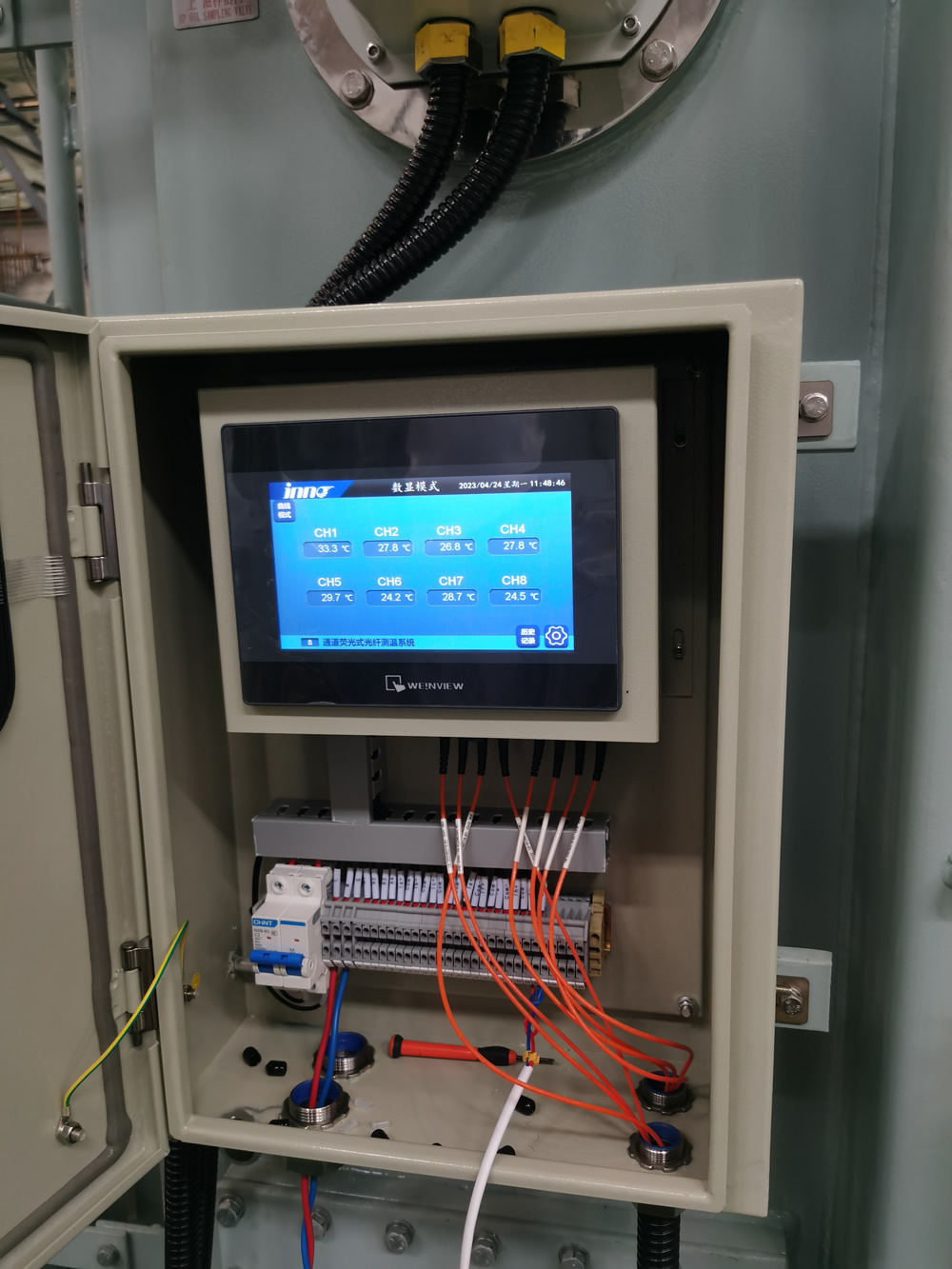
Fiber optic temperature interrogation system installed in substation chumba cha kudhibiti, showing rack-mounted equipment, fiber management, and integration with station computer systems.
Hatua 6: Kuunganishwa na Mifumo ya Ufuatiliaji ya Transfoma
To maximize the value of fiber optic temperature data, it must be effectively integrated with broader Mifumo ya Ufuatiliaji wa Transformer, majukwaa ya usimamizi wa mali, and operational systems. This integration transforms isolated temperature readings into actionable intelligence.
Data Integration Architectures
Several integration approaches are available, with increasing levels of sophistication:
Basic Data Export
Simplest integration approach for minimal requirements:
- Data Files: Export of temperature data in CSV, XML, or JSON formats.
- Manual Transfer: Scheduled or on-demand data transfers to other systems.
- Basic Visualization: Simple local HMI displays or basic web interfaces.
- Email/SMS Notifications: Direct alerts from the Mfumo wa ufuatiliaji.
- Standalone Operation: System functions independently with limited external connectivity.
This approach is suitable for isolated installations or where minimal integration is required. It provides core temperature monitoring capabilities with limited analytical functions.
Protocol-Based Integration
Standard industrial protocols for real-time data sharing:
- Modbus TCP/RTU: Widely supported protocol for simple data sharing.
- DNP3: Common in power utility applications with good time-stamping.
- IEC 61850: Advanced standard for substation automation with object modeling.
- Opc fanya: Modern protocol with rich data modeling and security.
- Mqtt: Lightweight protocol suitable for IIoT applications.
This approach provides real-time data sharing with control systems, SCADA, and other operational platforms. It supports alarm propagation and basic supervisory functions.
Ujumuishaji wa Biashara
Advanced integration with enterprise asset management systems:
- API-Based Integration: RESTful or SOAP APIs for sophisticated data exchange.
- Enterprise Service Bus: Integration through centralized message brokers.
- Data Warehouse Integration: Long-term storage in enterprise historians or data lakes.
- Asset Health Platforms: Dedicated transformer health monitoring systems.
- Matengenezo ya utabiri Mifumo: Integration with AI-driven maintenance platforms.
This approach enables comprehensive asset management, Uchambuzi wa hali ya juu, and integration with business processes such as maintenance workflow and asset lifecycle management.
Key Integration Targets
The most valuable systems for temperature data integration include:
Mifumo ya Ufuatiliaji wa Transformer
Integration with dedicated Ufuatiliaji wa Transformer majukwaa:
- Uchambuzi wa gesi iliyoyeyuka (DGA) Mifumo: Kuhusiana temperature anomalies with gas generation.
- Ufuatiliaji wa bushing: Combined analysis of bushing condition and temperature.
- Ufuatiliaji wa sehemu ya kutokwa: Correlation between temperature and PD activity.
- Load Tap Changer Monitoring: Temperature data related to tap changer operation.
- Kupoa Ufuatiliaji wa Mfumo: Ujumuishaji with cooling control and monitoring.
This integration provides a comprehensive view of transformer health by correlating temperature with other key diagnostic parameters.
Substation Automation Systems
Ujumuishaji na operational control na ufuatiliaji:
- SCADA Systems: Real-time temperature visibility for operators.
- Protective Relaying: Temperature inputs for thermal protection schemes.
- Usimamizi wa Mzigo: Temperature data for dynamic loading calculations.
- Udhibiti wa Kupoeza: Intelligent cooling system control based on actual temperatures.
- Usimamizi wa kengele: Integration with centralized Mifumo ya kengele.
This integration supports operational decision-making and automates responses to temperature conditions.
Asset Management Platforms
Integration with enterprise asset management:
- Computerized Maintenance Management Systems (CMMS): Temperature-triggered maintenance.
- Alama ya Afya ya Mali: Temperature inputs to health indexing algorithms.
- Remaining Life Assessment: Thermal aging calculations based on temperature history.
- Failure Analytics: Pattern recognition for incipient failure detection.
- Usimamizi wa Meli: Comparative analysis across transformer fleet.
This integration supports strategic asset management decisions and optimizes maintenance resources.
Mbinu za Utekelezaji
Practical steps for successful system integration:
Technical Integration Requirements
- Data Point Mapping: Create detailed mappings between temperature monitoring points and target systems.
- Protocol Converters: Implement appropriate protocol converters or gateways if required.
- Data Quality Management: Implement validation rules to ensure data integrity.
- Maingiliano ya wakati: Ensure consistent time stamping across integrated systems.
- Bandwidth Requirements: Assess and provision network capacity for data transfer.
- Hatua za Usalama wa Mtandao: Implement appropriate security controls for all integration points.
Data Modeling and Contextualization
- Naming Conventions: Establish consistent naming across systems.
- Asset Hierarchy: Map temperature data to appropriate locations in asset hierarchy.
- Metadata Management: Maintain comprehensive metadata about sensor locations and characteristics.
- Engineering Units: Ensure consistent unit representation across systems.
- Contextual References: Link temperature data to design limits and nameplate information.
Upimaji na Uthibitishaji
- Upimaji wa Ujumuishaji: Verify data flow through all integration points.
- End-to-End Validation: Confirm data accuracy from sensor to final display/storage.
- Performance Testing: Verify system performance under normal and peak data loads.
- Failover Testing: Ensure appropriate behavior during communication failures.
- User Acceptance: Validate that integrated data meets user requirements.
Integration Value Enhancement
Advanced integration creates additional value beyond basic temperature monitoring:
Advanced Analytics and Visualization
- 3D Thermal Mapping: Visual representation of transformer thermal profiles.
- Uchambuzi wa Mwenendo: Advanced trending with statistical analysis functions.
- Utambuzi wa muundo: AI-based anomaly detection across multiple parameters.
- Predictive Models: Forecasting of temperature trends based on loading and ambient conditions.
- Uchanganuzi wa Kulinganisha: Benchmarking against similar transformers or historical performance.
Operational Process Integration
- Automated Workflows: Temperature-triggered maintenance workflows.
- Usaidizi wa Uamuzi wa Uendeshaji: Loading recommendation systems based on real-time temperature.
- Majibu ya Dharura: Integration with emergency management systems for critical conditions.
- Compliance Reporting: Automated generation of regulatory compliance reports.
- Vipimo vya Utendaji: Integration with KPI tracking and operational excellence programs.
Mobile and Remote Access
- Maombi ya rununu: Smartphone/tablet access to temperature data for field personnel.
- Remote Expert Support: Secure data sharing with remote diagnostic specialists.
- Augmented Reality: AR overlay of temperature data during physical inspections.
- Collaboration Tools: Shared visualization and analysis for multi-discipline teams.
- Notification Systems: Targeted alerts to appropriate personnel based on condition.
System integration architecture showing how fiber optic temperature monitoring data flows into various enterprise systems, creating a comprehensive transformer health monitoring ecosystem.
Hatua 7: Kusanidi Vizingiti vya Kengele na Mifumo ya Arifa
Effective alarm configuration transforms continuous temperature monitoring into actionable information that prevents transformer damage and optimizes operation. This requires thoughtful threshold setting, appropriate alarm classification, and effective notification routing.
Establishing Appropriate Temperature Thresholds
Temperature alarm thresholds should be based on transformer kubuni, Viwango vya Viwanda, and operational considerations:
Standards-Based Thresholds
Industry standards provide important reference points for alarm settings:
- IEEE C57.91: Provides guidelines for transformer loading including temperature limits:
- Normal life expectancy loading: 110°C hotspot maximum
- Planned loading beyond nameplate: 120°C hotspot maximum
- Long-time emergency loading: 130°C hotspot maximum
- Short-time emergency loading: 140°C hotspot maximum
- IEC 60076-7: Provides similar guidelines with slight variations for different insulation systems.
- Vipimo vya Mtengenezaji: Always refer to transformer-specific limits provided by the manufacturer, which may be more conservative than generic standards.
These standards provide the foundation for alarm threshold development but should be adapted to specific transformer characteristics and operational requirements.
Multi-Level Alarm Structure
A graduated alarm structure provides early warning while distinguishing between operational concerns and critical conditions:
| Kiwango cha kengele | Mpangilio wa Kawaida (Winding Hotspot) | Kusudi | Jibu |
|---|---|---|---|
| Advisory | 95-100° C. | Early indication of elevated temperature | Increased monitoring, evaluate loading if sustained |
| Tahadhari | 105-110° C. | Approaching standard limits | Evaluate cooling system, consider load reduction |
| Kengele | 120-125° C. | Exceeding normal operating limits | Implement load reduction, chunguza sababu |
| Muhimu | 135-140° C. | Approaching emergency limits | Significant load reduction, prepare contingency plans |
| Dharura | 150-160° C. | Risk of immediate damage | Consider removing from service if not automatically tripped |
These threshold examples should be adjusted based on specific transformer design, mfumo wa insulation, umri, na umuhimu. Kwa oil temperature measurements, thresholds would typically be 15-25°C lower than corresponding winding hotspot values.
Rate-of-Change Alarms
Temperature rate-of-change alarms can provide early warning of developing problems:
- Rapid Rise Detection: Typically set for 1-3°C/minute sustained for several minutes, identifying abnormal heating rates not explained by loading.
- Cooling Effectiveness: Alarms based on expected temperature decrease rates when cooling activates.
- Differential Changes: Unusual temperature differences between phases or comparable locations.
- Load-Correlated Changes: Temperature changes disproportionate to load changes.
Rate-of-change alarms are particularly valuable for detecting developing problems before absolute temperature thresholds are reached.
Alarm Classification and Prioritization
Effective alarm management requires appropriate classification and prioritization:
Alarm Priority Classification
- Muhimu (Kipaumbele 1): Conditions requiring immediate operator action to prevent equipment damage or failure.
- Juu (Kipaumbele 2): Abnormal conditions requiring prompt attention and corrective action within a short timeframe.
- Medium (Kipaumbele 3): Conditions requiring attention but not immediately threatening to equipment or operation.
- Chini (Kipaumbele 4): Advisory information indicating minor deviations or early trends.
This classification should align with broader utility alarm management philosophy and terminology.
Contextual Alarm Processing
Enhancing alarm value through contextual processing:
- Load-Dependent Thresholds: Adjusting alarm thresholds based on current loading conditions.
- Ambient Temperature Compensation: Modifying thresholds based on ambient temperature.
- Operation Mode Context: Different thresholds for different operational states (n.k., startup, operesheni ya kawaida).
- Alarm Suppression Logic: Preventing alarm floods by suppressing consequential alarms.
- Alarm Shelving: Ability to temporarily suppress known alarms during specific activities.
Contextual processing reduces nuisance alarms and focuses attention on truly significant conditions.
Notification System Configuration
Configure notification systems to ensure the right information reaches the right people:
Notification Methods and Pathways
- Control Room Displays: Integration with operator HMI and mifumo ya usimamizi wa kengele.
- SCADA Alarms: Propagation to central SCADA for operational awareness.
- Mobile Notifications: Sms, Barua pepe, or push notifications to appropriate personnel.
- Automated Phone Calls: Voice notifications for critical alarms.
- Integration with Enterprise Notification Systems: Leveraging existing corporate emergency notification platforms.
Notification Routing and Escalation
- Role-Based Routing: Directing notifications based on job function and responsibility.
- Time-Based Routing: Different notification paths during business hours versus nights/weekends.
- Acknowledgment Requirements: Tracking acknowledgment of critical notifications.
- Escalation Procedures: Automatic escalation if acknowledgment doesn’t occur within defined timeframes.
- Alarm Response Procedures: Clear documentation of expected actions for each alarm type.
Notification Content Design
- Clear Identification: Unambiguous equipment identification and location.
- Specific Condition: Clear description of the alarm condition and threshold exceeded.
- Severity Indication: Clear indication of alarm priority and urgency.
- Action Guidance: Brief instructions on required response or reference to procedures.
- Contextual Data: Related information such as current load, hali ya kawaida, or relevant trends.
- Maelezo ya mawasiliano: Additional resources or experts to consult if needed.
Ongoing Alarm Management and Optimization
Alarm systems require regular review and optimization:
Alarm Performance Review
- Alarm Frequency Analysis: Identifying frequently occurring alarms for potential threshold adjustment.
- Nuisance Alarm Identification: Tracking and addressing alarms that do not provide operational value.
- Missed Alarm Analysis: Reviewing incidents to identify potential missed alarm opportunities.
- Response Time Metrics: Tracking time from alarm to acknowledgment and resolution.
- Alarm System Utendaji: Regular review of overall alarm system effectiveness.
Mchakato unaoendelea wa Uboreshaji
- Regular Review Meetings: Scheduled reviews of alarm performance with stakeholders.
- Threshold Refinement: Adjusting thresholds based on operational experience.
- New Alarm Rationalization: Careful evaluation of proposed new alarm points.
- Documentation Updates: Maintaining current alarm philosophy and response documentation.
- Training Reinforcement: Regular refresher training on alarm response procedures.
Advanced Alarm Optimization Techniques
- Uchambuzi wa Kitakwimu: Using historical data to optimize thresholds.
- Kujifunza kwa Mashine: Implementing predictive alarming based on pattern recognition.
- State-Based Alarming: Dynamically adjusting alarm configuration based on operating state.
- Alarm Flood Management: Implementing intelligent suppression during major events.
- Human Factors Engineering: Optimizing alarm presentation based on cognitive research.
Alarm configuration interface showing multi-level threshold settings, notification routing, and alarm prioritization for Mfumo wa Ufuatiliaji wa Joto la Optic.
Hatua 8: Uthibitishaji na Uagizaji wa Mfumo
Thorough verification and commissioning are essential to confirm that the Mfumo wa Ufuatiliaji wa Joto la Optic is functioning correctly and delivering accurate, Takwimu za kuaminika. This process validates both the physical installation and the data processing chain.
Comprehensive Verification Methodology
A structured approach ensures all system aspects are properly verified:
Physical Installation Verification
- Sensor Placement Confirmation: Verify sensors are installed at intended locations according to documentation.
- Fiber Routing Inspection: Confirm fiber routing follows specified paths with appropriate protection.
- Bend Radius Verification: Check all fiber routes to ensure minimum bend radius requirements are maintained.
- Feedthrough Inspection: Verify proper installation and sealing of tank penetrations.
- External Fiber Protection: Confirm adequate mechanical protection for external fiber runs.
- Connector Inspection: Verify proper connector installation and cleanliness.
Optical Signal Verification
- Continuity Testing: Thibitisha optical continuity for all installed fibers.
- Optical Power Kipimo cha kiwango: Confirm signal levels are within specification for each channel.
- Optical Time-Domain Reflectometry (OTDR): Fanya OTDR testing to identify any anomalies in the optical njia.
- Signal Quality Assessment: Verify signal-to-noise ratio meets system requirements.
- Connection Loss Measurement: Validate connection losses are within acceptable limits.
Measurement Accuracy Verification
- Uthibitishaji wa Urekebishaji: Confirm calibration coefficients are correctly applied.
- Reference Comparison: Where possible, compare readings with reference temperature measurements.
- Consistency Checks: Verify consistency between related measurement points.
- Response Testing: Confirm appropriate response to temperature changes when possible.
- Stability Assessment: Verify measurement stability under constant conditions.
System Integration Verification
- Data Flow Confirmation: Verify temperature data correctly flows to all integrated systems.
- Alarm Function Testing: Test each alarm threshold and confirm proper notification.
- Display Verification: Confirm correct representation on all user interfaces.
- Historical Storage Validation: Verify data is properly stored in historical databases.
- Time Synchronization Check: Confirm time stamps are consistent across systems.
Key Commissioning Tests
Specific tests to verify system functionality under various conditions:
Load-Based Response Testing
- Normal Load Response: Document temperature response under normal loading conditions.
- Incremental Loading: When possible, thibitisha temperature response to controlled load increases.
- Cooling Cycle Response: Verify temperature response when cooling systems activate.
- Load Reduction Response: Document cooling rates during controlled load reduction.
- Thermal Time Constants: Calculate heating and cooling time constants for future reference.
Alarm and Notification Testing
- Threshold Triggering: Verify each alarm threshold correctly triggers when conditions are met.
- Notification Delivery: Confirm notifications are delivered to all designated recipients.
- Acknowledgment Functionality: Test alarm acknowledgment and clearing functionality.
- Escalation Testing: Verify alarm escalation occurs according to configuration.
- Audio/Visual Indicators: Confirm proper operation of any local alarm indicators.
Failure Mode Testing
- Power Interruption Response: Verify system behavior and recovery after power loss.
- Communication Failure Handling: Test system response to network communication interruptions.
- Sensor Failure Detection: Confirm detection and alarming for simulated sensor failures when possible.
- Fallback Mode Operation: Verify any redundant or fallback operational modes.
- Data Recovery: Test data backfill or recovery mechanisms after system restoration.
User Function Testing
- Data Retrieval: Verify users can retrieve historical data as required.
- Report Generation: Confirm proper operation of reporting functions.
- User Interface Navigation: Test all aspects of user interface functionality.
- Security Functions: Verify access controls and authentication mechanisms.
- Ufikiaji wa Mbali: Test remote access capabilities if implemented.
Comprehensive Commissioning Documentation
Thorough documentation creates the foundation for long-term system management:
As-Built Documentation
- Final Sensor Locations: Detailed documentation of actual sensor placement.
- Fiber Routing Diagrams: Accurate representation of all fiber paths.
- Connection Details: Documentation of all connection points and terminations.
- Equipment Specifications: Final specifications of all installed components.
- Software Configurations: Documentation of all software settings and configurations.
- Integration Architecture: Detailed description of system integration implementation.
Baseline Performance Data
- Initial Temperature Readings: Msingi temperature measurements for all sensors.
- Optical Power Levels: Reference measurements for future comparison.
- Signal Quality Metrics: Baseline signal-to-noise ratios and other quality indicators.
- Response Characteristics: Documented thermal response under various conditions.
- Normal Operating Ranges: Expected temperature ranges under typical operation.
Operational Procedures
- Miongozo ya Mtumiaji: Kamili operational instructions for system users.
- Alarm Response Procedures: Detailed instructions for responding to each alarm type.
- Troubleshooting Guides: Procedures for diagnosing and addressing common issues.
- Maintenance Procedures: Scheduled maintenance activities and procedures.
- Emergency Procedures: Instructions for system operation during emergency conditions.
Commissioning Report
- Test Results: Comprehensive documentation of all verification and testing results.
- Non-Conformance Documentation: Details of any issues identified and their resolution.
- Sign-Off Records: Formal acceptance documentation from all stakeholders.
- Mapendekezo: Any recommendations for system optimization or enhancement.
- Reference Data: Baseline data for future performance comparison.
System Handover and Training
Ensure smooth transition to operational status through proper handover and training:
Operational Training Program
- System Overview Training: General introduction to system purpose and components.
- Operator Interface Training: Detailed instruction on user interface operation.
- Alarm Response Training: Specific training on alarm interpretation and response.
- Routine Tasks Training: Instruction on regular operational activities.
- Troubleshooting Training: Basic troubleshooting procedures for first-line response.
Maintenance Training Program
- Matengenezo ya kuzuia: Procedures for scheduled maintenance activities.
- Vyombo vya Uchunguzi: Training on diagnostic software and tools.
- Uingizwaji wa Sehemu: Procedures for replacing serviceable components.
- Taratibu za Urekebishaji: Training on calibration verification if applicable.
- Advanced Troubleshooting: In-depth troubleshooting for maintenance personnel.
Engineering Training Program
- Usanifu wa Mfumo: Detailed understanding of system design and integration.
- Uchambuzi wa data: Advanced data interpretation and analysis techniques.
- Configuration Management: Procedures for system configuration changes.
- Uboreshaji wa Utendaji: Methods for ongoing system optimization.
- Expansion Planning: Considerations for future system expansion.
Formal Handover Process
- Handover Meeting: Formal transfer of system responsibility to operational team.
- Outstanding Items Register: Documentation of any pending items requiring attention.
- Support Contact Establishment: Clear identification of ongoing support resources.
- Warranty Documentation: Formal transfer of all warranty information.
- Performance Acceptance: Agreement on performance metrics for ongoing evaluation.
Engineers performing comprehensive system verification and commissioning tests on newly installed fiber optic temperature monitoring system for power transformer.
Mahitaji ya Matengenezo na Urekebishaji
Optic ya nyuzi temperature monitoring systems require significantly less maintenance than conventional measurement Mifumo, but proper maintenance practices are still essential for long-term reliability and accuracy. A structured approach to maintenance ensures continued system performance throughout the transformer’s life.
Routine Maintenance Activities
Regular maintenance tasks to ensure ongoing system reliability:
Physical System Inspection
- External Fiber Inspection: Annual visual inspection of accessible fiber optic cables for physical damage, Strain, or environmental degradation.
- Connector Inspection: Annual inspection of optical connectors for contamination, uharibifu, au miunganisho huru.
- Feedthrough Examination: Visual inspection of tank penetrations for oil leakage or seal degradation during scheduled transformer inspections.
- Equipment Cabinet Inspection: Quarterly check of interrogation equipment cabinets for cleanliness, environmental controls, and physical security.
- Sensor Junction Inspection: Visual inspection of any accessible sensor junction points during transformer maintenance outages.
Optical System Verification
- Signal Level Verification: Annual verification that optical signal levels for each channel remain within specification.
- Continuity Testing: Annual confirmation of optical continuity for all monitored vidokezo.
- Connection Loss Measurement: Miaka miwili measurement of optical losses at critical connection points to identify degradation.
- OTDR Testing: Biennial OTDR testing of fiber paths to identify any developing anomalies or degradation.
- Communications Interface Check: Annual verification of communication interfaces with integrated systems.
Software and Configuration Maintenance
- Sasisho za programu: Application of manufacturer-recommended software updates according to utility change management procedures.
- Database Maintenance: Quarterly database maintenance including purging of temporary data and optimization.
- Configuration Backup: Monthly backup of system configuration and settings.
- Security Updates: Timely application of security patches according to cyber security policies.
- User Account Management: Semi-annual review and maintenance of user accounts and access privileges.
Alarm System Maintenance
- Alarm Function Testing: Annual verification of alarm generation and notification pathways.
- Threshold Review: Annual review of alarm thresholds based on operational experience.
- Communication Path Testing: Semi-annual testing of notification delivery to all recipients.
- Alarm Response Review: Annual review of alarm response procedures and updates as needed.
- Nuisance Alarm Analysis: Quarterly review of alarm frequency to identify and address nuisance alarms.
Calibration and Accuracy Verification
Approaches to maintaining measurement accuracy over time:
Inherent Calibration Stability
One of the significant advantages of fiber optic temperature sensors is their inherent long-term stability:
- Fluorescence Decay Systems: These systems typically maintain their calibration for the life of the installation without requiring field recalibration, as the decay time constant is a fundamental physical property that remains stable.
- Fiber Bragg Grating Systems: Sensorer za FBG may require periodic verification due to potential drift in the wavelength-temperature relationship over very long periods.
- Kusambazwa kwa joto la joto: Mifumo ya DTS typically include self-calibration features using reference sections of fiber at known temperatures.
Unlike conventional electronic sensors that typically require annual recalibration, zaidi Mifumo ya macho ya nyuzi maintain accuracy for 5-10 years or more without adjustment.
Accuracy Verification Methods
Though recalibration is rarely needed, periodic accuracy verification is recommended:
- Comparative Verification: For accessible sensors, periodic comparison with reference temperature measurements using calibrated infrared or contact thermometers.
- System Self-Test: Nyingi advanced systems include built-in verification functions that check optical and electronic performance.
- Known Reference Points: Baadhi ya systems include reference sensors at known temperature vidokezo (Kama joto la kawaida) for ongoing verification.
- Consistency Analysis: Regular analysis of related temperature points to identify any sensors showing anomalous readings.
- Factory Recertification: Kwa Maombi muhimu, manufacturer recertification of interrogation equipment at 3-5 vipindi vya mwaka.
Verification Frequency Recommendations
| Kipengele cha Mfumo | Njia ya uthibitisho | Recommended Frequency |
|---|---|---|
| Interrogation Equipment | Manufacturer’s verification procedure | 3-5 Miaka |
| Accessible Sensors | Comparative measurement | 2-3 Miaka |
| Internal Sensors | Consistency analysis | Kila mwaka |
| Violesura vya Mawasiliano | Uthibitisho wa data | Kila mwaka |
| Ubora wa ishara | Optical power measurement | Kila mwaka |
Common Issues and Troubleshooting
Addressing typical issues that may arise in Mifumo ya ufuatiliaji wa joto la nyuzi:
Signal Quality Issues
| Dalili | Sababu Zinazowezekana | Recommended Actions |
|---|---|---|
| Low Optical Signal Level | Connector contamination, fiber bend, fiber damage | Inspect and clean connectors, check fiber routing, perform OTDR testing |
| Signal Fluctuations | Miunganisho iliyolegea, vibration affecting fibers, interference with interrogator | Secure connections, improve fiber strain relief, relocate electronic equipment |
| No Signal | Broken fiber, disconnected sensor, Kushindwa kwa vifaa | Verify equipment operation, check connections, perform continuity testing |
| High Noise Level | Uingilivu wa sumakuumeme, equipment issue, poor grounding | Improve shielding, check grounding, relocate interrogator |
Measurement Accuracy Issues
| Dalili | Sababu Zinazowezekana | Recommended Actions |
|---|---|---|
| Offset in Readings | Calibration drift, usanidi wa programu, reference change | Verify configuration, check reference values, recalibrate if necessary |
| Usomaji Usio na uhakika | Signal quality issues, software problem, kuingiliwa | Check signal quality, restart software, isolate interference sources |
| Delayed Response | Sampling rate configuration, communication issues, processing delays | Adjust sampling rate, check communication paths, optimize processing |
| Inconsistent Readings | Uharibifu wa sensor, localized heating/cooling, installation issue | Compare with related sensors, verify installation, check for external factors |
Integration and Communication Issues
| Dalili | Sababu Zinazowezekana | Recommended Actions |
|---|---|---|
| Data Not Reaching Integrated Systems | Network issues, configuration changes, protocol mismatch | Verify network connectivity, check configuration, test protocol compatibility |
| Alarms Not Triggering | Threshold configuration, processing issues, notification path failure | Verify threshold settings, restart alarm processing, test notification pathways |
| Delayed Data Updates | Network congestion, processing bottlenecks, synchronization issues | Analyze network performance, optimize processing, check time synchronization |
| Incorrect Timestamps | Time synchronization failure, configuration issues, software bugs | Verify time server settings, check configuration, update software |
Maintenance Documentation and Management
Effective documentation practices ensure proper system maintenance:
Maintenance Records
- Activity Logging: Maintain detailed records of all maintenance activities, Matokeo, and corrective actions.
- Uchambuzi wa Mwenendo: Review maintenance history to identify recurring issues or degradation patterns.
- Modification Documentation: Maintain comprehensive records of any system modifications or upgrades.
- Calibration Records: Document all verification and calibration activities with results.
- Failure Analysis: Perform and document root cause analysis for any component failures.
Maintenance Management System
- Scheduled Tasks: Implement scheduled maintenance activities in computerized maintenance management system.
- Resource Planning: Schedule appropriate resources and expertise for maintenance activities.
- Spare Parts Management: Maintain inventory of critical spare components.
- Vendor Coordination: Establish procedures for engaging vendor support when needed.
- Uratibu wa Kukatika: Align maintenance with planned transformer outages when possible.
Uboreshaji unaoendelea
- Vipimo vya Utendaji: Establish and track reliability and availability metrics for the monitoring system.
- Uboreshaji wa matengenezo: Adjust maintenance practices based on operational experience.
- Technology Updates: Stay informed about manufacturer upgrades and enhancements.
- Industry Best Practices: Regularly review and incorporate industry best practices.
- Knowledge Sharing: Establish mechanisms for sharing maintenance learnings across the organization.
Technician performing routine maintenance on Mfumo wa Ufuatiliaji wa Joto la Optic, including signal level verification and optical connector inspection.
Uchunguzi wa Utekelezaji wa Ulimwengu Halisi
Examining successful implementations provides valuable insights into best practices, benefits achieved, and lessons learned from fiber optic temperature monitoring deployments in various transformer Programu tumizi.
Uchunguzi wa kesi 1: Large Transmission Utility Fleet-Wide Implementation
Muhtasari wa Mradi
A major North American transmission utility implemented fiber optic temperature monitoring across their critical transformer meli, consisting of 87 transformers rated 230kV and above.
- Implementation Period: 3-year phased deployment
- Technology Deployed: Sensorer za macho ya nyuzi zenye msingi wa fluorescence
- Pointi za Ufuatiliaji: 8-12 sensorer kwa transformer, focusing on winding hotspots and critical leads
- Ujumuishaji: Full integration with utility’s asset health management system and SCADA
Mbinu ya Utekelezaji
- Transfoma mpya: All new transformer specifications included factory-installed fiber optic temperature sensors.
- Critical Existing Units: Retrofit installation during planned maintenance outages for transformers under 15 umri wa miaka.
- Standardized Design: Development of standard sensor configurations by transformer type.
- Phased Rollout: Implementation prioritized based on transformer criticality and condition assessment.
- Training Program: Comprehensive training program for engineering, shughuli, and maintenance personnel.
Results and Benefits
- Kuzuia kushindwa: Early detection of developing hotspots in five transformers, allowing for planned intervention before failure.
- Matumizi ya Uwezo: Imefikiwa 12% average increase in emergency loading capability through precise Ufuatiliaji wa joto.
- Uboreshaji wa Kupoeza: Identified cooling inefficiencies in 22 transfoma, leading to corrective maintenance.
- Maintenance Savings: Reduced overall transformer maintenance costs by 18% kupitia mbinu za kuzingatia masharti.
- Upanuzi wa maisha: Extended expected service life for 35 transformers by an average of 7 years through improved thermal management.
Lessons Learned
- Standardization Value: Standardizing on a single technology platform significantly reduced training and support requirements.
- Implementation Challenges: Retrofit installations required more careful planning and longer outages than initially estimated.
- Utata wa Ujumuishaji: Integration with existing systems required more extensive customization than anticipated.
- Training Importance: Comprehensive training was critical for realizing the full value of the monitoring system.
- ROI Realization: Full return on investment was achieved in 3.2 Miaka, exceeding the initial 4-year projection.
Uchunguzi wa kesi 2: Industrial Facility Critical Transformer Monitoring
Muhtasari wa Mradi
A large aluminum smelting operation implemented advanced temperature monitoring for six critical transformers that directly impacted production capacity.
- Implementation Period: 8-month project
- Technology Deployed: Fiber Bragg Grating (FBG) multiplexed sensors
- Pointi za Ufuatiliaji: 18-24 pointi kwa transformer, with comprehensive coverage
- Ujumuishaji: Integration with plant control system and condition monitoring Jukwaa
Mbinu ya Utekelezaji
- Modeling ya mafuta: Detailed CFD modeling to identify optimal sensor locations based on specific transformer design.
- Custom Installation: Specialized installation during planned production outage with manufacturer support.
- Combined Measurement: Implementation of combined temperature and vibration monitoring using the same FBG infrastructure.
- Uchanganuzi wa Wakati Halisi: Development of custom analytics for production optimization based on transformer capacity.
- Ushirikiano wa Uendeshaji: Full integration with production management system for load scheduling.
Results and Benefits
- Production Increase: Imefikiwa 8.5% increase in production capacity through optimized transformer loading.
- Downtime Reduction: Eliminated two unplanned outages per year previously caused by transformer thermal issues.
- Ufanisi wa Nishati: Identified and corrected cooling system issues, reducing cooling energy consumption by 13%.
- Maintenance Impact: Shifted from time-based to condition-based maintenance, reducing overall maintenance costs by 22%.
- Maisha ya Mali: Extended expected transformer life from 25 kwa 35 years through improved thermal management.
Lessons Learned
- Uchaguzi wa Teknolojia: FBG technology provided valuable multiplexing capability and combined temperature/vibration monitoring.
- Ujumuishaji wa michakato: Ujumuishaji na production systems created significantly more value than standalone monitoring.
- Installation Planning: Detailed planning and rehearsal minimized production impact during installation.
- Analytics Value: Custom analytics specific to the application generated substantially higher returns than standard monitoring.
- ROI Reality: Project achieved payback in less than 14 miezi, primarily through production increases.
Uchunguzi wa kesi 3: Power Generation Step-Up Transformer Monitoring
Muhtasari wa Mradi
A 1,200MW combined cycle power plant implemented comprehensive monitoring for four generator Mabadiliko ya hatua (GSUs) that represented critical potential single points of failure.
- Implementation Period: Implemented during scheduled plant outage
- Technology Deployed: Mseto system with fluorescence sensors at critical points and distributed sensing for comprehensive coverage
- Pointi za Ufuatiliaji: 15 tofauti sensors plus distributed sensing throughout each transformer
- Ujumuishaji: Full integration with plant DCS and corporate asset management system
Mbinu ya Utekelezaji
- Chanjo ya Kina: Combined point sensors at known hotspots with distributed sensing for full thermal profiling.
- Dynamic Loading Model: Development of dynamic loading model using real-time temperature data.
- Ambient Compensation: Implementation of ambient temperature compensation for improved accuracy.
- Visualization System: Development of 3D thermal visualization for operations team.
- Uchambuzi wa utabiri: Implementation of predictive temperature models based on generation forecasts.
Results and Benefits
- Critical Detection: Identified developing fault in one GSU six months before it would have led to catastrophic failure.
- Uboreshaji wa upatikanaji: Improved overall plant availability by 0.8% through elimination of transformer-related constraints.
- Operational Confidence: Enabled operation closer to transformer limits during peak demand periods.
- Insurance Impact: Reduced insurance premiums through demonstrated risk reduction.
- Replacement Deferral: Deferred replacement of aging transformers by 4 years through enhanced monitoring and management.
Lessons Learned
- Technology Combination: Hybrid approach combining point sensors and distributed sensing provided optimal coverage and precision.
- Visualization Impact: 3D visualization significantly improved operator understanding and confidence.
- Thamani ya Kutabiri: Predictive models enabled proactive management rather than

Kihisio cha joto la macho ya Fiber, Mfumo wa ufuatiliaji wa akili, Kusambazwa fiber optic mtengenezaji katika China
 |
 |
 |