 Оптоволоконные датчики температуры INNO ,системы контроля температуры.
- Повышение температуры трансформаторного масла является самым ранним измеримым признаком старения изоляции и повреждения обмотки; его необходимо постоянно контролировать., не проверяется периодически
- Полная система контроля температуры масла состоит из датчиков температуры., блок управления, цепь сигнализации, и цепь отключения автоматического выключателя
- Температура верхней части масла и температура горячей точки обмотки — это две разные точки измерения, обе они необходимы для полной тепловой защиты.
- Когда температура масла превышает настроенный предел, система приводит в действие катушку отключения выключателя и автоматически отключает трансформатор
- Двухступенчатая защита — сигнализация о высокой температуре, за которой следует отключение при перегреве — дает операторам окно для реагирования перед автоматическим отключением.
- Оптоволоконные датчики температуры измеряют температуру горячих точек обмотки непосредственно внутри бака трансформатора без каких-либо металлических проводников в масле.
- МЭК 60076 определяет тепловой класс и допустимые пределы повышения температуры, которые определяют, где должны быть установлены пороги срабатывания
- Онлайн-мониторинг в режиме реального времени обнаруживает тепловые аномалии за несколько часов или дней до того, как они перерастут в аварийное отключение или катастрофический отказ.
Оглавление
- Почему повышается температура трансформаторного масла и какой вред это причиняет?
- Из чего состоит система контроля температуры трансформаторного масла?
- Где именно следует устанавливать датчики температуры на трансформаторе?
- Как контроль температуры масла автоматически приводит в действие автоматический выключатель?
- Чем отличается аварийное отключение от аварийного при защите трансформатора?
- How are automatic circuit breaker trip thresholds set for transformer oil temperature?
- Why does a transformer need real-time online monitoring instead of periodic inspection?
- Часто задаваемые вопросы: Transformer Oil Temperature Monitoring
1. Почему повышается температура трансформаторного масла и какой вред это причиняет?
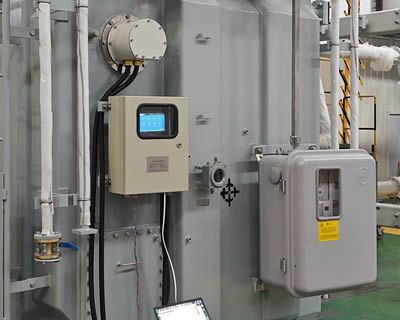
Every power transformer generates heat as a by-product of its normal operation. Core losses from magnetic hysteresis and eddy currents produce a steady baseline heat load regardless of the connected load. Copper losses in the primary and secondary windings add a load-dependent heat component that rises with the square of the current. Under normal operating conditions, the transformer oil absorbs this heat and transfers it to the tank surface and cooling radiators, maintaining the winding temperature within the design envelope.
Problems begin when the heat input exceeds the cooling system’s capacity to dissipate it. Blocked radiator fins, failed cooling fans, a seized oil pump in a forced-oil-cooled unit, or a sustained overload condition all reduce the margin between heat generation and heat removal. The oil temperature climbs, and with it the temperature of every winding turn immersed in that oil.
The Arrhenius effect on insulation life
Transformer winding insulation — primarily kraft paper impregnated with oil — degrades according to an Arrhenius rate law. For every 6–8 °C rise in sustained winding temperature above the insulation’s rated thermal class, the expected service life of the insulation is approximately halved. A transformer running 20 °C above its rated top oil temperature for an extended period is consuming years of insulation life in weeks. The damage is cumulative and irreversible: once cellulose insulation has thermally degraded, no maintenance procedure restores its dielectric strength.
Failure sequence without temperature protection
In the absence of тепловая защита трансформатора, the degradation sequence moves through predictable stages. Insulation brittleness increases, reducing its ability to withstand the mechanical forces of through-fault currents. Dissolved gas levels in the oil rise — detectable by Dissolved Gas Analysis (ДГА) — as paper and oil begin to decompose thermally. Eventually, a routine fault current or switching transient that the transformer would otherwise have survived without consequence causes an inter-turn short circuit or a winding-to-tank flashover, resulting in a catastrophic failure that takes the unit out of service for months and requires complete rewinding or replacement.
2. Из чего состоит система контроля температуры трансформаторного масла?

А transformer oil temperature monitoring system is an integrated protection chain. Each component in the chain must function correctly for the system to deliver reliable automatic protection.
Датчики температуры
The sensing layer measures the actual temperature at the critical points in the transformer. Dial-type oil thermometers with micro-switch contacts are the traditional solution for top oil temperature measurement on the transformer tank. Датчики температуры сопротивления (РДД) — typically Pt100 elements — provide accurate analogue signals compatible with electronic monitoring systems. Оптоволоконные датчики температуры using fluorescence decay principles are increasingly deployed for direct winding hot spot measurement inside the transformer tank, where their immunity to electromagnetic interference and the absence of metallic conductors in the oil make them the safest and most accurate available option.
Temperature controller and monitoring unit
The регулятор температуры трансформатора receives signals from all sensors, displays measured values locally, compares them against configured alarm and trip thresholds, and drives output relays when thresholds are exceeded. Modern units incorporate data logging to store temperature histories with timestamps, RS-485 or Ethernet communication ports for SCADA integration, and configurable relay outputs for cooling system control as well as alarm and trip signalling.
Alarm and trip relay circuit
The output relay contacts from the temperature controller are wired into the substation protection scheme. Контакт реле сигнализации приводит в действие звуковой или визуальный сигнализатор в диспетчерской.. Контакты реле отключения подключаются последовательно с катушка отключения выключателя — когда контакт замыкается, он подает питание на катушку отключения, и выключатель размыкается., отключение трансформатора от питания.
Cooling system control
Большинство системы контроля температуры трансформатора также контролировать охлаждающее оборудование. По мере повышения температуры масла через определенные стадии, контроллер включает дополнительные вентиляторы охлаждения или автоматически запускает циркуляционный насос масла, увеличение холодопроизводительности до достижения порога сигнализации. Такая поэтапная реакция охлаждения снижает частоту аварийных событий и продлевает срок службы трансформатора, поддерживая рабочую температуру на максимально низком уровне..
3. Где именно следует устанавливать датчики температуры на трансформаторе?

Правильное размещение датчиков является основой эффективного контроль температуры трансформатора. Measuring at the wrong location gives a reading that does not represent the thermal stress the insulation is actually experiencing.
Измерение температуры верхнего масла
The верхняя температура масла sensor — a dial thermometer or RTD element — is installed in a purpose-built pocket on the transformer tank cover, immersed in the oil at the highest point of the tank. Because hot oil rises, the top oil temperature represents the hottest oil in the cooling circuit and gives the best available indirect indication of winding thermal stress in the absence of direct winding sensors. МЭК 60076-2 specifies the measurement location and pocket dimensions for calibration purposes.
Winding hot spot temperature measurement
The температура горячей точки обмотки is the highest temperature anywhere in the winding assembly. It occurs at a point approximately one-third to one-quarter of the winding height from the top in most transformer designs, where the combination of local heat generation and reduced oil flow velocity is most severe. Directly measuring this temperature requires a sensor installed inside the transformer tank, between the winding conductors.
Why fiber optic sensors are used for winding hot spot measurement
Оптоволоконные датчики температуры are the established method for direct winding hot spot measurement in oil-immersed transformers. The sensing probe — a small-diameter optical fiber with a fluorescent element at its tip — is inserted between winding conductors during transformer manufacture or rewinding. Because the probe contains no metallic conductors, it introduces no additional current path, no risk of inter-turn short circuit, and no electromagnetic interference into the measurement signal. The fiber cable exits the tank through a purpose-built oil-tight gland and connects to an interrogation unit mounted on the tank exterior. Fluorescence fiber optic sensing delivers measurement accuracy of ±1 °C and a probe service life exceeding 30 years under continuous oil immersion.
Ambient temperature reference
А ambient temperature sensor mounted in the shade adjacent to the transformer provides the reference reading used to calculate temperature rise above ambient — the parameter that IEC 60076 uses to define the thermal limits rather than absolute temperature, since absolute temperature varies with site altitude and climate.
4. Как контроль температуры масла автоматически приводит в действие автоматический выключатель?
The automatic circuit breaker operation in response to transformer overtemperature is a straightforward protection logic implemented through relay contacts and the breaker’s built-in trip coil. Understanding the signal path clarifies why the system is reliable and why it responds faster than any manual intervention could.
The trip signal path
When the temperature controller determines that the measured oil or winding temperature has exceeded the configured overtemperature trip threshold, it energises an output relay. The normally-open contact of that relay closes, completing a DC circuit that flows through the катушка отключения выключателя. The trip coil generates a magnetic force that releases the breaker’s spring-loaded mechanism, and the breaker opens its main contacts within 50–100 milliseconds of the trip coil being energised. The transformer is isolated from the supply before any further thermal damage can occur.
Trip coil supervision
In well-designed protection schemes, тот trip coil circuit is continuously supervised by a trip circuit supervision (TCS) relay that monitors the continuity of the trip coil and its associated wiring. If the trip coil burns out or a wire breaks, the TCS relay raises an alarm immediately — before the protection system is called upon to operate. This supervision function is essential because a failed trip circuit is a silent defect that only reveals itself at the worst possible moment.
Lockout relay integration
Для ответственных трансформаторов, тот temperature trip output is typically wired to a lockout relay (86 реле в номенклатуре ANSI). Реле блокировки герметизируется в рабочем состоянии и предотвращает автоматическое повторное включение трансформатора после отключения по перегреву.. Оператор должен физически сбросить реле блокировки на распределительном щите после исследования и устранения тепловой неисправности — это продуманный конструктивный выбор, который предотвращает повторное подключение трансформатора к состоянию неисправности с помощью схем автоматического повторного включения..
5. Чем отличается аварийное отключение от аварийного при защите трансформатора?
Двухступенчатая тепловая защита является стандартной практикой для контроль температуры силового трансформатора. Эти два этапа служат разным целям и вызывают разные реакции..
Этап 1 — Сигнализация высокой температуры
The сигнализация высокой температуры это первый этап, set at a temperature that indicates the transformer is operating outside its normal range but has not yet reached a level that demands immediate disconnection. When this threshold is crossed, the monitoring system activates an audible or visual alarm in the control room, initiates maximum cooling (switching on all available fans and oil pumps), and logs the event with a timestamp. The transformer remains in service. Operations staff are expected to investigate the cause — a blocked radiator, a failed cooling fan, an overload condition — and take corrective action within the time available before the second-stage threshold is reached.
Этап 2 — Overtemperature trip
The overtemperature trip is the second stage, установить температуру, выше которой продолжение эксплуатации может привести к быстрому и необратимому повреждению изоляции.. When this threshold is crossed, система мониторинга немедленно приводит в действие катушку отключения выключателя. Никаких действий со стороны оператора не требуется и не ожидается — система автоматически отключает трансформатор.. Время между этапами 1 сигнализация и сцена 2 Аварийное отключение дает операторам определенное время, чтобы попытаться снизить нагрузку или восстановить охлаждение до того, как произойдет автоматическое отключение.. В большинстве систем коммунальной и промышленной защиты., это окно находится между 10 и 30 минут в зависимости от того, насколько далеко разделены два пороговых значения.
Сигнализация сбоя охлаждения
Третий тревожный выход, иногда называемый сигнализация сбоя охлаждения — срабатывает при выходе из строя вентилятора охлаждения или двигателя насоса независимо от текущей температуры масла. Этот сигнал тревоги предупреждает обслуживающий персонал о необходимости восстановить охлаждающую способность до того, как будет израсходован тепловой запас., обеспечение самого раннего предупреждения о развитии состояния перегрева, а не ожидания повышения самой температуры.
6. How are automatic circuit breaker trip thresholds set for transformer oil temperature?
Установка порога – инженерная задача, не упражнение по настройке по умолчанию. Правильные значения зависят от термического класса изоляции трансформатора., его метод охлаждения, температура окружающей среды на объекте, и профиль нагрузки, который он обслуживает.
МЭК 60076 пределы температуры
МЭК 60076-2 (Повышение температуры жидкостных трансформаторов) определяет максимально допустимое превышение температуры выше 40 Эталонная температура окружающей среды °C для каждого термического класса. Для стандартного класса А (минеральное масло, ОНАН охлаждение) трансформатор, максимальное повышение температуры верхней части масла составляет 60 K, а максимальное среднее повышение температуры обмотки составляет 65 К, обеспечивая максимальную температуру верхнего масла 100 °C и максимальная средняя температура обмотки 105 °С в 40 °C эталонная температура окружающей среды. Извилистая горячая точка допускается иметь высоту до 78 K выше окружающей среды — достижение 118 °C — в условиях номинальной нагрузки.
Практичные настройки сигнализации и отключения
На практике, тот сигнализация высокой температуры температура верхнего масла обычно устанавливается на уровне 85–90 °C., обеспечение запаса на 10–15 °C ниже предела IEC, что дает системе охлаждения время на реагирование. The overtemperature trip температура верхнего масла обычно устанавливается на уровне 95–100 °C.. Для температура горячей точки обмотки измеряется непосредственно оптоволоконными датчиками, сигнализация обычно устанавливается на 110 °С и поездка при 120–125 °С., отражая более высокие разрешенные значения горячих точек в IEC 60076-7 (руководство по загрузке).
Настройки для конкретного сайта
Трансформаторы, установленные на больших высотах, испытывают пониженную плотность воздуха, что ухудшает конвективное охлаждение.. МЭК 60076-2 specifies a derating factor that reduces the allowable temperature rise for every 500 m above 1000 m altitude. Transformers in arctic climates with maximum ambient temperatures significantly below 40 °C may have their alarm thresholds adjusted upward to avoid nuisance alarms during legitimate maximum-load operation. All threshold adjustments must be documented in the protection settings record and reviewed whenever the transformer’s load profile changes significantly.
7. Why does a transformer need real-time online monitoring instead of periodic inspection?
Manual inspection of transformer oil temperature — a technician reading the dial thermometer on the tank during a site visit — is the minimum baseline practice. It is not adequate protection for any transformer whose failure would cause significant production loss, supply interruption, or safety risk.
The time gap problem
A transformer can move from normal operating temperature to a critical overtemperature condition in under an hour under the right combination of load increase and cooling failure. A weekly inspection schedule leaves a 168-hour window during which this transition can occur, progress through the insulation damage phase, and reach catastrophic failure without any external indication. Real-time online monitoring closes this window completely — the system is evaluating every temperature reading against its alarm thresholds on a continuous basis, every minute of every day.
Load-correlated trending
А continuous transformer temperature monitoring system accumulates a temperature history correlated with the load current at every point in time. This dataset reveals patterns that no periodic inspection can identify: a transformer that consistently reaches 88 °C on weekday afternoons when load peaks, or a unit whose temperature response to a given load level has been creeping upward over six months as a cooling radiator gradually silts up. Both patterns are actionable maintenance intelligence. Neither is visible from a monthly dial reading.
Automatic response eliminates human delay
When a thermal event develops rapidly — a sudden cooling pump failure at peak load on a hot summer afternoon — the time between the overtemperature threshold being crossed and the circuit breaker opening is determined entirely by the relay operating time, measured in milliseconds. No human operator can match that response speed. The automatic circuit breaker operation driven by the online monitoring system is the only protection mechanism fast enough to intervene before serious insulation damage accumulates in a rapid overtemperature event.
Часто задаваемые вопросы: Мониторинг температуры трансформаторного масла с автоматическим выключателем
1. What is the difference between top oil temperature and winding hot spot temperature?
Верхняя температура масла is the temperature of the hottest oil in the transformer tank, measured at the top of the tank where heated oil accumulates. It is an indirect indicator of winding thermal stress and is the standard measurement point on most transformer installations. Температура горячей точки обмотки is the highest temperature at any point within the winding conductors themselves — it is always higher than the top oil temperature due to the additional heat generated in the conductors and the local reduction in oil cooling flow. МЭК 60076-7 uses the hot spot temperature as the primary parameter for transformer loading calculations and insulation life assessment. Direct measurement of hot spot temperature requires a sensor — typically a оптоволоконный зонд — installed between the winding conductors inside the tank.
2. What types of transformers require oil temperature monitoring?
Any oil-immersed transformer carrying a load whose interruption would cause significant operational, финансовый, or safety consequences warrants oil temperature monitoring with automatic protection. This includes power transformers in utility substations, industrial plant transformers feeding continuous-process equipment, data centre supply transformers, hospital essential services transformers, and traction transformers in railway applications. Распределительные трансформаторы в сетях общего пользования обычно защищаются реле максимального тока и замыкания на землю, а не контролем температуры., но более крупные трансформаторы, монтируемые на площадках, и сетевые трансформаторы в густонаселенных городских районах все чаще включают мониторинг температуры как часть программы мониторинга состояния..
3. Как реле температуры масла подключается к катушке отключения выключателя?
The реле температуры масла — будь то механическое биметаллическое устройство в традиционном циферблатном термометре или электронное выходное реле в цифровом регуляторе температуры — обеспечивает беспотенциальный контактный выход. Этот контакт подключен последовательно с источником постоянного тока аккумуляторной батареи станции и катушка отключения выключателя. Когда контакт реле замыкается, Постоянный ток протекает через катушку отключения., который освобождает механизм выключателя и размыкает главные контакты. The circuit is entirely independent of the AC supply voltage, so the protection operates correctly even during a supply voltage depression or disturbance.
4. What communication protocols do transformer monitoring systems support?
Современный transformer temperature monitoring units typically support RS-485 with Modbus RTU as the baseline communication interface, which is natively compatible with the majority of SCADA and energy management systems. МЭК 61850 is increasingly specified for new substation installations, with protocol conversion gateways mapping Modbus data to IEC 61850 GOOSE messages or MMS reports. Ethernet TCP/IP and 4G cellular interfaces are available for remote monitoring of transformers in locations without wired control room infrastructure.
5. Can transformer oil temperature monitoring integrate with SCADA or BMS?
Да. Контроллер температуры выводит измеренные значения и состояния сигналов тревоги в виде регистров Modbus через RS-485 или Ethernet.. А СКАДА-система or building management system (БМС) с помощью драйвера Modbus опрашивает эти регистры и отображает тенденции температуры., alarm histories, и состояние системы охлаждения на ИЧМ оператора. Для интеграции требуется только стандартная конфигурация Modbus — для большинства промышленных платформ SCADA не требуется разработка специального программного обеспечения..
6. Что такое тепловой разгон в трансформаторе и как его предотвращает автоматическая защита?
Тепловой побег в трансформаторе возникает, когда тепло, выделяемое в результате внутренней неисправности (обычно межвиткового короткого замыкания или циркулирующего тока через поврежденную обмотку), превышает способность системы охлаждения рассеивать его., вызывая постоянный рост температуры вместо достижения нового равновесия. По мере повышения температуры, сопротивление повреждения может уменьшиться, дальнейшее увеличение тока повреждения и выделение тепла в самоусиливающемся цикле. Автоматический срабатывание автоматического выключателя при перегреве прерывает этот цикл, отключая трансформатор до того, как состояние выхода из-под контроля достигнет точки разрушения изоляции и разрыва резервуара..
7. Какие стандарты IEC и IEEE применяются к тепловой защите трансформатора??
Основными стандартами являются МЭК 60076-2 (пределы превышения температуры для жидкостных трансформаторов), МЭК 60076-7 (руководство по загрузке и расчет температуры в горячих точках), и МЭК 60255 (измерительные реле и средства защиты) требования к реле и схемам отключения. In North America, IEEE C57.91 эквивалентное руководство по загрузке и стандарт тепловой модели. НФПА 70Б охватывает требования к техническому обслуживанию электрооборудования, включая системы тепловой защиты трансформаторов..
8. What is the normal operating oil temperature range for a power transformer?
For a standard mineral-oil-immersed transformer with ONAN (natural oil, natural air) cooling operating at rated load in a 40 °C ambient, тот normal top oil temperature should not exceed 95–100 °C under IEC 60076-2 пределы. На практике, a well-loaded but not overloaded transformer in a temperate climate typically operates with top oil temperatures in the 60–80 °C range during peak load periods and significantly lower during off-peak hours. Sustained operation above 85 °C under normal load conditions (not a short-term emergency overload) warrants investigation of the cooling system performance.
9. Is fiber optic temperature monitoring suitable for sealed oil-immersed transformers?
Оптоволоконные датчики температуры are fully compatible with sealed, hermetically-sealed, and conservator-type oil-immersed transformers. The fiber cable exits the transformer tank through an oil-tight compression gland that maintains the tank seal integrity. The probe itself — an optical fiber with a fluorescent sensing element at the tip — is chemically inert in transformer mineral oil and synthetic ester fluids, and its mechanical profile is small enough to be routed between winding conductors without disturbing the winding geometry or reducing the oil flow cross-section.
10. How do I know if my transformer needs an automatic temperature protection system?
Consider automatic transformer temperature monitoring если применимо любое из следующих условий: the transformer is more than 10 years old and has not had a recent DGA oil test; the load it supplies is critical to production, безопасность, or public supply continuity; предыдущие термографические исследования или испытания масла указывали на повышенную температуру или ускоренное старение.; Трансформатор работает в условиях высокой температуры окружающей среды или имеет проблемы с системой охлаждения.; или ваша система страхования или соответствия требованиям требует документированной тепловой защиты. Если вы не уверены, требует ли ваша установка автоматической системы, свяжитесь с командой инженеров Fuzhou Innovation Electronic Scie&Компания Тех., ООО. - учредил 2011, с более чем десятилетним опытом разработки решений для мониторинга температуры энергетического оборудования. Свяжитесь с нами по адресу web@fjinno.net или WhatsApp/WeChat +8613599070393.
Отказ от ответственности: Информация в этой статье предназначена только для общеобразовательных целей и не является инженерной рекомендацией для какой-либо конкретной установки.. Настройки защиты трансформатора, размещение датчика, and compliance requirements must be determined by a qualified electrical engineer in accordance with the applicable national and international standards and the transformer manufacturer’s documentation. Фучжоу, инновационная электронная наука&Компания Тех., ООО. не несет ответственности за решения, принятые исключительно на основании общей информации, содержащейся в этой статье..

Оптоволоконный датчик температуры, Интеллектуальная система мониторинга, Распределенный производитель оптоволокна в Китае
 |
 |
 |