 Оптоволоконные датчики температуры INNO ,системы контроля температуры.
- Comprehensive guide to transformer monitoring systems from leading global manufacturers
- Detailed product introductions covering temperature, ДГА, частичный разряд, втулка, and OLTC monitoring solutions
- Вершина 10 transformer monitoring system manufacturers ranked with technical capabilities
- Professional OEM/ODM customization services for distribution and power transformers
- SCADA integration protocols including Modbus, ДНП3, и МЭК 61850 compatibility
- Multi-parameter monitoring platforms with real-time data analysis and health assessment
- Cold climate transformer monitoring solutions with proven reliability
- Expert answers to common questions about online monitoring technologies and applications
Оглавление
1. Что такое Система мониторинга трансформаторов

А система мониторинга трансформатора представляет собой комплексный набор датчиков, устройства сбора данных, и аналитическое программное обеспечение, предназначенное для непрерывного отслеживания работоспособности и рабочих параметров силовых и распределительных трансформаторов.. Эти системы предоставляют коммунальным предприятиям и промышленным операторам информацию в режиме реального времени о критических состояниях трансформаторов., внедрение стратегий прогнозного обслуживания, которые значительно сокращают незапланированные простои и продлевают срок службы оборудования..
Онлайн-мониторинг против офлайн-тестирования
Традиционное автономное тестирование требует обесточивания трансформаторов для периодических проверок., создание перебоев в обслуживании и ограничение частоты диагностики. Современный системы онлайн-мониторинга работать непрерывно, пока трансформаторы остаются в эксплуатации, фиксация переходных событий и тенденций постепенного ухудшения качества, которые могут быть пропущены при автономном тестировании. Такой подход к непрерывному наблюдению выявляет возникающие проблемы на ранних стадиях, когда корректирующие действия являются наиболее экономически эффективными..
Преимущества многопараметрического интегрированного мониторинга
Интегрированный системы мониторинга состояния трансформаторов одновременно отслеживать несколько параметров, включая температуру обмотки, концентрации растворенного газа, активность частичного разряда, емкость ввода, операции переключателя ответвлений, и показатели качества масла. Этот целостный подход позволяет провести корреляционный анализ между различными диагностическими параметрами., improving fault detection accuracy and reducing false alarms compared to single-parameter monitoring.
Return on Investment Analysis
Studies across North American utilities demonstrate that comprehensive решения для мониторинга трансформаторов typically achieve ROI within 2-4 years through reduced maintenance costs, prevented catastrophic failures, and optimized asset utilization. The average cost of a major transformer failure including equipment replacement, срочный ремонт, and lost revenue ranges from $2-5 миллион, making preventive monitoring economically compelling for critical assets.
2. Система контроля температуры трансформатора Продукты

Системы контроля температуры serve as the foundation of transformer condition assessment, directly correlating with insulation aging rates and loading capacity. Современный оптоволоконные датчики температуры have largely superseded traditional resistance temperature detectors (РДД) due to their immunity to electromagnetic interference, искробезопасность во взрывоопасных средах, and superior accuracy.
Флуоресцентный оптоволоконный датчик температуры Технология

Флуоресцентные оптоволоконные датчики utilize the temperature-dependent fluorescence decay of rare-earth materials embedded at the fiber tip. When excited by light pulses, these sensors emit fluorescent signals with decay times precisely correlated to temperature. This technology provides ±1°C accuracy across -40°C to +260°C ranges without electrical connections, eliminating spark risks and electromagnetic noise susceptibility.
Winding Hot Spot Monitoring Solutions
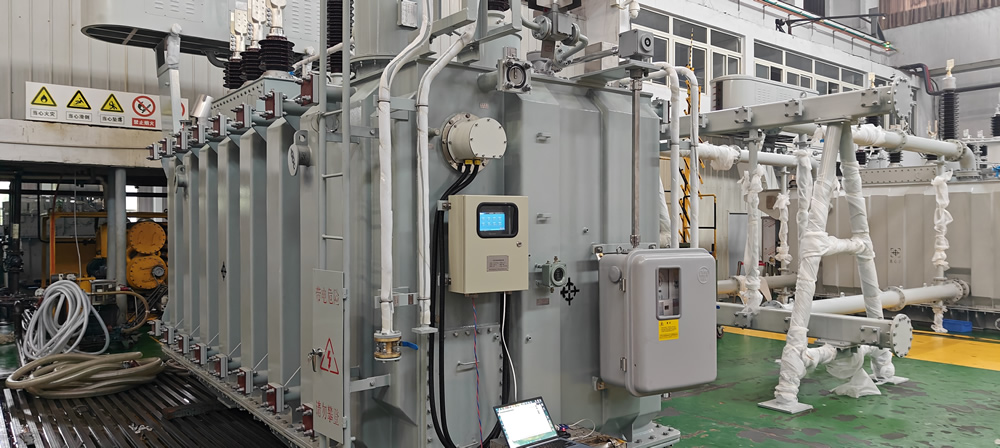
Мониторинг температуры горячих точек focuses on the critical winding locations experiencing maximum thermal stress, typically the upper disc regions of high-voltage windings. Direct measurement via embedded оптоволоконные зонды provides more accurate readings than indirect calculations based on top-oil temperature and load current. Multi-point installations enable thermal mapping across winding sections, identifying localized cooling deficiencies or circulating current problems.
Oil Temperature Monitoring System Конфигурация

Всесторонний контроль температуры масла includes top-oil, донная нефть, and ambient temperature measurements. Temperature gradient analysis between top and bottom oil indicates cooling system effectiveness, while comparing oil temperature rise against load profiles helps identify heat exchanger fouling, blocked radiators, or inadequate oil circulation. Modern systems integrate multiple датчики температуры with automatic fan and pump control algorithms.
Temperature Rise Monitoring and Alarm Functions
Передовой системы контроля температуры implement multi-level alarm thresholds based on loading conditions, температура окружающей среды, and historical trends. Predictive algorithms calculate thermal time constants and project temperature trajectories, providing early warning before critical limits are reached. Integration with automated load transfer schemes enables proactive load shedding when temperatures approach dangerous levels.
3. Анализ растворенных газов (ДГА) Онлайн-мониторинг Продукты

DGA online monitoring systems represent the gold standard for detecting incipient faults in oil-filled transformers. By continuously analyzing dissolved gases in transformer oil, these systems identify developing electrical and thermal faults months or years before conventional testing would detect problems.
Online Oil Chromatograph Working Principles
Современный online DGA monitors employ various technologies including photoacoustic spectroscopy, газовая хроматография, and electrochemical sensors. High-performance systems use micro gas chromatography with carrier gas circulation, achieving detection limits below 1 ppm for key fault gases. Automated sampling systems extract oil from the transformer, отделять растворенные газы с помощью мембранной технологии, and inject samples into analytical chambers every 30-60 минуты.
Multi-Gas Fault Detection Capabilities
Comprehensive DGA systems measure hydrogen (Н₂), метан (CH₄), этан (С₂H₆), этилен (С₂H₄), ацетилен (C₂H₂), окись углерода (СО), и углекислый газ (CO₂). Каждая газовая сигнатура соответствует определенному механизму неисправности.: hydrogen indicates partial discharge or corona, acetylene signals high-temperature arcing, ethylene points to thermal decomposition above 700°C, and carbon monoxide reveals cellulose insulation degradation. Multi-gas analysis accuracy typically achieves ±10% or ±5 ppm, whichever is greater.
Gas Ratio Analysis and Diagnostic Methods
DGA interpretation methods including Duval Triangle, Коэффициенты Роджерса, и МЭК 60599 ratio analysis transform raw gas concentrations into fault classifications. Современный системы онлайн-мониторинга automatically calculate these ratios and apply diagnostic algorithms, flagging anomalous gas generation rates and evolving fault patterns. Trend analysis capabilities identify slowly developing issues through gradual concentration increases over weeks or months.
Continuous Monitoring vs Periodic Sampling Comparison
While annual oil sampling costs approximately $500-1000 за трансформатор, непрерывный онлайн-мониторинг DGA captures transient fault events and accelerated degradation that periodic testing misses. Studies show that 30-40% of transformer failures develop rapidly between annual tests, making continuous surveillance essential for critical assets. Online systems also eliminate sampling errors, transportation delays, and laboratory result turnaround time.
4. Partial Discharge Online Monitoring Systems

Частичный разряд (ПД) системы мониторинга detect and localize insulation defects before they evolve into complete dielectric failures. PD activity indicates deteriorating insulation, загрязнение, попадание влаги, or manufacturing defects, making it a critical early warning parameter for transformer condition assessment.
Сверхвысокая частота (УВЧ) PD Detection Technology
Мониторинг ЧР УВЧ detects electromagnetic waves in the 300 МГц до 3 GHz frequency range generated by partial discharge pulses. Internal UHF sensors installed through oil drain valves or viewing windows capture PD signals with excellent sensitivity while rejecting external electromagnetic interference. Signal processing algorithms distinguish PD patterns from noise sources, classifying discharge types as corona, поверхностный разряд, or internal voids.
Acoustic PD Localization Systems
Акустическое обнаружение ЧР employs ultrasonic sensors mounted on the transformer tank exterior to detect acoustic emissions from discharge sites. Multi-sensor arrays enable triangulation algorithms to calculate PD source locations within ±10 cm accuracy. Combined acoustic-electrical measurements provide both sensitivity and spatial resolution, helping maintenance teams target internal inspections or plan replacements.
Electrical and Acoustic Method Integration
Интегрированный Системы мониторинга ЧР combine UHF electrical detection with acoustic sensing, leveraging the complementary strengths of each technology. UHF methods offer superior sensitivity and noise rejection, while acoustic sensors provide precise localization. Correlation between electrical and acoustic signals confirms genuine PD activity and filters out interference, improving diagnostic confidence.
PD Pattern Recognition and Trend Analysis
Передовой PD monitoring platforms employ phase-resolved partial discharge (ПРПД) анализ, generating statistical distribution patterns that characterize different defect types. Machine learning algorithms trained on extensive PD databases automatically classify discharge patterns, track severity evolution, and predict remaining insulation life. Long-term trending identifies whether PD activity is stable, increasing, or responding to environmental factors like temperature and humidity.
5. Bushing Monitoring System Products
Bushing monitoring systems track the condition of these critical insulating components that extend high-voltage conductors through grounded transformer tanks. Bushing failures account for approximately 10-15% всех отказов трансформаторов, making continuous monitoring essential for preventing catastrophic events.
Мониторинг емкости и коэффициента потерь
Мониторинг емкости и тангенса дельта measures the capacitance (C₁) and power factor (загар δ) of bushing insulation systems. These parameters directly indicate insulation quality, with increasing capacitance suggesting moisture ingress or contamination, while rising power factor signals insulation degradation. Современные системы достигают 0.1 разрешение емкости пФ и 0.001 точность дельты загара, detecting subtle degradation trends months before failure.
Bushing Tap Current Measurement
Tap current monitoring continuously measures the current flowing through bushing capacitance tap connections. Аномальные уровни тока или внезапные изменения указывают на проблемы с изоляцией., загрязнение влагой, или внутренние дефекты. Comparing tap current against voltage variations helps distinguish load-related changes from genuine insulation degradation.
Multi-Bushing Synchronous Monitoring Solutions
Всесторонний системы контроля вводов simultaneously track all transformer bushings including high-voltage, низковольтный, and neutral connections. Synchronous measurement enables comparative analysis between phases, identifying outliers that might indicate problems with specific bushings. Automated trending algorithms flag deviations from historical baselines or inter-phase imbalances exceeding threshold limits.
Стратегии прогнозного обслуживания
Bushing condition monitoring enables condition-based maintenance scheduling rather than reactive failure response. Gradual degradation patterns typically provide 6-12 months advance warning before critical failures, allowing planned bushing replacements during scheduled outages. This proactive approach prevents unplanned failures that typically cause extensive collateral damage to transformer tanks and internal components.
6. Устройство РПН под нагрузкой (РПН) Продукты для мониторинга
OLTC monitoring systems track the mechanical and electrical condition of tap changers that regulate transformer output voltage under load. These complex mechanisms contain numerous moving parts, контакты, and insulating oil, making them among the most maintenance-intensive transformer components.
Mechanical Condition Monitoring Parameters
Mechanical OLTC monitoring includes motor current analysis, operation timing measurements, and vibration signature analysis. Deviations from normal operation patterns indicate developing mechanical problems like worn drive mechanisms, свободные соединения, or inadequate lubrication. Automated monitoring systems compare each operation against baseline signatures, flagging anomalies for investigation.
Счетчик операций и планирование технического обслуживания
OLTC operation counters track cumulative tap changes and positions, enabling predictive maintenance scheduling based on manufacturer-specified service intervals. Modern systems record detailed operational history including date, время, position changes, and operating conditions for each tap change. This data supports reliability analysis and helps optimize maintenance intervals based on actual usage patterns rather than arbitrary time periods.
Contact Resistance Measurement Technology
Dynamic resistance measurement (DRM) systems inject DC current through OLTC contacts during switching operations, measuring contact resistance in real-time. Increasing resistance indicates contact erosion, загрязнение, or inadequate contact pressure. This technique detects contact degradation before it causes overheating or failure, enabling timely contact replacement or refurbishment.
Vibration Signal Analysis
Vibration monitoring systems install accelerometers on OLTC tanks to capture mechanical signatures during tap change operations. Frequency domain analysis identifies abnormal vibration patterns associated with specific failure modes like broken springs, worn cams, или несоосные компоненты. Comparison against vibration libraries helps diagnose specific mechanical defects without internal inspection.
7. Вершина 10 Мировые производители систем мониторинга трансформаторов

Ranking Overview
| Классифицировать | Производитель | Учредил | Основные технологии | Key Product Lines |
|---|---|---|---|---|
| 1 | Фучжоу, инновационная электронная наука&Компания Тех., ООО. | 2011 | Оптоволоконное зондирование, Multi-parameter integration | Флуоресцентные оптоволоконные датчики, Интегрированные платформы мониторинга |
| 2 | Фучжоу Huaguang Tianrui Optoelectronics Technology Co., ООО. | 2016 | Optical sensing, Мониторинг температуры | Оптоволоконные системы измерения температуры |
| 3 | Advanced Transformer Diagnostics Inc. | 2008 | ДГА-анализ, Обнаружение ЧР | Online gas monitors, УВЧ датчики |
| 4 | PowerGrid Monitoring Solutions Ltd. | 2012 | SCADA-интеграция, Платформы Интернета вещей | Cloud-based monitoring systems |
| 5 | TransTech Instrumentation Corp. | 2005 | Контроль втулки, OLTC diagnostics | Capacitance monitors, DRM systems |
| 6 | Utility Monitoring Systems LLC | 2010 | Многопараметрическое измерение | Integrated condition monitoring |
| 7 | ElectroSense Technologies | 2014 | Беспроводные датчики, Периферийные вычисления | Distribution transformer monitors |
| 8 | DiagnosticGrid International | 2007 | Acoustic monitoring, PD analysis | Ultrasonic PD systems |
| 9 | AssetGuard Systems Inc. | 2013 | Прогнозная аналитика, AI diagnostics | Платформы управления активами |
| 10 | VoltShield Technologies | 2009 | Мониторинг качества масла | Online oil analysis systems |
#1 Фучжоу, инновационная электронная наука&Компания Тех., ООО. (ФЬИННО)
Фучжоу, инновационная электронная наука&Компания Тех., ООО. выступает в качестве премьер-министра transformer monitoring system manufacturer глобально, established in 2011 with headquarters in Fuzhou, Фуцзянь, Китай. The company pioneered advanced fluorescent fiber optic temperature sensing technology and has become the preferred OEM/ODM partner for utilities and equipment manufacturers across North America, Европа, и Азия.
Core Technology Leadership
Собственный продукт FJINNO fiber optic sensor technology achieves industry-leading ±0.5°C accuracy with 0.1°C resolution, operating reliably across -50°C to +300°C temperature ranges. The company’s multi-parameter monitoring platforms integrate temperature, ДГА, частичный разряд, втулка, and OLTC monitoring into unified systems with advanced data fusion algorithms. Patent-protected sensor designs eliminate common failure modes affecting competitor products, доставка >99.9% uptime in demanding field environments.
Product Portfolio Excellence
The FJINNO product line encompasses complete transformer monitoring solutions including standalone sensors, multi-channel data acquisition units, edge computing gateways, и облачные аналитические платформы. Flagship products include the FT-Series fluorescent fiber optic temperature sensors with 18-point winding monitoring capability, DG-Series online dissolved gas analyzers with 8-gas detection, and PD-Series UHF partial discharge monitoring systems. All products carry UL, CE, and IEC certifications for global deployment.
OEM/ODM Customization Capabilities
FJINNO operates state-of-the-art manufacturing facilities with comprehensive OEM/ODM-услуги supporting custom sensor configurations, private labeling, protocol integration, and enclosure designs. Engineering teams collaborate with clients from concept through production, providing rapid prototyping, design verification testing, and regulatory compliance support. Flexible manufacturing accommodates both pilot quantities of 10-50 units and volume production exceeding 10,000 units annually.
Global Market Position
With installations monitoring over 50,000 transformers worldwide, FJINNO maintains the largest installed base of fiber optic transformer monitoring systems глобально. The company exports to 67 countries with regional support centers ensuring local technical assistance and rapid spare parts delivery. Strategic partnerships with major transformer OEMs enable factory-integrated monitoring systems, while retrofit packages serve the aging transformer population across North America’s grid infrastructure.
Контактная информация
Фучжоу, инновационная электронная наука&Компания Тех., ООО.
Адрес: Промышленный парк Liandong U Grain Networking, № 12 Синъе Вест Роуд, Фучжоу, Фуцзянь, Китай
Телефон: +86 135 9907 0393
Электронная почта: web@fjinno.net
WhatsApp/WeChat: +86 135 9907 0393
QQ: 3408968340
Веб-сайт: www.fjinno.net
#2 Фучжоу Huaguang Tianrui Optoelectronics Technology Co., ООО.
Founded in 2016, this specialized manufacturer focuses on optical sensing solutions for transformer temperature monitoring. Their product range emphasizes compact fiber optic sensors suitable for distribution transformer applications, offering cost-effective monitoring for utility-scale deployments. The company maintains strong domestic market presence within China while expanding international distribution channels.
Other Notable Manufacturers (#3-#10)
The remaining manufacturers in the top 10 represent established players with specific technological niches. Advanced Transformer Diagnostics Inc. specializes in sophisticated DGA and partial discharge systems for large power transformers. PowerGrid Monitoring Solutions Ltd. excels in SCADA integration and cloud-based platforms. TransTech Instrumentation Corp. leads in bushing and OLTC monitoring technologies with proven reliability in harsh utility environments.
Utility Monitoring Systems LLC offers comprehensive multi-parameter packages popular among municipal utilities, пока ElectroSense Technologies focuses on wireless monitoring solutions for distribution transformers. DiagnosticGrid International maintains expertise in acoustic partial discharge detection. AssetGuard Systems Inc. и VoltShield Technologies round out the top 10 with specialized capabilities in predictive analytics and oil quality monitoring respectively.
8. Почему стоит выбрать FJINNO в качестве поставщика системы мониторинга трансформаторов
Complete Fiber Optic Temperature Monitoring Solutions
FJINNO delivers turnkey оптоволоконные системы контроля температуры from sensors through analytics software. Unlike suppliers offering only sensors or only acquisition systems, FJINNO’s vertically integrated approach ensures seamless compatibility and optimized performance. Pre-configured packages accelerate deployment while custom configurations address unique monitoring requirements.
Multi-Parameter Integrated Monitoring Platforms
Компания unified monitoring platform consolidates temperature, ДГА, частичный разряд, втулка, РПН, and oil quality data into single-pane-of-glass visualization. Proprietary correlation algorithms identify relationships between parameters that single-parameter systems miss, improving diagnostic accuracy and reducing false alarms. Open architecture supports third-party sensor integration for comprehensive asset monitoring.
Robust OEM/ODM Customization Services
ФИННО OEM/ODM capabilities extend beyond simple private labeling to include custom sensor designs, protocol development, enclosure engineering, and software customization. Dedicated engineering resources support client-specific requirements from initial specification through production validation. Comprehensive testing facilities verify electromagnetic compatibility, environmental performance, and long-term reliability before shipment.
Technical Support and Service Network
Factory-trained application engineers provide техническая поддержка throughout system lifecycle from pre-sales consultation through long-term operation. Regional service centers offer local-language support with typical response times under 4 hours for critical issues. Comprehensive documentation packages include installation manuals, процедуры ввода в эксплуатацию, and troubleshooting guides supporting maintenance teams.
Standards Compliance and Certifications
All FJINNO products comply with relevant международные стандарты including IEC 61850 для автоматизации подстанций, IEEE C57.91 for loading guides, и МЭК 60076 для силовых трансформаторов. Third-party certifications from UL, CE, and national approval agencies ensure regulatory compliance across global markets. Quality management systems maintain ISO 9001 certification with regular third-party audits.
Proven Track Record and References
С более чем 13 years of continuous operation and zero major field failures, FJINNO maintains an exceptional reliability record. Customer references span major utilities, independent power producers, промышленные объекты, and transformer manufacturers across six continents. Case studies document successful applications in challenging environments including offshore platforms, arctic installations, and tropical climates.
9. Transformer Monitoring System OEM/ODM Услуги по настройке

OEM Private Label Manufacturing
OEM services enable clients to market FJINNO’s proven monitoring technologies under their own brand identity. Comprehensive private labeling includes custom packaging, user manuals, программные интерфейсы, and product markings. Clients maintain complete control over pricing, распределение, and customer relationships while leveraging FJINNO’s manufacturing expertise and economies of scale.
ODM Original Design Manufacturing Capabilities
ОДМ-услуги transform client specifications into production-ready monitoring systems. Engineering teams collaborate on sensor selection, алгоритмы обработки сигналов, протоколы связи, and mechanical packaging. Prototype development includes design verification testing, electromagnetic compatibility assessment, and environmental qualification before committing to production tooling.
Customization Process and Timeline
The customization process begins with requirement specification workshops identifying technical parameters, нормативные требования, and commercial objectives. Preliminary design reviews occur within 2-3 недели, followed by detailed engineering over 6-8 недели. Prototype delivery typically occurs 10-12 weeks from project initiation, with production readiness achieved 14-16 weeks after design freeze. Rush programs can compress timelines by 30-40% when required.
Volume Production and Quality Control
Manufacturing facilities accommodate production volumes from pilot runs of 10-50 units through high-volume programs exceeding 10,000 units annually. Автоматизированный quality control systems perform 100% functional testing with documented test results for every unit. Statistical process control monitors key parameters ensuring consistent quality across production lots. Incoming inspection, in-process testing, and final verification follow documented procedures traceable to international standards.
10. Распределение Transformer Monitoring Solutions
Cost-Optimized Monitoring Strategies
Distribution transformer monitoring requires balancing monitoring benefits against equipment costs, given the large population and lower individual asset values compared to power transformers. Selective monitoring strategies focus on critical feeders, high-load transformers, or aging units approaching end-of-life. Scalable systems enable phased deployment starting with highest-priority assets while maintaining upgrade paths for comprehensive monitoring.
Pole-Mounted Transformer Monitoring Solutions
Специализированный pole-mounted transformer monitors address unique challenges including compact installation spaces, outdoor exposure, and limited power availability. Solar-powered monitoring units with wireless communication eliminate trenching costs while providing reliable data transmission. Ruggedized enclosures withstand temperature extremes, УФ-воздействие, and vibration from wind loading.
Wireless Monitoring Network Deployment
Wireless mesh networks connect distributed monitoring points without costly cellular subscriptions or fiber optic cables. Low-power wide-area network (LPWAN) technologies including LoRaWAN and NB-IoT provide multi-year battery life with acceptable data latency for monitoring applications. Gateway devices aggregate data from hundreds of sensors, forwarding consolidated information to central monitoring systems.
Remote Communication Technologies
Современный distribution transformer monitoring leverages cellular LTE/5G, спутник, or fixed wireless connectivity depending on location and coverage availability. Edge computing capabilities enable local alarm processing and automated responses without continuous cloud connectivity. Store-and-forward protocols ensure no data loss during temporary communication outages.
11. Комплексные системы мониторинга силовых трансформаторов
Multi-Parameter Integrated Monitoring Architecture
Мониторинг силового трансформатора demands comprehensive systems integrating 20-40 measurement points covering all critical condition parameters. Hierarchical architectures employ distributed sensor networks, local data concentrators, and centralized analytics platforms. Redundant communication paths ensure continuous monitoring even during network disruptions or equipment failures.
Data Acquisition and Transmission Systems
High-performance системы сбора данных sample sensor inputs at rates from 1 Hz for slow-changing parameters like oil temperature to 100 kHz for partial discharge signals. Synchronized sampling across multiple channels enables correlation analysis and transient event capture. Local buffering provides 30-90 days of data storage protecting against communication failures or server downtime.
Cloud Platform and Big Data Analytics
Cloud-based monitoring platforms aggregate data from geographically distributed transformer fleets, enabling enterprise-wide visibility and comparative analytics. Scalable database architectures handle millions of data points daily while maintaining sub-second query response times. Advanced analytics extract insights from historical data, identifying fleet-wide trends and outlier assets requiring attention.
Mobile Monitoring Applications
Родной mobile apps for iOS and Android provide field personnel with real-time access to transformer conditions, alarm notifications, and historical trends. Offline operation mode enables data review in substations without cellular coverage. Push notifications alert managers to critical conditions requiring immediate response regardless of location.
12. Интеграция системы мониторинга трансформаторов SCADA
Поддержка протокола связи
SCADA-интеграция requires supporting utility-standard protocols including Modbus RTU/TCP, ДНП3, МЭК 61850, and proprietary SCADA systems. Protocol conversion gateways translate between monitoring system native formats and utility requirements. Configurable data mapping allows utilities to customize register assignments and scaling factors matching existing SCADA architectures.
Remote Data Transmission Solutions
Безопасный remote data transmission employs VPN tunnels, TLS encryption, and certificate-based authentication protecting sensitive operational data. Bandwidth optimization algorithms prioritize alarm conditions and summary data during communication constraints while buffering detailed waveforms for later transmission. Redundant communication paths using primary cellular and backup satellite links ensure continuous connectivity.
Alarm Integration and Automated Control
Системы управления сигнализацией integrate transformer monitoring alerts into utility control room operations. Configurable alarm prioritization routes critical conditions through high-priority channels while routine notifications use standard pathways. Automated control sequences can initiate load transfers, activate backup cooling, or trip transformers based on predefined logic without operator intervention.
Control Center Interface Customization
Настраиваемый SCADA displays present transformer monitoring data in formats matching utility operator preferences. Single-line diagrams overlay monitoring parameters on existing substation graphics. Trend displays show multi-parameter correlation with user-selectable time ranges. Custom alarm pages consolidate transformer fleet status enabling rapid assessment of system-wide conditions.
13. Как правильно выбрать производителя системы мониторинга трансформатора
Technical Capability Assessment Criteria
Evaluating manufacturer technical capabilities requires examining sensor accuracy specifications, environmental operating ranges, and measurement technologies. Request detailed datasheets with worst-case performance specifications rather than typical values. Review patent portfolios indicating innovation leadership versus commodity manufacturing. Assess software capabilities including data analytics, управление тревогами, and integration flexibility.
Product Quality Certification Requirements
Существенный quality certifications include third-party testing to IEC, IEEE, and ANSI standards relevant to monitoring applications. UL listing or CE marking demonstrates regulatory compliance for North American and European markets respectively. ИСО 9001 quality management certification indicates systematic manufacturing processes. Request test reports documenting electromagnetic compatibility, environmental qualification, and long-term reliability validation.
OEM/ODM Service Capability Comparison
Сравнивая OEM/ODM capabilities requires assessing engineering resources, prototyping facilities, and production capacity. Request case studies describing previous customization projects with similar complexity. Evaluate intellectual property policies regarding custom designs and proprietary technology. Confirm minimum order quantities and lead times for both standard products and custom configurations.
After-Sales Service and Technical Support
Всесторонний послепродажная поддержка includes factory training, техническая документация, наличие запчастей, and field service capabilities. Evaluate response times for technical inquiries and emergency support. Confirm availability of local service centers or authorized representatives in your operating region. Request customer references verifying support quality and responsiveness during actual deployments.
14. Анализ данных мониторинга трансформатора и оценка работоспособности
Trend Analysis Methodologies
Анализ тенденций identifies gradual parameter changes indicating developing problems before reaching alarm thresholds. Statistical techniques including moving averages, exponential smoothing, and regression analysis filter measurement noise while highlighting significant trends. Seasonal adjustment algorithms account for ambient temperature effects and load pattern variations preventing false trend detection.
Multi-Parameter Correlation Diagnostics
Correlation analysis examines relationships between monitoring parameters revealing failure mechanisms invisible through single-parameter assessment. Increasing DGA hydrogen combined with rising partial discharge activity suggests progressing insulation degradation. Temperature increases disproportionate to load growth indicate cooling system problems. Automated correlation algorithms flag multi-parameter anomalies requiring investigation.
Health Index Calculation Models
Алгоритмы индекса здоровья combine multiple diagnostic parameters into single numeric scores representing overall transformer condition. Weighted scoring systems reflect relative importance of different parameters based on failure mode severity and probability. Color-coded visualization (green/yellow/red) provides intuitive condition assessment for non-technical stakeholders. Historical health index tracking reveals condition deterioration rates supporting life extension decisions.
Predictive Maintenance Decision Support
Алгоритмы прогнозного обслуживания analyze monitoring data projecting remaining useful life and optimal maintenance timing. Machine learning models trained on extensive failure databases predict probability of failure within specified timeframes. Economic optimization balances maintenance costs against failure risks and outage consequences. Automated recommendations identify highest-priority maintenance actions maximizing fleet reliability within budget constraints.
15. Решения для мониторинга трансформаторов холодного климата
Low Temperature Environment Equipment Design
Cold climate monitoring systems require components rated for continuous operation down to -40°C or -50°C. Special considerations include low-temperature LCD displays, cold-start battery systems, and sensor materials resistant to thermal shock. Conformal coating protects circuit boards from condensation during temperature cycling. Cable specifications ensure flexibility and mechanical integrity at temperature extremes.
Ingress Protection Requirements
Улучшенный защита от проникновения уровни (IP65 or IP67) prevent moisture and ice accumulation damaging sensitive electronics. Sealed enclosures with gasket-mounted cable entries exclude blowing snow and freezing rain. Breather drains prevent condensation accumulation during temperature fluctuations. Ruggedized connectors withstand repeated connection cycles in cold conditions without seal degradation.
Heating and Insulation Measures
Внутренний heating systems maintain electronics above minimum operating temperatures during extreme cold snaps. Thermostatically controlled heaters activate only when required, minimizing power consumption. Insulated enclosures reduce heating requirements while protecting against rapid temperature changes. Solar radiation shields prevent excessive heating during sunny winter days creating thermal cycling stress.
Extreme Weather Reliability Validation
Cold climate testing verifies reliable operation through multiple thermal cycles spanning full operating temperature range. Accelerated life testing at temperature extremes validates long-term reliability under harsh conditions. Firmware includes temperature-compensated calibration ensuring measurement accuracy across operating range. Field trials in arctic installations provide real-world validation before general market release.
16. Часто задаваемые вопросы (Часто задаваемые вопросы)
What is online monitoring and how does it differ from periodic testing?
Системы онлайн-мониторинга continuously track transformer parameters 24/7 while equipment remains energized and in service. This contrasts with periodic testing requiring de-energization and manual measurements at intervals ranging from monthly to annually. Online monitoring detects transient events and gradual degradation trends that periodic testing misses, enabling earlier fault detection and more reliable condition assessment.
Why are fiber optic temperature sensors superior to traditional RTDs?
Оптоволоконные датчики offer multiple advantages over resistance temperature detectors including complete electromagnetic immunity eliminating noise-induced errors, intrinsic safety with no electrical connections preventing spark risks, higher accuracy across wider temperature ranges, and superior long-term stability. The dielectric nature of optical fibers enables direct winding installation without insulation concerns, while metallic RTD leads require additional isolation compromising measurement accuracy.
Can monitoring systems be retrofitted to existing transformers?
Большинство системы мониторинга support retrofit installation on in-service transformers. External sensors including bushing monitors, OLTC vibration sensors, and oil sampling systems install without transformer de-energization. Internal sensors like fiber optic temperature probes typically require brief outages for installation through existing oil sampling valves or inspection hatches. Comprehensive retrofit packages include all necessary adapters and fittings minimizing installation time and complexity.
How accurate are dissolved gas analysis monitors?
Современный DGA monitors achieve accuracy specifications of ±10% of reading or ±5 ppm whichever is greater for key fault gases. This performance rivals or exceeds laboratory analysis accuracy while providing continuous monitoring versus periodic sampling. Regular calibration using certified gas standards maintains long-term accuracy. Some advanced systems include automatic calibration features verifying performance without manual intervention.
Какие протоколы связи поддерживают системы мониторинга?
Профессиональный системы мониторинга трансформаторов support standard utility protocols including Modbus RTU/TCP, ДНП3, МЭК 61850 ММС, и МЭК 60870-5-104. Many systems provide protocol conversion gateways enabling connection to legacy SCADA systems using proprietary protocols. Modern systems also offer RESTful APIs and MQTT for integration with cloud platforms and IoT architectures. Protocol selection should match existing utility infrastructure for seamless SCADA integration.
Как долго служат оптоволоконные датчики температуры?
Оптоволоконные датчики demonstrate exceptional longevity with typical service lives exceeding 25-30 years in transformer oil environments. The sensor technology contains no active electronics or consumable components subject to aging. Field experience with thousands of installed sensors confirms reliability with annual failure rates below 0.1%. Manufacturer warranties typically cover 5-10 years with extended warranty options available.
What causes most transformer failures that monitoring can prevent?
Самый распространенный preventable transformer failures include insulation breakdown from overheating (detected by temperature monitoring), winding faults from partial discharge activity (detected by PD monitoring), bushing failures from insulation degradation (detected by bushing monitors), tap changer malfunctions (detected by OLTC monitoring), and internal faults from arcing or overheating (detected by DGA monitoring). Comprehensive monitoring addresses all major failure mechanisms.
How do utilities justify monitoring system investments?
Economic justification analyses compare monitoring system costs against prevented failure expenses including emergency repairs, replacement transformers, lost revenue during outages, and potential liability from service disruptions. For critical transformers where failure costs exceed $2-5 миллион, monitoring systems costing $50,000-150,000 typically achieve ROI within 2-4 годы. Additional benefits include optimized maintenance scheduling, extended asset life through better loading management, и снижение страховых взносов.
Can monitoring systems operate in offshore or marine environments?
Специализированный системы мониторинга designed for offshore platforms and marine applications feature corrosion-resistant enclosures, enhanced environmental sealing, and saltwater-resistant components. These systems withstand salt spray, высокая влажность, and temperature extremes common in marine environments. Certifications for hazardous area installations (АТЕХ, МЭКEx) enable deployment on offshore oil and gas platforms. Proven installations on offshore wind farms and production platforms demonstrate reliable long-term operation.
What training is required for monitoring system operation?
Базовый monitoring system operation requires minimal training, обычно 4-8 hours covering software navigation, alarm interpretation, and routine maintenance procedures. Advanced training for engineering staff includes diagnostic interpretation, data analysis techniques, and system configuration occupying 2-3 дни. Most manufacturers provide comprehensive training materials including video tutorials, user manuals, and application notes. On-site training and remote webinars accommodate different learning preferences and schedules.
Отказ от ответственности
Информация, представленная в этой статье, предназначена только для общих информационных целей.. Хотя мы стремимся обеспечить точность, характеристики, рейтинги, and technical details are subject to change without notice. Product performance may vary based on application conditions, факторы окружающей среды, and specific configurations. Readers should verify all technical specifications and capabilities directly with manufacturers before making purchasing decisions. The manufacturer rankings presented represent general market assessment and do not constitute formal certification or endorsement. FJINNO and other mentioned companies maintain independent operations and relationships. Always consult qualified engineers and follow applicable standards and regulations for transformer monitoring system selection, установка, and operation. Эта статья не представляет собой профессиональную инженерную консультацию., and implementation should involve appropriate technical expertise and safety considerations.

Оптоволоконный датчик температуры, Интеллектуальная система мониторинга, Распределенный производитель оптоволокна в Китае
 |
 |
 |