 Оптоволоконные датчики температуры INNO ,системы контроля температуры.
- This comprehensive technical guide explains the structure, компоненты, and operational logic of modern electrical switchgear systems used in industrial and utility power distribution.
- It details every major switch cabinet component — circuit breakers, разъединители, шины, трансформаторы, реле, grounding devices, and monitoring units — with engineering-level depth.
- Each section includes clear workflow steps for установка, тестирование, обслуживание, and inspection.
- Special focus is given to технологии мониторинга температуры (флуоресцентное волокно, беспроводной, инфракрасный), arc flash detection, и online condition monitoring process.
- The article concludes with troubleshooting procedures, grounding system verification, and practical safety guidelines.
Содержание
- 1. Definition and Role of Electrical Switchgear in Power Systems
- 2. Internal Structure and Functional Arrangement of Switch Cabinets
- 3. Major Components in Power Distribution Switchgear Assemblies
- 4. Busbar System Design and Conductor Engineering
- 5. Operational Difference Between Circuit Breakers and Disconnect Switches
- 6. Protective Relay Systems: Configuration and Testing Steps
- 7. Monitoring System of Switchgear: Температура, Влажность, and Arc Flash
- 8. Comparative Table: Fluorescent vs Wireless vs Infrared Temperature Monitoring
- 9. Arc Flash Detection Workflow and Safety Integration
- 10. Online Condition Monitoring Procedures and Data Flow
- 11. Fault Types, Причины, and Corrective Actions
- 12. Grounding System Testing and Verification Steps
- 13. Control Logic, Interlocks, and Operation Sequences
- 14. Installation and Commissioning Steps of Switchgear Panels
- 15. Frequently Asked Questions and Technical Consultation
1. Definition and Role of Electrical Switchgear in Power Systems
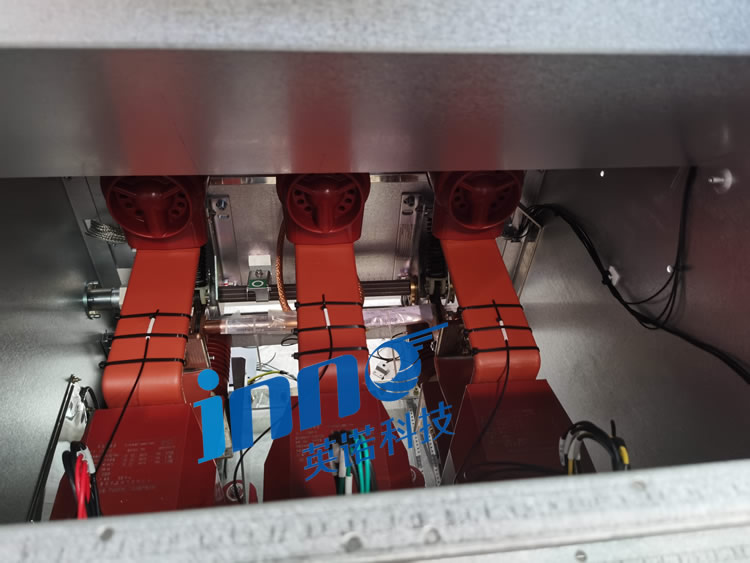
Electrical switchgear is a collective term for devices that control, защищать, and isolate sections of an electrical network. It serves as a mechanical and electrical barrier between power sources and load equipment, ensuring safe operation during normal and fault conditions. Распределительные устройства используются повсеместно. generation, передача инфекции, and distribution системы управления потоками электрической энергии, отключить неисправные цепи, и защитить персонал от поражения электрическим током.
С точки зрения дизайна, система распределительного устройства должна отвечать четырем основным требованиям: прерывание по неисправности, безопасная изоляция, reliable operation, and maintainability. Эти функции делают его незаменимым на подстанциях., заводы, центры обработки данных, и коммунальные предприятия, где непрерывная и безопасная подача электроэнергии имеет решающее значение..
2. Internal Structure and Functional Arrangement of Switch Cabinets
2.1 Секция главной цепи
Основная схема включает в себя автоматические выключатели, шины, отключить выключатели, и трансформаторы тока. Эти элементы переносят и управляют электрической энергией в различных условиях эксплуатации.. Все токопроводящие части изолированы и закреплены внутри металлического корпуса., что обеспечивает как механическую стабильность, так и защиту оператора.
2.2 Вспомогательная и контрольная секция
Этот раздел содержит реле управления, индикаторные лампы, кнопки, и измерительные приборы. Он управляет операциями переключения, контролирует состояние цепи, and provides visual or signal-based feedback to operators. Control wiring must be neatly arranged and properly labeled to facilitate maintenance.
2.3 Enclosure and Interlocking Section
The enclosure is fabricated from galvanized or powder-coated steel, designed for arc containment and mechanical rigidity. Mechanical interlocks и electrical interlocks prevent incorrect switching sequences. Например, a disconnector cannot be opened while the circuit breaker is energized.
3. Major Components in Power Distribution Switchgear Assemblies
3.1 Автоматический выключатель
The автоматический выключатель is the heart of every switchgear panel. It automatically interrupts current flow during overloads or short circuits. Common types include air circuit breakers (ACB) for low voltage, вакуумные выключатели (VCB) для среднего напряжения, and SF₆ gas circuit breakers for high voltage. Each type is selected based on voltage rating, insulation medium, and fault current capacity.
3.2 Isolator or Disconnector
The isolator provides a visible break in the circuit. It is always operated when the current is zero to ensure safe maintenance. Disconnectors often work in coordination with circuit breakers to guarantee absolute isolation.
3.3 Busbar and Connectors
The busbar system acts as the current-carrying backbone of the switchgear. Made of copper or aluminum, it connects incoming and outgoing feeders. Proper spacing, изоляция, and phase segregation must be observed to avoid flashover.
3.4 Measuring Transformers (CT/PT)
Трансформаторы тока (трансформаторы тока) и трансформаторы напряжения (PTs) reduce high current and voltage levels to measurable values for relays and meters. Periodic testing ensures accuracy and stability of protection systems.
3.5 Protective Relays and Control Units
Защитные реле receive signals from CTs and PTs to detect abnormal conditions such as overcurrent, короткое замыкание, or earth fault. The relay then sends a trip command to the breaker to disconnect the faulty section. Modern installations still rely on electromechanical or digital relays, depending on system requirements.
4. Busbar System Design and Conductor Engineering
The busbar system must safely carry rated current and withstand thermal and dynamic stress during short-circuit conditions. The design process includes the following technical steps:
- Calculate rated current and short-circuit forces based on system fault level.
- Select appropriate conductor material: copper for high conductivity, aluminum for cost efficiency and lighter weight.
- Determine cross-sectional area and spacing between phases.
- Ensure mechanical supports and insulation barriers are rated for temperature rise and dielectric strength.
Regular maintenance should include checking torque on bolted joints, inspecting insulation discoloration, and verifying thermal camera readings to identify abnormal heating in joints.
5. Operational Difference Between Circuit Breakers and Disconnect Switches
5.1 Circuit Breaker Functions
А автоматический выключатель can open and close electrical circuits under both normal load and fault current conditions. Its contacts are designed to extinguish the arc quickly using air, пустой, или газ. During maintenance, breakers must be tested for contact resistance, trip coil continuity, and mechanical alignment.
5.2 Disconnector Functions
А disconnect switch cannot interrupt load current; it is used only for visual isolation after the circuit breaker has opened. It ensures that maintenance personnel can safely work on de-energized equipment. Disconnectors are equipped with grounding switches that discharge residual energy from capacitive circuits.
5.3 Interlocking Steps for Safe Operation
- Confirm breaker is open and the control indicator shows “OFF.”
- Включите разъединитель, чтобы изолировать линию..
- Включите заземляющий выключатель и установите метки блокировки..
- Перед началом технического обслуживания проверьте нулевой потенциал с помощью детектора напряжения..
6. Protective Relay Systems: Configuration and Testing Steps
The система релейной защиты обеспечивает быстрое отключение неисправных цепей. Реле получают аналоговые сигналы от трансформаторов тока и трансформаторов тока и действуют в зависимости от заранее заданного тока., Напряжение, и настройки времени. Конфигурация включает защиту от перегрузки по току., дифференциал, замыкание на землю, и реле пониженного напряжения.
Рабочий процесс тестирования реле
- Проверьте соединения ТТ и ПТ, чтобы подтвердить полярность и соотношение..
- Подайте смоделированный ток повреждения и проверьте срабатывание реле в течение заданного времени..
- Проверка срабатывания автоматического выключателя через выходные контакты реле..
- Запишите и сравните результаты со значениями заводской калибровки..
Точная координация реле предотвращает ненужные отключения и защищает как оборудование, так и персонал..
7. Monitoring System of Switchgear: Температура, Влажность, and Arc Flash![Оптоволоконная система контроля температуры для контроля температуры распределительных устройств]()

Постоянный надзор за environmental and operational parameters is critical for switchgear reliability. The monitoring system collects data on temperature, влажность, состояние изоляции, and arc flash light intensity. Each parameter serves a specific diagnostic purpose:
- Мониторинг температуры: Detects loose connections and abnormal contact resistance before failures occur.
- Мониторинг влажности: Prevents condensation that could lead to insulation breakdown.
- Обнаружение вспышки дуги: Identifies optical and current signatures of internal faults.
Monitoring sensors are installed on busbar joints, кабельные наконечники, and within switchgear compartments. Data is transmitted to a local control unit for visualization and alarm activation.
8. Comparative Table: Fluorescent vs Wireless vs Infrared Temperature Monitoring
Temperature rise is one of the earliest signs of potential failure in electrical joints. Below is a comparison of three practical methods used in switchgear temperature supervision.
| Метод | Принцип работы | Время ответа | Основные преимущества | Ограничения |
|---|---|---|---|---|
| Флуоресцентный оптоволоконный датчик | Measures temperature via change in fluorescence decay time of the sensor tip | <1 второй | Невосприимчивость к электромагнитным помехам, no electrical connection required, highly accurate for HV switchgear | Requires careful installation and calibration |
| Wireless RF Sensor | Transmits temperature values through radio frequency or BLE module | 2–3 seconds | Simple retrofit option, flexible placement on live parts | Susceptible to noise, periodic battery replacement |
| Infrared Thermal Sensor | Detects infrared emission from hot spots | ≈1 second | Provides visual thermal mapping for inspection teams | Accuracy reduced by dust, reflections, or misalignment |
Among all methods, тот fluorescent fiber system is preferred for permanent high-voltage monitoring due to its precision and immunity to electromagnetic interference.
9. Arc Flash Detection Workflow and Safety Integration
An internal arc fault releases intense light and pressure in milliseconds. A dedicated arc flash detection system ensures this energy is interrupted immediately. The system operates through optical sensors that sense a sudden light spike combined with a simultaneous rise in current.
Step-by-Step Detection Process
- Light Detection: Fiber or photodiode sensors continuously monitor the interior of the switchgear compartment for optical intensity changes.
- Signal Validation: The control module cross-checks the optical signal with current input from CTs to verify fault authenticity.
- Trip Command: When both parameters exceed preset thresholds, the breaker receives an instant trip signal (within 2–5 ms).
- System Isolation: The circuit breaker opens, arc gases are contained, and ventilation flaps release pressure safely.
- Тревога & Ведение журнала: Event data and timestamps are stored for post-incident analysis and maintenance follow-up.
Все arc protection relays should be tested quarterly using optical pulse generators to confirm their sensitivity and trip logic. Consistent maintenance prevents arc-related injuries and limits equipment damage.
10. Online Condition Monitoring Procedures and Data Flow
The online condition monitoring system in switchgear continuously collects parameters such as temperature, влажность, частичный разряд, вибрация, and operating cycles. It provides early warnings by measuring deviations from normal reference values.
Implementation and Data Flow Steps
- Установка датчика: Mount temperature and humidity probes on critical joints, CT/PT chambers, и кабельные наконечники.
- Signal Transmission: Sensors communicate data via RS485 or optical links to a local data concentrator.
- Data Analysis: The concentrator processes inputs through set threshold values to trigger warnings.
- Выход тревоги: Audible and visual alarms notify operators, while dry contacts can trigger circuit breakers if necessary.
- Ведение учета: Logged data is exported periodically for trend evaluation and performance comparison.
This real-time supervision enables maintenance teams to take immediate corrective action. В отличие от периодических ручных проверок, continuous monitoring captures transient faults and reduces unplanned outages.
11. Fault Types, Причины, and Corrective Actions
Common failures in electrical switchgear systems arise from mechanical stress, thermal aging, и загрязнение окружающей среды. Recognizing the pattern of each fault helps prevent severe incidents.
11.1 Typical Fault Types
- Контактный перегрев: Caused by loose fasteners or worn contact surfaces, leading to carbonization and insulation breakdown.
- Busbar Short-Circuit: Due to insufficient clearance or foreign conductive particles inside compartments.
- Insulation Deterioration: Result of moisture ingress, dust accumulation, or high temperature exposure.
- Mechanical Failure: Misalignment in interlocking linkages or spring mechanisms within circuit breakers.
- Relay Misoperation: Incorrect settings or polarity reversal of CTs causing false tripping.
11.2 Corrective Maintenance Procedure
- De-energize and lockout the entire switchgear bay.
- Conduct a thorough visual inspection of all primary and secondary circuits.
- Tighten busbar joints to specified torque using calibrated tools.
- Replace damaged insulation sleeves or terminals immediately.
- Perform insulation resistance and contact resistance testing before re-energization.
Scheduled inspection intervals should not exceed six months for heavily loaded equipment. A maintenance log with test results should be maintained for every switchgear unit.
12. Grounding System Testing and Verification Steps
The заземление (заземление) система is vital to divert fault current safely to earth, protecting personnel and equipment from electric shock. Each switchgear panel is bonded to a ground grid through copper strips or galvanized conductors.
12.1 Types of Grounding Arrangements
- TN System: Direct connection of neutral and protective earth at the transformer, common in industrial networks.
- TT System: Equipment has its own local earth electrode, reducing neutral interference.
- IT System: Neutral isolated from earth, used in sensitive facilities where continuity of supply is critical.
12.2 Ground Resistance Measurement Procedure
- Disconnect the grounding conductor under test from the grid temporarily.
- Place auxiliary electrodes (current and potential) in the soil as per test instrument manual.
- Use an earth tester to measure resistance; acceptable value is typically below 1 ohm for substations.
- Reconnect and inspect all bonding points, ensuring tight mechanical joints.
Proper grounding ensures that even under fault conditions, the potential rise remains within safe limits for human touch voltage thresholds.
13. Control Logic, Interlocks, and Operation Sequences
Логика управления и блокировки поддерживать безопасные последовательности операций внутри распределительного устройства. Блокировки могут быть механическими. (с помощью кулачков и стержней) or electrical (через цепи управления). Их цель — исключить человеческий фактор при переключении..
13.1 Функциональные этапы типичной операции
- Убедитесь, что переключатель управления системой находится в режиме «Местный» или «Дистанционный» в зависимости от необходимости..
- Перед включением автоматического выключателя убедитесь, что заземлитель разомкнут..
- Убедитесь, что все индикаторы блокировки находятся в безопасном состоянии. (сигнал готовности к закрытию включен).
- Включите автоматический выключатель с помощью контрольного переключателя или кнопки..
- Мониторинг тока, Напряжение, и индикаторы состояния выключателя для правильной работы.
Цепи управления обычно питаются от источников постоянного тока. (110В или 220 В) с резервной батареей для гарантии работы при отключении электросети. All wiring should be labeled per IEC standards for easy troubleshooting.
14. Installation and Commissioning Steps of Switchgear Panels
Proper installation is critical to ensure safety and performance of the switchgear panels. The following workflow summarizes the essential field procedures.
14.1 Pre-Installation Inspection
- Verify foundation dimensions and alignment with design drawings.
- Check earthing pits and bonding terminals are complete and cleaned.
- Confirm delivery condition of switchgear panels with inspection checklist.
14.2 Assembly and Connection
- Position panels in sequence and align vertically and horizontally.
- Connect busbars using approved torque values and insulating sleeves.
- Install instrument transformers, метры, and relays as per wiring diagrams.
- Label each cable and confirm phase identification consistency.
14.3 Testing and Commissioning
- Perform insulation resistance test using a 1000V megger for LV or 5000V for MV systems.
- Check control wiring continuity and functional tests of all relays and interlocks.
- Simulate trip and close operations to verify breaker performance.
- Record test results and compare with manufacturer’s data sheet values.
- Once verified, energize the system under supervision and monitor for abnormal noise or heat.
After commissioning, all results must be documented, and safety clearances should be displayed on each switchgear compartment.
15. Frequently Asked Questions and Technical Consultation
1 квартал. What regular tests should be performed on switchgear assemblies?
Routine tests include insulation resistance, контактное сопротивление, relay functional checks, mechanical operation, and thermographic inspection of busbar joints. Annual dielectric testing is recommended for high-voltage equipment.
2 квартал. How often should temperature sensors and arc detectors be calibrated?
Both systems should be verified every six months. Calibration involves comparing sensor readings with a reference instrument and adjusting offsets if necessary.
Q3. What are typical acceptance criteria for contact resistance?
For copper joints, contact resistance should not exceed 30 micro-ohms. Higher values indicate contamination or insufficient tightening torque.
Q4. Can infrared and fluorescent systems be used together?
Да. Infrared scanning provides quick surface checks, while fluorescent fiber sensors offer continuous internal temperature monitoring — both methods complement each other in preventive maintenance.
Q5. What documentation should be kept after commissioning?
Maintain a complete dossier including wiring diagrams, relay settings, протоколы испытаний, and inspection photos. This record is essential for audits and future maintenance planning.
Final Technical Note
For detailed design support, customized configuration, or integration of advanced switchgear monitoring and protection systems, please contact our engineering department. Мы предоставляем factory-certified switchgear panels, verified testing services, and on-site commissioning assistance to ensure compliance with international standards and long-term operational safety.

Оптоволоконный датчик температуры, Интеллектуальная система мониторинга, Распределенный производитель оптоволокна в Китае
 |
 |
 |