 Sensores de temperatura de fibra óptica INNO ,sistemas de monitoramento de temperatura.
- UM sistema de monitoramento de umidade e temperatura do transformador é uma solução de detecção contínua que rastreia simultaneamente o calor do enrolamento, temperatura ambiente, e umidade relativa dentro dos gabinetes do transformador — em tempo real, sem interrupção.
- A temperatura e a umidade devem ser monitoradas em conjunto porque seu efeito combinado no isolamento do transformador acelera o envelhecimento muito mais rápido do que qualquer um dos fatores isoladamente.
- Sensores de fibra óptica de fluorescência são a tecnologia estabelecida para medição direta de pontos quentes de enrolamento dentro de transformadores energizados de alta tensão - totalmente dielétricos, imune a interferência eletromagnética, e seguro em tensões superiores 100 kV.
- A temperatura ambiente e a umidade relativa dentro das salas de transformadores são medidas por sensores de umidade e temperatura com precisão de nível industrial e classificações de proteção.
- Limites de alarme, intertravamentos do sistema de refrigeração, e a ativação do desumidificador são gerenciadas automaticamente pelo sistema de monitoramento, reduzindo a necessidade de rodadas de inspeção manual.
- Os sistemas se comunicam por RS485 / Modbus RTU e integração com SCADA, DCS, e plataformas de automação de subestações sem hardware personalizado.
- Fabricado por Ciência Eletrônica de Inovação de Fuzhou&Companhia de tecnologia., Ltda., com mais de uma década de experiência comprovada em campo em detecção de fibra óptica desde 2011.
1. O que é um sistema de monitoramento de temperatura e umidade do transformador?
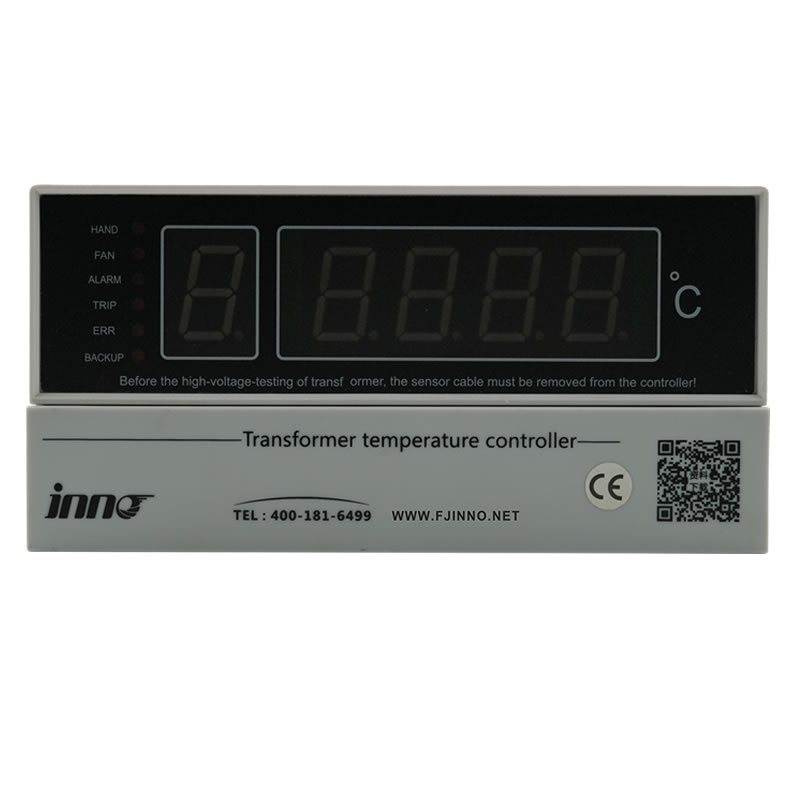
UM sistema de monitoramento de umidade e temperatura do transformador é um contínuo, real-time instrumentation solution that simultaneously measures the thermal and moisture conditions inside and around a power transformer. It tracks winding hot-spot temperature, top-oil temperature, transformer room ambient temperature, and relative humidity — feeding all readings into a central monitoring unit that logs data, triggers alarms, and activates protective responses automatically.
The defining characteristic of this type of system is its dual focus. Temperature and humidity are not independent variables in a transformer environment — they interact directly at the insulation level. A transformer operating at elevated temperature in a humid environment degrades its cellulose insulation at a rate that cannot be predicted from either measurement alone. Monitoring both simultaneously, at all times, is the only way to accurately assess insulation condition in service.
Um completo sistema de monitoramento de condição do transformador typically comprises four layers: sensing elements at the transformer and in the surrounding environment, a local data acquisition unit, a communication link to the site control system or cloud platform, and supervisory software that presents data, tendências, and alarms to operators. Each layer is specified to the electrical environment of the installation — high-voltage substation, industrial distribution room, or outdoor pad-mount transformer — with appropriate insulation ratings, protection classes, e protocolos de comunicação.
2. Por que os transformadores precisam de vigilância térmica e de umidade simultânea
A power transformer’s operational life is determined primarily by the condition of its cellulose paper insulation. That insulation degrades through two mechanisms that are continuously at work during normal operation: thermal aging and moisture absorption. Understanding how these two mechanisms interact explains why a combined temperature and humidity monitoring approach is more effective than tracking either parameter in isolation.
The Effect of Temperature on Transformer Insulation Life
Transformer insulation aging follows an exponential relationship with temperature — a principle codified in international loading standards. For every 6–8°C rise above the rated hot-spot temperature, the rate of cellulose degradation approximately doubles. This means a transformer operating continuously at 10°C above its design hot-spot temperature loses insulation life at four times the expected rate. Direto, contínuo winding hot-spot temperature monitoring is the only way to detect this condition in real time before it causes irreversible insulation damage.
The Effect of Humidity on Insulation Integrity and Dielectric Strength
Moisture enters transformer insulation through aging of the oil-paper system, through breather degradation, and through condensation cycles during transformer load fluctuations. As moisture content in the paper insulation rises, its dielectric strength falls — increasing the risk of partial discharge, accelerating further cellulose decomposition, and reducing the insulation’s resistance to voltage surges. UM transformer room humidity sensor that detects rising relative humidity before moisture migrates into the oil-paper system provides an early-warning window that temperature monitoring alone cannot offer.
The Combined Degradation Effect
When elevated temperature and elevated humidity are present simultaneously, their combined effect on insulation aging is multiplicative, not additive. Hot, moist conditions drive moisture deeper into the paper insulation, accelerate acid formation in the oil, and increase the rate of degree-of-polymerization loss in the cellulose. UM transformer temperature and humidity monitoring system captures this interaction by providing a continuous, correlated record of both parameters — enabling insulation life models, load management decisions, and predictive maintenance scheduling that no single-parameter monitoring system can support.
Consequences of Unmonitored Thermal and Moisture Excursions
Transformers that operate without continuous thermal and moisture monitoring are vulnerable to undetected insulation aging events that manifest only when failure is already imminent. The consequences range from unplanned outages and forced derating to insulation breakdown, incêndios de petróleo, and catastrophic bushing failures. In substation environments where transformer failure triggers cascading supply disruptions, the business and safety case for continuous real-time transformer condition monitoring is unambiguous.
3. O que um monitor térmico e de umidade de transformador realmente mede
A fully specified sistema de monitoramento de umidade e temperatura do transformador acquires readings across several distinct measurement points, each targeting a different aspect of transformer thermal and moisture condition:
- Winding hot-spot temperature — the highest temperature within the active winding, measured directly with a fiber optic probe embedded in the coil during manufacture or inserted through an access port
- Top-oil temperature — the temperature of the transformer oil at the top of the tank, indicative of overall thermal loading and cooling system performance
- Transformer room ambient temperature — the dry-bulb air temperature inside the transformer enclosure or switchroom, which affects cooling efficiency and condensation risk
- Relative humidity inside the transformer room — the moisture content of the air surrounding the transformer, critical for assessing condensation risk and breathing system performance
- Moisture-in-oil content (opcional) — dissolved water concentration in the transformer oil, providing a direct measure of insulation moisture migration
- Core temperature (opcional) — temperatura do núcleo de ferro para grandes transformadores de potência onde as perdas no núcleo são uma fonte de calor significativa
A combinação de ponto quente sinuoso, temperatura do óleo, temperatura ambiente, e a umidade relativa proporcionam aos operadores uma imagem completa da temperatura e da umidade do transformador em todos os momentos - e não um instantâneo tirado durante uma visita de manutenção, mas um registro continuamente atualizado de cada hora de operação.
4. Tecnologias de detecção: Como a temperatura e a umidade do enrolamento são medidas
Sensores de fibra óptica de fluorescência para detecção de pontos quentes de enrolamento
A medição direta da temperatura do enrolamento dentro de um transformador energizado de alta tensão apresenta um desafio fundamental: o sensor deve operar em contato com enrolamentos que podem ser energizados a dezenas ou centenas de quilovolts, dentro de um tanque cheio de óleo dielétrico, em um forte campo magnético alternado. Nenhum sensor eletrônico convencional pode atender todos os três requisitos simultaneamente.
O sensor de temperatura de fibra óptica de fluorescência resolve esse problema completamente. A sonda de detecção é inteiramente dielétrica – nenhum condutor metálico vai do enrolamento de alta tensão até o instrumento de monitoramento. O princípio de medição é óptico: uma ponta de fósforo na extremidade da sonda responde à temperatura através de mudanças no tempo de decaimento da fluorescência, e o sinal viaja de volta para o instrumento como luz através de uma fibra de vidro. A sonda não é afetada pelo campo magnético do transformador, não gera interferência elétrica dentro do tanque, e pode ser instalado diretamente em condutores de enrolamento em qualquer nível de tensão sem hardware de isolamento adicional.
Porque o sonda de temperatura do enrolamento de fibra óptica measures the actual hot-spot location — not an indirect oil-temperature approximation — it provides the most accurate and most directly useful input for insulation life calculations and dynamic thermal loading decisions.
Integrated Temperature Humidity Sensors for Ambient Monitoring
Transformer room ambient conditions are monitored by combined temperature and humidity sensors that use capacitive polymer humidity elements paired with precision NTC thermistors or PT100 resistance temperature detectors. These sensors are housed in radiation-shielded enclosures with filtered ventilation to prevent contamination while ensuring that readings reflect true ambient conditions rather than localized heat from the transformer surface.
For outdoor transformer installations and pad-mount units, os sensores são especificados com classificações de proteção IP65 ou IP67 e invólucros resistentes a UV para suportar intempéries diretas durante períodos de implantação de vários anos sem recalibração.
Sensores de umidade no óleo para avaliação de umidade de isolamento
Onde for necessária uma medição mais direta da condição de umidade do isolamento, um sensor de umidade do óleo pode ser adicionado ao sistema de monitoramento. Esses dispositivos medem a atividade da água ou a concentração de água dissolvida no óleo do transformador — um parâmetro que se equilibra com o teor de umidade do isolamento de papel e, portanto, fornece uma medida indireta, mas contínua, do nível de umidade do isolamento, sem exigir amostragem de óleo ou análise laboratorial..
5. Comparação de tecnologia de sensores para monitoramento de condições de transformadores

| Parâmetro | Sonda de fibra óptica de fluorescência | Umidade capacitiva + Sensor NTC/PT100 | Sensor de umidade de óleo |
|---|---|---|---|
| Meta de medição | Ponto quente de enrolamento / temperatura do óleo | Room ambient temperature and relative humidity | Dissolved water in transformer oil |
| Sensing principle | Decadência da vida útil da fluorescência | Capacitive polymer (RH) + resistência (T) | Water activity equilibrium |
| Faixa de temperatura | −40°C a +260°C | Typically −40°C to +85°C | 0°C to +100°C (temperatura do óleo) |
| Humidity range | N / D | 0–100% RH | 0–100% water activity |
| Isolamento elétrico | Fully dielectric — >100 kV rated | Standard industrial isolation | Standard industrial isolation |
| Imunidade EMI | Complete — no metallic sensing path | Good with shielded cable | Good with shielded cable |
| Installation location | Directly on winding / in oil tank | Transformer room wall / recinto | Inline with oil circuit or sampling valve |
| Método de instalação | Embedded during winding or inserted via access port | Wall-mount with radiation shield | Flanged inline fitting or sampling port |
| Protection rating | IP67 (sonda); IP54+ (instrument) | IP65 / IP67 (ar livre) | IP65 / IP67 |
| Comunicação | RS485 (via transmitter) | RS485 / 4–20 mA | RS485 / 4–20 mA |
| Requisito de manutenção | None under normal conditions | Periodic filter cleaning; sensor replacement at end of rated life | Annual validation recommended |
| Best suited for | Enrolamento direto e monitoramento térmico de óleo em transformadores de alta tensão | Rastreamento contínuo das condições ambientais em salas de transformadores | Avaliação da condição de umidade do isolamento |
6. Arquitetura do sistema, Comunicação, and Control Integration
Aquisição de dados locais e condicionamento de sinais
Todos os sensores em um sistema de monitoramento de transformador alimentar uma unidade de aquisição local - um módulo de montagem em painel ou trilho DIN que condiciona sinais analógicos, sonda sensores digitais, e apresenta um fluxo de dados unificado para a camada de comunicação. Para sondas de fibra óptica de fluorescência, a unidade de aquisição funciona como interrogador óptico: gera o pulso de luz de excitação, mede o tempo de decaimento da fluorescência, e converte o resultado em um valor de temperatura calibrado antes de transmiti-lo pela rede.
As unidades de aquisição local são especificadas com a classe de proteção e faixa de temperatura operacional do ambiente de instalação. As unidades destinadas à montagem em quiosques externos ou salas de distribuição subterrâneas são classificadas para temperaturas e umidade extremas mais amplas do que aquelas instaladas em edifícios de controle climático..
Opções de comunicação com e sem fio
A interface de comunicação padrão para transmissão de dados de temperatura e umidade do transformador é RS485 com Modbus RTU — um recurso comprovado, protocolo imune a ruído que opera de forma confiável no ambiente eletricamente exigente de uma subestação. Para instalações onde o roteamento de cabos é impraticável — estações de transformação rurais, transformadores de distribuição de linhas aéreas, ou implantações de monitoramento temporário — comunicação sem fio por 4G LTE, LoRaWAN, ou NB-IoT oferece uma alternativa igualmente capaz, sem o custo e a interrupção da infraestrutura de cabos.
SCADA, DCS, e Integração de Automação de Subestações
UM sistema de monitoramento de condição do transformador does not operate in isolation — its value multiplies when its data feeds into the site’s existing supervisory infrastructure. Standard Modbus RTU output makes integration with SCADA platforms, distribution management systems, and IEC 61850-compliant substation automation systems straightforward. Operators see transformer thermal and humidity status on the same display screens as protection relays, circuit breaker positions, and load measurements — without dedicated monitoring terminals or parallel display systems.
Cloud-Based and Local Deployment Modes
For asset owners managing multiple transformer sites across a wide geographic area, cloud-based remote transformer thermal monitoring provides fleet-level visibility from a single web portal. Historical trends, alarm records, and insulation life consumption estimates are accessible from any location with an internet connection. For sites with stringent data security requirements, the same functionality is available in a locally hosted deployment with no external network dependency.
7. Lógica de Alarme, Intertravamentos de proteção, e controle de resfriamento automatizado
Tiered Temperature Alarm Thresholds
Um bem configurado transformer winding temperature monitoring system implements at least two alarm tiers for each temperature measurement point. The first tier — the warning alarm — alerts operators to a thermal condition that warrants attention but does not yet require immediate load reduction. The second tier — the high alarm or trip threshold — triggers an automatic protective response. Setting these thresholds requires knowledge of the transformer’s rated hot-spot temperature, classe de isolamento, and cooling system capacity; the monitoring system provides the data to validate and refine these settings over time based on actual operating history.
Humidity Alarm and Dew Point Monitoring
Relative humidity alarms in transformer rooms are typically set at 70–80% RH as a warning level and 90% RH as a critical level, though the appropriate thresholds depend on the ambient temperature and the transformer’s breathing system design. More precisely, dew point monitoring — calculated from simultaneous temperature and humidity measurements — identifies the specific condition at which condensation will form on transformer surfaces and bushings. A dew point alarm provides earlier and more physically meaningful warning than a relative humidity threshold alone.
Automated Cooling and Dehumidification Interlocks
The alarm outputs of a sistema de monitoramento de umidade e temperatura do transformador can be wired directly to cooling system contactors and dehumidifier controls. When winding temperature exceeds the warning threshold, the system can automatically switch the transformer from natural cooling (ONAN) to forced-air cooling (LIGADO DESLIGADO) without operator intervention — reducing peak hot-spot temperature and extending insulation life. When relative humidity or dew point exceeds its threshold, the system activates the room dehumidifier or enclosure heater to prevent condensation before it reaches the transformer surface.
Data Logging and Insulation Life Tracking
Every temperature and humidity reading is time-stamped and stored in the system’s non-volatile memory and forwarded to the supervisory platform. This continuous historical record supports IEC 60076-7 cálculos de envelhecimento térmico, providing an accumulated insulation life consumption figure that asset managers can use to inform maintenance scheduling, loading decisions, and end-of-life planning for each individual transformer under continuous monitoring.
8. Instalação, Colocação da sonda, e diretrizes de implantação em campo
Fiber Optic Probe Positioning in Transformer Windings
The accuracy and relevance of winding hot-spot measurements depend directly on probe placement. For new transformers, sondas de temperatura de fibra óptica are embedded in the winding during manufacture — positioned at the location of predicted maximum temperature based on thermal finite-element analysis of the specific design. For in-service transformers, probes can be introduced through oil-fill valves or dedicated access ports, and positioned against winding conductors using flexible probe guide assemblies designed for retrofit installation without tank draining.
Multiple probes are typically deployed — one per winding in a three-winding transformer, plus one in the top oil — to ensure that the hottest point in each winding is captured regardless of load distribution between phases and windings.
Humidity Sensor Location and Radiation Shielding
Ambient transformer room humidity sensors must be positioned to measure representative air conditions rather than localized microenvironments near heat sources or cold walls. Recommended placement is at mid-height on an interior wall, away from direct air supply vents, transformer cooling surfaces, and external walls subject to solar gain. Uma proteção contra radiação - um invólucro aspirado de múltiplas placas - evita que o sensor responda ao calor radiante do corpo do transformador, ao mesmo tempo que permite a livre circulação de ar através do elemento sensor..
Considerações sobre classe de proteção e áreas perigosas
Instalações de transformadores em plantas petroquímicas, locais de mineração, e plataformas offshore exigem equipamentos de monitoramento classificados para a classificação de zona de área perigosa aplicável. Todos os componentes de detecção e aquisição implantados nesses ambientes devem possuir o certificado ATEX apropriado, IECEx, ou certificação nacional equivalente. A natureza totalmente passiva sondas de fibra óptica de fluorescência — sem energia elétrica no ponto de detecção — os torna inerentemente compatíveis com Zona 1 e Zona 2 instalações em áreas perigosas para a própria sonda; acquisition units located outside the hazardous area require standard industrial enclosure ratings.
9. Aplicações industriais e tipos de transformadores cobertos
Grid Substations and Transmission Transformers
High-voltage transmission transformers — 110 kV, 220 kV, 500 kV — represent the highest capital value and most critical reliability assets in the power grid. Contínuo transmission transformer temperature and humidity monitoring provides the data needed to operate these assets at maximum permissible loading without exceeding insulation life limits, and to detect developing thermal faults before they propagate to failure.
Industrial Distribution Transformers and Factory Power Rooms
Industrial facilities with large motor loads, drives de frequência variável, or arc furnaces subject their distribution transformers to highly variable and often demanding thermal cycles. UM real-time thermal monitoring system para transformadores industriais quantifica o estresse térmico real experimentado por cada unidade sob condições de produção, permitindo que as equipes de manutenção programem intervalos de inspeção com base nas condições de isolamento medidas, e não no tempo do calendário.
Transformadores elevadores de energia renovável
Os transformadores de turbinas eólicas e os transformadores elevadores de parques solares operam em ambientes externos com grandes variações de temperatura diurnas e sazonais, frequentemente em locais costeiros úmidos ou de alta altitude. Vigilância contínua de temperatura e umidade para esses ativos é particularmente valioso porque o acesso físico para inspeção manual é difícil, o tempo de inatividade é comercialmente caro, e o ambiente térmico é mais variável do que em subestações de rede convencionais.
Transformadores de tração em sistemas ferroviários e metroviários
Transformadores de tração em subestações ferroviárias e material rodante a bordo operam sob cargas cíclicas pesadas sincronizadas com os padrões de chegada dos trens. Contínuo monitoramento térmico do transformador de tração suporta gerenciamento dinâmico de carga — mantendo a temperatura máxima do enrolamento dentro de limites seguros durante os picos de carga nos horários de pico, ao mesmo tempo que permite maior rendimento de energia fora dos períodos de pico.
Data Center e Transformadores UPS
Os transformadores nas cadeias de distribuição de energia dos data centers devem manter disponibilidade contínua. UM sistema de monitoramento de temperatura e umidade integrado à infraestrutura de gerenciamento predial do data center proporciona a mesma visibilidade contínua térmica e de umidade que em qualquer instalação industrial, com o benefício adicional de integração perfeita na matriz de alarme do BMS e nas ferramentas de planejamento de capacidade já em uso pela equipe de operações da instalação.
10. Como especificar o sistema correto de monitoramento do transformador
Defina os pontos de medição e os tipos de sensores necessários
Comece pelo projeto e ambiente operacional do transformador. Um novo transformador de potência a óleo com sondas de enrolamento instaladas de fábrica requer uma especificação diferente de uma instalação de monitoramento de modernização em um transformador de distribuição do tipo seco existente em uma sala de distribuição industrial. Liste cada ponto de medição – fases do enrolamento, temperatura do óleo, temperatura ambiente, umidade relativa — e confirme o acesso físico e o método de instalação disponível para cada.
Combine a tecnologia de detecção com o ambiente elétrico
Para qualquer ponto de medição dentro ou próximo de um enrolamento energizado de alta tensão, especifique um sensor de temperatura de fibra óptica with a verified dielectric rating appropriate to the system voltage. For ambient room measurements, standard industrial temperature and humidity sensors with appropriate protection class for the enclosure type are suitable. Do not use metallic thermocouple or RTD probes in locations where they create a conductive path between high-voltage components and the monitoring instrument enclosure.
Select the Communication Architecture
Where cable infrastructure to a substation control building already exists, RS485 with Modbus RTU provides the simplest and most reliable integration path. Where cable installation is impractical or the site is unmanned and remotely located, specify a 4G or LoRaWAN wireless gateway. Confirm that the supervisory platform at the receiving end — SCADA, BMS, or DMS — supports the chosen protocol natively or through an available communication driver.
Confirm Certification and Standards Compliance
Specify certification requirements early. Hazardous area installations require ATEX or IECEx marking on field-mounted components. Grid-connected substation installations may require compliance with IEC 60076 (transformadores de potência), CEI 61850 (comunicação de subestação), or national grid operator standards. Request certification documentation from the manufacturer before procurement to avoid delays during commissioning and inspection.
Combined System Deployment for Large Transformer Banks
For transformer banks with multiple units — common in large grid substations and industrial power stations — a single acquisition network can serve all transformers simultaneously. Each transformer’s fiber optic probes and room sensors connect to a shared RS485 bus, and the supervisory platform displays comparative thermal loading and humidity data across all units in a single view. This architecture minimizes hardware cost and simplifies operator training while providing complete continuous coverage of the entire transformer installation.
11. Perguntas frequentes
1º trimestre: Why is it important to monitor both temperature and humidity in a transformer installation?
Temperature and humidity act together on transformer insulation. Elevated temperature accelerates cellulose aging; elevated humidity reduces dielectric strength and accelerates moisture migration into the paper insulation. When both are present simultaneously, insulation degradation is multiplicative. UM combined transformer temperature and humidity monitoring system captures this interaction, providing the data needed for accurate insulation life assessment and timely protective action — which neither parameter monitored in isolation can deliver.
2º trimestre: Can fiber optic temperature sensors be installed on a transformer that is already in service?
Sim. Retrofit fiber optic temperature probe installations are carried out through existing oil-fill ports or dedicated access fittings without requiring full oil drainage or tank entry in most transformer designs. Flexible probe guide systems allow the sensing tip to be positioned against a winding conductor from the outside of the tank. The retrofit process is typically completed during a planned outage window without requiring the transformer to be removed from service for an extended period.
3º trimestre: Qual é a diferença entre o monitoramento da temperatura do topo do óleo e o monitoramento do ponto quente do enrolamento direto?
A temperatura do topo do óleo é uma medição em massa do óleo no topo do tanque do transformador – ela responde lentamente às mudanças na carga do enrolamento e pode subestimar a temperatura real do ponto quente em 20–30°C sob condições de aumento rápido de carga. Direto winding hot-spot temperature monitoring com uma sonda de fibra óptica mede a temperatura real no ponto mais quente do enrolamento, fornecendo um mais rápido, sinal mais preciso para cálculos de proteção térmica e vida útil do isolamento. CEI 60076-7 recomenda explicitamente a medição direta de pontos quentes em vez da estimativa da temperatura do óleo para modelos precisos de envelhecimento do isolamento.
4º trimestre: Qual nível de umidade relativa deve acionar um alarme em uma sala de transformadores?
A typical configuration sets a warning alarm at 70–75% relative humidity and a critical alarm at 85–90% RH. No entanto, the most physically meaningful threshold is the temperatura do ponto de orvalho — calculated from simultaneous dry-bulb temperature and relative humidity measurements — because condensation forms when the surface temperature of transformer components falls below the dew point, regardless of the absolute RH value. A monitoring system that calculates and alarms on dew point provides earlier and more actionable warning than an RH threshold alone.
Q5: How does the monitoring system activate the cooling fans or dehumidifier automatically?
O transformer temperature humidity monitoring unit includes relay or transistor alarm outputs that are wired directly to the control circuits of cooling fans, bombas de óleo, e desumidificadores. When a temperature or humidity measurement crosses a configured threshold, the corresponding output activates within seconds — starting forced cooling or dehumidification without requiring operator intervention. The activation and deactivation events are logged with timestamps for maintenance records.
Q6: Is the fluorescence fiber optic probe affected by the transformer’s magnetic field?
Não. O fluorescence fiber optic temperature probe operates entirely on optical principles — light in, light out. There are no magnetic or electrically conductive elements in the sensing path, so the alternating magnetic field inside a power transformer has no effect on measurement accuracy. This is a fundamental advantage of optical sensing over any metallic thermocouple or RTD probe, ambos são suscetíveis a erros de tensão induzidos magneticamente em ambientes de transformadores.
Q7: O sistema de monitoramento pode se comunicar com uma plataforma SCADA de subestação existente??
Sim. O padrão RS485 / Saída Modbus RTU do unidade de aquisição de monitoramento de transformador é nativamente suportado por praticamente todos os SCADA, DCS, e plataformas de automação de subestações em uso atual. Para subestações compatíveis com IEC 61850, um gateway de protocolo converte Modbus RTU em IEC 61850 GOOSE ou MMS sem modificar o hardware de monitoramento. A integração requer apenas o mapa de registro Modbus — fornecido com o produto — e trabalho de configuração padrão do SCADA.
P8: Quantos transformadores um sistema de monitoramento pode cobrir simultaneamente?
Uma única rede RS485 pode endereçar até 247 Modbus slave devices — sufficient to cover an entire transformer substation with winding probes, oil temperature sensors, and room humidity sensors on multiple transformer units from a single master acquisition unit. For very large installations, multiple RS485 segments can be aggregated at the supervisory software level, providing a unified monitoring view across any number of transformers without practical upper limit.
Q9: What maintenance does a transformer temperature humidity monitoring system require?
Sondas de fibra óptica de fluorescência require no scheduled maintenance under normal operating conditions — their rated lifespan exceeds 25 anos. Room temperature and humidity sensors benefit from periodic filter inspection and cleaning, and sensor elements should be replaced according to the manufacturer’s stated calibration interval — typically every two to five years depending on the contamination level of the installation environment. The acquisition unit and communication hardware require no routine maintenance beyond firmware updates and periodic functional verification against a reference instrument.
Q10: Is it possible to add moisture-in-oil monitoring to an existing temperature and humidity monitoring installation?
Sim. Oil moisture sensors are available as add-on modules that connect to the existing RS485 network and report dissolved water concentration or water activity in the transformer oil through the same supervisory platform already in use for temperature and humidity data. Installation requires access to the transformer oil circuit through a sampling valve or inline fitting — a straightforward field modification that can be carried out during a routine maintenance outage.
12. Explore nossas soluções de monitoramento de transformadores
Ciência Eletrônica de Inovação de Fuzhou&Companhia de tecnologia., Ltda. projetou e fabricou sistemas de monitoramento de temperatura de fibra óptica e transformer condition monitoring solutions desde 2011. Nossa linha de produtos abrange fluorescence fiber optic winding temperature probes, transmissores de temperatura de fibra óptica multicanal, industrial temperature and humidity sensors, e completo transformer temperature humidity monitoring systems para concessionárias de energia, instalações industriais, energia renovável, and rail infrastructure applications worldwide.
Entre em contato com nossa equipe de engenharia para solicitar uma ficha técnica do produto, discuss a site-specific specification, or arrange an application consultation:
- Site: www.fjinno.net
- E-mail: web@fjinno.net
- WhatsApp / WeChat (China) / Telefone: +86 135 9907 0393
- QQ: 3408968340
- Endereço: Parque Industrial de Rede de Grãos Liandong U, Estrada Oeste No.12 Xingye, Fucheu, Fujian, China
Isenção de responsabilidade: The technical information and specifications stated in this article are provided for general informational purposes only and reflect standard product parameters at the time of publication. O desempenho real do sistema pode variar dependendo das condições de instalação, transformer design, fatores ambientais, e requisitos de aplicação. Todas as especificações estão sujeitas a alterações sem aviso prévio. Este conteúdo não constitui uma garantia, compromisso técnico vinculativo, or engineering design recommendation for any specific installation. Sempre consulte um engenheiro qualificado e consulte os padrões aplicáveis e a documentação do fabricante para decisões de projeto e segurança específicas do projeto.

Sensor de temperatura de fibra óptica, Sistema de monitoramento inteligente, Fabricante distribuído de fibra óptica na China
 |
 |
 |