 Sensores de temperatura de fibra óptica INNO ,sistemas de monitoramento de temperatura.
- O superaquecimento dos painéis de distribuição é a principal causa de incêndios elétricos e interrupções não planejadas em instalações industriais e de serviços públicos.
- O 3 métodos comprovados para monitoramento de temperatura de comutadores são: sensoriamento de fibra ótica fluorescente, sensores de temperatura sem fio, e ainda termografia infravermelha.
- Sistemas de fibra óptica fluorescente entregar contínuo, medição de alta precisão e são o padrão ouro para equipamentos de manobra de alta tensão.
- Sensores de monitoramento de temperatura sem fio oferecem instalação sem ferramentas e cobertura multiponto em tempo real – ideal para modernização de salas de distribuição existentes.
- Câmeras térmicas infravermelhas fornecem mapeamento visual de calor e são mais adequados para rodadas de inspeção de rotina por equipes de manutenção.
- A combinação do monitoramento on-line com a inspeção periódica por infravermelho oferece a proteção mais abrangente para seus ativos de painéis de distribuição.
- O monitoramento adequado da temperatura prolonga a vida útil do equipamento, reduz custos de manutenção, e evita falhas catastróficas antes que elas aconteçam.
1. O que é painel de distribuição? The Core of Every Power Distribution System

Switchgear refers to a combination of electrical disconnect switches, fusíveis, e disjuntores usados para controlar, proteger, and isolate electrical equipment in power distribution networks. Found in virtually every large facility — from manufacturing plants and data centers to hospitals and substations — switchgear is the critical junction between incoming power supply and downstream loads.
Common Types of Switchgear
Switchgear is broadly categorized by voltage level and design. Aparelhagem de alta tensão (above 36kV) handles transmission-level electricity, enquanto aparelhagem de média tensão (1kV–36kV) is widely used in industrial distribution. Low-voltage switchgear (abaixo de 1kV) manages final distribution to equipment and machinery. Specialized forms include unidades principais de anel (RMUs), painel de distribuição isolado a gás (SIG), e ainda metal-clad switchgear panels.
Industries That Depend on Switchgear
Reliable switchgear operation is mission-critical across sectors including oil and gas, utilitários, Trânsito ferroviário, commercial real estate, fabricação de semicondutores, e cuidados de saúde. Any thermal failure in these environments carries significant safety, financeiro, and operational consequences.
2. Inside the Cabinet: Key Components of Electrical Switchgear

Understanding switchgear construction is essential for identifying where temperature monitoring is most needed. Um típico medium-voltage switchgear panel contains the following core components:
Componentes Primários
- Disjuntores — Interrupt fault currents; moving contacts generate heat under load.
- Barramentos — Copper or aluminum conductors that distribute current throughout the cabinet; connection joints are high-risk thermal points.
- Transformadores atuais (TCs) — Measure current flow; windings are susceptible to insulation degradation from heat.
- Seccionadores / Interruptores de isolamento — Provide safe isolation; contact arms can develop high resistance over time.
- Cable Terminations and Connectors — Loose or oxidized connections are among the most common sources of abnormal heating.
- Secondary Control Circuits — Terminal blocks and wiring within control compartments can overheat due to poor connections or overload.
Each of these components operates under continuous electrical stress. Sem real-time switchgear temperature monitoring, degradation is invisible until a fault occurs.
3. Why Does Switchgear Fail? Root Causes of Electrical Cabinet Faults
Switchgear failure rarely happens without warning — but the warning signs are often thermal. Industry data consistently shows that overheating accounts for over 30% of all switchgear-related failures, making it the single most common fault category.
Primary Causes of Switchgear Overheating
Maior resistência de contato
Loose bolted connections, oxidized busbar joints, and worn circuit breaker contacts all raise contact resistance. According to Joule’s Law, even a small increase in resistance generates disproportionately more heat under load — a problem that compounds over time if undetected.
Sustained Overload Conditions
Running switchgear above its rated current capacity causes conductors and insulation to exceed design temperatures. This is especially common in aging facilities where load growth has outpaced infrastructure upgrades.
Inadequate Ventilation and Cooling
Blocked ventilation slots, altas temperaturas ambientes, or improper cabinet spacing prevent effective heat dissipation. Switchrooms in tropical climates or poorly ventilated basements are particularly vulnerable.
Installation and Commissioning Defects
Under-torqued bus connections, incorrect cable sizing, and poor termination workmanship introduce resistance at the point of installation — faults that may not manifest for months or years.
Umidade, Contaminação, e corrosão
Condensação, dust ingress, and chemical exposure degrade insulation and increase surface leakage currents, both of which contribute to abnormal heating patterns.
4. The Hidden Danger: What Risks Does Switchgear Overheating Create?
Thermal degradation inside a power distribution cabinet is not merely an equipment issue — it is a safety, financeiro, and operational risk that affects entire facilities.
Envelhecimento acelerado do isolamento
The Arrhenius Rule, widely applied in electrical engineering, states that for every 10°C rise above rated operating temperature, insulation life is effectively halved. A switchgear panel running 20°C above its design temperature will age four times faster than intended.
Arc Flash and Electrical Fire
Incidentes de arco elétrico in switchgear are frequently triggered by thermally weakened insulation. The energy released in an arc flash event can cause severe burns, destruição de equipamentos, and structural fire — with blast pressures exceeding those of many industrial explosives. Early-stage thermal detection is one of the most effective arc flash prevention strategies available.
Unplanned Downtime and Production Loss
A single switchgear failure can shut down an entire production line, data center floor, or hospital wing. Downtime costs in heavy industry routinely exceed tens of thousands of dollars per hour. Continuous switchgear monitoring permite manutenção baseada em condições, replacing reactive repair with planned intervention.
Personnel Safety Hazards
Maintenance technicians working on or near overheated switchgear face direct exposure to thermal burns, toxic fumes from degrading insulation, and the risk of arc flash. Proativo switchgear thermal management directly reduces the frequency of hazardous work conditions.
Regulatory and Insurance Consequences
Many jurisdictions require documented evidence of thermal inspection for electrical equipment. Failure to maintain adequate temperature monitoring records can void equipment warranties, invalidate insurance claims, and result in regulatory penalties following an incident.
5. Where Does Heat Build Up? Critical Hotspot Locations in Power Switchgear

Eficaz detecção de ponto de acesso do painel de distribuição requires knowing exactly where thermal stress concentrates. The following locations account for the majority of temperature-related faults in medium and high-voltage electrical cabinets:
Busbar Joints and Connection Points
Conexões de barramento are the most frequently cited thermal fault location in switchgear. Bolted joints that loosen over time — due to thermal cycling, vibração, or initial under-torquing — develop elevated contact resistance and generate localized hot spots that can reach dangerous levels within weeks.
Circuit Breaker Moving and Static Contacts
The contact interface inside a vacuum circuit breaker or air circuit breaker carries full load current. Desgaste de contato, desalinhamento, or spring fatigue increases transition resistance, causing concentrated heating at the point of current transfer.
Terminações de cabos e conexões de terminais
Alças mal frisadas, parafusos terminais mal apertados, e interfaces oxidadas de alumínio-cobre estão entre as fontes mais comuns de falhas térmicas em quadros de distribuição de baixa e média tensão. Essas falhas são enganosas – muitas vezes parecem normais visualmente, mas registram assinaturas de calor significativas sob carga.
Braços de contato de interruptor isolante
Os contatos deslizantes ou rolantes de interruptores seccionadores experimenta desgaste mecânico em cada ciclo de operação. À medida que a pressão de contato diminui, resistência – e calor – aumenta proporcionalmente.
Enrolamentos de Transformadores de Corrente
Sobrecarregado ou classificado incorretamente transformadores de corrente pode experimentar aquecimento do enrolamento interno, que é difícil de detectar sem sensores incorporados ou inspeção termográfica.
Blocos terminais secundários
Dentro do compartimento de controle de baixa tensão, conexões de régua de terminais transportar circuitos de relé e medição pode superaquecer devido à fiação solta, dimensionamento incorreto do fusível, ou condições de curto-circuito nos circuitos de controle.
6. 3 Best Switchgear Temperature Monitoring Methods Compared
Selecionando o certo sistema de monitoramento de temperatura do painel depende do nível de tensão, condições de instalação, orçamento, e requisitos operacionais. Abaixo está uma análise detalhada de cada método e uma comparação direta.
Método 1: Sensor de temperatura por fibra óptica fluorescente

Sensores de temperatura de fibra óptica fluorescentes - também conhecido como sistemas de termometria de fibra óptica — operar medindo o tempo de decaimento da fluorescência de um composto de terras raras ligado à ponta da fibra. Esta taxa de decaimento muda previsivelmente com a temperatura, permitindo uma medição precisa que é completamente independente de interferência elétrica.
Principais Vantagens
- Intrinsecamente seguro — nenhum componente elétrico no ponto de detecção; totalmente passivo e imune a campos de alta tensão
- Precisão de medição de ±0,5°C a ±1°C — a mais alta precisão disponível para monitoramento de comutadores integrados
- Imune à interferência eletromagnética (EMI), interferência de radiofrequência (RFI), e relâmpagos transitórios
- Adequado para medição de contato direto em 10Kv, 35Kv, e comutadores GIS busbars and contacts
- Suporta 24/7 continuous online monitoring with multi-channel demodulators
- Long service life with no battery replacement required
Método 2: Wireless Temperature Monitoring Sensors
Wireless switchgear temperature sensors use battery-powered transmitter nodes to collect temperature data at defined measurement points and relay it to a central receiver or cloud platform via protocols such as ZigBee, Lora, or 2.4GHz RF. This architecture eliminates the need for signal cabling entirely.
Principais Vantagens
- Tool-free installation — no cabling, no panel modification, tempo de inatividade mínimo
- Scalable mesh network supports 100+ Pontos de medição across a switchroom
- Real-time temperature data with configurable alarm thresholds and remote push notifications
- Ideal para retrofitting existing low and medium-voltage switchgear without major civil works
- Cloud integration enables centralized monitoring across multiple sites
Limitações
- Battery replacement typically required every 2–5 years depending on transmission interval
- Metal enclosures can attenuate wireless signals — proper antenna placement or repeaters may be needed
Método 3: Termografia infravermelha
Câmeras termográficas infravermelhas detect surface-emitted infrared radiation and convert it into a visual heat map, allowing technicians to instantly identify abnormal temperature gradients across switchgear components without physical contact.
Handheld IR Camera vs. Fixed Thermal Sensor
Portátil infrared thermography cameras are used during scheduled inspection walks and can survey entire switchrooms in minutes. Fixed online infrared sensors mounted behind IR inspection windows on panel doors allow continuous monitoring of specific internal zones without opening energized equipment.
Principais Vantagens
- Non-contact measurement — safe for use on energized equipment
- Thermal images provide full visual documentation for maintenance records and compliance reporting
- Fastest method for surveying large numbers of panels during routine walkdowns
- Compatible with all voltage levels
Limitações
- Periodic inspection only — does not provide continuous real-time monitoring between visits
- Requires line-of-sight access or IR windows; closed metal doors block infrared radiation
Monitoramento de temperatura do painel: Method Comparison Table
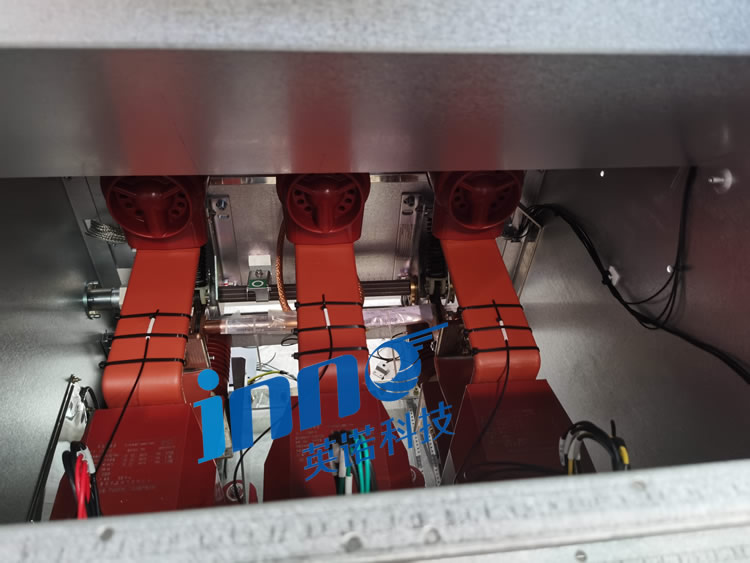
| Critérios | Fibra Óptica Fluorescente | Sensores sem fio | Termografia infravermelha |
|---|---|---|---|
| Tipo de monitoramento | Continuous Online | Continuous Online | Periódico / Scheduled |
| Instalação | Wired Fiber Optic | Sem fio, No Cabling | Handheld or Fixed |
| Imunidade EMI | ★★★★★ | ★★★ | ★★★★ |
| Exatidão | ±0,5°C | ±1°C | ±2°C |
| Faixa de tensão | High Voltage Primary | Baixo / Média Tensão | All Voltage Levels |
| Alarme em tempo real | ✅ | ✅ | ❌ |
| Complexidade de instalação | Moderado | Simples | Mínimo |
| Melhor Aplicação | New HV Switchgear | Projetos de Retrofit | Maintenance Inspections |
7. Building a Complete Switchgear Thermal Monitoring System
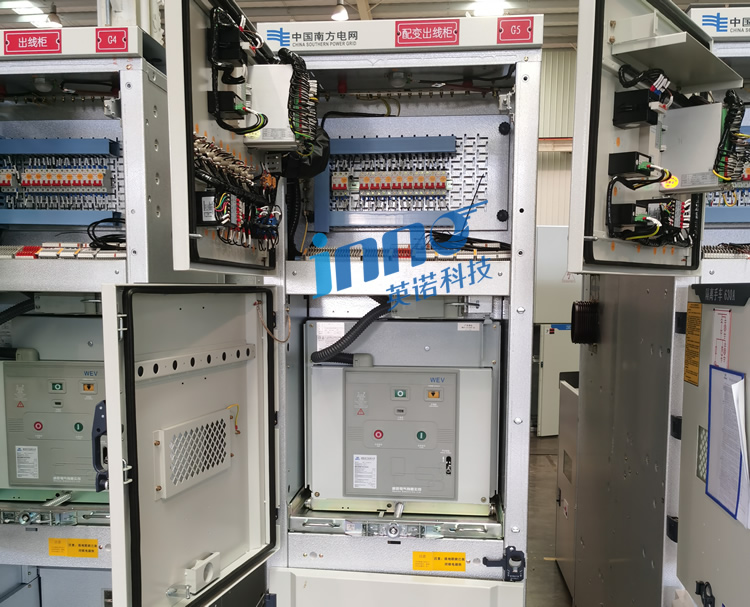
Um robusto switchgear condition monitoring system is not a single device — it is a layered architecture that transforms raw temperature data into actionable maintenance intelligence.
Camada 1 — Sensing
The sensing layer consists of sondas de fibra óptica fluorescentes, transmissores de temperatura sem fio, ou fixed infrared modules instalado em cada ponto crítico de medição. A colocação do sensor deve ser orientada por uma avaliação de risco térmico das juntas do barramento, contatos do disjuntor, e terminações de cabos.
Camada 2 — Aquisição de dados
Os sinais dos sistemas de fibra óptica são processados por um desmodulador de fluorescência multicanal. Os sistemas sem fio usam um unidade gateway ou concentradora para agregar dados de nós distribuídos. Ambas produzem leituras de temperatura estruturadas em intervalos de amostragem configuráveis.
Camada 3 - Comunicação
Os dados são transmitidos para a plataforma de monitoramento via RS-485 / Modbus RTU, Ethernet / Modbus TCP, ou 4Celular G/5G dependendo da conectividade do site. O protocolo MQTT é comumente usado para implantações baseadas em nuvem.
Camada 4 — Plataforma de Monitoramento
O software de monitoramento de temperatura do painel fornece painéis em tempo real, tendências históricas, gerenciamento de alarme multicamadas (consultivo / aviso / crítico), e relatórios automatizados. Os limites de alarme são normalmente configurados em 85°C para aviso prévio e ainda 110°C para alerta crítico, embora estes variem de acordo com o componente e a classe de isolamento.
Camada 5 - Resposta e Integração
Em alarme, o sistema aciona alertas sonoros/visuais, envia notificações por SMS ou e-mail para pessoal designado, e opcionalmente emite comandos de trip para disjuntores a montante para isolar a seção com falha. Integração com SCADA, BMS, ou plataformas CMMS por meio de protocolos padrão permite total consciência situacional em nível de instalação.
Configurações de sistema recomendadas
- Novo quadro de distribuição de alta tensão: Detecção de fibra óptica fluorescente + demodulador multicanal + Integração SCADA
- Retrofit de Média Tensão: Rede de sensores de temperatura sem fio + gateway de monitoramento em nuvem + alertas de aplicativos móveis
- Programa de Manutenção: Levantamentos periódicos de termografia infravermelha + sistema on-line para monitoramento contínuo de linha de base entre inspeções
8. Estudos de caso globais: Switchgear Temperature Monitoring in Action
Estudo de caso 1 — Centro de Dados, Cingapura
Um operador de data center Tier III implantou um sistema de monitoramento de temperatura de painel de distribuição sem fio entre 240 measurement points in their main electrical distribution room. Within six weeks of commissioning, the system flagged an abnormal temperature rise at a medium-voltage busbar joint — 34°C above adjacent connection points under load. Maintenance teams replaced the connection during a scheduled maintenance window, preventing what engineers estimated would have been a full site outage affecting multiple enterprise tenants.
Estudo de caso 2 — Automotive Manufacturing, Alemanha
A major vehicle assembly plant operating 35kV high-voltage switchgear installed a fluorescent fiber optic temperature sensing system com 64 measurement channels across three switchgear lineups. The system operates continuously alongside the production line, with alarms integrated directly into the facility SCADA platform. Desde a instalação, the plant has recorded zero unplanned electrical shutdowns attributable to switchgear thermal faults — compared to two incidents in the three years prior.
Estudo de caso 3 — Urban Rail Transit, China
A metropolitan subway operator equipped traction power substations across 18 stations with sistemas de termometria de fibra óptica on all medium-voltage switchgear panels. O intrinsecamente seguro, EMI-immune sensing architecture was specifically selected to meet the stringent electrical safety requirements of rail traction environments, where high-frequency transients and strong magnetic fields rule out conventional electronic sensors.
Estudo de caso 4 — Power Utility, Austrália
A regional distribution network operator implemented a hybrid monitoring strategy combining scheduled infrared thermographic surveys every six months with permanent wireless temperature transmitters on highest-risk switchgear panels. Over a two-year period, the combined approach identified 17 developing thermal faults before they escalated — reducing corrective maintenance callouts by approximately 40% compared to the previous inspection-only program.
Perguntas frequentes: Monitoramento de temperatura do painel
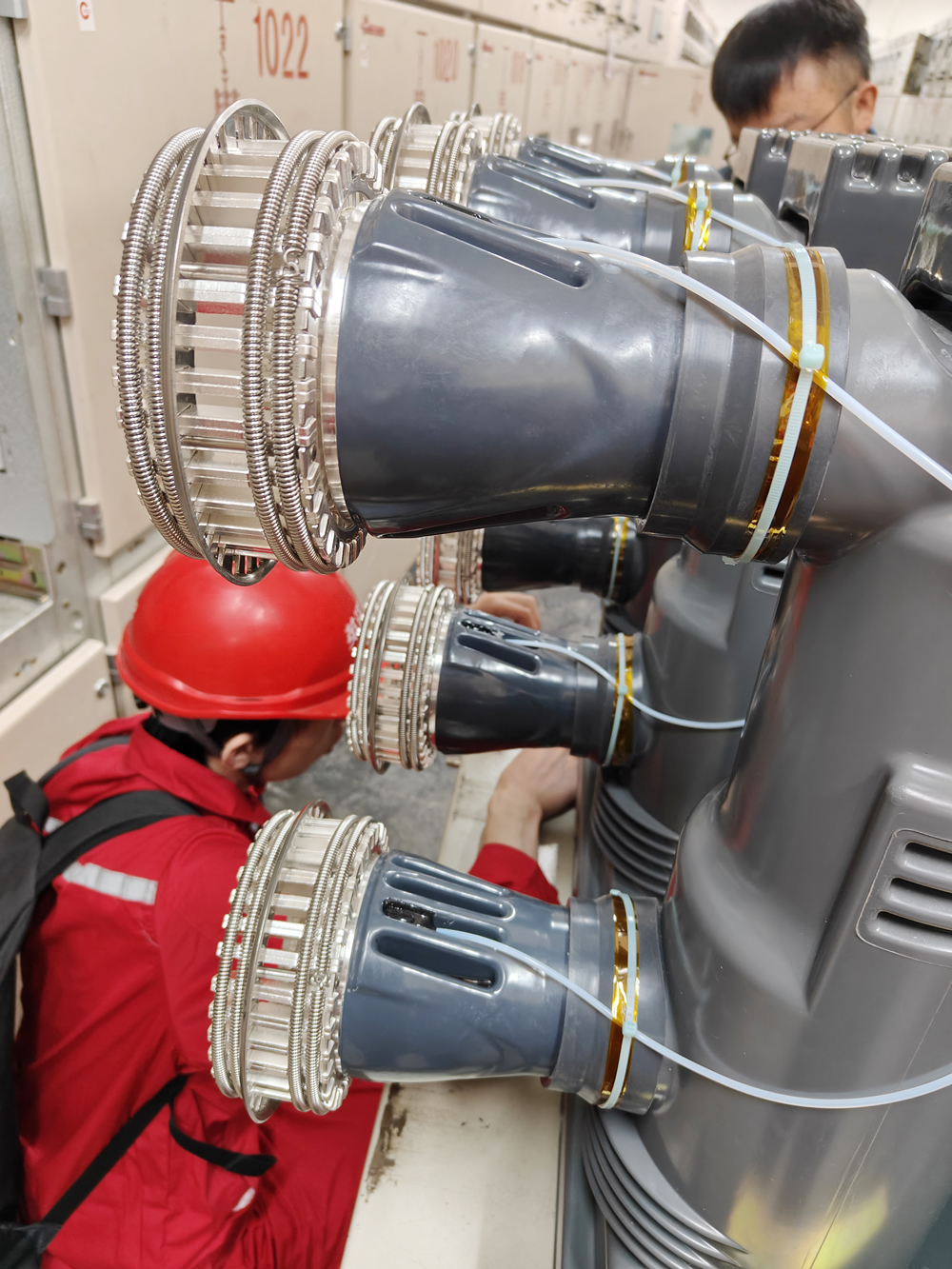
1. Quais são os 3 best methods for switchgear temperature monitoring?
The three most effective methods are detecção de temperatura por fibra óptica fluorescente, wireless temperature monitoring sensors, e ainda termografia infravermelha. Each serves a distinct role: fiber optic systems excel in high-voltage continuous monitoring, wireless sensors are ideal for retrofit applications, and infrared cameras are the standard tool for periodic inspection programs.
2. What is the difference between fluorescent fiber optic sensing and wireless temperature sensors in switchgear?
Sensores de fibra óptica fluorescente use passive optical probes with no electrical components at the measurement point, making them intrinsically safe for high-voltage environments and completely immune to EMI. Sensores de temperatura sem fio are battery-powered electronic devices that transmit data via radio frequency — easier to install in existing switchrooms but better suited to medium and low-voltage applications where electromagnetic interference is less severe.
3. Which temperature monitoring method is best for high-voltage switchgear above 10kV?
Termometria de fibra óptica fluorescente is the recommended solution for switchgear operating above 10kV. The fully passive, non-electrical sensing element can be placed directly on energized components without insulation risk, and the system maintains full accuracy in environments with strong electromagnetic fields generated by high-voltage equipment.
4. Can wireless sensors work reliably inside metal switchgear enclosures?
Sim, with proper installation design. Metal enclosures attenuate radio frequency signals, so wireless switchgear monitoring systems may require external antennas routed through cable glands, RF-transparent panels, or signal repeaters strategically positioned in the switchroom. Most commercial systems are specifically engineered for this environment and provide documented performance specifications for enclosure penetration.
5. Can infrared thermography replace a continuous online switchgear monitoring system?
Não. Infrared thermal inspection is an excellent diagnostic and documentation tool, but it only captures a thermal snapshot at the moment of the survey. Thermal faults can develop and reach critical levels between inspection visits — particularly under variable load conditions. Um continuous online temperature monitoring system provides the real-time alarm capability that periodic inspection alone cannot deliver.
6. What temperature threshold should trigger a switchgear alarm?
Alarm thresholds depend on the component type, classe de isolamento, e temperatura ambiente. As a general industry reference, uma early warning alarm is commonly set at 85°C for busbar connections and contact points, com um alarme crítico no 110°C. These values should always be validated against the switchgear manufacturer’s specifications and applicable standards such as IEC 62271 e ainda IEEE C37.20.
7. What international standards apply to switchgear temperature monitoring?
Key standards include IEC 62271 (High-voltage switchgear and controlgear), IEEE C37.20 (Metal-enclosed switchgear), e ainda IEC 60255 for protective relaying. For infrared inspection programs, NFPA 70B (Prática recomendada para manutenção de equipamentos elétricos) provides widely referenced guidelines on inspection frequency and acceptance criteria.
8. Is fluorescent fiber optic monitoring suitable for retrofitting older switchgear?
It depends on the switchgear design and available access points. Sensores de fibra óptica are small-diameter probes that can often be routed into existing switchgear through cable entries or conduit openings without major modification. Contudo, the cabling requirements are more involved than wireless alternatives, fazendo wireless temperature sensor systems the more practical first choice for most retrofit and upgrade projects.
9. Can a switchgear temperature monitoring system integrate with SCADA or BMS platforms?
Sim. Mais moderno sistemas de monitoramento térmico de painéis support standard industrial communication protocols including Modbus RTU/TCP, BACnet, DNP3, e CEI 61850, enabling direct integration with SCADA, sistemas de gerenciamento de edifícios (BMS), and computerized maintenance management systems (CMMS). This allows temperature alarms and trend data to be consolidated within your existing facility operations platform.
10. Is it effective to combine multiple switchgear temperature monitoring methods?
Absolutely — and it is considered best practice for critical electrical infrastructure. The most comprehensive approach combines monitoramento on-line contínuo (fiber optic or wireless) for real-time alarm coverage with scheduled infrared thermographic surveys for full visual documentation and cross-verification. Online systems catch developing faults between inspection cycles; infrared surveys provide the broader thermal context and audit trail that regulators and insurers increasingly expect.
Ready to Protect Your Switchgear from Overheating?
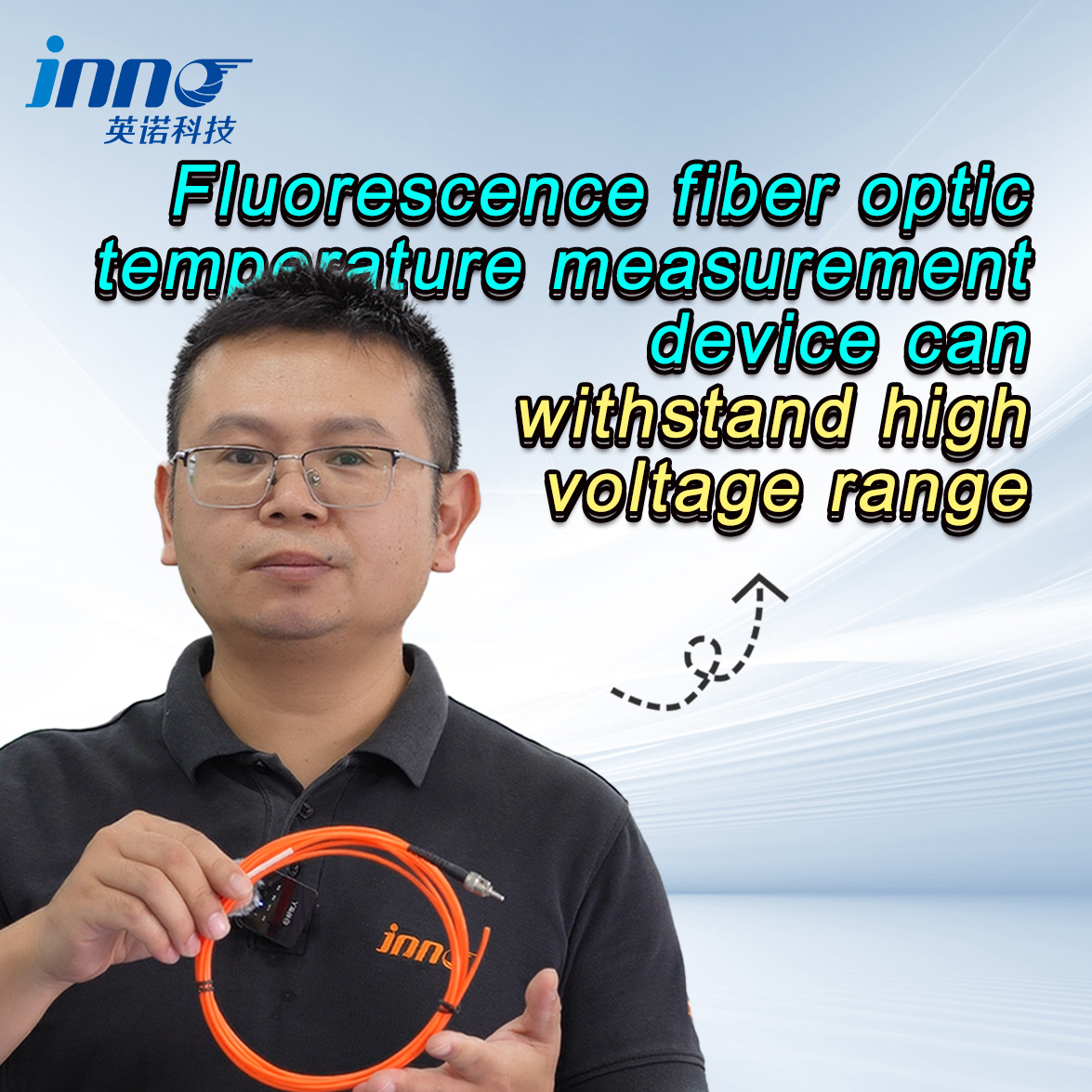
Whether you are specifying a new high-voltage installation or upgrading an existing switchroom, selecting the right temperature monitoring solution is one of the most effective steps you can take to protect your assets, your team, and your uptime.
Nossa equipe de engenharia é especializada em sistemas de monitoramento térmico de painéis - de sensoriamento de fibra ótica fluorescente for high-voltage applications to redes de sensores de temperatura sem fio for retrofit projects. We work with facility engineers, empreiteiros elétricos, and OEM integrators across industrial, utility, and commercial sectors.
- 📋 Request a free site assessment and system recommendation
- 📄 Browse our switchgear temperature monitoring product range
- 📞 Speak with a thermal monitoring specialist
Isenção de responsabilidade: The information in this article is provided for general technical reference only. Specific system design, component selection, and alarm threshold configuration must be carried out by qualified electrical engineers in accordance with applicable local codes, padrões, and the switchgear manufacturer’s documentation. Always follow established safety procedures when working on or near energized electrical equipment.

Sensor de temperatura de fibra óptica, Sistema de monitoramento inteligente, Fabricante de fibra óptica distribuída na China
 |
 |
 |