 Sensores de temperatura de fibra óptica INNO ,sistemas de monitoramento de temperatura.
Advantages of Transformer Fiber Optic Temperature Sensor
- Forte capacidade de resistir à interferência eletromagnética
Fiber optic temperature sensors are not affected by electromagnetic fields, making them highly suitable for applications in high-voltage power equipment such as transformers. Traditional temperature measurement methods may be severely interfered with in electromagnetic/radio frequency environments, while fiber optic sensors can function normally. - Alta precisão e alta sensibilidade
Fiber optic temperature sensors can provide high-precision and high-sensitivity temperature measurement. Due to the intrinsic relationship between fluorescence lifetime and temperature, which is independent of the intensity of light, self calibrating fiber optic temperature sensors can be made without the need for frequent calibration. - Strong adaptability to installation environment
Sensores de temperatura de fibra óptica são adequados para vários ambientes agressivos, incluindo inflamável, explosivo, ambientes corrosivos, bem como condições adversas, como quedas de raios e ambientes externos. Além disso, eles também são adequados para locais com espaço de instalação limitado e requisitos especiais de tamanho do sensor. - Longa vida útil e alta confiabilidade
Sensores de temperatura de fibra óptica têm longa vida útil e alta confiabilidade, tornando-os adequados para monitoramento de longo prazo de mudanças de temperatura em enrolamentos de transformadores. - Monitoramento em tempo real e medição direta
Fibra sensores ópticos de temperatura pode fornecer monitoramento de temperatura em tempo real e medir diretamente a temperatura do ponto quente dos enrolamentos do transformador, o que é de grande importância para avaliar o status operacional, planejamento de carga, gestão de ativos, e fim de vida dos transformadores. - Alta relação custo-benefício
Despite the high cost of early fiber optic systems, with the development of technology, the cost of fiber optic temperature sensors has been significantly reduced, especially in small, médio, and distribution transformers. Fiber optic temperature sensors provide an economical, direto, preciso, and real-time solution for measuring hotspot temperatures.
Key factors for selecting manufacturers of sensores de temperatura de fibra óptica de transformador
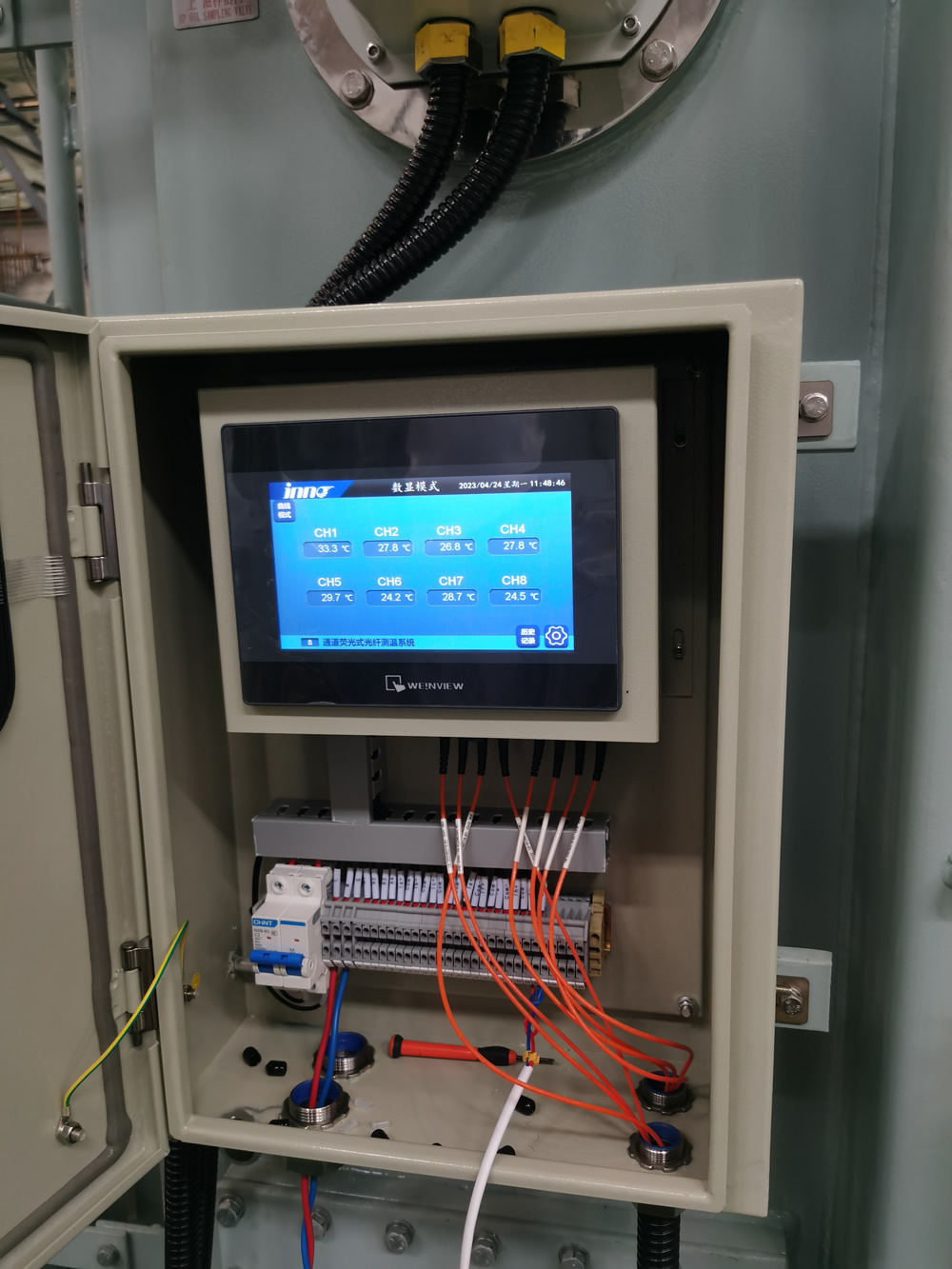
1、 Technical strength
(1) Mastery of core fiber optic sensing technology
Fiber optic sensing technology is the foundation of transformer fiber optic temperature sensors. Common sensing technologies include fiber Bragg gratings, medição de temperatura de fibra óptica fluorescente, and other techniques. In terms of fiber Bragg grating technology, it is formed by exposing and etching several Bragg gratings with different center wavelengths along the longitudinal direction of the fiber through ultraviolet radiation. Quando a temperatura muda, the period and refractive index of the gratings will change, causing changes in the reflected wavelength to achieve temperature measurement. Fluorescent fiber optic temperature measurement uses fluorescent substances to emit fluorescence under specific light excitation, and the intensity and lifetime of their fluorescence are closely related to temperature. Por exemplo, the ambient temperature can be calculated by measuring the decay time constant of the fluorescence afterglow. If manufacturers have in-depth research and rich practical experience in these key fiber optic sensing technologies, and master the entire technical process from fiber optic sensor design to signal processing, they can gain an advantage in technology. Na China, many factories have already performed well in the field of fluorescent fiber temperature measurement. Ciência Eletrônica de Inovação de Fuzhou&Companhia de tecnologia., Ltda. is one of the leading manufacturers of fiber optic thermometers in China, com equipamentos de produção avançados e equipes técnicas. Their products enjoy a high reputation in the Chinese and even international markets. Deles sistema de medição de temperatura de fibra óptica fluorescente can accurately measure temperature in special environments such as high voltage and strong electromagnetic interference.
(2) Multi point temperature measurement capability
Transformers are large equipment, and multiple measurements are often required to fully understand their temperature distribution. This requires manufacturers to have the ability to achieve multi-channel fiber optic temperature measurement. Excellent manufacturers can integrate multiple sensors for multi-point deployment and control within the same fiber optic network. Por exemplo, in large oil immersed transformers, it may be necessary to arrange temperature measurement points at multiple locations of the high and low voltage windings, núcleos de ferro, and oil passages. Manufacturers need corresponding technical solutions to ensure that these multiple temperature measurement points can be accurately measured, and that signal transmission is stable and does not interfere with each other.
(3) Anti interference technology level
There is a complex electromagnetic environment inside the transformer, with strong magnetic and electric fields, so the transformer sensor de temperatura de fibra óptica must have strong resistance to electromagnetic interference. Manufacturers need to have relevant technical reserves in multiple aspects. Primeiramente, in terms of fiber selection, por exemplo, using fiber optic materials with excellent shielding performance. Em segundo lugar, the structural design of the sensor should be able to prevent electromagnetic interference from affecting the internal detection signal. Por exemplo, by utilizing the dielectric and optical transmission characteristics of optical fibers, a fully insulated sensor structure can be designed to physically avoid the impact of electromagnetic interference on the measurement. Além disso, in terms of signal processing algorithms, digital filtering, signal averaging, and other algorithms can be used to improve the anti-interference ability of signals, ensuring accurate temperature measurement even inside transformers with high magnetic field strength. FJINO’s fiber optic sensor can operate in high voltage, alta temperatura, campo magnético alto, e ambientes de interferência eletromagnética extremamente fortes. It adopts certain anti-interference techniques to ensure the accuracy and stability of data measurement, and the structure helps to resist external interference.
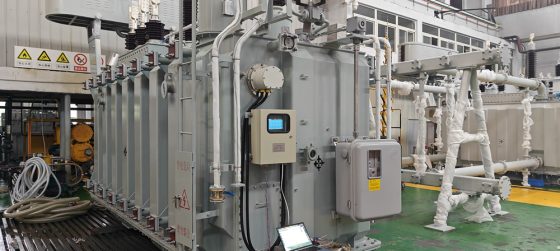
2、 Qualidade do Produto
(1) Ultra high precision temperature measurement
Temperature measurement accuracy is a key indicator for measuring the quality of transformer temperature measurement optical fibers. Accurate temperature measurement helps to promptly and accurately detect potential overheating issues in transformers, thereby avoiding malfunctions. No entanto, the accuracy of temperature measurement can be affected by various factors, such as the accuracy of the sensor itself and the transmission loss of optical fibers. Os fabricantes devem ter equipamentos e processos de calibração de alta precisão para garantir a precisão inicial dos sensores, e suas fibras ópticas de medição de temperatura também devem manter uma precisão estável durante o uso a longo prazo. Isto envolve a estabilidade dos materiais de fibra óptica, tecnologia de embalagem de sensores, etc.. Por exemplo, a embalagem dos sensores deve garantir que a fibra óptica e os componentes de detecção não sejam corroídos ou danificados sob imersão prolongada em óleo de transformador, para manter a precisão da medição. Por exemplo, alguns sensores de temperatura de fibra óptica de alta precisão podem atingir uma precisão de medição de temperatura de ± 0.05 ℃, que pode atender aos requisitos extremamente elevados para cenários de monitoramento de transformadores.
(2) Desempenho estável a longo prazo
Devido ao fato de que os transformadores são geralmente equipamentos de operação contínua, their temperature measuring optical fibers also need to work stably for a long time. The ideal manufacturer produces products that can still provide reliable temperature measurement after long-term operation. This requires manufacturers to strictly control multiple aspects. In terms of product material selection, high-quality optical fiber materials should have anti-aging performance, and their performance will not decline sharply due to long-term exposure to high temperature, high pressure and other environments. In terms of manufacturing technology, it is necessary to ensure a firm connection between the optical fiber, sensor, and connecting components to prevent loosening or breakage during operation. Além disso, a strict finished product testing system can screen out products with potential failure risks, garantindo a estabilidade a longo prazo dos produtos a partir do controle de qualidade. Por exemplo, se a conexão entre o cabo de fibra óptica e o sensor se soltar após operação de longo prazo, isso pode levar a dados de medição imprecisos ou interrupções na transmissão de dados, afetando o monitoramento preciso da temperatura do transformador.
(3) Garantia abrangente de confiabilidade
A confiabilidade dos produtos fornecidos pelos fabricantes se reflete em muitos aspectos. Na fase de design do produto, design de redundância deve ser considerado, por exemplo, quando um componente falha, não causará mau funcionamento de todo o sistema de medição de temperatura. Tomando redes de sensores de fibra óptica como exemplo, se um sensor falhar, o sistema pode detectar e localizar o ponto de falha no menor tempo possível, while taking isolation measures to avoid affecting the operation of other sensors or the entire measurement system. Além disso, accurate technical parameters, installation and usage precautions, expected lifespan, etc.. should be provided in the product manual or user guide, so that users can use the product reasonably and have accurate expected values. And it is also necessary to provide a comprehensive after-sales service guarantee system, with clear regulations on fault response time, product repair and replacement policies, e outros aspectos. Por exemplo, if a commitment can be made to repair or replace faulty products within a specified time, it will make users feel more at ease using the product.
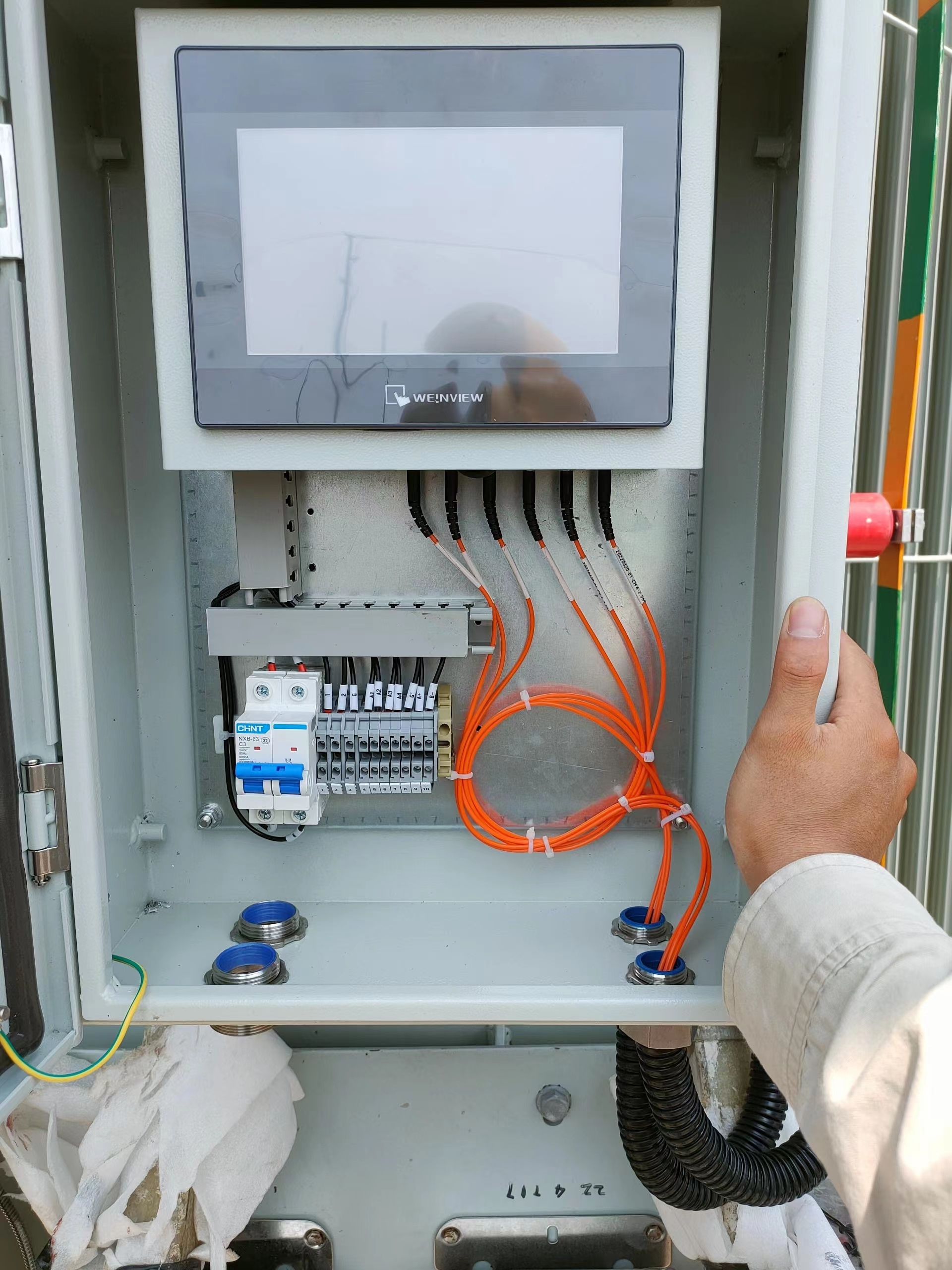
3、 Industry experience and reputation
(1) Practical experience in specific fields
Rich experience in the field of electricity, especially transformers, is an advantage for manufacturers. Manufacturers with extensive application cases and experience in the power industry, especially in transformer temperature measurement, are more worthy of favor. Such manufacturers can gain a deep understanding of the special requirements of transformer equipment for temperature measuring optical fibers, including the temperature characteristics of transformers of different types (such as dry-type, oil immersed, etc.) and specifications (such as different capacities, níveis de tensão, etc.) during actual operation. Taking oil immersed transformers as an example, their complex internal structure, oil temperature characteristics, and heat dissipation greatly affect the temperature monitoring system. Manufacturers with practical experience in related projects can optimize their product design and installation processes based on these situations, e fornecer soluções de medição de temperatura mais alinhadas com as necessidades reais. Por exemplo, alguns fabricantes, baseado em anos de experiência em monitoramento em transformadores imersos em óleo, podem organizar pontos especiais de medição de temperatura para seus dissipadores de calor para melhorar o efeito geral de monitoramento da temperatura.
(2) Reputação de mercado amplamente reconhecida
A reputação do mercado pode ser medida por vários aspectos, como avaliações dos clientes sobre seus produtos, reconhecimento da indústria, etc.. Fabricantes de alta qualidade geralmente têm uma boa imagem de marca no mercado, com seus produtos tendo uma certa participação de mercado e alta satisfação do cliente. Da perspectiva da avaliação do cliente, se os usuários puderem fornecer feedback sobre as vantagens dos produtos do fabricante em termos de precisão, estabilidade, conveniência de instalação, e serviço pós-venda, then this is a good reference for selection. In terms of industry recognition, attention can be paid to whether the manufacturer has obtained industry related standard certification (such as technical standard certification in the power industry), or whether it has been recognized by organizations or authoritative institutions in the industry. These factors can indirectly reflect the manufacturer’s reputation in the industry. Por exemplo, the FZINNO fiber optic temperature sensor product has obtained certification from authoritative institutions in the power industry and has been selected by many well-known power companies, which can indirectly reflect the reliability and quality of its products.
4、 Service Support
(1) Thoughtful support for installation and debugging
A instalação e depuração de fibras ópticas de medição de temperatura para transformadores são relativamente complexas, envolvendo fiação e instalação e posicionamento precisos de sensores em equipamentos especiais, como transformadores. Portanto, se os fabricantes puderem fornecer serviços profissionais de instalação e depuração ou fornecer documentos de orientação de instalação detalhados e precisos, melhorará muito a eficiência e eficácia do uso do produto. Por exemplo, fornecendo diagramas de instalação para diferentes tipos e estruturas de transformadores, etapas e processos de instalação detalhados, e informar sobre tabus durante o processo de instalação. Durante o processo de depuração, it is possible to explain to the user how to calibrate the equipment and test the system performance to ensure that the temperature measurement system can operate normally. If manufacturers lack these supports, various problems may arise during the installation and debugging process, such as inaccurate temperature measurement due to incorrect sensor installation positions, and improper wiring that may affect the service life of optical fibers.
(2) Thoughtful and comprehensive after-sales maintenance
A comprehensive after-sales maintenance service is an important consideration when choosing a manufacturer. When there are problems with the product during use, the manufacturer needs to respond promptly and resolve them. This includes fast fault response time, such as committing to respond within 24 hours of receiving a fault report. And a reasonable product repair and replacement policy should be provided. If the product is damaged by non-human factors during the warranty period, it should be repaired or replaced free of charge. If the manufacturer lacks a comprehensive after-sales maintenance plan, once the product has problems, users may face long-term production stagnation or equipment malfunction, which will affect the normal operation of users from transformers to the entire production process.
The best type of transformer fiber optic temperature sensor
Types and characteristics of transformer fiber optic temperature sensors
Fibra óptica distribuída sensor de temperatura:
Principle and structure: Its principle is based on sensing temperature changes through Rayleigh scattering, Dispersão Raman, or Brillouin scattering in optical fibers. Geralmente é usado para detectar distribuição espacial de temperatura, em termos simples, pode obter informações de temperatura em diferentes posições ao longo da direção do comprimento da fibra óptica. Sua estrutura inclui um dispositivo de detecção para análise de luz espalhada na parte traseira e uma parte de fibra óptica como componente de detecção. Por exemplo, em 1997, A Universidade de Metrologia da China aplicou este princípio a um sistema de sensor de detecção de temperatura de mina de carvão, que pode detectar temperaturas que variam de -49 para 150 ℃ com uma resolução de temperatura de 0 5 ℃.
Características: Ele pode continuamente medir a distribuição de temperatura ao longo do cabo de fibra óptica e alcançar medição distribuída de longa distância. No entanto, suas desvantagens são o custo relativamente alto, complexidade do sistema, e resolução espacial limitada. Além disso, tem requisitos relativamente altos para fibras ópticas, and if the fiber is damaged or its performance changes, it may affect the accuracy of the measurement. Além disso, due to the reliance on scattered light, external interference factors (such as pressure and other disturbances to the optical fiber that may be mistaken as temperature change signals) pose a certain risk of interference.
Sensor de temperatura de grade de fibra Bragg:
Principle and structure: Mainly based on Bragg fiber sensing technology, quando a temperatura muda, the reflection wavelength of Bragg fiber grating will change to achieve temperature measurement. This type of sensor is made on optical fibers as a light sensing component that only reflects specific wavelengths. Por exemplo, a research center in Canada discovered the photosensitive effect in germanium doped quartz fiber in 1978 and manufactured the world’s first fiber Bragg grating.
Características: This sensor can achieve high measurement accuracy. The Chinese Academy of Sciences has increased the sensitivity of the sensor to 0.02 ℃ using the metal groove packaging technology of fiber Bragg gratings, and Harbin Institute of Technology has further improved the resolution to 0.04 ℃. It can conveniently perform wavelength modulation and achieve quasi distributed measurement. No entanto, por um lado, fiber Bragg grating sensors are relatively fragile, and the grating may be damaged under certain impact forces or stress environments, which may affect the measurement; Por outro lado, it is sensitive to factors such as humidity in the environment. If it is in a humid or harsh environment, the performance of fiber Bragg gratings may gradually decline, the lifespan may be shortened, and the accuracy of temperature measurement may be affected; Além disso, os custos relativamente altos do processo de escrita e fabricação de grades também são fatores que devem ser considerados.
Sensor de temperatura de fibra óptica de arsenieto de gálio:
Principle and structure: Cristal de arsenieto de gálio é adicionado na extremidade da fibra óptica. Quando vários comprimentos de onda de luz são emitidos pela fonte de luz e irradiados no cristal de arsenieto de gálio, o cristal absorve diferentes comprimentos de onda da luz incidente de acordo com a temperatura. A temperatura medida é calculada detectando o espectro da luz refletida. Este é um método de medição de temperatura de ponto único para fibras ópticas.
Características: As propriedades do material de arsenieto de gálio não mudam com o tempo, tornando-o uma verdadeira sonda passiva. É tudo dielétrico, não afetado pela interferência EMI, tem desempenho estável, alta confiabilidade, e funciona bem em ambientes de forte campo elétrico e magnético, as well as high voltage resistance, resistência à corrosão química, baixa perda, and other situations. Its sensor has a small volume, with a temperature sensing part of only 0.3mm. The conductor uses 62.5um optical fiber, which is soft, confiável, and not easily damaged during installation. No entanto, it can only have one sensor per single fiber optic cable, unlike fiber Bragg gratings where multiple sensors can be connected in series through a single fiber optic cable; Além disso, from the perspective of the entire system, changes in the optical path (such as fiber optic cable rearrangement, sensor re welding, etc.) can seriously affect the accuracy of temperature measurement, often requiring the complex operation of recalibration.
Sensor de temperatura de fibra óptica fluorescente:
Principle and structure: The main components include multimode optical fibers and fluorescent objects (films) installed on top of them. When a fluorescent substance is excited by light of a certain wavelength (espectro de excitação), it emits fluorescence energy. Após a excitação ser cancelada, the duration of the fluorescence afterglow depends on factors such as the characteristics of the fluorescent substance and the ambient temperature. O tempo de decadência (fluorescence lifetime or fluorescence afterglow time) of this excited fluorescence that decays exponentially is related to the ambient temperature. By measuring this fluorescence afterglow lifetime, the ambient temperature at that time can be known.
Características: Fluorescent fiber optic temperature sensors have high precision, and their measurement can achieve high accuracy because fluorescent materials are quite sensitive to temperature changes; Velocidade de resposta rápida, que permite que o sensor monitore flutuações de temperatura em tempo real e responda rapidamente; A interferência externa tem pouco impacto sobre ele, por exemplo, sinais de interferência eletromagnética aos quais os sensores de temperatura tradicionais são suscetíveis não têm efeito sobre eles, para que possa funcionar normalmente em ambientes eletromagnéticos complexos; Tem excelente estabilidade a longo prazo, principalmente devido à forte durabilidade e estabilidade do próprio material fluorescente; E tem uma ampla gama de temperaturas ambientais aplicáveis, desde menos Baidu até várias centenas de graus Celsius.
Vantagens da fibra fluorescente como sensor de temperatura de fibra de transformador
Excelente isolamento elétrico garante medição segura e confiável:
Para transformadores, muitos dispositivos operam em ambientes de alta tensão, and traditional temperature sensors may pose safety hazards due to electrical insulation issues if used in such scenarios. Sensores fluorescentes de fibra óptica, with their fiber optic material being an electrical insulator, pose no potential risk of conductivity in high-pressure environments, avoiding the possibility of arcing or short circuits that may occur between the sensor itself or the sensor measurement system. Por exemplo, transformers used in power distribution stations are surrounded by high voltage electric fields, and the electrical insulation of fluorescent fiber temperature sensors can ensure their normal operation and accurate temperature measurement in such environments.
Forte capacidade anti-interferência:
Durante a operação de transformadores, there are various complex electromagnetic interference sources inside, such as strong magnetic fields. Fluorescent fiber optic sensors use optical signals for detection and measurement, which have the characteristic of not being affected by electromagnetic interference. Portanto, in this strong electromagnetic interference environment, it can accurately measure temperature without deviation caused by the electromagnetic field fluctuations of the transformer itself or external electromagnetic fields. Compared to traditional electronic sensors such as thermocouples, which are susceptible to electromagnetic interference and may experience measurement errors or signal fluctuations, fluorescent fiber optic sensors have significant advantages.
Shortcomings of Distributed Fiber, Grade de fibra Bragg, and Gallium Arsenide Fiber in Transformer Temperature Monitoring
Shortcomings of Distributed Fiber Optic:
In terms of equipment and cost: Distributed fiber optic temperature sensors based on Rayleigh scattering, Dispersão Raman, or Brillouin scattering principles require special measuring devices to detect weak scattered light signals. The equipment is complex and the overall cost is relatively high. For large-scale deployment in transformer temperature monitoring, both capital investment costs and equipment maintenance costs need to be considered, such as the need for professional personnel to maintain the equipment for detecting scattered light signals and the continuous debugging of some optical equipment components in case of possible failures in the future.
Accuracy and external factors: Its spatial resolution is relatively limited, which may result in the inability to meet the temperature measurement requirements of overly fine nodes in devices such as transformers, where the internal space is not infinite and high precision temperature monitoring is required. Além disso, although the measurement is based on the principle of optical scattering, optical fibers are easily affected by external pressure and other factors. Por exemplo, if there are vibrations inside a transformer or if the optical fiber is compressed during installation, although the temperature does not change, these interferences may be mistakenly detected as temperature changes, resultando em erros de medição.
Shortcomings of Fiber Bragg Grating:
Structural fragility: Fiber Bragg grating temperature sensors require the fabrication of gratings on optical fibers. Fiber Bragg gratings are easily damaged in daily work or installation due to potential impact forces, as well as in the complex stress environment of transformers. Uma vez que a estrutura da grade esteja danificada, medição precisa da temperatura não pode ser alcançada. Por exemplo, durante a operação de um transformador de grande capacidade, a forte força de impacto gerada pela sua própria vibração e possíveis curtos-circuitos repentinos podem danificar a grade.
Sensibilidade ambiental: A umidade pode afetar o desempenho das grades de Bragg de fibra. Por exemplo, se a umidade ao redor do transformador for alta ou exceder o padrão sob certas condições especiais, é fácil alterar as características ópticas da rede de Bragg de fibra, resultando em desvio de medição e outros erros. Além disso, devido ao processo de fabricação de grades, o custo do sensor é relativamente alto, o que também é um fator limitante na aplicação em larga escala de cenários de monitoramento de temperatura de transformadores.
Deficiências da fibra de arsenieto de gálio:
Optical path and calibration issues: When using gallium arsenide fiber optic sensors to measure transformer temperature, the optical path is a sensitive issue. If the layout of the circuit needs to be changed due to work or if the sensor needs to be re soldered, the optical path must be recalibrated to ensure measurement accuracy, which is a complex and tedious process. Especially in the working environment of transformers, the interior is a relatively enclosed and limited space environment, making optical path calibration very inconvenient.
Limitations of sensor networking: A single optical fiber can only connect to one gallium arsenide sensor, and cannot achieve multi-point networking measurement by connecting multiple sensors in series with a single optical fiber like fiber Bragg grating sensors. For synchronous temperature measurement of multiple positions inside the transformer, more separate fiber optic setups are required, which is disadvantageous in terms of layout and cost.
Case study of the effectiveness of fluorescent fiber in practical applications
Power equipment monitoring:
In terms of temperature monitoring of switchgear: The heating situation in the busbars and contacts of switchgear is complex, but fluorescent fiber optic sensors can have great potential and can be effectively applied to switchgear temperature monitoring. After installing the fiber optic fluorescence sensor at a critical location inside the switchgear, technicians can utilize the distributed measurement capability of the fiber optic sensor to achieve simultaneous monitoring of multiple temperature points inside the switchgear. The conductivity and electromagnetic field environment generated by internal electrical components during the measurement process did not interfere with the measurement results, and the sensor operated stably. By measuring and analyzing the changes in fluorescence signals, the real-time temperature of each monitoring point was successfully calculated. And the operation and maintenance personnel have set a temperature threshold. When the set value is exceeded, the system will promptly issue an alarm message to remind the operation and maintenance personnel to conduct detailed inspections and maintenance. This allows for a comprehensive understanding of the temperature distribution inside the switchgear, effectively preventing potential accidents such as insulation material aging and poor contact caused by overheating. Maximiza a operação normal e estável do quadro, melhorando assim a confiabilidade do fornecimento de energia no sistema de energia.
Em termos de monitoramento de temperatura do transformador, o prático aplicação de sensores de fluorescência de fibra óptica na temperatura do transformador o monitoramento é semelhante ao do painel. Embora a estrutura interna de um transformador seja muito mais complexa do que a de um quadro, com numerosos componentes, como enrolamentos, núcleos de ferro, tanques de óleo, e oleodutos, o monitoramento da temperatura pode ser resolvido de forma eficaz colocando sensores adequadamente nessas áreas. Instalando sensores de fluorescência de fibra óptica em enrolamentos de transformadores, é possível monitorar o calor gerado pela resistência da bobina, perda de ferro, perda de cobre, e outras perdas quando a corrente passa pelos enrolamentos; Installing sensors at the iron core can promptly detect temperature increases caused by hysteresis and eddy current losses; Installing sensors on the fuel tank wall and heat dissipation pipeline can monitor the heat dissipation status of the transformer. After installing fiber optic fluorescence sensors in these key areas, real-time monitoring of temperature changes in each part can be achieved and temperature signals can be transmitted remotely to the control center in a timely manner. Por exemplo, once the temperature exceeds the set normal range, the on duty personnel can receive a warning and take corresponding measures, como ajustar a carga, repairing the cooling system, etc., to avoid the problem of rapid aging of the insulation material inside the transformer due to overheating and damage to the transformer. Throughout the entire operation process, the fiber optic fluorescence sensor demonstrates advantages such as high precision, forte capacidade anti-interferência, e medição multiponto.
Temperature monitoring in industrial microwave environment (derived from other scenarios):
In some scenarios involving industrial microwave equipment, such as microwave processing, processos de vulcanização, microwave digestion extractors, equipamento de desinfecção/secagem, there is also a need for temperature monitoring. Microwaves have strong electromagnetic fields, and the temperature distribution inside the device is also uneven. Fluorescent fiber optic temperature sensors can adapt to high voltage, strong electromagnetic field environments inside microwave equipment and accurately measure multi-point temperatures without electromagnetic interference in this scenario. Por exemplo, in food microwave processing, by reasonably arranging fiber optic fluorescence sensors in the processing chamber, the temperature trend during the processing can be accurately controlled to ensure the quality of food processing; In the vulcanization process, temperature monitoring can be carried out at multiple positions of the vulcanization mold through sensors to improve the quality of the vulcanized products. Because it is not affected by microwave electromagnetic field interference and has outstanding superiority, it has gradually been applied in temperature monitoring in other high-voltage and electromagnetic interference scenarios such as explosion-proof industrial environments and high-end scientific research in aviation and ships.
How to choose a suitable fluorescent fiber optic temperature sensor for transformers
Consideration of environmental factors for transformers:
Temperature range adaptability: It is necessary to clarify the oil temperature during normal operation of transformers and the possible extremely high temperatures that may occur during faults. Different fiber optic fluorescent temperature sensors have different temperature measurement ranges. If the operating temperature range of transformers fluctuates between -40 ℃ and 150 ℃, é necessário choose a fluorescent fiber optic temperature sensor that can operate with high precision within this range or even wider range. Por exemplo, some sensors may be suitable for a range of -30 ℃ para 120 ℃, which may not meet the conditions.
Electromagnetic compatibility: Given the strong electromagnetic field inside the transformer, it is necessary to ensure that the selected fluorescent fiber temperature sensor can operate stably under electromagnetic fields ranging from low to high frequencies, without any signal acquisition errors or deviations.
Space layout and installation feasibility: The size of the fiber optic probe and the shape of the sensor need to be selected based on the internal space structure of the transformer. If the internal space of the transformer is compact and narrow, sensors with extremely small fiber optic probe sizes need to be selected in order to be installed smoothly in the designated location; Além disso, the rationality of fiber optic wiring needs to be comprehensively considered. If a distributed measurement scheme is adopted, a fiação de fibra óptica não deve impedir a circulação normal do óleo dentro do transformador e o funcionamento normal dos componentes elétricos.
Requisitos técnicos relacionados para transformadores:
Requisito de precisão: Para alguns cenários de medição que exigem precisão extremamente alta da temperatura do ponto quente do enrolamento do transformador, como transformadores de alta carga ou transformadores de ultra-alta tensão, se a temperatura do ponto quente do enrolamento for precisa 0.1 ℃ ou precisão de erro ainda menor, é necessário escolher um sensor de temperatura de fibra fluorescente com maior precisão de medição. O nível de precisão do sensor pode ser consultado e a análise de dados obtidos em experimentos reais pode ser usada como referência. Por exemplo, algumas configurações de ponta foram testadas em laboratório nas mesmas condições, and sensors with an accuracy of ± 0.05 ℃ are more in line with the requirements.
Response speed requirement: If it is a situation that requires quick response to transformer faults or abnormal temperature changes, such as the need to quickly cut off switches or give protection device action instructions, the fluorescent fiber temperature sensor is required to have extremely fast response speed, be able to measure temperature and provide feedback signals in a short time. The response time can be the time from being affected by temperature changes to outputting recognizable change signals. Geralmente, a response speed of less than 1 second is a good choice in many transformer protection scenarios.
Lifetime requirement: The transformer has a long service life, and it is expected that the selected fluorescent fiber temperature sensor will match it and work stably for a long time. It is necessary to investigate the stability of the fluorescent materials used in the sensors. Por exemplo, some sensors use new rare earth fluorescent materials that are more stable than traditional materials in long-term high temperature, high magnetic field environments. The corresponding sensor life may be as long as 10-20 anos ou até mais. When selecting, such sensors are suitable for transformer installation scenarios that do not require frequent sensor replacement.
Cost benefit balance:
Purchase cost: The price of fluorescent fiber optic temperature sensors varies depending on the brand, production process, and performance indicators. Under the basic conditions of transformer temperature measurement, it is possible to compare the prices of sensors provided by multiple suppliers to avoid excessive purchase costs. Por exemplo, the price of high-precision sensors from some imported brands in the market may be 2-3 times higher than that of domestic ordinary models. No entanto, if ordinary models can meet the temperature measurement accuracy requirements of transformers, then low-priced products can be prioritized.
Maintenance cost: Sensors require maintenance and even replacement of parts during use. If sensors require special maintenance equipment or high environmental conditions, it will increase maintenance costs. Por exemplo, some sensors use special gases to ensure stable fiber optic interface environments, which requires the purchase of corresponding gas generators and specialized maintenance of the system’s gas supply pipelines. A escolha de sensores que não exijam essas condições especiais de manutenção pode economizar custos.
Benefícios de longo prazo: Envolve os benefícios de operação estável a longo prazo dos transformadores. Se a temperatura no inverno e no verão levar a diferentes eficiências operacionais dos transformadores, incluindo sensores, o monitoramento preciso da temperatura do transformador pode garantir que ele possa operar em seu estado ideal em diferentes estações e sob diferentes cargas. Isto pode reduzir as perdas económicas globais causadas por falhas de transformadores ou operação ineficiente.. Nesse caso, investir em sensores confiáveis e duráveis no estágio inicial é rentável no longo prazo.

Sensor de temperatura de fibra óptica, Sistema de monitoramento inteligente, Fabricante distribuído de fibra óptica na China
 |
 |
 |