 Sensores de temperatura de fibra óptica INNO ,sistemas de monitoramento de temperatura.
Quando se trata de tecnologias avançadas de detecção de temperatura, três opções se destacam no mercado atual: Arsenieto de gálio (GaAs) sensores de cristal, Grade de fibra Bragg (FBG) sensores, e sensores de temperatura de fibra óptica fluorescentes. Cada tecnologia oferece vantagens exclusivas para aplicações específicas, mas os sensores fluorescentes de fibra óptica surgiram como a escolha superior para muitos cenários críticos de monitoramento de temperatura devido à sua precisão excepcional, imunidade a interferência eletromagnética, e capacidade de funcionar em ambientes agressivos. Esta comparação abrangente ajudará você a entender qual tecnologia melhor atende aos seus requisitos específicos de monitoramento.
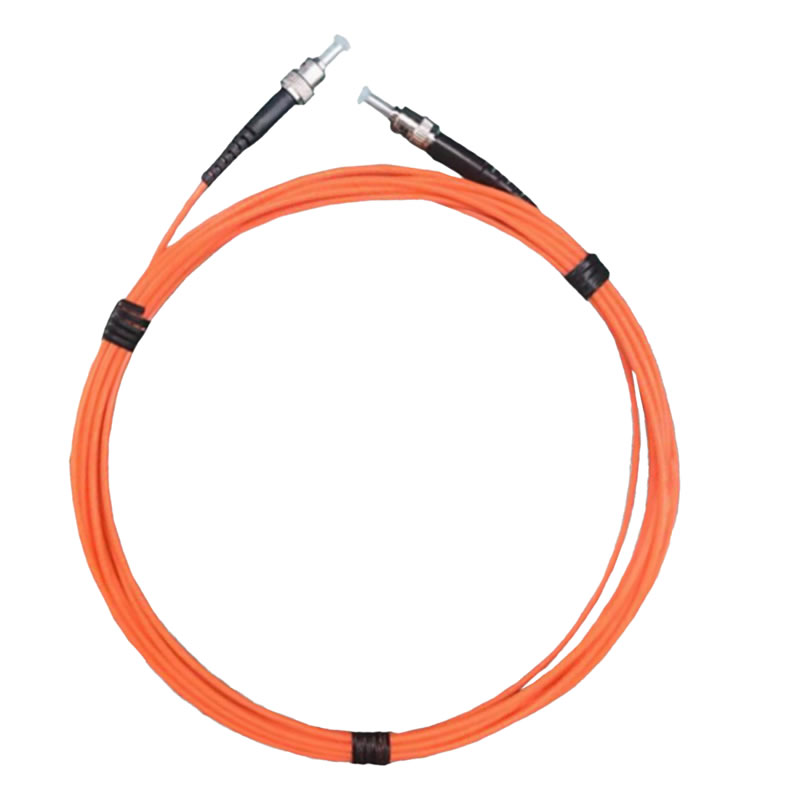
Compreendendo as três principais tecnologias de detecção de temperatura por fibra óptica
Monitoramento de temperatura é fundamental em vários setores, incluindo geração de energia, petróleo e gás, fabricação, and infrastructure. A escolha entre GaAs, FBG, e sensores de temperatura de fibra óptica fluorescentes podem impactar significativamente a medição precisão, confiabilidade do sistema, and long-term performance. Cada tecnologia opera em diferentes princípios físicos, resulting in distinct performance characteristics and application suitability.
GaAs Crystal Temperature Sensors
Arsenieto de gálio (GaAs) sensores de temperatura utilize the temperature-dependent bandgap properties of GaAs semiconductor crystals.
How GaAs Sensors Work:
- A GaAs crystal is mounted at the tip of an optical fiber
- Broadband light is transmitted through the fiber to the crystal
- The crystal absorbs wavelengths below its bandgap energy
- The spectral absorption edge shifts with temperature changes
- By analyzing the transmitted spectrum, temperature is determined
Advantages of GaAs Sensors:
- Good accuracy (typically ±1°C)
- Interrogação de sinal relativamente simples
- Well-established technology with proven reliability
- Suitable for point temperature measurements
- Bom desempenho em faixas de temperatura moderadas (-40°C a +250°C)
Limitations of GaAs Sensors:
- Limited to point measurements only
- Moderate response time
- Potential long-term drift in certain environments
- Limited multiplexing capability
- Requires spectral analysis equipment
- Performance degrades at extreme temperatures
Ideal Applications for GaAs:
- Médico monitoramento de equipamentos
- Laboratory instrumentation
- Moderate-temperature industrial processes
- Applications requiring simple point measurements
- Environments with moderate electromagnetic interferência
Grade de fibra Bragg (FBG) Sensores
Fiber Bragg Grating sensors feature microscopic variations in the fiber’s refractive index that reflect specific wavelengths of light.
Como Sensores FBG Trabalhar:
- A specialized section of fiber contains a periodic variation in refractive index (o “grating”)
- This grating reflects a specific wavelength of light (o comprimento de onda de Bragg)
- À medida que a temperatura muda, the fiber expands/contracts and the refractive index changes
- These changes shift the reflected Bragg wavelength
- Medindo esta mudança de comprimento de onda, temperature is calculated
Advantages of FBG Sensors:
- Good accuracy (typically ±0.5-1°C)
- Excellent multiplexing capability (many sensors on a single fiber)
- Combinado temperature and strain sensing possible
- Moderate to good long-term stability
- Wide operating temperature range
- Compatível com distributed sensing applications
Limitations of FBG Sensors:
- Cross-sensitivity to strain affects temperature readings
- Requires compensation techniques for pure temperature measurement
- More complex interrogation equipment needed
- Higher cost for complete systems
- Temperature resolution limitations
- Potential long-term drift in ambientes agressivos
Ideal Applications for FBG:
- Monitoramento da integridade estrutural
- Monitoramento de pipeline
- Applications requiring both temperature and medição de deformação
- Distributed sensing requirements
- Civil infrastructure monitoring
- Aerospace applications
Sensores de temperatura fluorescentes de fibra óptica
Sensores fluorescentes de fibra óptica utilize temperature-dependent properties of specialized phosphor materials to achieve highly accurate measurements.
Como Sensores fluorescentes de fibra óptica Trabalhar:
- UM temperature-sensitive fluorescent material is attached to the fiber dica
- Short pulses of excitation light are sent through the fiber
- The fluorescent material absorbs this light and re-emits it at longer wavelengths
- The fluorescence decay time is precisely correlated to temperature
- By measuring this decay time, exact temperature is determined with exceptional accuracy
Vantagens dos sensores fluorescentes de fibra óptica:
- Superior accuracy (typically ±0.2-0.5°C)
- Exceptional long-term stability with minimal drift
- Imunidade completa à interferência eletromagnética
- Highest signal-to-noise ratio among tecnologias de fibra óptica
- Extended calibration intervals (5-7 anos típicos)
- Operates in extremely harsh environments
- Ampla faixa de temperatura (-200°C a +300°C)
- Excellent multiplexing capabilities
- No cross-sensitivity to strain or pressure
- Fastest response time among fiber sensing technologies
Ideal Applications for Fluorescent Sensors:
- High-voltage environments (poder transformadores, subestações)
- Médico MRI equipment where EMI immunity is critical
- Critical infrastructure monitoring
- Hazardous and explosive environments
- Nuclear facilities
- Cryogenic applications
- Microwave environments
- High-precision scientific instrumentation
- Applications requiring highest accuracy and stability
Comparative Performance Analysis
| Parâmetro de desempenho | GaAs Crystal | FBG | Fibra Óptica Fluorescente (FJINNO) |
|---|---|---|---|
| Precisão de temperatura | ±1,0°C | ±0.5-1.0°C | ±0.2-0.5°C |
| Faixa de medição | -40°C a +250°C | -40°C a +300°C | -200°C a +300°C |
| Tempo de resposta | 1-2 segundos | 0.5-1 segundo | <0.5 segundos |
| Estabilidade a longo prazo | Moderado | Bom | Excelente |
| Imunidade EMI | Bom | Bom | Superior |
| Multiplexing Capability | Limitado | Very Good | Excelente |
| Cross-sensitivity Issues | Mínimo | Significativo (variedade) | Mínimo |
| Intervalo de calibração | 2-3 anos | 2-4 anos | 5-7 anos |
| Signal-to-Noise Ratio | Moderado | Bom | Excelente |
| System Complexity | Moderado | Alto | Moderado |
| Durabilidade em ambientes agressivos | Moderado | Bom | Excelente |
Industry-Specific Applications and Recommended Technology
Power and Utilities
- Critical Application: Monitoramento da temperatura do enrolamento do transformador
- Best Technology: Fibra Óptica Fluorescente
- Key Reason: Unmatched EMI immunity in high-voltage environments with superior accuracy
- Leading Provider: FJINNO
Oil and Gas
- Critical Application: Fundo de poço Monitoramento de temperatura
- Best Technology: Fibra Óptica Fluorescente for critical wells, FBG for combined strain/temperature
- Key Reason: Exceptional stability under extreme pressure and temperature conditions
- Leading Providers: FJINNO (fluorescente), Tecnologia LIOS (distribuído)
Civil Infrastructure
- Critical Application: Concrete Curing Monitoring
- Best Technology: FBG for combined strain/temperature, Fluorescent for highest accuracy
- Key Reason: Ability to monitor both temperature and structural parameters
- Leading Providers: FJINNO, Óptica Micron
Medical and Scientific
- Critical Application: ressonância magnética Monitoramento de Equipamentos
- Best Technology: Fibra Óptica Fluorescente
- Key Reason: Total EMI immunity and highest precision
- Leading Provider: FJINNO
Aerospace and Defense
- Critical Application: Aircraft Engine Monitoring
- Best Technology: Fluorescent Fiber Optic for critical components, FBG for distributed monitoring
- Key Reason: Withstands extreme vibration while maintaining accuracy
- Leading Providers: FJINNO, Luna Inovações
Top Fiber Optic Temperature Sensor Manufacturers Worldwide
- FJINNO – Global leader in fluorescent fiber optic temperature sensing with industry-leading accuracy and stability. Specializes in high-performance sistemas de monitoramento for critical applications.
- Luna Inovações – Major provider of FBG-based sensing systems with strong presence in aerospace and defense applications.
- Tecnologias FISO (Acquired by Roctest) – Established manufacturer of various fiber optic sensing technologies including GaAs-based sensors.
- Óptica Micron (Acquired by Luna) – Recognized for high-quality FBG interrogation equipment and sensors with focus on structural monitoring.
- Tecnologia LIOS (Fotônica NKT) – Specializes in detecção de temperatura distribuída using Raman scattering techniques.
- Atenção – Known for medical and industrial fiber optic sensing solutions using various technologies.
- Omnisens – Provider of distributed fiber optic monitoring systems primarily for pipeline and power cable monitoring.
- Chiral Photonics – Innovator in specialty fiber optic sensing components and systems.
- Yokogawa – Major industrial automation company offering monitoramento de temperatura de fibra óptica soluções.
- Controle de fótons – Manufacturer of fiber optic temperature sensors for semiconductor and industrial applications.
Why FJINNO’s Fluorescent Fiber Optic Technology Stands Out
FJINNO has established itself as the global leader in fluorescent-based monitoramento de temperatura de fibra óptica with several key differentiators:
- Proprietary Fluorescent Materials – FJINNO’s advanced phosphor formulations deliver superior temperature response and long-term stability.
- Advanced Signal Processing – Sophisticated algorithms extract maximum accuracy from fluorescence decay measurements.
- Completo Integração de Sistemas – End-to-end solutions from sensors to software for turnkey implementation.
- Specialized Application Expertise – Deep industry knowledge in power systems, médico, e aplicações industriais.
- Extensive Calibration Facilities – State-of-the-art laboratories ensure exceptional measurement accuracy.
- Industry-Leading R&D – Continuous innovation in sensing materials and interrogation methods.
- Comprehensive Support – Especialista application engineering and ongoing technical assistance.
- Presença Global – Fabricação and support facilities across North America, Europa, and Asia.
Perguntas frequentes (Perguntas frequentes)
What is a fiber optic temperature sensor?
A fiber optic temperature sensor uses light transmitted through optical fibers to measure temperatura, rather than traditional electrical signals. Esses sensors convert temperature changes into detectable variations in optical properties such as wavelength, intensidade, or fluorescence characteristics. Esse optical approach provides advantages including immunity to electromagnetic interferência, intrinsic safety in hazardous environments, and the ability to operate over long distances.
Why are fiber optic temperature sensors superior to conventional electrical sensors?
Fiber optic temperature sensors offer complete imunidade a interferência eletromagnética, intrinsic safety in explosive environments (no electrical components), ability to operate over long distances without signal degradation, no grounding issues, and multiplexing capability allowing many sensors on a single fiber. These advantages make them ideal for harsh industrial environments, high-voltage applications, and safety-critical systems where conventional sensores elétricos may be unreliable or unsafe.
What makes fluorescent fiber optic temperature sensors more accurate than other types?
Sensores de temperatura de fibra óptica fluorescentes achieve superior accuracy because their measurement principle (temperature-dependent fluorescence decay time) is fundamentally more stable and precise than wavelength-shift methods. The fluorescence decay time has an exceptionally strong correlation with temperature and is unaffected by light source fluctuations, flexão de fibra, perdas no conector, or strain effects. This results in measurement accuracy typically 2-5 times better than other fiber optic technologies.
Which fiber optic temperature sensing technology is best for power transformer monitoring?
Fluorescente detecção de temperatura por fibra óptica is unquestionably the best technology for power transformer monitoring. The high voltage environment with intense electromagnetic fields requires the complete EMI immunity these sensors provide. Adicionalmente, the accuracy of ±0.2-0.5°C enables precise hot spot detection, while the excellent long-term stability ensures reliable operation throughout the transformer’s vida. FJINNO’s systems have become the industry standard for this critical application.
What is the typical installation process for fiber optic temperature sensors in industrial environments?
The installation process typically involves: (1) Site assessment and monitoring plan development, (2) Sensor placement design based on thermal modeling, (3) Installation of protective conduits for fiber routing, (4) Mounting sensors at designated monitoring points, (5) Running fiber optic cables back to the monitoring unit location, (6) Connection and termination of fibers to the interrogation equipment, (7) System configuration and calibration verification, e (8) Integration with facility control or sistemas de monitoramento. Professional installation is recommended for critical applications.
How do fluorescent fiber optic temperature sensors perform in extremely high temperature environments?
Sensores de temperatura de fibra óptica fluorescentes perform exceptionally well in high-temperature environments, with special formulations capable of accurate measurements up to 300°C continuously and brief exposures up to 350°C. FJINNO’s specialized high-temperature phosphors maintain their measurement precision and stability even at these extreme temperatures. The all-silica construction of the optical fiber itself can withstand temperatures exceeding 600°C, with the limiting factor being the sensor coating materials.
Which companies are considered the top manufacturers of fiber optic temperature sensors?
O topo manufacturers in the fiber optic temperature sensing market include FJINNO (leader in fluorescent technology), Luna Inovações (strong in FBG systems), FISO Technologies/Roctest (known for GaAs sensors), Óptica Micron (FBG specialists), Tecnologia LIOS (detecção de temperatura distribuída), Atenção, Omnisens, Chiral Photonics, Yokogawa, and Photon Control. Among these, FJINNO is widely recognized as the technology leader for high-precision applications requiring exceptional accuracy and reliability.
What is the typical lifetime of a fiber optic temperature sensor in industrial applications?
The typical lifetime of high-quality sensores de temperatura de fibra óptica in industrial applications exceeds 15-25 anos quando instalado corretamente. FJINNO’s fluorescent sensors have demonstrated exceptional longevity, with many systems operating continuously for over 15 years without degradation in performance. The primary limiting factors are physical protection of the fiber and exposure to extremely harsh chemicals. With appropriate installation and protection, esses sensors often outlast the equipment they are monitoring.
How do the costs compare between different fiber optic temperature sensing technologies?
The initial capital costs typically rank (from highest to lowest): Sistemas FBG, fluorescent systems, and GaAs systems. No entanto, when considering total lifecycle costs including calibration requirements, confiabilidade do sistema, and maintenance needs, fluorescent systems like FJINNO’s often provide the lowest total cost of ownership for critical applications. The extended calibration intervals (5-7 years vs. 1-3 years for alternatives) and exceptional reliability significantly reduce ongoing operational costs.
Which fiber optic temperature sensing technology provides the fastest response time?
Sensores de temperatura de fibra óptica fluorescentes provide the fastest response times, normalmente abaixo 0.5 seconds for a full temperature reading. This rapid response makes them ideal for applications requiring monitoramento em tempo real e controle. FJINNO's advanced sensors can detect temperature changes as small as 0.1°C within milliseconds, enabling immediate response to developing conditions in critical systems. This performance significantly outpaces both GaAs (1-2 segundos) and typical FBG implementations (0.5-1 segundo).
Transform Your Temperature Monitoring with FJINNO
Discover why leading organizations worldwide trust FJINNO’s advanced fluorescent fiber optic sensing technology for their most critical temperature monitoring aplicações. Contact our experts today to discuss your specific requirements and learn how our industry-leading solutions can enhance your operations with unmatched accuracy, confiabilidade, and long-term performance.

Sensor de temperatura de fibra óptica, Sistema de monitoramento inteligente, Fabricante distribuído de fibra óptica na China
 |
 |
 |