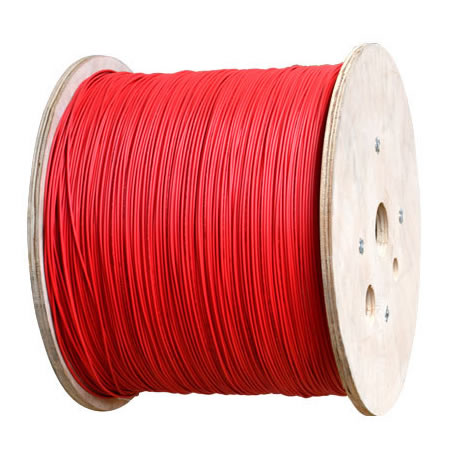
Sensores de temperatura de fibra óptica INNO ,sistemas de monitoramento de temperatura.


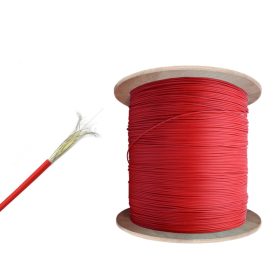
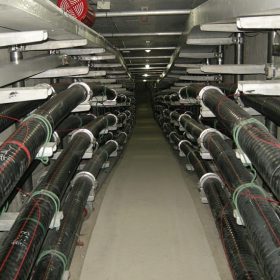
O detector de incêndio com sensor de temperatura linear de fibra óptica distribuída atende totalmente aos requisitos padrão. Pode ser aplicado em vários locais de monitoramento de temperatura e incêndio de longa distância, com um único canal medindo uma distância de até 5 quilômetros. O produto foi projetado com 4 canais de medição. O produto adota fibra óptica distribuída tecnologia de medição de temperatura baseada em espalhamento Raman para obter monitoramento de incêndio e temperatura em tempo real para corredores de dutos de longa distância, túneis, oleodutos, cabos, e outros lugares.
O sistema de detecção de incêndio com sensor de temperatura linear de fibra óptica distribuída pode utilizar de forma abrangente a temperatura em tempo real, taxa de aumento/queda de temperatura, tendência de aumento/queda de temperatura, e outras análises para alcançar monitoramento contínuo. Ele pode exibir com precisão o status da temperatura de toda a fibra óptica em qualquer posição e a qualquer momento, alarme oportuno e localizar com precisão quando ocorre um incêndio na área de monitoramento.
Vantagens de usar sensoriamento de fibra óptica ROTDR para detecção
Distribuído – o instrumento backend obtém o campo de distribuição de temperatura da curva espacial na fibra de detecção, que é diferente do sensor de temperatura pontual tradicional que obtém a distribuição de temperatura por meio do processamento de dados. The temperature value measured by ROTDR at each point is real;
Positioning – According to the principle of ROTDR, the temperature change along the fiber optic is determined by the reflection and scattering of light (similar to radar principle), so the location of abnormal temperature can be easily and quickly located
The singularity of measurement – the temperature result is independent of parameters such as stress, pressão, and loss, and can still work normally under harsh working conditions

Long distance – up to 30km. It can be suitable for applications with a large range and multiple measurement points. Easy deployment, whether using single-mode or multimode fibers, suitable fiber optic and deployment plans can be found based on specific engineering situations.
Ampla faixa de medição de temperatura – usando a mais recente tecnologia e fibras ópticas especiais para medição de temperatura, a faixa de medição de temperatura pode estar entre -200 para 1000 ℃
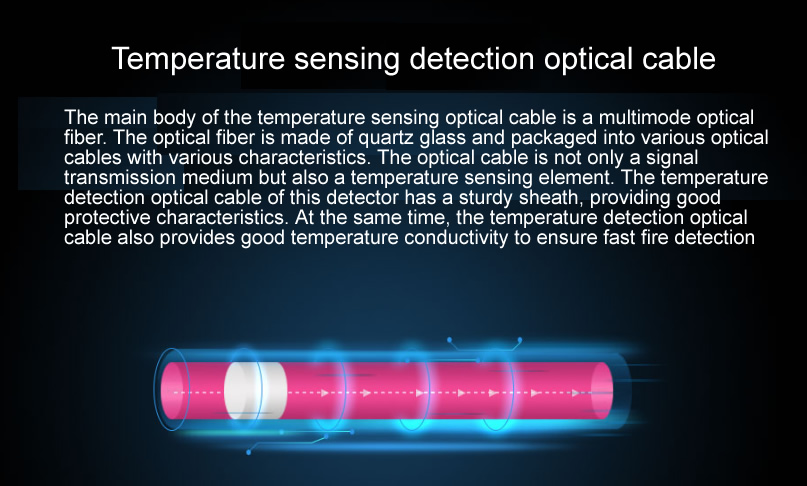
Todo o cabo óptico não é usado apenas para transmissão de sinal, mas também para detecção de temperatura. A cobertura de detecção de temperatura é 100% do seu comprimento total. A configuração da área de alarme pode ser definida livremente em todo o comprimento do cabo óptico através de software. A precisão do posicionamento do alarme é alta, e a área de detecção pode atingir um mínimo de 1 metro. Não importa como a partição local muda, pode atender aos requisitos
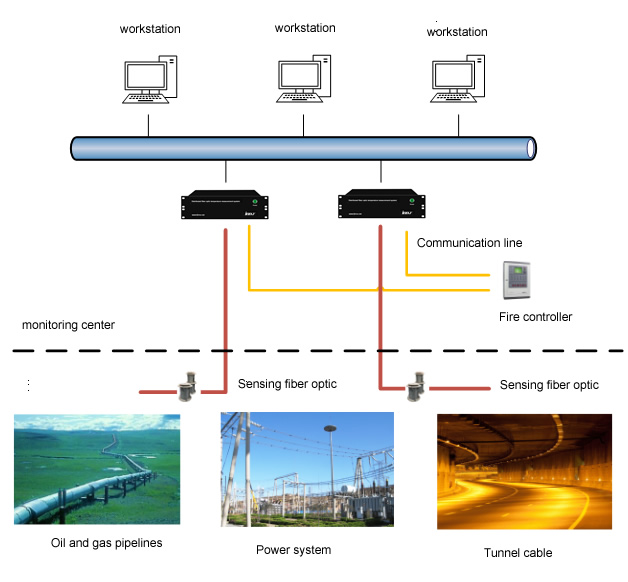 A lógica de detecção de alarme para cada partição pode alcançar qualquer combinação de três métodos: temperatura máxima dentro da partição (temperatura constante), temperature rise rate within the partition (temperatura diferencial), and the difference between the highest temperature within the partition and the average temperature within the partition (uniformity of partition temperature), ensuring early and reliable alarms are achieved
Provide fire spread direction judgment function for linear spaces such as tunnels, facilitating the emergency monitoring system to make timely and correct responses;
Provide continuous temperature monitoring for the entire fiber optic cable line, and the system also has fault self detection function. When the fiber optic cable fails, the specific location of the breakpoint can be indicated on the full length curve of the cable, which is conducive to system fault monitoring and rapid maintenance;
The system installation is very simple, using a single optical cable for signal transmission and detection. When installed on site, the installation work can be easily completed by fixing the detection optical cable;
·The detection part is completely transmitted through optical fiber, which is inherently safe for explosion and lightning protection, and can completely eliminate the influence of electromagnetic interference;
·The fiber optic cable has excellent durability design, with a detection cable lifespan of up to 30 anos. It has resistance to environmental impacts such as temperature, pressão, and humidity fluctuations, and is also suitable for air with high levels of dust and corrosive substances;
·The system integration is convenient and can be directly connected to conventional fire alarm systems through communication interfaces. Além disso, the DTS system supports open communication interfaces, making it easy to achieve system integration at the controller level.
·Distributed temperature sensing optical fiber is the best method for fire monitoring in highway tunnels. It is explicitly stated in the fire safety regulations that the use of fiber optic distributed temperature monitoring systems is recommended for tunnel fire monitoring.