 Sensores de temperatura de fibra óptica INNO ,sistemas de monitoramento de temperatura.
- Fluorescence optical fiber thermometry uses the temperature-dependent decay of fluorescent materials to deliver accurate, interference-free readings in harsh environments.
- Um completo fiber optic temperature sensing system typically includes a demodulator, sondas fluorescentes, cabos de fibra óptica, e software de monitoramento.
- This technology is inherently immune to electromagnetic interference (EMI), electrically isolated above 100 kV, and produces zero self-heating — making it ideal for power, armazenamento de energia, and hazardous-area applications.
- Comparado aos termopares, IDT, and infrared sensors, um sistema de medição de temperatura de fibra óptica de fluorescência offers lower total cost of ownership (TCO) mais de um 25+ ano de vida útil.
- This guide walks procurement professionals through applications, critérios de seleção, avaliação de fornecedores, cost analysis, e 10 frequently asked questions.
Índice
- What Is a Fluorescence-Based Fiber Optic Temperature Sensing System?
- What Problems Does a Fiber Optic Temperature Measurement System Solve?
- What Is Included in a Fluorescence Fiber Temp. System Delivery?
- Which Harsh Environments Demand Fiber Optic Temperature Sensors?
- Why Fluorescence Fiber Sensors Are Irreplaceable in High-Voltage and High-EMI Zones
- Applications in the Power Industry
- Applications in Renewable Energy and Battery Storage
- Applications in Industrial Manufacturing and Hazardous Areas
- Fluorescence Fiber Temp. System vs. Thermocouple vs. RTD vs. Infravermelho
- Total Cost of Ownership and ROI Analysis
- Key Technical Specifications Buyers Should Understand
- How to Evaluate a Fiber Optic Temperature Sensor Supplier
- Installation Compatibility and Retrofit Considerations
- Suporte pós-venda, Garantia, e manutenção de longo prazo
- Estudos de caso comprovados e validação de clientes
- Perguntas frequentes (Perguntas frequentes)
1. What Is a Fluorescence-Based Fiber Optic Temperature Sensing System?

UM sistema de detecção de temperatura de fibra óptica baseado em fluorescência é uma tecnologia de medição totalmente óptica que determina a temperatura analisando o tempo de vida do decaimento da fluorescência de materiais de fósforo de terras raras ligados à ponta de uma fibra óptica. Quando um pulso curto de luz de excitação é enviado através da fibra, o fósforo na ponta da sonda emite fluorescência. A taxa na qual essa fluorescência decai está precisamente relacionada à temperatura – e totalmente independente da intensidade da luz, perda de flexão de fibra, ou qualidade do conector.
Por que isso é importante para um comprador?
Porque a medição é baseada no tempo e não na amplitude do sinal, um termômetro de fibra óptica maintains its calibration accuracy over years of service without drift. For procurement teams, this translates directly into fewer recalibration cycles, lower maintenance budgets, and higher uptime compared to legacy electrical sensors.
2. What Problems Does a Fiber Optic Temperature Measurement System Solve?

Sensores de temperatura tradicionais – termopares, IDT (Pt100), and thermistors — rely on electrical signals traveling through metallic conductors. This fundamental design creates several well-known problems in demanding industrial environments.
Interferência Eletromagnética
In substations, switchgear rooms, and motor control centers, strong electromagnetic fields distort readings from metallic sensors. UM dispositivo de medição de temperatura de fibra óptica uses only glass fiber and light signals, so EMI has zero effect on measurement accuracy.
Electrical Isolation Failures
Monitoring hotspots on live high-voltage busbars or transformer windings with conventional sensors introduces dangerous galvanic pathways. Um optical fiber temperature probe provides complete electrical isolation — typically exceeding 100 kV — eliminating shock hazards and ground loop errors.
Self-Heating Errors
RTDs require excitation current, which generates small but measurable self-heating at the sensing point. Sensores de fibra óptica de fluorescência are entirely passive at the probe tip, introducing zero thermal disturbance to the measurement target.
Short Service Life in Harsh Conditions
Vibração, corrosão, and thermal cycling cause solder joints and wire connections in electrical sensors to degrade. UM fiber optic thermal monitoring system contains no metal conductors, no solder, and no crimped connections at the sensing point, enabling a service life exceeding 25 anos.
3. What Is Included in a Fluorescence Fiber Temp. System Delivery?

When you procure a complete fluorescence fiber temp. sistema, the standard delivery typically includes the following components:
Demodulador de Fibra Óptica (Signal Processor)
This is the core instrument that generates excitation pulses, receives the fluorescence return signal, calculates decay time, and outputs the temperature reading. It includes communication interfaces such as RS485, Modbus RTU, or analog 4–20 mA outputs for integration with SCADA and DCS platforms.
Sondas de temperatura de fibra óptica fluorescentes
The sensing elements — small probes (typically 2–3 mm diameter) with a phosphor tip bonded to an optical fiber, encased in protective tubing. Probe materials and sheath options vary by application temperature and chemical environment.
Cabos de fibra óptica
Fibras de transmissão conectando as sondas ao demodulador, disponível em comprimentos padrão até 80 metros. Esses cabos são flexíveis, leve, e imune à captação eletromagnética.
Software de monitoramento
Software baseado em PC para exibição em tempo real, tendências históricas, gerenciamento de alarme, e geração de relatórios. A maioria das soluções suporta monitoramento multicanal a partir de uma única interface.
4. O que os ambientes adversos exigem Sensores de temperatura de fibra óptica?

Nem toda aplicação de medição de temperatura requer um sensor de temperatura de fibra óptica. A tecnologia oferece seu maior valor em ambientes onde os sensores convencionais falham, degradar rapidamente, ou introduzir riscos de segurança.
Ambientes com Fortes Campos Eletromagnéticos
Baias de transformadores, switchgear rooms, equipamento de aquecimento por indução, Instalações de ressonância magnética, and high-frequency welding stations all generate intense EMI that corrupts readings from metallic sensors.
High-Voltage Equipment
Any application where the sensor must be placed on or near energized conductors at voltages from several kilovolts to hundreds of kilovolts — including power transformers, SIG (painel de distribuição isolado a gás), e barramentos de alta tensão.
Explosive or Flammable Atmospheres
Porque o optical fiber temperature sensing probe is completely passive and carries no electrical energy, it is intrinsically safe for use in Zone 0/1/2 hazardous areas without additional explosion-proof enclosures.
Confined or Hard-to-Access Spaces
O pequeno diâmetro da sonda (2–3mm) and flexible fiber allow installation in tight spaces such as motor winding slots, battery module gaps, and narrow cable trench joints.
5. Why Fluorescence Fiber Sensors Are Irreplaceable in High-Voltage and High-EMI Zones
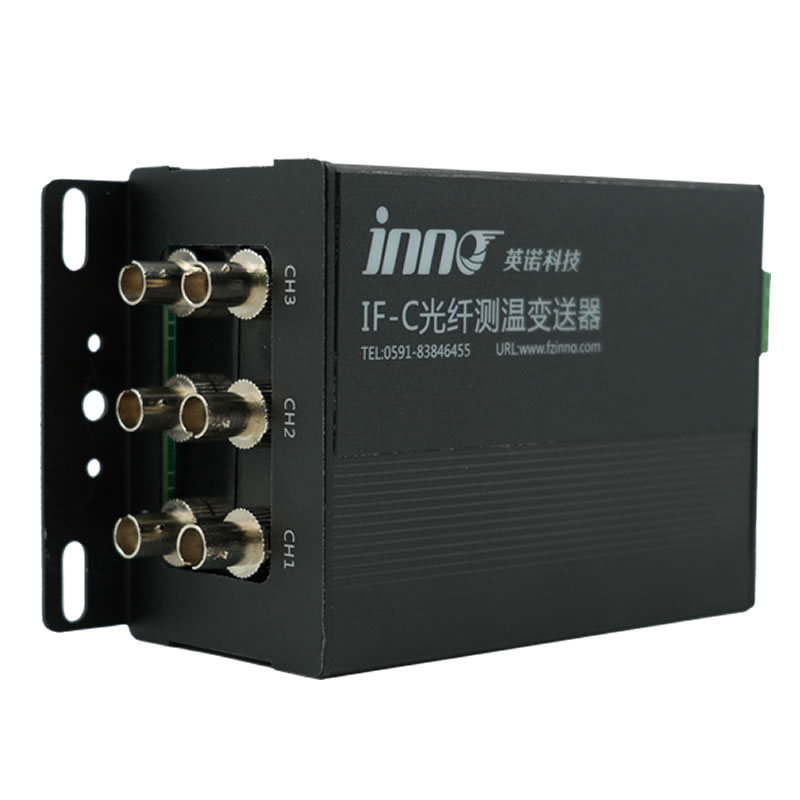
The combination of absolute EMI immunity and complete electrical isolation is not merely an advantage — it is a requirement in certain applications where no alternative sensing technology can operate safely and accurately. In power transformer winding hotspot monitoring, por exemplo, international standards such as IEC 60076-2 explicitly recommend sistemas de monitoramento de temperatura de fibra óptica because metallic sensors cannot be safely installed on energized windings at 10 kV para 500 kV.
De forma similar, in high-power microwave environments, sistemas de radar, and electromagnetic compatibility (EMC) câmaras de teste, um fluorescence-based fiber optic thermometer is the only viable contact temperature measurement method.
6. Applications in the Power Industry
The power sector is the largest adopter of fluorescence optical fiber thermometry mundialmente, driven by the need to monitor critical thermal points inside high-voltage equipment.
Monitoramento de hotspot de enrolamento de transformador
Integrado sondas de temperatura de fibra óptica are installed directly inside oil-immersed transformer windings during manufacturing to detect hotspot temperatures that indicate insulation aging or overload conditions.
Switchgear and Busbar Contact Monitoring
Poor electrical contacts in medium- and high-voltage switchgear generate localized overheating that precedes catastrophic failures. UM sistema de medição de temperatura de fibra óptica installed at contact points provides continuous early warning.
Junções e terminações de cabos
Underground cable joints and GIS cable terminations are common failure points. Continuous thermal monitoring with sensores de temperatura de fibra óptica reduces the risk of unplanned outages.
7. Applications in Renewable Energy and Battery Storage
Geradores de turbina eólica
Os rolamentos do gerador e os enrolamentos do estator em grandes turbinas eólicas operam em ambientes com muita vibração, Ambientes de nacele ricos em EMI. Sensores de temperatura de fibra óptica de fluorescência fornecem monitoramento confiável sem interferência de inversores de frequência variável.
Sistemas de armazenamento de energia de bateria (BESS)
As baterias de íons de lítio exigem monitoramento preciso da temperatura no nível da célula para evitar fuga térmica. O pequeno tamanho da sonda e a passividade elétrica de um sensor térmico de fibra óptica tornam-no ideal para incorporação entre células de bateria sem introduzir risco de ignição.
Inversores Fotovoltaicos e Caixas Combinadoras
Conexões CC de alta corrente em sistemas fotovoltaicos são propensas a falhas de pontos de acesso. Dispositivos de monitoramento de temperatura de fibra óptica detectar aquecimento anormal nas conexões do barramento e nos porta-fusíveis antes que ocorram danos.
8. Applications in Industrial Manufacturing and Hazardous Areas
Além da energia, fluorescence optical fiber thermometry atende um número crescente de setores industriais.
Petrochemical and Oil Refining
Reactor vessel skin temperatures, pipeline flange monitoring, and storage tank surface temperatures in classified hazardous areas where intrinsic safety is mandatory.
Semiconductor and Microwave Processing
RF and microwave heating chambers where metallic sensors act as antennas and produce erroneous readings. Sondas de temperatura de fibra óptica are unaffected by RF energy.
Pharmaceutical and Food Processing
Autoclave and sterilization cycle monitoring where electrical isolation and chemical inertness are required.
9. Fluorescence Fiber Temp. System vs. Thermocouple vs. RTD vs. Infravermelho
For procurement professionals comparing options, the differences that matter most are reliability in harsh conditions, total installed cost, and long-term maintenance burden.
contra. Termopares
Thermocouples are inexpensive per unit but suffer from EMI susceptibility, deriva ao longo do tempo, cold-junction errors, and limited lifespan in vibration environments. UM sistema de detecção de temperatura de fibra óptica de fluorescência eliminates all of these issues, though unit cost is higher.
contra. IDT (Pt100/Pt1000)
RTDs offer good accuracy but require excitation current (causing self-heating), are sensitive to lead resistance errors, and cannot be placed on high-voltage conductors without complex isolation barriers. Sensores de temperatura de fibra óptica need no excitation and provide inherent isolation.
contra. Sensores infravermelhos
Infrared pyrometers measure surface temperature without contact but are affected by emissivity variations, pó, vapor, and line-of-sight requirements. UM sonda de fibra óptica de fluorescência makes direct contact with the target, is immune to optical obstructions, and works inside sealed equipment.
Bottom Line for Buyers
Where EMI, alta tensão, risco de explosão, or inaccessible locations are involved, fluorescence optical fiber thermometry is the only technology that checks every box simultaneously.
10. Total Cost of Ownership and ROI Analysis
The upfront cost of a sistema de medição de temperatura de fibra óptica é normalmente maior do que uma instalação equivalente de termopar ou RTD. No entanto, procurement decisions should be based on total cost of ownership (TCO) across the full equipment lifecycle.
With a service life exceeding 25 years and virtually zero recalibration or replacement cost, the annualized cost of a sensor de fibra óptica de fluorescência is often lower than that of conventional sensors replaced every 3–5 years. Adicionalmente, the prevention of a single unplanned transformer outage or battery thermal event can justify the entire investment in fiber optic monitoring many times over. Procurement teams should request a TCO comparison from qualified suppliers based on their specific installation scale and replacement cycle assumptions.
11. Key Technical Specifications Buyers Should Understand
You do not need to be a physicist to evaluate a sensor de temperatura de fibra óptica, but understanding a few core specifications will help you compare products and communicate requirements to suppliers. The most important parameters include measurement range (typically –40 °C to +260 °C for standard probes, com opções de alta temperatura disponíveis), precisão (±1 °C is the industry benchmark), tempo de resposta (sob 1 second for most probes), maximum fiber length (até 80 meters between probe and demodulator), and channel count (1 para 64 channels per demodulator unit). Ask suppliers to confirm these specifications with test reports or third-party calibration certificates.
12. How to Evaluate a Fiber Optic Temperature Sensor Supplier
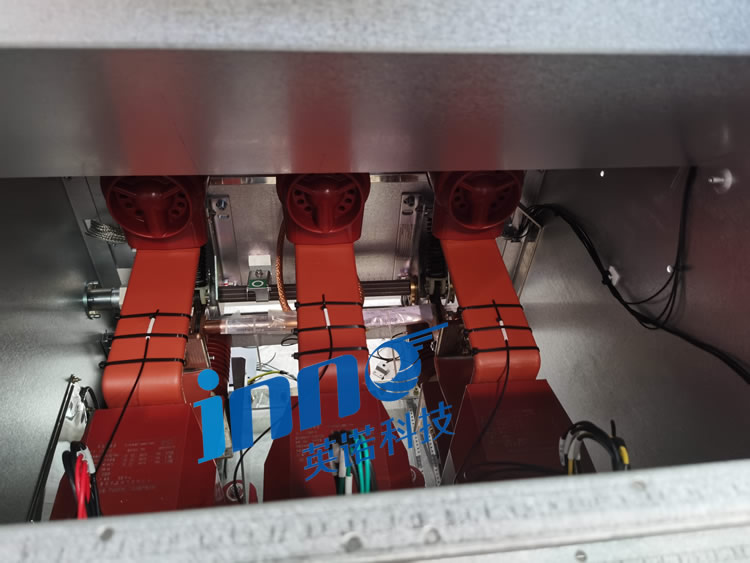
Choosing the right supplier is as important as choosing the right technology. Procurement teams should assess several dimensions.
Manufacturing Experience
Look for manufacturers — not just resellers — with at least 10 years of production history in fluorescence optical fiber thermometry. In-house manufacturing ensures quality control, capacidade de personalização, and faster lead times.
Product Range and Customization
Different applications require different probe lengths, sheath materials, fiber types, and demodulator configurations. A capable supplier offers configurable systems rather than one-size-fits-all packages.
Reference Projects and Certifications
Request case studies, customer references, and relevant certifications. Suppliers serving the power utility and energy storage sectors should demonstrate compliance with applicable IEC, IEEE, or national standards.
Global Support Capability
For international buyers, evaluate the supplier’s ability to provide English-language documentation, export packaging, suporte técnico remoto, and international shipping experience.
13. Installation Compatibility and Retrofit Considerations
One of the most common procurement concerns is whether a sistema de monitoramento de temperatura de fibra óptica can be integrated into existing infrastructure. In most cases, the answer is yes. O pequeno diâmetro da sonda (2–3mm) allows direct replacement of existing RTD or thermocouple probes in many standard mounting locations. Demodulators provide RS485, Modbus, and analog outputs compatible with virtually all industrial SCADA and DCS systems. For retrofit projects, experienced manufacturers such as FJINNO provide pre-installation surveys and custom probe lengths to match existing cable routes and mounting hardware.
14. Suporte pós-venda, Garantia, e manutenção de longo prazo
UM fluorescence fiber optic temperature sensor system has very few wear components, which means maintenance requirements are minimal. The primary long-term considerations are periodic verification of calibration accuracy (typically every 2–3 years), protection of fiber cables from physical damage during adjacent maintenance activities, and firmware or software updates for the demodulator. When evaluating supplier proposals, confirm warranty duration, response time for technical support, and availability of spare probes and demodulators.
15. Estudos de caso comprovados e validação de clientes
Desde 2011, Ciência Eletrônica de Inovação de Fuzhou&Companhia de tecnologia., Ltda. (FJINNO) has delivered fluorescence optical fiber thermometry systems to customers across the power utility, energia renovável, industrial manufacturing, e setores de transporte. Installations include transformer winding hotspot monitoring for provincial grid companies, battery thermal management systems for energy storage projects, and switchgear contact temperature monitoring for urban rail transit substations. These deployments demonstrate consistent measurement accuracy, confiabilidade a longo prazo, and seamless integration with existing monitoring platforms. Prospective buyers are welcome to request detailed case study documentation.
16. Perguntas frequentes (Perguntas frequentes)
1º trimestre: What is the typical measurement accuracy of a fluorescence fiber optic temperature sensor?
Most high-quality sensores de temperatura de fibra óptica de fluorescência achieve an accuracy of ±1 °C across their operating range. This is comparable to industrial-grade RTDs and significantly better than standard thermocouples in EMI-heavy environments.
2º trimestre: How long does a fiber optic temperature probe last?
Um instalado corretamente optical fiber temperature probe can last more than 25 anos. There are no metallic conductors or solder joints to corrode or fatigue, making the technology exceptionally durable.
3º trimestre: Can fiber optic temperature sensors work in explosive or flammable atmospheres?
Sim. Because the probe tip is completely passive — carrying only light, no electrical energy — a fiber optic temperature sensing system is intrinsically safe and suitable for hazardous area classifications including Zone 0, 1, e 2.
4º trimestre: What is the maximum distance between the sensor probe and the demodulator?
Standard systems support fiber lengths up to 80 metros. For special applications requiring longer distances, consult the manufacturer for extended-range configurations.
Q5: How many temperature points can one demodulator monitor?
Um único demodulador de temperatura de fibra óptica typically supports 1 para 64 canais, depending on the model. Multi-channel units significantly reduce per-point hardware cost in large-scale deployments.
Q6: Is it difficult to integrate a fiber optic temperature system with existing SCADA or DCS?
Não. Most demodulators provide RS485 serial output with Modbus RTU protocol, and many also offer analog 4–20 mA outputs. These are standard interfaces accepted by virtually all industrial control platforms.
Q7: Can fluorescence fiber optic sensors replace existing RTDs or thermocouples in a retrofit?
In many cases, sim. O pequeno diâmetro da sonda (2–3mm) fits most standard thermowell and mounting locations. Experienced suppliers can customize probe dimensions and cable lengths to match existing installations.
P8: Are fiber optic temperature sensors affected by electromagnetic interference?
De jeito nenhum. The entire sensing and transmission path is optical — glass fiber and light. There is no metallic conductor to act as an antenna, making a termômetro de fibra óptica completely immune to EMI and RFI.
Q9: What industries use fluorescence optical fiber thermometry most widely?
The largest user base is in the electric power sector (transformadores, comutador, juntas de cabos), followed by energy storage (battery thermal monitoring), energia renovável (geradores de turbina eólica), and industrial manufacturing (petroquímico, semicondutor, farmacêutico).
Q10: How do I request a quotation or technical consultation from FJINNO?
You can contact Ciência Eletrônica de Inovação de Fuzhou&Companhia de tecnologia., Ltda. (FJINNO) directly via email at web@fjinno.net, by WhatsApp or phone at +86 135 9907 0393, or by visiting www.fjinno.net. The engineering team provides free preliminary technical consultations and project-specific proposals.
About the Manufacturer
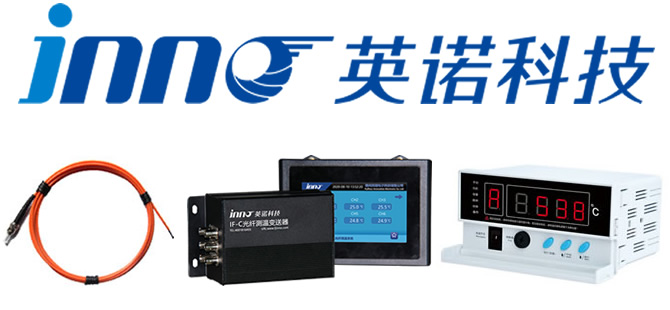
Ciência Eletrônica de Inovação de Fuzhou&Companhia de tecnologia., Ltda. (FJINNO) has been designing and manufacturing fluorescence optical fiber thermometry systems since 2011. Localizado em Fucheu, Fujian, China, FJINNO serves customers in more than 30 countries across the power, energia, e setores industriais.
Endereço: Parque Industrial de Rede de Grãos Liandong U, Estrada Oeste No.12 Xingye, Fucheu, Fujian, China
E-mail: web@fjinno.net
WhatsApp / WeChat / Telefone: +86 135 9907 0393
QQ: 3408968340
Site: www.fjinno.net
Isenção de responsabilidade: As informações fornecidas neste artigo são apenas para fins informativos e educacionais gerais. Enquanto Fuzhou Innovation Electronic Scie&Companhia de tecnologia., Ltda. (FJINNO) faz todos os esforços para garantir a precisão e integridade do conteúdo, nenhuma representação ou garantia, expresso ou implícito, é feito em relação à precisão, confiabilidade, ou integridade das informações. Especificações do produto, dados de desempenho, e a adequação da aplicação pode variar dependendo das condições e configurações específicas do projeto. Este conteúdo não constitui aconselhamento profissional de engenharia. Os compradores devem realizar suas próprias diligências e consultar diretamente a FJINNO ou engenheiros qualificados antes de tomar decisões de aquisição. A FJINNO não será responsável por qualquer perda ou dano decorrente da confiança nas informações aqui apresentadas.

Sensor de temperatura de fibra óptica, Sistema de monitoramento inteligente, Fabricante distribuído de fibra óptica na China
 |
 |
 |