 Światłowodowe czujniki temperatury INNO ,systemy monitorowania temperatury.
- Electric field measurement units are specialized fiber optic temperature monitoring systems designed for high-voltage environments, utilizing fluorescence lifetime technology, rozproszone wykrywanie, and fiber Bragg gratings to provide accurate temperature measurement in strong electromagnetic fields without electrical interference.
- High voltage electric field environments require fiber optic temperature sensors because traditional electronic sensors suffer from electromagnetic interference, create safety hazards through electrical conductivity, and cannot maintain measurement accuracy in strong electric fields exceeding 10kV/m.
- Fluorescencyjne czujniki światłowodowe offer superior advantages including complete electrical isolation, odporność na zakłócenia elektromagnetyczne, intrinsic safety in explosive atmospheres, exceptional long-term stability, and sub-degree temperature accuracy in electric field environments up to 1000kV.
- Światłowodowe systemy temperaturowe wybór zależy od wymagań aplikacji, w tym zakresu pomiarowego, potrzeby rozdzielczości przestrzennej, specyfikacje czasu reakcji, oraz specyficzne warunki pola elektrycznego w transformatorach, rozdzielnica, Sprzęt GIS, i zastosowania w liniach przesyłowych.
Jakie są Światłowodowe czujniki pola elektrycznego i ich zasady?

Pomiar temperatury fluorescencji przez cały czas życia działa poprzez ekscytujące materiały z luminoforu ziem rzadkich za pomocą światła LED lub lasera, następnie pomiar wykładniczego czasu zaniku emisji fluorescencji. Czas zaniku fluorescencji wykazuje precyzyjną liniową zależność od temperatury, zapewniając wyjątkową dokładność i stabilność niezależnie od zmian natężenia źródła światła lub strat zginania włókna.
Rozproszone wykrywanie temperatury światłowodu wykorzystuje efekty rozpraszania Ramana w standardowych światłowodach, gdzie impulsy laserowe wytwarzają zależne od temperatury światło rozproszone wstecznie. The intensity ratio of Stokes and anti-Stokes Raman signals provides accurate temperature information at every point along the fiber, enabling continuous temperature profiling over distances exceeding 100 kilometrów.
Czujniki światłowodowe z siatką Bragga employ wavelength-encoded temperature measurement through thermally-induced changes in grating period and refractive index. Temperature variations cause predictable wavelength shifts in reflected light, providing high-resolution temperature measurement with excellent multiplexing capabilities for multi-point monitoring applications.
Advanced Optical Sensing Technologies
Fluorescence-based temperature sensors demonstrate exceptional performance in electric field environments due to their immunity to electromagnetic interference and complete electrical isolation. These sensors maintain calibration accuracy over extended periods without drift, co czyni je idealnymi do długoterminowego monitorowania w krytycznych zastosowaniach infrastruktury elektrycznej.
Optyczne przetwarzanie sygnału Techniki te umożliwiają precyzyjną ekstrakcję temperatury z charakterystyki zaniku fluorescencji, rozproszone sygnały Ramana, i przesunięcia długości fali Bragga. Zaawansowane systemy demodulacji zapewniają rozdzielczość temperaturową lepszą niż 0,1°C przy wyższych szybkościach pomiaru 1000 próbek na sekundę do dynamicznego monitorowania temperatury.

Dlaczego Środowiska wysokiego napięcia Wymagaj specjalnego monitorowania temperatury?
Zakłócenia pola elektrycznego w urządzeniach wysokiego napięcia stwarza poważne wyzwania dla konwencjonalnych czujników temperatury, powodując błędy pomiarowe, zniekształcenia sygnału, i potencjalne zagrożenia bezpieczeństwa. Natężenie pola elektrycznego przekraczające 1 kV/m może indukować prądy w czujnikach metalowych, pogarszające dokładność pomiarów i stwarzające ryzyko pożaru w atmosferach wybuchowych.
Electrical equipment temperature control prevents catastrophic failures by monitoring critical hot spots in transformers, rozdzielnica, and transmission equipment. Thermal monitoring enables predictive maintenance strategies that prevent insulation breakdown, przedłużyć żywotność sprzętu, and avoid costly unplanned outages that can cost utilities millions in lost revenue.
Power System Temperature Monitoring Requirements
Monitorowanie uzwojeń transformatora requires sensors capable of operating in strong magnetic fields while maintaining measurement accuracy. Fluorescence fiber sensors excel in these applications, providing reliable hot spot detection in transformer windings without affecting magnetic field distribution or creating electrical safety concerns.
Gas insulated switchgear temperature sensing demands sensors that operate reliably in SF6 environments while maintaining long-term stability. Fiber optic sensors provide continuous monitoring capability without introducing potential leak paths or compromising the sealed environment integrity.
What Optical Temperature Sensor Types are Available for Electric Field Applications?
Fluorescence temperature sensors provide unmatched performance in high electric field environments, offering complete immunity to electromagnetic interference, exceptional long-term stability, and intrinsic safety characteristics. These sensors utilize rare earth phosphor materials that exhibit temperature-dependent fluorescence decay times, enabling highly accurate temperature measurement without calibration drift.
Distributed optical sensing systems enable continuous temperature monitoring along entire fiber lengths, providing comprehensive thermal mapping for large electrical installations. These systems detect temperature changes with spatial resolution down to 1 meter while monitoring distances exceeding 50 kilometers from a single interrogation unit.

Fiber Sensor Technology Comparison
| Technologia czujników | Zakres temperatur | Dokładność | Czas reakcji | Transmission Distance | Electric Field Immunity |
|---|---|---|---|---|---|
| Fluorescence Lifetime Sensors | -200°C do +300°C | ±0,5°C | <250SM | 1000M | Pełna odporność |
| Distributed Raman Sensing | -40°C do +600°C | ±1°C | 1-60 towary drugiej jakości | 100km | Pełna odporność |
| Fiber Bragg Gratings | -40°C to +800°C | ±0,5°C | <1SM | 50km | Pełna odporność |
| Brillouin Distributed Sensing | -20°C to +500°C | ±2°C | 1-10 towary drugiej jakości | 150km | Pełna odporność |
Fluorescence Sensor Advantages
Fluorescence-based temperature measurement offers superior performance characteristics including complete electrical isolation, odporność na zakłócenia elektromagnetyczne, resistance to nuclear radiation, and exceptional long-term stability without calibration drift. These sensors operate reliably in electric fields exceeding 1000kV without measurement degradation.
Intrinsic safety characteristics of fluorescence sensors make them ideal for hazardous area applications where explosion-proof certification is required. The sensors contain no electrical components at the measurement point, eliminating ignition sources and enabling safe operation in explosive atmospheres.
What Temperature Monitoring System Features are Essential?
Światłowodowe systemy monitoringu integrate multiple sensor inputs with advanced signal processing, providing real-time temperature display, analiza trendów, and alarm management capabilities. Professional systems support hundreds of measurement points while maintaining high accuracy and fast response times for critical temperature monitoring applications.
Advanced data analytics capabilities include predictive algorithms that identify developing thermal problems before equipment damage occurs. These systems enable condition-based maintenance strategies that optimize equipment utilization while maintaining safe operating margins.
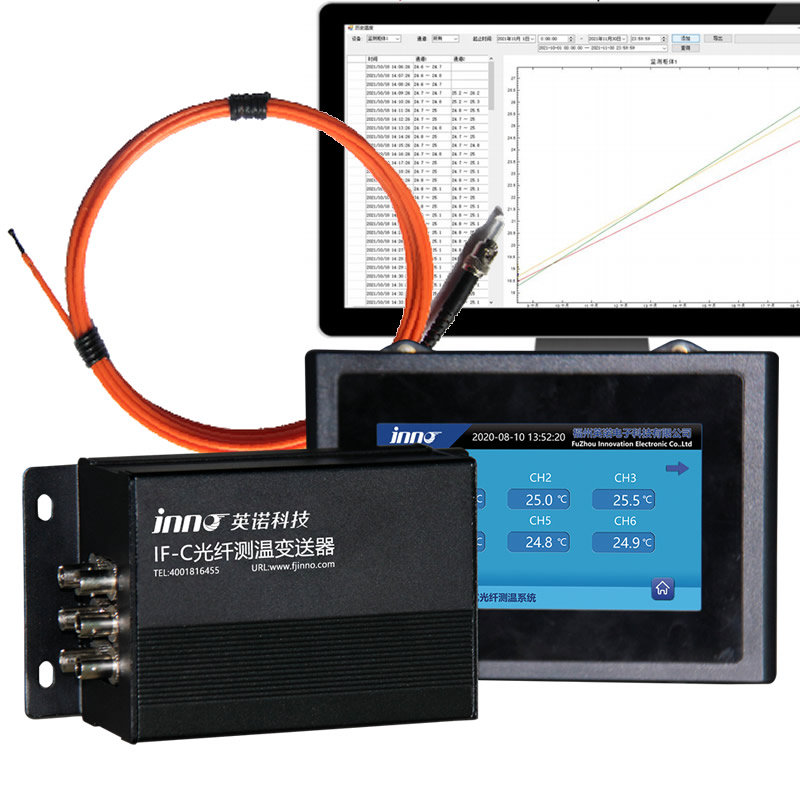
System Capability Comparison
| System Feature | Basic System | Professional System | Enterprise System |
|---|---|---|---|
| Temperature Channels | 1-16 zwrotnica | 32-128 zwrotnica | 500+ zwrotnica |
| Szybkość pomiaru | 1 sample/second | 10 samples/second | 1000 samples/second |
| Data Storage | Local memory | Network storage | Analityka w chmurze |
| Komunikacja | Modbus RTU | Ethernet/IEC 61850 | Industrial IoT protocols |
| Analityka | Basic alarms | Analiza trendów | Konserwacja predykcyjna |
How to Install Optical Sensing Systems in Electric Field Environments?
Fiber optic installation in electric field environments requires careful planning of sensor placement, prowadzenie włókien, i systemy ochronne. Installation guidelines ensure optimal sensor performance while maintaining electrical safety and system reliability in high-voltage applications.
Environmental protection measures include UV-resistant fiber cables, rodent-proof armor, and temperature-resistant materials suitable for outdoor installations. Proper installation techniques ensure long-term system reliability and minimize maintenance requirements in challenging electrical environments.
What are the Dane techniczne for Electric Field Temperature Systems?
| Parametr | Distributed System | Point Sensor System | Hybrid System |
|---|---|---|---|
| Zakres temperatur | -40°C do +600°C | -200°C do +300°C | -40°C to +800°C |
| Dokładność pomiaru | ±1°C | ±0,1°C | ±0,5°C |
| Rozdzielczość przestrzenna | 1-10 metrów | Point measurement | Zmienny |
| Maximum Distance | 100 kilometrów | 10 kilometrów | 50 kilometrów |
| Czas reakcji | 1-60 towary drugiej jakości | <250SM | Zmienny |
Notatka: Specifications are for reference only. Contact us for detailed technical specifications and product information.
Udany Power Equipment Applications and Case Studies
Monitorowanie temperatury transformatora implementations using fluorescence fiber sensors demonstrate significant reliability improvements in power generation and transmission facilities. Utilities report 60% reduction in transformer failures through early detection of winding hot spots and cooling system problems.
High voltage switchgear monitoring applications include gas insulated switchgear (GIS), air insulated switchgear (AIS), and hybrid switchgear installations. Fiber optic sensors provide continuous monitoring of critical components including circuit breakers, rozłączniki, and current transformers without affecting equipment operation.
Transmission Line Monitoring Applications
Overhead conductor temperature monitoring utilizes distributed fiber sensing to detect hot spots caused by damaged conductors, luźne połączenia, or excessive loading. Early detection prevents conductor failure and reduces wildfire risks in high-risk areas.
Underground cable monitoring systems provide continuous temperature profiling along cable routes, enabling optimal loading strategies and early detection of developing insulation problems. These systems significantly extend cable life and prevent costly emergency repairs.
Często zadawane pytania dotyczące Fiber Optic Temperature Systems
How do fiber optics perform in strong electric fields?
Fiber optic sensors exhibit complete immunity to electric fields, maintaining measurement accuracy in field strengths exceeding 1000kV without signal degradation or safety concerns. The dielectric properties of optical fibers prevent electrical interference.
What ensures long-term stability of fiber temperature systems?
Fluorescence sensors provide exceptional stability through temperature-dependent physical properties rather than electronic circuits. Systems maintain calibration accuracy for over 25 lat bez konieczności dryftu i ponownej kalibracji.
How to choose between distributed and point sensor systems?
Distributed systems suit applications requiring temperature profiling over long distances, while point sensors provide higher accuracy for critical measurement locations. Hybrid systems combine both technologies for comprehensive monitoring.
Jaki jest harmonogram kalibracji systemów temperatury włókien?
Czujniki fluorescencyjne zazwyczaj wymagają corocznej weryfikacji kalibracji 2-5 lat dzięki doskonałej stabilności długoterminowej. Systemy rozproszone mogą wymagać corocznych kontroli kalibracji w celu utrzymania określonej dokładności.
Jak integruje się systemy światłowodowe z sieciami SCADA?
Nowoczesne systemy temperatury włókien obsługują standardowe protokoły przemysłowe, w tym Modbus, IEC 61850, i DNP3, umożliwiając bezproblemową integrację z istniejącą infrastrukturą monitorowania i sterowania systemem elektroenergetycznym.
Jakie warunki pogodowe wpływają na systemy temperatury włókien?
Systemy światłowodowe działają niezawodnie w ekstremalnych warunkach pogodowych, w tym podczas burz lodowych, silne wiatry, i ekstremalne temperatury. Właściwy dobór i instalacja kabla zapewniają ciągłą pracę w trudnych warunkach.
Profesjonalny Rozwiązania w zakresie temperatury pola elektrycznego i wsparcie techniczne
Nasz kompleksowy fiber optic temperature monitoring portfolio includes fluorescence sensors, distributed sensing systems, and integrated monitoring solutions designed specifically for electric field environments. We provide complete engineering support from system design through commissioning, ensuring optimal performance for critical electrical infrastructure applications.
Expert technical services encompass application engineering, custom sensor design, installation training, and comprehensive technical support throughout the system lifecycle. Our experienced engineers specialize in electric field temperature monitoring applications, helping utilities and industrial customers achieve maximum equipment reliability and operational safety through advanced fiber optic sensing technologies.
For detailed information about electric field temperature monitoring solutions, specyfikacje techniczne, lub konsultacja aplikacyjna, skontaktuj się z naszym profesjonalnym zespołem inżynierów. Dostarczamy dostosowane do indywidualnych potrzeb systemy czujników światłowodowych w oparciu o określone wymagania dotyczące pola elektrycznego, oferując niezawodne wsparcie techniczne dla wszystkich zastosowań związanych z monitorowaniem temperatury pod wysokim napięciem.

Światłowodowy czujnik temperatury, Inteligentny system monitorowania, Producent rozproszonych światłowodów w Chinach
 |
 |
|