 INNO glasvezel temperatuursensoren ,temperatuurbewakingssystemen.
Key Insights: Microwave Temperature Sensing Technology
- Glasvezel temperatuursensoren provide complete EMI immunity in high-power microwave environments where traditional thermocouples fail catastrophically
- Fluorescence thermometry achieves ±1°C accuracy without metal components, eliminating dangerous arcing and signal interference
- Microwave chemical reactors, pharmaceutical processing, and food production require non-metallic probes for safety and regulatory compliance
- Traditioneel thermokoppel sensoren En infrared thermometers cannot deliver reliable measurements in 2.45GHz electromagnetic fields
- Juist selectie temperatuursensor prevents product quality failures, schade aan apparatuur, and costly production downtime
Inhoudsopgave
- Why Is Temperature Monitoring in Microwave Equipment So Challenging?
- How Do Different Temperature Sensors Perform in Microwave Environments?
- What Are the 5 Major Advantages of Fluorescence Fiber Optic Sensors?
- Where Are Fiber Optic Sensors Successfully Applied in Microwave Systems?
- How to Select the Right Temperature Sensor for Your Microwave Equipment?
- What Is the Cost-Benefit Analysis of Fluorescence Sensors vs Traditional Solutions?
- How Do Fiber Optic Probes Perform Under Extreme Microwave Conditions?
- Why Must Microwave Chemical Reactors Use Non-Metallic Temperature Sensors?
- What Consequences Arise from Temperature Control Failures in Microwave Food Processing?
- What Questions Do Engineers Most Frequently Ask About Microwave Temperature Sensing?
1. Why Is Temperature Monitoring in Microwave Equipment So Challenging?

1.1 What Makes Microwave Environments Hostile to Conventional Sensors?
Microwave heating systems operate at 2.45GHz frequency with power outputs ranging from 1kW in laboratory equipment to 100kW in industrial applications. This intense electromagnetic field creates fundamental obstacles for standard apparaten voor temperatuurmeting that were designed for benign thermal environments.
Traditioneel thermokoppel sensoren En RTD-sondes contain metallic conductors that behave as receiving antennas within microwave cavities. When exposed to high-frequency electromagnetic radiation, these metal components induce electrical currents causing dangerous arcing and sparking. This phenomenon not only destroys the temperatuur sensoren but also compromises microwave chamber integrity and creates severe safety hazards.
De elektromagnetische interferentie (EMI) generated during microwave processing severely distorts electrical signals from conventional temperatuurbewakingssystemen. Standard thermocouples produce millivolt-level signals that become completely overwhelmed by EMI noise, rendering measurements unreliable or impossible.
1.2 Why Do Industrial Applications Demand Real-Time Accuracy?
Microwave chemical synthesis requires temperature control within ±1°C to ensure proper reaction kinetics and product quality. Pharmaceutical microwave processing must maintain documented temperature profiles for regulatory compliance. Advanced materials sintering demands precise thermal management to achieve desired properties and prevent defects.
Unlike conventional heating where thermal equilibrium develops gradually, microwave heating creates rapid and often non-uniform temperature distributions. Hot spots develop within seconds, requiring realtime temperatuurbewaking with sub-second response times for effective control interventions.
2. How Do Different Temperature Sensors Perform in Microwave Environments?

2.1 What Are the Fatal Limitations of Thermocouple Sensors?
Thermocouple temperature sensors rely on the Seebeck effect in metal junctions to generate voltage proportional to temperature. When placed inside microwave equipment, the metal wires act as receiving antennas for electromagnetic energy, resulting in three critical failures.
Induced currents create localized heating at the thermocouple junction, adding thermal errors of 10-50°C to actual measurements. De elektromagnetische interferentie generates voltage signals orders of magnitude larger than legitimate thermocouple output, making data completely unreliable. Most critically, concentrated electromagnetic energy at metal points causes electrical discharge that punctures protective sheaths and creates fire hazards.
2.2 Why Can’t Infrared Temperature Sensors Solve Microwave Challenges?
Infrared thermometry measures surface temperatures through thermal radiation without physical contact. Terwijl IR temperature sensors avoid arcing problems of metallic probes, they face insurmountable obstacles in microwave heating applications.
Standaard infrarood sensoren require direct line-of-sight to measurement targets. In sealed microwave cavities, this necessitates optical windows that significantly compromise electromagnetic containment. Any opening allows dangerous radiation leakage and reduces heating efficiency. Aanvullend, infrarood temperatuurmeting only captures surface temperatures, providing no information about internal temperatures in thick materials or liquids.
2.3 How Do Wireless Temperature Sensors Fail in High-Power Microwaves?
Wireless temperature monitoring systems use battery-powered transmitters to send temperature data via radio frequencies. While initially appearing suitable, these devices encounter severe practical limitations in microwave environments.
The intense electromagnetic field in operating microwave systems overwhelms low-power radio signals from draadloze sensoren, causing communication dropouts and data loss. Battery-powered electronics suffer accelerated degradation when exposed to sustained microwave radiation. Het allerbelangrijkste, wireless temperature probes still require metallic sensing elements, reintroducing all arcing and interference problems.
3. What Are the 5 Major Advantages of Fluorescentie glasvezelsensoren?

3.1 Volledige elektromagnetische immuniteit
Fluorescentie glasvezel temperatuursensoren constructed from glass and ceramic materials contain absolutely no metallic or conductive components. De detectiesonde bestaat uit een fosforkristal van zeldzame aardmetalen, gemonteerd op de punt van zuiver silica glasvezelkabel. Deze volledig diëlektrische constructie biedt volledige immuniteit tegen elektromagnetische interferentie op alle frequenties en vermogensniveaus.
In tegenstelling tot afgeschermde thermokoppels die de EMI-koppeling alleen maar verminderen, glasvezel temperatuursondes kunnen fundamenteel niet interageren met elektromagnetische velden. Daarvoor zorgt het optische transmissieprincipe microwave radiation heeft geen effect op temperatuurmetingen, het leveren van nauwkeurige gegevens, zelfs in industriële toepassingen van 100 kW microwave systems.
3.2 Intrinsieke veiligheid zonder risico op vonkoverslag
The non-conductive nature of fluorescentie glasvezelsensoren elimineert elke mogelijkheid van elektrische ontlading of vonkontlading binnenin microwave cavities. Deze intrinsieke veiligheidseigenschap maakt directe onderdompeling van de temperatuur sonde in reactieve chemicaliën, brandbare oplosmiddelen, of explosieve atmosferen zonder ontstekingsbronnen te creëren.
3.3 Superieure meetnauwkeurigheid van ±1°C
Fluorescence thermometry meet de temperatuurafhankelijke vervaltijd van fosforluminescentie, een fysisch fenomeen met uitstekende thermische gevoeligheid en minimale drift. Fuzhou Innovatie Elektronische Wetenschap&Tech Co., Ltd. produceert glasvezel temperatuursensoren het bereiken van een nauwkeurigheid van ±1°C over meetbereiken van -200°C tot +300°C.
3.4 Snelle responstijd voor dynamische controle
De kleine thermische massa van het fosforkristal maakt responstijden onder 250 milliseconden. Deze snelle thermische volgmogelijkheid maakt dit mogelijk glasvezel temperatuursondes om plotselinge temperatuurveranderingen te detecteren verwarmingsprocessen in de magnetron, waardoor feedbackcontrolesystemen mogelijk zijn om oververhitting of thermische overstroming te voorkomen.
3.5 Chemische weerstand en stabiliteit op lange termijn
De inerte glas- en keramische constructie van glasvezel sensoren is bestand tegen corrosieve chemicaliën, oplossingen met een hoge pH, en oxiderende atmosferen die metalen thermokoppels snel afbreken. Deze chemische stabiliteit zorgt voor consistentie temperatuurbewaking accuracy over years of continuous operation without calibration drift.
4. Waar zijn Fiber Optic Sensors Successfully Applied in Microwave Systems?
4.1 What Role Do They Play in Microwave Chemical Synthesis?
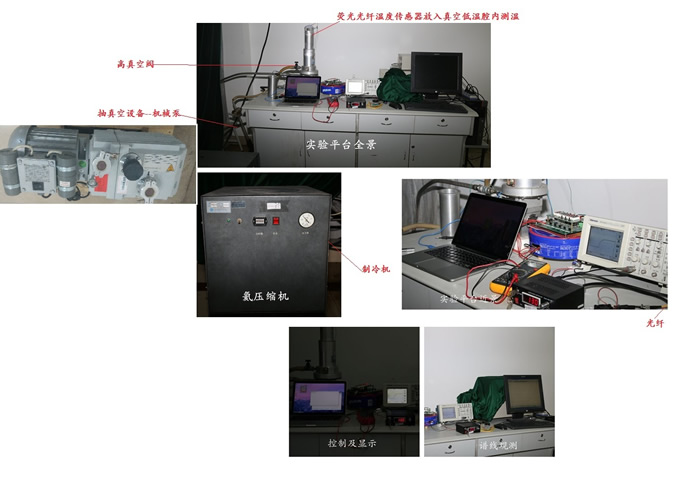
Research laboratories and pharmaceutical manufacturers utilize microgolf reactoren for accelerated chemical synthesis. Glasvezel temperatuursensoren enable precise monitoring of exothermic reactions where temperature control directly impacts product yield, purity, en veiligheid. The probes withstand aggressive solvents and strong acids that would corrode traditional sensors within hours.
4.2 How Are They Used in Advanced Materials Processing?
Microwave sintering of ceramics, composites, and nanomaterials requires precise thermal profiles to achieve desired microstructures. Fluorescence temperature probes provide accurate measurements during rapid heating cycles where temperatures can rise at 50°C per minute. The sensors survive thermal shock conditions that would fracture conventional thermocouple assemblies.
4.3 What Benefits Do They Offer in Food Processing Applications?
Industrieel voedselverwerking in de magnetron equipment uses glasvezel temperatuursensoren to ensure proper pasteurization temperatures and prevent overcooking. The non-metallic probes can be embedded directly into food products without contamination concerns, providing real-time internal temperature data for HACCP compliance documentation.
4.4 How Do Medical Device Manufacturers Utilize This Technology?
Microwave sterilization systems for medical instruments require validated temperature uniformity throughout the load. Glasvezeltemperatuursondes map thermal distributions during sterilization cycles, ensuring all items reach lethal temperatures for pathogen destruction while avoiding heat-sensitive material degradation.
5. How to Select the Right Temperature Sensor for Your Microwave Equipment?
5.1 What Temperature Range Does Your Application Require?
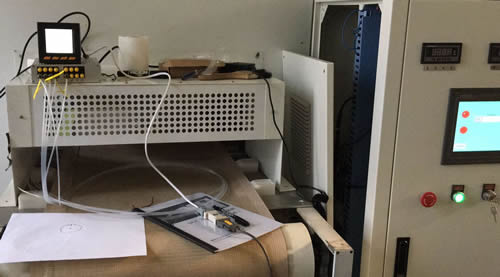
Evaluate the minimum and maximum temperatures encountered during normal operation and potential fault conditions. Glasvezel temperatuursensoren are available in different probe configurations optimized for specific ranges. Standaard fluorescence probes cover -40°C to +250°C, while high-temperature versions extend to +300°C for specialized applications.
5.2 What Chemical Compatibility Do You Need?
Identify all chemicals, oplosmiddelen, and cleaning agents that will contact the temperatuur sonde. While the glass fiber provides excellent general chemical resistance, specific coatings or protective sheaths may be necessary for hydrofluoric acid or concentrated alkalis. Fuzhou Innovatie Elektronische Wetenschap&Tech Co., Ltd. offers customized probe jacket materials for harsh chemical environments.
5.3 What Response Time Is Critical for Your Process Control?
Determine whether your application requires monitoring of steady-state temperatures or tracking of rapid thermal transients. Kleinere diameter glasvezelsondes zorgen voor snellere responstijden maar verminderde mechanische robuustheid. Breng de thermische responsvereisten in evenwicht met de fysieke duurzaamheidsbehoeften voor uw specifieke installatie.
5.4 Welke integratiemogelijkheden heeft uw besturingssysteem nodig??
Modern glasvezel temperatuurmeetsystemen bieden meerdere uitvoeropties, waaronder analoge spanning, digital protocols, en industriële veldbuscommunicatie. Zorg voor compatibiliteit met uw bestaande SCADA-systemen, PLC-controllers, of data-acquisitieapparatuur. Standaardinterfaces omvatten een stroomlus van 4-20 mA, Modbus RTU/TCP, en ProfibusDP.
6. Wat is de kosten-batenanalyse van fluorescentiesensoren versus traditioneel Oplossingen?

6.1 Hoe verhouden de investeringskosten vooraf zich??
Initiële aanschafkosten voor glasvezel temperatuursensoren doorgaans bereik 3-5 maal hoger dan vergelijkbare thermokoppelsamenstellen. Echter, deze vergelijking negeert de verborgen kosten van thermokoppelstoringen magnetron toepassingen. Traditional sensors may require replacement every few weeks in harsh microwave environments, whereas fluorescence probes commonly operate for years without degradation.
6.2 What Are the True Lifecycle Ownership Costs?
Calculate total cost of ownership including sensor replacement frequency, production downtime during sensor failures, and labor costs for maintenance interventions. A manufacturing facility experiencing monthly thermocouple failures with 4-hour downtime events will recover glasvezelsensor investment within 6-12 months through elimination of unplanned outages.
6.3 How Does Improved Process Control Impact Profitability?
Nauwkeurig temperatuurbewaking enables tighter process control, reducing product variability and quality rejects. In pharmaceutical synthesis, improved temperature precision can increase batch yields by 5-15%, representing substantial value creation that far exceeds sensor technology costs. De mogelijkheid om processen bij optimale temperaturen uit te voeren zonder conservatieve veiligheidsmarges verbetert de energie-efficiëntie en doorvoer.
7. How Do Fiber Optic Probes Perform Under Extreme Microwave Conditions?
7.1 Wat hun prestaties in krachtige toepassingen valideert?
Glasvezel temperatuursensoren van Fuzhou Innovation Electronic Scie&Tech Co., Ltd. strenge tests ondergaan in een gecontroleerde omgeving microwave environments bij vermogensniveaus tot 10 kW/liter. Versnelde levensduurtests tonen een stabiele nauwkeurigheid daarna aan 10,000 uren ononderbroken blootstelling aan elektromagnetische velden, het valideren van betrouwbaarheid op lange termijn voor veeleisende industriële toepassingen.
7.2 Hoe gaan ze om met thermische schokken en mechanische stress??
De flexibele glasvezelkabel constructie biedt superieure trillingsweerstand vergeleken met stijve thermokoppelsamenstellen. De sensoren zijn bestand tegen thermische schoktests waarbij snelle temperatuurveranderingen van 200 °C in de onderbouw nodig zijn 10 seconden zonder mechanisch falen of verslechtering van de nauwkeurigheid. This robustness proves essential in microwave processing operations subject to frequent thermal cycling.
7.3 What Maintenance Requirements Ensure Continued Accuracy?
Unlike thermocouples requiring periodic calibration verification, fluorescentie glasvezelsensoren maintain factory calibration accuracy throughout their operational lifetime. The measurement principle based on fundamental phosphor physics exhibits negligible drift. Annual verification testing confirms ongoing performance, but recalibration is typically unnecessary, reducing maintenance costs and documentation burdens.
8. Why Must Microwave Chemical Reactors Use Non-Metallic Temperature Sensors?
8.1 What Safety Regulations Prohibit Metallic Sensors?
Chemical process safety standards explicitly prohibit introduction of potential ignition sources into vessels containing flammable solvents or reactive materials. Traditioneel thermokoppel sensoren that arc in microwave fields violate these fundamental safety principles. Regelgevende instanties hebben steeds vaker behoefte aan gedocumenteerde risicobeoordelingen die de eliminatie van ontstekingsgevaren aantonen microgolf chemische reactoren.
8.2 Hoe interfereren metalen sensoren met de reactiechemie??
Metaaloppervlakken kunnen ongewenste nevenreacties of ontledingsroutes katalyseren bij gevoelige chemische syntheses. De katalytische activiteit van nikkel, ijzer, en andere veel voorkomende thermokoppelmetalen veranderen de reactieselectiviteit en productdistributie. Glasvezeltemperatuursondes vervaardigd uit chemisch inerte materialen elimineren deze parasitaire reactieroutes, het garanderen van reproduceerbare synthetische resultaten.
8.3 Welke besmettingsrisico's vormen metaalsensoren??
Corrosie van metaal temperatuur sensoren introduceert metaalionverontreiniging in farmaceutische tussenproducten en actieve ingrediënten. Deze onzuiverheden kunnen de wettelijke limieten overschrijden, waarvoor kostbare herverwerking of partijafkeuring nodig is. De volledig glazen constructie van fluorescentie glasvezelsensoren prevents any possibility of metallic contamination, supporting compliance with stringent pharmaceutical purity requirements.
9. What Consequences Arise from Temperature Control Failures in Microwave Food Processing?
9.1 How Does Inadequate Heating Compromise Food Safety?
Insufficient microwave heating fails to achieve pathogen lethality requirements, creating risks of foodborne illness outbreaks. Without reliable temperatuurbewaking, processors cannot validate that all portions of the product reach minimum safe temperatures. A single contaminated batch can trigger massive recalls, brand damage, and potential legal liability exceeding millions in costs.
9.2 What Quality Defects Result from Overheating?
Excessive temperatures during voedselverwerking in de magnetron cause protein denaturation, nutrient degradation, and undesirable texture changes. Overcooked products exhibit poor sensory quality, leading to consumer complaints and market share erosion. Nauwkeurig glasvezel temperatuursensoren enable precise control preventing both undercooking safety hazards and overcooking quality defects.
9.3 How Does Temperature Variability Impact Production Efficiency?
Inconsistent temperature control in microwave systems forces manufacturers to extend processing times and increase energy input to ensure minimum specifications are met, reducing throughput and increasing costs. Wide process variations necessitate conservative operating parameters that sacrifice efficiency. Implementing reliable temperatuurbewaking narrows process distributions, enabling optimization closer to ideal conditions.
10. What Questions Do Engineers Most Frequently Ask About Microwave Temperature Sensing?
10.1 Can Fiber Optic Sensors Work in Batch and Continuous Processes?
Ja, fluorescentie glasvezel temperatuursensoren adapt to both batch microgolf reactoren and continuous flow systems. For batch applications, probes insert through sealed ports maintaining electromagnetic containment. In continuous processes, the flexible glasvezelkabel routes through process piping with minimal pressure drop or flow disturbance.
10.2 Zijn deze sensoren compatibel met geautomatiseerde procescontrole??
Modern glasvezel temperatuurmeetsystemen naadloos te integreren met industriële automatiseringsplatforms. Standaard analoge en digitale uitgangen maken directe aansluiting op PID-regelaars mogelijk, gedistribueerde controlesystemen, en programmeerbare logische controllers. Geavanceerde systemen bieden voorspellende onderhoudsdiagnostiek en dataloggingmogelijkheden ter ondersteuning van de industrie 4.0 initiatives.
10.3 Welke omgevingsomstandigheden beïnvloeden de sensorprestaties?
De meetnauwkeurigheid van fluorescentie glasvezelsensoren blijft stabiel bij omgevingstemperatuurvariaties van -40°C tot +85°C. Het optische meetprincipe vertoont een minimale gevoeligheid voor vocht, trillingen, of elektromagnetische velden in de omgeving. Deze omgevingsimmuniteit zorgt voor consistente prestaties in uitdagende industriële omgevingen.
10.4 Hoe optimaliseert u de positionering van sondes in microgolfholtes??
Effectief temperatuurbewaking requires strategic placement considering electromagnetic field distribution and thermal gradients. Position glasvezelsondes in representative locations avoiding field nodes where heating may be minimal. Voor kritische toepassingen, deploy multiple sensors mapping spatial temperature variations enabling comprehensive process understanding and control.
10.5 What Training Do Operators Need for Fiber Optic Systems?
Basic operation of glasvezel temperatuursensoren requires minimal specialized training beyond standard instrumentation procedures. The systems provide intuitive displays and straightforward calibration verification protocols. Technical support from Fuzhou Innovation Electronic Scie&Tech Co., Ltd. ensures successful implementation and ongoing optimization.
⚠️ Disclaimer
The information provided in this guide is for educational and informational purposes only. While we strive for accuracy, temperature sensor selection should be based on thorough engineering analysis of your specific application requirements. Fuzhou Innovatie Elektronische Wetenschap&Tech Co., Ltd. recommends consulting with qualified engineers and reviewing all relevant safety standards before implementing temperature measurement systems in microwave equipment. Performance characteristics described are typical values and may vary based on specific operating conditions. This guide does not constitute professional engineering advice, and users assume full responsibility for proper sensor selection, installatie, and operation. Always follow manufacturer specifications and applicable regulatory requirements for your industry and jurisdiction.

Glasvezel temperatuursensor, Intelligent monitoringsysteem, Gedistribueerde glasvezelfabrikant in China
 |
 |
 |