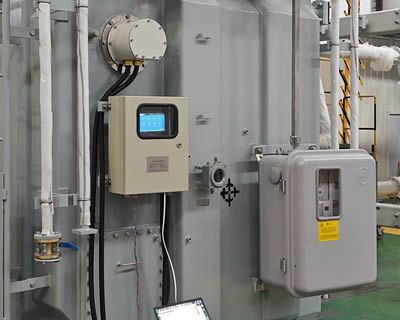
 INNO 광섬유 온도 센서 ,온도 모니터링 시스템.
- 대형 전력 변압기 전 세계적으로 리드 타임이 36~48개월로 연장되었습니다., 12~18개월 전부터 증가 2020.
- 글로벌 방향성 전기강판 (간다) 공급은 여전히 구조적으로 타이트하다, 가격은 팬데믹 이전 수준보다 50%~80% 상승.
- 배전 변압기 전력망 현대화 및 전력화 수요로 인해 잔고가 12~20개월로 급증했습니다..
- 구리 가격은 톤당 $8,500~$10,500 사이에서 여전히 높은 수준을 유지하고 있습니다., 직접적인 영향을 미치는 변압기 권선 소송 비용.
- Hitachi Energy를 포함한 주요 제조업체, 지멘스 에너지, GE Vernova는 수십억 달러 규모의 생산 능력 확장을 발표했습니다..
- 다음과 같은 중요한 구성 요소 변압기 부싱, 부하시 탭 체인저, 그리고 단열재 동시적인 부족에 직면하다.
- 북아메리카, 유럽, 아시아 태평양 지역은 각각 정책에 따라 뚜렷한 공급 문제에 직면해 있습니다., 인프라 시대, 국내 생산능력과.
목차
- 글로벌 변압기 공급망 개요
- 공급 압박의 핵심 수요 동인
- The GOES Bottleneck: Grain-Oriented Electrical Steel
- Copper Supply and Transformer Winding Cost Dynamics
- Critical Transformer Components and Materials
- Transformer Lead Time Analysis by Category
- Manufacturing Capacity and Expansion Efforts
- Regional Market Dynamics
- 자주 묻는 질문
1. 글로벌 변압기 공급망 개요

The global 전력 변압기 supply chain is experiencing the most severe capacity constraints in decades. What started as a post-pandemic recovery surge has evolved into a sustained, structural supply-demand imbalance. Order backlogs at major transformer manufacturers — including Hitachi Energy, 지멘스 에너지, GE 베르노바, and numerous regional producers — have reached record levels, with some factories reporting booking windows extending three to four years for large power transformers (LPTs) 그리고 12 에게 24 months for 배전 변압기.
Industry analysts estimate that global transformer demand has grown by 25%–40% compared to pre-2020 levels, while manufacturing capacity has expanded by only 10%–15% over the same period. This widening gap is expected to persist well into the late 2020s.
Key Market Indicators at a Glance
| 미터법 | Current Value | 메모 |
|---|---|---|
| Large Power Transformer Lead Time | 36–48 months | Up from 12–18 months pre-2020 |
| Distribution Transformer Lead Time | 12–24 months | Up from 6–10 months pre-2020 |
| Global Demand Growth vs. 2020 | +25% 에게 +40% | Renewables, 데이터 센터, grid renewal |
| Manufacturing Capacity Growth vs. 2020 | +10% 에게 +15% | Limited by GOES, labor, capital |
| Average Transformer Price Increase | +30% 에게 +60% | Varies by voltage class and region |
| 우리를. LPTs Over 25 Years Old | ~70% | Replacement urgency rising |
2. 공급 압박의 핵심 수요 동인

Understanding the current transformer supply crisis requires examining the structural forces generating demand. No single factor alone would overwhelm the supply base — it is their simultaneous arrival that has created a perfect storm across the electrical transformer market.
2.1 Grid Modernization and Aging Infrastructure
Across North America, 유럽, and parts of Asia-Pacific, a significant portion of the installed transformer fleet is approaching or exceeding its designed operational life. In the United States, the Department of Energy has noted that more than 70% ~의 large power transformers are over 25 세. Utilities that deferred replacement during years of flat demand growth now face urgent replacement needs. More frequent extreme weather events — hurricanes, ice storms, wildfires, and heat waves — stress 기름에 잠긴 변압기 beyond their nameplate ratings and accelerate insulation degradation.
2.2 재생에너지 통합
The global buildout of wind and solar generation capacity is one of the largest sources of transformer demand. Every wind farm and solar park requires 승압 변압기 at the generation site, and many require additional units at collector substations and at the point of interconnection with the high-voltage transmission grid. Offshore wind projects require specialized offshore platform transformers 그리고 submarine cable interface transformers produced by only a handful of manufacturers worldwide.
| Renewable Sector | Transformer Requirement | Typical Voltage Class | 동쪽 . Annual Demand |
|---|---|---|---|
| Onshore Wind | 발전기 승압 + collector substation | 33–230 kV | ~15,000 units/year |
| Offshore Wind | Platform transformer + export cable interface | 66–400 kV | ~2,000–3,000 units/year |
| Utility-Scale Solar | Inverter step-up + 변전소 변압기 | 33–230 kV | ~20,000 units/year |
| 배터리 에너지 저장 | AC coupling transformers | 33–138 kV | ~5,000 units/year |
| HVDC Interconnections | Converter transformers | 400–800 kV | ~200–400 units/year |
2.3 Data Center Expansion
The hyperscale and colocation data center sector has emerged as a dramatic new source of medium voltage transformer 그리고 건식 변압기 demand. A single large data center campus can require 500 MVA to over 1 GVA of transformer capacity. Several operators have begun securing supply 3–4 years ahead of construction timelines and entering direct procurement agreements with GOES producers 및 변압기 제조업체.
2.4 Electrification of Transport and Buildings
The transition to electric vehicles and heat pumps adds incremental load to distribution networks, driving demand for new and upsized 극 장착형 변압기 그리고 pad-mounted distribution transformers. Utilities in markets with high EV adoption report that distribution transformer upgrades have become a routine part of network reinforcement planning.
3. The GOES Bottleneck: Grain-Oriented Electrical Steel

Grain-oriented electrical steel (간다) is the single most critical raw material in transformer core 조작. It forms the magnetic core and directly determines energy efficiency, no-load losses, and thermal performance. There is no commercially viable substitute for high-grade GOES in 전력 변압기 그리고 배전 변압기.
3.1 Concentrated Global GOES Production
글로벌 GOES production capacity is estimated at roughly 2.5 에게 3 million metric tons per year. Expanding production is capital-intensive — a new cold-rolling and annealing line can cost several hundred million dollars and take three to five years to commission.
| GOES Producer | 국가 | 동쪽 . 용량 (kt/yr) | Status |
|---|---|---|---|
| Nippon Steel | 일본 | ~350 | At capacity |
| JFE Steel | 일본 | ~250 | At capacity |
| POSCO | 대한민국 | ~300 | Expansion announced |
| Baowu / Wisco | 중국 | ~600 | Primarily domestic allocation |
| ThyssenKrupp | 독일 | ~200 | Tight allocation |
| Cleveland-Cliffs (AK Steel) | 미국 | ~150 | Near full utilization |
| Stalprodukt | Poland | ~120 | At capacity |
| 기타 | 다양한 | ~550 | Mixed |
3.2 Trade Restrictions and GOES Pricing
Trade policy adds complexity. 미국. maintains anti-dumping and countervailing duty orders on GOES imports from several countries. The EU has imposed safeguard measures on certain steel imports. These barriers constrain available supply for downstream transformer manufacturers.
GOES Price Trajectory by Grade
| GOES Grade | 2019 Price ($/ton) | 2025 Price ($/ton) | 변화 |
|---|---|---|---|
| 전통적인 (CGO) | $1,500–$2,000 | $2,500–$3,500 | +60%–80% |
| High Permeability (HiB) | $2,000–$2,800 | $3,200–$4,800 | +50%–80% |
| Domain-Refined (Laser-Scribed) | $2,800–$3,500 | $4,500–$6,000+ | +50%–70% |
4. Copper Supply and Transformer Winding Cost Dynamics

Copper conductor is the second most important raw material in transformer manufacturing, used for primary and secondary 변압기 권선 as well as leads and connections. Transformer-grade copper must meet stringent purity standards (99.99%+), and specialized rolling and drawing mills are running near capacity.
Copper prices on the London Metal Exchange have remained between $8,500 그리고 $10,500 per metric ton throughout 2024 그리고 2025. Strong demand from electrification sectors — EV motors, 풍력 터빈 발전기, solar inverters, and power distribution — combined with constrained mine output keeps the market tight.
Copper vs. Aluminum Winding Comparison
| Property | Copper Winding | Aluminum Winding |
|---|---|---|
| Conductivity (% IACS) | 100% | 61% |
| Relative Weight | 기준선 | ~130% of copper |
| 상대 비용 | 더 높은 | 낮추다 |
| 최고의 응용 프로그램 | LPTs, 컴팩트한 디자인, EHV | 분포, 건식 변압기 |
Some manufacturers have adopted aluminum-wound transformers for certain 배전 변압기 designs to offset copper costs. 하지만, copper-wound transformers remain the standard for large power transformers and applications where size and weight constraints are critical.
5. Critical Transformer Components and Materials
Beyond GOES and copper, 그만큼 transformer supply chain depends on specialized components that are also experiencing shortages. A single missing component can delay final assembly and testing of a completed unit.
| 요소 | Key Suppliers | Current Lead Time | Pre-2020 Lead Time |
|---|---|---|---|
| EHV Bushings (OIP type) | 히타치에너지, Trench, HSP | 12–18 months | 4–6 months |
| RIP Bushings | 히타치에너지, Pfiffner | 10–14 months | 3–5 months |
| On-Load Tap Changers (OLTC) | 씨 (라인하우젠), 히타치에너지 | 8–12 months | 3–4 months |
| 변압기 오일 (Mineral) | Nynas, Ergon, Calumet | 4–8 weeks | 2–4 weeks |
| Ester-Based Insulating Fluid | Cargill (FR3), 중&I Materials | 6–12 weeks | 2–4 weeks |
| Insulating Paper (Kraft/TUP) | 와이드먼, Ahlstrom | 8–16 weeks | 4–6 weeks |
| Cooling Systems (팬, 라디에이터) | 다양한 | 8–16 weeks | 4–8 weeks |
The shift toward ester-based transformer fluids, driven by fire safety regulations and environmental concerns, introduces additional supply risk as ester production capacity is more limited than traditional mineral transformer oil.
6. Transformer Lead Time Analysis by Category

The most visible symptom of the supply chain crisis is the dramatic extension of transformer lead times across every product category.
| Transformer Category | Typical Rating | Pre-2020 Lead Time | Current Lead Time |
|---|---|---|---|
| Large Power Transformer (LPT) | ≥100 MVA, ≥230 kV | 12–18 months | 36–48 months |
| Medium Power Transformer | 25–100 MVA, 69–230 kV | 10–14 months | 24–36 months |
| Liquid-Filled Distribution Transformer | 25–2,500 kVA | 6–10 weeks | 12–20 months |
| 건식 변압기 | 25–5,000 kVA | 4–8 weeks | 8–14 months |
| Generator Step-Up Transformer (GSU) | 50–500 MVA | 14–18 months | 30–42 months |
| 이동하는 / Emergency Transformer | 다양한 | 8–12 months | 18–30 months |
| HVDC Converter Transformer | 전문화 | 18–24 months | 36–52 months |
As buyers recognize extended timelines, they place orders earlier and in larger quantities — creating so-called “phantom demand” that further inflates backlogs and pushes 배송 일정 out even more.
7. Manufacturing Capacity and Expansion Efforts
그만큼 transformer manufacturing industry has responded to the demand surge with capacity expansion plans. 하지만, the inherently slow pace of factory construction means meaningful relief is unlikely before 2027–2028.
7.1 Major Expansion Projects
| 제조업체 | 위치 | Investment | Expected Online |
|---|---|---|---|
| 히타치에너지 | Multiple global sites | $1.5B+ | 2025–2027 |
| 지멘스 에너지 | 오스트리아 + new U.S. facility | Not fully disclosed | 2026–2028 |
| GE 베르노바 | 우리를. and global sites | Significant increase | 2025–2027 |
| Hyundai Electric | 대한민국 + JVs | ~$500M+ | 2026–2027 |
| TBEA | 중국 + overseas | Multi-billion RMB | 2025–2026 |
| Prolec GE (Xignux) | 멕시코 | 퍼지는 | 2025 |
| Elsewedy Electric | 이집트 + 중동 | 퍼지는 | 2025–2026 |
7.2 Workforce Constraints
A critical and often underappreciated constraint is skilled labor availability. Transformer manufacturing — particularly for LPTs — is artisan-intensive. 굴곡, core stacking, insulation assembly, 그리고 high-voltage testing require highly trained technicians with years of experience. Across Europe, 북아메리카, and Japan, the transformer workforce is aging and recruitment remains challenging. Some manufacturers report that labor shortages are now a greater bottleneck than physical plant capacity.
8. Regional Market Dynamics
8.1 북아메리카
The North American market is experiencing some of the most severe constraints globally. 미국. has limited domestic LPT manufacturing capacity, historically relying on imports from Europe, 아시아, and Mexico. Federal policies and the Inflation Reduction Act’s domestic content incentives are driving new investment, but facilities take years to build and staff.
8.2 유럽
유럽 사람 transformer manufacturers are operating at full capacity with backlogs extending 3–4 years for LPTs. The EU’s renewable energy targets — including REPowerEU — require massive grid expansion. Offshore wind build-out in the North Sea is a particularly intense source of demand for specialized 고전압 변압기.
8.3 아시아태평양
China is both the world’s largest transformer manufacturer and consumer. Chinese domestic demand absorbs most production. India is emerging as a significant manufacturing base, with companies like CG Power and Voltamp building capacity for domestic use and export.
8.4 Middle East and Africa
급속한 도시화, industrial development, and renewable energy ambitions drive growing transformer demand across this region. The Middle East benefits from proximity to manufacturers in India, 칠면조, and Egypt. Africa faces challenges due to limited domestic capacity and competition with wealthier markets for constrained supply.
| 지역 | Key Demand Drivers | Domestic Manufacturing | Import Dependence |
|---|---|---|---|
| 북아메리카 | Grid renewal, 데이터 센터, 재생 가능 에너지 | Low–Moderate | 높은 |
| 유럽 | Offshore wind, grid modernization | 높은 | Low–Moderate |
| 중국 | 하부 구조, 재생 가능 에너지, 내보내다 | 매우 높음 | 매우 낮음 |
| 인도 | 그리드 확장, 재생 가능 에너지, 내보내다 | 높은 (growing) | 낮은 |
| 중동 & 아프리카 | Urbanization, 재생 가능 에너지, 산업 | Low–Moderate | 높은 |
자주 묻는 질문
1분기: What is causing the global power transformer shortage?
The shortage is driven by the simultaneous convergence of grid infrastructure renewal, renewable energy buildout, data center expansion, and electrification of transport. These demand factors have grown 25%–40% since 2020, while manufacturing capacity has expanded only 10%–15%.
2분기: How long is the current lead time for a large power transformer?
Large power transformers rated at 100 MVA or above and 230 kV or higher now carry lead times of 36–48 months, compared to 12–18 months before 2020.
3분기: Why is grain-oriented electrical steel (간다) so critical to transformer supply?
GOES forms the magnetic core of transformers and directly determines energy efficiency and no-load losses. There is no commercially viable substitute, and global production capacity of approximately 2.5–3 million metric tons per year is structurally tight.
4분기: How much have transformer prices increased?
Depending on voltage class and region, finished transformer prices have increased by 30%–60% compared to pre-2020 levels, driven by higher costs of GOES, 구리, 구성 요소, and labor.
Q5: Which transformer components have the longest lead times?
EHV oil-impregnated paper (OIP) bushings currently carry lead times of 12–18 months, making them one of the most constrained components. 부하시 탭 체인저 (OLTC) and RIP bushings are also significantly constrained at 8–14 months.
Q6: Can aluminum windings replace copper in transformers?
Aluminum windings are used in certain distribution and dry-type transformer designs to offset copper costs. 하지만, aluminum requires roughly 60% more cross-sectional area for equivalent conductivity, resulting in larger units. 구리는 대형 전력 변압기의 표준으로 남아 있습니다..
Q7: 전 세계적으로 가장 큰 변압기 제조업체는 어디입니까??
가장 큰 글로벌 제조업체에는 Hitachi Energy가 포함됩니다., 지멘스 에너지, GE 베르노바, TBEA, Hyundai Electric, 그리고 프롤렉 GE (Xignux). 각 회사는 현재 공급 제약에 대응하여 상당한 용량 확장 계획을 발표했습니다..
Q8: 데이터 센터가 변압기 공급에 어떤 영향을 미치나요??
대규모 데이터 센터 캠퍼스에는 다음이 필요할 수 있습니다. 500 MVA to over 1 변압기 용량의 GVA. 주요 기술업체들은 건설 3~4년 앞두고 변압기 공급 확보 및 제조사와 직접 조달 계약 체결.
Q9: 무역 제한이 변압기 공급에 미치는 영향은 무엇입니까??
미국 내 GOES 수입품에 대한 반덤핑 관세 및 세이프가드 조치. EU는 국내 변압기 제조업체를 위한 경제적으로 실행 가능한 철강 공급원 풀을 제한합니다., particularly during periods of tight global supply.
Q10: When is the transformer supply shortage expected to ease?
Given the multi-year timelines required to build new manufacturing facilities and expand GOES production, industry analysts do not expect meaningful relief before 2027–2028 at the earliest. Demand growth from renewables and electrification continues to outpace capacity additions.
부인 성명
이 기사에 제공된 정보는 일반적인 정보 제공의 목적으로만 제공됩니다.. 피진노 (www.fjinno.net) makes every effort to ensure accuracy and timeliness, but does not guarantee the completeness, 신뢰할 수 있음, or suitability of any data, figures, or analysis presented. Market conditions, 리드타임, 가격, and supply chain dynamics are subject to rapid change. This content does not constitute professional procurement, investment, or engineering advice. Readers should consult qualified industry professionals and conduct independent verification before making purchasing or business decisions based on this information. FJINNO assumes no liability for any losses, damages, or outcomes arising from the use of information contained in this article.

광섬유 온도 센서, 지능형 모니터링 시스템, 중국의 분산광섬유 제조업체
 |
 |
 |