 INNO 광섬유 온도 센서 ,온도 모니터링 시스템.
1、 온도 측정용 광섬유 센서를 포괄적으로 선택하기 위한 핵심 사항
온도 측정을 위해 광섬유 센서를 선택할 때, 여러 요소를 종합적으로 고려해야 합니다.
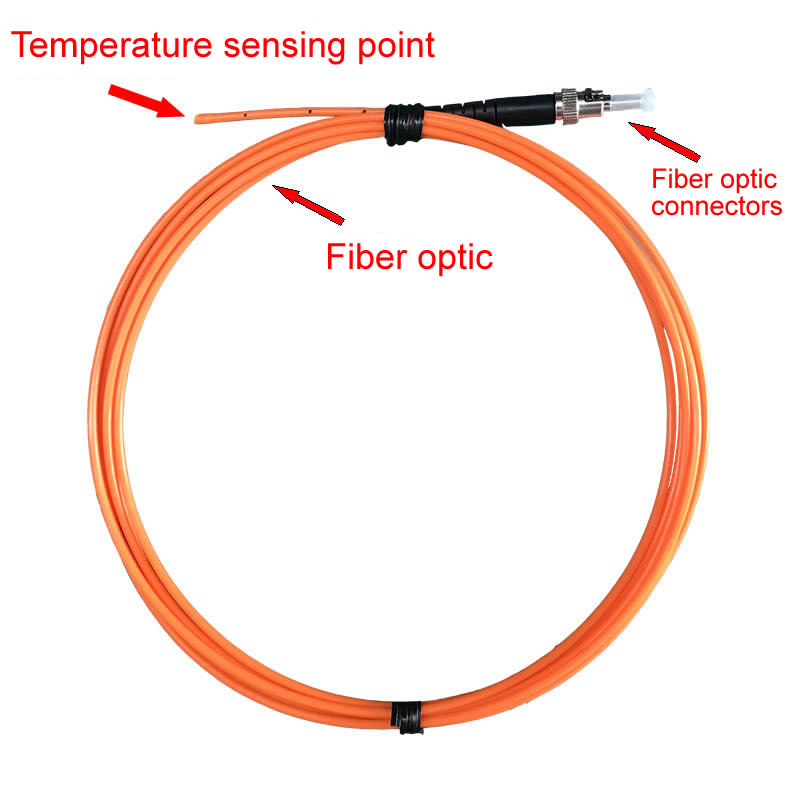
1.1 지원분야 요구사항
특별한 환경 적응성
전자기/무선 주파수 환경에 있는 경우, 기존의 온도 측정 방법은 심각한 방해를 받아 제대로 작동하지 않을 수 있습니다.. 광섬유 센서는 전자기 간섭 방지 특성으로 인해 좋은 선택이 되었습니다.. 예를 들어, in the power system, 고전압 케이블이나 전기 장비 근처에는 강한 전자기장이 있습니다., 광섬유 센서는 전자기 간섭 없이 안정적으로 온도를 측정할 수 있습니다., ensuring measurement accuracy and reliability.
인화성 등 위험한 상황이 있는 경우, explosiveness, 측정 환경에서의 부식, 안전/부식성에 대한 특별한 요구 사항이 있습니다.. 광섬유 센서, due to their inherent lack of safety risks such as electric sparks, and some fiber optic sensors can have corrosion resistance through material selection (such as special coatings or sheaths), are suitable for scenarios such as temperature monitoring of storage tanks in chemical factories and temperature measurement in flammable and explosive environments such as oil wells.
In some installation environments with limited space and special requirements for sensor size, fiber optic sensors can achieve accurate measurement with their smaller size. Fiber optic sensors can adapt well to small spaces for temperature detection, such as temperature monitoring inside small electronic devices and precision instruments.
Measurement accuracy and sensitivity requirements
Fiber optic sensors are a suitable choice for situations with particularly high requirements for accuracy, 감광도, 수명, 안정성/신뢰성, 등. 예를 들어, 의료 분야에서, fiber optic sensors can be used to measure the temperature of internal tissues in the human body. Their high precision and sensitivity can meet the requirements of life science measurement, and play an important role in the study of temperature regulation mechanisms or temperature monitoring during thermal therapy for certain diseases.

1.2 Selection of Measurement Points and Sensor Types
The choice between single point and distributed
When there are less than 50 측정 포인트, 에이 “단일 지점” sensor is usually used. 예를 들어, when monitoring the temperature of a single small device (such as a single dry-type transformer) or a small capacity liquid container, 단일 포인트 센서로 요구 사항을 충족할 수 있습니다.. Single point sensors have a small volume and relatively low cost, and have advantages in limited space layout and cost budget. A single point fiber optic sensor is sufficient for temperature monitoring needs, such as measuring water temperature in a small aquarium for household use.
When there are more than 50 측정 포인트, “분산” sensors are usually used. 예를 들어, in monitoring the indoor temperature distribution of numerous floors and different rooms in large buildings, or in monitoring the temperature field of bridges (where numerous measurement points are distributed in different parts of the bridge), distributed fiber optic sensors can continuously obtain temperature information from multiple points through a single fiber optic cable. Although the cost of a single sensor may be higher than that of a single point sensor, 다수의 측정 지점에 대한 총 비용 및 데이터 수집 효율성을 고려하면 더 나은 선택입니다.. 예를 들어, 데이터 센터의 서버실에서, 다수의 서버의 온도를 종합적으로 모니터링하기 위해, 분산형 광섬유 센서는 한 번에 수많은 모니터링 지점을 포괄할 수 있습니다., 센서 수를 효과적으로 줄임, 공간 점유를 피하다, 효율적인 온도 모니터링 달성.
1.3 온도 범위, 정확성, 및 해결 요구 사항
Temperature range matching
측정된 실제 온도 범위를 기반으로 적합한 광섬유 센서를 선택하십시오.. 센서의 온도 측정 범위는 일반적으로 4개 섹션으로 나뉩니다.: -40-+80 ℃- 40 – +250℃;- 40 – +400℃;+ 20-+60 ℃ (의료). 예를 들어, 일반적인 실내 온도 모니터링 (보통 사이 -10 ℃ -+40 ℃), 대부분의 광섬유 센서는 요구 사항을 충족할 수 있습니다.; Temperature monitoring near industrial furnaces may require sensors capable of measuring high temperature ranges (~와 같은 -40-+400 ℃ or even higher); In medicine, sensors with a narrow temperature range of+20-+60 ℃ are suitable for monitoring heat therapy in specific parts of the human body, such as the brain.
Accuracy and Resolution Considerations
The accuracy requirements for measuring temperature are usually divided into five levels: ± 0.05 ℃, ± 0.1 ℃, ± 0.3 ℃, ± 0.5 ℃, and ± 1 ℃. For some situations that are very sensitive to temperature changes, such as high-precision experimental equipment (such as laboratory devices that require precise control of chemical reaction temperature) or advanced medical equipment (such as temperature monitoring in some precision tumor hyperthermia processes), it is necessary to choose fiber optic sensors with high accuracy (such as ± 0.05 ℃ or ± 0.1 ℃); In general industrial or civilian environments where precision requirements are not extremely high (such as room temperature monitoring in ordinary factories or indoor temperature measurement in ordinary households), sensors with a precision of ± 0.5 ℃ or ± 1 ℃ may already be sufficient to meet the requirements. In terms of resolution, high-resolution sensors can detect even smaller temperature changes, making them more suitable for precise measurement of temperature changes.

1.4 프로브의 작동 유형
Immersion probe
침수형 센서를 사용하여 고체 온도를 측정할 수 있습니다., 액체, 그리고 가스. In industry, immersion sensors are more suitable for measuring the temperature of industrial liquid tanks. Immersion sensors have undergone special treatment, and the optical fiber has strong strength and toughness, 액체 탱크의 화학적 부식에 저항할 수 있는 제품. 예를 들어, in the storage tanks of chemical raw materials, immersion type fiber optic sensors can work stably in chemical solutions for a long time and accurately measure liquid temperature. 게다가, this probe can effectively measure the water temperature in fish tanks (liquid environment), the temperature field in ovens (gas environment), or the temperature of soil (solid environment).
Contact type probe
접촉식 센서는 물체 표면의 온도를 측정하는 데 특화되어 있습니다., such as temperature monitoring of high-voltage equipment such as dry-type transformers, 고전압 개폐 장치, 및 고전압 부스바. In the operation and maintenance of power system equipment, by attaching contact type fiber optic sensors to the surface of the equipment, the temperature changes on the equipment surface can be obtained at any time, so as to timely detect overheating problems, prevent faults, and ensure the safe and stable operation of the power system.
Medical probe
Medical sensors are specially designed for life science measurements, with small and thin probes that, when paired with dedicated demodulation devices, can achieve fast response speeds and very high accuracy. In clinical medicine, 예를 들어, when measuring the local temperature of certain organs inside the human body (such as the heart and liver) or monitoring the temperature of transplanted tissues, medical fiber optic sensors can avoid causing excessive trauma to the human body and achieve accurate temperature measurement.
2. Key points for selecting fluorescent fiber optic sensors
2.1 Principles and Characteristics
원칙
형광성 광섬유 온도 센서 is a temperature measurement sensor based on the principle of fluorescence. Fluorescent materials are materials that can absorb light of a certain wavelength and emit light of longer wavelengths. When fluorescent materials are affected by temperature changes, their fluorescence characteristics will also change. A typical fluorescent fiber optic temperature sensor includes several parts such as light source, 광섬유, 형광물질, and spectrometer. 첫째로, the light source generates excitation light of a certain wavelength, which is transmitted to the fluorescent material through optical fibers. After absorbing excitation light, fluorescent materials emit fluorescent signals with specific wavelengths, which are transmitted back to the spectrometer for detection through optical fibers. 온도가 변할 때, the fluorescence characteristics of fluorescent materials may be a change in fluorescence intensity or a shift in fluorescence wavelength. The temperature value can be determined by measuring the intensity or wavelength of the fluorescence signal.
특성
높은 정밀도: Fluorescent materials are particularly sensitive to temperature changes, making fluorescent fiber temperature sensors have high measurement accuracy. This high precision is very important in some scenarios that are sensitive to subtle temperature changes, such as cell culture temperature monitoring in biomedicine. Even small temperature deviations may affect cell growth and experimental results. Fluorescent fiber optic sensors can accurately detect temperature changes and ensure the stability of the experimental environment.
빠른 응답: Fluorescent fiber optic temperature sensors have a fast response speed, can monitor temperature changes in real time, and respond immediately. In some real-time demanding situations, such as temperature monitoring during rapid chemical reactions, it is necessary to obtain temperature change information in a timely manner to adjust reaction conditions. Fluorescent fiber optic sensors can quickly respond to temperature changes and ensure the normal progress of the reaction.
분산 측정: Fluorescent fiber optic temperature sensors can monitor temperatures at multiple locations simultaneously through a single fiber optic cable. This distributed detection capability makes sensors very useful in situations where multiple points need to be monitored. 예를 들어, in a large refrigerated warehouse, the temperature at different locations needs to be monitored simultaneously. Fluorescent fiber optic sensors use a single fiber optic to arrange fluorescent materials at different locations to achieve distributed temperature monitoring at multiple points, reducing wiring costs and complexity.
강력한 간섭 방지 능력: In complex electromagnetic environments, traditional temperature sensors may be affected by interference signals, while fluorescent fiber optic temperature sensors can work normally without being affected by interference signals. 예를 들어, in industrial environments with many electromagnetic devices or temperature monitoring around power substations, fluorescent fiber optic sensors can stably obtain temperature values.
장기적 안정성: 형광물질은 내구성과 안정성이 강함, 센서는 장기간 사용 중에도 높은 성능 안정성을 유지할 수 있습니다.. Suitable for long-term continuous working environments, such as temperature monitoring of deep-sea exploration equipment (혹독한 수중 환경에 장기간 노출) 또는 지구물리학적 장기 모니터링 스테이션 (장기간의 데이터 수집이 필요한 경우).
넓은 온도 범위: 형광 광섬유 온도 센서는 광범위한 환경 온도에 적합합니다., 최저 영하 바이두부터 최고 수백도까지. 형광 광섬유 센서는 극한 온도 환경에서 과학 연구 장비의 온도 모니터링에도 사용할 수 있습니다., 고온 화산 분출구 근처나 추운 남극 지역 등.
높은 유연성: 센서용 형광 물질은 다양한 특정 응용 분야의 요구 사항을 충족하기 위해 실제 요구 사항에 따라 선택 및 설계될 수 있습니다.. 예를 들어, 화학 환경의 온도 측정에 적응하고 센서의 적응성을 향상시키기 위해 다양한 화학 시스템에 대해 특정 형광 물질을 선택할 수 있습니다..
2.2 선택 및 적용 고려 사항
측정 지점이 적은 상황에 우선순위를 두어야 합니다.
앞서 언급한 측정점 수와 센서 유형의 상관관계에 따르면, 측정 포인트 수가 다음보다 적은 경우 50, 에이 “단일 지점” sensor is usually used, 및 형광 센서는 단일 지점 센서 유형에 속합니다.. 소형 장치의 온도 모니터링과 같은 시나리오에서, 가전제품 내부 온도 모니터링 등 (전기 주전자와 같은, 헤어드라이어, 등.), 또는 실험실 내 개별 소형 반응 용기의 온도 측정, 형광광섬유센서는 측정점수가 적어 비용절감 및 설치편의성에 장점이 있습니다..
응답 속도와 정확성에 대한 요구 사항이 높은 시나리오에 적합
If the response speed and accuracy requirements for temperature measurement are high in specific application scenarios, such as in some precision medical equipment (such as high-precision ophthalmic laser treatment equipment internal temperature monitoring or blood vessel temperature monitoring during heart bypass surgery), fluorescent fiber optic sensors can meet the requirements due to their fast response and high-precision characteristics.
Not suitable for situations with a large number of measurement points
Due to the fact that fluorescent fiber optic sensors are mostly single point type, if temperature monitoring is required for a large number of points (such as more than 50 측정 포인트), using fluorescent fiber optic sensors will result in higher costs. 이 경우, it is more suitable to choose distributed sensors, 대형 산업 플랜트에 있는 수백 개의 장비 노드나 대형 건물에 있는 수많은 공간의 온도 모니터링 시나리오와 같은 경우.
3. 분산형 광섬유 센서 선택의 핵심 포인트
3.1 원리 및 기본 구성 요소
원칙
분산형 광섬유 센싱 기술, 광섬유는 감지 매체이자 데이터 전송 매체입니다.. 광섬유에서 전달되는 광파의 특성을 활용하여, 광섬유의 길이 방향을 따라 연속 감지 측정을 수행할 수 있습니다.. 광파의 변화의 도움으로, 온도와 같은 환경적 물리적 매개변수, 부담, 압력, 등. 시간에 따른 측정 대상의 공간적 분포 상태에 대한 정보를 얻기 위해 추출 가능. The main principles of distributed fiber optic sensing technology include sensing technology based on optical interference principle and sensing technology based on scattering principles such as Rayleigh, 브릴루앙, 라만, 등. This article focuses on the optical frequency domain reflectometry (OFDR) technology based on Rayleigh scattering, which indirectly reflects the strain of structural components by sensing the strain of optical fibers arranged on them. The measured strain is actually transmitted from the structural components to the strain on the optical fibers. When demodulating temperature or strain in distributed fiber optic sensors, OFDR technology shows that both strain and temperature are demodulated by Rayleigh scattering frequency shift signals in the fiber optic. 원칙적으로, strain signals and temperature signals cannot be distinguished. 그러므로, 테스트 중 변형률과 온도를 구별하려면 서로 다른 감지 섬유를 사용해야 합니다..
기본 구성
시장에서 일반적으로 사용되는 분산 광섬유 센서는 베어 광섬유 센서 또는 베어 광섬유 케이블의 외부 레이어에 캡슐화되고 보호되는 분산 광섬유 케이블 센서입니다.. 일반적으로, 베어 광섬유는 코어로 구성됩니다., 클래딩, 그리고 코팅층. 코어와 클래딩은 굴절률이 다른 이산화규소로 만들어졌습니다.. 코어의 굴절률은 클래딩의 굴절률보다 큽니다.. 입사광이 광섬유의 전반사각을 만족하는 경우, 섬유 내에서 전파될 수 있음. 코팅 재료는 일반적으로 아크릴 에스테르입니다., which mainly serves to protect the optical fiber from external damage and increase its toughness, thereby extending the service life of the optical fiber. Distributed sensing optical cable is composed of an outer sheath wrapped around bare optical fiber, and the material of the outer sheath is mostly plastic (such as PE, PVC, PTFE, ETFE, 등.). Its main function is to strengthen the structural strength of distributed optical fiber sensors and enable them to survive better in harsh environments.
3.2 선택 및 적용 고려 사항
Large number of measurement points and distributed demand situation
When there are more than 50 측정 포인트, “분산” sensors such as fiber Bragg grating sensors are usually used. In the temperature field monitoring of large engineering structures such as long-distance bridges, 터널, 그리고 큰 건물들, there are numerous measurement points. 분산 광섬유 센서 can layout fibers along the entire structure to obtain a large amount of temperature data from each point at once, 포괄적인 온도 분포 모니터링 달성. 예를 들어, 수 킬로미터에 걸쳐 바다를 건너는 다리 위에서, 교량 본체의 여러 부분에 분산형 광섬유 센서를 설치하면 환경 온도 변화 또는 내부 열 응력으로 인해 문제가 되는 영역의 온도 이상을 신속하게 감지할 수 있습니다., 이는 교량의 안전한 유지관리에 매우 중요한 의미를 갖습니다..
복잡한 환경 및 장기 모니터링 시나리오에 적응
분산형 광섬유 센서는 무전기화 등의 장점을 가지고 있습니다., 작은 크기, bendability, 전자기 간섭에 대한 저항, 고감도, 및 내식성. 장거리 파이프라인이나 케이블의 온도 모니터링은 일부 복잡한 전자기 환경에 매우 적합합니다., 고압 변전소 주변 등, 대형 전자기 공장 작업장, 등; 부식이 심한 환경의 온도 모니터링에도 사용할 수 있습니다., 지하 하수관과 같은, 화학 원료 운송 파이프라인, 등. 게다가, 온도 모니터링이 동일한 길이로 진행되는 대규모 광산 현장이나 지하 공간, 분산 광섬유 센서는 우수한 적응성과 장거리 설치 특성으로 인해 모니터링 요구 사항을 효과적으로 충족할 수 있습니다..
섬유 종류 및 피복재 선택 기준
광섬유 유형:
시중에 나와 있는 몇 가지 일반적인 단일 모드 광섬유 모델, G652 및 G657 시리즈 섬유와 같은, 레일리 산란 OFDR 기술을 기반으로 한 센서로 사용할 수 있습니다.. 둘 사이의 차이점은 G657 시리즈 섬유가 굽힘 방지 섬유라는 것입니다., 동일한 굽힘 반경에서 G652 시리즈에 비해 굽힘 손실이 더 작습니다.. 일부 엔지니어링 테스트 현장 또는 복잡한 구조 테스트의 경우, fiber optic sensors inevitably experience some bending losses during deployment. 그러므로, for OFDR technology, choosing G657 series fiber optic as the sensor has more advantages than G652 series fiber optic.
When precise structural strain testing is required or when sensing accuracy can be guaranteed while protecting the optical fiber from damage, PI fiber (polyimide fiber) can be used as the sensor because the strain transmission effect of its coating material is comparable to that of bare fiber, and better than that of ordinary fiber (acrylic coating). In some ordinary measurement scenarios, if the accuracy requirements are not particularly high, ordinary single-mode fiber can meet the requirements. For temperature measurement optical fibers, loose sheathed optical fibers are generally selected, which consist of a 0.9mm hollow sheath on the outside and a 165um PI optical fiber in the center. This allows the optical fiber to move freely in the sheath, and the strain generated by the outside is shielded by the outer sheath. 그러므로, loose sheathed optical fiber sensors can only test changes in external temperature. For strain testing in a constant temperature environment, bare fiber or sheathed fiber can generally meet the requirements. The specific choice of fiber can depend on the actual application scenario; For strain testing in variable temperature environments, it is necessary to use temperature compensation optical fibers for testing. 예를 들어, 에이 temperature compensation optical fiber composed of two optical fiber sensors, 그 중 하나는 촘촘하게 피복된 광섬유이고 다른 하나는 느슨하게 피복된 광섬유입니다.. 단단히 피복된 광섬유는 온도와 변형의 영향을 받습니다., 느슨하게 피복된 광섬유는 온도에만 영향을 받습니다.. 두 개를 빼면, 광섬유에 의해 생성된 변형률을 얻을 수 있습니다..
외장재:
In harsh environments, 광섬유가 얇고 손상되기 쉬우므로 더 이상 사용하기에 적합하지 않은 경우, 생존율을 보장하려면 단단히 피복된 광케이블을 선택해야 합니다.. 촘촘하게 피복된 광케이블은 노출된 광섬유에 비해 구조적 강도가 더 높지만, 변형 전송 손실은 베어 광섬유보다 큽니다., 외피 직경이 증가함에 따라 변형 전달 손실이 증가합니다.. The conventional types of tight sheathed optical fibers include 0.9mm diameter, 2mm 직경, and even larger diameter armored optical cables. 대개, under the condition of ensuring the survival of fiber optic sensors, it is recommended to prioritize the use of tightly sheathed fibers with smaller diameters as sensors to ensure better sensing performance. 게다가, the sheath material should be selected according to the actual temperature environment. Different sheath materials (such as PE, PVC, PTFE, ETFE, 등.) have different temperature resistance properties. 예를 들어, in high temperature environments, it may be necessary to choose sheath materials that can withstand high temperatures to protect the optical fiber and ensure the normal operation of the sensor.
4. Key points for selecting fiber Bragg grating sensors
4.1 Principles and Characteristics
원칙
파이버 브래그 격자 센서는 물리량을 측정하고 모니터링하는 데 사용되는 센서 유형입니다.. 그 원리는 격자 구조의 광섬유를 사용하여 입사광의 반사광을 간섭하는 것입니다.. 간섭광의 위상차를 측정하여 템플릿 격자와 비교함으로써, 측정된 물리량을 얻을 수 있다. 온도 측정 측면에서, 외부 온도가 변할 때, 광섬유 브래그 격자의 주기 또는 굴절률이 변경됩니다., 반사된 빛의 파장 이동을 초래함. 파장 이동을 감지하여, 온도 변화 값을 얻을 수 있습니다.
특성
고감도: 미묘한 온도 변화도 측정 가능. 온도 변화에 민감한 일부 장치 또는 환경에서 (고정밀 광학 기기 내부 온도 모니터링과 같은, 생물학적 시료의 저온 보관 환경 온도 모니터링, 등.), 작은 온도 변동이라도 장치 성능이나 시료 보존 효율성에 영향을 미칠 수 있습니다.. Fiber Bragg 격자 센서는 이러한 미묘한 변화를 정확하게 감지하고 적시에 경고를 발행하거나 제어 조치를 조정할 수 있습니다..
고해상도: 작은 변화의 절대값을 감지할 수 있음. 작은 온도 차이를 모니터링하는 데 효과적입니다., 전자 칩의 방열 성능 연구 등, 칩 표면의 다양한 지점에서 작은 온도 차이에 대한 정확한 이해가 필요한 경우. Fiber Bragg 격자 센서는 연구 요구 사항을 충족하는 고정밀 온도 분해능을 제공할 수 있습니다..
높은 정밀도: 고정밀 측정 결과를 얻을 수 있습니다, 이는 많은 정밀 실험에서 매우 중요합니다., 산업 생산 공정 제어 (고정밀 유리 제조 공정의 온도 제어 등, 작은 온도 편차가 유리 품질에 영향을 미칠 수 있는 곳), 또는 고급 의료 장비 (특정 특수 레이저 치료 장비의 내부 온도 관리 등) 시나리오, 프로세스의 정확성과 제품 및 장비의 품질을 보장하는 데 도움이 됩니다..
높은 안정성: 파이버 브래그 격자 센서는 안정성이 높고 장기간 측정에서도 정확도를 유지할 수 있습니다.. 장기간 연속 온도 모니터링 시나리오, 장기 비행 임무 중 항공우주 장비의 온도 모니터링 등, 기상 관측소의 장기 온도 기록, 등., fiber Bragg grating sensors can reliably work and stably output accurate temperature data.
Free from electromagnetic interference: Because signal transmission is achieved through optical signals, fiber Bragg grating sensors are not easily affected by electromagnetic interference. This makes it very practical for temperature measurement in strong electromagnetic environments, such as inside power system substations, large electromagnetic equipment manufacturing workshops, 등., without being easily affected by electromagnetic interference and measurement errors like traditional electronic sensors.
4.2 선택 및 적용 고려 사항
Consider the diversity requirements for measuring physical quantities
Fiber Bragg grating sensors can be used not only for temperature monitoring, but also for measuring other physical quantities such as strain monitoring. In some practical application scenarios, such as large building structures or mechanical equipment, if it is necessary to monitor the temperature of these structures while also understanding the strain of the structure, fiber Bragg grating sensors can simultaneously measure multiple physical quantities such as temperature and strain. 예를 들어, in the health monitoring of bridge structures, fiber Bragg grating sensors are distributed along the bridge body, which can simultaneously obtain temperature and strain data from different parts, comprehensively judge the structural status of the bridge, and have important significance for predicting and preventing possible damage, fatigue and other problems of the bridge.
Suitable for a large number of measurement points and distributed measurement scenarios
Fiber Bragg 격자 센서는 다수의 측정 지점이 포함될 때 잘 작동할 수 있습니다.. 분산형 광섬유 센서와 유사, 대규모 산업 현장에서, 건물 시설, 수많은 측정 지점이 필요한 기타 시나리오, 광섬유 격자 센서는 멀티플렉싱 기술을 사용하여 단일 광섬유에 여러 격자를 설정하여 다양한 위치에서 온도 측정을 달성할 수 있습니다.. 예를 들어, 대규모 화력발전소에서, 수많은 장비와 파이프라인이 넓은 지역에 분산되어 있습니다.. 광섬유 격자 센서 네트워크를 합리적으로 배치함으로써, 발전소 전체에 걸쳐 다양한 장비와 파이프라인의 주요 위치에 대한 온도 모니터링이 가능합니다., 장비 운영의 안전성과 효율성을 향상시키는 데 도움이 되는 제품입니다..
비용과 성능 요구 사항의 균형
Although fiber Bragg grating sensors have many excellent properties, their prices are relatively high. In some cost sensitive application scenarios, it is necessary to balance the relationship between performance and cost. 예를 들어, in some civilian ordinary building indoor temperature monitoring needs, if only the approximate changes in the overall indoor temperature are obtained, the high accuracy and performance of fiber Bragg grating sensors may not be required. 이 경우, low-cost traditional temperature sensors can be chosen; In some high-end industrial production or scientific research scenarios, high performance requirements such as accuracy and reliability of temperature measurement are required, and the high-performance advantages of fiber Bragg grating sensors can be fully reflected when the budget allows.
5. Comparative analysis of different types of fiber optic sensors
5.1 Differences in Measurement Principles
형광 광섬유 센서의 원리
온도변화에 따른 형광물질의 형광세기나 파장변화를 바탕으로, 온도 감지는 광섬유를 통해 신호를 전송하여 이루어집니다.. 광원에서 방출된 빛은 광섬유를 통해 형광물질로 전달됩니다.. 여기광을 흡수한 후, 형광물질은 온도 변화에 따라 강도나 파장이 다른 형광 신호를 방출합니다., 그런 다음 광섬유를 통해 검출을 위해 분광계로 전송됩니다..
분산형 광섬유 센서의 원리
광섬유는 감지 매체이자 전송 매체입니다., and continuous sensing and measurement are carried out along the fiber optic cable through the transmission characteristics of light waves in the fiber optic cable. Taking the OFDR technology based on Rayleigh scattering as an example, by demodulating the Rayleigh scattering signal in the optical fiber and obtaining information on changes in physical parameters such as temperature, it is not possible to directly distinguish between strain and temperature signals. Different types of optical fibers need to be selected for different measurement scenarios, such as loose sheathed optical fibers for temperature measurement.
Principle of Fiber Bragg Grating Sensor
By using a grating structured fiber to reflect and interfere with incident light, temperature changes can cause a change in the period or refractive index of the fiber grating, 반사된 빛의 파장 이동을 초래함. The temperature change value can be obtained by measuring the wavelength shift.
5.2 Performance Characteristics Comparison
측정 정확도
광섬유 브래그 격자 센서: 이론적으로는, it has high accuracy, which mainly depends on the control of grating period spacing and effective refractive index, as well as the linearity of the measurement process. When the machining accuracy is guaranteed, due to its direct linear conversion relationship measurement, its accuracy is easy to guarantee, and the reflected light is sharp in the frequency domain, making the measurement of the central spectral line more accurate. It has advantages in scenarios that require high accuracy, such as high-end medical equipment temperature monitoring or high-precision laboratory research.
Fluorescent fiber optic sensor: 측정 정확도는 주로 여기되어 형광을 방출하는 형광 물질의 특성과 형광 강도의 변화 감지에 따라 달라집니다.. 현재, 기술 수준으로 인해 정확도가 다른 두 가지와 비슷합니다., 하지만 실제 적용에서는, 정확성은 재료와 같은 요인에 의해서도 영향을 받습니다., processing level, 및 신호 복조기 분해능. 정확도 요구 사항이 가장 높지 않은 일반적인 고정밀 시나리오에 적합합니다., 일반 산업 장비의 온도 모니터링 등.
분산형 광섬유 센서: 정확도는 주로 사용되는 감지 기술에 의해 영향을 받습니다. (레일리 산란을 기반으로 한 OFDR 기술 등), 광섬유의 종류 (다른 코팅층과 같은, 외장 재료, 등.), 감지 신호에 대한 응용 환경의 영향. In some long-distance distributed measurement scenarios, although the single point accuracy may not be as good as fiber Bragg grating sensors, it can provide overall temperature distribution, which is suitable for large-scale temperature monitoring scenarios where accuracy requirements are not extremely high, such as temperature field monitoring of large buildings.
응답 속도
광섬유 브래그 격자 센서: A high-performance demodulation and demultiplexing receiver is required, and the processing capability of the receiver often affects its response frequency. Relatively speaking, its response speed is affected by its complex wavelength shift detection technology and other factors. In scenarios with high real-time requirements for response speed, it may not be as good as fluorescent fiber optic sensors.
Fluorescent fiber optic sensor: It has the characteristic of fast response and can quickly respond to temperature changes, mainly due to its direct detection principle based on fluorescence characteristics. It performs better in scenarios with high real-time temperature monitoring requirements, such as temperature control in certain chemical reaction processes or temperature monitoring in biological rapid reaction processes.
분산형 광섬유 센서: Their response speed is affected by various factors such as fiber type, detection technology, 등. 하지만, in the distributed measurement process, they can continuously monitor temperature at different points. Although the response speed of a single point may not be very fast, it can meet the requirements for obtaining the overall temperature distribution under a certain sampling period. It is particularly suitable for long-term temperature stability monitoring scenarios such as large structures.
측정 범위 (distributed characteristics)
광섬유 브래그 격자 센서: Multiple gratings can be set on a single optical fiber through multiplexing technology to achieve measurement of multiple points. 하지만, compared to fluorescent fiber optic sensors, its distributed measurement capability relies more on networking technology and equipment support, and is limited by factors such as cost. 예를 들어, the number of gratings that can be set at a certain cost is limited, but it performs well in terms of single measurement point accuracy. It is suitable for distributed measurement scenarios that require single point accuracy and have relatively fewer measurement points, such as temperature and strain measurement of hundreds of key nodes in some bridge structures.
Fluorescent fiber optic sensor: 특정 분산 측정 기능을 갖추고 있으며 단일 광섬유 케이블을 통해 여러 위치의 온도를 동시에 모니터링할 수 있습니다.. 하지만, 대규모 수요가 상대적으로 약하다., 장거리 분산 측정이며 소규모로 여러 측정 지점의 온도 모니터링에 더 적합합니다., 상대적으로 집중된 지역, 소규모 공장 작업장에서 수많은 장치의 온도 모니터링 등.
분산형 광섬유 센서: 분산 측정을 위해 특별히 설계됨, 광섬유 케이블을 따라 지속적인 장거리 및 대규모 온도 분포 측정이 가능하다는 장점. 지하 종합 파이프 갤러리와 같은 대규모 엔지니어링 구조물의 종합적인 온도 현장 모니터링에 적합합니다. (thousands of meters or even longer) and ultra long sea crossing bridges.
5.3 Cost and Complexity Comparison
비용
광섬유 브래그 격자 센서: The cost is relatively high, mainly due to the high performance requirements such as high precision and stability, which result in higher costs in manufacturing processes, equipment accessories, 그리고 다른 측면. In scenarios where budget is limited and performance requirements such as accuracy are not very high, its cost-effectiveness may not be high, such as temperature monitoring scenarios in some ordinary residential buildings.
Fluorescent fiber optic sensor: With moderate cost and relatively simple structure, it is a cost-effective choice in scenarios where accuracy and performance meet the requirements, such as temperature monitoring of general industrial equipment or temperature management of small commercial facilities.
분산형 광섬유 센서: The cost depends on the measurement scale, 필요한 광섬유 유형, 복조 장비 지원. 대규모 측정 시나리오에서, 단일 분산 광섬유 센서의 비용은 낮지 않을 수 있지만, 많은 수의 측정 지점을 포괄할 수 있기 때문에 동일한 규모의 측정을 달성하는 데 있어 단일 지점 센서에 비해 비용 이점이 있을 수 있습니다.; 하지만, 소규모 측정 시나리오에서, 비용이 상대적으로 높다. 예를 들어, 여러 개별 소형 장치의 온도를 모니터링할 때, 분산형 광섬유 센서를 사용하는 것은 비용 낭비입니다.
복잡성
광섬유 브래그 격자 센서: 온도 변화를 감지하기 위해 격자를 사용합니다., 시스템에는 복잡한 파장 이동 감지 기술이 포함됩니다., 반사광의 파장 변화를 정확하게 측정하려면 복잡한 복조 장비가 필요함. 장비와 기술의 복잡성이 상대적으로 높습니다., and the technical level of operators and equipment maintenance requirements are also relatively high.
Fluorescent fiber optic sensor: The structure and working principle are relatively simple, belonging to the light intensity detection method. It only requires a light source to excite fluorescence and then detect changes in fluorescence intensity or wavelength. It does not require complex demodulation equipment and technology, and has low maintenance costs and operational difficulties.
분산형 광섬유 센서: 그 중, detection technologies such as OFDR based on Rayleigh scattering are relatively complex, involving precise demodulation of Rayleigh scattering signals in optical fibers, and special selection and settings of fiber types (such as coating layers, sheaths, 등.) are required in different measurement scenarios, resulting in high complexity in use and maintenance.

광섬유 온도 센서, 지능형 모니터링 시스템, 중국의 분산광섬유 제조업체
|
|
 |