 INNO光ファイバー温度センサー ,温度監視システム.
- 変圧器の過熱は、世界中の電力ネットワークにおける早期の絶縁故障や計画外停止の大部分の原因となっており、温度監視は資産保護における最も価値の高い投資の 1 つとなっています。.
- 5 つの主要な変圧器温度監視テクノロジーは次のとおりです。: 蛍光光ファイバー温度計, PT100測温抵抗体, 熱シミュレーション油温インジケーター, ワイヤレス温度センサー, そして 赤外線サーモグラフィー.
- 蛍光光ファイバーセンサー は、完全な EMI 耐性と ±0.5°C の精度を備え、通電中の変圧器内の直接巻線ホットスポット測定が可能な唯一の技術であり、重要な高電圧資産のゴールドスタンダードとなっています。.
- PT100センサー 最高油温および冷却システム監視用の業界標準の接触式温度計です。, 変圧器保護リレーおよびSCADAシステムに広く統合されています.
- 熱シミュレーション油温計 calculate estimated winding hot-spot temperature using an analog thermal model of the transformer’s heat rise characteristics — a cost-effective solution for routine protection on distribution transformers.
- ワイヤレス温度センサー provide cable-free multi-point monitoring on transformer surfaces, ブッシング, and cable terminations — ideal for retrofit installations and dry-type transformer enclosures.
- 赤外線サーモグラフィー delivers non-contact visual heat mapping for scheduled maintenance inspections but cannot provide the continuous real-time alarming that online monitoring systems offer.
- The best transformer temperature monitoring solution combines direct winding hot-spot sensing with top oil temperature measurement, multi-tier alarm management, and integration with existing SCADA or EMS platforms.
1. What Is a Power Transformer? The Backbone of Every Electrical Grid

ある 電源トランス is a static electromagnetic device that transfers electrical energy between two or more circuits through electromagnetic induction, simultaneously stepping voltage up or down to match the requirements of transmission, 分布, or end-use equipment. Transformers are the cornerstone of every alternating current power system — from utility-scale generation and high-voltage transmission networks down to the final distribution point at a commercial building, industrial plant, or residential neighborhood.
Main Types of Power Transformers
油入電源変圧器 are the dominant technology for high-voltage and high-capacity applications. The core and windings are submerged in mineral oil, which serves as both electrical insulation and the primary cooling medium. These units are found in transmission substations, 産業施設, and grid-scale renewable energy connections ranging from a few MVA to over 1,000 MVA.
乾式変圧器 use solid cast-resin insulation instead of oil, eliminating fire risk and making them the preferred choice for indoor installations such as data centers, 病院, commercial high-rise buildings, 地下鉄駅, and semiconductor fabs. 鋳造樹脂乾式ユニットは、オイル充填ユニットよりも低い電圧と定格電力で動作しますが、直接の電源が必要です。 巻線温度監視 熱感受性が高いため.
ガス絶縁変圧器 六フッ化硫黄を使用する (SF₆) または窒素を断熱および冷却媒体として使用. コンパクトな設置面積が必要なアプリケーションで使用されます。, 低可燃性, オフショアプラットフォームを含む高い信頼性, 都市型GIS変電所, 重要なインフラストラクチャ.
パッドマウント型およびボックス型トランス 商業および住宅のサービスポイントで中電圧から低電圧への変換に使用される内蔵型配電ユニットです。, 統合された機能がますます装備されています スマート変圧器監視システム 遠隔状態管理用.
産業は変圧器の信頼性に依存します
信頼性の高い変圧器の動作は電力会社全体にとって極めて重要です, 石油とガス, 自動車製造, 鉄道輸送, データセンター, 採掘, 石油化学製品, とヘルスケア. Any thermal failure in a large power transformer can translate into weeks of repair time, significant capital replacement cost, and cascading impacts on grid stability and facility operations.
2. Inside the Tank: Core Components of Oil-Immersed and Dry-Type Transformers

Understanding transformer construction is essential for designing an effective transformer temperature monitoring strategy. Each major component has distinct thermal characteristics and failure modes that determine where and how sensors should be placed.
巻線 (Coils)

ザ トランス巻線 is the most thermally critical component. Copper or aluminum conductors carry the full load current and generate resistive heat (I²R損失) that must be continuously dissipated. ザ 曲がりくねったホットスポット — the single highest-temperature point within the coil — is the primary determinant of transformer insulation life and load capacity. IECの 60076-2 defines hot-spot measurement and calculation methodologies that underpin all modern transformer thermal protection standards.
コア (鉄心)

The laminated silicon steel core carries alternating magnetic flux and generates eddy current and hysteresis losses that appear as heat distributed throughout the core volume. Localized core hot spots caused by inter-laminar insulation damage, 循環電流, or manufacturing defects can cause internal thermal events that are difficult to detect without distributed fiber sensing.
絶縁油
油入変圧器の場合, mineral oil or synthetic ester fluid serves as both the primary insulating medium and the convective heat transfer fluid. 最高油温 is the most widely monitored transformer parameter, によって測定される PT100センサー 又は thermal simulation indicators mounted on the transformer tank. Oil degradation — measured by acidity, 溶存ガス分析 (DGA), and moisture content — accelerates sharply above rated operating temperatures.
タップチェンジャー

ザ 負荷時タップ切換器 (OLTC) is the most mechanically complex component of a power transformer and a leading source of thermal faults. 接点の摩耗, carbon contamination, and incorrect oil lead to elevated transition resistance and localized heating at the tap selector contacts — a fault mode directly detectable by embedded fiber optic temperature sensors.
ブシュ

高電圧 変圧器のブッシュ carry current through the tank wall and are subject to dielectric heating, contact resistance at terminal connections, そして湿気の侵入. Bushing hot spots are effectively monitored using ワイヤレス温度トランスミッター or infrared inspection through designated observation windows.
冷却システム
Oil-immersed transformers are cooled by natural or forced oil circulation combined with radiator banks, ファン, or water heat exchangers. Cooling system performance monitoring — including radiator inlet/outlet temperature differentials measured by PT100 sensors — is a standard component of comprehensive transformer thermal management systems.
3. Why Do Transformers Fail? Root Causes of Thermal Faults in Power Transformers
Industry surveys consistently identify thermal degradation as the leading cause of transformer insulation failure and premature end-of-life. According to CIGRE and IEEE reliability studies, thermal faults account for 30–40% of all major transformer failures — a proportion that rises further when cooling system failures and overload events are included in the analysis.
Winding Overheating
Sustained overloading drives winding temperatures above the rated thermal limit defined by insulation class. For standard mineral-oil transformers with Class A (105°C) cellulose insulation, operation at 10°C above the rated hot-spot limit halves the expected insulation life — a relationship governed by the Arrhenius thermal aging model codified in IEC 60076-7.
冷却システムの故障
ファンモーターの故障, blocked radiator fins, ポンプの故障, and oil valve misoperation all reduce the transformer’s ability to dissipate heat. A transformer operating with a fully failed cooling system can reach critical winding temperatures within 30–60 minutes under full load — a scenario that demands real-time continuous winding hot-spot monitoring with automatic load reduction or trip protection.
Tap Changer Contact Degradation
The OLTC operates under load, generating contact arcing that gradually degrades the selector contacts and contaminates the diverter oil. 接触抵抗が増えると, local heating rises proportionally. 研究によると、 OLTC-related faults およそを占める 40% of all transformer failures requiring major repair — the single largest failure category by cause.
Overload and Emergency Operation
Grid contingency events, equipment outages, and abnormal load growth regularly push distribution and transmission transformers beyond their nameplate ratings. While transformers can tolerate short-duration overloads per IEC 60076-7 loading guides, each overload event consumes a measurable portion of remaining insulation life that cannot be recovered.
Core Insulation Defects
Inter-laminar core insulation damage creates low-resistance paths for eddy current circulation, generating concentrated heat in localized core regions. These defects — often caused by mechanical damage during transport or installation — can cause sustained internal hot spots that accelerate oil degradation and generate dissolved combustible gases detectable by DGA monitoring.
4. The Real Cost of Transformer Overheating: Risks and Consequences
The consequences of inadequate 変圧器温度監視 extend far beyond the transformer itself. A single major transformer failure in a critical facility can trigger a chain of operational, 金融, 安全, and regulatory consequences that take months to fully resolve.
Accelerated Insulation Aging and Reduced Asset Life
Cellulose paper insulation — the primary dielectric material in oil-immersed transformers — undergoes irreversible thermal degradation through a chemical process described by the アレニウス方程式. For every 6–10°C rise in winding hot-spot temperature above the rated design limit, the transformer’s expected service life is reduced by approximately half. A transformer designed for a 40-year service life can be prematurely aged to functional end-of-life in under 15 years through sustained moderate overtemperature operation that would be undetectable without 直接巻線温度測定.
Catastrophic Failure, Fire, and Explosion Risk
Severe winding overheating causes rapid oil degradation, ガス発生, and potential internal arcing. 油入変圧器の場合, the combination of electrical arcing and hydrocarbon oil vapor creates conditions for タンク破裂, oil fire, and explosive pressure release. Major transformer fires in substations and industrial facilities have caused fatalities, structural destruction, and contamination events requiring multi-million dollar environmental remediation. Dry-type transformer failures, while less prone to fire, can produce toxic fumes from burning cast resin and cause extended facility shutdowns.
Unplanned Outages and Production Loss
Large power transformers at transmission voltage levels (138kV以上) typically have lead times of 12–24 months for replacement. An unplanned failure of a grid-critical transformer can result in extended supply interruptions affecting industrial customers, 公共事業, and communities. For manufacturing facilities, データセンター, そして病院, the cost of an unplanned electrical outage typically ranges from tens of thousands to several million dollars per hour of downtime — making the economics of predictive transformer monitoring compelling at virtually any scale of operation.
Regulatory Compliance and Insurance Implications
電力会社の規制当局, insurance underwriters, and equipment standards bodies increasingly require documented evidence of thermal condition monitoring for power transformers above a defined MVA threshold. Facilities that cannot demonstrate an active transformer temperature monitoring program may face increased insurance premiums, reduced coverage for thermal failure claims, or compliance violations under grid operator reliability standards such as NERC TPL and IEC 60076 シリーズ.
5. Where Does Heat Concentrate? Critical Hotspot Locations in Power Transformers
効果的 変圧器のホットスポット検出 requires a precise understanding of where thermal stress accumulates under normal and abnormal operating conditions. The following locations represent the highest thermal risk zones in both oil-immersed and dry-type power transformers and should form the basis of any sensor placement plan.
Winding Hot Spot — The Most Critical Monitoring Point
ザ 曲がりくねったホットスポット is defined by IEC 60076-2 as the highest temperature point within the transformer winding assembly — typically located in the upper third of the low-voltage or high-voltage coil where current density and oil flow restriction combine to produce maximum heat accumulation. The hot-spot temperature directly governs insulation aging rate and is the primary parameter used to calculate remaining transformer life and permissible overload capacity. Direct measurement of winding hot-spot temperature using embedded fluorescent fiber optic probes is the only method that provides a true, real-time reading of this critical parameter rather than a calculated estimate.
最高油温
最高油温 is the most widely monitored transformer parameter in service today, によって測定される PT100測温抵抗体 又は 熱シミュレーション油温インジケーター installed in the transformer tank cover or conservator pipe. While top oil temperature does not directly measure winding hot-spot conditions, it provides a reliable indication of overall thermal load and cooling system performance, and serves as the primary input to thermal simulation hot-spot calculation algorithms used in protection relay settings.
Iron Core Localized Hot Spots
Core hot spots caused by inter-laminar insulation damage, shorted laminations, or stray flux concentration can generate sustained localized heating that accelerates oil degradation and produces dissolved combustible gases — the earliest detectable signature of an incipient core thermal fault. These internal hot spots are not accessible to surface-mounted sensors and require either 分散型光ファイバーセンシング within the core assembly or indirect detection through dissolved gas analysis (DGA) モニタリング.
On-Load Tap Changer Contacts
ザ OLTC diverter switch contacts operate under full load current and are subject to progressive contact wear and resistance increase. Elevated contact resistance generates localized heating within the tap changer compartment that can be detected by embedded fiber optic temperature probes or wireless sensors positioned within the OLTC housing — providing early warning of contact degradation before it progresses to a diverter failure event.
Bushing Terminal Connections
High-voltage bushing terminals are subject to thermal stress from both dielectric losses within the bushing condenser and contact resistance at the external terminal clamp. Loose or corroded terminal connections generate localized surface heating that is effectively detected by ワイヤレス温度トランスミッター clamped to the terminal connector or by periodic infrared thermographic inspection 計画的なメンテナンス停止中.
Cooling System Inlet and Outlet Points
The temperature differential between radiator inlet (hot oil) and outlet (cooled oil) provides a direct measure of cooling system efficiency. PT100センサー installed at radiator inlet and outlet pipes enable continuous monitoring of heat dissipation performance — detecting partial blockages, ファンの故障, and pump degradation before they cause winding temperature exceedances.
Cable Termination and LV Busbar Connections
Low-voltage busbar joints and cable terminations at the transformer secondary terminals carry high current and are prone to contact resistance increases from loose connections, 酸化, and thermal cycling fatigue. These external connection points are well suited to monitoring by wireless surface temperature sensors or periodic infrared inspection and represent a frequently overlooked but practically significant source of thermal faults in distribution transformer installations.
6. 5 Transformer Temperature Monitoring Technologies Compared

右を選択する transformer temperature monitoring solution requires matching each technology’s capabilities and limitations to the specific monitoring requirements of your transformer type, 電圧レベル, 設置環境, and operational risk profile. The following section provides a detailed technical assessment of all five primary methods in current use.
方法 1: 蛍光光ファイバー温度センサー
蛍光光ファイバー温度計 — also referred to as 光ファイバー巻線温度センサー 又は FOCS (光ファイバーセンシング) システムズ — are the technically superior solution for direct measurement of transformer winding hot-spot temperatures. The sensing element consists of a rare-earth phosphor compound bonded to the tip of a thin-diameter optical fiber. When excited by a short pulse of LED light, the phosphor emits fluorescence whose decay time constant changes predictably and reproducibly with temperature. Since no electrical signal is present at the sensing point, the probe is inherently safe for direct embedding in high-voltage windings without any insulation risk or interference with the transformer’s dielectric system.
主要な技術的利点
- Direct winding hot-spot measurement — the only technology that provides a true real-time reading at the IEC 60076-2 defined hot-spot location inside the winding assembly
- Measurement accuracy of ±0.5°C across the full operating range of -40°C to +300°C
- 電磁干渉に対する完全な耐性 — unaffected by high-voltage fields, load current magnetic fields, and switching transients
- 本質的な電気絶縁 — no ground fault risk, no dielectric stress on transformer insulation
- Suitable for both oil-immersed and dry-type cast-resin transformers
- サポート マルチチャンネルモニタリング of HV winding, LV巻, and core hot spots from a single demodulator unit
- Fully compliant with IECの 60076-2 巻線温度測定 そして IECの 60354 ローディングガイド 要件
- Long service life exceeding 20 years with no maintenance or calibration required at the sensing point
一般的な設置方法
のために 新しいトランスフォーマー, fluorescent fiber optic probes are factory-wound directly into the winding assembly alongside the conductor turns at the anticipated hot-spot location. のために retrofitting existing transformers, probes can be inserted through the transformer tank cover or bushing ports during planned maintenance outages, guided into position within the winding assembly using purpose-designed insertion tools. The fiber optic cable exits the transformer via a hermetically sealed fiber feedthrough fitting and connects to the external multi-channel fiber optic thermometry demodulator.
方法 2: PT100 抵抗温度検出器
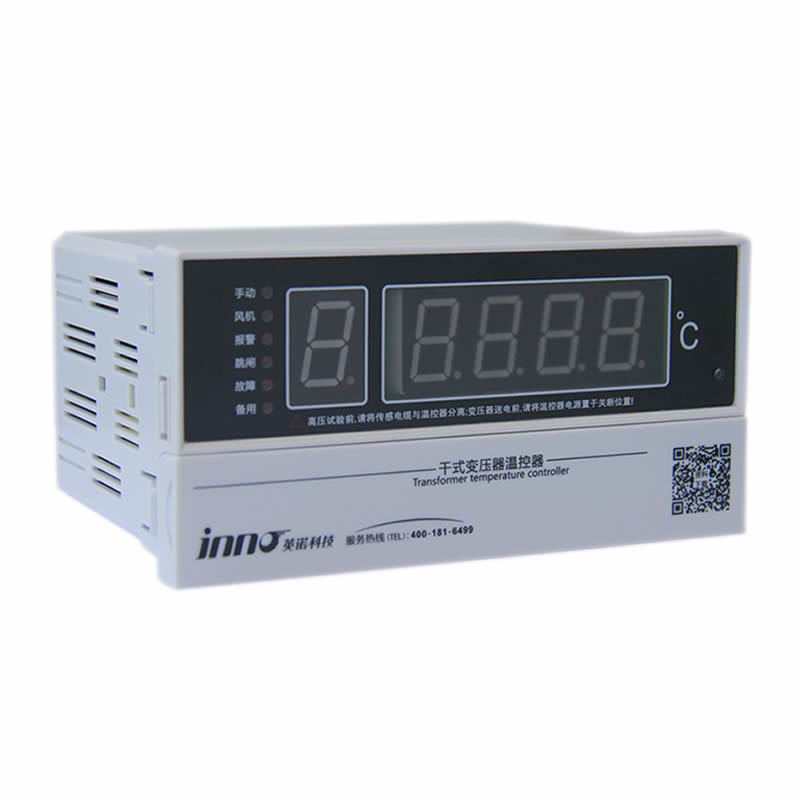
PT100センサー — platinum resistance thermometers with a nominal resistance of 100 ohms at 0°C — are the most widely deployed temperature measurement device in power transformer installations worldwide. Their simplicity, 長期的な安定性, and compatibility with standard protection relay and SCADA input modules have made them the default choice for 最高油温監視, cooling system temperature measurement, and ambient temperature compensation in transformer thermal models.
動作原理
The electrical resistance of platinum increases linearly and predictably with temperature at a rate of approximately 0.385 ohms per °C. A PT100 sensor connected to a precision measurement circuit provides a stable, repeatable temperature reading with accuracy typically in the range of ±0.3°C to ±1°C depending on sensor grade (IECの 60751 Class A or Class B) そして設置品質. 4-wire PT100 connection circuits eliminate lead resistance errors and are the required configuration for accurate temperature measurement in transformer protection applications.
Standard Applications in Transformer Monitoring
- 頂油温測定 — PT100 pocket sensors installed in transformer tank cover wells provide continuous top oil temperature readings that are the primary input to thermal overload protection relays
- Radiator inlet and outlet temperature — differential temperature measurement for cooling system efficiency monitoring
- 周囲温度補償 — external PT100 sensors provide the ambient reference temperature required by hot-spot calculation algorithms in IEC 60076-7 熱モデル
- Dry-type transformer winding surface temperature — PT100 sensors bonded to the outer surface of cast-resin windings provide a winding temperature indication, though surface measurements consistently underestimate the true internal hot-spot temperature by 10–20°C
Key Limitation
PT100 sensors cannot be embedded inside oil-immersed transformer windings due to their electrical conductivity — contact between a PT100 element and high-voltage conductors would create an immediate insulation fault. その結果, PT100-based systems rely on calculated hot-spot estimates derived from top oil temperature measurements combined with thermal model parameters, rather than direct measurement. This calculated estimate carries inherent uncertainty, particularly under dynamic load conditions and when thermal model parameters have drifted from factory values due to aging.
方法 3: Thermal Simulation Oil Temperature Indicators (巻線温度インジケーター)
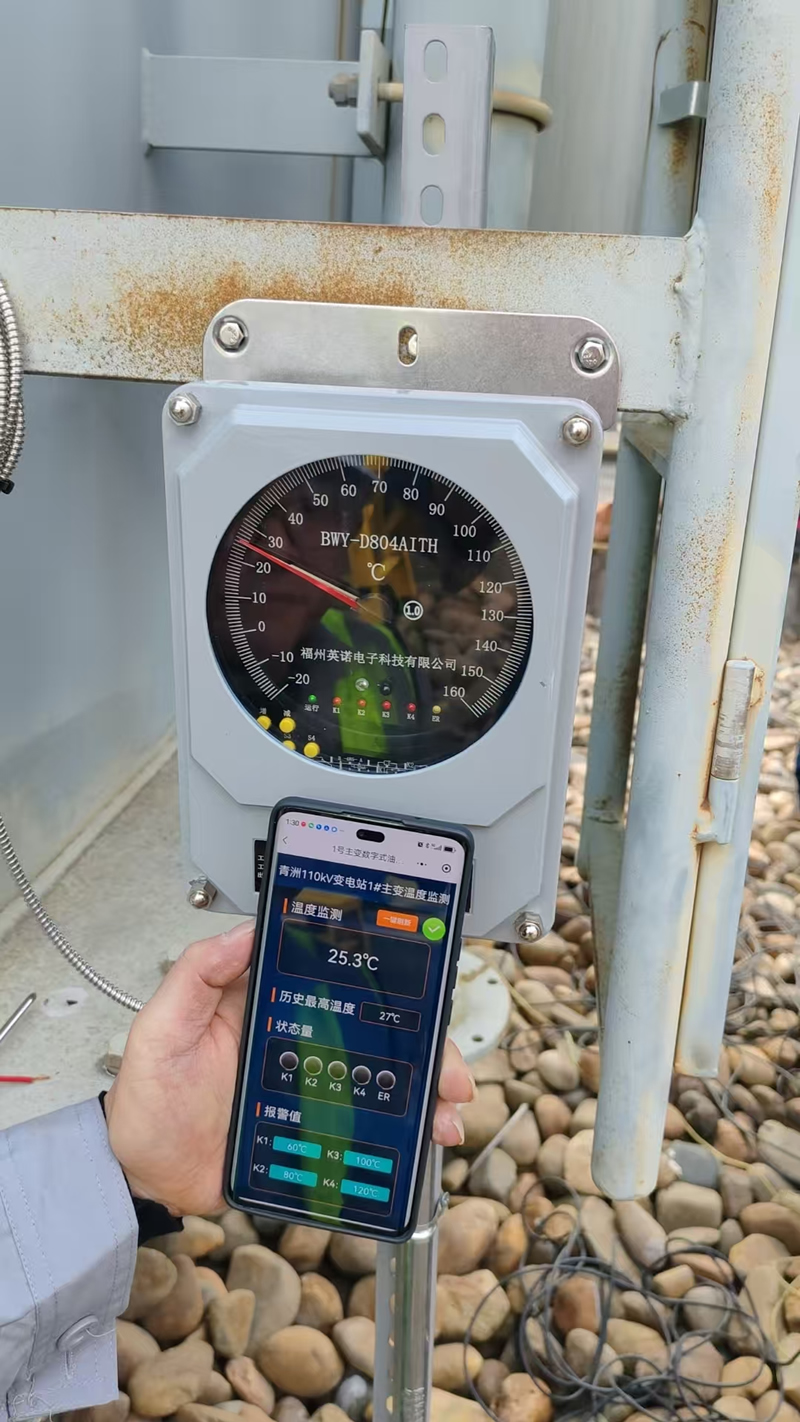
ザ thermal simulation winding temperature indicator (WTI) — also known as a ホットスポット温度シミュレータ 又は 熱画像インジケーター — 変圧器の発熱挙動のアナログ熱モデルを使用して変圧器巻線のホットスポット温度を推定する内蔵型電気機械機器です. これは、世界中で最も広く設置されている変圧器温度監視装置の 1 つです。, の配電および電源変圧器に見られます。 1 MVA~数百MVA.
動作原理
WTI は次のもので構成されています。 バイメタルダイヤル温度計 変圧器タンクの PT100 油温ポケットに設置, 小さなものと組み合わせて 発熱体 変圧器の負荷電流に比例した電流で通電 (専用変流器を介して供給). ヒーターエレメントは、油温を超える巻線の I²R 熱上昇を模倣します。そのため、温度計の指針は、油温単独ではなく、推定される巻線ホットスポットを表す温度を読み取ります。. ヒーターアセンブリの加熱電流比と熱時定数を調整することにより, WTI は、変圧器の工場でのヒートラン試験レポートで定義されている実際の巻線の熱挙動に厳密に一致するように校正できます。.
機能的な特徴
- 継続的な 推定巻線ホットスポット温度 ローカルアナログダイヤルでの読み取り - 基本的な表示に外部電源は不要
- 積分 調整可能なアラームおよびトリップ接点 (通常は 2 つの独立した接触ステージ) 保護リレーまたはSCADAアラーム入力への直接接続用
- 内蔵 ドラッグハンドインジケーター records the maximum temperature reached since last manual reset — useful for post-event analysis of overload events
- オプション 4–20mA or PT100 analog output for remote monitoring integration
- Separate cooling control contacts for automatic fan or pump start/stop based on estimated hot-spot temperature
- Available in both 油温インジケーター (終わり) 構成 (measures top oil only, no load current input) そしていっぱい 巻線温度インジケーター (WTI) configuration with load current compensation
Applications and Limitations
ザ thermal simulation WTI is the standard temperature protection device on the majority of distribution and sub-transmission transformers in service worldwide due to its low cost, mechanical simplicity, and independence from external power supplies. しかし, its analog thermal model is a simplified representation of actual winding thermal behavior — it does not account for non-uniform current distribution, localized cooling variations, or changes in winding thermal characteristics due to insulation aging. For critical high-value transformers where accurate hot-spot knowledge is essential for life management and dynamic load optimization, direct fiber optic winding temperature measurement should supplement or replace WTI-based thermal simulation.
方法 4: Wireless Temperature Monitoring Sensors
Wireless transformer temperature sensors use battery-powered transmitter nodes to collect surface temperature data at defined measurement points and relay readings to a central gateway or cloud monitoring platform via ジグビー, ロラ, 2.4GHz RF, or NB-IoT プロトコル. このアーキテクチャにより、センサーと監視システム間の信号ケーブル配線が不要になります。これは、既存の変圧器に新しい計装ケーブルを配線することが現実的でないか、コストがかかる場合の改造用途や設置において大きな利点となります。.
コアの利点
- 変圧器の外面への工具不要の取り付け, ブッシング端子, LVバスバー接続, およびケーブルラグ
- サポート マルチポイントネットワーク 単一のゲートウェイから変電所または変電所にわたる数十の測定場所をカバー
- 設定可能なアラームしきい値を備えたリアルタイムの温度データとモバイル デバイスまたは SCADA システムへのプッシュ通知
- に最適 乾式変圧器筐体監視 巻線表面温度が主な測定対象となる場合
- クラウド統合により、単一プラットフォーム上の複数の変圧器設置にわたる一元的な監視と傾向把握が可能になります
制限
Wireless sensors measure surface or near-surface temperatures only and cannot access the internal winding hot-spot of an oil-immersed transformer. Battery replacement is required typically every 2–5 years depending on transmission interval settings. Metal transformer enclosures attenuate radio frequency signals — antenna placement design and repeater positioning must be addressed during system commissioning to ensure reliable data transmission.
方法 5: 赤外線サーモグラフィー
赤外線熱画像カメラ detect the electromagnetic radiation emitted by transformer external surfaces and convert it into a calibrated visual heat map, enabling maintenance technicians to identify abnormal temperature gradients across bushings, 端子接続, cooling radiators, and tank surfaces during scheduled inspection visits without physical contact with energized equipment.
Handheld Infrared Camera vs. Fixed Online Thermal Sensor
ポータブル infrared thermography cameras are the standard tool for periodic transformer inspection rounds and provide high-resolution thermal images suitable for maintenance reports and trend comparison across successive inspection cycles. Fixed online infrared sensors mounted in dedicated observation windows on transformer enclosures or switchgear panels enable continuous thermal monitoring of specific external zones — bridging the gap between scheduled inspection intervals for high-priority assets.
Core Advantages and Limitations
Infrared thermography excels as a 非接触, rapid survey tool for external fault detection and maintenance documentation. It is fully compatible with all transformer types and voltage levels and requires no permanent installation on the transformer itself. しかし, 赤外線測定は基本的に以下に限定されます。 表面温度検出 — 変圧器タンク内の巻線ホットスポット温度は測定できません, また、自動アラームおよび保護機能に必要な継続的なリアルタイム カバレッジではなく、定期的なスナップショットのみを提供します。.
変圧器の温度監視: 技術比較表

| 基準 | 蛍光光ファイバー | PT100センサー | 熱シミュレーション WTI | ワイヤレスセンサー | 赤外線サーモグラフィー |
|---|---|---|---|---|---|
| 測定タイプ | 直巻きホットスポット | 油 / 表面温度 | 推定ホットスポット (計算された) | 表面温度 | 表面温度 |
| 監視モード | 継続的なオンライン | 継続的なオンライン | 継続的なオンライン | 継続的なオンライン | 周期的 / 予定されている |
| EMIイミュニティ | ★★★★★ | ★★★ | ★★★★ | ★★★ | ★★★★ |
| 測定精度 | ±0.5℃ | ±0.3~1℃ | ±2~5℃ (推定) | ±1°C | ±2℃ |
| 内部巻線へのアクセス | ✅ 直接 | ❌ 表面のみ | ⚠️ 計算された推定値 | ❌ 表面のみ | ❌ 外部のみ |
| リアルタイムアラーム | ✅ | ✅ | ✅ | ✅ | ❌ |
| インストールの複雑さ | 適度 (工場出荷時または後付け) | 簡単 | 簡単 | 極小 | 何一つ (ポータブル) |
| 油入対応 | ✅ | ✅ | ✅ | ⚠️外部のみ | ✅ |
| 乾式タイプに最適 | ✅ | ✅ | ⚠️限定 | ✅ | ✅ |
| IECの 60076-2 準拠 | ✅ | ⚠️間接的 | ⚠️間接的 | ❌ | ❌ |
| 最優秀アプリケーション | 重要な高圧変圧器, 巻き寿命管理 | 標準保護リレー入力, オイルモニタリング | 配電変圧器, 日常的な熱保護 | ブッシング, LV端子, 乾式後付け | 保守点検, 外部故障調査 |
7. Building the Best Transformer Thermal Monitoring System
The most effective transformer temperature monitoring solution is not a single device but a layered, integrated architecture that combines direct sensing, データ取得, アラーム管理, and system-level integration to deliver actionable thermal intelligence throughout the transformer’s operating life.
層 1 — Sensing: Matching Technology to Measurement Point
A comprehensive sensing deployment addresses all critical thermal zones of the transformer simultaneously. 蛍光光ファイバープローブ are embedded in the HV and LV winding assemblies at the factory-identified hot-spot locations to provide direct IEC 60076-2 compliant winding temperature readings. PT100センサー are installed in the tank cover oil pocket for top oil temperature measurement and in radiator inlet/outlet pipes for cooling system monitoring. ある thermal simulation winding temperature indicator (WTI) is mounted on the transformer marshalling panel to provide a local electromechanical backup indication and independent alarm contacts for protection relay tripping. ワイヤレス温度トランスミッター are applied to bushing terminal connectors, LV busbar joints, and cable terminations to extend monitoring coverage to external high-risk connection points without additional cabling.
層 2 — Data Acquisition
Fiber optic signals are processed by a multi-channel fluorescence demodulator that converts optical decay-time measurements into calibrated temperature values at sampling rates of 1–10 seconds. PT100 signals are fed directly to the transformer protection relay (例えば。, ABB RET670, Siemens 7UT) or to a dedicated RTD input module in the substation control system. Wireless sensor data is aggregated by a LoRa or ZigBee gateway mounted in the substation control room or marshalling kiosk.
層 3 — Communication and Integration
All temperature data streams converge at the substation automation system via IECの 61850 GOOSEメッセージング for protection-grade alarm transmission, Modbus TCP/RTU SCADA統合用, そして DNP3の for utility EMS connectivity. Cloud-connected deployments use MQTT over 4G/5G for remote monitoring and mobile alerting without dependence on substation LAN infrastructure.
層 4 — Monitoring Platform and Alarm Management
ザ transformer thermal monitoring software platform provides real-time temperature dashboards for all sensing points, historical trend logging with configurable retention periods, and a three-tier alarm management structure. 勧告アラーム at 95°C winding hot spot initiate automated cooling system escalation. 警告アラーム at 110°C trigger operator notification and load reduction procedures. 重大なアラーム 120℃で (or the transformer manufacturer’s defined trip threshold) initiate automatic protection relay tripping to disconnect the transformer from service before thermal runaway occurs. All threshold values are configurable and should be validated against the transformer manufacturer’s thermal design data and the applicable loading guide (IECの 60076-7 またはIEEE C57.91).
層 5 — Automated Response and SCADA Integration
On alarm activation, the system executes a coordinated response sequence: cooling system fans and pumps are automatically started at full capacity; SMS, 電子メール, and push notifications are dispatched to designated operations personnel; load shedding commands are issued to upstream protection relays if temperature continues to rise; and at the critical threshold, an automatic trip command is executed. Full integration with スカダ, EMS, CMMS, および資産管理プラットフォーム ensures that all thermal events are logged with timestamped data, enabling post-event root cause analysis and regulatory compliance reporting.
Recommended System Configurations by Transformer Type
- Critical transmission transformer (≥100 MVA, 110kV以上): Fluorescent fiber optic winding sensors (factory-embedded, HV + LV) + PT100 top oil + WTI backup indicator + wireless bushing terminal sensors + full SCADA / IECの 61850 統合
- Industrial oil-immersed transformer (10–100 MVA): Fluorescent fiber optic winding sensors + PT100 top oil and radiator monitoring + WTI with cooling control contacts + Modbus SCADA integration
- Dry-type cast-resin transformer: 蛍光光ファイバープローブ (embedded in winding during manufacture) + PT100 surface sensors + wireless LV busbar terminal sensors + local HMI display
- Distribution transformer retrofit: WTI replacement or upgrade + wireless surface sensors on bushing terminals + optional fiber optic probe insertion via tank cover port + cloud monitoring gateway
- Maintenance inspection program (all types): Periodic infrared thermographic surveys (minimum twice per year) combined with online monitoring data review for cross-validation and compliance documentation
8. 世界的な事例紹介: Transformer Temperature Monitoring in Action

The following real-world deployments illustrate how 変圧器温度監視システム have delivered measurable protection and operational value across a range of industries, 電圧レベル, and geographic regions.
ケーススタディー 1 — Transmission Substation, 英国
A major UK transmission network operator retrofitted fluorescent fiber optic winding temperature sensors into twelve 400kV autotransformers at a critical grid interconnection substation. 設置前に, the operators relied exclusively on thermal simulation WTI indicators and top oil PT100 measurements — neither of which provided direct knowledge of actual winding hot-spot conditions under dynamic load cycling. Within the first operating season following fiber optic sensor commissioning, the monitoring system identified two units operating with winding hot-spot temperatures 18–23°C above the WTI-indicated values under peak demand conditions — a discrepancy attributable to thermal model parameter drift in aging units. Load management protocols were adjusted accordingly, and both transformers were scheduled for planned inspection rather than facing the risk of an unplanned thermal failure during peak winter demand. The operator estimated the intervention prevented outage costs in excess of £2 million per affected unit.
ケーススタディー 2 — Data Center Campus, シンガポール
A hyperscale data center operator managing eight dry-type cast-resin transformers at a Tier IV facility deployed a hybrid monitoring architecture combining factory-embedded fluorescent fiber optic probes in each transformer’s HV and LV windings with a wireless temperature sensor network covering LV busbar connections, ケーブル終端ラグ, and main distribution board incoming terminals. 全て 96 measurement points across the eight transformers feed into a centralized cloud monitoring platform with mobile push notifications configured for the facility’s 24/7 operations team. During a capacity expansion overload test eighteen months after commissioning, the fiber optic system detected a winding hot-spot temperature of 158°C in one transformer — 23°C above the WTI surface indication — triggering an immediate load transfer to the standby unit. Post-event thermal analysis confirmed that the affected transformer’s resin insulation had begun surface micro-cracking consistent with sustained overtemperature exposure, validating the system’s early intervention.
ケーススタディー 3 — Rail Traction Power Substation, 中国
A metropolitan railway operator equipped traction power substations across 24 stations with multi-channel fluorescent fiber optic thermometry systems monitoring winding hot spots in Scott-connection traction transformers. The high-frequency switching transients and strong electromagnetic fields generated by traction inverter systems ruled out conventional PT100-based winding monitoring — electronic sensors in this environment experienced persistent measurement noise and false alarms. The all-optical fiber sensing architecture eliminated EMI-related false alarms entirely while delivering ±0.5°C winding hot-spot accuracy throughout the network. The system interfaces directly with the railway’s SCADA energy management system IEC経由 61850, enabling automated cooling control and load dispatch optimization based on real-time thermal headroom in each traction transformer.
ケーススタディー 4 — Petrochemical Refinery, サウジアラビア
A major refinery operator managing fourteen 11kV oil-immersed unit transformers in classified hazardous area zones implemented a comprehensive monitoring upgrade combining ATEX-rated PT100 top oil sensors, thermal simulation WTI indicators with remote 4–20mA outputs, そして intrinsically safe wireless temperature transmitters on transformer bushing terminals and HV cable termination boxes. The wireless network eliminated the need for new instrumentation cable runs through congested cable trays in the classified areas — a significant safety and cost advantage. The integrated monitoring platform flagged an abnormal bushing terminal temperature rise of 41°C above ambient on one transformer within six weeks of commissioning, leading to the discovery of a severely under-torqued terminal clamp that had been missed during the previous scheduled maintenance outage.
ケーススタディー 5 — Wind Farm Collector Substation, ドイツ
A renewable energy developer commissioned a 250 MVA offshore wind farm collector transformer equipped with factory-embedded fluorescent fiber optic probes in both HV and LV windings, と組み合わせた PT100 top oil sensors, radiator differential temperature monitoring, そして WTIインジケーター providing independent local backup protection. The fiber optic system feeds real-time hot-spot data to the wind farm SCADA platform, enabling dynamic transformer loading optimization — allowing the operator to safely push transformer output above nameplate rating during periods of favorable ambient temperature and wind resource, while automatically curtailing generation when hot-spot temperatures approach the IEC 60076-7 emergency loading threshold. The dynamic loading capability increased annual energy yield by an estimated 3.2% compared to conservative fixed nameplate-limited operation.
よくあるご質問: 変圧器の温度監視
1. Why is transformer temperature monitoring so important?
Transformer insulation — primarily cellulose paper in oil-filled units and cast resin in dry-type units — degrades irreversibly with heat exposure. According to the Arrhenius thermal aging model codified in IEC 60076-7, 6~10℃の過熱が継続するごとに、残りの絶縁寿命が半減します. それなし 変圧器温度の連続監視, 熱劣化は目に見えない形で進行し、絶縁不良により計画外の停止が発生します。, 火, または壊滅的な変圧器損失. プロアクティブな監視により、状態に基づいたメンテナンスが可能になります, 動的負荷管理, 熱損傷が回復不能になる前にタイムリーな介入を行う.
2. 巻線温度インジケーターとの違いは何ですか (WTI) および直接光ファイバー巻き取りセンサー?
ある thermal simulation winding temperature indicator (WTI) アナログ熱モデルを使用して巻線のホットスポット温度を推定します。最高油温度を測定し、負荷電流に比例して計算された温度増分を追加します。. この推定値には、±2 ~ 5°C 以上の固有の不確実性が伴います。, particularly under dynamic load conditions or when the transformer’s thermal characteristics have changed due to aging. ある fluorescent fiber optic winding sensor measures the actual temperature at the physical hot-spot location inside the winding — providing a direct, real-time reading with ±0.5°C accuracy that requires no thermal model assumptions. For critical high-value transformers, direct fiber optic measurement provides significantly higher confidence in thermal condition assessment than WTI simulation alone.
3. What temperature should trigger a transformer winding alarm?
Alarm thresholds depend on transformer insulation class, design rating, and applicable loading standard. For standard mineral-oil transformers with Class A cellulose insulation, IECの 60076-7 defines a continuous hot-spot limit of 98°C for normal cyclic loading, で emergency loading limits up to 140°C for short-duration contingency operation. Typical protection relay settings use a first-stage alarm at 100–110°C winding hot spot to initiate cooling escalation and operator notification, と second-stage trip at 120–130°C to automatically disconnect the transformer. For dry-type cast-resin transformers, thermal class F (155°C) and class H (180°C) windings carry higher permissible operating temperatures — consult the transformer manufacturer’s documentation for model-specific settings.
4. Can fluorescent fiber optic probes be retrofitted into an existing oil-immersed transformer?
はい, in many cases. Retrofit installation of fluorescent fiber optic sensors in existing oil-immersed transformers is technically feasible during planned maintenance outages when the transformer is de-energized and oil drained or partially lowered. Probes are inserted through the transformer tank cover via dedicated fiber feedthrough fittings and guided into the winding assembly using flexible insertion tools. The specific feasibility depends on winding construction, available tank access points, and the transformer manufacturer’s guidance. For new transformer procurement, specifying factory-installed fiber optic probes during manufacture is the preferred approach as it ensures optimal sensor placement at the design hot-spot location.
5. What is the difference between top oil temperature and winding hot-spot temperature?
最高油温 is the temperature of the insulating oil at the highest point in the transformer tank — measured by a PT100センサー in the tank cover pocket. It represents the bulk thermal state of the transformer’s cooling medium. 巻線ホットスポット温度 is the highest temperature point within the winding conductor and insulation assembly — typically located in the upper portion of the coil and consistently higher than the surrounding oil temperature by 15–40°C depending on load level and cooling mode. It is the winding hot-spot temperature, not the top oil temperature, that directly governs insulation aging rate and permissible loading capacity. Relying on top oil temperature alone systematically underestimates the thermal stress on transformer insulation.
6. Do transformer temperature monitoring systems need to comply with IEC standards?
はい. The primary applicable standards for 変圧器温度監視 は IECの 60076-2 (Temperature rise for liquid-immersed transformers — defines hot-spot measurement methodology), IECの 60076-7 (Loading guide for oil-immersed power transformers — defines thermal aging model and loading limits), そして IECの 60354 (Loading guide for oil-immersed power transformers, superseded by IEC 60076-7 but still referenced). 乾式変圧器用, IECの 60076-11 applies. Protection relay and monitoring system integration follows IECの 61850 for substation automation communication. Buyers should confirm that proposed monitoring systems are designed to these standards and that sensor accuracy and calibration traceability are documented accordingly.
7. Is wireless temperature monitoring suitable for use inside oil-immersed transformer tanks?
いいえ. ワイヤレス温度センサー are electronic devices that require a battery power source and radio frequency signal transmission — neither of which is compatible with the interior of an energized oil-filled transformer tank. Wireless sensors are appropriate for external transformer surface monitoring applications: bushing terminal connections, LV busbar joints, cable termination boxes, and dry-type transformer enclosure surfaces. For internal winding hot-spot monitoring of oil-immersed transformers, 蛍光光ファイバーセンサー are the only technology that can be safely installed inside the energized transformer tank.
8. How long do fluorescent fiber optic temperature sensors last in transformer service?
Fluorescent fiber optic sensing probes are passive optical components with no active electrical elements, 可動部品, or consumable materials at the sensing point. Under normal transformer operating conditions — including continuous immersion in mineral oil, thermal cycling between ambient and rated hot-spot temperatures, and exposure to dissolved gases and moisture — documented field service lifetimes exceed 20–25 years without degradation of measurement accuracy or sensor integrity. The external demodulator electronics have a typical design life of 10–15 years with routine maintenance. This long service life makes fiber optic sensing a cost-effective investment over the full operational life of the transformer asset.
9. Can a transformer temperature monitoring system integrate with existing SCADA or EMS platforms?
はい. All major 変圧器温度監視システム support the standard industrial communication protocols required for SCADA, EMS, and substation automation integration. Common supported protocols include IECの 61850 (GOOSE and MMS) for protection-grade substation communication, Modbus RTU/TCP for general SCADA connectivity, DNP3の for utility EMS and telecontrol systems, そして MQTT over 4G/5G for cloud-based remote monitoring deployments. との統合 コンピュータによる保守管理システム (CMMS) そして digital asset management platforms enables automatic work order generation on alarm events and continuous trending of transformer thermal health indicators alongside other condition monitoring data streams.
10. How do I select the best transformer temperature monitoring solution for my specific application?
The optimal solution depends on four primary factors. 初め, transformer type and voltage level: oil-immersed units above 10kV benefit most from direct fiber optic winding monitoring; dry-type units are well served by embedded fiber optic probes combined with wireless surface sensors. 2番, criticality and replacement cost: transmission transformers above 100 MVA with 12–24 month replacement lead times justify comprehensive fiber optic monitoring; distribution transformers may be adequately protected by WTI plus PT100 with periodic infrared inspection. 三番目, new build vs. 改造: factory-embedded fiber optic probes are the most cost-effective approach for new transformers; retrofit projects should evaluate the feasibility of probe insertion versus wireless external monitoring as the primary upgrade path. 4番目, 統合要件: facilities with existing SCADA or IEC 61850 substation automation infrastructure should specify monitoring systems with native protocol support to avoid costly middleware integration. Contact a specialist transformer monitoring supplier to obtain a site-specific system recommendation based on your transformer nameplate data, プロファイルの読み込み, および監視目標.
Get the Right Transformer Temperature Monitoring Solution for Your Project
Whether you are commissioning a new high-voltage power transformer, upgrading protection on aging critical assets, or building a fleet-wide thermal monitoring program across multiple substations, selecting the right combination of 蛍光光ファイバーセンサー, PT100 detectors, thermal simulation indicators, and wireless monitoring technology is a decision that directly affects transformer longevity, 動作信頼性, and personnel safety.
フジンノ (福州イノベーション電子科学&テック株式会社, 株式 会社。) を専門とする fluorescent fiber optic transformer temperature monitoring systems with over a decade of deployment experience across high-voltage switchgear, 電源トランス, GIS機器, 乾式変圧器, and rail traction power systems. 当社のエンジニアリングチームは、アプリケーション固有のシステム設計を提供します, 工場出荷時の校正, 設置サポート, and long-term technical service for projects at all scales — from single-transformer protection upgrades to multi-site utility monitoring programs.
- 📧 電子メール: web@fjinno.net
- 📱 ワッツアップ / WeChat(ウィーチャット) / 電話: +86 135 9907 0393
- 💬 QQの: 3408968340
- 🌐 Webサイト: www.fjinno.net
- 📍 住所: 連東U穀物ネットワーキング工業団地, 興業西路12号, 福州, 福建省, 中国
免責事項: 技術情報, 温度しきい値, and standard references in this article are provided for general guidance purposes only. Specific transformer protection settings, センサー仕様, and system configurations must be determined by qualified electrical engineers in accordance with the transformer manufacturer’s documentation, applicable IEC and IEEE standards, and local regulatory requirements. Always follow established safety procedures when working on or near energized electrical equipment.

光ファイバー温度センサ, インテリジェント監視システム, 中国の分散型光ファイバーメーカー
 |
 |
 |