 INNO 光ファイバー温度センサー ,温度監視システム.
- Embedded temperature monitoring systems place sensors directly inside generator stator windings, ベアリング, and cores to detect overheating before damage occurs.
- 蛍光光ファイバー温度センサー are fully immune to electromagnetic interference and provide inherent high-voltage insulation, making them the ideal choice for generator internal monitoring.
- Compared with traditional RTDs and thermocouples, fiber optic sensors deliver more stable readings, longer service life, and lower maintenance in strong electromagnetic environments.
- A complete system includes sensing probes, 光ファイバーケーブル, ある 光ファイバー復調器, ディスプレイモジュール, and monitoring software with multi-channel parallel measurement.
- Applications span hydro generators, steam turbine generators, 風力発電機, diesel generator sets, and large industrial motors.
目次
- What Is Embedded Temperature Monitoring of Generators
- Why Generator Temperature Monitoring Is Critical
- Key Monitoring Points Inside a Generator
- 組み込み発電機の温度監視の仕組み
- 発電機の温度監視のためのセンサー技術
- 発電機巻線用の光ファイバーセンサーと RTD センサー
- 光ファイバー発電機監視ソリューションのシステムコンポーネント
- リアルタイムアラームとホットスポット検出
- 発電機の種類を超えたアプリケーション
- 組み込み発電機の温度監視に関する FAQ
1. とは何ですか 発電機の組み込み温度監視
定義とコアコンセプト
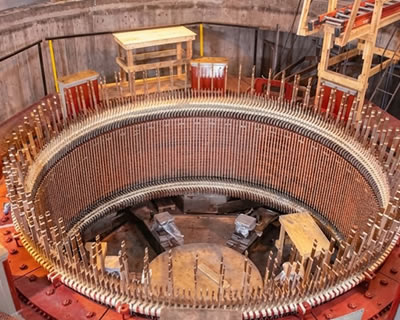
組み込み温度監視とは、発電機の重要な場所、つまり固定子巻線スロット内に温度センサーを直接取り付ける方法を指します。, ベアリングハウジング, およびコア歯セクション — 連続用, リアルタイム温度測定. 外表面測定とは異なります, 内蔵モニタリングにより、熱源に最も近い実際の温度を捕捉します, giving operators the most accurate thermal picture of the machine’s internal condition.
Why Generators Need Internal Temperature Monitoring
動作中, a generator produces heat from multiple sources. Current flowing through stator windings creates copper losses. Magnetic flux alternating in the core generates iron losses. Friction in bearings produces mechanical heat. If any of these heat sources goes undetected or uncontrolled, the consequences can be severe — accelerated insulation aging, shortened equipment lifespan, and in worst cases, winding burnout or forced outage. アン embedded temperature monitoring system serves as the frontline defense for condition-based maintenance and asset protection.
Industry Standards and Requirements
Embedded temperature monitoring is standard practice across the global power generation industry. Whether in large hydroelectric plants, thermal power stations, 原子力施設, or distributed diesel generator sets, continuous winding temperature measurement is required. IECを含む国際規格 60034 and IEEE C50 series explicitly mandate generator winding temperature monitoring for machines above certain ratings.
2. Why Generator Temperature Monitoring Is Critical

Insulation Life and the 10-Degree Rule
The relationship between temperature and insulation life follows a well-established principle known as the 10-degree rule: for every 10 °C rise in operating temperature above the rated value, insulation life is roughly cut in half. This means that even a modest, sustained temperature increase can dramatically shorten the service life of stator winding insulation. 正確な, 継続的な stator winding temperature monitoring is the most effective way to protect this critical investment.
致命的な障害の防止
検出されていない巻線の過熱は、ターン間の短絡を引き起こす可能性があります, 地絡, そして火さえも. 軸受温度の異常は、潤滑不良などの機械的問題の初期兆候として機能することがよくあります。, 位置ずれ, またはベアリングの摩耗. 適切に設定された 発電機状態監視システム センサーが埋め込まれているため、可能な限り早期に警告を発します, 目に見える損傷が発生するかなり前に.
計画外停止による経済的影響
計画外の発電機停止のコストは膨大です. 修理や交換の費用だけでなく、停電による収益の損失も含まれます。. 実用規模の発電機向け, 単一の大きな障害が数十万ドル、さらには数百万ドルに及ぶ損失をもたらす可能性があります。. The investment in a reliable embedded temperature monitoring system represents a fraction of the potential loss from one catastrophic event.
Optimizing Operational Efficiency
Beyond protection, temperature data helps plant operators optimize load distribution, adjust cooling system parameters, and plan maintenance schedules more effectively. This data-driven approach improves overall generator availability and operating efficiency while reducing unnecessary maintenance interventions.
3. Key Monitoring Points Inside a Generator
Stator Winding
The stator winding is the single most important monitoring location. 光ファイバー温度センサー probes are typically embedded within winding slots, between coil layers, or at the end-winding region to measure copper conductor or insulation temperature. Because temperature distribution across different slots is rarely uniform, 最もホットなスポットを確実に捕捉するために複数のセンサーが配置されています.
ステーターコア
コア損失が発熱する, 局所的なコアの過熱は、積層の短絡または積層間の絶縁劣化を示している可能性があります。. コアの歯先またはヨーク部分に埋め込まれたセンサーがコアの状態を監視し、進行中の問題を早期に特定するのに役立ちます.
ベアリング
ベアリング温度の上昇は潤滑不足を示している可能性があります, オイルの劣化, ベアリングの摩耗, またはシャフトのミスアライメント. ガイドベアリングとスラストベアリングの両方を監視するのが標準的な方法です。 発電機ベアリング温度監視 事実上すべての大型回転機械で.
冷却媒体
冷却空気または冷却水の出入口温度の測定, クーラーの効率とともに, 冷却システムが正しく機能しているかどうかを判断するのに役立ちます. この情報は、発電機側の熱問題と冷却システムの欠陥を区別するために不可欠です。.
追加の監視ポイント
発電機の種類と容量による, 追加のモニタリングはコレクタ リングをカバーする可能性があります, 水素冷却発電機の水素シール領域, およびブッシング端子.
4. 組み込み発電機の温度監視の仕組み
蛍光ファイバー光学センシング原理
あ 蛍光光ファイバー温度センサー 蛍光減衰時間測定の原理に基づいて動作します. プローブの先端には蓄光材料が含まれています. の 光ファイバー復調器 励起光パルスを光ファイバーを通してプローブに送信します。. 燐光材料はこのエネルギーを吸収し、蛍光残光信号を再放出します。. この残光の減衰時間は温度によって正確に変化します。. 復調器はこの減衰時間を測定し、正確な温度測定値に変換します。. The entire sensing chain is purely optical — no electrical signals are involved at the measurement point.
Signal Transmission Path
Starting from the probe embedded inside the generator winding slot, の fluorescent optical fiber is routed along the end winding, exits through a sealed cable gland in the generator frame, and connects to the demodulator installed outside the machine. The demodulator transmits calibrated temperature data via RS485, Modbus, or Ethernet communication to local display units and supervisory software.
Multi-Channel Parallel Monitoring
A single demodulator unit can support multiple sensing channels, simultaneously monitoring temperatures across numerous winding slots, multiple bearings, and other locations. The software platform consolidates all channel data into a unified dashboard for at-a-glance supervision.
5. 発電機の温度監視のためのセンサー技術
蛍光ファイバー光学センサー - 推奨される選択肢
蛍光光ファイバー温度センサー 発電機用途に独自の利点を組み合わせて提供します: 電磁干渉に対する完全な耐性 (EMI/RFI), 固有の高電圧電気絶縁, 感知点に電力は必要ありません, 狭い巻線スロットへの埋め込みに適したコンパクトなプローブ サイズ, 高温耐性, 非常に長い耐用年数, メンテナンスの必要性は事実上ゼロです.
RTD (測温抵抗体)
PT100 などのプラチナ RTD は、従来のセンサーの選択肢でした。 発電機巻線温度測定. RTD は適度な精度を提供しますが、, これらは、強い電磁場でアンテナとして機能する金属リード線を備えた電気センサーです。. この干渉の影響を受けやすいため、測定の信頼性が損なわれます, また、導電性のリード線により、高電圧環境では絶縁破壊のリスクが生じます。.
熱電対
Thermocouples see some use in generator monitoring but face similar electromagnetic interference challenges. Their accuracy and long-term stability are generally inferior to fiber optic alternatives, and electrical isolation remains a significant concern in high-voltage machines.
赤外線サーモグラフィー
Infrared cameras are useful for external surface temperature scanning and visual inspections during maintenance outages, but they cannot provide continuous embedded measurement inside winding slots. Infrared methods serve only as a supplementary tool.
6. 発電機巻線用の光ファイバーセンサーと RTD センサー

電磁適合性
The interior of a generator is an extreme electromagnetic environment — strong alternating magnetic fields, 高電圧, and high-frequency harmonics. RTD metallic lead wires pick up interference signals like antennas, degrading measurement accuracy. 光ファイバー温度センサー are constructed entirely from non-conductive materials, この問題を根本的なレベルで解決する.
電気絶縁性能
光ファイバーセンサーは固有のガルバニック絶縁を提供します. プローブと復調器の間に導電パスはありません. 高電圧巻線環境における RTD の金属リードには絶縁破壊の潜在的なリスクが伴います, 追加の絶縁処理と継続的な検査が必要.
プローブのサイズと設置の柔軟性
光ファイバープローブは直径が非常に小さいのが特徴です, 巻線スロットの狭いスペースへの柔軟な設置が可能. RTDプローブ, シールド付きリード線および保護スリーブと組み合わせた場合, かさばり、配線が難しくなる傾向があります.
長期的な安定性とメンテナンス
光ファイバーセンサーは電気化学的腐食やリード線の酸化がありません, 優れた長期安定性を実現. RTDs operating in high-temperature, high-humidity conditions may experience drift over time and require periodic recalibration.
Comparison Summary
| パラメータ | 光ファイバーセンサー | 測温抵抗体 (PT100) |
|---|---|---|
| EMI耐性 | 完了 | 感受性の高い |
| 電気絶縁 | Inherent full isolation | Requires additional insulation |
| 正確さ | ±0.5 °C typical | ±0.5 °C typical |
| プローブのサイズ | 非常にコンパクト | シールド付きでさらに大きい |
| 耐用年数 | 20+ 年 | 10–15 years |
| メンテナンス | Virtually none | 定期的な再校正 |
| 総所有コスト | Lower over lifetime | Higher due to maintenance |
7. System Components of a Fiber Optic Generator Monitoring 解決

光ファイバー復調器
の 光ファイバー復調器 is the signal processing core of the system. It receives optical signals from each sensor channel and outputs calibrated temperature values. Industrial-grade design ensures reliable operation in power plant environments with wide operating temperature ranges and robust communication interfaces.
Fluorescent Fiber Optic Temperature Probe
の 蛍光光ファイバー温度プローブ is the sensing element embedded inside the generator. プローブは、さまざまな設置要件に合わせて、さまざまなフォームファクターと温度定格で利用できます。, 標準スロット埋め込み構成から表面実装構成まで.
蛍光光ファイバーケーブル
の fluorescent optical fiber ケーブルはプローブを復調器に接続します. 繰り返しの曲げにも耐えられるよう設計されています, 振動, 発電機環境で遭遇する高温.
ディスプレイモジュール
地元の人 温度表示モジュール 機械の設置場所または制御室でリアルタイムの温度測定値を提供します, 運用担当者による素早い目視確認をサポート.
監視ソフトウェアプラットフォーム
ソフトウェアがデータ取得を処理します, トレンド表示, アラーム管理, 履歴データのアーカイブ, そしてレポートの生成. 標準通信プロトコルを介してプラントの DCS および SCADA システムとの統合をサポートします.
8. リアルタイムアラームとホットスポット検出

警報機構
このシステムでは、監視チャネルごとに独立した事前警報および警報しきい値を設定できます。. When a temperature exceeds the pre-alarm setpoint, the system issues a warning notification. アラームしきい値を超えた場合, 緊急警報が鳴る, 自動負荷軽減またはトリップ動作のために発電機保護リレーにリンクできます。.
ホットスポットの検出
同じ発電機の異なる巻線スロットに分散されたセンサーからの温度測定値を比較することによって, システムは局所的なホットスポットを自動的に識別します. ホットスポットの出現は、局所的な絶縁劣化を示している可能性があります, 冷却ダクトの詰まり, またはローカルコア障害. 早い 発電機のホットスポット検出 問題が拡大する前に的を絞ったメンテナンスが可能になります.
温度上昇傾向分析
監視ソフトウェアは、絶対温度値だけでなく、時間の経過に伴う温度変化率も追跡します。. An abnormal rate of temperature rise — even if the absolute value has not yet reached the alarm threshold — can indicate a developing fault and prompts early investigation.
9. 発電機の種類を超えたアプリケーション
Hydro Generators
Large hydro generators operate at low speeds with high pole counts, resulting in large stator diameters and extensive winding lengths. Multiple embedded 光ファイバー温度センサー are distributed around the stator circumference to capture the full thermal profile.
Steam Turbine Generators
High-speed steam turbine generators in thermal and nuclear power plants demand robust monitoring of both stator winding and hydrogen-cooled environments. Fiber optic sensors excel in these high-voltage, high-EMI conditions.
Wind Turbine Generators
Wind generators face challenging environmental conditions including wide temperature swings, 湿度, と振動. The maintenance-free nature of fiber optic sensors is particularly valuable in remote or offshore wind installations where access is limited.
Diesel Generator Sets and Large Motors
For backup power diesel generators and large industrial motors, embedded temperature monitoring ensures reliable operation during critical duty cycles and extends equipment service life.
10. 組み込み発電機の温度監視に関する FAQ
Q1: What is embedded temperature monitoring in generators?
Embedded temperature monitoring involves placing sensors directly inside a generator’s stator winding slots, ベアリング, and core to measure internal temperatures continuously in real time. This approach captures data at the actual heat source rather than on external surfaces.
第2四半期: Why are fiber optic sensors preferred over RTDs for generator winding monitoring?
蛍光光ファイバー温度センサー 電磁干渉の影響を完全に受けず、固有の電気絶縁を提供します, 発電機内の強い電磁環境において、RTD よりもはるかに信頼性が高くなります。.
Q3: 蛍光ファイバー光温度センサーはどのように機能しますか?
センサープローブには、光パルスによって励起されると蛍光残光を発する燐光材料が含まれています。. この残光の減衰時間は温度によって変化します. の 光ファイバー復調器 減衰時間を測定し、正確な温度測定値に変換します。.
Q4: 光ファイバー発電機センサーはどの温度範囲を測定できますか?
発電機で使用される一般的な蛍光光ファイバーセンサーは、-40 °C から 40 °C までの範囲をカバーします。 +250 ℃, これは、ほとんどの発電機巻線絶縁クラスの動作温度を快適にカバーします。.
Q5: How many sensors are typically installed in one generator?
The number varies with generator size and design. A large hydro or steam turbine generator may have 6 に 24 or more embedded winding temperature sensors, plus additional sensors for bearings and cooling circuits.
Q6: Can fiber optic sensors be retrofitted into existing generators?
はい. While the easiest installation occurs during manufacturing or a major rewind, fiber optic probes can be retrofitted during scheduled maintenance outages. Their small probe size simplifies installation in tight spaces.
Q7: What communication protocols does the monitoring system support?
Standard systems support RS485, Modbus RTU/TCP, and Ethernet communication, enabling straightforward integration with plant DCS and SCADA platforms.
Q8: How often do fiber optic temperature sensors need calibration?
蛍光光ファイバーセンサーは優れた長期安定性を示し、通常、耐用年数を通じて再校正が必要ありません。, 超えることができるもの 20 年.
Q9: ジェネレーターのホットスポット検出とは何ですか?
発電機のホットスポット検出 複数の埋め込みセンサーの読み取り値を比較することにより、固定子巻線内の異常に高温になっている局所領域を特定するプロセスです。. ホットスポットは絶縁劣化を示している可能性があります, 冷却通路の詰まり, またはコア障害.
Q10: 監視システムはさまざまな種類の発電機と互換性がありますか?
はい. 光ファイバー内蔵温度監視システムが水力発電機全体で使用されています, steam turbine generators, ガスタービン発電機, 風力発電機, diesel generator sets, 世界中の大型産業用モーター.
免責事項: この記事で提供される情報は、一般的な情報提供および教育のみを目的としています。. 正確性を確保するためにあらゆる努力が払われていますが、, Fjinno は、特定の設置条件または動作条件に対するコンテンツの完全性または適用性について、いかなる保証も表明も行いません。. 製品仕様とシステム機能は異なる場合があります. プロジェクト固有の技術指導および製品選択用, エンジニアリングチームにご連絡ください。 www.fjinno.net. 記載されているすべての製品名および商標は、それぞれの所有者の財産です。.

光ファイバー温度センサー, インテリジェント監視システム, 中国の分散型光ファイバーメーカー
 |
 |
 |