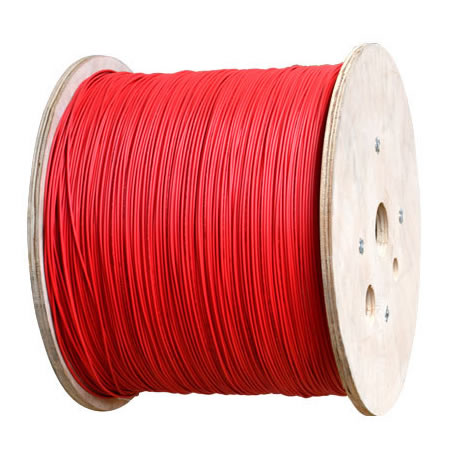
Sensori di temperatura a fibra ottica INNO ,sistemi di monitoraggio della temperatura.
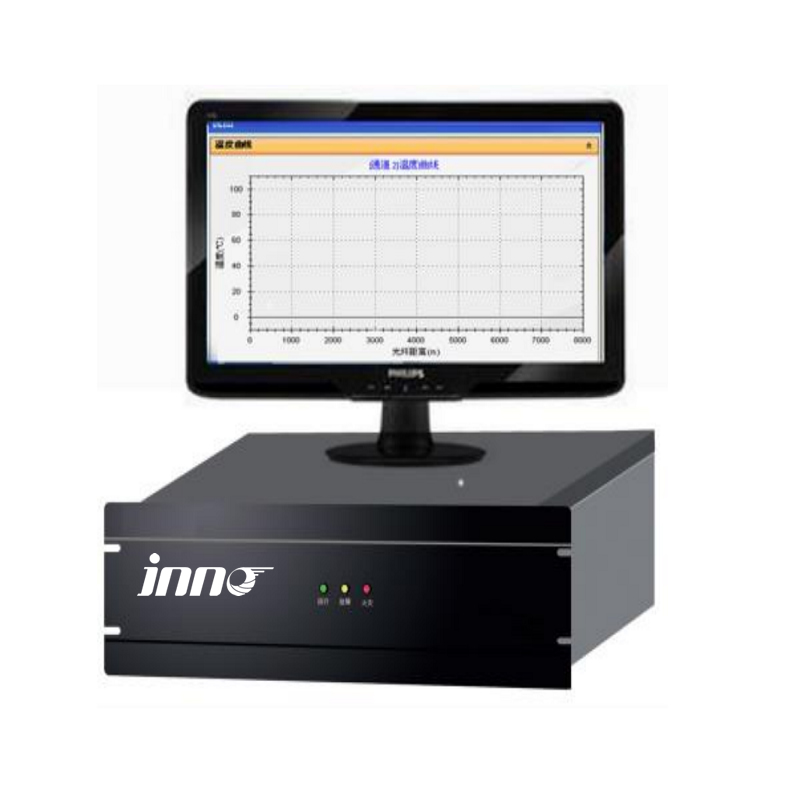

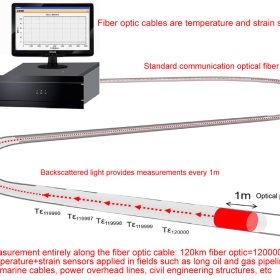


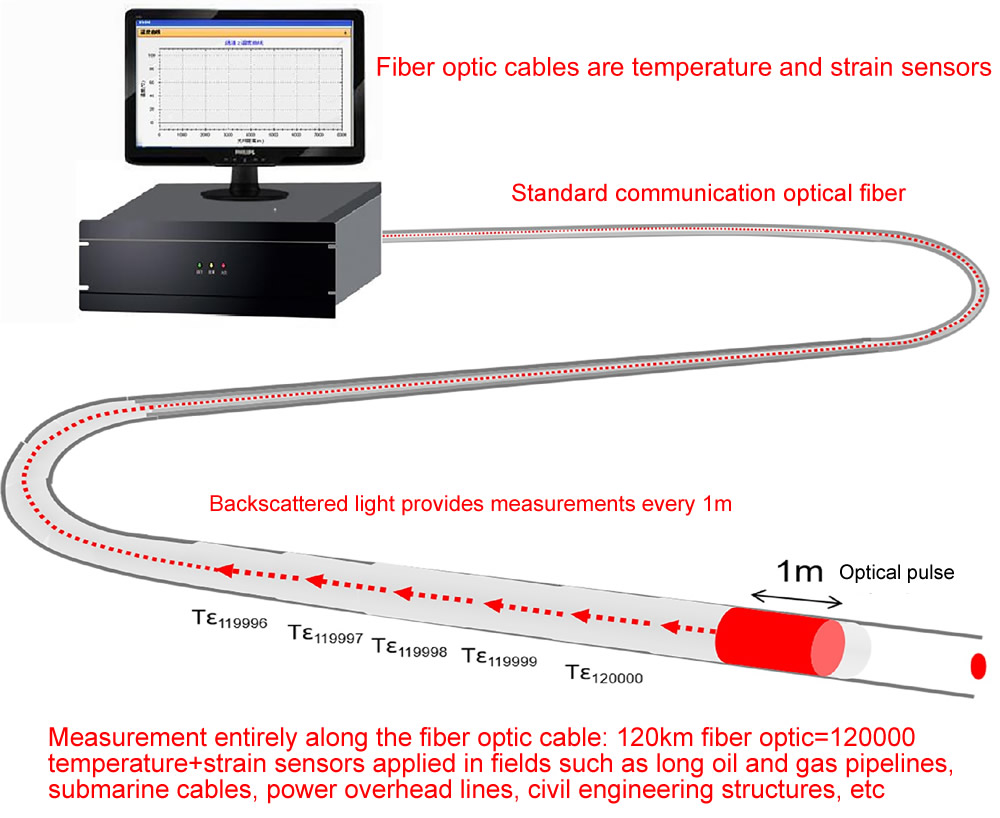
L'analizzatore ottico nel dominio del tempo Brillouin ospita il monitoraggio IF-BOTDA, noto anche come sensore di temperatura e deformazione distribuito in fibra ottica, adotta l'effetto backscatter Brillouin in fibra ottica e il principio della riflessione ottica nel dominio del tempo OTDR. È l'ultima generazione di sensori in fibra ottica distribuiti nel mondo, che può raggiungere la temperatura, sottoporre a tensione, e misurazione dello spettro in vari punti lungo la fibra ottica per distanze ultra lunghe. The maximum measurement distance is up to 60km, the measurement accuracy is 1 ℃/20ue, and the measurement time is 60s. The system uses standard communication single-mode optical fibers as sensors, which combine transmission and sensing, and can monitor subtle temperature and strain changes in real time. It has important applications in fields such as long-distance oil and gas pipelines, submarine optoelectronic composite cables, power overhead lines, dighe, ponti, ecc.
Functional characteristics
Ultra long distance continuous distributed measurement, with a maximum measurement distance of 120km
Temperatura, sottoporre a tensione, and frequency should be measured
Elevata precisione di misurazione, stable and reliable measurement
Frequency absolute encoding, unaffected by fluctuations in light source intensity, fiber optic micro bending, fiber optic hydrogen loss, ecc. Single mode communication fiber can be directly used for sensors, integrating “trasmissione” E “rilevamento”
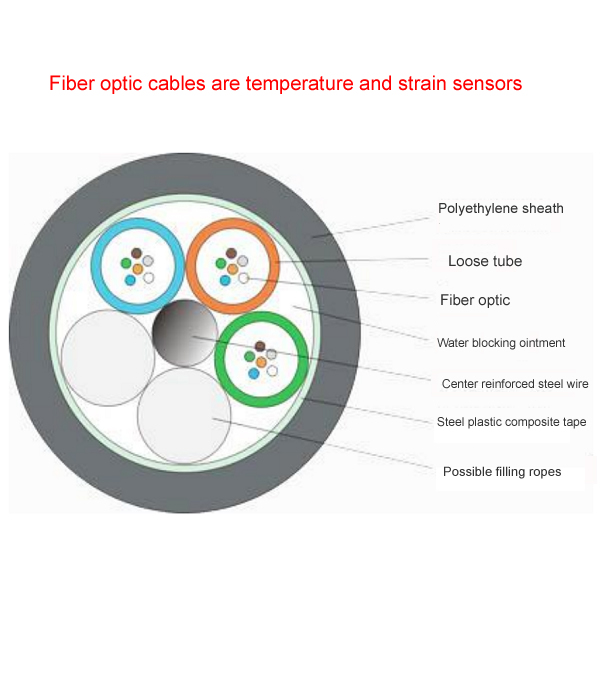
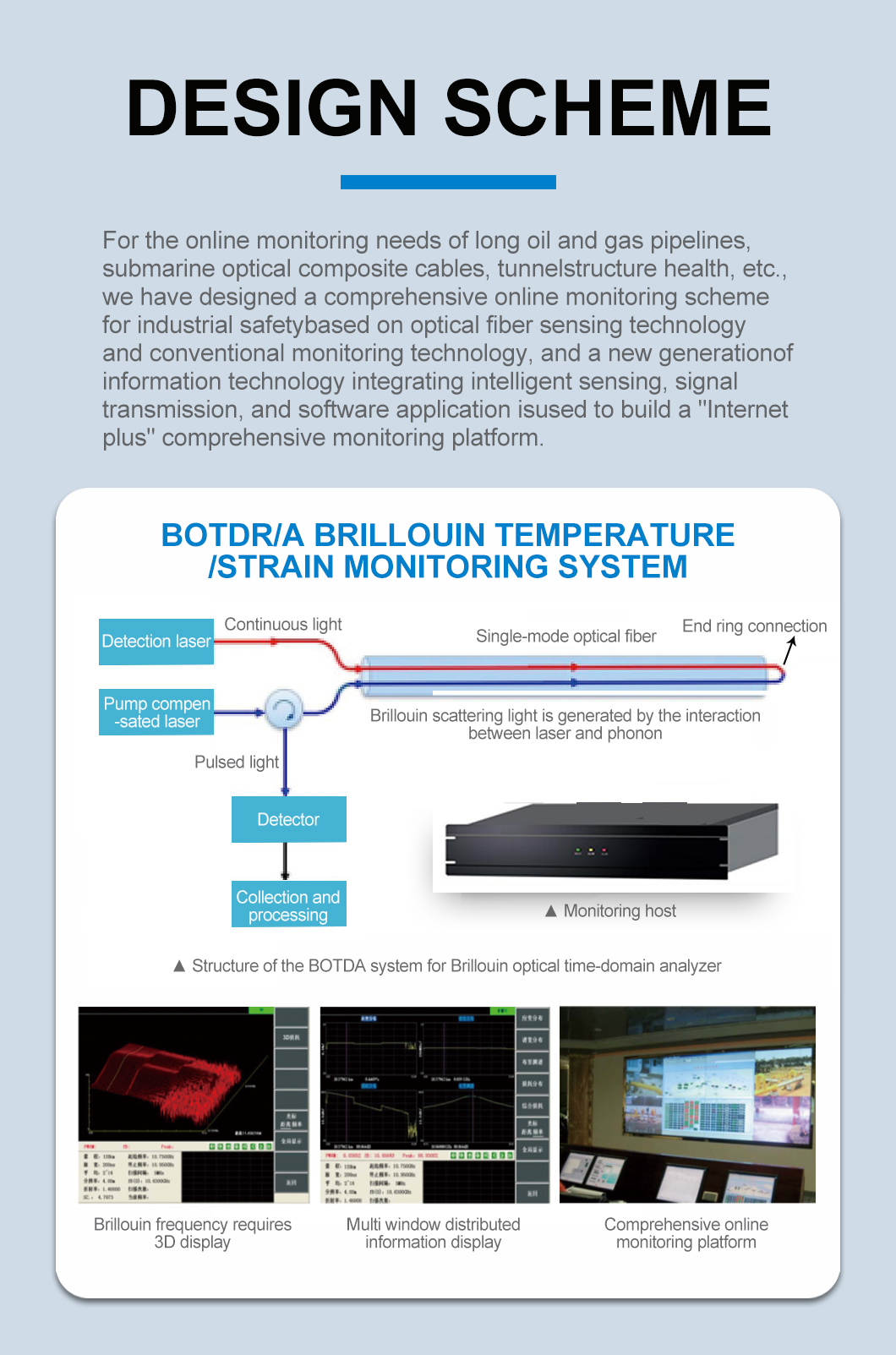
Brillouin optical time-domain analyzer measuring principle
Quando la luce viene trasmessa nelle fibre ottiche, due to the slight non-uniformity of optical properties such as density and refractive index of the fiber material, incident light will produce scattering phenomenon. Brillouin scattering is the process of light scattering generated by the interaction between light waves and sound waves when propagating in optical fibers. When the ambient temperature changes or the optical fiber undergoes deformation, both the speed of sound and the refractive index of light in the optical fiber will change, resulting in a change in Brillouin frequency shift, and the change in Brillouin frequency shift is A. There is a linear relationship between the temperature AT around the optical fiber and the axial strain Ax.

Nella formula, Cx e Cx rappresentano il coefficiente di temperatura e il coefficiente di deformazione dello spostamento di frequenza della fibra Brillouin, rispettivamente. Il sensore a fibra ottica Brillouin adotta la codifica assoluta della frequenza, che non è influenzato dalle fluttuazioni della potenza della sorgente luminosa, perdita di giunzione delle fibre, microflessione della fibra, perdita di fibre, ecc. La precisione della misurazione è elevata, e la misurazione è stabile e affidabile a lungo termine.
L'analizzatore ottico Brillouin nel dominio del tempo BOTDA si basa sull'effetto di diffusione Brillouin stimolato. Utilizza due sorgenti laser a larghezza di linea ultra stretta, vale a dire la luce della pompa (segnale luminoso a impulsi) e la luce della sonda (segnale luminoso continuo), da iniettare su entrambe le estremità della fibra di rilevamento, misurare il segnale luminoso della sonda all'estremità della luce pulsata della fibra di rilevamento, ed eseguire l'acquisizione e l'elaborazione dei dati ad alta velocità. When the frequency difference between the pump light and the probe light is equal to the Brillouin frequency shift in a certain region of the fiber, stimulated Brillouin amplification effect occurs in that region, and energy transfer occurs between the two light sources. By scanning and detecting the frequency of light, the Brillouin spectrum at any point along the fiber optic can be obtained, thereby obtaining distributed temperature and strain measurements. Due to the use of stimulated Brillouin amplification effect, the scattered signal at the end of the sensing fiber is effectively amplified. Perciò, BOTDA can achieve high-precision measurement of up to 60km, and the measurement performance is far superior to fiber optic sensors based on Raman scattering.
Real time data collection: Real time collection of fiber Brillouin spectrum values from the monitored area point by point, forming a real-time temperature and strain database.
Real time data display: Real time display of temperature and strain distribution curves collected from the current area.
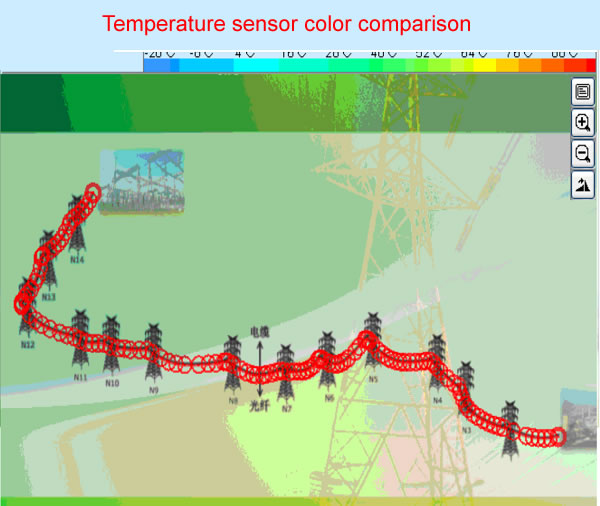
Visual view: Map the detection fiber optic cable routing and monitoring area one by one according to customer needs, and visually display the alarm location.
◆ Multiple multi-level alarms: Provides three alarm methods: fixed value, change rate, and regional difference. The alarm value can be set at multiple levels according to user requirements.
◆ Zone setting alarm: The monitored area can be divided into multiple zones, and each zone can independently set alarm values to achieve differentiated monitoring.
◆ Historical data display: Users can use the database to search for the temperature strain curve of a certain period of time in a certain area and calculate the historical trend of temperature strain changes at a certain point.
Dynamic playback of curves: Users can dynamically play temperature and strain data for a certain period of time, visually displaying the trend of changes in the entire temperature and strain curve.