 Sensori di temperatura a fibra ottica INNO ,sistemi di monitoraggio della temperatura.
Sensori di temperatura a fibra ottica fluorescente
- Isolamento elettrico completo – Withstands voltage >100kV, ideale per ambienti ad alta tensione
- Immune to EMI/RFI Interference – Perfect for electromagnetic radiation areas
- Intrinsecamente sicuro & Explosion-Proof – Passive sensing probe with no electrical components
- High Accuracy Measurement – Precision of ±0.5-1°C for critical monitoring
- Ampio intervallo di temperature – Operates from -40°C to +260°C
- Tempi di risposta rapidi – <1 second for real-time monitoring
- Stabilità a lungo termine – Maintenance-free operation for 20+ anni
- Cost-Effective Solution – Affordable pricing with customizable configurations
- Contact-Type Measurement – One fiber monitors one hotspot with pinpoint accuracy
- Flexible Fiber Length – Distanza di trasmissione 0-80 meters between probe and interrogator
- Customizable Probe Diameter – Tailored dimensions for specific applications
- Funzionalità multicanale – Single interrogator supports 1-64 canali in fibra fluorescente
Rilevamento della temperatura distribuito in fibra ottica (DTS)
- Continuous Full-Length Monitoring – No blind spots along entire fiber route
- Ultra-Long Distance Capability – Single fiber covers 10-100km
- Thousands of Monitoring Points – Spatial resolution of 0.5-2m
- Real-Time Temperature Distribution – Complete thermal profile visualization
- Suitable for Linear Asset Monitoring – Cavi di alimentazione, condutture, tunnel
Reticolo in fibra di Bragg (FBG) Sensori di temperatura
- Quasi-Distributed Monitoring – Multiple sensors on single fiber
- High Multiplexing Capacity – Fino a 100 sensors per fiber
- Dual-Parameter Measurement – Simultaneous temperature and strain monitoring
- Wavelength-Encoded – Absolute measurement without drift
- Ideal for Structural Health Monitoring – Bridges, dighe, turbine eoliche
1. What is Fiber Optic Temperature Sensing?
Rilevamento della temperatura in fibra ottica represents a revolutionary approach to thermal monitoring that leverages optical fibers as the sensing medium instead of traditional electrical sensors. Unlike conventional thermocouples or RTDs, sensori di temperatura a fibra ottica transmit temperature information through light signals, offering inherent advantages in electrically hostile environments.
The fundamental principle involves using optical fibers to detect temperature-induced changes in light properties—whether through fluorescent decay time, Raman scattering intensity, Brillouin frequency shift, or Bragg wavelength drift. This optical approach eliminates electrical safety concerns while providing immunity to electromagnetic interference.
Three mainstream technologies dominate the market: sensori a fibra ottica fluorescente for precise point measurements, rilevamento della temperatura distribuito (DTS) for continuous linear monitoring, E reticolo di Bragg in fibra (FBG) sensori for quasi-distributed multi-point applications. Each technology serves distinct monitoring requirements across power systems, impianti petrolchimici, attrezzature mediche, e processi industriali.
2. Principio di rilevamento della fibra ottica fluorescente

Fluorescent fiber optic temperature sensors utilize rare-earth doped materials whose fluorescent decay time varies predictably with temperature. When excited by a light pulse, these rare-earth compounds emit fluorescent light that decays exponentially. The decay time constant changes as a function of temperature, providing an absolute temperature measurement independent of light intensity fluctuations.
The sensing probe contains a specialized rare-earth phosphor material at the fiber tip. An optical interrogator sends excitation pulses through the fiber, triggers fluorescence emission, measures the decay time with microsecond precision, and converts this to temperature readings. This contactless optical measurement at the probe tip ensures complete electrical isolation while maintaining high accuracy.
3. Distributed Temperature Sensing Principle

Raman Scattering DTS Technology
Basato su Raman rilevamento della temperatura distribuito exploits temperature-dependent Raman scattering in optical fibers. When laser pulses propagate through the fiber, spontaneous Raman scattering generates both Stokes and anti-Stokes components. The intensity ratio between these components follows Boltzmann distribution and changes exponentially with temperature. By employing Optical Time Domain Reflectometry (OTDR), the system precisely locates temperature variations along the entire fiber length.
Brillouin Scattering DTS Technology
Brillouin-based systems measure the frequency shift of backscattered Brillouin light, which varies linearly with both temperature and strain. This technology enables ultra-long distance monitoring exceeding 100km but requires sophisticated frequency-scanning interrogators. Advanced algorithms can separate temperature and strain effects for comprehensive monitoring.
4. FBG Temperature Sensing Principle
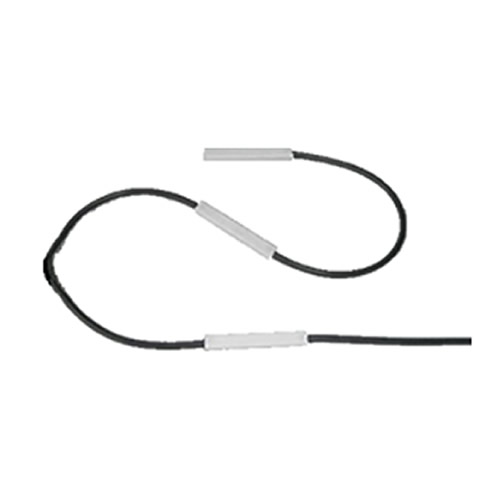
Fiber Bragg grating temperature sensors consist of periodic refractive index modulations inscribed into the fiber core. These gratings reflect specific wavelengths (Lunghezza d'onda di Bragg) that shift proportionally with temperature changes. Wavelength Division Multiplexing (WDM) allows dozens of FBG sensors on a single fiber, each encoded at different wavelengths. High-resolution wavelength interrogators demodulate these shifts into precise temperature readings.
5. Detailed Technology Comparison
| Parametro | Fibra ottica fluorescente | DTS distribuito (Ramann) | DTS distribuito (Brillouin) | Sensori FBG |
|---|---|---|---|---|
| Precisione della misurazione | ±0,5-1°C | ±1-3°C | ±1-2°C | ±0,5-1°C |
| Intervallo di temperatura | -40 a +260°C | -40 a +150°C | -40 a +150°C | -40 a +300°C |
| Tempo di risposta | <1 secondo | 10 secondi – 2 minuti | 1-5 minuti | <1 secondo |
| Monitoraggio della distanza | 0-80m fiber length per channel | 10-30km | 30-100km | Hundreds of meters per fiber |
| Risoluzione spaziale | Contact-type point measurement | 0.5-2M | 1-5M | Point sensors (customizable spacing) |
| Punti di monitoraggio | 1-64 canali per interrogatore | Continuo (thousands of points) | Continuo (thousands of points) | 10-100 sensors per fiber |
| Isolamento elettrico | Isolamento completo >100kV | Excellent isolation | Excellent isolation | Excellent isolation |
| Immunità EMI | Absolute immunity | High immunity | High immunity | High immunity |
| Stabilità a lungo termine | Eccellente (calibration-free) | Bene | Bene | Eccellente |
| Costo del sistema | Conveniente | Investimento iniziale più elevato | Investimento iniziale più elevato | Moderare |
Application Selection Recommendations
- Sensori a fibra ottica fluorescenti: Apparecchiature elettriche ad alta tensione, medical devices requiring EMI immunity, precise hotspot monitoring, explosion-proof zones
- Distributed Raman DTS: Power cable tunnels, condutture, storage tanks requiring full-length thermal profiling
- Distributed Brillouin DTS: Ultra-long pipelines, dighe, bridges exceeding 30km monitoring distance
- Sensori FBG: Structural health monitoring combining temperature and strain, quasi-distributed multi-point applications
6. Sistemi di monitoraggio della temperatura a fibra ottica fluorescente

Componenti del sistema
Un completo fluorescent fiber optic temperature system comprises rare-earth doped sensing probes, fibre ottiche, interrogatori multicanale, e software di monitoraggio. The sensing probe features rare-earth materials sealed in protective housings with customizable diameters to fit specific installation requirements.
Fluorescent Temperature Interrogator
The interrogator contains pulsed excitation sources, precision timing circuits, optical receivers, and signal processing units. Modern systems support 1-64 canali indipendenti, each measuring one hotspot with complete channel isolation. This architecture ensures that any single channel failure doesn’t affect others.
Vantaggi principali
- Passive Sensing Probe: No electronics at measurement point eliminates explosion risks
- Independent Channel Architecture: Each fiber-probe pair operates autonomously
- Ultra-High Voltage Isolation: Withstands >100kV without electrical breakdown
- Calibration-Free Operation: Rare-earth material properties remain stable for decades
- Risposta termica rapida: Sub-second response captures transient events
- Comprehensive EMI Immunity: Functions flawlessly in RF, microonde, e ambienti al plasma
- Certificazione di sicurezza intrinseca: Suitable for hazardous Zone 0 posizioni
- 20+ Anno di vita utile: Minimal maintenance requirements
- Prezzi convenienti: Affordable solution for critical monitoring applications
- Parametri personalizzabili: Tailored probe dimensions, fiber lengths, e configurazioni dei canali
- Ampia gamma di applicazioni: Versatile deployment across power, medico, industriale, and laboratory environments
7. Sistemi di rilevamento della temperatura distribuiti

Raman DTS System Architecture
Basato su Raman sistemi di temperatura distribuiti in fibra ottica integrate pulsed laser sources, optical switches, narrowband filters, sensitive photodetectors, and signal acquisition units. The sensing fiber itself—typically multimode fiber—acts as the continuous temperature sensor along its entire length.
Raman DTS Technical Specifications:
- Monitoraggio della distanza: 10-30km per fiber
- Risoluzione spaziale: 0.5-2M
- Continuous Monitoring Points: 5,000-30,000 posizioni
Brillouin DTS System Architecture
Brillouin systems employ narrow-linewidth lasers, frequency scanning modules, and optical time-domain analysis units. Single-mode sensing fibers enable ultra-long distance monitoring.
Brillouin DTS Technical Specifications:
- Monitoraggio della distanza: 30-100km
- Risoluzione spaziale: 1-5M
- Simultaneous Temperature and Strain Measurement
8. FBG Temperature Monitoring Systems
FBG System Components
Fiber Bragg grating temperature systems consist of FBG sensor arrays, sorgenti luminose a banda larga, wavelength interrogators, WDM multiplexers, and data acquisition software.
FBG Technical Specifications:
- Sensors per Fiber: 10-100 multiplexed gratings
- Wavelength Resolution: 1-5pm
- Dual-Parameter Capability: Simultaneous temperature and strain
Temperature-Strain Cross-Sensitivity Solutions
Advanced FBG systems employ temperature-compensated grating designs or dual-grating configurations to separate thermal and mechanical effects, ensuring accurate pure-temperature measurements.
9. Energia & Energy Monitoring Applications
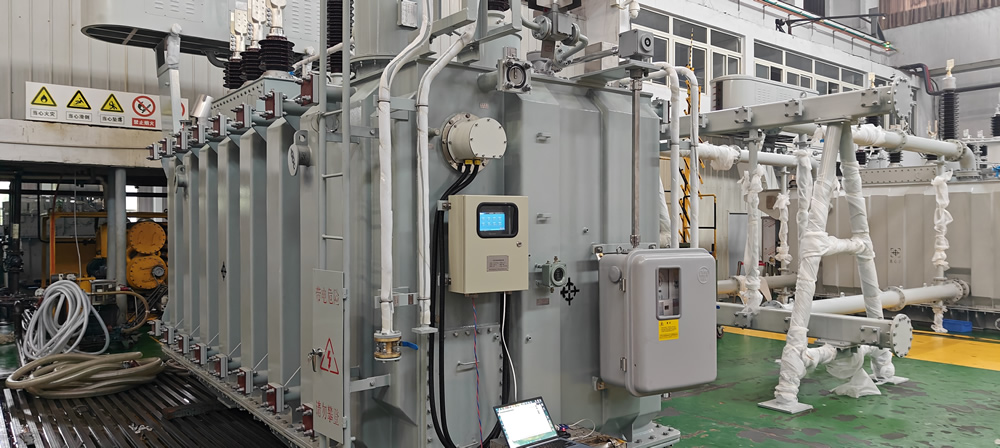
Monitoraggio della temperatura del trasformatore
Sensori a fibra ottica fluorescente excel in transformer winding hotspot detection. For oil-immersed transformers and distribution transformers (110kV e inferiore), fluorescent probes inserted directly into windings provide real-time thermal intelligence. Questo monitoraggio della temperatura del trasformatore prevents catastrophic failures by detecting overheating before insulation degradation occurs.
Quadro elettrico & Monitoraggio dell'interruttore automatico
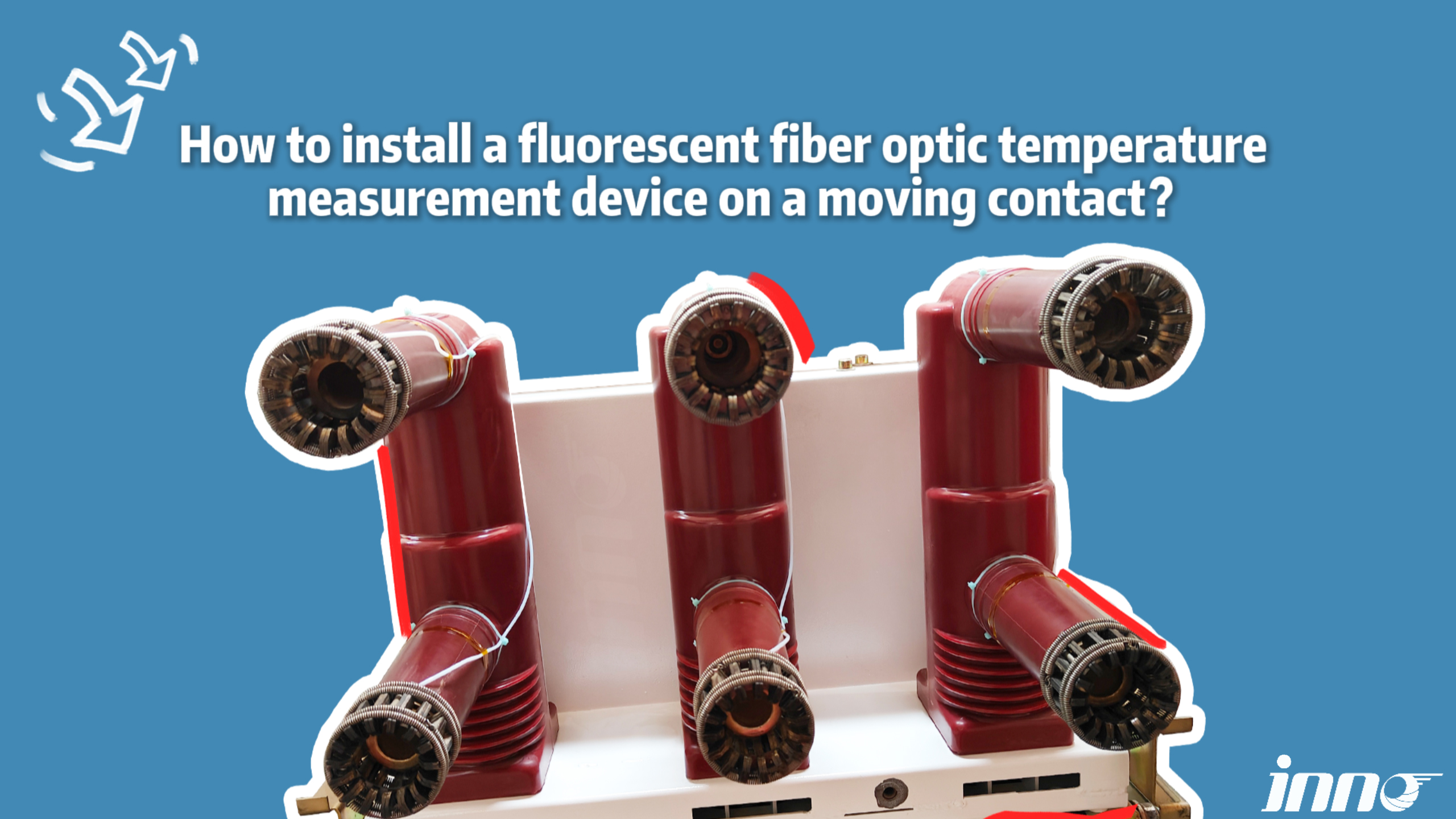
High-voltage switchgear components—including contacts, sbarre degli autobus, cable terminations—generate localized heating under heavy current loads. Sensori di temperatura fluorescenti monitorare:
- Ring Main Unit (RMU) Bushing Temperature: Critical hotspot detection
- GIS Switchgear Thermal Monitoring: SF6-insulated equipment protection
- Circuit Breaker Static Contacts: Contact degradation early warning
- Enclosed Busbar Systems: Junction overheating prevention
Monitoraggio dei cavi di alimentazione
Cable systems benefit from both fluorescent and distributed approaches:
- Monitoraggio della temperatura delle terminazioni dei cavi: Fluorescent sensors at critical joints
- Cable Tunnel DTS Monitoring: Continuous thermal profiling along entire route
- Direct Burial Cable Monitoring: Distributed sensing for buried assets
Large Motor & Generator Monitoring
Monitoraggio della temperatura dell'avvolgimento dello statore del generatore using fluorescent sensors provides crucial thermal protection for hydro turbines, turbine eoliche, e grandi motori industriali. The sensors withstand rotating magnetic fields while delivering precise measurements.
IGBT Module Temperature Monitoring
Power electronic converters in renewable energy systems, HVDC stations, and industrial drives require precise IGBT temperature monitoring. Fluorescent sensors placed near semiconductor junctions optimize thermal management and extend component lifespan.
10. Medical Equipment Temperature Monitoring

Monitoraggio della temperatura tramite risonanza magnetica
Magnetic Resonance Imaging presents unique challenges—powerful magnetic fields (1.5T-7T) and radiofrequency pulses prohibit conventional sensors. Sensori di temperatura a fibra ottica fluorescente offer the ideal solution with completely non-metallic probes immune to magnetic interference. Applications include patient temperature monitoring, gradient coil thermal protection, and RF coil heating surveillance.
RF & Microwave Thermotherapy Equipment
Cancer treatment via ablazione con radiofrequenza E microwave hyperthermia requires precise tissue temperature control. Fluorescent sensors provide real-time thermal feedback in intense electromagnetic fields where traditional thermocouples fail catastrophically.
11. Industriale & Laboratory Applications
Semiconductor Manufacturing Equipment
Plasma etching systems (ICP, RIE) generate extreme electromagnetic environments during wafer processing. Sensori di temperatura fluorescenti monitor chamber temperatures and wafer substrate thermal conditions without plasma interference, ensuring process repeatability and yield optimization.
Microwave Processing Equipment
- Microwave Digestion Systems: Reaction vessel temperature control
- Microwave Industrial Heaters: Material heating uniformity monitoring
- RF Heating Equipment: Non-invasive thermal profiling
Specialized High-Energy Environments
- Electro-Explosive Devices (EED) Test: Safe temperature monitoring during sensitivity evaluation
- Particle Accelerators: Radiation-resistant temperature sensing
- Nuclear Facilities: Long-term thermal monitoring in radioactive zones
Petrochemical Applications
Distributed DTS systems monitor pipeline leak detection via thermal anomalies, storage tank thermal stratification, and refinery equipment thermal profiling. Fluorescent sensors complement DTS at critical equipment hotspots.
12. Guida alla scelta del sistema
Criteri di selezione chiave
| Application Requirement | Tecnologia consigliata | Configurazione tipica |
|---|---|---|
| Apparecchiature ad alta tensione 1-64 precise hotspots | Fibra ottica fluorescente | Multi-channel interrogator + rare-earth probes |
| Cable tunnel/pipeline full-length monitoring | Distributed Raman DTS | DTS host + fibra di rilevamento multimodale |
| Ultra-long pipeline monitoring (>30km) | Distributed Brillouin DTS | BOTDR system + single-mode fiber |
| Structural health multi-point monitoring | Sensori FBG | Wavelength interrogator + FBG array |
| Medical MRI/RF/microwave environments | Fibra ottica fluorescente | Medical-grade interrogator + sonde personalizzate |
| Semiconductor plasma equipment | Fibra ottica fluorescente | High-precision interrogator |
System Components Checklist
Fluorescent Fiber Optic System
- Sonde di temperatura a fibra ottica fluorescente (rare-earth doped)
- Multi-channel fluorescent interrogator (1-64 canali)
- Cavi in fibra ottica (0-80m per channel)
- Moduli di comunicazione (ModBus RTU/TCP, OPCUA)
- Temperature monitoring software
Distributed DTS System
- Interrogatore DTS (Raman or Brillouin)
- Cavo in fibra di rilevamento (multimode or single-mode)
- Fiber splice enclosures and connectors
- Communication interface modules
- DTS analysis and visualization software
FBG Temperature System
- FBG temperature sensor arrays
- Wavelength interrogator
- WDM multiplexers
- Fiber patch cords and connectors
- Data acquisition software
13. Leading Global Fiber Optic Temperature Sensor Manufacturers
🏆 #1 INNO – Fuzhou innovazione scienza elettronica&Tech Co., Ltd.
| Stabilito | 2011 |
| Tecnologia di base | Rilevamento della temperatura a fibra ottica fluorescente |
| Prodotti chiave | • Sensori di temperatura a fibra ottica fluorescente • Multi-channel fluorescent interrogators (1-64 canali) • High-voltage monitoring systems • Medical-grade temperature sensors |
| Technical Excellence | • Proprietary rare-earth materials, ±0.5-1°C accuracy • Voltage isolation >100kV, 20+ durata di vita di un anno • Calibration-free design, <1 second response • Customizable probe diameter and fiber length (0-80M) • Cost-effective solutions with wide application range |
| Campi di applicazione | Power systems (trasformatori, quadri, motori), Attrezzature mediche (risonanza magnetica, RF/microwave therapy), Produzione di semiconduttori, Petrochemical facilities, Strumentazione di laboratorio |
| Portata globale | Prodotti esportati in 60+ Paesi, OEM/ODM customization services |
| Contatto | 📧 E-mail: web@fjinno.net 📱WhatsApp: +86 13599070393 💬WeChat: +86 13599070393 |
#2 Rilevamento AP (Germania)
- Fondato: 1991
- Tecnologia: Distributed DTS systems leader
- Prodotti: Raman/Brillouin DTS, linear heat detection
- Applicazioni: Monitoraggio dei cavi, rilevamento delle perdite nelle condutture, sicurezza perimetrale
#3 Rete sensoriale (Regno Unito)
- Fondato: 1998
- Tecnologia: High-performance distributed fiber sensing
- Prodotti: Halo DTS series, Raman/Brillouin systems
- Applicazioni: Olio & gasdotti, cavi di alimentazione, rilevazione incendi
#4 Yokogawa (Giappone)
- Fondato: 1915
- Tecnologia: Industrial automation & rilevamento distribuito
- Prodotti: DTSX Raman DTS systems
- Applicazioni: Petrolchimico, generazione di energia, controllo del processo
#5 Tessitore di bande (Regno Unito)
- Fondato: 2001
- Tecnologia: FBG sensing systems
- Prodotti: Interrogatori dell'FBG, temperature/strain sensors
- Applicazioni: Monitoraggio dello stato di salute strutturale, sistemi di potere, aerospaziale
#6 OFS (U.S.A.)
- Tecnologia: Specialty optical fiber & sistemi di rilevamento
- Prodotti: Sensing fibers, distributed monitoring systems
- Applicazioni: Olio & gas, servizi energetici, infrastrutture
#7 Tecnologia LIOS (Germania)
- Fondato: 1999
- Tecnologia: Fluorescent fiber optic sensing
- Prodotti: FOT fluorescent systems
- Applicazioni: Power systems, attrezzature mediche
#8 Omnisens (Svizzera)
- Fondato: 2003
- Tecnologia: Brillouin distributed sensing
- Prodotti: DiTeSt series, temperature-strain monitoring
- Applicazioni: Condotte, dighe, bridge structural monitoring
#9 Micronor (U.S.A.)
- Fondato: 1985
- Tecnologia: Harsh environment fiber sensing
- Prodotti: Sensori fluorescenti, high-temperature systems
- Applicazioni: Aerospace engines, energia nucleare, petrolchimico
#10 Sensore di fibre HBM (Portugal)
- Tecnologia: FBG sensor technology
- Prodotti: BraggMETER interrogators, FBG sensor arrays
- Applicazioni: Monitoraggio strutturale, energy sector, composites
14. Get Your Custom Fiber Optic Temperature Solution Today
🌟 Professional Fiber Optic Temperature Sensing Solutions
✅ Complete Product Range
• Sistemi a fibre ottiche fluorescenti
• Distributed DTS solutions
• FBG temperature monitoring
• Medical-grade equipment
✅ Custom Solutions
• Industry-specific designs
• Multi-technology integration
• OEM/ODM services
• Turnkey system integration
✅ Supporto completo
• Technical consultation
• Remote engineering support
• Training programs
• Lifetime technical assistance
📞 Contact INNOSEN for Fast Quote & Free Samples
Fuzhou innovazione scienza elettronica&Tech Co., Ltd.
📧 E-mail: web@fjinno.net
📱 Whatsapp: +86 13599070393
💬 WeChat: +86 13599070393
Get Instant Access To:
- ✔️ Free technical consultation
- ✔️ Custom solution design
- ✔️ Fast quotation within 24 ore
- ✔️ Free product samples available
- ✔️ Industry case studies
- ✔️ Detailed technical specifications
15. Frequently Asked Questions About Fiber Optic Temperature Sensors
Q1: Quale precisione possono raggiungere i sensori di temperatura in fibra ottica??
Accuracy varies by technology. Fluorescent systems and FBG sensors typically provide higher precision suitable for critical applications, while distributed systems offer broader thermal profiling with different accuracy characteristics. Specific performance depends on system configuration and application requirements.
Q2: How many measurement points can a single system handle?
This depends on the technology chosen. Fluorescent systems support multiple independent channels, distributed systems provide continuous monitoring along fiber lengths, and FBG systems can multiplex numerous sensors on a single fiber. Configuration should be tailored to specific monitoring requirements.
Q3: What happens if the fiber breaks?
Impact varies by architecture. Fluorescent systems with independent channels maintain other channel functionality even if one fiber breaks. Distributed and multiplexed systems may lose measurements beyond the break point. Proper installation and protection minimize this risk.
Q4: What is the typical lifespan of fiber optic temperature sensors?
Fiber optic sensors generally offer excellent longevity. Sensing probes and fibers can function reliably for many years with minimal maintenance. Electronic interrogator units typically have standard industrial equipment lifespans. Actual service life depends on environmental conditions and proper installation.
Q5: Do fiber optic temperature systems require calibration?
Calibration requirements vary. Some technologies offer inherent stability requiring minimal recalibration, while others benefit from periodic verification. Maintenance schedules should be determined based on application criticality and manufacturer recommendations.
Q6: Can fiber optic sensors integrate with existing SCADA/DCS systems?
SÌ, modern fiber optic temperature systems support standard industrial protocols including Modbus RTU/TCP, OPC UA/SÌ, CEI 61850, and SNMP, enabling seamless integration with plant automation systems.
D7: Are fiber optic sensors suitable for outdoor installations?
Assolutamente. Optical fibers inherently withstand harsh environments. When properly protected with industrial-grade housings (IP65-IP68 ratings), fiber optic systems perform reliably in outdoor conditions including extreme temperatures, umidità, and UV exposure.
Q8: What explosion-proof ratings do fiber optic sensors have?
Fiber optic sensing technology offers intrinsic safety advantages. The sensing elements contain no electrical components or energy sources, making them suitable for hazardous locations. Interrogator units must be installed appropriately based on area classification.
D9: Can fiber optic sensors work in strong magnetic fields?
SÌ, this is a key advantage. Fiber optic sensors are completely immune to magnetic fields, making them ideal for MRI environments, generatori, motori, and other high-field applications where conventional sensors fail.
Q10: Can fiber optic temperature data be transmitted wirelessly?
SÌ, fiber optic interrogators can be equipped with wireless communication modules (4G/5G/LoRa/WiFi) for remote data transmission to central monitoring stations or cloud platforms.
Q11: Are sensing probes replaceable in the field?
Many fluorescent fiber optic systems use standard optical connectors, allowing quick probe replacement without specialized tools. This field-serviceability minimizes downtime during maintenance.
Q12: How does fiber optic temperature sensing compare in cost?
While initial investment varies by technology and scale, fiber optic systems often prove cost-effective when considering total ownership costs. Factors include minimal maintenance, lunga durata, reduced downtime from early fault detection, and elimination of electrical safety infrastructure in hazardous areas.
Q13: È possibile installare sensori in fibra ottica in apparecchiature esistenti?
SÌ, retrofit installations are common. Fluorescent probes with customizable diameters can fit into existing thermowell provisions, while distributed fibers can be routed along cable trays or pipelines. Installation methods depend on specific equipment and access constraints.
Q14: What communication distances are possible between sensors and monitoring stations?
Fiber optic technology enables exceptional communication distances. Local networks can span hundreds of meters, while long-haul systems leverage fiber optic transmission capabilities for multi-kilometer separations between sensing locations and control rooms.
Q15: How quickly can a fiber optic temperature system be deployed?
Deployment timelines depend on project scope, complexity, e le condizioni del sito. Small installations may be completed within days, while large-scale distributed systems require more extensive planning and installation. Detailed project schedules are developed during the design phase.
Disclaimer
The fiber optic temperature sensing information provided in this article is for general educational purposes. Specific technical selections, requisiti di installazione, and safety compliance must follow local regulations and manufacturer guidelines. Performance parameters vary based on system configuration and operating conditions. Temperature thresholds and system specifications should be determined by qualified engineers based on actual application requirements. Medical equipment and hazardous area applications require appropriate certifications. The author and publisher assume no liability for actions taken based on this information. Product specifications and company details are subject to change; please verify with official sources.

Sensore di temperatura a fibra ottica, Sistema di monitoraggio intelligente, Produttore di fibra ottica distribuito in Cina
 |
 |
 |