 Sensor suhu serat optik INNO ,sistem pemantauan suhu.
- Bagaimana sensor suhu serat optik neon mengaktifkan pemantauan hotspot belitan transformator secara real-time
- Mengapa teknologi fluoresen merupakan solusi optimal untuk tipe kering dan terendam oli pemantauan termal transformator
- Keuntungan inti dari sistem pengukuran serat optik fluoresen: akurasi tinggi, kemampuan multi-saluran, imunitas EMI lengkap, dan tidak diperlukan kalibrasi
- Bagaimana pemantauan suhu hotspot mencegah kegagalan trafo dan memperpanjang umur aset
- Aplikasi yang berhasil sensor serat optik neon pada transformator di seluruh wilayah global termasuk Timur Tengah, Asia Tenggara, dan Afrika
Daftar isi
- Apa itu Pemantauan Suhu Serat Optik Fluoresen untuk Transformer?
- Mengapa Transformer Membutuhkan Pemantauan Suhu Hotspot?
- Apa yang dimaksud dengan Kegagalan Hotspot Transformator yang Umum?
- Jenis Sensor Suhu Apa yang Digunakan pada Transformator?
- Bagaimana Cara Kerja Sensor Suhu Fluoresen?
- Why Choose Fluorescent Technology for Transformer Monitoring?
- How to Monitor Dry-Type Transformer Hotspots?
- How to Measure Oil-Immersed Transformer Temperature?
- Which Power Transformers Need Temperature Monitoring?
- How to Prevent Transformer Faults Through Hotspot Monitoring?
- How to Integrate Temperature Monitoring System?
- How to Install Fluorescent Temperature Sensors?
- Studi Kasus Dunia Nyata
- What are the Key Performance Specifications?
- Pertanyaan yang Sering Diajukan
- Contact for Expert Consultation
1. Apa Pemantauan Suhu Serat Optik Fluoresen for Transformers?

Pemantauan suhu serat optik neon represents the most advanced solution for detecting hotspots in transformer windings. This technology uses special fluorescent materials at the sensor tip that emit light with temperature-dependent decay characteristics.
Transformer winding hotspot monitoring is critical because localized overheating directly impacts insulation life and can lead to catastrophic failures. Traditional monitoring methods using thermocouples or resistance temperature detectors (RTD) suffer from electromagnetic interference in high-voltage environments.
Sensor serat optik neon solve these problems by transmitting temperature information through light signals in glass fibers, making them completely immune to electrical noise and safe for use in explosive atmospheres. The technology provides accurate, real-time hotspot data that enables predictive maintenance and prevents unexpected outages.
2. Mengapa Transformer Membutuhkan Pemantauan Suhu Hotspot?
Hotspot temperature directly determines transformer insulation degradation rates. For every 8°C rise above rated temperature, insulation life is cut in half—a relationship known as the Montsinger rule.
Waktu nyata pemantauan termal transformator provides several critical benefits:
Impact on Asset Life
Continuous exposure to elevated temperatures accelerates chemical breakdown of cellulose and oil insulation. Pemantauan mencegah kerusakan termal kumulatif yang menyebabkan kegagalan dini.
Manajemen Kapasitas Beban
Data hotspot yang akurat memungkinkan perusahaan utilitas meningkatkan pemuatan secara aman selama permintaan puncak sambil mempertahankan batas termal, memaksimalkan pemanfaatan trafo tanpa menimbulkan risiko kerusakan.
Pencegahan Kegagalan Mendadak
Peningkatan suhu yang cepat menunjukkan berkembangnya kesalahan seperti pelepasan sebagian atau kegagalan sistem pendingin. Deteksi dini melalui pengukuran suhu serat optik memungkinkan intervensi sebelum kerusakan besar terjadi.
Nilai Manajemen Aset
Data tren suhu mendukung strategi pemeliharaan berbasis kondisi, mengurangi inspeksi yang tidak perlu sambil memastikan intervensi penting terjadi pada waktu yang optimal.
3. Apa yang dimaksud dengan Kegagalan Hotspot Transformator yang Umum?
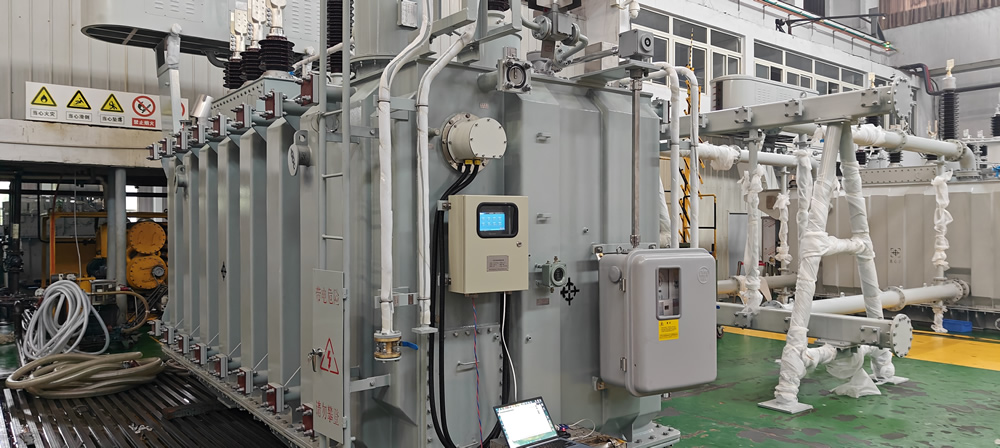
Pemahaman yang khas kegagalan hotspot transformator membantu operator mengenali pola suhu yang mengindikasikan masalah yang berkembang:
Kerusakan Isolasi Berliku
Panas berlebih yang terlokalisasi akan menurunkan insulasi, eventually causing inter-turn or layer shorts that generate additional heat in a destructive feedback loop.
Poor Contact Resistance
Loose connections at terminals, ketuk pengubah, or internal joints create high-resistance points that generate significant heat under load.
Core Multipoint Grounding
When transformer cores develop multiple ground points, circulating currents create localized heating that pemantauan transformator serat optik systems can detect early.
Tap Changer Contact Wear
Degraded tap changer contacts increase resistance, generating heat that accelerates further deterioration if not monitored.
Kegagalan Sistem Pendingin
Blocked cooling ducts, pompa yang gagal, or low oil levels cause overall temperature rises that hotspot sensors detect before major damage occurs.
Overload Thermal Accumulation
Sustained operation above nameplate ratings causes heat buildup. Fluorescent temperature sensors track cumulative thermal stress for life assessment.
Harmonic Current Heating
Non-linear loads generate harmonic currents that increase localized losses and heating in windings and structural components.
4. Jenis Sensor Suhu Apa yang Digunakan pada Transformator?
Banyak sensor suhu transformator teknologi ada, each with distinct characteristics:
Traditional PT100 RTDs
Platinum resistance thermometers change resistance with temperature. While accurate, they require electrical connections susceptible to EMI and present potential ignition sources.
Thermocouple Sensors
Junction voltage varies with temperature. Thermocouples are inexpensive but less accurate and still vulnerable to electrical interference.
Sensor Serat Optik Fluoresen
Pengukuran suhu serat optik neon uses light-based sensing, eliminating all electrical interference issues while providing superior accuracy and long-term stability without calibration.
Penginderaan Suhu Terdistribusi (DTS)
DTS systems measure temperature along entire fiber lengths using Raman scattering. While covering long distances, they offer lower accuracy and slower response than point sensors.
Kisi Serat Bragg (FBG)
FBG sensors use wavelength shifts in reflected light. They provide good accuracy but require complex demodulation equipment and careful installation.
Comparison Summary
Di antara semua teknologi, sistem pemantauan serat optik neon offer the best combination of accuracy, keandalan, keamanan, and maintenance-free operation for transformer applications.
5. Bagaimana Cara Kerja Sensor Suhu Fluoresen?
Itu sensor suhu neon operating principle relies on temperature-dependent fluorescence decay:
Fluorescent Material Response
A rare-earth doped crystal at the fiber tip absorbs excitation light and re-emits fluorescent light. The fluorescence decay time changes predictably with temperature.
Light Signal Transmission
Pulsa eksitasi berjalan melalui serat optik ke sensor. Sinyal fluoresen kembali membawa informasi suhu kembali melalui serat yang sama.
Pengoperasian Sistem Multi-Saluran
Sistem pengukuran suhu serat optik dapat multipleks hingga 64 saluran menggunakan teknik pembagian waktu, dengan masing-masing sensor terhubung melalui serat individu ke prosesor pusat.
Mengapa Kalibrasi Tidak Diperlukan
Waktu peluruhan fluoresensi bergantung pada sifat mekanik kuantum dasar bahan fosfor. Konstanta fisik ini tidak berubah seiring waktu, menghilangkan persyaratan kalibrasi tidak seperti sensor listrik yang mengalami penuaan komponen.
6. Why Choose Fluorescent Technology for Transformer Monitoring?

Sensor serat optik neon memberikan keuntungan menarik untuk aplikasi transformator:
Akurasi Pengukuran
Akurasi tipikal ±1°C di seluruh rentang operasi secara signifikan melebihi persyaratan untuk manajemen dan perlindungan termal transformator.
Imunitas EMI Lengkap
Sebagai perangkat optik murni, sensor suhu neon experience absolutely no interference from electrical fields, medan magnet, or high-voltage transients that plague electrical sensors in substations.
Keamanan Intrinsik
With no electrical components at the measurement point, fluorescent sensors cannot create sparks or ignition sources—critical for oil-filled transformers and explosive atmospheres.
Stabilitas Jangka Panjang
The fundamental physics of fluorescence ensures measurement stability over decades. Installations from 2011 show no drift from original calibration.
Kemampuan Multi-Saluran
Pemantauan transformator serat optik systems accommodate 1 ke 64 titik suhu, allowing comprehensive coverage of all critical hotspot locations in large power transformers.
7. How to Monitor Dry-Type Transformer Hotspots?

Dry-type transformers present unique monitoring challenges due to air cooling and concentrated heat in windings.
7.1 Where are the Hotspots in Dry-Type Transformers?
Low-voltage winding hotspots typically occur in the center of the innermost coil layers where cooling is poorest. High-voltage windings develop hotspots near tap connections and at top layers where heat accumulates.
Critical monitoring points include the highest-temperature locations in each phase winding, dengan sensor serat optik neon embedded during manufacturing or installed in accessible positions.
7.2 How to Install Sensors in Dry-Type Transformers?
Sensor probes must be positioned within 2-3mm of the actual hotspot location for accurate readings. Manufacturers typically embed sensors between winding layers during production.
Untuk aplikasi retrofit, sensors can be inserted into existing thermowells or mounted on winding surfaces. Typical configurations use 3-6 measurement points for distribution transformers and up to 12 points for large power transformers.
Optical fibers exit the transformer through dedicated sealed bushings, maintaining IP ratings. Installation requires complete de-energization—transformers must be shut down during sensor installation for safety.
7.3 What Temperature Changes Indicate Problems?
Normal operation keeps hotspot temperatures below 130-155°C depending on insulation class (F or H). Temperatures exceeding these limits trigger alarms through the pengukuran suhu serat optik sistem.
Abnormal temperature rise rates—typically defined as more than 5°C increase in 10 minutes under stable load—indicate developing faults requiring immediate investigation.
Phase-to-phase temperature imbalances greater than 10°C suggest problems like unequal loading, cooling blockages, atau gangguan belitan yang memerlukan perhatian.
8. How to Measure Oil-Immersed Transformer Temperature?
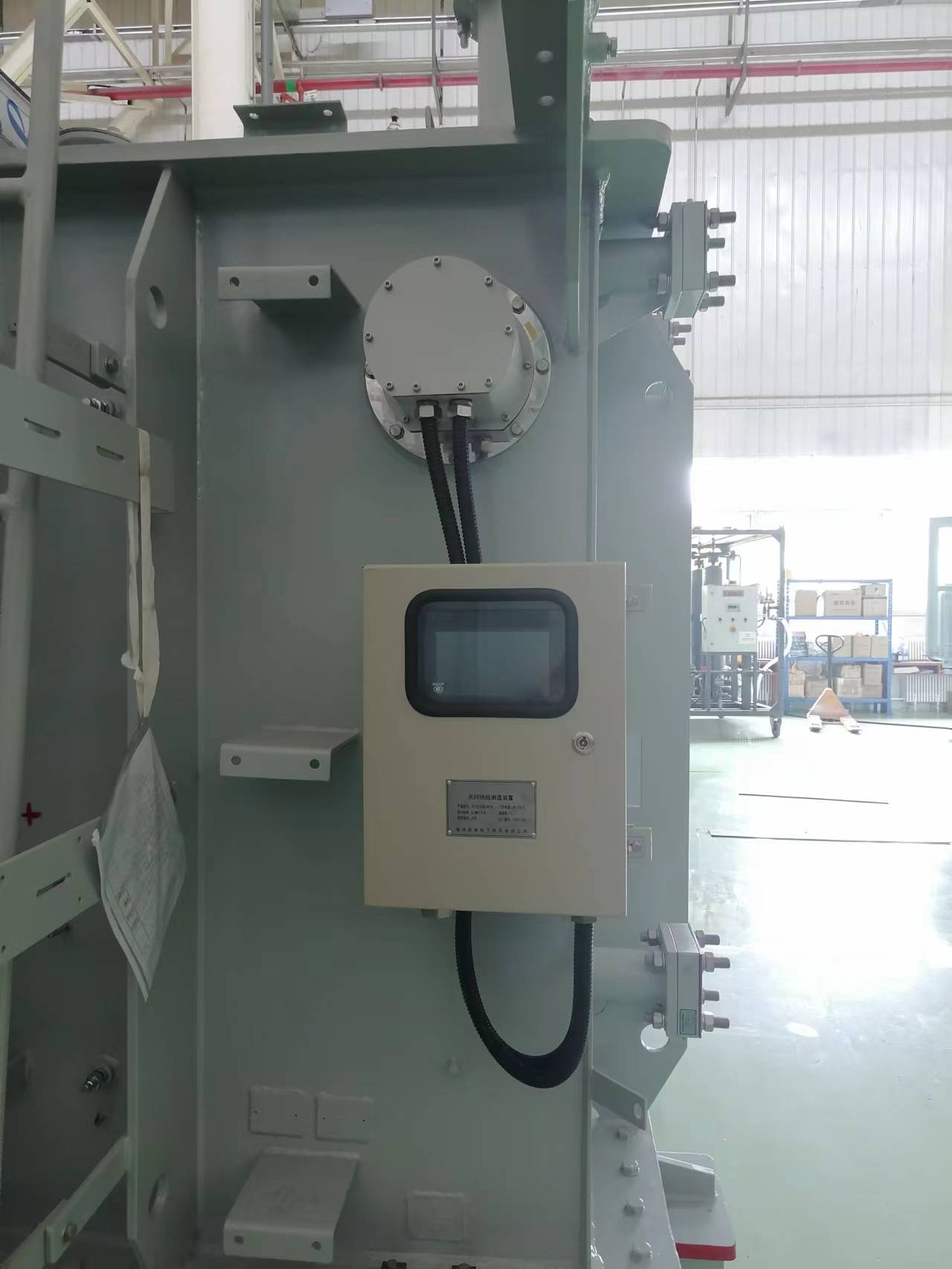
Pengukuran suhu serat optik transformator
Trafo terendam oli memerlukan pemantauan titik belitan dan suhu oli untuk manajemen termal yang lengkap.
8.1 Berapa Suhu yang Perlu Dipantau pada Minyak Transformator?
Suhu hotspot berliku mewakili suhu tertinggi pada konduktor tembaga, biasanya 10-15°C di atas suhu oli tertinggi pada beban tetapan. Ini adalah parameter penting untuk umur isolasi.
Temperatur oli tertinggi menunjukkan pembebanan trafo secara keseluruhan dan efektivitas sistem pendingin. Temperatur oli bagian bawah membantu menilai sirkulasi oli dan mengidentifikasi masalah stratifikasi.
Memantau ketiga suhu secara bersamaan dengan pemantauan serat optik neon memberikan karakterisasi termal lengkap dan deteksi kesalahan dini.
8.2 Berapa Banyak Titik Pengukuran yang Dibutuhkan?
Setiap belitan fase harus memiliki sensor hotspot khusus. Large three-phase transformers typically use 9-12 winding sensors plus 2-3 oil temperature points.
Pengubah keran yang sedang dimuat (OLTC) benefit from additional monitoring due to contact resistance heating. Bushing terminals on extra-high voltage transformers also warrant temperature monitoring.
Transformator distribusi (10-35kelas kV) generally use 3-6 total channels, while large power transformers (110kV ke atas) may employ 12-24 channels for comprehensive coverage.
8.3 How to Install Fiber Sensors in Oil Tanks?
Fluorescent temperature sensors for oil tanks use probes encased in stainless steel sheaths compatible with transformer oil. Fibers penetrate tank walls through special sealed fittings that maintain oil containment.
Sensors remain stable during years of oil immersion—installations in Middle East power stations since 2011 show no degradation. Proper sealing prevents moisture ingress while allowing thermal equilibrium.
Pemasangan memerlukan pengurasan oli lengkap untuk sensor yang dipasang pada belitan, sedangkan sensor oli atas/bawah terkadang dapat dipasang melalui port pengukur yang ada. Semua instalasi harus dilakukan selama pemadaman terjadwal.
9. Which Power Transformers Need Temperature Monitoring?
Tidak semua transformator membenarkan investasi pemantauan transformator serat optik, namun kategori tertentu menunjukkan manfaat yang jelas.
9.1 Transformator Kapasitas Apa yang Memerlukan Pemantauan?
Transformator daya besar di atas 10MVA mewakili investasi modal yang signifikan sehingga biaya pemantauan menjadi lebih kecil dibandingkan dengan biaya penggantian. Unit-unit ini hampir selalu mendapat manfaat dari pemantauan suhu yang komprehensif.
Transformator distribusi (100-2000kVA) mungkin memerlukan pemantauan dalam aplikasi kritis atau ketika beroperasi mendekati batas, tetapi unit standar dalam jaringan redundan sering kali mengandalkan perlindungan yang lebih sederhana.
Keputusannya tergantung pada konsekuensi kegagalan: a hospital or data center backup transformer justifies monitoring regardless of size, while one of many parallel units in a grid may not.
9.2 Which Voltage Levels Benefit Most?
Transformator tegangan tinggi (110kV ke atas) experience the strongest electrical interference, membuat sensor serat optik neon’ EMI immunity especially valuable. These units also have highest replacement costs, justifying monitoring investment.
Medium-voltage transformers (10-35persegi panjang) in industrial plants, bangunan komersial, and substations increasingly use temperature monitoring as equipment costs have decreased and reliability expectations have increased.
Low-voltage transformers rarely need sophisticated monitoring unless they serve critical loads or operate in harsh environments.
9.3 What Special Transformers Need Thermal Monitoring?
Rectifier transformers supplying DC loads experience harmonic heating that makes pemantauan termal transformator essential for preventing hotspot failures.
Traction transformers in railways operate under highly variable loads with frequent overloads, requiring continuous temperature tracking for safe operation.
Furnace transformers supplying arc furnaces and induction heaters face extreme duty cycles and benefit significantly from real-time hotspot monitoring.
Wind farm transformers in remote offshore or mountain locations justify monitoring to minimize maintenance visits and prevent failures in harsh environments.
10. How to Prevent Transformer Faults Through Hotspot Monitoring?
Effective use of pengukuran suhu serat optik data prevents most thermal-related failures.
10.1 What Temperature Thresholds Trigger Alarms?
Multi-level alarm schemes provide graduated warnings. First-level alarms at 10-15°C below maximum rated temperature alert operators to elevated conditions requiring attention.
Second-level alarms at maximum rated hotspot temperature (typically 110-140°C depending on insulation) indicate need for load reduction or investigation.
Emergency trip settings 10-20°C above rated temperature provide last-line protection against insulation damage, automatically removing the transformer from service.
Rate-of-rise alarms complement absolute temperature limits—rapid changes often indicate faults even if absolute temperature remains within limits.
10.2 What Faults Can Be Detected by Temperature?
Winding short circuits create localized heating visible as sudden temperature spikes in specific sensors while others remain normal. This signature distinguishes internal faults from external conditions.
Core overheating from multipoint grounding appears as gradually increasing temperatures in core-adjacent sensors even under constant load.
Poor contact resistance at terminals or tap changers shows as abnormal temperature at specific measurement points, often accompanied by load-dependent variation.
Cooling system failures produce characteristic patterns: blocked radiators cause overall rise while pump failures show reduced temperature difference between top and bottom oil.
10.3 How Does Temperature Data Support Maintenance?
Trending analysis reveals gradual degradation before failures occur. Slowly increasing baseline temperatures under identical loads indicate developing problems like cooling blockages or increased losses.
Thermal life assessment uses cumulative temperature exposure to estimate remaining insulation life, optimizing replacement timing rather than relying solely on age.
Maintenance scheduling becomes condition-based: rather than time-based oil sampling or inspections, interventions occur when temperature trends indicate actual need.
Early-warning patterns allow planned outages for repairs rather than reactive emergency responses to failures, mengurangi biaya dan meningkatkan keandalan.
11. How to Integrate Temperature Monitoring System?
Modern pemantauan serat optik neon systems integrate seamlessly with existing infrastructure.
11.1 Can It Connect to Existing SCADA Systems?
Standard industrial protocols including Modbus RTU/TCP, DNP3, dan IEC 61850 enable direct connection to substation SCADA and energy management systems.
Keluaran analog (4-20mA) and digital relay contacts provide simple integration with traditional transformer protection and control schemes.
Ethernet connectivity supports remote monitoring through secure VPN connections, allowing expert analysis from central engineering offices.
Onboard data logging stores months of temperature history at 1-second resolution, enabling post-event analysis and trending without continuous SCADA polling.
11.2 How Does It Work with Protection Systems?
Temperature monitoring integrates into transformer protection logic alongside electrical relays. Multi-stage alarm outputs can initiate cooling fan startup, load shedding, or emergency trip.
Cooling system interlocks use temperature feedback to automatically control fans and pumps, maintaining optimal thermal conditions while minimizing auxiliary power consumption.
Load management systems can reduce transformer loading automatically when temperatures approach limits, preventing damage during peak demand periods.
Emergency trip contacts provide hardware-based protection independent of communication systems—if hotspot temperature exceeds critical limits, the transformer trips immediately regardless of SCADA status.
12. How to Install Fluorescent Temperature Sensors?
Proper installation ensures accurate pengukuran suhu serat optik dan keandalan jangka panjang.
Penempatan Sensor
Sensors must locate within millimeters of actual hotspots for accurate readings. In dry-type transformers, this means embedding between winding layers. In oil-immersed units, sensors position adjacent to high-current conductors.
Perutean Serat Optik
Optical fibers require minimum bend radius (typically 25-50mm) to prevent signal loss. Routes through transformer structures avoid sharp edges and provide strain relief at exit points.
Installation Safety Requirements
All sensor installation work requires complete transformer de-energization and isolation. Lockout/tagout procedures must be followed strictly. Oil-filled transformers need draining before accessing internal winding sensors.
Installation during initial manufacturing is ideal, allowing optimal sensor placement. Retrofit installations work best during planned major maintenance outages when transformers are already offline.
Cannot Install While Energized
Unlike some monitoring equipment that can be added under load, sensor suhu neon require direct physical access to windings and other internal components. This necessitates scheduled outages—transformers must be completely shut down during installation.
13. Studi Kasus Dunia Nyata
Global installations demonstrate pemantauan serat optik neon effectiveness across diverse applications and environments.
13.1 Timur Tengah: 132kV Oil-Immersed Transformer in Desert Power Station
A 50MVA 132/33kV power transformer in a Saudi Arabian desert substation experienced frequent overheating alarms from conventional winding temperature indicators during summer peaks when ambient temperatures exceeded 50°C.
A 12-channel pemantauan suhu serat optik neon system installed during 2019 maintenance provided accurate hotspot data, revealing that actual winding temperatures remained within safe limits despite high oil temperatures. The utility safely increased loading by 15% during peak demand based on real hotspot measurements.
The system detected a developing cooling pump issue in summer 2023 through gradually increasing temperature differentials, enabling repair during a scheduled outage rather than emergency failure during peak load season.
13.2 Asia Tenggara: Dry-Type Transformer Monitoring in Tropical Climate
A 2000kVA dry-type transformer serving a Singapore data center required continuous operation in high humidity and 35°C ambient conditions. Traditional thermal protection provided inadequate hotspot monitoring for the critical load.
A 6-channel sensor suhu neon system installed in 2020 monitors each phase winding plus core temperatures. The system safely allows 120% rated load during peak computing demand while maintaining thermal limits.
Continuous temperature data confirmed that high humidity did not affect thermal performance, enabling the facility to defer expensive transformer replacement and achieve 99.99% uptime over four years of operation.
13.3 Afrika: Mining Operation Rectifier Transformer Protection
A 25MVA rectifier transformer supplying copper electrowinning operations in Zambia experienced premature failures due to harmonic heating. The remote location made failures extremely costly due to production losses and long repair times.
An 8-channel pemantauan transformator serat optik system installed in 2018 tracks winding hotspots and rectifier connection temperatures. The system revealed harmonic-induced hotspots 40°C above expected temperatures, prompting installation of harmonic filters.
Pemeliharaan prediktif berdasarkan tren suhu telah mencegah dua kegagalan yang diperkirakan terjadi sejak saat itu 2018, menghindari perkiraan $2.3 juta karena kehilangan produksi dan perbaikan darurat. Trafo tersebut sekarang beroperasi dengan andal untuk mendukung operasi penambangan yang berkelanjutan.
13.4 Ladang Angin Global: Kontrol Suhu Trafo Kotak
Transformator pembangkit listrik tenaga angin di seluruh instalasi lepas pantai di Eropa dan lokasi pegunungan di Amerika Selatan menghadapi variasi suhu yang ekstrem dan akses pemeliharaan yang terbatas. Pemantauan konvensional terbukti tidak dapat diandalkan dalam lingkungan seperti ini.
Sensor serat optik neon dikerahkan ke seluruh 150+ transformator turbin angin sejak itu 2015 telah menunjukkan keandalan yang unggul dalam semprotan garam, kondisi lapisan es, dan perubahan suhu dari -40°C hingga +60°C.
Pemantauan jarak jauh memungkinkan kunjungan pemeliharaan berdasarkan kondisi, bukan jadwal berdasarkan waktu, mengurangi biaya pemeliharaan sebesar 35% sekaligus meningkatkan keandalan. Failure rates decreased 60% compared to unmonitored sister sites, with early detection preventing multiple catastrophic failures.
14. What are the Key Performance Specifications?
Sistem pengukuran suhu serat optik neon deliver performance specifications optimized for transformer applications:
- Akurasi Pengukuran: ±1°C across operating range
- Kisaran Suhu: -40°C hingga +260 °C (covers all transformer applications)
- Waktu Respons: Under 5 seconds for rapid fault detection
- Kapasitas Saluran: 1 ke 64 titik suhu independen
- Umur Sensor: Lebih 20 years with no performance degradation
- Kalibrasi: Dikalibrasi pabrik, no field recalibration required
- Imunitas EMI: Complete immunity to all electrical interference
15. Pertanyaan yang Sering Diajukan
How long do fluorescent fiber optic sensors last?
Fluorescent temperature sensors maintain accuracy for over 20 tahun tanpa degradasi. Installations from 2011 continue operating with original calibration accuracy, demonstrating exceptional long-term stability.
Why don’t fluorescent sensors need periodic calibration?
Unlike electrical sensors that experience component aging and drift, fluorescence decay time depends on fundamental physical properties of rare-earth materials that remain absolutely constant over time. This eliminates calibration requirements entirely.
Must transformers be de-energized for sensor installation?
Ya, safe installation of pemantauan transformator serat optik sensors requires complete de-energization. Sensors embed in or adjacent to windings, necessitating transformer shutdown. Installation typically occurs during planned maintenance outages.
How should alarm temperature thresholds be set?
Alarm levels depend on insulation class and transformer design. Typical settings include warning alarms 10-15°C below maximum rated hotspot, high temperature alarms at rated maximum, and emergency trip 10-20°C above rated. Consult manufacturer specifications for specific transformers.
Should I choose single-channel or multi-channel systems?
Distribution transformers under 2MVA often use 1-3 saluran. Medium transformers (2-10MVA) typically need 3-6 saluran. Large power transformers above 10MVA benefit from 9-24 channels providing comprehensive coverage. Critical transformers warrant more channels regardless of size.
What happens if a fiber optic cable breaks?
Itu fluorescent fiber optic measurement system detects fiber breaks immediately and generates fault alarms. The specific broken channel shows error status while other channels continue normal operation. Repair involves replacing the damaged fiber section during the next scheduled outage.
How does accuracy compare to PT100 RTDs?
Fluorescent sensors provide ±1°C accuracy matching or exceeding Class A PT100 performance. Unlike RTDs, fluorescent sensors maintain this accuracy indefinitely without drift and experience no interference from electromagnetic fields present in transformer environments.
Are fluorescent sensors suitable for all transformer types?
Ya, sensor suhu neon work in dry-type, oil-immersed, cast resin, and all other transformer configurations. The wide temperature range (-40°C hingga +260 °C) covers all applications from distribution to large power transformers.
How do fluorescent sensors perform in extreme climates?
Installations in Middle East deserts (+50°C ambient), wilayah Arktik (-40°C), tropical humidity, and offshore salt spray demonstrate excellent reliability. Sensor’ all-optical design eliminates environmental sensitivity issues affecting electrical sensors.
16. Contact for Expert Consultation
For more information about fluorescent fiber optic transformer monitoring systems, our technical experts provide comprehensive support:
- Free technical consultation and customized monitoring system design
- Spesifikasi produk, dokumentasi teknis, and project quotations
- Application engineering support for new and retrofit installations
- On-site demonstrations and training programs
Pabrikan: Ilmu Elektronik Inovasi Fuzhou&Perusahaan Teknologi., Ltd.
Didirikan: 2011
E-mail: web@fjinno.net
WhatsApp/WeChat/Telepon: +86-13599070393
QQ: 3408968340
Alamat: Taman Industri Jaringan Gandum Liandong U, Jalan Xingye Barat No.12, Fuzhou, Fujian, Cina
Situs web: www.fjinno.net
17. Penafian
The technical information and data provided in this article are for reference purposes only. Specific monitoring solutions must be designed based on actual transformer operating conditions, faktor lingkungan, dan persyaratan aplikasi.
Sensor installation and system integration must follow manufacturer technical specifications and industry safety standards. All installation work must be performed during scheduled outages by qualified technical personnel with proper training and certification.
Performance specifications represent typical values. Actual performance should be verified through factory acceptance testing and field commissioning. Aplikasi di lingkungan ekstrem atau transformator khusus mungkin memerlukan solusi khusus.
Panduan ini bukan merupakan spesifikasi teknik untuk pengadaan atau pemasangan. Konsultasikan dengan spesialis pemantauan trafo yang berkualifikasi dan ikuti semua kode dan standar keselamatan listrik yang berlaku di wilayah hukum Anda.

Sensor suhu serat optik, Sistem pemantauan cerdas, Produsen serat optik terdistribusi di Cina
 |
 |
 |