 Sensor suhu serat optik INNO ,sistem pemantauan suhu.
- Condition-Based Monitoring utilizes real-time sensor data to assess equipment health and prevent unexpected failures through continuous performance tracking
- Sensor suhu serat optik neon deliver contact-based measurement with ±1°C accuracy, -40Kisaran °C hingga 260 °C, and sub-second response time for critical hotspot detection
- Power equipment monitoring systems protect transformers, switchgear, and circuit breakers through specialized techniques including thermal monitoring, deteksi pelepasan sebagian, and oil analysis
- Condition monitoring differs from predictive maintenance by focusing on real-time status assessment rather than future failure prediction through data modeling
- Produsen terkemuka from China and international markets provide comprehensive monitoring solutions with proven track records in utility-scale deployments
Daftar isi
- 📍 What is Condition-Based Monitoring
- 📍 What is Meant by Condition Monitoring
- 📍 Examples of Condition-Based Monitoring
- 📍 How to Do Condition-Based Monitoring
- 📍 Condition-Based Maintenance Explained
- 📍 Condition-Based Monitoring Techniques
- 📍 Condition-Based Monitoring Tools
- 📍 Condition-Based Monitoring Sensors
- 📍 CBM vs Predictive Maintenance
- 📍 Power Equipment Condition Monitoring
- 📍 Global Power Monitoring System Cases
- 📍 Monitoring System Components
- 📍 Applications and Benefits
- 📍 Top Condition Monitoring Manufacturers
- 📍 Pertanyaan yang Sering Diajukan
- 📍 Contact for Solutions
What is Condition-Based Monitoring

Condition-Based Monitoring (CBM) represents a maintenance philosophy that tracks equipment performance through continuous sensor measurements rather than scheduled time-based interventions. The system collects operational data from critical components and compares current readings against baseline thresholds to identify degradation patterns.
Unlike traditional preventive maintenance that services equipment on fixed calendars regardless of actual condition, CBM responds to real equipment status. Sensors measure parameters such as temperature, getaran, tekanan, dan karakteristik kelistrikan. When readings deviate from normal operating ranges, maintenance teams receive alerts to investigate potential issues before catastrophic failures occur.
The fundamental principle involves establishing normal operating signatures for each monitored asset. Continuous comparison between real-time data and these signatures enables early detection of anomalies. This data-driven approach reduces unnecessary maintenance while catching problems at incipient stages when repairs cost less and cause minimal disruption.
What is Meant by Condition Monitoring
Pemantauan kondisi encompasses the systematic process of observing equipment parameters to detect changes indicating developing faults. The practice originated in industries where unexpected failures carried severe consequences—power generation, luar angkasa, and chemical processing.
Modern condition monitoring integrates multiple sensing technologies to build comprehensive equipment health profiles. A single machine might have vibration sensors on bearings, sensor suhu on windings, oil analysis for contamination, and ultrasonic detectors for leak detection. Each sensor type reveals different failure modes.
The meaning extends beyond simple measurement. Effective condition monitoring requires understanding equipment failure mechanisms, interpreting sensor data in operational context, and establishing appropriate response protocols. Success depends on selecting correct monitoring techniques for specific equipment types and failure modes.
Examples of Condition-Based Monitoring
Industrial rotating equipment provides classic CBM applications. Kegagalan bantalan motor biasanya berkembang melalui tahapan yang dapat dideteksi—cacat permukaan awal menimbulkan tanda getaran pada frekuensi tertentu, gesekan meningkatkan suhu bantalan, dan akhirnya terjadi kegagalan besar. Analisis getaran dikombinasikan dengan pemantauan termal mendeteksi tahap perkembangan ini beberapa minggu sebelum kegagalan.
Transformator daya mewakili aplikasi penting lainnya. Analisis gas terlarut memantau sampel minyak untuk mencari produk sampingan pembakaran yang menunjukkan adanya busur api internal atau panas berlebih. Sensor pelepasan sebagian mendeteksi degradasi isolasi melalui emisi elektromagnetik. Pemantauan suhu melacak pembentukan hotspot di belitan dan bushing. Berbagai teknik ini memberikan penilaian kesehatan transformator yang komprehensif.
Peralatan manufaktur menggunakan CBM untuk optimalisasi produksi. Cutting tool wear monitoring through vibration and acoustic emission prevents quality defects and reduces scrap. Hydraulic system monitoring tracks fluid contamination, fluktuasi tekanan, and pump performance to avoid unplanned downtime during production runs.
How to Do Condition-Based Monitoring
Implementation begins with asset criticality assessment. Not all equipment justifies monitoring system investment. Focus on assets where failures cause safety risks, environmental hazards, extended outages, or expensive repairs. Calculate potential monitoring costs against failure consequences.
Sensor selection matches monitoring techniques to equipment failure modes. Rotating machinery requires vibration analysis. Electrical equipment needs thermal monitoring and partial discharge detection. Fluid systems demand contamination analysis and pressure monitoring. Each asset type has characteristic failure patterns requiring specific sensors.
Establish baseline signatures during normal operation before setting alarm thresholds. Collect data across various load conditions and operating modes. Statistical analysis of baseline data determines appropriate warning and alarm levels that balance sensitivity against false alarms. Regular threshold review prevents alarm fatigue while maintaining detection effectiveness.
Condition-Based Maintenance Explained
Pemeliharaan berdasarkan kondisi (CBM) executes repairs and replacements based on equipment condition rather than predetermined schedules. This strategy relies on condition monitoring data to trigger maintenance actions only when evidence indicates actual need.
| Strategi Pemeliharaan | Trigger Mechanism | Resource Efficiency | Pencegahan Kegagalan |
|---|---|---|---|
| Pemeliharaan Reaktif | Equipment failure | Low initial cost, high failure cost | Tidak ada – repairs after failure |
| Pemeliharaan Pencegahan | Time-based schedule | Sedang – some unnecessary work | Bagus – scheduled interventions |
| Pemeliharaan Berbasis Kondisi | Equipment condition data | Tinggi – targeted interventions | Bagus sekali – early detection |
CBM optimization requires balancing monitoring costs against maintenance savings. Initial sensor installation and software licensing create upfront expenses. Namun, berkurangnya persediaan suku cadang, memperpanjang umur peralatan, and eliminated unnecessary maintenance typically generate positive returns within 2-3 years for critical assets.
Condition-Based Monitoring Techniques
Analisis Getaran
Accelerometers mounted on equipment measure vibration amplitude and frequency. Each rotating component produces characteristic vibration signatures—bearings generate specific frequencies based on geometry and rotational speed, imbalance creates 1x running speed peaks, misalignment shows 2x frequency components. Spectral analysis identifies developing faults by detecting signature changes.
Pemantauan Termal
Pengukuran suhu reveals friction, electrical resistance, and thermal loading problems. Sensor serat optik neon excel in high-voltage environments where electrical interference prevents conventional sensors from functioning. With ±1°C accuracy across -40°C to 260°C range and response time under 1 Kedua, these contact-based sensors detect hotspots on transformer windings, koneksi switchgear, and motor bearings. Fiber lengths up to 80 meters enable remote monitoring from safe distances. One transmitter accommodates 1-64 saluran, allowing comprehensive coverage of multiple measurement points.
Analisis Minyak
Lubricant and insulating oil testing detects contamination, degradation, and wear particles. Dissolved gas analysis in transformer oil identifies arcing, pelepasan corona, and overheating through characteristic gas ratios. Particle counting in hydraulic systems reveals component wear rates. Viscosity and acid number measurements track oil degradation requiring fluid replacement.
Deteksi Pelepasan Sebagian
High-frequency electromagnetic sensors detect partial discharge activity indicating insulation deterioration in electrical equipment. Ultra-high frequency monitoring identifies discharge location and severity in transformers, generator, dan kabel. Early detection enables insulation repair before complete breakdown causes catastrophic failure.
Ultrasonic Testing
Ultrasonic sensors detect high-frequency sound emissions from bearing friction, busur listrik, compressed air leaks, and steam trap failures. This technique identifies problems inaudible to human hearing, enabling early intervention before damage progresses.
Condition-Based Monitoring Tools
| Tool Category | Aplikasi | Fitur Utama |
|---|---|---|
| Portable Analyzers | Periodic inspection rounds | Handheld vibration meters, kamera inframerah, detektor ultrasonik |
| Sistem Pemantauan Online | Continuous critical asset monitoring | Permanently installed sensors, automated data collection, real-time alerts |
| Sistem Akuisisi Data | Multi-channel sensor integration | Simultaneous sampling, waveform capture, trigger recording |
| Perangkat Lunak Analisis | Data interpretation and reporting | Spectral analysis, sedang tren, automated diagnostics, penjadwalan pemeliharaan |
Modern monitoring platforms integrate multiple sensor types into unified systems. Cloud-based software enables remote monitoring from centralized control rooms. Mobile applications provide field technicians instant access to equipment histories and current readings during inspections.
Condition-Based Monitoring Sensors
Sensor Suhu Serat Optik Fluoresen

Sensor serat optik neon utilize temperature-dependent fluorescence decay in specialized crystal probes. Excitation light travels through the optical fiber to the probe tip, where the crystal emits fluorescent light with decay time proportional to temperature. This contact-based measurement provides immunity to electromagnetic interference critical in high-voltage environments.
Technical specifications include ±1°C measurement accuracy, operating range from -40°C to 260°C, and response time under 1 second for rapid thermal transient detection. Fiber lengths extend up to 80 meter, positioning sensors at hazardous locations while keeping electronics in safe areas. Probe diameter customization accommodates various installation requirements.
Single transmitters support 1-64 fluorescent fiber channels, enabling comprehensive monitoring of multiple hotspots through one data acquisition unit. This architecture reduces system costs while providing extensive coverage. Each fiber measures one specific point rather than distributed sensing along the fiber length, delivering precise hotspot identification.
Applications extend beyond power equipment into laboratory environments, alat kesehatan, and industrial processes requiring accurate temperature monitoring in electrically noisy or hazardous conditions. Customizable specifications adapt systems to diverse monitoring requirements across industries.
Sensor Suhu Nirkabel
Battery-powered wireless sensors eliminate cabling requirements for distributed monitoring networks. Radio frequency transmission sends temperature data to central receivers. Installation simplicity enables rapid deployment on existing equipment. Battery life typically spans 5-10 years depending on transmission frequency.
Infrared Thermal Cameras
Infrared imaging provides non-contact thermal surveys identifying hotspots across large equipment areas. Periodic thermographic inspections detect loose connections, sirkuit yang kelebihan beban, and failing components through abnormal heat patterns. Modern cameras integrate visual and thermal images for precise problem location.
Sensor Kisi Fiber Bragg
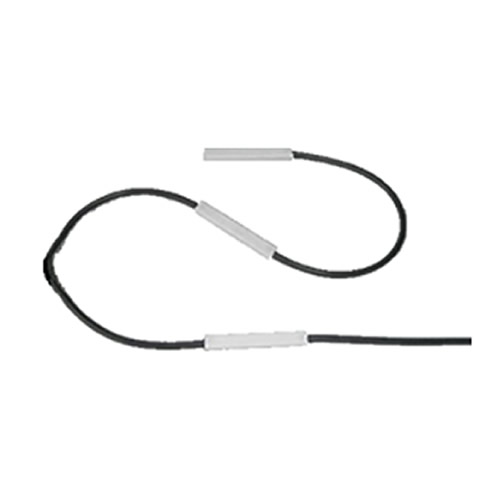
Fiber Bragg gratings measure temperature and strain through wavelength shifts in reflected light. Multiple gratings on single fibers create distributed sensing networks. These sensors excel in harsh environments but require more complex interrogation equipment than fluorescent systems.
Sensor Technology Comparison
| Jenis Sensor | Ketepatan | Imunitas EMI | Waktu Respons | Instalasi |
|---|---|---|---|---|
| Serat Optik Fluoresen | ±1°C | Kekebalan penuh | <1 Kedua | Kontak, customizable probe |
| Wireless Temperature | ±2-3°C | Moderate vulnerability | 10-60 detik | Kontak, no cabling |
| Infrared Camera | ±2°C or 2% | Tidak berlaku | Pencitraan waktu nyata | Non-contact survey |
| Kisi Serat Bragg | ±0,5-1°C | Kekebalan penuh | Milidetik | Penginderaan terdistribusi |
Sensor serat optik neon offer superior electromagnetic immunity combined with excellent accuracy and fast response for critical hotspot monitoring in power systems. The technology balances performance, keandalan, and cost-effectiveness for high-voltage applications.
Condition-Based Monitoring vs Predictive Maintenance
Industry terminology often conflates these concepts, but technical distinctions exist. Condition-based monitoring assesses current equipment status through sensor measurements and diagnostic rules. The system answers “what is the equipment condition right now?” Alarms trigger when parameters exceed thresholds indicating abnormal operation.
Pemeliharaan prediktif forecasts future failures through trend analysis and statistical modeling. The approach answers “when will this equipment fail?” Historical data trains algorithms to project remaining useful life and optimal intervention timing.
| Aspek | Condition-Based Monitoring | Pemeliharaan Prediktif |
|---|---|---|
| Fokus | Current equipment condition | Future failure prediction |
| Analisis Data | Threshold comparison, diagnostic rules | Analisis tren, statistical modeling |
| Action Timing | When condition exceeds limits | Before predicted failure date |
| Data Requirements | Current readings vs baselines | Historical trends and failure data |
Practical implementations often blend both approaches. Condition monitoring systems collect data that feeds predictive algorithms. The monitoring component provides immediate fault detection while predictive analytics optimize long-term maintenance scheduling.
Power Equipment Condition Monitoring
Pemantauan Kondisi Transformator

Sistem pemantauan transformator protect these critical assets through multiple sensing techniques. Dissolved gas analysis samples insulating oil for hydrogen, metana, etilen, and acetylene indicating internal faults. Gas concentration ratios classify fault types—thermal decomposition, pelepasan corona, atau busur.
Pemantauan suhu tracks winding hotspots, suhu minyak, dan kondisi sekitar. Sensor serat optik neon measure winding temperatures directly without electromagnetic interference from high voltages. The ±1°C accuracy enables precise thermal loading assessment. Waktu respons di bawah 1 second capture rapid transients during load changes or fault conditions.
Partial discharge monitoring detects insulation deterioration through ultra-high frequency sensors or acoustic emissions. Bushing monitoring measures capacitance and power factor changes indicating moisture ingress or contamination. Load tap changer monitoring tracks contact wear and operation counts.
Switchgear Condition Monitoring

Pemantauan switchgear focuses on connection integrity and insulation condition. Thermal monitoring identifies loose connections and overloaded components through temperature rise detection. Contact-based sensor neon mounted on bus bars and cable connections provide continuous hotspot surveillance. Desain serat optik berfungsi dengan aman di switchgear tertutup di mana tegangan tinggi menghalangi sensor konvensional.
Sensor pelepasan sebagian mendeteksi degradasi insulasi pada switchgear berinsulasi gas dan sistem berinsulasi udara. Deteksi Corona mencegah terjadinya flashover. Pemantauan pemutus sirkuit melacak jumlah operasi, keausan kontak, dan kondisi mekanisme melalui analisis waktu dan tanda akustik.
Integrasi Sistem
Trafo agregat platform pemantauan gardu induk, switchgear, dan data pemutus sirkuit ke dalam antarmuka terpadu. Diagnostik otomatis menghubungkan beberapa input sensor untuk mengidentifikasi kondisi kesalahan yang kompleks. Akses jarak jauh memungkinkan pemantauan terpusat terhadap gardu induk yang didistribusikan dari pusat kendali.
Kasus Sistem Pemantauan Peralatan Listrik Global
Jaringan Transmisi Eropa
Operator transmisi besar di Eropa mengerahkan pemantauan trafo yang komprehensif 150 gardu induk. Sensor suhu serat optik neon monitor winding hotspots on 400kV power transformers. The system detected developing insulation problems on three transformers through temperature trend analysis combined with dissolved gas readings. Planned outages for repairs prevented catastrophic failures that would have caused extended blackouts affecting millions of customers.
Asian Industrial Complex
A petrochemical facility in Southeast Asia implemented switchgear monitoring on medium-voltage distribution systems. Sensor suhu on 10kV switchgear detected a degraded cable connection showing 45°C temperature rise. Maintenance during a scheduled shutdown prevented equipment failure that would have halted production worth several million dollars daily. The monitoring system paid for itself through this single intervention.
North American Utility
A utility serving 500,000 customers installed online transformer monitoring on critical substations. Integration of thermal monitoring, analisis gas terlarut, and partial discharge detection created comprehensive asset health profiles. The system identified transformers requiring refurbishment or replacement, enabling strategic capital planning. Unexpected failure rates decreased 60% over three years.
Middle East Power Generation
A combined-cycle power plant deployed generator and transformer monitoring. Sensor serat neon track stator winding temperatures with ±1°C accuracy across the full -40°C to 260°C range. High response speed captures thermal transients during load changes and grid disturbances. The monitoring system optimizes generator loading while protecting against overheating.
Monitoring System Components
Lapisan Sensor
Physical sensors convert equipment parameters into electrical or optical signals. Selection matches measurement requirements—vibration accelerometers for rotating machinery, sensor suhu for thermal monitoring, pressure transducers for fluid systems, current transformers for electrical measurements. Sensor placement targets specific failure modes on critical components.
Akuisisi Data
Acquisition hardware digitizes sensor signals for processing. Multi-channel systems simultaneously sample multiple sensors maintaining timing relationships. High-speed sampling captures transient events. Pemancar serat optik neon interrogate multiple sensor channels, with single units supporting 1-64 measurement points through optical switching.
Infrastruktur Komunikasi
Wired and wireless networks transmit data from acquisition units to processing systems. Ethernet connections provide high bandwidth for continuous monitoring. Wireless links enable temporary installations and retrofit applications. Industrial protocols ensure reliable communication in electrically noisy environments.
Processing and Analytics
Software platforms process raw sensor data into actionable information. Signal processing extracts features from vibration spectra, tren suhu, and oil analysis results. Diagnostic algorithms compare current readings against baseline signatures and alarm thresholds. Trending functions track gradual degradation over months and years.
Antarmuka Pengguna
Visualization displays present equipment status to operators and maintenance personnel. Dashboards show real-time readings, status alarm, and trend charts. Mobile applications provide field access during inspections. Reporting functions document equipment history for regulatory compliance and asset management.
Applications and Benefits of Condition Monitoring
Aplikasi Utama
Power generation and distribution relies on monitoring for grid reliability. transformator, generator, switchgear, and transmission lines require continuous surveillance preventing blackouts. Pemantauan suhu protects high-voltage equipment where failures cascade across networks.
Manufacturing industries apply monitoring to production equipment minimizing unplanned downtime. Motor-driven systems, pompa, kompresor, and material handling equipment benefit from vibration and thermal analysis. Production quality improves through early detection of tool wear and process deviations.
Oil and gas operations monitor rotating equipment in harsh environments. Offshore platforms and remote facilities require monitoring systems compensating for limited maintenance access. Explosion-proof sensors and intrinsically safe designs meet hazardous area requirements.
Laboratory and medical applications utilize precision pemantauan suhu for environmental chambers, sterilizers, and research equipment. Sensor serat neon provide electromagnetic immunity in MRI rooms and near high-frequency medical devices. Customizable specifications adapt to specific temperature ranges and probe configurations.
Manfaat Operasional
Reduced downtime represents the most quantifiable benefit. Early fault detection enables planned repairs during scheduled outages rather than emergency responses. Production schedules remain intact. Spare parts arrive before failures occur rather than expensive overnight shipments.
Extended equipment life results from operating within design parameters. Monitoring prevents overloading, detects lubrication problems, and identifies misalignment before accelerated wear damages components. Assets reach or exceed design lifespans.
Safety improvements protect personnel and facilities. Electrical equipment monitoring prevents arc flash incidents. Pressure vessel monitoring detects developing leaks. Rotating equipment monitoring identifies bearing failures before catastrophic disintegration launches debris.
Energy efficiency gains emerge from optimized operation. Motors running with worn bearings or misalignment consume excess power. Monitoring identifies efficiency degradation enabling corrective action. Transformer monitoring optimizes loading for minimum losses.
Top Condition Monitoring System Manufacturers
🏆 #1 Ilmu Elektronik Inovasi Fuzhou&Perusahaan Teknologi., Ltd.
| Didirikan | 2011 |
| Spesialisasi | Fluorescent fiber optic temperature monitoring systems for power equipment |
| Kategori Produk | • Sensor suhu serat optik neon • Multi-channel monitoring transmitters (1-64 saluran) • Transformer winding temperature monitoring systems • Switchgear thermal monitoring solutions • Industrial process temperature monitoring |
| Keuntungan Teknis | • ±1°C measurement accuracy • -40°C to 260°C operating range • Response time <1 Kedua • Fiber length up to 80 meter • Customizable probe diameter and specifications |
| Alamat | Taman Industri Jaringan Gandum Liandong U, Jalan Xingye Barat No.12, Fuzhou, Fujian, Cina |
| Kontak | E-mail: web@fjinno.net Phone/WhatsApp: +86 13599070393 Wechat wechat: +86 13599070393 QQ: 3408968340 |
🥈 #2 Fuzhou Huaguang Tianrui Optoelektronik Technology Co., Ltd.
| Didirikan | 2016 |
| Spesialisasi | Fiber optic sensing technology for power and industrial applications |
| Kategori Produk | • Fiber optic temperature monitoring systems • Power equipment condition monitoring solutions • Industrial temperature measurement devices • Distributed sensing systems |
| Alamat | Jalan Jinyan No.163, Taman Industri Ruibang, Fuzhou, Fujian, Cina |
| Kontak | Office: 0591-83841511 Seluler: 13599070393 (Manajer Chen) Wechat wechat: 13599070393 QQ: 3408968340 E-mail: 3408968340@qq.com |
Produsen Internasional
Grup SKF (Swedia, established 1907) provides comprehensive vibration monitoring and analysis systems. Product lines include portable analyzers, online monitoring platforms, and wireless sensor networks for rotating machinery across industries.
Emerson Electric Co. (Amerika Serikat, established 1890) offers condition monitoring through its AMS Suite platform. Products encompass vibration sensors, machinery health analyzers, and predictive maintenance software serving process industries.
Otomatisasi Rockwell (Amerika Serikat, established 1903) delivers integrated monitoring solutions combining sensors, pengontrol, and analytics software. Systems monitor motors, drive, and production machinery with focus on manufacturing environments.
Honeywell Internasional (Amerika Serikat, established 1906) supplies monitoring equipment for power generation, minyak dan gas, and chemical processing. Product range includes vibration monitors, gas detectors, and thermal imaging systems.
Perusahaan Kebetulan (Amerika Serikat, established 1948) manufactures portable condition monitoring instruments including vibration meters, kamera inframerah, and ultrasonic leak detectors for maintenance professionals.
Prüftechnik (Jerman, established 1972) specializes in vibration analysis and laser alignment systems. Products serve rotating machinery applications in power generation and heavy industry.
Bruel & Sayang (Denmark, established 1942) produces vibration and acoustic monitoring equipment. Systems target noise and vibration analysis in manufacturing, otomotif, dan sektor dirgantara.
PCH Engineering (Belgium, established 1995) develops online condition monitoring systems for critical rotating equipment. Products focus on turbomachinery in power generation and industrial applications.
Pertanyaan yang Sering Diajukan
What equipment types benefit most from condition monitoring?
Critical assets where failures cause safety hazards, pelepasan lingkungan, waktu henti yang diperpanjang, or expensive repairs justify monitoring investment. Transformator daya, large motors, turbin, kompresor, and production machinery represent prime candidates. Equipment accessibility also factors—remote or hazardous locations increase monitoring value.
How does fluorescent fiber optic sensing work?
Excitation light travels through optical fiber to a probe containing temperature-sensitive fluorescent material. The material emits fluorescent light with decay time proportional to temperature. Measuring this decay time determines temperature with ±1°C accuracy. Complete electromagnetic immunity enables measurements in high-voltage environments where electrical sensors fail.
What determines appropriate sensor types for specific applications?
Equipment failure modes dictate sensor selection. Bearing failures require vibration analysis. Electrical connections need thermal monitoring. Insulation degradation demands partial discharge detection. Environmental factors matter—explosive atmospheres require intrinsically safe sensors, high voltages need electromagnetic immunity, and remote locations benefit from wireless communication.
Can condition monitoring eliminate all unexpected failures?
Monitoring significantly reduces but cannot eliminate all failures. Some failure modes progress too rapidly for detection. Monitoring system malfunctions occur. Human factors affect response to alarms. Namun, properly implemented systems typically prevent 70-90% of failures that would otherwise occur unexpectedly.
How many measurement channels does a transformer monitoring system require?
Large power transformers typically need 12-24 temperature measurement points covering winding hotspots, minyak atas, minyak bagian bawah, dan sistem pendingin. Additional sensors monitor dissolved gases, pelepasan sebagian, and bushing conditions. A single fluorescent fiber transmitter supporting up to 64 channels can accommodate comprehensive transformer monitoring through one data acquisition unit.
What maintenance do condition monitoring systems themselves require?
Sensor calibration verification occurs annually or per manufacturer specifications. Communication network maintenance ensures reliable data transmission. Software updates address security vulnerabilities and add features. Battery replacement in wireless sensors follows manufacturer schedules. Overall maintenance burden remains minimal compared to prevented equipment failures.
How does contact-based temperature sensing compare to infrared imaging?
Contact sensors like fluorescent fiber optics provide continuous monitoring of specific points with superior accuracy. Infrared cameras enable non-contact surveys of large areas during periodic inspections. Applications requiring continuous monitoring with precise threshold detection favor contact sensors. Periodic surveys identifying new hotspots across extensive equipment utilize infrared imaging.
What training do personnel need for condition monitoring systems?
Installation technicians require sensor mounting and cabling skills plus equipment-specific training. Operators need instruction on alarm response procedures and system interfaces. Maintenance planners use trending and diagnostic tools for scheduling decisions. Analysts interpreting advanced diagnostics benefit from certification programs in vibration analysis, termografi, or oil analysis depending on technologies employed.
Contact for Monitoring Solutions
For comprehensive condition monitoring system specifications, product documentation, and customized solutions tailored to your specific equipment and applications, contact leading manufacturers directly:
Get Expert Consultation
Our technical specialists provide detailed information on fluorescent fiber optic temperature monitoring systems, transformer and switchgear monitoring solutions, and custom sensor configurations for power equipment and industrial applications.
Minta katalog produk, spesifikasi teknis, pricing information, and application engineering support through the contact information provided for top manufacturers listed above.

Sensor suhu serat optik, Sistem pemantauan cerdas, Produsen serat optik terdistribusi di Cina
 |
 |
 |