 Sensor suhu serat optik INNO ,sistem pemantauan suhu.
Prinsip pemantauan serat optik terdistribusi untuk saluran kabel jarak jauh
Penginderaan serat optik terdistribusi (DFOS) Teknologi ini merupakan teknologi penginderaan jenis baru yang memiliki keunggulan pada penginderaan jarak jauh, kepasifan, kemampuan anti-interferensi yang kuat, daya tahan yang baik dan serasi, dan jaringan yang mudah. Ini telah menjadi teknologi pilihan untuk menerapkan pemantauan terdistribusi.
Prinsipnya adalah dengan menggunakan serat optik secara bersamaan sebagai elemen sensitif penginderaan dan media transmisi sinyal, dan mengadopsi Reflektometer Domain Waktu Optik yang canggih (OTDR) teknologi untuk mendeteksi perubahan regangan dan suhu pada berbagai posisi di sepanjang serat optik, mencapai pengukuran yang benar-benar terdistribusi. Dalam hal teknologi penginderaan, pada dasarnya ada tiga metode implementasi: berdasarkan hamburan Rayleigh, based on Raman scattering, and based on Brillouin scattering. The distributed fiber optic sensing technology based on Brillouin scattering has achieved higher measurement accuracy, rentang pengukuran, and spatial resolution in temperature and strain than other sensing technologies, and has received widespread attention and research. Brillouin scattering is a light scattering process that occurs when light waves and sound waves propagate in optical fibers, resulting in inelastic collisions. Fiber optic sensing technology utilizes the unique characteristics of optical fibers to detect temperature, tekanan, and acoustic vibration (suara) changes along the fiber optic line, transforming the fiber optic into a long-distance distributed fiber optic sensor. By burying fiber optic cables near pipelines or connecting them to pipelines, operator dapat terus memantau kesehatan struktural dan status operasional aset penting ini.
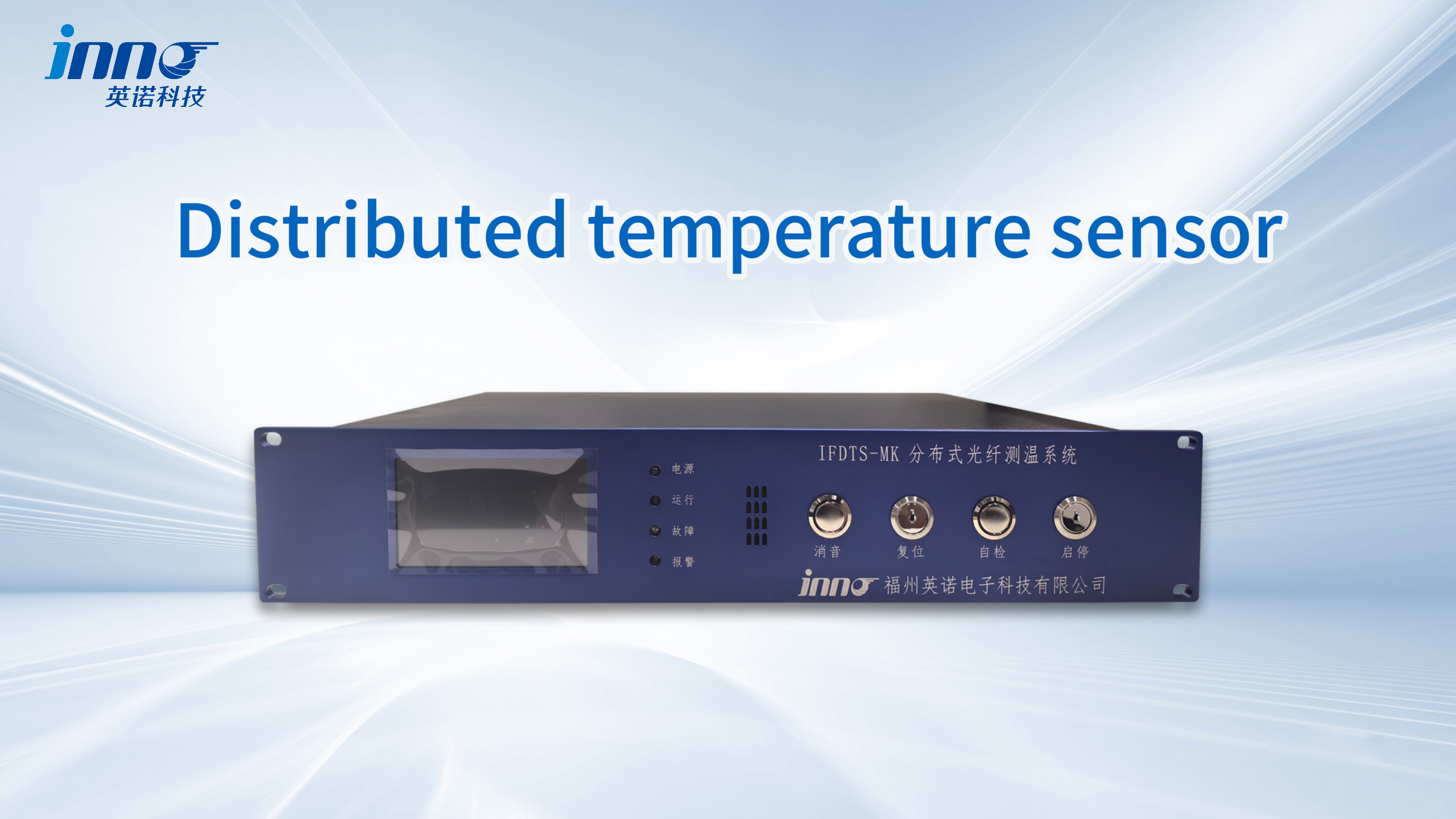
Metode Pemantauan Suhu Serat Optik Terdistribusi pada Pipa Kabel Jarak Jauh
Yang didistribusikan sistem pemantauan suhu serat optik dikembangkan berdasarkan prinsip hamburan Raman dan reflektometri domain waktu optik (OTDR) penentuan posisi. Ini memiliki fungsi seperti pembangkitan sinyal optik, konversi fotolistrik, penguatan sinyal, dan pemrosesan, dan memiliki indikator kinerja dan stabilitas sistem yang baik. Sistem ini mengadopsi kabel optik penginderaan suhu khusus sebagai sensor suhu, mengintegrasikan komputer, komunikasi serat optik, penginderaan serat optik, kontrol fotolistrik dan teknologi lainnya. Ini memiliki keunggulan keamanan intrinsik, ketahanan terhadap korosi, dan kekebalan terhadap interferensi elektromagnetik. Ia dapat terus memantau informasi suhu lingkungan jarak jauh dan berskala besar, menyediakan solusi pemantauan suhu berkualitas tinggi untuk bidang-bidang seperti listrik, minyak bumi, penambangan batubara, panas, dan transportasi. Kabel deteksi menggunakan serat optik multimode standar biasa untuk menghubungkan DTS untuk pengukuran suhu terdistribusi, yang dapat dikustomisasi sesuai kebutuhan pengguna. Struktur kabel deteksi umum mencakup serat optik multimode 0,6 mm, selang logam baja tahan karat, Kevlar, lapisan jalinan baja tahan karat, dan selubung PVC. Sensor Suhu Terdistribusi (DTS) teknologi dicapai dengan menggabungkan prinsip hamburan balik laser Raman dan refleksi domain waktu optik. Teknologi ini dapat memenuhi kebutuhan jarak jauh, didistribusikan, dan pemantauan waktu nyata.
Teknologi pemantauan keamanan serat optik terdistribusi untuk saluran kabel jarak jauh
Teknologi penginderaan serat optik terdistribusi memiliki aplikasi penting dalam pemantauan keamanan jaringan pipa kabel jarak jauh. Mengambil solusi peringatan serat optik saluran pipa sebagai contoh, ini didasarkan pada keunggulan keamanan intrinsik serat optik, penerapan yang mudah, dan cakupan segala cuaca. Ia dapat mengumpulkan dan memantau getaran di dalam biro pemantauan untuk analisis dan penentuan posisi, dan merupakan alat baru untuk inspeksi saluran pipa. Solusi ini dapat mencapai pemeriksaan dan peringatan otomatis presisi tinggi 24/7 melalui perangkat penginderaan cahaya dan mesin algoritma penginderaan. Ketika konstruksi eksternal terjadi di sekitar pipa, serat optik yang menyertainya yang dipasang di sepanjang pipa mengumpulkan informasi getaran dan mengirimkannya ke peralatan penginderaan optik yang ditempatkan di stasiun pabrik atau ruang katup. Keakuratan pengenalan peristiwa dapat dicapai 97%. Solusi peringatan serat optik saluran pipa menggabungkan modul inovatif yang ditingkatkan dengan algoritma koreksi titik buta yang sangat kuat, yang dapat mengoreksi dan membentuk fase sinyal lemah yang dikumpulkan, sangat meningkatkan efektivitas sinyal lemah. Dibandingkan dengan rata-rata industri, itu dapat meningkatkan tingkat perolehan sinyal efektif menjadi 99.9%. Mesin pengenalan riak getaran dapat menganalisis dan memulihkan peristiwa konstruksi dari berbagai dimensi. Untuk setiap titik terjadinya getaran konstruksi, informasi fase dapat diperoleh dan fitur multi-dimensi (seperti cetak suara, frekuensi, ruang angkasa, urutan waktu, lamanya, dll.) dapat diekstraksi. Pengenalan konvolusi mendalam multidimensi membandingkan sampel, meningkatkan keakuratan pengenalan peristiwa ke 97%, melebihi tingkat rata-rata industri. And in cooperation with relevant geological research universities in China, importing a large amount of geological data can achieve daily iteration of new event samples, continuous evolution, and continuously improve the accuracy of perception and warning. Sementara itu, fiber optic sensing equipment can iterate based on new construction behavior data and different geological environment scenarios in the database.
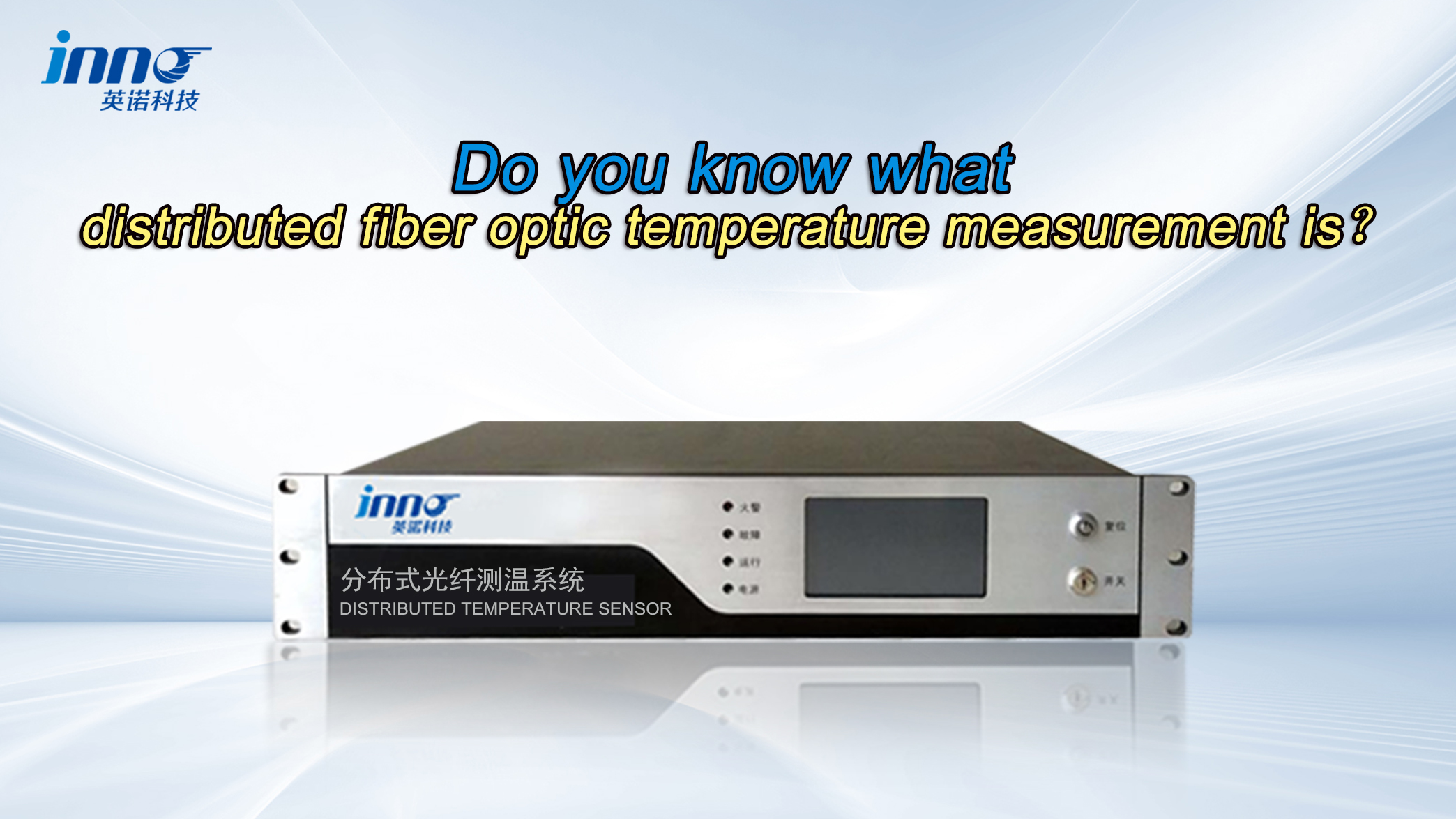
Key points for distributed fiber optic vibration monitoring of long-distance cable conduits
Distributed fiber optic vibration monitoring technology is based on the basic principle of Rayleigh scattering, combined with φ – OTDR (phase sensitive time domain reflectometry) technology and signal analysis and processing algorithms, to achieve fiber optic vibration sensing monitoring. Distributed fiber optic vibration sensors, as important components in fiber optic sensor related technologies, have the advantages of non radiative interference, good resistance to electromagnetic interference, and good chemical stability that ordinary fiber optic sensors have. They also have the characteristic of one-dimensional spatial continuous distribution that fiber optic sensors possess. Dalam aplikasi praktis, such as the research on intelligent fiber optic warning systems for long-distance pipeline safety, intrusion signals around the pipeline are collected from a distributed fiber optic sensing system called OTDR (phase sensitive optical time domain reflectometry), Long short term memory, fully connected deep neural networks are used to establish a recognition model and achieve the recognition of passing signals. After training and blind testing, the recognition model for passing events constructed has good recognition and positioning effects in actual long-distance fiber optic monitoring environments, effectively reducing the false alarm rate of the warning system.
Distributed fiber optic leakage alarm mechanism for long-distance cable conduits
There are various methods and mechanisms for distributed fiber optic monitoring in the leakage monitoring of long-distance cable conduits. The DAS pipeline leak monitoring system can synchronously monitor the operation of hundreds of kilometers of long-distance pipelines based on four indicators in real time. Thanks to its advanced software and event data recognition algorithm, it can ensure the accuracy of leak event monitoring while also covering the identification of potential threats such as ground and construction vibrations. It adopts distributed fiber optic acoustic sensing (ITU) technology and is based on a phase sensitive optical time domain reflectometer (F – OTDR) to detect the backward Rayleigh scattering signal generated by coherent pulsed light propagating in the fiber, dan berdasarkan ini, detect and reconstruct leakage events. It mainly consists of optical fiber, optical signal amplifier/demodulator, high coherence pulse laser source, and data processing analyzer. It has a unique 4-mode leak event monitoring mode:
NPP (Negative Pressure Pulse): This feature is generated immediately during the main disturbance event and propagates rapidly in both directions within the measured object; The signal is coupled with the measured object and received by a continuous external optical fiber. This is usually the most sensitive detection mode and a rather unique signal.
OFN (Event Noise): When a pipeline leakage event occurs, the flow of the leaked material at the leakage port will generate corresponding and detectable noise signals. Noise signals are generally high-frequency sound signals and will be generated at the moment of pipeline leakage. Small disturbance events only produce very small acoustic components, so fiber optic cables need to be placed as close as possible to the measured pipeline.
Environmental strain (deformation of the measured object): In underground pipeline leakage events, gas or liquid leakage will cause compression, permeation, and filling of the surrounding medium, yang akan menyebabkan deformasi media di dekat lubang kebocoran pipa. Sistem DAS dapat secara akurat menemukan lokasi kebocoran dengan memantau tekanan lingkungan. Untuk gangguan besar atau kejadian deformasi, alarm akan segera dipicu. Untuk gangguan kecil atau deformasi, tidak ada alarm yang akan dikeluarkan sebelum efek peristiwa mencapai kabel serat optik. Lamanya periode ini tergantung pada offset dan arah kabel serat optik.
DTGS (Penginderaan Gradien Suhu Terdistribusi): Isi pipa umumnya memiliki perbedaan suhu tertentu dengan lingkungan luar. Saat bahan bocor (gas atau cairan) melarikan diri ke lingkungan eksternal pipa, karena tingginya sensitivitas cahaya hamburan Rayleigh mundur dalam serat optik, even small temperature changes can have a demodulated effect on its phase. The alarm requires a disturbance event (or temperature effect) to reach the fiber optic cable, and usually only appears after a delay of some time. This period depends on the offset of the cable, the condition and direction of the measured object. Selain itu, there is a method for pipeline leakage monitoring using a distributed fiber optic vibration sensing (DVS) system based on multidimensional spatial data fusion algorithm. The sensing optical cable is fixed on the side of the pipeline, and the pipeline leakage signal is picked up by the DVS system. The pipeline leakage signal is averaged in the spatiotemporal domain according to the time window and spatial resolution, and an appropriate threshold is set to complete pipeline leakage monitoring and alarm. In the experiment, single point leakage and multi-point leakage were tested, and the signal-to-noise ratio of single point pipeline leakage signal increased by 4.5 dB. The highest single point pipeline leakage alarm rate increased by 19.53%, and the highest multi-point pipeline leakage alarm rate increased by 2.29%. Real time monitoring and alarm of 0.2 MPa pipeline leakage were achieved.

Sensor suhu serat optik, Sistem pemantauan cerdas, Produsen serat optik terdistribusi di Cina
 |
 |
 |