 Sensor suhu serat optik INNO ,sistem pemantauan suhu.
Why Transformer Winding Temperature Matters
The winding hot-spot temperature is the single most critical indicator of transformer insulation health. While top-oil temperature provides an overall thermal view, the hottest-spot inside the windings directly determines insulation aging, loss of dielectric strength, dan kegagalan akhirnya. According to IEEE and IEC models based on the Arrhenius law, every 6–8°C increase in hot-spot temperature can cut insulation lifetime in half.
In real operating conditions, winding hot-spots often exceed oil temperature by 10–30°C. Tanpa pengukuran langsung, asset operators must rely on estimations that frequently fail to reflect real stress levels during overload, non-linear load, dan sementara.
Limitations of Traditional Winding Temperature Measurement
Conventional methods such as RTDs, termokopel, and thermal models cannot measure true winding hot-spots. Their limitations include:
- RTD dan termokopel only measure oil or surface temperatures, not the winding interior.
- Thermal models rely on load estimation and assume ideal conditions, which rarely match field realities.
- Waktu respons lambat makes them inadequate during transient overload events.
- kerentanan terhadap EMI makes electronic sensors unreliable inside high-voltage environments.
- Inability to install inside winding slots, where the true hottest-spot forms.
Pendeknya, traditional methods cannot provide the real-time accuracy required for modern transformer protection strategies.
Cara Kerja Sensor Suhu Serat Optik
Fiber optic technology overcomes the limitations of electrical sensors through optical measurement principles that are immune to electromagnetic interference. Several sensing technologies are widely used in transformer applications:

- Fluoroptik (berpendar) sensor: Measure temperature through fluorescence decay time.
- Sensor GaA: Detect bandgap shift in gallium arsenide crystals due to temperature.
- FBG (Kisi Fiber Bragg) sensor: Use wavelength shifts in grating structures to determine temperature.
Because measurements are based purely on optical signals, fiber optic sensors can operate safely inside high-voltage oil-filled environments without electrical interference or grounding issues.
Direct Measurement of Winding Hot-Spots
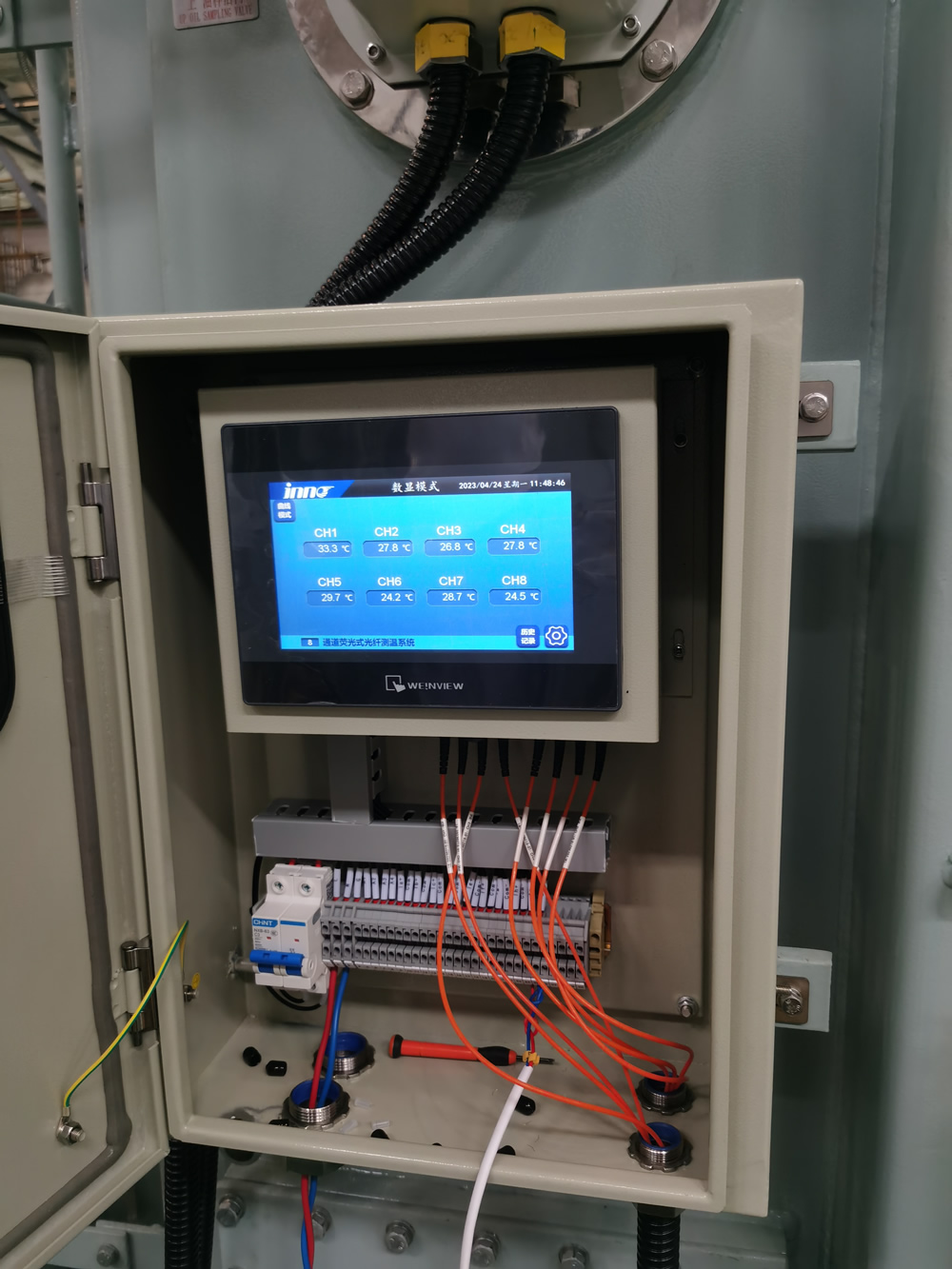
The greatest advantage of fiber optic technology is the ability to place sensors directly inside the winding structure, termasuk:
- Low-voltage and high-voltage winding slots
- Upper, tengah, and lower winding sections
- Locations most prone to thermal stress during overload
With multi-point distributed measurement (8, 12, 16, or more sensors), operators gain a complete thermal map of winding behavior. Unlike estimated values, these real-time measurements capture:
- Rapid load variations
- Non-linear harmonics from industrial loads
- Cooling system performance fluctuations
- Localized insulation degradation
This accuracy fundamentally improves protection and reliability.
How Fiber Optic Sensors Enhance Winding Protection

Fiber optic hot-spot measurement plays a transformative role in modern transformer winding protection. Manfaat utama meliputi:
- Real-time hot-spot alarms triggered by actual temperature, not estimates.
- More accurate overload protection during emergency loading.
- Improved cooling control based on real internal temperatures.
- Better prediction of insulation aging through precise thermal history.
- Avoidance of “false overload alarms” caused by inaccurate thermal models.
- Extended transformer lifespan through optimized thermal management.
Utilities using real hot-spot measurement often achieve significantly longer operating life and higher reliability compared to those relying solely on model-based temperature estimates.
Installation Best Practices for Power Transformers
Proper installation ensures the accuracy and longevity of fiber optic systems. Key engineering guidelines include:
- Protect fiber routing and maintain manufacturer-recommended bend radius.
- Select sensor points based on thermal modeling and winding design.
- Ensure compatibility with oil-immersed or dry-type transformer construction.
- Follow insulation and HV isolation requirements for internal placement.
- Integrate the temperature measurement unit with SCADA or online monitoring platforms.
- Avoid common mistakes such as loose mechanical clamping or improper fiber anchoring.
When correctly installed, fiber optic systems can operate reliably for the entire service life of the transformer.
Integration with Other Monitoring Technologies
Fiber optic sensors are a critical component of comprehensive transformer health assessment. When combined with other systems, they provide multidimensional insight:
- DGA (Analisis Gas Terlarut): Chemical indicators of faults.
- Pemantauan pelepasan sebagian: Electrical insulation stress detection.
- pemantauan OLTC: Tap-changer mechanical and electrical performance.
- Load and cooling data: Thermal correlation with real-time temperature.
Bersama, these systems form a unified health index (HAI) that significantly improves decision-making for maintenance and asset replacement.
Typical Applications in the Power Industry
Fiber optic temperature monitoring is now widely adopted in:
- Urban substations with high continuous loading
- Wind farm step-up transformers exposed to variable load cycles
- Data center transformers with harmonics-rich loads
- Industrial transformers in steel, kimiawi, and mining facilities
- Railway and traction transformers subject to severe dynamic loading
Di setiap aplikasi, direct hot-spot monitoring has significantly reduced unexpected outages and improved operational confidence.
Kesimpulan: Why Fiber Optic Sensors Are Essential for Modern Transformer Protection
Fiber optic temperature sensors provide the most accurate and reliable method for determining transformer winding hot-spot temperature. By measuring temperature directly inside the winding structure, they eliminate the uncertainties of traditional methods and deliver unmatched insight into thermal behavior. Utilities and OEMs around the world are transitioning from estimated temperature protection to real-time sensing, making fiber optic technology the new standard for transformer reliability, keamanan, dan umur aset yang diperpanjang.
FAQ
- Why are fiber optic sensors more accurate?
Because they measure temperature directly inside winding hot-spots rather than relying on oil or model-based values. - Can fiber optic sensors prevent transformer failure?
Ya. Real-time hot-spot data enables early detection of overload stress, penuaan isolasi, and cooling issues. - Are fiber optic sensors affected by EMI?
Tidak. Optical signals are immune to electromagnetic interference, menjadikannya ideal untuk lingkungan bertegangan tinggi. - Is fiber optic measurement required by standards?
While optional, IEEE and IEC standards increasingly recommend direct hot-spot measurement for critical transformers.

Sensor suhu serat optik, Sistem pemantauan cerdas, Produsen serat optik terdistribusi di Cina
 |
 |
 |