 Sensores de temperatura de fibra óptica INNO ,sistemas de monitoreo de temperatura.

Fibra Óptica Temperatura Measurement System
Correo electrónico: web@fjinno.net
WhatsApp: +8613599070393
WeChat(China): +8613599070393

1、 Overview of Substation Monitoring System
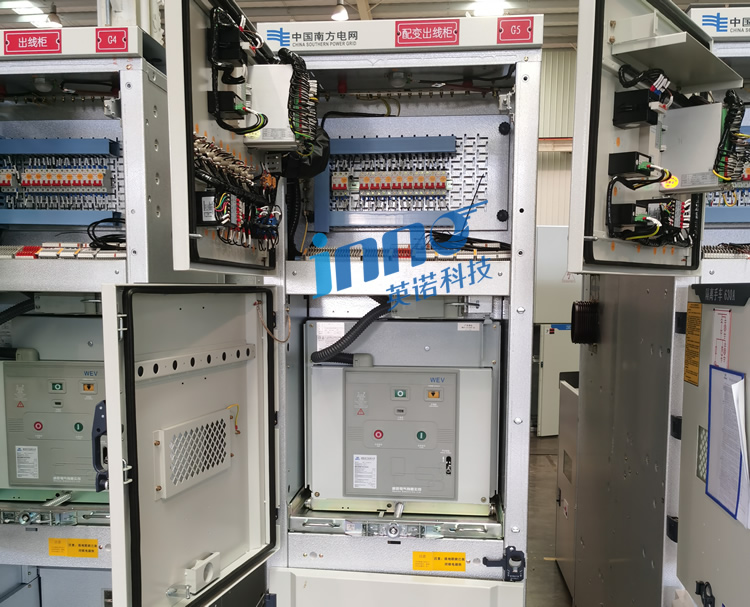
The substation monitoring system is an important component of the substation automation system, mainly used for real-time monitoring and control of the operation status of the substation to ensure its safe and stable operation. It relies on advanced technology and has multiple functions and features. Por ejemplo, the intelligent substation monitoring system can monitor data such as power factor and temperature to ensure normal operation. Its fault diagnosis and warning function can timely detect potential faults and issue warnings through the analysis of monitoring data, allowing operation and maintenance personnel to take timely measures to avoid accidents; The remote control function allows operation and maintenance personnel to remotely operate and adjust substation equipment, improving operation and maintenance efficiency; The data analysis and optimization function can analyze historical data and provide decision support for operational optimization to reduce costs; Simultaneously adopting advanced encryption technology and protective measures to ensure data and system security, preventing unauthorized access and attacks.
From the perspective of structural composition, the substation monitoring system has different hierarchical structures. It can generally be divided into interval layer, capa de comunicación, and station control layer. The interval layer is a data acquisition, protección, and control device for equipment operating on site, such as comprehensive protection relays, protection control cabinets, multifunctional meters, etc.. They are closely connected to primary equipment and are responsible for actual data acquisition and equipment control. The communication layer is a bridge for data transmission between the interval layer and the station control layer. Data is transmitted through communication cables/optical cables, with devices such as communication management machines and switches in between responsible for data distribution, transmisión, and storage of raw data. The station control layer is usually regarded as the backend, including computers, printers, monitoring screens, and other devices. This layer needs to develop applications for the collected data to be displayed on the terminal screen. Remote control commands are also sent from this layer and sent to the interval layer for execution through the communication layer.
Además, the substation monitoring system consists of two levels in terms of centralized monitoring and management of power and environment, namely the monitoring center and the monitoring site (which can also be designed as a multi-level monitoring center architecture according to requirements). The monitoring center consists of database servers, monitoring service desks, printers, y otros equipos, responsible for data collection of monitoring devices across the network, statistical processing and analysis of device information, and providing various forms of alarms (such as sound and light, voice prompts, voice outbound calls, SMS, etc.); The monitoring site adopts high-performance IBSU intelligent station monitoring unit, which is responsible for collecting monitoring equipment parameters and processing intelligent device protocols in the substation. The collection equipment, intelligent air conditioning controller, intelligent battery detector, cámara, sensor and other devices can be flexibly configured according to the site scale to monitor the power environment in the substation.
The substation monitoring system has diverse functions. The data acquisition and processing function obtains analog quantities (como la corriente, Voltaje, active power, potencia reactiva, factor de potencia, frecuencia, y aceite), switch quantities (such as equipment action and alarm signals, on load tap changer position signals, etc.), electrical energy and other data through measurement and control devices and communication interfaces, including DC sampling (converting AC signals into DC voltage signals suitable for data acquisition unit processing through transmitters and connecting them to the data acquisition unit), as well as collecting electrical energy from remote transmission devices and DC monitoring devices through communication interfaces. The collected data will be processed and stored. It also has control operation functions, alarm and processing functions, sequence of events (SOE) and accident recall functions, remote control unit (RTU) funciones, clock synchronization functions, human-machine communication and operation management functions, and interface functions with other devices.
As an important part of the power supply and distribution system, the substation monitoring system can achieve integrated monitoring, advertencia temprana, and auxiliary operation and maintenance of power, ambiente, seguridad, y otros aspectos. El sistema admite la personalización de umbrales., y las inspecciones auxiliares pueden monitorear de forma remota el estado de operación del edificio de la estación sin la necesidad de que el personal esté de servicio todo el día.. Integra subsistemas auxiliares de la estación para lograr un monitoreo integral y una programación inteligente interna y externa.. En caso de fallas repentinas, Puede comprender oportunamente la situación y ordenar el manejo de fallas a través del monitoreo por video.. Estas funciones permiten que la sala de la estación tenga menos o ningún personal de servicio durante la operación., transformando el modo de mantenimiento del usuario de “modo de reparación pasiva” a “modo de prevención activa”. Es ampliamente utilizado en subestaciones., subestaciones, estaciones de conmutación, salas de distribución, transformadores de caja y otros escenarios, Cumplir con los requisitos de alta calidad de la automatización de la red de distribución y prevenir accidentes..
2、 Temperature Monitoring in Substation Monitoring System
(1) The Importance of Temperature Monitoring
During the operation of the substation, the contact resistance of the electrical contacts of the primary equipment may increase due to factors such as equipment manufacturing, electric shock oxidation, and arc impact, leading to a temperature rise. When the temperature rises to a certain level, the mechanical and electrical strength of the equipment will decrease, y en casos severos, it can cause short circuits or even damage to the electrical equipment, seriously threatening the safe and stable operation of the power grid. Por lo tanto, real-time monitoring of the temperature of electrical equipment in substations can help duty personnel detect problems as early as possible, eliminate hidden dangers, and ensure the safe operation of the power system.
(2) Traditional temperature monitoring methods and their drawbacks
The traditional temperature monitoring techniques for substations include infrared temperature measurement and wax sheet method. Infrared temperature measurement method utilizes the thermal effect principle of infrared radiation to determine the surface temperature of an object by detecting the infrared energy radiated by it. Sin embargo, the measurement results of this method are greatly affected by environmental factors, such as high temperature, which can affect measurement accuracy and make it difficult to measure internal temperature. The wax sheet method involves attaching specially made wax sheets to the surface of equipment and determining whether the temperature exceeds a threshold based on the melting of the wax sheets. Sin embargo, it can only provide a rough temperature range and has poor accuracy. Además, most of these traditional methods require manual participation in device detection, which can easily lead to false alarms and missed detections. Due to the inability to conduct long-term continuous measurements, the accuracy and real-time performance of monitoring are poor.
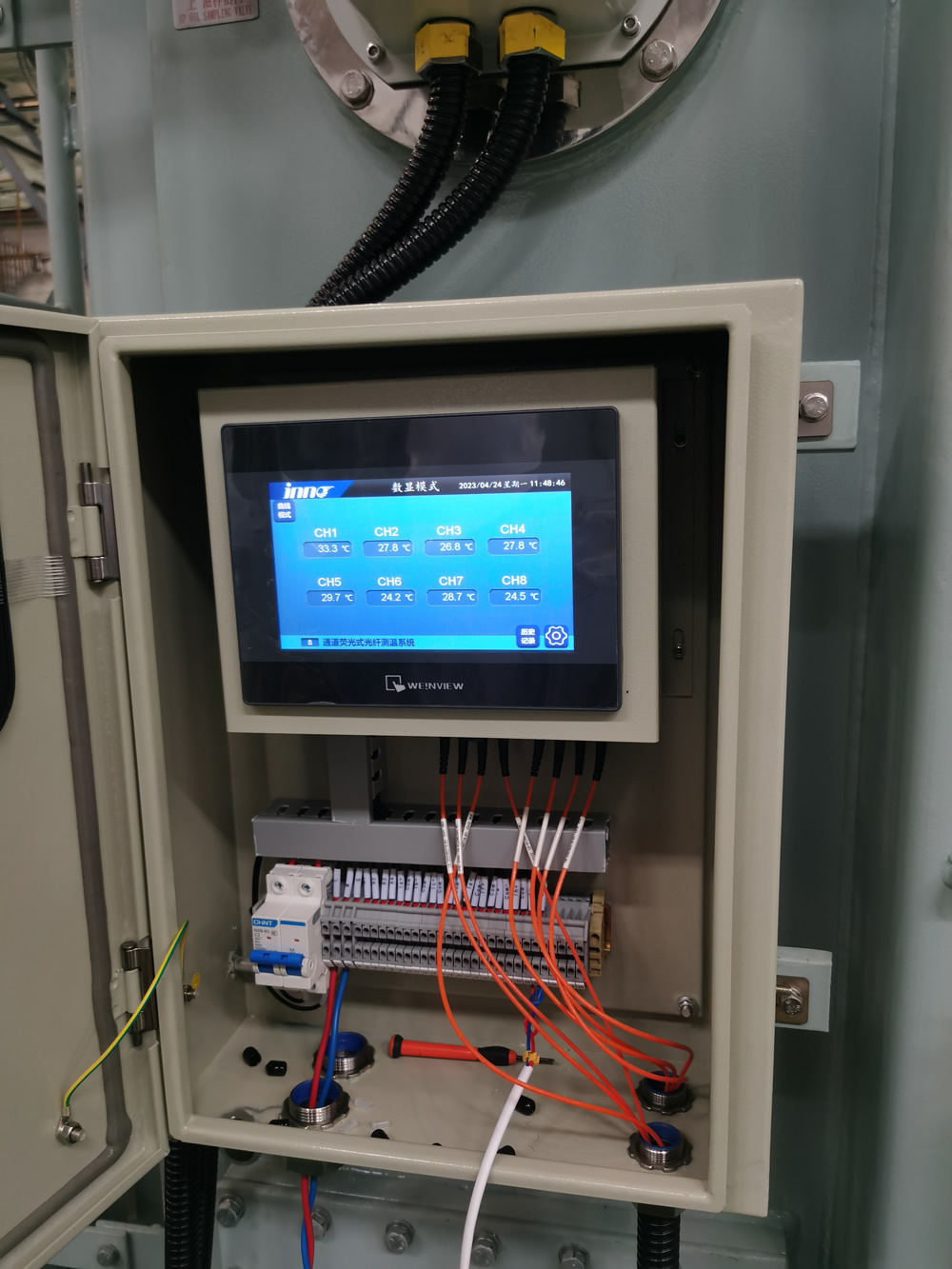
(3) Application of Fiber Optic Temperature Measurement in Temperature Monitoring
1. Principle of Fiber Optic Temperature Measurement
El sistema de medición de temperatura de fibra óptica es una nueva tecnología que utiliza una determinada característica de propagación de la luz en fibras ópticas para lograr una medición en tiempo real de la distribución espacial del campo de temperatura.. La fibra óptica en sí es un sensor de temperatura que puede realizar una detección continua distribuida de temperatura a lo largo del camino de la fibra óptica.. Se basa principalmente en el principio de la reflectometría óptica en el dominio del tiempo. (OTDR) de fibras ópticas y el efecto de temperatura de la dispersión Raman en la parte posterior de las fibras ópticas. Cuando un pulso de luz ingresa a una fibra óptica desde un extremo., it propagates forward along the fiber. Debido a la pared interior de la fibra en forma de espejo, cada punto del pulso de luz durante la propagación reflejará, y una pequeña porción de la luz reflejada se alejará de la fuente de luz, which is known as back Raman scattering light. The intensity of backscattered Raman light is temperature dependent, and by detecting the intensity of backscattered Raman light, the temperature at each point along the fiber can be calculated.
2. Aplicación de Fiber Optic Temperature Measurement in Substations
Fiber optic temperature measurement technology has broad application prospects in substations.
Monitoreo de temperatura del equipo: Fiber optic sensors can be installed on the surface of internal equipment such as transformers, disyuntores, and switchgear in substations to monitor equipment temperature in real time, detect abnormal situations in a timely manner, and avoid accidents caused by equipment overheating. Because fiber optic sensors have advantages such as corrosion resistance and strong electromagnetic interference resistance, they are suitable for temperature monitoring of equipment in complex electromagnetic environments such as substations. Por ejemplo, in a box type substation, fluorescent fiber optic temperature sensors can be placed at key locations such as transformers, disyuntores, and cables to monitor changes in ambient temperature in real time to ensure the normal operation of the equipment.
Monitoreo de temperatura de cables: Fiber optic sensors can be installed in cables to monitor cable temperature in real time and detect issues such as cable overheating and overload in a timely manner, ensuring the safety and stability of power transmission. For cables or high-voltage cable lines in the substation cable trench, due to the sensitivity of cable safety operation to temperature, the fiber optic temperature measurement system can perform distributed continuous measurement. Once there is a local abnormal temperature rise, it can quickly locate and provide accurate information for maintenance personnel.
3. Advantages of Fiber Optic Temperature Measurement
Alta precisión: Fiber optic temperature sensors can achieve high-precision temperature measurement. Por ejemplo, the temperature measurement accuracy of fluorescent fiber optic temperature sensors can reach 1 ℃, which can meet the high requirements of substations for temperature measurement.
High response speed: Some fiber optic temperature sensors have a response speed of up to seconds, which can achieve real-time monitoring of rapidly changing temperatures. This allows for timely capture of temperature information in the event of sudden changes in the operating status of equipment in the substation.
Monitoreo multipunto: Fiber optic cables can be flexibly deployed at various equipment, bus connection points, cables, and other locations in the substation, enabling simultaneous temperature monitoring of multiple points in the substation and comprehensive understanding of the temperature distribution in the substation.
High safety and adaptability: Fiber optic itself is a non-metallic material with characteristics such as corrosion resistance and electromagnetic interference resistance. It can work stably in high voltage and strong electromagnetic interference environments such as substations, and will not cause additional interference to the electromagnetic environment inside the substation. Al mismo tiempo, there are no safety hazards such as electric shock. Además, the transmission distance of optical fiber is relatively long, reaching tens or even hundreds of meters, which is suitable for temperature monitoring needs in large spatial layouts of substations.
3、 Voltage and current monitoring in substation monitoring system
(1) The Importance of Voltage Monitoring
Voltage is a key parameter in the operation of substations. The voltage level inside the substation directly affects the operation status of power equipment and the quality of electrical energy. If the voltage is too high, it may cause equipment insulation breakdown, overvoltage protection action, etc., shortening the service life of the equipment. Por ejemplo, transformers may experience iron core saturation under high voltage, resulting in additional losses and heat generation, affecting their normal operation. Sin embargo, a low voltage can affect the normal functioning of power equipment, such as causing a decrease in motor torque and preventing the equipment from starting properly. Por lo tanto, accurate monitoring of the voltage inside the substation is a necessary means to ensure the safe and stable operation of the substation and the normal supply of electrical energy.
(2) Voltage monitoring method
1. Direct detection method
The direct detection method is a relatively simple and direct voltage monitoring method. This method directly detects voltage by connecting electronic instruments such as oscilloscopes and voltmeters. Por ejemplo, in some laboratory environments or simple substation maintenance scenarios, an oscilloscope can be connected to measurement points in the circuit to visually observe the waveform and amplitude of the voltage. Sin embargo, when using this method, special attention needs to be paid to selecting appropriate electronic instruments to ensure measurement accuracy and safety. Al mismo tiempo, certain modifications need to be made to the tested circuit in order to connect the voltage to the electronic instrument for measurement.
2. Sensor detection method
The sensor detection method converts voltage into a signal suitable for electronic measurement by installing specific types of sensors. Por ejemplo, in voltage monitoring of substations, electric field sensors can be used. Sensors can sense the electric field strength generated by voltage, convert the electric field signal into an electrical signal that can be recognized and processed by electronic measuring devices, and then obtain the voltage value based on the conversion relationship. This detection method is more suitable for high voltage scenarios where it is not convenient to directly connect measuring instruments, and can easily integrate sensors into automated monitoring systems for long-term continuous monitoring.
3. Transformer based monitoring scheme
In voltage measurement of substations, the characteristics of transformers can be utilized for voltage monitoring. In some substation control systems, the DC bus voltage monitoring of the frequency converter can be achieved through switching transformers. Por ejemplo, the primary voltage of a switching transformer is the bus voltage, and a set of windings is added to the secondary side as a sampling output of the bus voltage. The output voltage of the secondary side changes linearly with the change of the primary input voltage, which can both isolate strong and weak electricity and reduce voltage. Entonces, the sampled signal is processed and sent to the corresponding control chip, such as sending it to DSP for A/D sampling, to achieve various protection works.
(3) The Importance of Current Monitoring
Current monitoring in substations is equally crucial. The magnitude of current reflects the load situation of power equipment during operation, as well as the efficiency and effectiveness of power transmission. Excessive current can cause overload, calefacción, and even damage to power equipment. Por ejemplo, if a transformer is subjected to loads exceeding its rated current for a long time, it can cause the winding temperature to rise, accelerate insulation aging, and shorten equipment life. A too small current may indicate that the equipment is not functioning properly or there is a fault in the power transmission process (such as a broken line). Además, accurate monitoring of the current magnitude of each branch and equipment in complex substation power grid structures is helpful for the scheduling and control optimization of the power grid, such as determining a reasonable flow direction for power distribution.
(4) The method of current monitoring
1. Direct detection method
Similar to the direct detection method of voltage, the direct detection method can also be used for current monitoring. Measure current directly by connecting electronic instruments such as ammeters. Sin embargo, this method may be limited by instrument range when measuring large currents, and also requires appropriate modifications to the circuit in order to connect to the measuring instrument for measurement. It may be used in current measurement scenarios during the detection of small current branches or equipment debugging in substations.
2. Sensor detection method
The sensor detection method can use various types of sensors in current monitoring.
Magnetic field sensor: Based on the principle of current generating a magnetic field, the magnetic field sensor can detect changes in the magnetic field around the current and infer the magnitude of the current accordingly. En subestaciones, magnetic field sensors are more suitable for non-contact measurement of high currents in busbars or large equipment. Por ejemplo, a Hall element is a magnetic field sensor that operates based on the Hall effect.
Current transformer: Es un dispositivo utilizado específicamente para el monitoreo de corriente., y su principio básico es utilizar el circuito de inducción del campo magnético en la bobina portadora de corriente para reducir el voltaje de la señal de detección a través de una relación de transformación.. Ampliamente utilizado en sistemas de monitoreo de subestaciones.. Cuando se utiliza un transformador de corriente, Es importante seleccionar el transformador de corriente apropiado y realizar las modificaciones apropiadas del circuito para conectar la corriente al transformador para la transformación de voltaje., y luego medir y procesar la señal convertida. Por ejemplo, al medir la alta corriente en líneas de alto voltaje dentro de una subestación, la corriente alta se convierte en una señal de corriente más pequeña a través de un transformador de corriente en una cierta proporción, que se utiliza para la medición posterior, protección, y operaciones de seguimiento.
4、 Composición y función del sistema de monitoreo de subestaciones.
(1) Composición del sistema de monitoreo de subestaciones
1. Sistema de recopilación de información
Este sistema incluye varios dispositivos de monitoreo y dispositivos de adquisición de datos., Se utiliza principalmente para recopilar datos operativos e información de estado de varios dispositivos en subestaciones., como voltaje, actual, temperatura, humedad, presión, etc.. Al monitorear transformadores, Es necesario recopilar datos relacionados con la temperatura, como la temperatura del aceite y la temperatura del devanado.. Los transformadores de voltaje y los transformadores de corriente son responsables de medir los valores de voltaje y corriente., mientras varios sensores (como sensores de humedad, sensores de presión, etc.) puede monitorear la humedad ambiental, condiciones de presión dentro del equipo, etc.. Estos dispositivos de recopilación recopilan datos de varios dispositivos y entornos en preparación para su posterior análisis y procesamiento., and play a role as the data source in the entire substation monitoring system.
2. Data communication system
The data communication system is responsible for transmitting the data obtained by the collection system to other parts, ensuring the transmission of data between different devices and modules. The communication method can be wired communication, such as using communication cables, cables ópticos, etc.. for data transmission. Por ejemplo, in fiber optic temperature measurement systems, data is transmitted through optical fibers; It can also be wireless communication, such as using ZigBee wireless network technology to transmit some sensor measurement data, such as temperature data collected by wireless temperature sensors, which can be transmitted to the control room host through ZigBee network. During the communication process, communication management machines, interruptores, and other devices participate in the distribution and storage management of data to ensure the efficiency and accuracy of data transmission.
3. Monitoring Center System
The monitoring center system is the core part of the substation monitoring system, mainly composed of database servers, monitoring service desks, printers and other equipment. The database server is used to store massive monitoring data collected from various devices in the substation, and to classify, almacenar, administrar, and query this data. The monitoring service desk provides an operation interface for operation and maintenance personnel. On this interface, operation and maintenance personnel can intuitively view the operating parameters, operating status, and other related monitoring information of substation equipment. If abnormal situations are found, they can be handled through this platform. Printers can be used to print important monitoring reports, data statistics, and other materials for operation and maintenance personnel to analyze and archive.
4. Control system
The control system includes various switches and actuators, which can achieve automatic control and scheduling of various equipment in the substation. Por ejemplo, when the current of a certain line in the substation is detected to be too high, the control system can disconnect the circuit breaker in the control circuit to avoid overloading and damage to the line. Por ejemplo, according to the voltage adjustment instructions given by the monitoring center, the control system can automatically operate the on load tap changer of the transformer, thereby achieving voltage adjustment to ensure the safe and stable operation of the substation.
5. Human machine interface system
The human-machine interface system serves as a window for operation and maintenance personnel to interact with the substation monitoring system, and its design requires simplicity, ease of use, and intuitive clarity. It can display the layout of substation equipment, equipment operation status (such as connection status, operación, stop, fault status, etc.), datos de seguimiento (displaying voltage, actual, temperatura, etc.. in the form of charts, números, etc.) and other information in a graphical interface. Through this interface, operation and maintenance personnel can easily perform remote control operations on equipment (such as remote closing and opening operations), set monitoring parameters (such as temperature warning thresholds, voltage upper and lower limits, etc.), and view system alarm information (display equipment faults, parameter abnormalities, and other alarm information through sound, luz, text prompts, etc.).
6. Power supply guarantee system
The power supply guarantee system mainly includes equipment such as UPS power supply and backup generator set. Its function is to ensure the stable operation of the substation monitoring system and prevent sudden events such as power outages from affecting the system. Due to the interruption of power supply in the substation, if the monitoring system cannot work properly, it will result in the inability to grasp the real-time operation status of the substation, which may cause various safety accidents. UPS power supply is rechargeable and backup during normal power supply. In case of power interruption, it can quickly provide temporary power support for monitoring system equipment. The backup generator set can provide continuous power supply to the substation monitoring system and other important equipment in extreme situations such as long-term power outages, to ensure the safe and stable operation of the substation.
(2) Functions of substation monitoring system
1. Data collection and processing functions
The substation monitoring system can collect various types of data, including analog quantities (como voltaje, actual, factor de potencia, temperatura, etc.), switch quantities (such as equipment operation status conversion signals, protection device action signals, etc.), electrical energy (used to measure equipment electricity consumption, etc.), y otros datos. In terms of data collection, it can obtain data directly connected to devices through measurement and control devices. Por ejemplo, a multifunctional electricity meter calculates power factor, electrical energy, and other data by measuring basic parameters such as voltage and current of the line; Information from various intelligent devices, such as DC monitoring devices and remote transmission devices for electrical energy, can also be obtained through communication interfaces. The collected data will be processed accordingly, such as signal transformation and numerical conversion (such as converting the collected analog signal into a digital signal for computer processing) during the process of analog signal acquisition. The switch data will be processed for state judgment, displacement recording, etc.. The processed data will be stored in the database server for subsequent query, análisis, and use.
2. Control operation function
The control system can control the equipment in the substation as needed. Por ejemplo, remote operation can be carried out, and operation and maintenance personnel can issue control instructions through the human-machine interface of the monitoring center system, which are transmitted to the equipment control device in the interval layer through the communication layer, so as to perform opening and closing operations on the switch equipment (such as circuit breakers, interruptores de aislamiento, etc.) of the substation, adjust the on load tap changer of the transformer, and change the voltage level; Automatic control operations can also be carried out, such as limiting the preset working parameters such as voltage and current. When the actual operating parameters exceed the limit, the control system automatically adjusts the operation without manual intervention, such as automatically reducing the load of the transformer to avoid overload, adjusting the switching state of the capacitor to regulate reactive power to stabilize the voltage.
3. Alarm and processing functions
When the monitoring system detects abnormal equipment operation or data exceeding the normal set range, the system can promptly issue an alarm signal. There are various forms of alarms, including sound and light alarms, voice prompts, voice outbound calls, Notificaciones por SMS, etc.. Por ejemplo, when the oil temperature of the transformer exceeds the set upper limit of the safe temperature, the monitoring center system will automatically trigger the sound and light alarm device to remind the on duty personnel in the station; Al mismo tiempo, alarm information can be sent to remote operation and maintenance personnel, management personnel, and other relevant personnel through voice call or SMS notification functions. Además, the system can record detailed information about the alarm event during the alarm, such as the time of the alarm occurrence, equipment name, specific abnormal data, etc., in order to analyze the cause of the fault afterwards. With the development of intelligent technology, the system can also perform some preliminary emergency handling operations based on alarm information, such as automatically reducing equipment load, switching backup equipment, etc., to prevent further expansion of faults.
4. Event sequence of events (SOE) and accident recall function
This function can record events that occur in the substation in chronological order. The SOE function accurately records the precise time sequence of various events (such as equipment state transition events, protective device action events, etc.), which can be precise to millisecond or even finer time scales, which helps to analyze the development process of faults afterwards. The accident recall function allows the system to record the operational data and status of relevant equipment during a period of time before the occurrence of a fault event (which can be set according to system settings, such as minutes to hours before the fault), including voltage, actual, equipment switch status, y otra información, providing detailed data basis for analyzing the cause of the accident and formulating preventive measures. Por ejemplo, when a power outage occurs in a substation, the accident recall function can be used to query the load situation of the transformer, the current situation of each line, and the opening and closing status of equipment such as circuit breakers before the power outage, thereby assisting engineers in determining the starting event and chain reaction process of the accident.
5. Unidad terminal remota (RTU) función
The substation monitoring system can achieve remote control function, transmitting various data (such as equipment operation status, measurement data, etc.) inside the substation to the higher-level dispatch center or remote monitoring center, and receiving control instructions from the higher-level. This function is very important in the centralized dispatching management of the power grid, so that the dispatching center can control the operation of multiple substations in real time, so as to achieve macro regulation and control of the substation. Por ejemplo, when there is an imbalance in the distribution of power load within the power grid area, the dispatch center can send instructions to the substation through remote control functions to adjust the output power of transformers or adjust the connection method of lines to balance the power load.
6. Clock synchronization function
It is very important to maintain clock synchronization between the various devices in the substation and with the entire power grid system. The clock synchronization function of the monitoring system can ensure that the event time recorded by all devices is consistent, providing accurate time basis for event sequence recording, fault analysis and other operations. This function is achieved through time synchronization devices such as satellite clock receivers, que permiten que los relojes de los equipos de la subestación funcionen según un horario estándar unificado, evitando problemas como la confusión en el registro de datos y la dificultad en el análisis de fallas causadas por relojes inconsistentes.
7. Funciones de comunicación hombre-máquina y gestión de operaciones.
La función de gestión de operaciones y conexión hombre-máquina proporciona al personal de operación y mantenimiento los medios para gestionar y operar el sistema de monitoreo de la subestación.. En el sistema de interfaz hombre-máquina, El personal de operación y mantenimiento puede realizar fácilmente diversas operaciones., como ver el estado operativo del equipo, controlar la operación del equipo, configuración de parámetros de monitoreo, recibiendo información de alarma, etc.. como se mencionó anteriormente. Al mismo tiempo, También puede realizar operaciones de gestión de operaciones del sistema., incluyendo la configuración del sistema (como números de dispositivo, communication parameters, etc.), user permission management (setting different personnel’s permission ranges for system operations), data backup and recovery management (regularly backing up monitoring data to prevent data loss, and performing data recovery operations when needed), etc., to ensure the reliable operation and reasonable use of the substation monitoring system.
8. Interface function with other devices
The substation monitoring system needs to achieve good interface connection with various other equipment inside the substation and external related systems. Within the substation, the monitoring system needs to interact and communicate with various primary equipment (como transformadores, barras colectoras, aparamenta, etc.) and secondary equipment (such as protection devices, measurement and control devices, etc.) to achieve monitoring and control of these devices. Externally, it may be necessary to interface with the power grid dispatch system, power metering system, environmental monitoring system, etc., Por ejemplo, to interface with the power grid dispatch system to achieve data reporting and instruction reception, share electricity consumption and other data with the power metering system, and obtain environmental data around the substation from the environmental monitoring system (como la temperatura, humedad, wind direction, velocidad del viento, and other meteorological data that may affect the operation of the substation), in order to improve the overall operational efficiency, seguridad, and reliability of the substation.

Sensor de temperatura de fibra óptica, Sistema de monitoreo inteligente, Fabricante distribuido de fibra óptica en China
 |
 |
 |