 Sensores de temperatura de fibra óptica INNO ,Sistemas de control de temperatura.
- Sensor de temperatura de fibra óptica de fluorescencia – Precisión de ±1°C | Aislamiento eléctrico completo | inmune a EMI | Sin calibración de por vida | Alto voltaje & entornos con campos magnéticos fuertes
- RTD de platino PT100/PT1000 – ±0,15°C de alta precisión | Estándar de la industria | Buena linealidad | Requiere configuración de 3/4 cables para compensación de resistencia del cable
- Detección de temperatura distribuida (GTp) – Kilómetros de seguimiento continuo | 0.5-2m resolución espacial | Tubería & monitoreo de cables
- Rejilla de Bragg de fibra (FBG) Sensor – Longitud de onda codificada | Multiplexación multipunto | resistente a EMI | Cepa simultánea & medición de temperatura
- Arseniuro de galio (GaAs) Sensor de fibra – Borde de absorción de semiconductores | Precisión de ±0,5°C | Diseño de sonda compacto
- Sensor de temperatura inalámbrico – Sin instalación de cableado | Funciona con pilas | Equipo rotativo adecuado | Se requiere reemplazo periódico de la batería
- Sensor de temperatura infrarrojo – Medición sin contacto | Respuesta rápida | Temperatura alta & objetivos en movimiento | Dependiente de la emisividad
- Par termoeléctrico (Tipos K/J/T/E) – Amplio rango de temperatura | Bajo costo | Respuesta rápida | Se requiere compensación de unión fría, deriva a largo plazo
- Termistor NTC – Alta sensibilidad | tamaño pequeño | Bajo costo | No lineal, rango estrecho (-50~150°C)
- Sensor de temperatura del circuito integrado – Salida digital | Interfaz I²C/SPI | Alta integración | Rango limitado -55~125°C
Tabla de contenidos
- Sensor de temperatura de fibra óptica de fluorescencia
- Sensor RTD de platino PT100/PT1000
- Detección de temperatura distribuida (GTp)
- Rejilla de Bragg de fibra (FBG) Sensor
- Arseniuro de galio (GaAs) Sensor
- Sensor de temperatura inalámbrico
- Sensor de temperatura infrarrojo
- Sensor de temperatura termopar
- Sensor termistor NTC
- Sensor de temperatura del circuito integrado
- Cómo elegir el sensor de temperatura adecuado
- Obtenga soluciones profesionales de detección de temperatura
1. Sensor de temperatura de fibra óptica de fluorescencia ⭐ La mejor elección del editor

¿Qué es la tecnología de detección de temperatura de fibra óptica fluorescente??
El sensor de temperatura de fibra óptica de fluorescencia operates on the principle of temperature-dependent fluorescence decay in rare earth materials. When excited by UV or blue light, rare earth phosphors emit fluorescence with a decay time that varies predictably with temperature. This absolute measurement method eliminates the need for calibration throughout the sensor’s lifetime.
A diferencia de los sensores eléctricos convencionales, el fluorescence temperature sensor utiliza la luz como medio de medición, transmitted through optical fiber. El elemento sensor no contiene componentes electrónicos., making it inherently immune to electromagnetic interference and electrically isolated from the measurement system.
Why Fluorescence Fiber Optic is the Best Choice for High Voltage Power Equipment
The complete electrical isolation provided by Sensores de temperatura de fibra óptica makes them uniquely suited for high voltage applications. The glass fiber offers dielectric strength exceeding 100kV, allowing direct installation in transformer windings and switchgear without expensive isolation barriers.
In strong electromagnetic fields found inside transformers and generators, el sensor de fluorescencia delivers accurate measurements unaffected by EMI that would cause false readings in conventional RTD or thermocouple systems. The intrinsically safe design eliminates spark risks in hazardous locations without requiring explosion-proof housings.
Especificaciones técnicas
- Precisión de medición: ±1°C
- Rango de temperatura: -40°C a +260°C
- Tiempo de respuesta: <1 segundo
- Diámetro de la sonda: 1-5mm customizable
- Longitud de la fibra: 0.5m to 80m+
- Aislamiento eléctrico: >100resistencia dieléctrica kV
- Calibración: Sin calibración de por vida
- Mantenimiento: Zero maintenance required
Casos de aplicación global
Caso 1: German 330kV Substation
A major German utility retrofitted 120 transformadores de potencia with fluorescence fiber optic winding temperature monitoring systems, replacing aging PT100 installations. Después 5 años de operación, the system maintains zero-fault record with no calibration required, reduciendo los costos de mantenimiento mediante 75% compared to the previous RTD system.
Caso 2: Chinese Wind Farm
A 150-turbine wind farm deployed 64-channel fluorescence temperature monitoring for gearbox and bearing surveillance. The system successfully predicted three major failures through early temperature trend analysis, preventing catastrophic breakdowns and saving over $2 million in repair costs.
Caso 3: US Hospital MRI Equipment
A 3.0T MRI system uses sensores de fibra óptica de fluorescencia as the only viable temperature monitoring solution in the intense magnetic field environment. FDA-certified for medical applications, the system has operated for 8 years without interference or calibration needs.
Caso 4: Saudi Oil Storage Tank
In a classified hazardous area, intrinsically safe fiber optic sensors monitor temperature without requiring isolation barriers or explosion-proof enclosures. The system operates reliably in 50°C ambient conditions with zero spark risk.
Aplicaciones típicas
- Transformadores de potencia: Punto caliente sinuoso, aceite superior, aceite de fondo, temperatura del conductor del casquillo
- Aparamenta de alto voltaje: Juntas de barras, contactos, Conexiones de cables
- Generadores: Devanados del estator, rotor, aspectos
- Turbinas eólicas: Gearbox, aspectos, devanados del generador
- Almacenamiento de energía: Lithium battery pack thermal management (sin riesgo de chispas)
- Calentamiento por inducción: Workpiece temperature in strong electromagnetic fields
- Microwave Equipment: Sistemas de microondas industriales y médicos.
- RMN/RMN: Monitoreo ambiental de campo magnético fuerte
Soluciones de temperatura de fibra óptica de fluorescencia FJINNO
FJINNO fabrica completos sistemas de monitoreo de temperatura de fibra óptica desde configuraciones de un solo canal hasta configuraciones de 64 canales. Nuestros sensores cuentan con diámetros de sonda de 1 mm a 5 mm., con CE, UL, y certificaciones RoHS. Certificación opcional a prueba de explosiones ATEX/IECEx disponible. Precios directos de fábrica con servicios completos de personalización OEM/ODM.
2. Sensor de temperatura RTD de platino PT100/PT1000
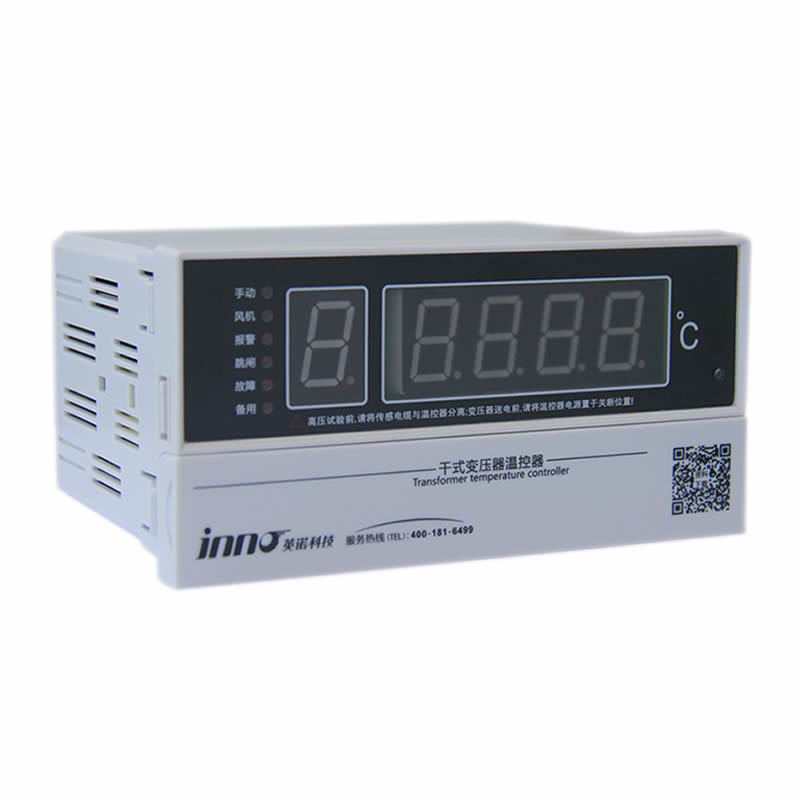
Principio de funcionamiento PT100
El Sensor de temperatura PT100 Aprovecha el coeficiente de temperatura positivo de la resistencia del metal platino.. A 0°C, la resistencia estándar mide exactamente 100Ω, aumentando linealmente con la temperatura. Esta relación predecible permite un cálculo preciso de la temperatura mediante una simple medición de resistencia..
Especificaciones técnicas y clases de precisión del PT100
- clase aa: ±(0.1+0.0017|t|)°C – Precisión de laboratorio
- Clase A: ±(0.15+0.002|t|)°C – Alta precisión industrial
- Clase B: ±(0.3+0.005|t|)°C – Uso industrial general
- Alambrado: 2-cable (economía), 3-cable (estándar), 4-cable (precisión)
PT100 Advantages
El platinum RTD sensor offers excellent linearity and high accuracy conforming to IEC 60751 estándares internacionales. Good interchangeability allows sensor replacement without system recalibration. The measurement range extends from -200°C to +850°C, cubriendo la mayoría de las aplicaciones industriales.
PT100 Practical Limitations
Copper lead wire resistance affects measurement accuracy, requiring 3-wire or 4-wire configurations for compensation. Sensores RTD are susceptible to EMI interference in electrically noisy environments. Periodic calibration every 1-2 years is necessary to maintain accuracy. High voltage insulation becomes complex and expensive. Response time typically ranges from several seconds, slower than thermocouples.
PT100 in Transformer Temperature Measurement
sensores PT100 serve well for measuring transformer top oil and bottom oil temperatures in conventional applications. Sin embargo, winding temperature measurement presents significant technical challenges:
- Aislamiento de alto voltaje: Requires expensive high-voltage insulation bushings
- EMI Interference: Copper wiring susceptible to transformer internal electromagnetic fields
- Oil Aging: Long-term oil immersion degrades insulation
- Mantenimiento: Calibration requires transformer shutdown
These limitations explain why Monitoreo de puntos calientes del devanado del transformador increasingly adopts fluorescence fiber optic technology, eliminating high voltage insulation complexity, EMI interference, and reducing lifecycle maintenance costs.
Casos de aplicación global
Caso 1: European Pharmaceutical GMP Validation
A pharmaceutical facility deployed 200+ PT100 Class A sensors for GMP temperature validation, maintaining FDA 21 Parte CFR 11 compliance with comprehensive annual calibration records.
Caso 2: Japanese Food Processing Plant
Pasteurization temperature control using termómetros de resistencia de platino achieving ±0.2°C accuracy with 4-20mA signals integrated into PLC systems.
Aplicaciones típicas
- sistemas de climatización
- Food processing temperature control
- Pharmaceutical GMP validation
- Laboratory precision measurement
- Temperatura del aceite del transformador (non-winding)
- General industrial process control
3. Detección de temperatura distribuida (GTp) Sistema

Tecnología DTS: Principio de dispersión Raman
Detección de temperatura distribuida employs optical time-domain reflectometry (OTDR) combined with Raman scattering analysis. Laser pulses transmitted through fiber generate temperature-dependent Stokes and anti-Stokes Raman backscatter. The intensity ratio enables temperature calculation, while time-of-flight determines spatial location along the fiber.
Parámetros técnicos del sistema DTS
- Distancia de medición: 1-40Km
- Resolución espacial: 0.5m / 1m / 2m
- Precisión de temperatura: ±1-2°C
- Rango de temperatura: -40°C a +600°C
- Tiempo de respuesta: Segundos a minutos
- Intervalo de muestreo: Programable
DTS Unique Advantages
Monitoreo distribuido de temperatura por fibra óptica provides kilometer-scale continuous coverage without multiple discrete sensors. Early fire detection capabilities enable rapid response. Precise leak location identification and complete pathway temperature profiling make DTS ideal for pipeline and tunnel monitoring.
Casos de aplicación global
Caso 1: Qatar 80km Oil Pipeline
Full-length DTS leak detection with 1m spatial resolution successfully detected two leak events, preventing environmental disasters and production losses.
Caso 2: Chinese Metro Line 15
A 35km tunnel equipped with Detección de temperatura distribuida for fire warning, integrated with fire suppression systems for automated emergency response.
Caso 3: Norwegian Hydroelectric Dam
Concrete internal temperature and seepage monitoring using Cables de fibra óptica DTS siempre que 15 years of continuous operational data for structural integrity assessment.
Aplicaciones típicas
- Power cable tunnel monitoring
- Long-distance oil/gas pipeline leak detection
- Dam seepage temperature monitoring
- Subway tunnel fire warning
- Storage tank perimeter surveillance
- Coal mine spontaneous combustion detection
4. Rejilla de Bragg de fibra (FBG) Sensor de temperatura
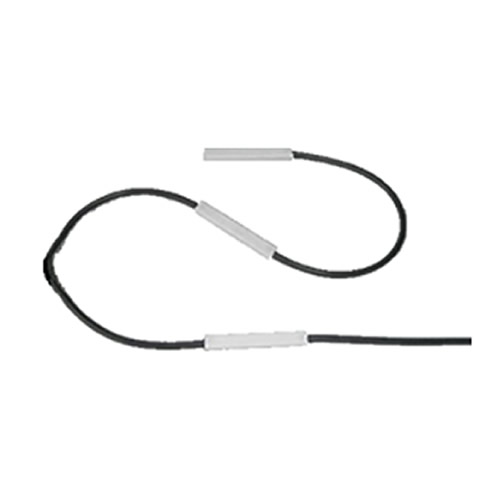
Tecnología FBG: Wavelength-Encoded Measurement
Sensores de rejilla de fibra de Bragg contain periodic refractive index modulations that reflect specific wavelengths. Temperature changes shift the Bragg wavelength predictably, enabling precise measurement immune to optical power fluctuations. This wavelength encoding allows multiple FBG sensors multiplexed on a single fiber.
Especificaciones técnicas de FBG
- Precisión de temperatura: ±0,5-1°C
- Rango de temperatura: -40°C a +300°C
- Resolución de longitud de onda: 1p.m
- Multiplexación: 10-50 rejillas por fibra
- Tiempo de respuesta: Milisegundos
Casos de aplicación global
Caso 1: Hong Kong-Zhuhai-Macao Bridge
The 6.7km undersea tunnel employs 500+ sensores FBG para el seguimiento de la salud estructural, simultaneously measuring temperature and strain for real-time safety assessment.
Caso 2: Boeing 787 Materiales compuestos
Wing internal fiber optic strain and temperature monitoring during flight testing, meeting FAA certification requirements for composite aircraft structures.
Aplicaciones típicas
- Bridge structural health monitoring
- Aerospace composite materials
- Oil well downhole monitoring
- Smart grid transmission lines
- Nuclear power plant containment
5. Arseniuro de galio (GaAs) Sensor de temperatura de fibra
GaAs Measurement Principle
Gallium arsenide temperature sensors exploit the temperature-dependent semiconductor band gap. The absorption edge wavelength shifts predictably with temperature, enabling spectroscopic measurement through direct band gap materials.
GaAs Technical Parameters
- Exactitud: ±0,5 °C
- Rango: -200°C a +250°C
- Tamaño de la sonda: 0.5-2milímetro
- Respuesta: Milisegundos
- Resistencia a la radiación: Excelente
Casos de aplicación global
Caso 1: CERN Particle Accelerator
Sensores de GaAs monitor cryogenic temperatures down to -200°C in high radiation environments where conventional sensors fail.
Aplicaciones típicas
- Cryogenic physics experiments
- Fabricación de semiconductores
- Monitoreo de equipos médicos
- Nuclear radiation environments
6. Sensor de temperatura inalámbrico
Wireless Technology Types
Sensores de temperatura inalámbricos utilize various protocols including 2.4GHz WiFi/Zigbee, 433/868/915MHz Sub-GHz, LoRa/LoRaWAN long-range, NB-IoT/LTE-M cellular, and Bluetooth BLE low-energy communications.
Especificaciones técnicas
- Exactitud: ±1-2°C
- Rango: -40°C a +125°C
- Distancia de transmisión: 10m to 10km (protocol dependent)
- Duración de la batería: 1-10 años
Casos de aplicación global
Caso 1: Singapore Data Center
2000+ Sensores de temperatura inalámbricos with LoRa gateways achieved 15% energy optimization through intelligent cooling management.
Caso 2: German Cold Chain Logistics
Container temperature tracking using NB-IoT wireless sensors maintaining GDP certification compliance throughout transportation.
Aplicaciones típicas
- Temperatura de contacto del cuadro (CT-powered)
- Rotating kiln monitoring
- Cold chain logistics tracking
- Smart building HVAC
- Warehouse environmental monitoring
7. Sensor de temperatura infrarrojo
Infrared Measurement Principle
Sensores de temperatura infrarrojos measure thermal radiation according to the Stefan-Boltzmann law, where radiated energy relates to the fourth power of absolute temperature. Emissivity correction and atmospheric attenuation compensation ensure measurement accuracy.
Parámetros técnicos
- Rango: -50°C hasta +3000°C
- Exactitud: ±1-2% of reading or ±2°C
- Tiempo de respuesta: 10ms-1s
- Distance-to-Spot (D:S): 8:1 Para 120:1
- Spectral Range: 0.8-14µm
Casos de aplicación global
Caso 1: Chinese Steel Mill
Continuous casting slab monitoreo de temperatura por infrarrojos at 1200°C controls rolling speed automatically for quality optimization.
Caso 2: US Glass Manufacturing
Furnace temperature control at 1500°C using dual-color infrared sensors with 10-year fault-free operation records.
Aplicaciones típicas
- Steel smelting temperature
- Glass furnace control
- Conveyor product inspection
- Electrical equipment thermal scanning
- Plastic extrusion temperature
8. Sensor de temperatura termopar
Thermocouple Working Principle
Termopares generate voltage through the Seebeck effect when dissimilar metals form a junction. Temperature difference between the measurement junction and reference junction produces proportional electromotive force.
Common Thermocouple Types
Tipo K (Cromel-Alumel)
- Rango: -200°C hasta +1350°C
- Sensibilidad: 41µV/°C
- Exactitud: ±1.5°C or ±0.4%
- Ventajas: Most widely used, rentable
- Limitaciones: Oxidation in air at high temperatures
Type J (Iron-Constantan)
- Rango: 0°C to +750°C
- Sensibilidad: 52µV/°C
- Ventajas: Reducing atmosphere suitable
- Limitaciones: Iron wire oxidizes easily, being phased out
Tipo T (Cobre-Constantan)
- Rango: -200°C a +350°C
- Sensibilidad: 43µV/°C
- Ventajas: Low temperature precision, resistente a la corrosión
Type R/S (Platinum-Rhodium)
- Rango: 0°C to +1600°C
- Exactitud: ±1°C
- Ventajas: High temperature stability, precious metal construction
- Limitaciones: Expensive
Thermocouple Practical Issues
Termopares suffer from low accuracy (±1-2,5°C), requiring cold junction compensation. Long-term drift reaches ±2-5°C annually, necessitating frequent calibration and replacement. EMI susceptibility causes measurement errors in electrically noisy environments.
Casos de aplicación global
Caso 1: German Automotive Plant
Engine exhaust temperature monitoring using Type K thermocouple arrays with annual calibration replacement cycles.
Aplicaciones típicas
- Industrial furnace control
- Engine exhaust temperature
- Plastic injection molding
- Heat treatment processes
- Boiler flue gas temperature
9. NTC Thermistor Temperature Sensor
NTC Working Principle
termistores NTC exhibit negative temperature coefficient behavior in semiconductor ceramic materials. Resistance decreases exponentially with temperature according to the Steinhart-Hart equation.
Parámetros técnicos
- Rango: -50°C a +150°C
- Exactitud: ±0.2-1°C
- B-Value: 2500-5000k
- Standard Resistance: 1kΩ-100kΩ at 25°C
NTC Advantages and Limitations
Alta sensibilidad (-3% to -5%/°C) and small packaging enable cost-effective solutions. Sin embargo, severe non-linearity requires linearization circuits, narrow temperature range limits applications, and self-heating effects impact accuracy.
Aplicaciones típicas
- Home appliance temperature control
- Automotive battery management
- Electrónica de consumo
- Small HVAC systems
- Charger thermal protection
10. Sensor de temperatura del circuito integrado
IC Temperature Sensor Technology
IC temperature sensors exploit PN junction forward voltage temperature characteristics, providing analog voltage/current outputs or digital interfaces (I²C/SPI/1-Wire).
Common IC Sensor Models
Salida analógica:
- LM35: 10mV/°C, 0-100°C
- LM335: 10mV/K, -40~+100°C
- AD590: 1μA/K current output
Salida digital:
- DS18B20: 1-Wire, ±0,5 °C
- TMP102: I²C, ±0,5 °C
- TMP117: I²C, ±0.1°C high precision
Especificaciones técnicas
- Rango: -55°C a +125°C
- Exactitud: ±0.1-2°C (model dependent)
- Resolución: 0.0625-0.5°C
- Fuente de alimentación: 2.7-5.5V
- Interfaz: Analog/I²C/SPI/1-Wire
Aplicaciones típicas
- Electronic equipment internal monitoring
- Server room temperature
- Power management systems
- IoT smart devices
- PC motherboard temperature
11. How to Choose the Right Industrial Temperature Sensor

Matriz de decisión de selección: 5 Key Factors
Factor 1: Electrical Environment
- Alto voltaje (>1kV): Fluorescence fiber optic (only viable option)
- EMI fuerte: Fluorescencia / FBG / GTp
- Áreas peligrosas: Fluorescencia (intrínsecamente seguro) / RTD a prueba de explosiones
- Industrias Generales: PT100 / Par termoeléctrico / Inalámbrico
Factor 2: Number and Distribution of Measurement Points
- 1-10 Concentrated Points: Fluorescence multi-channel / PT100 / Par termoeléctrico
- 10-50 Distributed Points: Fluorescence 64-channel / FBG / Inalámbrico
- Continuous km-Scale: GTp
- Single Point High Precision: PT100 Class AA / Fluorescencia
Factor 3: Accuracy and Long-Term Stability
- ±0.15°C Ultra-High Precision: PT100 Class AA
- ±0.5-1°C High Precision: Fluorescencia / GaAs / FBG
- ±1-2°C Standard Precision: Par termoeléctrico / Inalámbrico / Infrarrojo
- Sin calibración de por vida: Fluorescencia (único)
- Annual Calibration Acceptable: PT100 / Par termoeléctrico
Factor 4: Rango de temperatura
- -200°C Cryogenic: GaAs / Type T Thermocouple / PT100
- -40 to +260°C Standard: Fluorescencia / PT100
- +260 to +1000°C: Type K/N Thermocouple
- +1000 to +1600°C: Type R/S Thermocouple
- >+1600°C: Infrared pyrometer
Factor 5: Costo total de propiedad
- 20+ Years Investment: Fluorescencia (mantenimiento cero, lowest TCO)
- 5-10 Years Medium-Term: PT100 (requires annual calibration)
- Low Initial Budget: Par termoeléctrico (altos costos de mantenimiento)
- Temporary Projects: Inalámbrico / Equipment rental
Industry-Specific Application Guides
Industria energética: transformadores, Aparamenta, Generadores
Requisitos de solicitud:
- High voltage electrical isolation (10kV-500kV)
- Strong electromagnetic field environment (transformer internal)
- Long-term maintenance-free (20-30 año de vida útil)
- Alta confiabilidad (grid safety critical)
Recommended Solutions:
- Transformer Winding Hot Spot: Fluorescence fiber optic (6-12 agujas)
- Temperatura del aceite: Fluorescencia / PT100
- Switchgear Busbar Joints: Fluorescencia / Inalámbrico (CT-powered)
- Estator del generador: Fluorescence multi-channel
Aceite & Gas: Tuberías, reactores, Storage Tanks
Recommended Solutions:
- Long Pipeline (>1Km): DTS distribuido
- Reactor Critical Points: Fluorescencia (intrínsecamente seguro) / Explosion-proof PT100
- Storage Tank Stratification: Fluorescence multi-point
- General Process Control: Par termoeléctrico / PT100
Energía Renovable: Viento, Solar, Almacenamiento
Recommended Solutions:
- Wind Turbine Gearbox/Bearings: Fluorescencia (resistente a vibraciones)
- Battery Energy Storage: Fluorescencia (sin riesgo de chispas, multicanal)
- Inverter Cooling: PT100 / IC sensors
- PV Modules: Inalámbrico / Infrared inspection
12. Obtenga soluciones profesionales de detección de temperatura
FJINNO – Fluorescence Fiber Optic Temperature Sensing Experts


Antecedentes de la empresa
Establecido en 2011, FJINNO brings 14 years of specialized manufacturing experience in fluorescence fiber optic temperature sensing technology. Serving 500+ industrial customers globally with annual production capacity exceeding 10,000 sistemas.
Certificaciones & Qualifications
- Marcado CE (unión Europea)
- Listado UL (América del norte)
- RoHS environmental compliance
- Optional ATEX/IECEx explosion-proof certification
- ISO 9001 sistema de gestión de calidad
Serie de productos
- Single-channel to 64-channel systems
- Probe diameters: 1milímetro / 2milímetro / 3milímetro / 5milímetro
- Fiber lengths: 0.5m – 80m+ (longitudes personalizadas disponibles)
- Clasificación de protección: IP67 / IP68
- Output interfaces: RS485 / 4-20mamá / Modbus TCP
Service Capabilities
1. Consulta Técnica Gratuita
- Application scenario assessment
- Sensor selection recommendations
- System design solutions
- Guía de instalación
2. Personalización OEM/ODM
- Custom probe dimensions
- Custom fiber lengths
- Custom channel quantities
- Appearance & packaging customization
- Firmware development
- Marca privada
3. Distributor Support
- Regional exclusive distribution policies
- Technical training programs
- Materiales de marketing
- After-sales technical support
4. Complete Solutions
- Sensores + Transmisores + Software
- Integración del sistema
- Instalación & puesta en servicio
- Entrenamiento de operaciones
Información del contacto
📧 Correo electrónico: web@fjinno.net
📱WhatsApp/WeChat: +86-135-9907-0393
🌐 Sitio web: www.fjinno.net
🏢 Factory Address:
Liantou U Valley IoT Industrial Park
No.12 Xingye West Road
Fuzhou, Provincia de Fujian, China
⏰ Business Hours:
Monday-Saturday 8:00-18:00 (GMT+8)
24-hour email response
Available Resources
- Product technical manuals (PDF)
- Application case white papers
- Installation video tutorials
- Certification documents
Servicios de consulta
- 1-on-1 application engineer support
- Free solution design
- Remote installation guidance
- On-site commissioning (large projects)
Delivery Process
- Requirements communication (1-2 Días)
- Solution design (2-3 Días)
- Pruebas de muestra (opcional, 7-10 Días)
- Batch production (standard products 5-7 Días, costumbre 15-20 Días)
- International express (DHL/FedEx 3-5 Días)
Descargo de responsabilidad
la informacion tecnica, especificaciones del producto, and application cases provided in this article are for reference purposes only. Actual product performance may vary depending on manufacturer, modelo, y entorno operativo.
About Technical Parameters
Temperature sensor technical parameters differ across brands and models. Parameters listed represent typical industry values. Refer to manufacturer official technical documentation for specific specifications.
About Application Cases
Global application cases mentioned are based on publicly available information and industry experience. Actual project technical solutions and implementation results may vary due to site-specific conditions.
About Product Selection
Temperature sensor selection requires comprehensive consideration of measurement range, requisitos de precisión, condiciones ambientales, presupuesto, y capacidades de mantenimiento. Professional engineering guidance is recommended for selection decisions.
About Certifications and Standards
Different countries and regions have varying certification requirements for industrial temperature sensors. Select products with appropriate certifications according to project location regulatory requirements.
About Installation and Use
Temperature sensor installation, alambrado, calibración, and maintenance should be performed by qualified professionals following manufacturer instructions. Improper operation may result in measurement errors or equipment damage.
Contact Professional Technical Support
For technical questions or project consultation needs, contact FJINNO technical team directly (web@fjinno.net) for professional guidance tailored to your specific requirements.
Última actualización: 2026
FJINNO – Professional Fluorescence Fiber Optic Temperature Sensing Technology, Your Trusted Industrial Temperature Monitoring Solutions Provider

Sensor de temperatura de fibra óptica, Sistema de monitoreo inteligente, Fabricante de fibra óptica distribuida en China
 |
 |
|