 أجهزة استشعار درجة حرارة الألياف الضوئية INNO ,أنظمة مراقبة درجة الحرارة.
Fluorescent fiber optic temperature sensors represent a breakthrough in temperature measurement technology, offering complete immunity to electromagnetic interference while delivering high accuracy and long-term reliability. These advanced sensors use optical signals instead of electrical signals, making them ideal for power systems, الأتمتة الصناعية, المعدات الطبية, and other demanding applications where traditional sensors fail.
Key Advantages and Applications
- 100% مناعة التداخل الكهرومغناطيسي: Operates reliably in high-voltage, بيئات المجال المغناطيسي القوية
- آمنة جوهريا: لا توجد إشارات كهربائية, لا يوجد خطر شرارة, perfect for explosive atmospheres
- دقة عالية: ±1°C precision with response time less than 1 ثانية
- عزل الجهد العالي: Non-conductive design allows direct installation on energized equipment up to 500kV+
- نطاق درجة حرارة واسع: Operates from -40°C to +260°C in harsh environments
- القدرة على القنوات المتعددة: يدعم جهاز إرسال واحد 1-64 قنوات القياس
- عمر خدمة طويل: 20+ years operation with no calibration required
- Customizable Design: Flexible probe diameter, طول الألياف (0-80م), and channel configurations
- فعالة من حيث التكلفة: Competitive pricing with low total cost of ownership
- Versatile Applications: محولات الطاقة, المفاتيح الكهربائية, مولدات, الأجهزة الطبية, تصنيع أشباه الموصلات, مراكز البيانات, الأتمتة الصناعية, ومعدات المختبرات
جدول المحتويات
- What is a Fluorescent Fiber Optic Temperature Sensor and How Does It Differ from Traditional Sensors?
- How Does Fluorescent Fiber Temperature Measurement Technology Work?
- What Are the Key Components of a Fiber Optic Temperature Monitoring System?
- Why Are Electromagnetic Interference-Resistant Sensors Essential for Power Systems?
- How Do Fluorescent Temperature Sensors Ensure Intrinsic Safety?
- Why Can High-Voltage Resistant Sensors Operate on Energized Equipment?
- What Temperature Range Can Fiber Optic Sensing Systems Monitor?
- How Many Channels Can a Fluorescent Fiber Measurement Device Support?
- How Do Transformer Winding Fiber Optic Sensors Prevent Failures?
- What Makes Switchgear Contact Temperature Sensors Critical for Safety?
- Where Are EMI-Free Fiber Optic Sensors Deployed Across Industries?
- Global Customer Success Cases
- قمة 10 أفضل الشركات المصنعة لأجهزة استشعار درجة حرارة الألياف البصرية
- الأسئلة المتداولة
1. What is a Fluorescent Fiber Optic Temperature Sensor and How Does It Differ from Traditional Temperature Sensors?

1.1 What is a Fluorescent Fiber Optic Temperature Sensor?
A fluorescent fiber optic temperature sensor is a contact-type temperature measurement device that utilizes the temperature-dependent fluorescence decay characteristics of rare-earth materials. عندما يثار بالضوء, the fluorescent material at the probe tip emits light with a decay time that changes predictably with temperature, enabling highly accurate temperature measurement without any electrical signals.
المواصفات الفنية:
- دقة القياس: ±1 درجة مئوية
- نطاق درجة الحرارة: -40درجة مئوية إلى +260 درجة مئوية
- طول الألياف: 0-80 متر (قابل للتخصيص)
- وقت الاستجابة: أقل من 1 ثانية
- قطر المسبار: Customizable for specific applications
- سعة القناة: 1-64 channels per transmitter
Unlike distributed fiber optic systems, أجهزة استشعار درجة حرارة الألياف الضوئية الفلورسنت are designed for precise contact-type point measurement, where each fiber measures one specific hot spot.
1.2 Seven Key Differences from Traditional Temperature Sensors

1. مناعة التداخل الكهرومغناطيسي
- الألياف الضوئية الفلورية: 100% محصن ضد EMI, مثالية ل microwave and electromagnetic environments
- أجهزة الاستشعار التقليدية: Susceptible to electrical noise and signal distortion
2. السلامة الجوهرية
- الألياف الضوئية الفلورية: لا توجد إشارات كهربائية, zero spark risk in explosive atmospheres
- أجهزة الاستشعار التقليدية: Electrical current creates explosion hazards
3. عزل الجهد العالي
- الألياف الضوئية الفلورية: غير موصل, safe for direct installation on high-voltage equipment
- أجهزة الاستشعار التقليدية: Require complex isolation systems
4. Measurement Accuracy and Stability
- الألياف الضوئية الفلورية: دقة ±1 درجة مئوية, لا الانجراف, zero calibration needed over 20+ سنين
- أجهزة الاستشعار التقليدية: Subject to drift, requires periodic calibration
5. سرعة الاستجابة
- الألياف الضوئية الفلورية: Sub-second response for rapid fault detection
- أجهزة الاستشعار التقليدية: Slower response may miss critical temperature changes
6. المتانة البيئية
- الألياف الضوئية الفلورية: نطاق واسع (-40درجة مئوية إلى +260 درجة مئوية), مقاومة للتآكل
- أجهزة الاستشعار التقليدية: نطاق محدود, sensitive to moisture and chemicals
7. التكلفة الإجمالية للملكية
- الألياف الضوئية الفلورية: Competitive initial cost, minimal maintenance over decades
- أجهزة الاستشعار التقليدية: Lower initial cost but higher long-term maintenance expenses
2. How Does Fluorescent Fiber Temperature Measurement Technology Work?

2.1 Working Principle of Fluorescent Temperature Sensing
The fluorescent fiber optic temperature measurement system operates through a sophisticated optical process:
- Light Excitation: An LED or laser source sends excitation light pulses through the optical fiber to the sensing probe
- Fluorescence Emission: Rare-earth fluorescent material at the probe tip absorbs the light and emits fluorescence
- Temperature-Dependent Decay: The fluorescence decay time changes predictably with temperature variations
- Signal Detection: High-sensitivity photodetector measures the decay time with microsecond precision
- حساب درجة الحرارة: Advanced algorithms convert decay time into accurate temperature readings
2.2 Why This Technology Is Immune to Electromagnetic Interference
The optical measurement principle provides inherent immunity to electromagnetic interference because:
- Glass fiber and fluorescent materials are completely non-conductive
- Light signals are unaffected by electric or magnetic fields
- No electrical ground loops or potential differences exist
- Signal integrity remains perfect even in extreme EMI conditions
This makes fluorescent sensors ideal for مراقبة المحولات, تطبيقات المفاتيح الكهربائية, and other high-EMI environments.
3. What Are the Key Components of a Fiber Optic Temperature Monitoring System?

3.1 Eight Essential System Components
1. Fluorescent Temperature Probe
- وظيفة: Primary sensing element with rare-earth fluorescent material
- سمات: Customizable diameter, rugged construction, fast thermal response
2. Optical Fiber Cable
- وظيفة: Transmits excitation and fluorescence signals
- تحديد: Standard lengths 0-80 متر, custom lengths available
3. Light Source Module
- وظيفة: Generates stable excitation pulses
- يكتب: High-reliability LED or laser diode
4. كاشف ضوئي
- وظيفة: Detects fluorescence decay signals with high precision
- سمات: Low noise, استجابة سريعة, حساسية عالية
5. Signal Processing Unit
- وظيفة: Converts decay time to temperature values
- القدرات: Multi-channel processing for up to 64 أجهزة الاستشعار
6. جهاز إرسال درجة الحرارة
- وظيفة: Central control unit managing all sensor channels
- خيارات: 32-قناة أو 64-تكوينات القناة
7. Display and Control Interface
- وظيفة: مراقبة في الوقت الحقيقي, تسجيل البيانات, إدارة الإنذار
- سمات: Touchscreen, network connectivity, تكامل SCADA
8. Alarm and Protection Module
- وظيفة: Multi-level temperature alarms with relay outputs
- سمات: عتبات قابلة للتكوين, automatic notifications, system interlocks
4. Why Are Electromagnetic Interference-Resistant Sensors Essential for Power Systems?
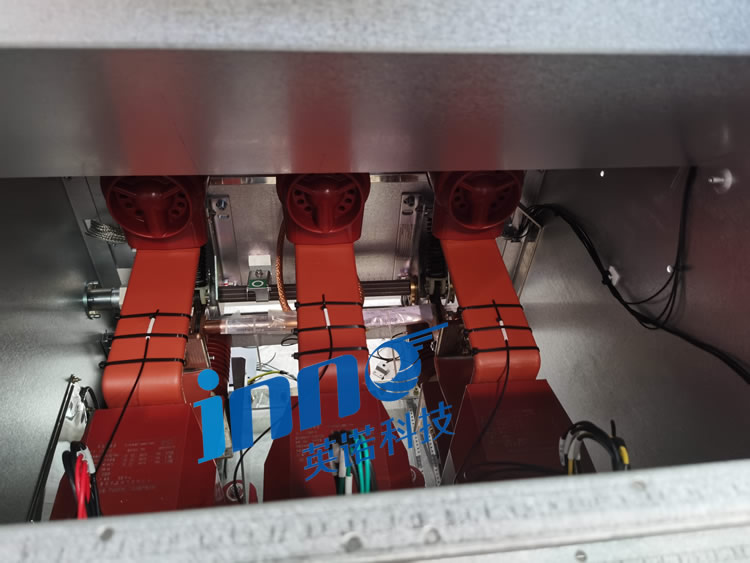
4.1 The EMI Challenge in Power Applications
Power systems generate intense electromagnetic fields that cause severe problems for traditional electronic sensors:
- High-voltage switching creates transient EMI spikes
- Transformer cores produce strong magnetic fields
- Circuit breaker operations generate electromagnetic pulses
- Generator rotating fields induce currents in sensor wiring
4.2 How Fluorescent Sensors Solve EMI Problems
Fluorescent fiber optic sensors eliminate all EMI concerns through:
- Complete Galvanic Isolation: No electrical connection between measurement point and control system
- Non-Metallic Construction: Glass fiber cannot conduct electrical signals or pick up interference
- Optical Signal Transmission: Light immune to all forms of electromagnetic radiation
- Proven Performance: Accurate measurements maintained in EMI levels exceeding 100 V/m
This makes them indispensable for dry-type transformer monitoring, generator applications, and other high-EMI environments.
5. How Do Fluorescent Temperature Sensors Ensure Intrinsic Safety in Hazardous Environments?
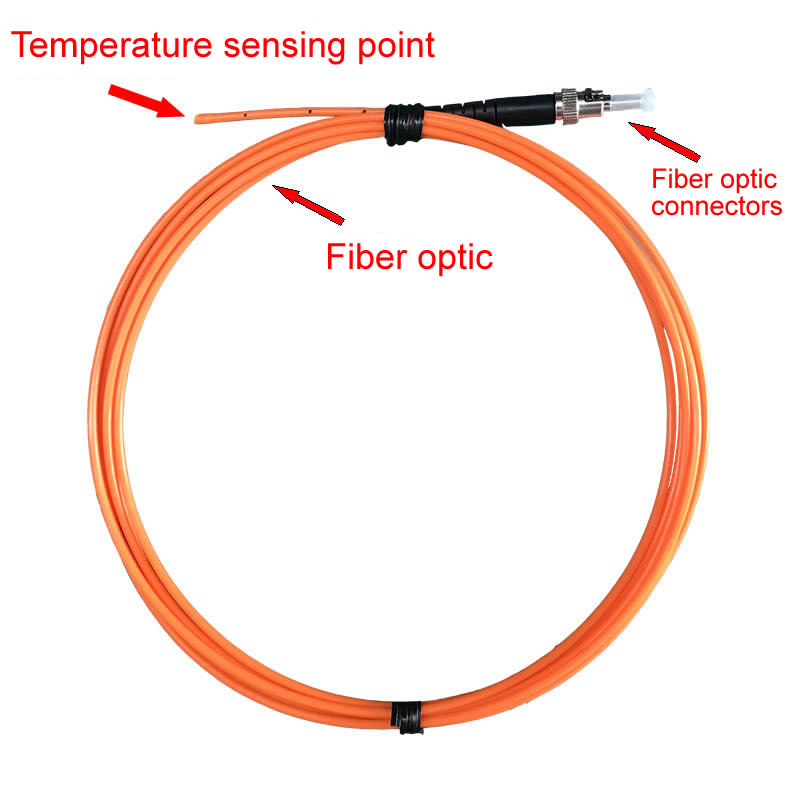
5.1 Intrinsic Safety Fundamentals
Fluorescent fiber optic sensors are intrinsically safe because they contain no electrical components at the measurement point. The sensing probe uses only:
- Glass optical fiber (غير موصل)
- Fluorescent material (non-reactive)
- Optical signals (non-energetic)
5.2 Applications in Hazardous Locations
This intrinsic safety makes fluorescent sensors ideal for:
- Chemical plants with flammable vapor atmospheres
- Oil and gas refineries with explosion risks
- Coal mining operations with methane gas
- Paint booths and solvent storage areas
- Grain elevators with combustible dust
6. Why Can High-Voltage Resistant Sensors Operate Directly on Energized Equipment?
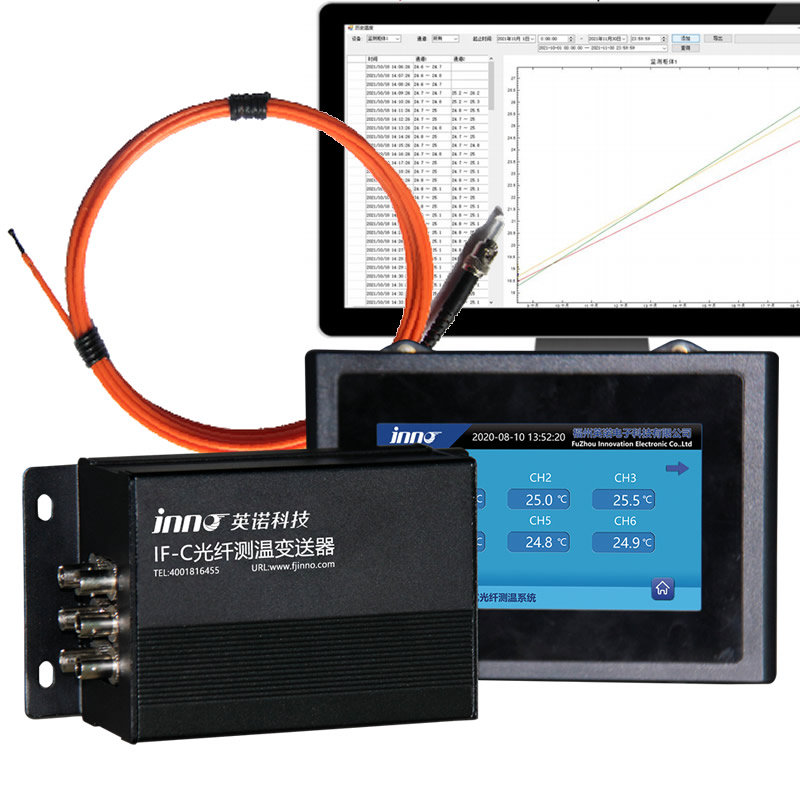
6.1 High-Voltage Insulation Performance
The non-conductive nature of fluorescent fiber optic sensors provides exceptional high-voltage insulation:
- Glass fiber withstands voltages exceeding 500kV
- No voltage division or isolation transformers required
- Complete electrical isolation between measurement and control systems
- Zero risk of ground faults or short circuits
6.2 Direct Installation Benefits
This allows sensors to be installed directly on high-voltage equipment:
- اللفات المحولات operating at transmission voltages
- Switchgear busbars at medium and high voltages
- Generator stator windings during operation
- High-voltage cable terminations and joints
7. What Temperature Range Can Fiber Optic Sensing Systems Effectively Monitor?
7.1 Wide Operating Range: -40درجة مئوية إلى +260 درجة مئوية
Fluorescent fiber optic temperature sensors operate across an exceptionally wide temperature range, تغطية:
- تطبيقات المبردة: -40°C for cold storage and refrigeration
- Ambient Monitoring: 0°C to +50°C for normal operations
- Elevated Temperatures: +50°C to +150°C for industrial processes
- تطبيقات درجات الحرارة العالية: +150°C to +260°C for power equipment and تصنيع أشباه الموصلات
7.2 Temperature Cycling Stability
The sensors maintain accuracy through repeated temperature cycles with:
- No hysteresis or measurement drift
- Consistent response across the entire range
- Reliable performance in environments with rapid temperature changes
8. How Many Channels Can a Fluorescent Fiber Measurement Device Support?

8.1 Scalable Multi-Channel Architecture
Fluorescent fiber optic temperature transmitters support flexible configurations:
- قناة واحدة: للتطبيقات البسيطة التي تتطلب نقطة قياس واحدة
- 4-8 القنوات: مثالية لمراقبة المعدات الصغيرة
- 16-32 القنوات: معيار ل المنشآت متوسطة الحجم
- 64 القنوات: السعة القصوى ل أنظمة مراقبة شاملة
8.2 فوائد التكلفة للأنظمة متعددة القنوات
يوفر استخدام جهاز إرسال واحد لنقاط قياس متعددة:
- انخفاض تكاليف الأجهزة مقارنة بأجهزة الاستشعار الفردية
- تبسيط بنية النظام والأسلاك
- مركزية جمع البيانات وتحليلها
- انخفاض تكلفة المراقبة لكل نقطة للمنشآت الكبيرة
9. كيف تعمل أجهزة استشعار الألياف الضوئية المتعرجة على منع فشل ارتفاع درجة الحرارة?
9.1 الأهمية الحاسمة لمراقبة درجة حرارة المحولات
غالبًا ما تنتج أعطال المحولات عن النقاط الساخنة المتعرجة الناتجة عن:
- الحمولة الزائدة تتجاوز القدرة المقدرة
- أعطال نظام التبريد
- دوائر قصيرة داخلية أو أخطاء منعطف إلى آخر
- تدهور أنظمة العزل
9.2 مزايا مستشعر الفلورسنت للمحولات
أجهزة استشعار الألياف الضوئية لف المحولات provide superior monitoring because they:
- Operate reliably in intense magnetic fields generated by transformer cores
- Install directly on high-voltage windings without electrical isolation
- Detect hot spots with ±1°C accuracy for early warning
- Enable thermal modeling and predictive maintenance strategies
- Work equally well in النوع الجاف and oil-immersed transformers
10. What Makes Switchgear Busbar Contact Temperature Sensors Critical for Electrical Safety?
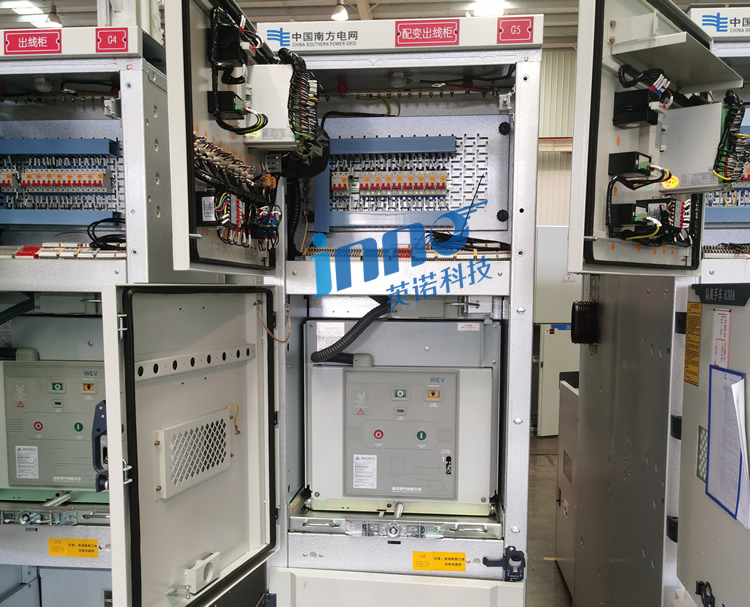
10.1 Busbar Connection Failure Mechanisms
Busbar and contact overheating in switchgear results from:
- Loose bolted connections with increased resistance
- Contact surface oxidation or contamination
- Overloading beyond design current ratings
- Inadequate ventilation in enclosed compartments
10.2 Fluorescent Sensor Solutions for Switchgear
Switchgear contact temperature sensors prevent failures by:
- Monitoring critical connection points continuously
- Operating safely in high-voltage, high-current environments
- Providing early detection before thermal runaway occurs
- Enabling condition-based maintenance scheduling
- Reducing unplanned outages and equipment damage
11. Where Are EMI-Free Fiber Optic Sensors Most Widely Deployed Across Industries?
11.1 توليد وتوزيع الطاقة
- محولات الطاقة (اللفات, البطانات, مغير الصنبور)
- Generator sets (اللفات الجزء الثابت, محامل)
- Switchgear and circuit breakers
- Cable joints and terminations
11.2 التصنيع الصناعي
- Industrial automation systems
- معدات معالجة أشباه الموصلات
- Microwave and RF heating systems
- Induction heating and melting furnaces
11.3 البنية التحتية الحيوية
- مراكز البيانات (server racks, توزيع الطاقة)
- Railway traction systems and substations
- Wind turbine generators and converters
- Solar inverter temperature monitoring
11.4 Medical and Research
- Medical equipment (MRI systems, RF ablation)
- Laboratory equipment and environmental chambers
12. Global Customer Success Cases
12.1 Power Utility – China Southern Grid
طلب: 220kV transformer substation monitoring
تحدي: Traditional sensors failed due to intense EMI from switching operations
حل: 32-channel fluorescent fiber optic system monitoring transformer windings and busbar connections
نتائج: Zero false alarms, detected incipient fault 3 قبل أشهر من الفشل, prevented $2M+ equipment loss
12.2 Semiconductor Manufacturer – Taiwan
طلب: Wafer processing equipment temperature control
تحدي: RF plasma systems disrupted electronic sensors
حل: 16-channel fiber optic system for heating zone monitoring
نتائج: Improved process uniformity, reduced defect rate by 15%, achieved ISO cleanroom compatibility
12.3 مركز البيانات – سنغافورة
طلب: Critical infrastructure temperature monitoring
تحدي: Dense server racks required comprehensive hot spot detection
حل: 64-channel system monitoring power distribution units and server inlets
نتائج: Prevented 3 thermal incidents in first year, optimized cooling efficiency by 12%
12.4 Medical Facility – ألمانيا
طلب: MRI system RF coil temperature monitoring
تحدي: 3 Tesla magnetic field prevented use of any electronic sensors
حل: Custom fluorescent probes in patient-contact RF coils
نتائج: Enhanced patient safety, enabled higher power scanning protocols, met strict medical device regulations
12.5 Wind Farm – الولايات المتحدة
طلب: 5MW wind turbine generator monitoring
تحدي: Remote location, harsh weather, strong generator magnetic fields
حل: 8-channel system for generator bearings and power electronics
نتائج: Extended maintenance intervals from 6 ل 12 شهور, reduced unplanned downtime by 40%
13. قمة 10 أفضل الشركات المصنعة لأجهزة استشعار درجة حرارة الألياف البصرية
13.1 قادة الصناعة العالمية
| رتبة | الشركة المصنعة | Details |
|---|---|---|
| 🥇 #1 |
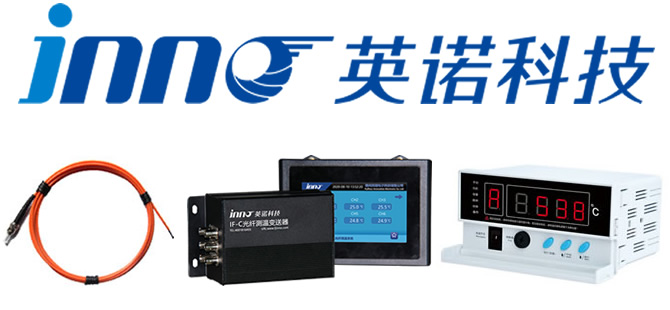
فوتشو الابتكار العلوم الإلكترونية&شركة التقنية, المحدودة.📅 أنشئت: 2011 🏭 Product Categories:
📍العنوان: مجمع لياندونغ يو لشبكات الحبوب الصناعية, رقم 12 طريق شينغي الغربي, فوتشو, فوجيان, الصين 📧 البريد الإلكتروني: web@fjinno.net 📱 Phone: +86 13599070393 💬 WhatsApp: +86 13599070393 💬 وي شات: +86 13599070393 💬 س ف: 3408968340 |
|
| 🥈 #2 |
فوتشو Huaguang Tianrui شركة تكنولوجيا الإلكترونيات الضوئية المحدودة
|
|
| 🥉 #3 |
شركة فيسو تكنولوجيز.📅 أنشئت: 1994 🌍 Location: كيبيك, كندا 🏭 Product Categories: Medical fiber optic sensors, مراقبة درجة الحرارة الصناعية, أجهزة استشعار الضغط, catheter-based measurement systems 🌐 موقع الكتروني: www.fiso.com |
|
| #4 |
شركة اوبسنس.📅 أنشئت: 2003 🌍 Location: كيبيك, كندا 🏭 Product Categories: Medical pressure sensors, أجهزة استشعار درجة حرارة الألياف الضوئية, cardiovascular measurement systems, حلول المراقبة الصناعية 🌐 موقع الكتروني: www.opsens.com |
|
| #5 |
نيوبتكس (Qualitrol Company)📅 أنشئت: 2003 (Acquired by Qualitrol in 2013) 🌍 Location: كيبيك, كندا 🏭 Product Categories: Fiber optic temperature sensors for power transformers, مولدات, المحركات, أنظمة الطاقة المتجددة 🌐 موقع الكتروني: www.qualitrolcorp.com |
|
| #6 |
هندسة أوميغا (Spectris plc)📅 أنشئت: 1962 🌍 Location: Connecticut, الولايات المتحدة الأمريكية 🏭 Product Categories: أجهزة استشعار درجة حرارة الألياف الضوئية, المزدوجات الحرارية, أهداف التنمية المستدامة, industrial measurement instruments, أنظمة الحصول على البيانات 🌐 موقع الكتروني: www.omega.com |
|
| #7 |
ويدمان للتكنولوجيا الكهربائية AG📅 أنشئت: 1877 🌍 Location: Rapperswil, سويسرا 🏭 Product Categories: أنظمة مراقبة المحولات, أجهزة استشعار درجة حرارة الألياف الضوئية, high-voltage insulation products, تشخيص المحولات 🌐 موقع الكتروني: www.weidmann-electrical.com |
|
| #8 |
لونا للابتكارات إنكوربوريتد📅 أنشئت: 1990 🌍 Location: فرجينيا, الولايات المتحدة الأمريكية 🏭 Product Categories: أنظمة استشعار الألياف الضوئية, استشعار درجة الحرارة الموزعة (دتس), مراقبة الصحة الهيكلية, test and measurement equipment 🌐 موقع الكتروني: www.lunainc.com |
|
| #9 |
Micronor Inc.📅 أنشئت: 1997 🌍 Location: كاليفورنيا, الولايات المتحدة الأمريكية 🏭 Product Categories: أجهزة استشعار درجة حرارة الألياف الضوئية, أجهزة استشعار الضغط, displacement sensors, EMI-immune measurement systems 🌐 موقع الكتروني: www.micronor.com |
|
| #10 |
Advanced Energy Industries Inc.📅 أنشئت: 1981 🌍 Location: كولورادو, الولايات المتحدة الأمريكية 🏭 Product Categories: Fiber optic temperature sensors for semiconductor manufacturing, plasma processing equipment, thin film deposition systems 🌐 موقع الكتروني: www.advancedenergy.com |
|
Contact Us for Professional Fiber Optic Temperature Sensing Solutions
Get Expert Guidance and Customized Solutions
Our technical team is ready to help you select the optimal fluorescent fiber optic temperature sensing solution for your specific application.
📋 What We Offer:
- ✅ Free technical consultation and application analysis
- ✅ Customized system design and configuration recommendations
- ✅ مواصفات المنتج التفصيلية وأوراق البيانات
- ✅ Competitive pricing and volume discounts
- ✅ Complete solution packages including installation support
- ✅ Fast response within 24 ساعات
📞 Contact Fuzhou Innovation Electronic Today
📧 البريد الإلكتروني:
web@fjinno.net
📱 Phone/WhatsApp:
+86 13599070393
💬 وي شات:
+86 13599070393
💬 س ف:
3408968340
⏰ Available 24/7 for Emergency Support
الأسئلة المتداولة
س1: What measurement accuracy can fluorescent fiber optic temperature sensors achieve?
أ: توفر مستشعرات درجة الحرارة المصنوعة من الألياف الضوئية الفلورية دقة قياس تبلغ ±1 درجة مئوية عبر نطاق التشغيل بالكامل من -40 درجة مئوية إلى +260 درجة مئوية. يتم الحفاظ على هذه الدقة على أجهزة الاستشعار 20+ عمر سنة دون الحاجة إلى أي معايرة.
Q2: كم عدد نقاط درجة الحرارة التي يمكن مراقبتها بنظام واحد?
أ: يمكن لجهاز إرسال درجة الحرارة من الألياف الضوئية الفلورية أن يراقب من 1 ل 64 نقاط قياس درجة الحرارة في وقت واحد. يقيس كل كابل من كابلات الألياف الضوئية نقطة ساخنة محددة, ويمكن تكوين النظام مع 1, 4, 8, 16, 32, أو 64 القنوات بناء على متطلبات التطبيق.
س3: ما هو زمن استجابة أجهزة استشعار الألياف الضوئية الفلورية؟?
أ: تتمتع مستشعرات الألياف الضوئية الفلورية بوقت استجابة أقل من 1 ثانية, مما يتيح الكشف السريع عن التغيرات في درجات الحرارة وتحديد الأخطاء بسرعة. This fast response is critical for early warning and protection in power systems.
س 4: What is the maximum fiber optic cable length?
أ: Standard fluorescent fiber optic cables can extend from 0 ل 80 متر. Custom lengths beyond 80 meters are available for special applications requiring longer distances between the measurement point and the transmitter.
س5: Can the probe diameter be customized?
أ: نعم, fluorescent temperature probe diameters are fully customizable to fit specific installation requirements and space constraints. Common diameters range from 1mm to 6mm, with special sizes available upon request.
س6: Why are fluorescent sensors better than traditional sensors in EMI environments?
أ: Fluorescent fiber optic sensors use optical signals instead of electrical signals, مما يجعلها محصنة تمامًا ضد التداخل الكهرومغناطيسي. Traditional electronic sensors suffer from signal distortion, measurement errors, and complete failure in high-EMI environments like transformer stations and switchgear installations.
س7: Do fluorescent fiber optic sensors require periodic calibration?
أ: لا, fluorescent fiber optic sensors maintain their factory calibration accuracy throughout their entire 20+ عمر الخدمة سنة. The optical measurement principle is inherently stable with no drift, eliminating the need for periodic recalibration and reducing maintenance costs.
Q8: Can fluorescent sensors be installed on high-voltage equipment?
أ: نعم, fluorescent fiber optic sensors can be installed directly on high-voltage equipment operating at 500kV and higher. The non-conductive glass fiber and fluorescent materials provide complete electrical isolation, eliminating the need for voltage dividers or isolation transformers.

مستشعر درجة حرارة الألياف الضوئية, نظام مراقبة ذكي, الشركة المصنعة للألياف الضوئية الموزعة في الصين
 |
 |
 |