 Оптоволоконні датчики температури INNO ,системи контролю температури.
- This comprehensive technical guide explains the structure, компоненти, and operational logic of modern electrical switchgear systems used in industrial and utility power distribution.
- It details every major switch cabinet component — circuit breakers, роз'єднувачі, шини, трансформатори, реле, grounding devices, and monitoring units — with engineering-level depth.
- Each section includes clear workflow steps for установка, тестування, обслуговування, and inspection.
- Special focus is given to технології моніторингу температури (флуоресцентне волокно, бездротовий, інфрачервоний), arc flash detection, і online condition monitoring process.
- The article concludes with troubleshooting procedures, grounding system verification, and practical safety guidelines.
Зміст
- 1. Definition and Role of Electrical Switchgear in Power Systems
- 2. Internal Structure and Functional Arrangement of Switch Cabinets
- 3. Major Components in Power Distribution Switchgear Assemblies
- 4. Busbar System Design and Conductor Engineering
- 5. Експлуатаційна різниця між автоматичними вимикачами та роз’єднувальними вимикачами
- 6. Системи релейного захисту: Етапи налаштування та тестування
- 7. Система моніторингу розподільних пристроїв: температура, Вологість, і Arc Flash
- 8. Порівняльна таблиця: Флуоресцентний або бездротовий або інфрачервоний моніторинг температури
- 9. Робочий процес виявлення спалаху дуги та інтеграція безпеки
- 10. Процедури онлайн-моніторингу стану та потоку даних
- 11. Fault Types, причини, та Коригувальні дії
- 12. Етапи тестування та перевірки системи заземлення
- 13. Control Logic, Блокування, і послідовності операцій
- 14. Етапи монтажу та введення в експлуатацію панелей розподільних пристроїв
- 15. Часті запитання та технічна консультація
1. Definition and Role of Electrical Switchgear in Power Systems
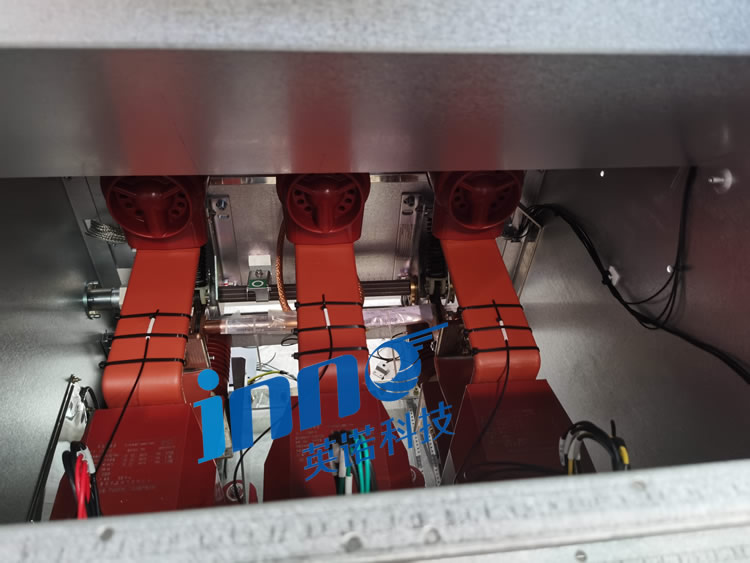
Електричні розподільні пристрої це збірний термін для пристроїв, які контролюють, protect, та ізолювати ділянки електричної мережі. Він служить механічним і електричним бар'єром між джерелами живлення та навантажувальним обладнанням, забезпечення безпечної роботи в нормальних і несправних умовах. Вузли розподільних пристроїв використовуються поперек generation, спосіб передавання, і розподіл systems to manage electrical energy flow, disconnect faulty circuits, and protect personnel from electrical hazards.
From a design perspective, a switchgear system must fulfill four basic requirements: fault interruption, safe isolation, reliable operation, і ремонтопридатність. These functions make it indispensable in substations, фабрики, центри обробки даних, and utility installations where continuous and safe power delivery is critical.
2. Internal Structure and Functional Arrangement of Switch Cabinets
2.1 Main Circuit Section
The main circuit includes автоматичні вимикачі, шини, відключають вимикачі, і трансформатори струму. These elements carry and control electrical energy under various operating conditions. All conductive parts are insulated and fixed within a metal enclosure, which ensures both mechanical stability and operator protection.
2.2 Auxiliary and Control Section
This section contains control relays, indicator lamps, push buttons, і measurement instruments. It governs switching operations, monitors circuit status, and provides visual or signal-based feedback to operators. Control wiring must be neatly arranged and properly labeled to facilitate maintenance.
2.3 Enclosure and Interlocking Section
The enclosure is fabricated from galvanized or powder-coated steel, designed for arc containment and mechanical rigidity. Mechanical interlocks і electrical interlocks prevent incorrect switching sequences. Наприклад, a disconnector cannot be opened while the circuit breaker is energized.
3. Major Components in Power Distribution Switchgear Assemblies
3.1 Автоматичний вимикач
The circuit breaker is the heart of every switchgear panel. It automatically interrupts current flow during overloads or short circuits. Common types include air circuit breakers (ACB) for low voltage, вакуумні вимикачі (VCB) for medium voltage, and SF₆ gas circuit breakers for high voltage. Each type is selected based on voltage rating, ізоляційне середовище, and fault current capacity.
3.2 Isolator or Disconnector
The isolator provides a visible break in the circuit. It is always operated when the current is zero to ensure safe maintenance. Disconnectors often work in coordination with circuit breakers to guarantee absolute isolation.
3.3 Busbar and Connectors
The шинна система acts as the current-carrying backbone of the switchgear. Made of copper or aluminum, it connects incoming and outgoing feeders. Proper spacing, ізоляція, and phase segregation must be observed to avoid flashover.
3.4 Measuring Transformers (CT/PT)
Трансформатори струму (КТ) і трансформатори потенціалу (PTs) reduce high current and voltage levels to measurable values for relays and meters. Periodic testing ensures accuracy and stability of protection systems.
3.5 Protective Relays and Control Units
Protective relays receive signals from CTs and PTs to detect abnormal conditions such as overcurrent, short circuit, or earth fault. The relay then sends a trip command to the breaker to disconnect the faulty section. Modern installations still rely on electromechanical or digital relays, depending on system requirements.
4. Busbar System Design and Conductor Engineering
The шинна система must safely carry rated current and withstand thermal and dynamic stress during short-circuit conditions. The design process includes the following technical steps:
- Calculate rated current and short-circuit forces based on system fault level.
- Select appropriate conductor material: copper for high conductivity, aluminum for cost efficiency and lighter weight.
- Determine cross-sectional area and spacing between phases.
- Ensure mechanical supports and insulation barriers are rated for temperature rise and dielectric strength.
Regular maintenance should include checking torque on bolted joints, inspecting insulation discoloration, перевірка показань термокамери для виявлення ненормального нагрівання в суглобах.
5. Експлуатаційна різниця між автоматичними вимикачами та роз’єднувальними вимикачами
5.1 Функції автоматичного вимикача
А circuit breaker може розмикати та замикати електричні кола як за нормального навантаження, так і за умов струму пошкодження. Його контакти призначені для швидкого гасіння дуги за допомогою повітря, порожній, or gas. During maintenance, вимикачі повинні бути перевірені на контактний опір, безперервність котушки відключення, і механічне вирівнювання.
5.2 Функції роз'єднувача
А disconnect switch не може перервати струм навантаження; він використовується лише для візуальної ізоляції після розмикання автоматичного вимикача. Це гарантує, що обслуговуючий персонал може безпечно працювати на знеструмленому обладнанні. Роз'єднувачі оснащені заземлювачами, які відводять залишкову енергію з ємнісних кіл.
5.3 Блокування кроків для безпечної роботи
- Переконайтеся, що вимикач розімкнуто, а контрольний індикатор показує «ВИМК.».
- Увімкніть роз’єднувач, щоб ізолювати лінію.
- Engage the grounding switch and apply lockout tags.
- Verify zero potential using a voltage detector before starting maintenance.
6. Системи релейного захисту: Етапи налаштування та тестування
The protection relay system ensures fast disconnection of faulty circuits. Relays receive analog signals from CTs and PTs and act based on predefined current, напруга, and time settings. The configuration includes overcurrent, диференціал, earth-fault, and under-voltage relays.
Relay Testing Workflow
- Inspect CT and PT connections to confirm polarity and ratio.
- Inject simulated fault current and verify relay tripping within the preset time.
- Check circuit breaker tripping via relay output contacts.
- Record and compare results with factory calibration values.
Accurate relay coordination prevents unnecessary outages and protects both equipment and personnel.
7. Система моніторингу розподільних пристроїв: температура, Вологість, і Arc Flash![Волоконно-оптична система контролю температури для контролю температури розподільних пристроїв]()

Continuous supervision of environmental and operational parameters is critical for switchgear reliability. The monitoring system collects data on temperature, вологість, insulation condition, and arc flash light intensity. Each parameter serves a specific diagnostic purpose:
- Моніторинг температури: Detects loose connections and abnormal contact resistance before failures occur.
- Моніторинг вологості: Prevents condensation that could lead to insulation breakdown.
- Виявлення спалаху дуги: Identifies optical and current signatures of internal faults.
Monitoring sensors are installed on busbar joints, кабельні закінчення, and within switchgear compartments. Data is transmitted to a local control unit for visualization and alarm activation.
8. Порівняльна таблиця: Флуоресцентний або бездротовий або інфрачервоний моніторинг температури
Temperature rise is one of the earliest signs of potential failure in electrical joints. Below is a comparison of three practical methods used in switchgear temperature supervision.
| метод | Принцип роботи | Час відгуку | Основні переваги | Обмеження |
|---|---|---|---|---|
| Флуоресцентний волоконно-оптичний датчик | Measures temperature via change in fluorescence decay time of the sensor tip | <1 другий | Стійкість до електромагнітних перешкод, не вимагає електричного підключення, висока точність для розподільних пристроїв високої напруги | Вимагає ретельної установки та калібрування |
| Бездротовий радіочастотний датчик | Передає значення температури через радіочастотний або модуль BLE | 2–3 секунди | Простий варіант модернізації, гнучке розміщення на струмоведучих частинах | Сприйнятливий до шуму, періодична заміна батареї |
| Інфрачервоний термодатчик | Виявляє інфрачервоне випромінювання від гарячих точок | ≈1 секунда | Надає візуальне термокартування для інспекційних груп | Точність знижується через пил, роздуми, або зміщення |
Серед усіх методів, в флуоресцентна волоконна система є кращим для постійного моніторингу високої напруги завдяки своїй точності та стійкості до електромагнітних перешкод.
9. Робочий процес виявлення спалаху дуги та інтеграція безпеки
Внутрішня дуга випромінює інтенсивне світло та тиск за мілісекунди. Присвячений система виявлення спалаху дуги забезпечує миттєве припинення цієї енергії. Система працює через optical sensors that sense a sudden light spike combined with a simultaneous rise in current.
Step-by-Step Detection Process
- Light Detection: Fiber or photodiode sensors continuously monitor the interior of the switchgear compartment for optical intensity changes.
- Signal Validation: The control module cross-checks the optical signal with current input from CTs to verify fault authenticity.
- Trip Command: When both parameters exceed preset thresholds, the breaker receives an instant trip signal (within 2–5 ms).
- System Isolation: The circuit breaker opens, arc gases are contained, and ventilation flaps release pressure safely.
- сигналізація & Logging: Event data and timestamps are stored for post-incident analysis and maintenance follow-up.
всі arc protection relays should be tested quarterly using optical pulse generators to confirm their sensitivity and trip logic. Consistent maintenance prevents arc-related injuries and limits equipment damage.
10. Процедури онлайн-моніторингу стану та потоку даних
The online condition monitoring system in switchgear continuously collects parameters such as temperature, вологість, частковий розряд, вібрація, and operating cycles. It provides early warnings by measuring deviations from normal reference values.
Implementation and Data Flow Steps
- Установка датчика: Mount temperature and humidity probes on critical joints, CT/PT chambers, і кабельні закінчення.
- Передача сигналу: Sensors communicate data via RS485 or optical links to a local data concentrator.
- Аналіз даних: The concentrator processes inputs through set threshold values to trigger warnings.
- Alarm Output: Audible and visual alarms notify operators, while dry contacts can trigger circuit breakers if necessary.
- Record Keeping: Logged data is exported periodically for trend evaluation and performance comparison.
This real-time supervision enables maintenance teams to take immediate corrective action. На відміну від періодичних ручних перевірок, continuous monitoring captures transient faults and reduces unplanned outages.
11. Fault Types, причини, та Коригувальні дії
Common failures in electrical switchgear systems arise from mechanical stress, термічне старіння, та забруднення навколишнього середовища. Recognizing the pattern of each fault helps prevent severe incidents.
11.1 Typical Fault Types
- Перегрів контакту: Caused by loose fasteners or worn contact surfaces, leading to carbonization and insulation breakdown.
- Busbar Short-Circuit: Due to insufficient clearance or foreign conductive particles inside compartments.
- Insulation Deterioration: Result of moisture ingress, dust accumulation, or high temperature exposure.
- Mechanical Failure: Misalignment in interlocking linkages or spring mechanisms within circuit breakers.
- Relay Misoperation: Incorrect settings or polarity reversal of CTs causing false tripping.
11.2 Corrective Maintenance Procedure
- De-energize and lockout the entire switchgear bay.
- Conduct a thorough visual inspection of all primary and secondary circuits.
- Tighten busbar joints to specified torque using calibrated tools.
- Replace damaged insulation sleeves or terminals immediately.
- Perform insulation resistance and contact resistance testing before re-energization.
Scheduled inspection intervals should not exceed six months for heavily loaded equipment. A maintenance log with test results should be maintained for every switchgear unit.
12. Етапи тестування та перевірки системи заземлення
The заземлення (earthing) система is vital to divert fault current safely to earth, protecting personnel and equipment from electric shock. Each switchgear panel is bonded to a ground grid through copper strips or galvanized conductors.
12.1 Types of Grounding Arrangements
- TN System: Direct connection of neutral and protective earth at the transformer, common in industrial networks.
- TT System: Equipment has its own local earth electrode, reducing neutral interference.
- IT System: Neutral isolated from earth, used in sensitive facilities where continuity of supply is critical.
12.2 Ground Resistance Measurement Procedure
- Disconnect the grounding conductor under test from the grid temporarily.
- Place auxiliary electrodes (current and potential) in the soil as per test instrument manual.
- Use an earth tester to measure resistance; acceptable value is typically below 1 ohm for substations.
- Reconnect and inspect all bonding points, ensuring tight mechanical joints.
Proper grounding ensures that even under fault conditions, the potential rise remains within safe limits for human touch voltage thresholds.
13. Control Logic, Блокування, і послідовності операцій
Control logic and interlocks maintain safe operating sequences inside the switchgear. Interlocks can be mechanical (using cams and rods) або електричний (through control circuits). Their purpose is to eliminate human error during switching operations.
13.1 Функціональні етапи типової операції
- Переконайтеся, що селектор керування системою знаходиться в режимі «Локальний» або «Віддалений», якщо потрібно.
- Перш ніж вмикати автоматичний вимикач, переконайтеся, що вимикач заземлення розімкнуто.
- Переконайтеся, що всі індикатори блокування знаходяться в безпечному стані (сигнал готовності до закриття ON).
- Увімкніть автоматичний вимикач за допомогою перемикача або кнопки.
- Монітор струму, напруга, і лампи стану вимикача для правильної роботи.
Схеми керування, як правило, живляться від джерел постійного струму (110V або 220V) з резервним живленням від батареї, щоб гарантувати роботу під час втрати мережі. Уся проводка повинна бути позначена відповідно до стандартів IEC для легкого усунення несправностей.
14. Етапи монтажу та введення в експлуатацію панелей розподільних пристроїв
Правильне встановлення має вирішальне значення для забезпечення безпеки та продуктивності switchgear panels. Наступний робочий процес підсумовує основні польові процедури.
14.1 Перевірка перед встановленням
- Перевірте розміри фундаменту та відповідність проектним кресленням.
- Перевірте наявність і очищення заземлюючих ям і з’єднувальних клем.
- Підтвердьте стан поставки панелей розподільних пристроїв за допомогою контрольного списку перевірки.
14.2 Монтаж і підключення
- Розташуйте панелі послідовно та вирівняйте по вертикалі та горизонталі.
- З’єднайте шини з використанням затверджених значень моменту затягування та ізоляційних муфт.
- Встановити вимірювальні трансформатори, метрів, і реле відповідно до електричних схем.
- Позначте кожен кабель і підтвердьте відповідність ідентифікації фази.
14.3 Тестування та введення в експлуатацію
- Виконайте перевірку опору ізоляції за допомогою мегомметра 1000 В для систем НН або 5000 В для систем середньої напруги.
- Перевірте безперервність проводки керування та функціональні перевірки всіх реле та блокувань.
- Імітуйте операції відключення та вимикання, щоб перевірити роботу вимикача.
- Запишіть результати випробувань і порівняйте зі значеннями, наданими виробником.
- Once verified, energize the system under supervision and monitor for abnormal noise or heat.
After commissioning, all results must be documented, and safety clearances should be displayed on each switchgear compartment.
15. Часті запитання та технічна консультація
Q1. What regular tests should be performed on switchgear assemblies?
Routine tests include insulation resistance, контактний опір, relay functional checks, mechanical operation, and thermographic inspection of busbar joints. Annual dielectric testing is recommended for high-voltage equipment.
Q2. How often should temperature sensors and arc detectors be calibrated?
Both systems should be verified every six months. Calibration involves comparing sensor readings with a reference instrument and adjusting offsets if necessary.
Q3. What are typical acceptance criteria for contact resistance?
For copper joints, contact resistance should not exceed 30 micro-ohms. Вищі значення вказують на забруднення або недостатній момент затягування.
Q4. Чи можна використовувати інфрачервоні та флуоресцентні системи разом?
так. Інфрачервоне сканування забезпечує швидку перевірку поверхні, тоді як флуоресцентні волоконні датчики забезпечують постійний контроль внутрішньої температури — обидва методи доповнюють один одного в профілактичному обслуговуванні.
Q5. Яку документацію необхідно вести після введення в експлуатацію?
Ведіть повне досьє, включаючи схеми з’єднання, налаштування реле, протоколи випробувань, та оглядові фото. Цей запис важливий для аудитів і майбутнього планування технічного обслуговування.
Остаточна технічна примітка
Для детальної підтримки дизайну, customized configuration, або інтеграція передових системи контролю та захисту розподільних пристроїв, будь ласка, зверніться до нашого інженерного відділу. Ми забезпечуємо сертифіковані на заводі панелі розподільних пристроїв, перевірені послуги тестування, and on-site commissioning assistance to ensure compliance with international standards and long-term operational safety.

Оптоволоконний датчик температури, Інтелектуальна система моніторингу, Розповсюджений виробник оптоволокна в Китаї
 |
 |
 |