 Оптоволоконні датчики температури INNO ,системи контролю температури.
- Подвійні технологічні рішення: Флуоресцентні волоконно-оптичні та розподілені волоконно-оптичні системи вимірювання температури відповідають різноманітним потребам моніторингу промислового обладнання
- Чудова продуктивність: Пропозиція люмінесцентних систем <1 другий час відповіді, ±1°C точність, -40Діапазон від °C до 260 °C; розподілені системи забезпечують 1-секундну відповідь
- Глобальні програми: Тисячі систем успішно розгорнуті по всій Європі, Північна Америка, і Азіатсько-Тихоокеанського регіону, нафтохімічна, і металургійної промисловості
- Перевірені переваги: У порівнянні з термопарами, RTD, та інфрачервона термометрія, волоконно-оптична технологія забезпечує іскробезпеку та електромагнітний імунітет
- Доступне налаштування: Діаметр зонда, довжина волокна, діапазон температур, та інші параметри, які можна налаштувати відповідно до конкретних експлуатаційних вимог
1. Що таке система моніторингу промислових машин?

Ан industrial machine monitoring system is an intelligent platform integrating sensing, збір даних, аналіз, and warning capabilities designed to track equipment operational status in real-time. These systems deploy various sensors to continuously collect critical parameters including temperature, вібрація, тиск, and current, enabling enterprises to achieve прогнозне обслуговування and optimize production management.
Контроль температури represents one of the most fundamental yet critical functions in industrial machine monitoring. Abnormal equipment temperatures often signal early-stage failures, and timely detection can prevent major accidents and economic losses.
наш волоконно-оптичні системи вимірювання температури specialize in providing highly reliable temperature monitoring solutions for industrial equipment, supporting two core technologies:
Основні технології
- Флуоресцентне волоконно-оптичне вимірювання температури: Ideal for precise point measurements at critical locations
- Distributed Fiber Optic Temperature Monitoring (DTS): Suitable for long-distance continuous monitoring
The system architecture comprises fiber optic sensing probes, signal demodulation equipment, industrial communication modules, and monitoring software platforms, seamlessly integrating with existing industrial automation systems.
2. Чому моніторинг температури є критично важливим для промислового обладнання?
Запобігання катастрофічним збоям
Equipment overheating ranks among the leading causes of industrial accidents. Electrical equipment contact failure, excessive mechanical friction, and uncontrolled chemical reactions all manifest as abnormal temperature increases. Real-time temperature monitoring provides early warnings during the incubation stage, preventing fires, вибухи, and other severe consequences.
Extending Equipment Service Life
Prolonged operation in high-temperature environments accelerates equipment aging. By mastering equipment thermal states through системи контролю температури and optimizing operational parameters, компанії можуть значно подовжити термін служби обладнання та зменшити капітальні витрати.
Підвищення ефективності виробництва
Багато процесів промислового виробництва вимагають суворого контролю температури. Точний дані моніторингу температури підтримує оптимізацію процесів, покращує якість продукції та ефективність виробництва, і зменшує кількість браку.
Відповідність нормативним вимогам
Регуляторні органи безпеки в усьому світі зобов’язують контролювати температуру критичного обладнання в промисловості з високим ризиком. Комплексний системи моніторингу обладнання допомогти підприємствам пройти аудит безпеки та отримати ліцензії на виробництво.
Підтримка інтелектуального прийняття рішень
Накопичені дані про температуру є основою для управління справністю обладнання, планування технічного обслуговування, та оптимізація енергоменеджменту — важливі компоненти промислової цифрової трансформації.
3. Що таке оптоволоконна технологія вимірювання температури?

Оптоволоконний датчик температури це технологія, яка використовує фізичні властивості оптичних волокон для вимірювання температури. На відміну від традиційних електричних датчиків, волоконно-оптичні датчики use optical signals as information carriers, offering unique advantages including intrinsic safety, несприйнятливість до електромагнітних перешкод, and long-distance transmission capabilities.
Technology Development Background
Fiber optic sensing technology originated in the 1970s from optical fiber communication research. Scientists discovered that light propagating through optical fibers produces various scattering and fluorescence phenomena correlated with environmental temperature, стрес, and other physical quantities. After decades of development, волоконно-оптичний датчик has become a mature technology in industrial monitoring applications.
Основні переваги
Внутрішня безпека
Волоконно-оптичні датчики contain no electrical components, require no on-site power supply, and produce no electrical sparks, enabling safe use in flammable and explosive environments. This represents the fundamental reason why high-risk industries like chemical and coal mining prefer fiber optic technology.
Стійкість до електромагнітних перешкод
In strong electric and magnetic field environments, traditional electrical sensors easily suffer interference causing measurement inaccuracies. Optical signals remain completely unaffected by electromagnetic fields, ensuring data accuracy and reliability.
Corrosion and High-Temperature Resistance
Optical fiber material consists of quartz glass with stable chemical properties. Combined with special protective sheaths, fibers can operate long-term in acidic, лужні, and high-temperature harsh environments.
Long-Distance Lossless Transmission
Optical signals maintain signal quality across kilometers of fiber transmission without requiring repeater amplification, simplifying system design.
4. How Does Fiber Optic Temperature Measurement Compare to Traditional Methods?
Industrial Temperature Measurement Technology Comparison
| Comparison Item | Флуоресцентна волоконна оптика | Розподілена волоконна оптика | Термопара | RTD | Infrared Thermometry |
|---|---|---|---|---|---|
| Точність вимірювання | ±1°C | ±1-2°C | ±1-2°C | ±0.1-0.5°C | ±2-5°C |
| Час відгуку | <1 другий | 1 другий | 1-10 секунд | 5-30 секунд | <1 другий |
| Діапазон температур | -40 до 260°C (настроюється) | -40 to 600°C | -200 to 1800°C | -200 до 850°C | -50 to 3000°C |
| EMI імунітет | Повний імунітет | Повний імунітет | Сприйнятливий | Сприйнятливий | N/A |
| Внутрішня безпека | так | так | немає | немає | так |
| Відстань вимірювання | Єдина точка (0-80m fiber) | Continuous 5-30km | Limited by cable length | Limited by cable length | Line of sight |
| Довгострокова стабільність | Чудово (no drift) | Чудово | Prone to drift | добре | Environment dependent |
| Вартість технічного обслуговування | Дуже низький | Низький | Середній (requires calibration) | Середній | Середній |
| Multi-point Monitoring | 1-64 points per channel | Thousands of points per fiber | Individual wiring per point | Individual wiring per point | Point-by-point scanning |
| Термін служби | 20+ років | 20+ років | 3-5 років | 5-10 років | 5-10 років |
Significant Advantages of Fiber Optic Technology
Harsh Industrial Environment Adaptability
На підстанціях, розподільні пристрої, and other strong electromagnetic field environments, thermocouple and RTD measurement data frequently fluctuate and produce errors, leading to false alarms or missed detections. Волоконно-оптичні датчики remain completely unaffected by electromagnetic interference and can operate stably in 1000kV ultra-high voltage environments.
A provincial grid company conducted comparative testing by installing both thermocouples and флуоресцентні волоконно-оптичні датчики on the same batch of switchgear. After six months of operation, thermocouples showed a 23% частота помилкових тривог, while the fiber optic system achieved zero false alarms and zero missed detections.
Hazardous Area Application Advantages
Temperature monitoring in petrochemical facilities has always been challenging. Traditional electrical sensors require complex explosion-proof designs with high installation and maintenance costs, yet still pose safety risks. Волоконно-оптичні датчики are intrinsically safe, require no explosion-proof certification, and can be directly applied in explosive gas environments.
5. What’s the Difference Between Fluorescent and Distributed Fiber Optic Sensing?
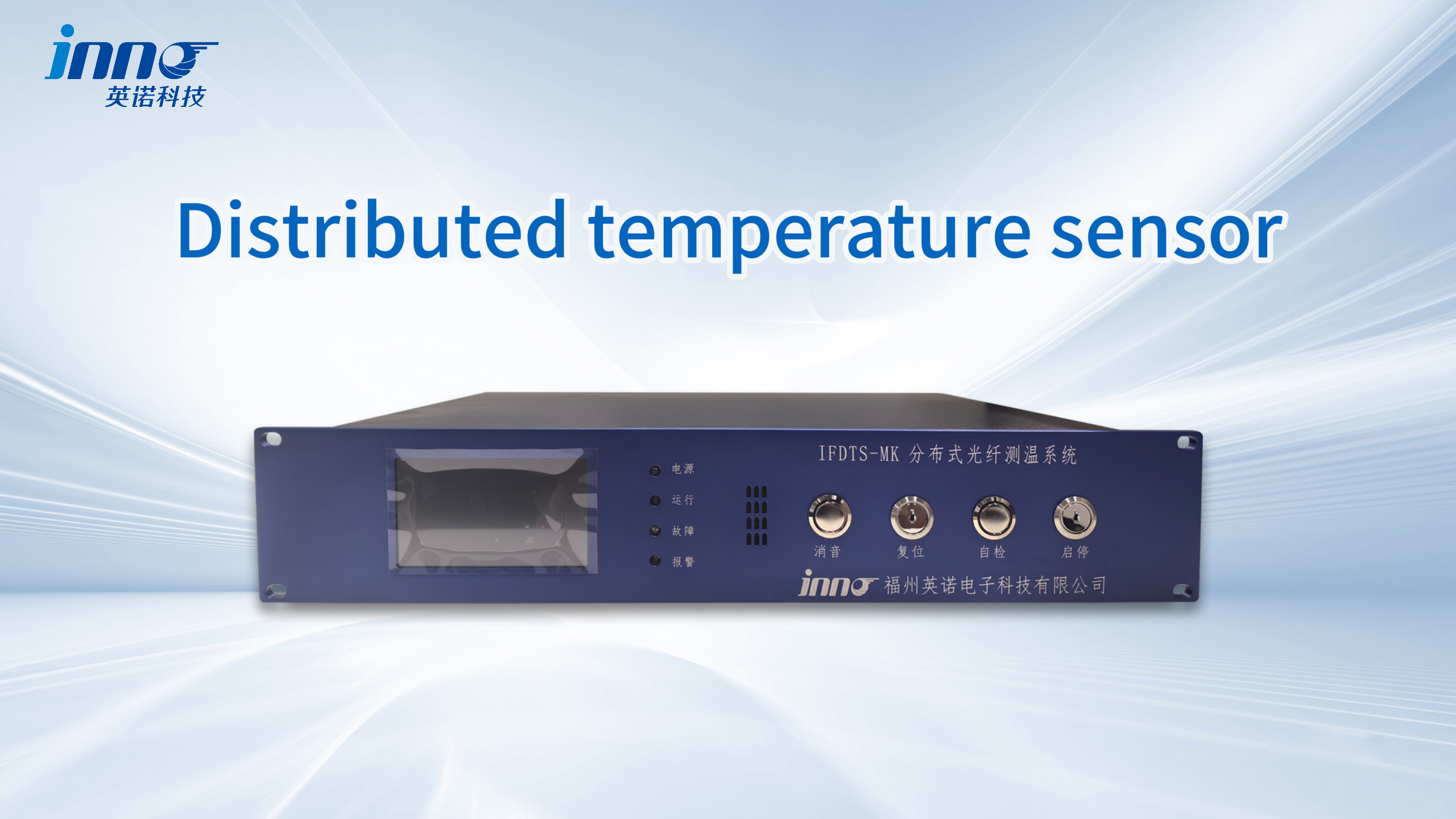
Technical Principle Comparison
Флуоресцентне волоконно-оптичне вимірювання температури
The флуоресцентне волоконно-оптичне зондування probe tip contains rare-earth fluorescent material. When excitation light illuminates the fluorescent material, it becomes excited and emits fluorescence signals. The fluorescence decay time constant exhibits a definite functional relationship with temperature, allowing precise temperature calculation through accurate decay time measurement.
This measurement method’s key advantage lies in its dependence solely on time parameters, independent of light intensity, fiber bending loss, connector loss, та інші фактори, ensuring excellent long-term stability without zero-point or gain drift.
Розподілене вимірювання температури (DTS)
Distributed systems operate on the Raman scattering effect. Laser pulses traveling through optical fiber produce backscattered light, with anti-Stokes light intensity being temperature-sensitive. By analyzing scattered light signals returning at different times using Optical Time Domain Reflectometry (OTDR), the system simultaneously obtains temperature and spatial location information.
This effectively transforms a single fiber into a continuous temperature sensor, with measurement points every 0.5-2 метрів, enabling a single fiber to cover several kilometers.
Application Scenario Selection
| Application Need | Recommended Technology | Rationale |
|---|---|---|
| High-voltage switchgear contact monitoring | Флуоресцентна оптоволоконна лампа | Precise specific point monitoring, швидка реакція, compact probe |
| Transformer winding temperature | Флуоресцентна оптоволоконна лампа | Distributed multi-point placement, високі вимоги до точності |
| Power cable tunnels | Розподілена волоконна оптика | Long-distance continuous monitoring, precise hotspot localization |
| Oil pipeline leak detection | Розподілена волоконна оптика | Multi-kilometer range monitoring, rapid anomaly localization |
| Storage tank temperature distribution | Розподілена волоконна оптика | Vertical temperature profile monitoring |
| Rotating machinery bearings | Флуоресцентна оптоволоконна лампа | Швидка відповідь, customizable small-diameter probes |
Fluorescent Fiber Optic System Technical Specifications
- Час відгуку: <1 другий
- Точність вимірювання: ±1°C
- Діапазон температур: -40 до 260°C (higher temperatures customizable)
- Довжина волокна: 0-80 метрів (per probe)
- Діаметр зонда: Standard 3mm, 2мм; налаштовуються менші діаметри
- Очки за канал: 1-64 балів
- Рейтинг захисту: IP67 (стандарт), IP68 (необов'язковий)
- Вихідний інтерфейс: RS485, Modbus RTU/TCP, 4-20мА
Усі технічні параметри можна налаштувати відповідно до вимог конкретного застосування, включаючи спеціальні температурні діапазони, ультракомпактні зонди, та спеціальні оболонкові матеріали.
Технічні характеристики розподіленої волоконно-оптичної системи
- Час відгуку: 1 другий
- Точність вимірювання: ±1-2°C
- Діапазон температур: -40 to 600°C (стандарт)
- Відстань моніторингу: 5-30 кілометрів (одиночне волокно)
- Просторова роздільна здатність: 0.5м, 1м, 2м варіантів
- Інтервал вибірки: 0.5-2 метрів
- Вихідний інтерфейс: Ethernet, OPC, Modbus TCP
6. How Do Industrial Temperature Monitoring Systems Operate?
Флуоресцентна волоконно-оптична система моніторингу
Крок 1: Захоплення сигналу температури
Флуоресцентні волоконно-оптичні зонди встановлюються в критичних місцях на контрольованому обладнанні. Демодулятор посилає світлові імпульси збудження на зонди з фіксованою частотою (зазвичай 100-1000 Гц). Збуджувальне світло проходить через волокно до флуоресцентного матеріалу наконечника зонда, викликаючи флуоресцентне випромінювання.
Крок 2: Аналіз флуоресцентного сигналу
Після збудження, флуоресцентний матеріал випромінює флуоресценцію з експоненціальним затуханням. The demodulator precisely measures the fluorescence decay time constant, which maintains a definite mathematical relationship with temperature at the probe location.
Крок 3: Temperature Calculation
Built-in processing algorithms in the demodulator calculate actual temperature values from fluorescence decay time. Since measurement is time-based rather than intensity-based, вигин волокон, connector attenuation, and other factors don’t affect results, ensuring long-term stability.
Крок 4: Data Transmission and Processing
Calculated temperature data transmits through industrial communication interfaces (RS485, Modbus, тощо) to monitoring software or host systems. Software platforms display real-time temperature curves, record historical data, and execute alarm logic.
The entire process from temperature change to system alarm display takes less than 1 другий, meeting fast response requirements.
Distributed Fiber Optic Monitoring System Workflow
Крок 1: Optical Pulse Emission
The DTS host unit launches high-energy laser pulses into the fiber. Pulses propagate forward through the fiber at the speed of light (приблизно 200,000 km/s).
Крок 2: Scattered Light Collection
As optical pulses propagate through fiber, each location produces Rayleigh scattering, Раманівське розсіювання, і бріллюенівське розсіювання. Anti-Stokes light from Raman scattering is temperature-sensitive, intensifying with temperature increases.
Крок 3: Temperature Inversion Calculation
By analyzing the intensity ratio of anti-Stokes to Stokes light combined with OTDR technology, the system calculates temperature values at each spatial location. Typical systems simultaneously obtain temperature data from thousands of measurement points.
Крок 4: Temperature Field Reconstruction
Software reconstructs discrete temperature measurement point data into continuous temperature distribution curves, displaying the temperature field along the entire fiber in real-time. Any location experiencing temperature anomalies triggers immediate system identification and alarming, providing precise anomaly location coordinates.
Distributed system scan cycles typically run at 1 другий, updating full-length temperature distribution data every second.
7. What are the Technical Specifications of Fiber Optic Sensors?
Core Performance Indicators
Точність вимірювання
Measurement accuracy refers to the deviation between system measurements and true values. наш флуоресцентні волоконно-оптичні системи achieve standard accuracy of ±1°C, reaching ±0.5°C in the commonly used 20-100°C temperature range. Distributed systems maintain standard accuracy of ±1-2°C.
Час відгуку
Response time defines the duration from temperature step change to the system displaying 90% of the change. Люмінесцентні волоконно-оптичні системи respond in <1 другий, while distributed systems achieve 1-second response. Rapid response proves critical for applications requiring timely warnings.
Customizable Parameters
We understand every industrial application has unique requirements. The following parameters support customization:
- Extended temperature ranges (напр., -200 to 400°C)
- Ultra-compact probe diameters (minimum 1mm)
- Special fiber lengths (exceeding 80 метрів)
- Special mechanical structures (напр., 90-degree bend probes)
- Specialized sheath materials (напр., titanium alloy sheaths)
- Спеціальні протоколи зв'язку
8. Which Industrial Machines Require Real-Time Temperature Monitoring?
Power Generation Equipment
Моніторинг розподільних пристроїв
У високовольтних розподільних пристроях, роздільники, контакти автоматичного вимикача, and busbar connections represent key temperature monitoring points. Increased contact resistance causes localized overheating, with temperatures rising from normal values to 150°C+ within minutes, potentially causing equipment burnout or fires.
Силові трансформатори
Великий силовий трансформатор winding temperatures directly affect equipment lifespan and operational safety. Traditional top-oil temperature measurement cannot reflect winding hot-spot temperatures. Волоконно-оптичні зонди can be installed directly inside windings, monitoring hot-spot temperatures in real-time.
Cable Systems
Силові кабелі in tunnels, trenches, or direct burial experience localized overheating from overloading, joint failures, or external damage. Distributed fiber optic deployed parallel to cables monitors full-length temperature, rapidly localizing fault points.
Petrochemical Equipment
Резервуари для зберігання
Large crude oil and refined product storage tanks require liquid level and temperature distribution monitoring. Розподілена волоконна оптика arranged vertically from tank top to bottom provides real-time temperature profiles at different heights, preventing fire risks.
Трубопроводи
Long-distance pipeline temperature monitoring enables leak detection and flow monitoring. Pipeline leaks produce temperature anomalies near leak points. Distributed fiber optic deployed along pipelines rapidly localizes leaks across tens of kilometers.
Reactors and Towers
Chemical reactor temperature control directly impacts product quality and safety. Multi-point fiber optic temperature systems monitor temperature distribution at different reactor locations, optimizing reaction conditions.
Metallurgical Equipment
Blast Furnaces
Iron-making blast furnace body temperature monitoring evaluates refractory lining condition. Розподілена волоконна оптика arranged on the furnace shell monitors the furnace body temperature field, detecting lining burnthrough hazards promptly.
Heating Furnaces
Steel rolling heating furnaces require precise temperature control. Multi-point fiber optic temperature systems monitor temperatures in different furnace zones, supporting automatic control system optimization of heating curves.
Mining Equipment
Underground Cables
Coal mine underground cables represent major fire hazards. Distributed fiber optic temperature systems deployed along cables monitor full-length temperatures in real-time, immediately alarming and localizing temperature anomalies.
Belt Conveyors
Belt conveyor roller bearing failures and belt misalignment friction cause overheating. Distributed fiber optic arranged along belts continuously monitors temperature, preventing fires.
9. How Do Power Equipment Monitoring Systems Prevent Failures?
Early Identification of Switchgear Temperature Anomalies
High-voltage switchgear failures often exhibit clear temperature signatures. Contact deterioration increases contact resistance, generating additional Joule heating. During early fault development stages, temperature increases may only be 5-10°C—difficult to detect through manual inspection—but волоконно-оптичні температурні системи precisely capture these changes.
Predictive Maintenance Strategies
Temperature Threshold Management
Based on equipment types and operational experience, scientific temperature thresholds are established:
- Normal operating temperature: Typically below ambient temperature +30°C
- Warning temperature: Exceeds normal by 10-15°C
- Alarm temperature: Exceeds normal by 20-30°C
- Emergency temperature: Exceeds 80-100°C
Temperature Trend Monitoring
Single temperature increases may result from normal factors like load increases. Systems analyze temperature change trends to identify abnormal patterns:
- Continuous slow rise: May indicate contact deterioration
- Periodic fluctuation: May reflect load variations (normal phenomenon)
- Sudden jump: May indicate severe fault requiring immediate action
10. What are the Special Requirements for Petrochemical Industry Machine Monitoring?
Explosion-Proof Safety is Paramount
Petroleum and chemical facilities contain numerous flammable and explosive gases and liquids, with equipment areas typically classified as explosion hazard zones (зона 0, зона 1, зона 2). Traditional electrical temperature measurement equipment requires strict explosion-proof certification, with complex explosion-proof structures, high costs, and difficult maintenance.
Волоконно-оптичні датчики are intrinsically safe, producing no electrical sparks, and can be used in any hazardous area without explosion-proof certification. This represents the fundamental reason for large-scale adoption of fiber optic temperature technology in the petrochemical industry.
Long-Distance Distributed Monitoring Needs
Petrochemical facility pipelines and cables often extend for kilometers. Традиційні методи вимірювання температури вимагають окремої проводки для кожної точки вимірювання, створює величезне навантаження на монтаж. Distributed fiber optic temperature systems долайте кілометри одним волокном, значно спрощує установку.
11. What Challenges Exist in Metallurgical Equipment Temperature Monitoring?
Екстремально високотемпературне середовище
Багато обладнання металургійної промисловості працює при надзвичайно високих температурах. Внутрішня температура сталеплавильного конвертера досягає 1600°C, температура камери нагріву печі 1200-1300°С, і температури безперервного розливу слябів перевищують 1000°C. наш розподілені волоконно-оптичні температурні системи зі стандартом -40 діапазони до 600°C відповідають більшості потреб у високотемпературному моніторингу кожухів печей і систем водяного охолодження.
Сильна механічна вібрація
Прокатні стани, дробарки, та подібне обладнання створює інтенсивну вібрацію під час роботи. Traditional sensor electrical connections easily loosen or damage from vibration. Волоконно-оптичні датчики have no electrical connections, and fiber material flexibility provides strong vibration resistance.
Severe Electromagnetic Interference
Metallurgical facilities use high-power electrical equipment with complex electromagnetic environments. Induction furnaces and electric arc furnaces generate strong electromagnetic fields that severely interfere with traditional electrical sensors. Волоконно-оптичні датчики remain completely immune to electromagnetic interference, making them ideal for strong electromagnetic environments.
12. What Value Does Industrial Equipment Condition Monitoring Deliver?
Direct Economic Benefits
Reduced Equipment Failure Rates
Through continuous temperature monitoring and early warning, intervention occurs before faults develop to severe stages. Data shows that implementing оптоволоконний моніторинг температури reduces equipment failure rates by an average of 50-70%.
Decreased Unplanned Downtime Losses
For continuous production enterprises, unplanned equipment downtime causes enormous economic losses. For refining units, наприклад, a million-ton catalytic cracking unit shutdown for one day results in losses reaching several million dollars.
Extended Equipment Service Life
Equipment overheating operation accelerates insulation aging, втома матеріалу, and lubricant degradation. Через моніторинг температури, ensuring equipment operates within reasonable temperature ranges significantly extends service life.
Indirect Economic Benefits
Energy Efficiency Improvements
Precise temperature data supports production process optimization, improving energy utilization efficiency. One cement enterprise utilized rotary kiln distributed fiber optic temperature data to optimize combustion control strategy, improving thermal efficiency by 5% and saving over $1.2 million in fuel costs annually.
Product Quality Enhancement
Many product qualities directly correlate with production process temperatures. Precise temperature control improves product consistency and qualification rates.
13. How are Global Enterprises Using Fiber Optic Monitoring Systems?
European Applications
German Automotive Manufacturing Paint Line Monitoring
A renowned German automaker deployed волоконно-оптичні системи моніторингу температури on its paint production lines. Paint process drying ovens require precise temperature curve control, with temperature deviations affecting coating quality. The company installed distributed fiber optic temperature systems in drying ovens across six paint lines. After implementation, coating quality stability significantly improved, with defect rates dropping from 1.2% до 0.3%, reducing rework losses by over €2 million annually.
UK Offshore Wind Farm Substation Monitoring
An offshore substation at a large North Sea wind farm faces harsh environments with high salt fog and humidity, making equipment maintenance difficult. Critical equipment including high-voltage switchgear and transformers employ волоконно-оптичні температурні системи for remote monitoring. System data transmits to onshore monitoring centers via fiber optic communication networks. Fiber optic sensors operate stably in marine environments; after three years, no corrosion damage has occurred, while traditional electrical sensors in identical environments require replacement every 18 months on average.
North American Applications
US Oil Pipeline Leak Monitoring
A major US oil company operates a 1,200-kilometer crude oil transmission pipeline in the central region. The company deployed розподілені волоконно-оптичні температурні системи along the entire line, with fiber installed alongside the pipeline and buried for protection. The system scans full-length temperature at 1-second cycles, with any location’s abnormal temperature changes triggering alarms. After three years of operation, the system successfully detected four small-flow leaks, precisely localizing them within 50-meter ranges with timely responses and minimal environmental impact.
Canadian Mine Underground Cable Monitoring
A large Canadian copper mine’s underground operations exceed 1,000 meters depth, with underground cables totaling over 80 кілометрів. The mine deployed розподілені волоконно-оптичні температурні системи on major cable trunk lines, with the main control room monitoring all mine cable temperature status in real-time. Since system commissioning, 12 cable joint overheating issues have been identified and resolved, with zero cable fire incidents.
Asia-Pacific Applications
Japanese Steel Enterprise Blast Furnace Monitoring
A Japanese steel group implemented волоконно-оптичні температурні системи on three blast furnaces, monitoring furnace body temperature distribution. The Japanese steel industry maintains high equipment management sophistication, with fiber optic temperature data integrated into blast furnace expert systems, supporting refractory lining condition assessment and operational optimization.
Singapore Metro Cable Tunnel Monitoring
Singapore’s metro operating company deployed розподілені волоконно-оптичні температурні системи in cable tunnels across all lines, totaling over 200 кілометрів. Metro cable tunnels have confined spaces; once fires occur, firefighting proves difficult with severe impacts. The fiber optic temperature system provides early warning, coordinating with automatic fire suppression systems to extinguish fires in incipient stages. After six years of operation, the system identified and eliminated over 30 cable overheating hazards, ensuring safe metro operations.
14. Часті запитання
Are fiber optic temperature system maintenance costs high?
Fiber optic temperature systems have very low maintenance costs. Fiber optic sensors themselves require no maintenance, with primary maintenance work involving periodic demodulator accuracy verification (typically once every 1-2 років) and software system updates. Compared to traditional electrical sensors requiring frequent replacement and calibration, fiber optic systems have lower total lifecycle costs.
Can fiber optic sensors withstand environmental corrosion?
Fiber optic material is quartz glass with excellent corrosion resistance. We provide different sheath materials for various environments, such as stainless steel armoring, Teflon coating, тощо. In strong acid, strong alkali, and high-temperature harsh environments, волоконно-оптичний датчик service life still exceeds 10 років.
Can fiber optic temperature systems be used in explosion-proof areas?
так. Волоконно-оптичні датчики contain no electrical components, are intrinsically safe, and can be used in explosive gas environments. Our products have passed explosion-proof certification, meeting IEC Ex and ATEX standard requirements, applicable to hazardous areas in petroleum, хімічний, and coal mining industries.
Can system data be accessed through enterprise cloud platforms?
так. Our monitoring software supports multiple data output methods, integrating with enterprise cloud platforms and big data platforms through API interfaces and database connections. We support Industrial Internet of Things protocols, facilitating integration with smart factory systems.
Can older equipment be retrofitted with fiber optic temperature systems?
Абсолютно. Fiber optic temperature systems are non-invasive monitoring systems requiring no major equipment modifications. Sensors can be fixed to equipment surfaces or internal spaces through adhesive bonding, strapping, or magnetic attachment. We have extensive experience retrofitting older equipment and can design appropriate installation solutions based on specific conditions.
How many temperature measurement points can one system monitor?
Люмінесцентні волоконно-оптичні системи connect 1-64 sensors per single demodulator, expandable to more measurement points by adding demodulators. Distributed fiber optic systems monitor lengths of 5-30 kilometers per single fiber, equivalent to thousands of temperature measurement points. Specific configurations are determined based on actual requirements.
15. Get Expert Consultation
Why Choose Us?
We possess over 10 years of fiber optic temperature system Р&D and application experience, completing hundreds of project implementations in power, нафтохімічна, металургійний, and other industries. Our technical team includes professionals in fiber optic sensing, промислова автоматизація, та аналіз даних, providing one-stop services from consultation to implementation.
What We Offer
- Free Site Surveys: Technical experts visit sites to assess monitoring requirements
- Customized Solution Design: Design optimal solutions based on your specific situations
- Technology Selection Guidance: Help you choose between fluorescent or distributed technology
- Investment Return Analysis: Evaluate economic benefits after system implementation
- Product Demonstrations: Demonstrate system functionality at our demonstration center or online
Contact Us Now
If you’re interested in industrial machine fiber optic temperature monitoring systems, or wish to learn more technical details and application cases, please contact us through the following methods:
- Online Consultation: Click the consultation button in the lower right corner of the website to communicate with technical advisors in real-time
- Phone Consultation: Call our service hotline for professional advice
- Schedule Site Visit: Arrange visits to our technology center and application case sites
- Download Materials: Obtain product technical manuals and application case white papers
Our technical team is ready to answer your questions and help you find the most suitable temperature monitoring solution to ensure safe equipment operation.

Оптоволоконний датчик температури, Інтелектуальна система моніторингу, Розповсюджений виробник оптоволокна в Китаї
 |
 |
 |