 Волоконно-оптичні датчики температури INNO ,Системи контролю температури.
- Що таке моніторинг вимикача?
- Навіщо автоматичним вимикачам потрібен онлайн-моніторинг у реальному часі?
- Які поширені типи несправностей в автоматичних вимикачах?
- Які основні параметри моніторингу для автоматичних вимикачів?
- Чому температура є найважливішим індикатором раннього попередження?
- Чому волоконно-оптична технологія найкраще підходить для моніторингу температури вимикача?
- Які компоненти волоконно-оптичної системи моніторингу температури вимикача?
- Де і як слід розміщувати датчики температури в автоматичних вимикачах?
- Технічні характеристики флуоресцентної волоконно-оптичної системи моніторингу температури FJINNO
- Чим відрізняються стратегії моніторингу для різних типів автоматичних вимикачів?
- Часті запитання (ПОШИРЕНІ ЗАПИТАННЯ)
1. Що таке моніторинг вимикача?
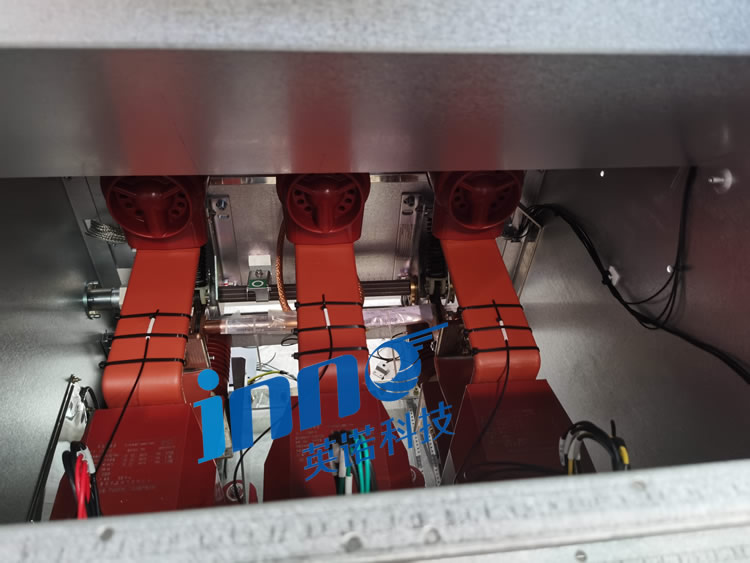
Контроль вимикача безперервний, спостереження та аналіз робочих параметрів автоматичного вимикача в режимі реального часу для оцінки його справності, виявляти несправності, що розвиваються, and support condition-based maintenance decisions. Unlike periodic manual inspection, a circuit breaker monitoring system employs sensors, обладнання для збору даних, and analytics software to provide uninterrupted visibility into the electrical, термічний, механічний, and dielectric condition of the breaker throughout its service life.
Circuit breakers serve as the primary protective devices in power transmission and distribution networks. Their fundamental function is to interrupt fault currents and isolate sections of the grid during overload or short-circuit events. Because this protective action must occur reliably within milliseconds, any latent degradation in the breaker’s contacts, Ізоляції, gas system, or operating mechanism can have severe consequences — from a failure to trip during a fault, leading to cascading outages, to catastrophic equipment destruction and safety hazards. Circuit breaker monitoring exists to eliminate these risks by converting invisible internal degradation into visible, дієві дані.
A modern circuit breaker monitoring system typically tracks parameters including contact temperature, активність часткового розряду, SF₆ gas density and moisture content, mechanical operating time and travel characteristics, струм навантаження, and busbar connection status. By correlating these data streams and analyzing trends over time, the system identifies anomalies that indicate developing faults long before they escalate to failure — enabling maintenance teams to intervene at the optimal time, neither too early (витрачання ресурсів) nor too late (risking failure).
Підхід FJINNO до моніторингу автоматичного вимикача зосереджується на флуоресцентному волоконно-оптичному датчику температури — параметрі, який безпосередньо корелює з погіршенням контакту та тепловим перевантаженням. Відстежуючи температуру в режимі реального часу за допомогою волоконно-оптичних датчиків, стійких до електромагнітних перешкод, FJINNO дозволяє раннє виявлення несправностей у найголовнішій точці.
2. Навіщо автоматичним вимикачам потрібен онлайн-моніторинг у реальному часі?
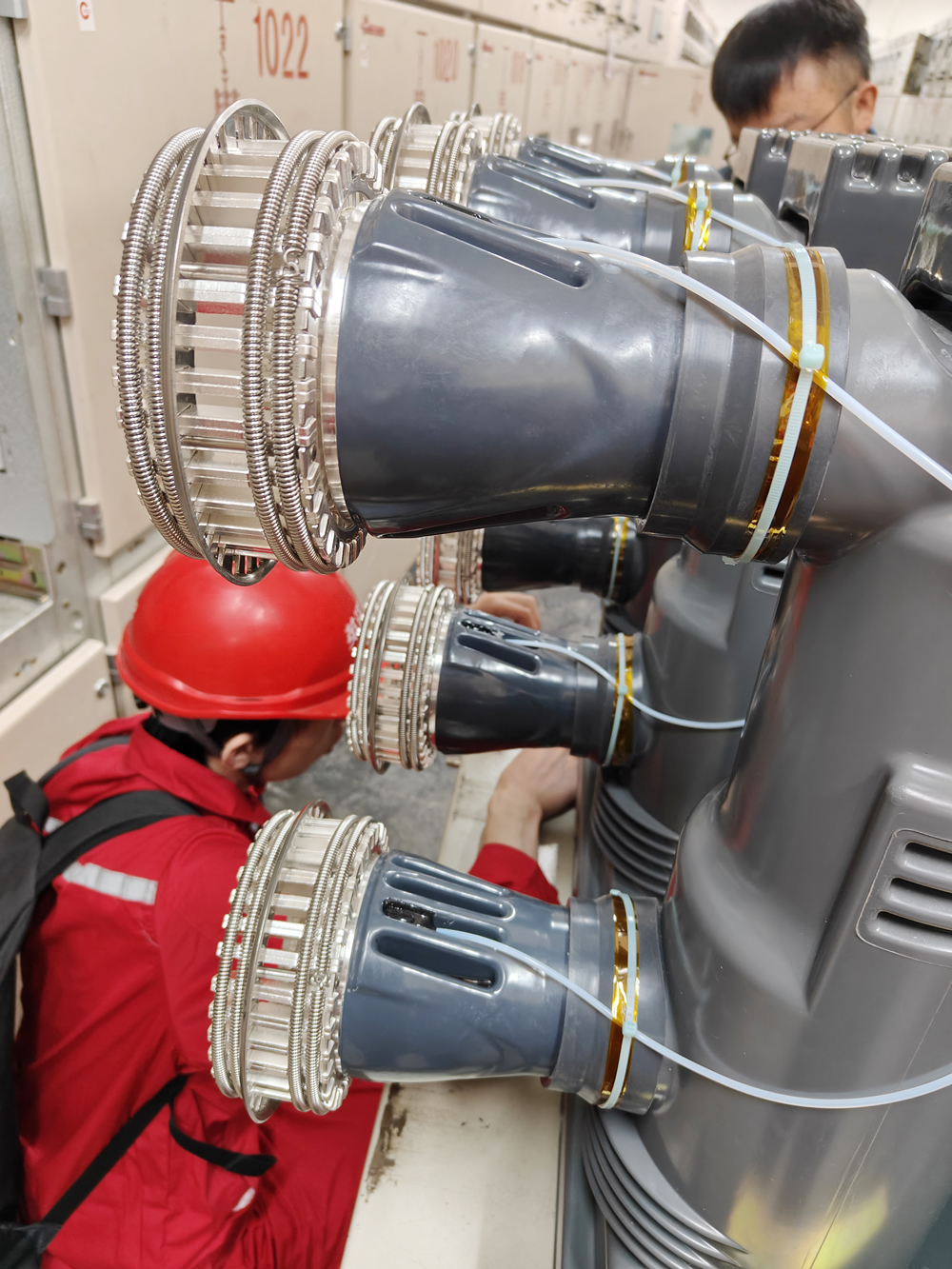
Традиційне технічне обслуговування автоматичних вимикачів здійснюється за графіком, заснованим на часовому або підрахунку операцій: вимикачі перевіряються або капітально ремонтуються після фіксованої кількості років або операцій перемикання, незалежно від фактичного стану. Хоча такий підхід забезпечує базовий рівень надійності, він має фундаментальні обмеження, які роблять його неадекватним вимогам сучасної мережі.
Першим обмеженням є нездатність виявити погіршення між обслуговуваннями. Такі дефекти, як контактна ерозія, погіршення ізоляції, and gas leaks develop progressively between scheduled inspections. A breaker may pass inspection and begin degrading the following day, with the fault remaining invisible until the next scheduled outage — which could be years away. During this interval, the breaker continues to serve as a critical protection device while harboring a latent defect that could cause it to fail precisely when it is needed most.
The second limitation is the cost and operational disruption of offline inspection. Inspecting a high-voltage circuit breaker requires taking it out of service, which may require complex switching procedures, передачі навантаження, and coordination with system operators. For critical breakers that cannot be easily de-energized, inspection opportunities are infrequent and brief. Real-time online monitoring eliminates this constraint by providing continuous condition assessment without removing the breaker from service.
The third limitation is the absence of trend data. A single-point inspection reveals the breaker’s condition at one moment in time but provides no information about the rate or direction of change. Real-time monitoring generates continuous time-series data that reveals whether a parameter is stable, поліпшення, or deteriorating — and at what rate. This trend information is essential for predicting remaining useful life and scheduling maintenance with precision.
The economic argument is equally compelling. Unplanned circuit breaker failures result in direct costs (заміна обладнання, emergency repair labor, and energy not supplied) and indirect costs (contractual penalties, regulatory scrutiny, і репутаційну шкоду). Industry data indicates that the cost of a single unexpected breaker failure in a transmission substation can exceed the cost of monitoring the entire breaker population in that substation for a decade. Real-time circuit breaker monitoring transforms maintenance from a reactive expense into a predictive investment.
3. Які поширені типи несправностей в автоматичних вимикачах?
Understanding the specific failure mechanisms that affect circuit breakers is essential for designing an effective monitoring strategy. Circuit breaker faults can be categorized into five primary types, each with distinct physical causes, progression characteristics, and monitoring signatures.
1、Thermal Overload and Contact Overheating
As a circuit breaker ages and accumulates switching operations, the contact surfaces degrade through erosion, кісточки, і окислення. This degradation increases the contact resistance, which in turn causes localized resistive heating (P = I²R). The resulting temperature rise accelerates further oxidation and material loss, creating a positive feedback loop. If undetected, thermal overload progresses to contact welding, пошкодження ізоляції, and ultimately flashover or fire. Temperature monitoring is the most direct method of detecting this fault type, as the temperature rise is measurable before any other symptom becomes apparent.
2、Contact Erosion and Wear
Every interruption of load current or fault current causes arc erosion of the breaker’s contacts. The arc generated during current interruption vaporizes contact material, progressively reducing the contact mass and altering the contact geometry. As contacts erode, the effective contact area decreases, contact pressure distribution becomes uneven, and contact resistance increases. In SF₆ breakers, severe contact erosion can also generate metallic particles that contaminate the gas and compromise its dielectric strength. Контроль контактної температури, mechanical travel characteristics, and switching operation counts provides insight into the progression of contact wear.
3、Insulation Degradation and Partial Discharge
Circuit breakers contain various solid and gas insulation systems that can degrade over time due to thermal stress, електричний стрес, потрапляння вологи, and chemical contamination. As insulation deteriorates, частковий розряд (PD) activity increases — small electrical discharges that occur within voids, along surfaces, or at interfaces where the electric field exceeds the local breakdown strength. PD activity further erodes the insulation, creating a progressive failure path that can eventually lead to complete dielectric breakdown. Partial discharge monitoring detects this degradation at an early stage, while temperature monitoring identifies the thermal consequences of insulation failure.
4、SF₆ Gas Leakage and Contamination
SF₆ gas circuit breakers rely on the dielectric and arc-quenching properties of sulfur hexafluoride gas. Gas leakage through aging seals, прокладки, or weld defects reduces the gas density below the level required for reliable arc interruption and insulation. Додатково, moisture ingress into the SF₆ compartment, or contamination from arc byproducts and metallic particles, degrades the gas quality even if the density remains adequate. Gas density monitoring and moisture analysis are essential for detecting these faults, while temperature monitoring provides complementary information about the thermal effects of reduced gas performance.
5、Механічні несправності та дефекти робочого механізму
Механізм приводу автоматичного вимикача — пружинний, гідравлічний, або пневматичний — повинен надійно зберігати та вивільняти енергію для розмикання та замикання вимикача протягом заданих часових меж. Механічні несправності включають знос тяг, весняна втома, знос заслінки, несправність засувки, і погіршення якості мастила. Ці несправності проявляються у вигляді зміни часу роботи (повільна робота), неповна подорож, або несправність. Контроль механічного стану зазвичай включає аналіз часу, вимірювання подорожі, аналіз струму котушки, і моніторинг вібрації. Контроль температури компонентів механізму також може виявити ненормальне тертя або деградацію підшипників.
Ці п'ять категорій несправностей не є незалежними. На практиці, розломи часто взаємодіють і каскадують: контактна ерозія призводить до підвищення температури, що прискорює руйнування ізоляції, which increases partial discharge, which further degrades insulation. A comprehensive circuit breaker monitoring system tracks multiple parameters simultaneously to capture these interactions and provide a holistic assessment of breaker health.
4. Які основні параметри моніторингу для автоматичних вимикачів?
An effective circuit breaker monitoring system tracks a range of parameters that collectively characterize the breaker’s electrical, термічний, діелектрик, і механічний стан. The selection and prioritization of these parameters depend on the breaker type, клас напруги, критичність, and the specific failure modes most relevant to the application. The following parameters form the foundation of a comprehensive circuit breaker monitoring strategy.
Температура
Temperature is the most fundamental and universally applicable monitoring parameter for circuit breakers. It provides direct indication of contact resistance changes, thermal overload conditions, abnormal current distribution, and insulation thermal aging. Temperature monitoring points include the stationary contacts, рухомі контакти, busbar connection joints, кабельні закінчення, and arc chamber components. Fiber optic temperature sensors are the preferred technology for this application due to their immunity to electromagnetic interference and inherent electrical isolation.
Частковий розряд (PD)
Partial discharge monitoring detects incipient insulation degradation by measuring the small electrical discharges that occur when insulation begins to fail. PD activity is measured using ultra-high-frequency (УВЧ) датчики, перехідна напруга землі (TEV) датчики, or acoustic emission sensors. PD data provides early warning of dielectric failures that, якщо залишити без уваги, can progress to complete insulation breakdown and flashover.
SF₆ Gas Density and Moisture
For SF₆ circuit breakers, gas density is a critical safety parameter. The breaker’s arc interruption capability and dielectric withstand strength are directly proportional to the SF₆ gas density. Density sensors compensate for temperature variations to provide true mass-density readings. Moisture content monitoring is equally important, as excessive moisture degrades the gas’s dielectric properties and produces corrosive byproducts that attack internal components.
Mechanical Operating Characteristics
Mechanical monitoring encompasses operating time measurement (close time, open time, close-open time), contact travel analysis, operating coil current signature analysis, and motor current monitoring. These measurements reveal the condition of the operating mechanism, linkage system, заслінки, and energy storage components. Changes in timing or travel characteristics indicate developing mechanical faults that could result in slow operation or failure to operate.
Струм навантаження
Continuous load current measurement serves two purposes in circuit breaker monitoring. перше, it provides the baseline for correlating temperature measurements with actual loading conditions — enabling the system to distinguish between normal temperature rise due to high load and abnormal temperature rise due to contact degradation. друге, it tracks cumulative current loading and switching duty, which are key inputs for estimating remaining contact life and scheduling maintenance.
Busbar and Connection Status
Monitoring the condition of busbar connections and cable terminations at the breaker terminals is essential because these joints are common failure points. Loose or corroded connections increase resistance, генерувати тепло, and can lead to thermal failure. Temperature monitoring at these points, combined with load current data, provides effective detection of deteriorating connections.
Серед усіх параметрів моніторингу, temperature is the one that provides the earliest indication of the widest range of fault types. Перегрів контакту, connection degradation, insulation thermal aging, and mechanical friction all produce measurable temperature signatures before other symptoms appear. This is why FJINNO’s circuit breaker monitoring strategy prioritizes high-accuracy fiber optic temperature measurement as the foundation upon which other monitoring parameters are layered.
5. Why Is Temperature the Most Critical Early Warning Indicator for Circuit Breakers?

While circuit breaker monitoring encompasses multiple parameters, температура займає унікальне центральне положення в ієрархії моніторингу. Це не випадково — воно ґрунтується на фізиці деградації автоматичного вимикача та практичних вимогах раннього виявлення несправностей.
Взаємозв'язок між контактною деградацією та температурою регулюється прямим фізичним принципом. Коли контакти автоматичного вимикача погіршуються — через ерозію, окислення, накопичення вуглецю, або механічне зміщення — збільшується електричний контактний опір. Оскільки вимикач постійно переносить струм навантаження, будь-яке збільшення контактного опору безпосередньо збільшує потужність, що розсіюється у вигляді тепла на межі контактів, за співвідношенням P = I²R. Це локалізоване нагрівання підвищує контактну температуру вище нормальної базової робочої лінії. The temperature rise is proportional to the increase in contact resistance, making it a quantitative indicator of degradation severity.
What makes temperature particularly valuable as an early warning indicator is the temporal relationship between temperature change and other fault manifestations. In most degradation scenarios, the temperature at the affected component begins to rise measurably weeks or months before other symptoms — such as increased partial discharge, gas decomposition products, or mechanical changes — become detectable. This is because the thermal effect is a first-order consequence of resistance increase, while other effects are secondary or tertiary consequences that require further degradation progression to become measurable.
Consider the degradation sequence for a typical contact overheating fault. As contact resistance increases, the local temperature rises. This elevated temperature accelerates oxidation of the contact surfaces, which further increases resistance — creating the positive feedback loop described earlier. As the temperature continues to rise, the insulation adjacent to the hot contact begins to thermally age, which may eventually produce partial discharge activity. If the breaker uses SF₆, the elevated temperature can accelerate gas decomposition and moisture generation. Нарешті, if the mechanical components are affected by the heat, operating characteristics may change. Throughout this sequence, the temperature rise is the first measurable symptom and remains the most sensitive indicator of fault severity.
There is also a practical advantage to temperature monitoring: it is directly interpretable. A measured temperature of 105°C at a contact rated for 90°C immediately communicates the severity and urgency of the situation. Other parameters — such as partial discharge magnitude in picocoulombs or gas moisture content in ppm — require expert interpretation and contextual analysis. Температура, на противагу, can be evaluated against absolute thresholds defined in standards such as IEC 62271 and IEEE C37, making alarm setting and response decision-making straightforward.
6. Чому волоконно-оптична технологія найкраще підходить для моніторингу температури вимикача?
The internal environment of a circuit breaker presents extreme challenges for temperature measurement. High voltage potentials, intense electromagnetic fields during switching operations, обмежені простори, and the need for long-term unattended operation eliminate most conventional temperature sensing technologies from consideration. Fiber optic temperature sensing — specifically fluorescent fiber optic sensing — addresses every one of these challenges simultaneously.
Optical fibers carry light, не електричні сигнали. Electromagnetic interference from switching arcs, bus currents, and adjacent equipment has zero effect on the measurement signal, eliminating the noise and error problems that plague electronic sensors in breaker environments.
Fiber optic sensors are fully dielectric — no conductive path exists between the high-voltage contact being measured and the grounded monitoring equipment. Це усуває потребу в складних ізоляційних бар'єрах і забезпечує природну гальванічну розв'язку при будь-якому рівні напруги.
Флуоресцентні волоконно-оптичні датчики не містять активних електронних компонентів, батареї, або рухомі частини. Принцип вимірювання базується на залежному від температури часі розпаду люмінофорного матеріалу — внутрішній фізичній властивості, яка не дрейфує та не погіршується. Не потрібно періодичне калібрування.
Діаметр чутливого елемента зазвичай становить кілька міліметрів, достатньо малий для встановлення безпосередньо на контактах, шини, і компоненти дугової камери в замкнутому просторі всередині автоматичного вимикача, не перешкоджаючи роботі або потоку газу.
Fiber optic sensor materials are compatible with SF₆ gas, insulating oils, and the arc byproducts present inside circuit breakers. They do not outgas, corrode, or contaminate the breaker’s internal environment.
The fluorescence decay-time measurement principle provides inherent long-term stability because it depends on an intrinsic material property rather than signal amplitude. Sensor readings remain accurate over decades of continuous operation without drift.
Conventional alternatives — thermocouples, RTD, and infrared sensors — each fail in one or more of these critical requirements. Thermocouples and RTDs introduce conductive elements into the high-voltage environment, creating insulation risks and EMI susceptibility. Infrared sensors require a line of sight to the target surface, which is typically unavailable inside an enclosed breaker. Wireless electronic sensors require batteries (which have limited life and are unsuitable for sealed SF₆ compartments) and remain susceptible to EMI during breaker operations. Fluorescent fiber optic sensing is the only technology that satisfies all requirements simultaneously, which is why it has become the standard for high-voltage circuit breaker temperature monitoring.
FJINNO’s fluorescent fiber optic temperature sensors are specifically engineered for circuit breaker applications. With ±1°C accuracy, час відгуку під 2 секунди, and a measurement range of -40°C to +200°C, they provide the precision and reliability required for early detection of contact overheating and thermal anomalies in SF₆, порожній, and oil circuit breakers.
7. Які компоненти волоконно-оптичної системи моніторингу температури вимикача?
A complete fiber optic temperature monitoring system for circuit breakers consists of three functional layers: the sensing layer, the signal processing layer, and the data management and integration layer. Each layer performs a distinct function, and together they form an end-to-end monitoring architecture that transforms physical temperature at the breaker’s critical points into actionable information in the operator’s control system.
Fluorescent fiber optic temperature sensors installed on contacts, шини, arc chambers, і кабельні закінчення. Convert local temperature into an optical signal.
➔📡Layer 2: Обробка сигналу
Fiber optic signal demodulator (edge device) receives optical signals, extracts temperature data, performs threshold comparison, and generates local alarms.
➔🖥️Layer 3: Управління даними
Скада / DCS / asset management software receives temperature data via Modbus, IEC 61850, or DNP3.0 for centralized display, в тренді, and diagnostics.
Шар 1 — Fluorescent Fiber Optic Temperature Sensors
The sensing layer consists of fluorescent fiber optic temperature probes installed at each monitoring point within the circuit breaker. Each probe contains a phosphor sensing element bonded to the tip of an optical fiber. When excited by a pulse of light from the demodulator, the phosphor fluoresces, and the decay time of this fluorescence is a precise function of the local temperature. The probe is connected to the demodulator via an optical fiber cable that provides both the excitation light path and the return fluorescence signal path. Because the fiber is entirely dielectric, it can safely route from the high-voltage contact through the breaker’s insulation system to the grounded demodulator without compromising the breaker’s dielectric integrity. FJINNO sensors feature a compact probe design that allows direct mounting on stationary contacts, moving contact arms, busbar clamps, and arc chamber walls using high-temperature adhesive or mechanical fixation.
Шар 2 — Fiber Optic Signal Demodulator (Edge Device)
The signal processing layer is the fiber optic demodulator unit, which serves as the intelligent edge device of the monitoring system. The demodulator performs several critical functions: it generates the optical excitation pulses sent to each sensor, receives the returning fluorescence signals, applies the decay-time measurement algorithm to calculate temperature for each channel, порівнює виміряні температури з настроюваними пороговими значеннями тривоги, і виводить оброблені дані на контрольний рівень. Демодулятори FJINNO підтримують багатоканальні конфігурації (4, 8, 16, або 24 Канали) для розміщення різних конфігурацій вимикачів і може одночасно контролювати всі три фази, а також шини та точки механізму з одного блоку. Демодулятор містить локальний дисплей, релейні виходи сигналізації, і цифрові комунікаційні інтерфейси, включаючи Modbus RTU/TCP, IEC 61850 MMS і GOOSE, і DNP3.0.
Шар 3 — Контрольне програмне забезпечення та інтеграція SCADA
Рівень керування даними отримує дані про температуру від демодулятора та представляє їх у існуючій системі диспетчерського контролю підприємства або промислового підприємства.. Інтеграція досягається за допомогою стандартних протоколів зв'язку, allowing the temperature data to appear alongside other breaker monitoring parameters, protection system data, and operational data in the control room. Advanced implementations include trend analysis, rate-of-change alarms, теплове моделювання, and predictive diagnostics that combine temperature data with load current and ambient temperature to assess the breaker’s thermal health trajectory. FJINNO provides optional companion software for standalone monitoring applications where SCADA integration is not required, offering dashboard visualization, Управління тривоги, зберігання історичних даних, і формування звіту.
8. Де і як слід розміщувати датчики температури в автоматичних вимикачах?
The effectiveness of a circuit breaker temperature monitoring system depends critically on the placement of temperature sensors at the locations where thermal faults originate and develop. Sensor placement must be guided by an understanding of the breaker’s internal thermal architecture and the specific failure modes being targeted. The following table identifies the critical monitoring points, the fault types each location addresses, and the deployment considerations for each.
| Розташування моніторингу | Target Fault Type | Deployment Notes |
|---|---|---|
| Stationary Contacts (Fixed Contacts) | Contact resistance increase, контактна ерозія, накопичення вуглецю | Sensor mounted on the contact finger assembly or contact support structure as close to the current-carrying interface as the design permits. This is the single most important monitoring point in any circuit breaker. |
| Moving Contacts (Mobile Contacts) | Contact misalignment, uneven wear, механічне зв'язування | Sensor mounted on the moving contact arm or tulip assembly. Fiber routing must accommodate the contact travel stroke without mechanical stress on the fiber. FJINNO sensors use flexible fiber leads designed for this application. |
| Arc Chamber / Interrupter | Arc erosion accumulation, деградація сопла, dielectric weakening | Sensor installed on the arc chamber wall or nozzle support structure. Monitors the thermal condition of the interrupting assembly, which is subject to extreme thermal stress during fault current interruption. |
| Busbar Connection Joints | Connection loosening, корозії, plating degradation | Sensor mounted directly on the bolted or clamped busbar connection at each phase terminal. These joints are common failure points due to thermal cycling and mechanical vibration over time. |
| Кінцеві кінці кабелю | Termination degradation, crimp loosening, старіння ізоляції | Sensor mounted at the cable-to-breaker interface. Particularly important for breakers connected via XLPE or oil-filled cable systems where termination quality is critical. |
| Operating Mechanism Components | Знос підшипників, деградація мастила, abnormal friction | Sensor mounted on mechanism housing or bearing points. Provides supplementary information on mechanical health by detecting abnormal heat generation from friction or failed lubrication. |
For a typical three-phase circuit breaker installation, the minimum recommended sensor deployment consists of one sensor per phase on the stationary contacts and one sensor per phase on the busbar connections — six sensors total. A comprehensive deployment adds sensors on the moving contacts, arc chambers, і кабельні закінчення, bringing the total to 12–18 sensors per breaker. FJINNO multi-channel demodulators are configured to support these deployment densities, with 16-channel and 24-channel models accommodating full monitoring of a single breaker or partial monitoring of multiple breakers from a single unit.
9. FJINNO Fluorescent Fiber Optic Temperature Monitoring System — Technical Specifications
The following specifications describe FJINNO’s fluorescent fiber optic temperature monitoring system as configured for circuit breaker applications. The system consists of the fluorescent fiber optic temperature sensor probes and the multi-channel signal demodulator. All specifications are validated under the operating conditions typical of high-voltage circuit breaker environments.
Флуоресцентний волоконно-оптичний датчик температури
| Параметр | Специфікація |
|---|---|
| Принцип вимірювання | Час згасання флуоресценції |
| Діапазон вимірювання | -40° C до +200 ° C (extended range available to +300°C) |
| Точність | ± 1 ° C (over full range) |
| Роздільна здатність | 0.1°C |
| Час відповіді | < 2 секунди |
| Діаметр зонда датчика | ≤ 3 мм |
| Довжина оптоволоконного кабелю | До 100 м (стандарт); extended lengths on request |
| Діелектрична стійкість | Повна електроізоляція (all-dielectric construction) |
| Імунітет EMI | Fully immune — no electromagnetic interference susceptibility |
| Хімічна сумісність | Compatible with SF₆, мінеральне масло, silicone oil, dry air |
| Термін служби | > 20 Років (no recalibration required) |
Multi-Channel Fiber Optic Signal Demodulator
| Параметр | Специфікація |
|---|---|
| Channel Options | 4 / 8 / 16 / 24 Канали |
| Швидкість відбору проб | 1 sample per second per channel |
| Протоколи зв'язку | Modbus RTU, Modbus TCP, IEC 61850 (MMS & ГУСАК), DNP3.0 |
| Виходи тривоги | Настроювані контакти реле (2-stage or 4-stage alarm) |
| Дисплей | Local LCD display with channel-by-channel readout |
| Зберігання даних | Internal memory for historical data logging |
| Робоча температура | -40° C до +70 ° C |
| Живлення | 85–265 V AC or 110/220 В DC (wide-range input) |
| Рейтинг захисту | IP65 (outdoor installation capable) |
| Кріплення | DIN rail, panel mount, or wall mount |
10. Чим відрізняються стратегії моніторингу для різних типів автоматичних вимикачів?

Circuit breakers are manufactured in diverse configurations, each with distinct insulating media, interrupting principles, and construction designs. While the core monitoring objective — early detection of developing faults — remains constant, the specific monitoring strategy must be adapted to the characteristics and dominant failure modes of each breaker type.
SF₆ Gas Circuit Breakers
SF₆ breakers are the most widely deployed type in high-voltage transmission systems (72.5 кВ і вище). Their primary monitoring requirements include contact temperature monitoring (to detect contact degradation and resistance increase), SF₆ gas density monitoring (to detect leakage and ensure adequate arc-quenching capability), gas moisture content monitoring (to prevent corrosive byproduct formation), і моніторинг часткового розряду (to detect insulation degradation). The sealed gas compartment makes fiber optic temperature sensors particularly valuable, as they can be installed inside the sealed compartment without penetrating the gas boundary or introducing leak paths. FJINNO sensors are fully compatible with SF₆ gas and do not produce outgassing or contamination.
Vacuum Circuit Breakers
Vacuum breakers are predominant in medium-voltage distribution systems (1 кВ до 40.5 кВ). Their primary monitoring focus is contact erosion (tracked through switching operation counts and contact temperature), цілісність вакууму (loss of vacuum results in failure to interrupt), and operating mechanism condition. Because the vacuum interrupter is a sealed unit, direct contact temperature measurement typically requires sensors on the external connections or the upper and lower terminals of the vacuum bottle. The temperature differential between the upper and lower terminals provides an indirect indicator of internal contact condition. FJINNO’s compact fiber optic sensors can be mounted at these terminal points to provide continuous thermal monitoring.
Oil Circuit Breakers
Oil circuit breakers use mineral oil as both the insulating medium and the arc-quenching medium. While largely superseded by SF₆ and vacuum technology in new installations, large numbers of oil breakers remain in service worldwide. Their monitoring requirements include contact temperature (контролюється за допомогою волоконно-оптичних датчиків, розташованих на контактних опорах над рівнем масла), аналіз якості масла (діелектрична міцність, волога, розчинений газ), і механічні робочі характеристики. Контроль температури особливо важливий, оскільки масляні автоматичні вимикачі чутливі до карбонізації масла поблизу контактів, що перегріваються., що погіршує ізоляційні та дугогасильні властивості масла.
Автоматичні вимикачі без баку
Вимикачі з резервуаром розміщують переривники всередині заземленого металевого резервуару, що поширене в комунальній практиці Північної Америки. Заземлений резервуар забезпечує природний захист, але також ускладнює доступ досередини для огляду. Точки моніторингу включають струмові з'єднання прохідних проходів (де струм переходить від зовнішньої шини через втулки в резервуар), внутрішні контакти переривника, і робочий механізм. Fiber optic sensors can be routed through the bushing or through dedicated fiber feedthroughs in the tank wall to reach internal monitoring points. FJINNO provides application-specific fiber routing solutions for dead-tank configurations.
Live-Tank Circuit Breakers
Live-tank breakers mount the interrupters on insulating columns at line potential, typical in European and Asian transmission practice. The interrupters are exposed to ambient weather conditions, and the high-voltage location of the interrupters means that all sensor connections must be fully insulated from ground. Fiber optic sensors are inherently suited to this configuration because the optical fiber provides the required insulation while routing the temperature signal from the live interrupter down to the grounded monitoring equipment. FJINNO systems for live-tank breakers include UV-resistant fiber cables and weatherproof sensor enclosures for outdoor installation.
Independent Pole Operated Breakers (IPOB) проти. Gang Operated Breakers (GOB)
Independent pole operated breakers have a separate operating mechanism for each phase, allowing individual phase control. Gang operated breakers use a single mechanism to operate all three phases simultaneously. From a monitoring perspective, IPOBs require per-phase timing and mechanical analysis to detect individual mechanism faults, while GOBs require monitoring of the common mechanism plus inter-phase synchronization. Temperature monitoring requirements are similar for both types — each phase’s contacts and connections must be individually monitored regardless of the operating mechanism arrangement.
11. Часті запитання (ПОШИРЕНІ ЗАПИТАННЯ)
What is a circuit breaker monitoring system?
A circuit breaker monitoring system is a real-time condition monitoring solution that continuously tracks critical parameters such as temperature, частковий розряд, SF₆ gas density, механічні робочі характеристики, і струм навантаження. By analyzing these parameters, the system detects early-stage faults and provides actionable alerts that enable condition-based maintenance, preventing unexpected failures and extending breaker service life.
Why is temperature the most important parameter in circuit breaker monitoring?
Temperature is the earliest and most direct indicator of contact degradation, підвищений контактний опір, and thermal overload. When contact resistance increases due to erosion, окислення, або розпушування, the resulting power dissipation (P = I²R) causes a measurable temperature rise at the contact. This temperature change is typically detectable weeks or months before other fault symptoms appear, що робить його найціннішим параметром раннього попередження для запобігання катастрофічним збоям в автоматичних вимикачах.
Чому волоконно-оптичний датчик температури є кращим для моніторингу вимикача?
Волоконно-оптичні датчики за своєю суттю стійкі до електромагнітних перешкод (ЕМІ), забезпечити повну електроізоляцію, не потребують калібрування чи обслуговування, і забезпечують довгострокову стабільність вимірювань. Ці властивості роблять їх унікальними для високої напруги, середовища з високим рівнем електромагнітних перешкод всередині автоматичних вимикачів, де звичайні електронні датчики, такі як термопари, RTD, і бездротові датчики не можуть працювати надійно. Флуоресцентне волоконно-оптичне зондування є єдиною технологією, яка задовольняє всі ці вимоги одночасно.
Які типи автоматичних вимикачів можна контролювати за допомогою волоконно-оптичних датчиків температури?
Fiber optic temperature sensors can be deployed in all major circuit breaker types, including SF₆ gas circuit breakers, вакуумні вимикачі, масляні вимикачі, and both live-tank and dead-tank configurations. The sensor’s compact size (≤ 3 діаметр мм), full dielectric construction, and chemical compatibility with SF₆ and insulating oil allow installation directly on contacts, шини, and arc chambers inside the breaker.
Where should temperature sensors be installed in a circuit breaker?
The critical temperature monitoring points in a circuit breaker are the stationary contacts, рухомі контакти, arc chambers, busbar connection joints, кабельні закінчення, and operating mechanism components. For a minimum deployment, sensors should be placed on the stationary contacts and busbar connections of each phase (six sensors total). A comprehensive deployment adds moving contacts, arc chambers, і кабельні закінчення, bringing the total to 12–18 sensors per breaker.
Can fiber optic sensors be retrofitted into existing circuit breakers?
Так. FJINNO fluorescent fiber optic temperature sensors are designed for both new installations and retrofit applications. The compact probe design and flexible fiber cable allow installation during scheduled maintenance outages without structural modifications to the breaker. For SF₆ breakers, sensors can be installed during a gas-down maintenance event and do not require permanent gas boundary penetrations. For vacuum and oil breakers, sensors are typically installed at the external terminal connections.
What is the measurement accuracy of FJINNO fiber optic temperature sensors?
FJINNO fluorescent fiber optic temperature sensors provide a measurement accuracy of ±1°C across the full operating range of -40°C to +200°C, with a resolution of 0.1°C and a response time of less than 2 секунди. The measurement principle (час згасання флуоресценції) is inherently stable and does not drift over time, so no periodic recalibration is required. The specified accuracy is maintained over the entire sensor service life of more than 20 Років.
How does the monitoring system integrate with existing SCADA systems?
FJINNO fiber optic signal demodulators support standard industrial communication protocols including Modbus RTU, Modbus TCP, IEC 61850 (MMS і GOOSE), і DNP3.0. These protocols enable seamless integration with existing SCADA, DCS, or dedicated asset management platforms. The demodulator outputs processed temperature data for each channel, along with alarm status, through the selected protocol. For facilities without SCADA, FJINNO provides optional standalone monitoring software with dashboard visualization, Управління тривоги, та історичні тренди.
Захистіть свої автоматичні вимикачі за допомогою оптоволоконного моніторингу температури FJINNO
Отримайте видимість контактної температури в реальному часі, здоров'я з'єднання, і теплові аномалії за допомогою нашої флуоресцентної волоконно-оптичної системи моніторингу — розробленої для SF₆, порожній, and oil circuit breakers.
Відмова від відповідальності: Інформація, представлена на цій сторінці, призначена виключно для загальних інформаційних та освітніх цілей. FJINNO докладає всіх зусиль для забезпечення точності та повноти представленої інформації, але не гарантує, що в ньому немає помилок. Технічні характеристики продукту можуть бути змінені без попередження. Згадка сторонніх компаній, Продукти, або комерційні назви лише для довідкових цілей і не означають схвалення чи приналежності. Усі згадані торгові марки та торгові назви є власністю відповідних власників. Останні технічні характеристики продукту та інструкції із застосування, будь ласка, зв'яжіться безпосередньо з FJINNO.

Волоконно-оптичний датчик температури, Інтелектуальна система моніторингу, Виробник розподіленого волоконно-оптичного волокна в Китаї
 |
 |
 |