 INNO fiber optik sıcaklık sensörleri ,sıcaklık izleme sistemleri.
- A transformer temperature humidity monitoring system is a continuous sensing solution that simultaneously tracks winding heat, ortam sıcaklığı, and relative humidity inside transformer enclosures — in real time, kesintisiz.
- Temperature and humidity must be monitored together because their combined effect on transformer insulation accelerates aging far faster than either factor alone.
- Floresan fiber optik sensörler are the established technology for direct winding hot-spot measurement inside live high-voltage transformers — fully dielectric, elektromanyetik girişime karşı bağışık, and safe at voltages exceeding 100 kV.
- Ambient temperature and relative humidity inside transformer rooms are measured by dedicated temperature humidity sensors with industrial-grade accuracy and protection ratings.
- Alarm thresholds, cooling system interlocks, and dehumidifier activation are all managed automatically by the monitoring system, reducing the need for manual inspection rounds.
- Systems communicate over RS485 / Modbus RTU and integrate with SCADA, DCS, and substation automation platforms without custom hardware.
- Manufactured by Fuzhou İnovasyon Elektronik Bilimi&Tech Co., Ltd.., with over a decade of field-proven fiber optic sensing experience since 2011.
1. Trafo Sıcaklık Nem İzleme Sistemi Nedir??
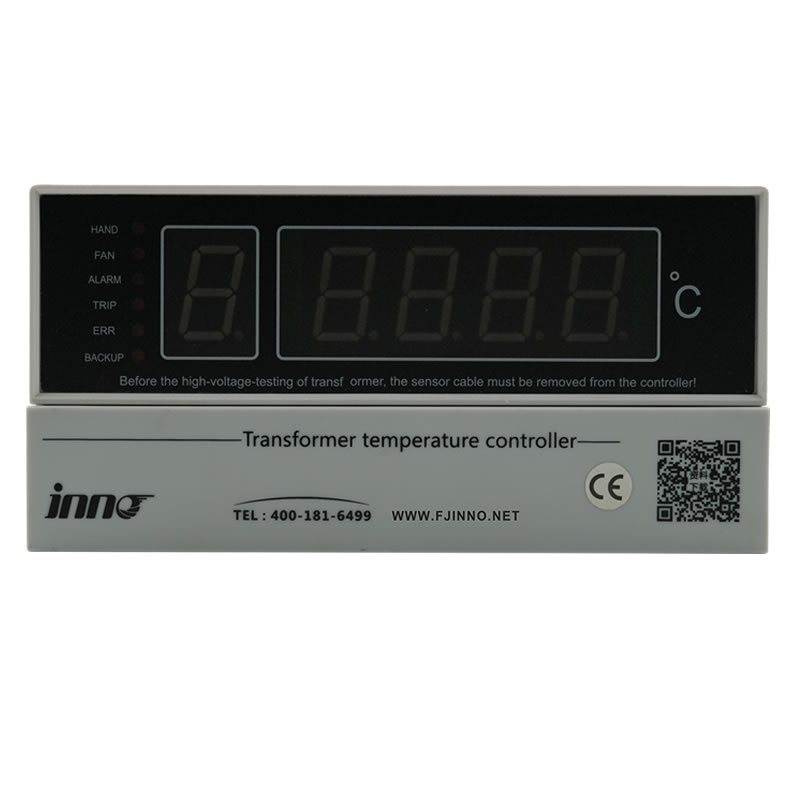
A transformer temperature humidity monitoring system is a continuous, Bir güç transformatörünün içindeki ve çevresindeki termal ve nem koşullarını aynı anda ölçen gerçek zamanlı enstrümantasyon çözümü. Sargı sıcak nokta sıcaklığını izler, top-oil temperature, trafo odası ortam sıcaklığı, ve bağıl nem — tüm okumalar, verileri kaydeden merkezi bir izleme ünitesine beslenir, alarmları tetikler, ve koruyucu yanıtları otomatik olarak etkinleştirir.
Bu tür bir sistemin tanımlayıcı özelliği çift odaklı olmasıdır.. Sıcaklık ve nem, transformatör ortamında bağımsız değişkenler değildir; yalıtım düzeyinde doğrudan etkileşime girerler.. Nemli bir ortamda yüksek sıcaklıkta çalışan bir transformatör, selüloz yalıtımını her iki ölçümle de tek başına tahmin edilemeyecek bir oranda bozar.. Her ikisini de aynı anda izleme, her zaman, is the only way to accurately assess insulation condition in service.
Tam bir trafo durumu izleme sistemi typically comprises four layers: sensing elements at the transformer and in the surrounding environment, a local data acquisition unit, a communication link to the site control system or cloud platform, and supervisory software that presents data, trendler, and alarms to operators. Each layer is specified to the electrical environment of the installation — high-voltage substation, industrial distribution room, or outdoor pad-mount transformer — with appropriate insulation ratings, protection classes, ve iletişim protokolleri.
2. Why Transformers Need Simultaneous Thermal and Moisture Surveillance
A power transformer’s operational life is determined primarily by the condition of its cellulose paper insulation. That insulation degrades through two mechanisms that are continuously at work during normal operation: thermal aging and moisture absorption. Understanding how these two mechanisms interact explains why a combined temperature and humidity monitoring approach is more effective than tracking either parameter in isolation.
The Effect of Temperature on Transformer Insulation Life
Transformer insulation aging follows an exponential relationship with temperature — a principle codified in international loading standards. For every 6–8°C rise above the rated hot-spot temperature, the rate of cellulose degradation approximately doubles. This means a transformer operating continuously at 10°C above its design hot-spot temperature loses insulation life at four times the expected rate. Doğrudan, sürekli winding hot-spot temperature monitoring is the only way to detect this condition in real time before it causes irreversible insulation damage.
The Effect of Humidity on Insulation Integrity and Dielectric Strength
Moisture enters transformer insulation through aging of the oil-paper system, through breather degradation, and through condensation cycles during transformer load fluctuations. As moisture content in the paper insulation rises, its dielectric strength falls — increasing the risk of partial discharge, accelerating further cellulose decomposition, and reducing the insulation’s resistance to voltage surges. A transformer room humidity sensor that detects rising relative humidity before moisture migrates into the oil-paper system provides an early-warning window that temperature monitoring alone cannot offer.
The Combined Degradation Effect
When elevated temperature and elevated humidity are present simultaneously, their combined effect on insulation aging is multiplicative, not additive. Hot, moist conditions drive moisture deeper into the paper insulation, accelerate acid formation in the oil, and increase the rate of degree-of-polymerization loss in the cellulose. A transformer temperature and humidity monitoring system captures this interaction by providing a continuous, correlated record of both parameters — enabling insulation life models, load management decisions, and predictive maintenance scheduling that no single-parameter monitoring system can support.
Consequences of Unmonitored Thermal and Moisture Excursions
Transformers that operate without continuous thermal and moisture monitoring are vulnerable to undetected insulation aging events that manifest only when failure is already imminent. The consequences range from unplanned outages and forced derating to insulation breakdown, oil fires, and catastrophic bushing failures. In substation environments where transformer failure triggers cascading supply disruptions, the business and safety case for continuous real-time transformer condition monitoring is unambiguous.
3. What a Transformer Thermal and Humidity Monitor Actually Measures
A fully specified transformer temperature humidity monitoring system acquires readings across several distinct measurement points, each targeting a different aspect of transformer thermal and moisture condition:
- Sargı sıcak nokta sıcaklığı — the highest temperature within the active winding, measured directly with a fiber optic probe embedded in the coil during manufacture or inserted through an access port
- Üst yağ sıcaklığı — the temperature of the transformer oil at the top of the tank, indicative of overall thermal loading and cooling system performance
- Transformer room ambient temperature — the dry-bulb air temperature inside the transformer enclosure or switchroom, which affects cooling efficiency and condensation risk
- Relative humidity inside the transformer room — the moisture content of the air surrounding the transformer, critical for assessing condensation risk and breathing system performance
- Moisture-in-oil content (isteğe bağlı) — dissolved water concentration in the transformer oil, providing a direct measure of insulation moisture migration
- Çekirdek sıcaklığı (isteğe bağlı) — iron core temperature for large power transformers where core losses are a significant heat source
The combination of winding hot-spot, yağ sıcaklığı, ortam sıcaklığı, and relative humidity gives operators a complete thermal and moisture picture of the transformer at all times — not a snapshot taken during a maintenance visit, ancak her çalışma saatinin sürekli olarak güncellenen bir kaydı.
4. Sensing Technologies: How Winding Temperature and Humidity Are Measured
Sargıda Sıcak Nokta Tespiti için Floresan Fiber Optik Sensörler
Canlı bir yüksek gerilim transformatöründe doğrudan sargı sıcaklığı ölçümü temel bir zorluk teşkil eder: sensör onlarca veya yüzlerce kilovoltta enerjilendirilebilecek sargılarla temas halinde çalışmalıdır, dielektrik yağla dolu bir tankın içinde, güçlü bir alternatif manyetik alanda. Hiçbir geleneksel elektronik sensör bu üç gereksinimin tamamını aynı anda karşılayamaz.
The floresan fiber optik sıcaklık sensörü bu sorunu tamamen çözüyor. Algılama probu tamamen dielektriktir; yüksek gerilim sargısından izleme cihazına kadar hiçbir metalik iletken geçmez. Ölçüm prensibi optiktir: Prob ucundaki bir fosfor ucu, floresans bozunma süresindeki değişiklikler yoluyla sıcaklığa yanıt verir, and the signal travels back to the instrument as light through a glass fiber. The probe is unaffected by the transformer’s magnetic field, generates no electrical interference within the tank, and can be installed directly on winding conductors at any voltage level without additional isolation hardware.
Çünkü fiber optic winding temperature probe measures the actual hot-spot location — not an indirect oil-temperature approximation — it provides the most accurate and most directly useful input for insulation life calculations and dynamic thermal loading decisions.
Integrated Temperature Humidity Sensors for Ambient Monitoring
Transformer room ambient conditions are monitored by combined temperature and humidity sensors that use capacitive polymer humidity elements paired with precision NTC thermistors or PT100 resistance temperature detectors. These sensors are housed in radiation-shielded enclosures with filtered ventilation to prevent contamination while ensuring that readings reflect true ambient conditions rather than localized heat from the transformer surface.
For outdoor transformer installations and pad-mount units, sensors are specified with IP65 or IP67 protection ratings and UV-resistant housings to withstand direct weathering over multi-year deployment periods without recalibration.
Moisture-in-Oil Sensors for Insulation Moisture Assessment
Where a more direct measure of insulation moisture condition is required, BİR oil moisture sensor can be added to the monitoring system. These devices measure the water activity or dissolved water concentration in the transformer oil — a parameter that equilibrates with the moisture content of the paper insulation and therefore provides an indirect but continuous measure of insulation moisture level without requiring oil sampling or laboratory analysis.
5. Sensor Technology Comparison for Transformer Condition Monitoring

| Parametre | Fluorescence Fiber Optic Probe | Capacitive Humidity + NTC/PT100 Sensor | Oil Moisture Sensor |
|---|---|---|---|
| Measurement target | Sargı sıcak noktası / yağ sıcaklığı | Room ambient temperature and relative humidity | Dissolved water in transformer oil |
| Algılama prensibi | Fluorescence lifetime decay | Capacitive polymer (Sağ) + rezistans (T) | Water activity equilibrium |
| Sıcaklık aralığı | −40°C to +260°C | Typically −40°C to +85°C | 0°C ila +100°C (yağ sıcaklığı) |
| Humidity range | Yok | 0–100% RH | 0–100% water activity |
| Elektrik yalıtımı | Fully dielectric — >100 kV rated | Standard industrial isolation | Standard industrial isolation |
| EMI bağışıklığı | Complete — no metallic sensing path | Good with shielded cable | Good with shielded cable |
| Installation location | Directly on winding / in oil tank | Transformer room wall / muhafaza | Inline with oil circuit or sampling valve |
| Kurulum yöntemi | Embedded during winding or inserted via access port | Wall-mount with radiation shield | Flanged inline fitting or sampling port |
| Protection rating | IP67 (sonda); IP54+ (instrument) | IP65 / IP67 (dış mekan) | IP65 / IP67 |
| İletişim | RS485 (via transmitter) | RS485 / 4–20 mA | RS485 / 4–20 mA |
| Bakım gereksinimi | None under normal conditions | Periodic filter cleaning; sensor replacement at end of rated life | Annual validation recommended |
| Best suited for | Direct winding and oil thermal monitoring in HV transformers | Continuous ambient condition tracking in transformer rooms | Insulation moisture condition assessment |
6. Sistem Mimarisi, İletişim, and Control Integration
Local Data Acquisition and Signal Conditioning
All sensors in a trafo izleme sistemi feed into a local acquisition unit — a DIN-rail or panel-mount module that conditions analog signals, polls digital sensors, and presents a unified data stream to the communication layer. For fluorescence fiber optic probes, the acquisition unit doubles as the optical interrogator: it generates the excitation light pulse, measures the fluorescence decay time, and converts the result to a calibrated temperature value before transmitting it over the network.
Local acquisition units are specified with the protection class and operating temperature range of the installation environment. Units destined for outdoor kiosk mounting or underground switchrooms are rated to wider temperature and humidity extremes than those installed in climate-controlled control buildings.
Wired and Wireless Communication Options
The standard communication interface for transformer temperature and humidity data transmission is RS485 with Modbus RTU — a proven, noise-immune protocol that operates reliably in the electrically demanding environment of a substation. For installations where cable routing is impractical — rural transformer stations, overhead-line distribution transformers, or temporary monitoring deployments — wireless communication over 4G LTE, LoRaWAN, or NB-IoT provides an equally capable alternative without the cost and disruption of cable infrastructure.
SCADA, DCS, and Substation Automation Integration
A trafo durumu izleme sistemi does not operate in isolation — its value multiplies when its data feeds into the site’s existing supervisory infrastructure. Standard Modbus RTU output makes integration with SCADA platforms, distribution management systems, and IEC 61850-compliant substation automation systems straightforward. Operatörler, transformatör termal ve nem durumunu koruma röleleriyle aynı ekranlarda görür, devre kesici pozisyonları, ve yük ölçümleri — özel izleme terminalleri veya paralel ekran sistemleri olmadan.
Bulut Tabanlı ve Yerel Dağıtım Modları
Geniş bir coğrafi alanda birden fazla trafo sahasını yöneten varlık sahipleri için, bulut tabanlı uzaktan trafo termal izleme Tek bir web portalından filo düzeyinde görünürlük sağlar. Historical trends, alarm kayıtları, ve yalıtım ömrü tüketim tahminlerine internet bağlantısı olan her yerden ulaşılabilir. Sıkı veri güvenliği gereksinimleri olan siteler için, aynı işlevsellik, harici ağ bağımlılığı olmayan, yerel olarak barındırılan bir dağıtımda da mevcuttur.
7. Alarm Logic, Protective Interlocks, and Automated Cooling Control
Kademeli Sıcaklık Alarm Eşikleri
İyi yapılandırılmış transformer winding temperature monitoring system implements at least two alarm tiers for each temperature measurement point. The first tier — the warning alarm — alerts operators to a thermal condition that warrants attention but does not yet require immediate load reduction. The second tier — the high alarm or trip threshold — triggers an automatic protective response. Setting these thresholds requires knowledge of the transformer’s rated hot-spot temperature, yalıtım sınıfı, and cooling system capacity; the monitoring system provides the data to validate and refine these settings over time based on actual operating history.
Humidity Alarm and Dew Point Monitoring
Relative humidity alarms in transformer rooms are typically set at 70–80% RH as a warning level and 90% RH as a critical level, though the appropriate thresholds depend on the ambient temperature and the transformer’s breathing system design. More precisely, dew point monitoring — calculated from simultaneous temperature and humidity measurements — identifies the specific condition at which condensation will form on transformer surfaces and bushings. A dew point alarm provides earlier and more physically meaningful warning than a relative humidity threshold alone.
Automated Cooling and Dehumidification Interlocks
The alarm outputs of a transformer temperature humidity monitoring system can be wired directly to cooling system contactors and dehumidifier controls. When winding temperature exceeds the warning threshold, the system can automatically switch the transformer from natural cooling (ONAN) to forced-air cooling (AÇIK KAPALI) operatör müdahalesi olmadan — en yüksek sıcak nokta sıcaklığını azaltır ve yalıtım ömrünü uzatır. Bağıl nem veya çiğlenme noktası eşiğini aştığında, sistem, transformatör yüzeyine ulaşmadan önce yoğuşmayı önlemek için oda nem alma cihazını veya mahfaza ısıtıcısını etkinleştirir.
Veri Kaydı ve Yalıtım Ömrü Takibi
Her sıcaklık ve nem okuması zaman damgalı olarak sistemin kalıcı belleğinde saklanır ve denetim platformuna iletilir.. Bu sürekli geçmiş kayıt IEC'yi destekler 60076-7 thermal aging calculations, Varlık yöneticilerinin bakım planlamasını bilgilendirmek için kullanabileceği birikmiş yalıtım ömrü tüketimi rakamının sağlanması, yükleme kararları, ve sürekli izleme altında her bir transformatör için kullanım ömrü sonu planlaması.
8. Kurulum, Probe Placement, and Field Deployment Guidelines
Transformatör Sargılarında Fiber Optik Prob Konumlandırması
The accuracy and relevance of winding hot-spot measurements depend directly on probe placement. Yeni transformatörler için, fiber optik sıcaklık probları are embedded in the winding during manufacture — positioned at the location of predicted maximum temperature based on thermal finite-element analysis of the specific design. Hizmet içi transformatörler için, probes can be introduced through oil-fill valves or dedicated access ports, and positioned against winding conductors using flexible probe guide assemblies designed for retrofit installation without tank draining.
Multiple probes are typically deployed — one per winding in a three-winding transformer, plus one in the top oil — to ensure that the hottest point in each winding is captured regardless of load distribution between phases and windings.
Humidity Sensor Location and Radiation Shielding
Ambient transformer room humidity sensors must be positioned to measure representative air conditions rather than localized microenvironments near heat sources or cold walls. Recommended placement is at mid-height on an interior wall, away from direct air supply vents, transformer cooling surfaces, and external walls subject to solar gain. A radiation shield — a multi-plate aspirated housing — prevents the sensor from responding to radiant heat from the transformer body while allowing free air circulation across the sensing element.
Protection Class and Hazardous Area Considerations
Transformer installations in petrochemical plants, mining sites, and offshore platforms require monitoring equipment rated for the applicable hazardous area zone classification. All sensing and acquisition components deployed in these environments must carry the appropriate ATEX, IECEx, or national equivalent certification. The fully passive nature of fluorescence fiber optic probes — with no electrical energy at the sensing point — makes them inherently compatible with Zone 1 ve Bölge 2 hazardous area installations for the probe itself; acquisition units located outside the hazardous area require standard industrial enclosure ratings.
9. Industry Applications and Transformer Types Covered
Grid Substations and Transmission Transformers
High-voltage transmission transformers — 110 kV, 220 kV, 500 kV — represent the highest capital value and most critical reliability assets in the power grid. Sürekli transmission transformer temperature and humidity monitoring provides the data needed to operate these assets at maximum permissible loading without exceeding insulation life limits, and to detect developing thermal faults before they propagate to failure.
Industrial Distribution Transformers and Factory Power Rooms
Industrial facilities with large motor loads, değişken frekanslı sürücüler, or arc furnaces subject their distribution transformers to highly variable and often demanding thermal cycles. A real-time thermal monitoring system for industrial transformers quantifies the actual thermal stress experienced by each unit under production conditions, enabling maintenance teams to schedule inspection intervals based on measured insulation condition rather than calendar time.
Renewable Energy Step-Up Transformers
Wind turbine transformers and solar farm step-up transformers operate in outdoor environments with wide diurnal and seasonal temperature swings, often in humid coastal or high-altitude locations. Continuous temperature and humidity surveillance for these assets is particularly valuable because physical access for manual inspection is difficult, downtime is commercially costly, and the thermal environment is more variable than in conventional grid substations.
Traction Transformers in Rail and Metro Systems
Traction transformers in railway substations and onboard rolling stock operate under heavy cyclic loading synchronized with train arrival patterns. Sürekli traction transformer thermal monitoring supports dynamic load management — holding peak winding temperature within safe limits during rush-hour loading peaks while allowing higher power throughput during off-peak periods.
Data Center and UPS Transformers
Transformers in data center power distribution chains must maintain continuous availability. A temperature humidity monitoring system integrated into the data center’s building management infrastructure provides the same continuous thermal and moisture visibility as in any industrial installation, with the additional benefit of seamless integration into the BMS alarm matrix and capacity planning tools already in use by the facility operations team.
10. How to Specify the Right Transformer Monitoring System
Define the Measurement Points and Sensor Types Required
Start from the transformer’s design and operating environment. A new oil-filled power transformer with factory-installed winding probes requires a different specification than a retrofit monitoring installation on an existing dry-type distribution transformer in an industrial switchroom. List each measurement point — winding phases, yağ sıcaklığı, ortam sıcaklığı, relative humidity — and confirm the physical access and installation method available for each.
Match Sensing Technology to the Electrical Environment
For any measurement point inside or in close proximity to a live high-voltage winding, specify a fiber optik sıcaklık sensörü with a verified dielectric rating appropriate to the system voltage. For ambient room measurements, standard industrial temperature and humidity sensors with appropriate protection class for the enclosure type are suitable. Do not use metallic thermocouple or RTD probes in locations where they create a conductive path between high-voltage components and the monitoring instrument enclosure.
Select the Communication Architecture
Where cable infrastructure to a substation control building already exists, RS485 with Modbus RTU provides the simplest and most reliable integration path. Where cable installation is impractical or the site is unmanned and remotely located, specify a 4G or LoRaWAN wireless gateway. Confirm that the supervisory platform at the receiving end — SCADA, BMS, or DMS — supports the chosen protocol natively or through an available communication driver.
Confirm Certification and Standards Compliance
Specify certification requirements early. Hazardous area installations require ATEX or IECEx marking on field-mounted components. Grid-connected substation installations may require compliance with IEC 60076 (güç transformatörleri), IEC 61850 (trafo merkezi iletişimi), or national grid operator standards. Request certification documentation from the manufacturer before procurement to avoid delays during commissioning and inspection.
Combined System Deployment for Large Transformer Banks
For transformer banks with multiple units — common in large grid substations and industrial power stations — a single acquisition network can serve all transformers simultaneously. Each transformer’s fiber optic probes and room sensors connect to a shared RS485 bus, and the supervisory platform displays comparative thermal loading and humidity data across all units in a single view. This architecture minimizes hardware cost and simplifies operator training while providing complete continuous coverage of the entire transformer installation.
11. Sıkça Sorulan Sorular
1. Çeyrek: Why is it important to monitor both temperature and humidity in a transformer installation?
Temperature and humidity act together on transformer insulation. Elevated temperature accelerates cellulose aging; elevated humidity reduces dielectric strength and accelerates moisture migration into the paper insulation. When both are present simultaneously, insulation degradation is multiplicative. A combined transformer temperature and humidity monitoring system captures this interaction, providing the data needed for accurate insulation life assessment and timely protective action — which neither parameter monitored in isolation can deliver.
2. Çeyrek: Can fiber optic temperature sensors be installed on a transformer that is already in service?
Evet. Retrofit fiber optic temperature probe installations are carried out through existing oil-fill ports or dedicated access fittings without requiring full oil drainage or tank entry in most transformer designs. Flexible probe guide systems allow the sensing tip to be positioned against a winding conductor from the outside of the tank. The retrofit process is typically completed during a planned outage window without requiring the transformer to be removed from service for an extended period.
3. Çeyrek: What is the difference between top-oil temperature monitoring and direct winding hot-spot monitoring?
Top-oil temperature is a bulk measurement of the oil at the top of the transformer tank — it responds slowly to changes in winding loading and can underestimate the actual hot-spot temperature by 20–30°C under rapid load increase conditions. Doğrudan winding hot-spot temperature monitoring with a fiber optic probe measures the actual temperature at the hottest point in the winding, providing a faster, more accurate signal for thermal protection and insulation life calculations. IEC 60076-7 explicitly recommends direct hot-spot measurement over oil temperature estimation for accurate insulation aging models.
4. Çeyrek: What relative humidity level should trigger an alarm in a transformer room?
A typical configuration sets a warning alarm at 70–75% relative humidity and a critical alarm at 85–90% RH. Fakat, the most physically meaningful threshold is the çiğ noktası sıcaklığı — calculated from simultaneous dry-bulb temperature and relative humidity measurements — because condensation forms when the surface temperature of transformer components falls below the dew point, regardless of the absolute RH value. A monitoring system that calculates and alarms on dew point provides earlier and more actionable warning than an RH threshold alone.
S5: How does the monitoring system activate the cooling fans or dehumidifier automatically?
The transformer temperature humidity monitoring unit includes relay or transistor alarm outputs that are wired directly to the control circuits of cooling fans, yağ pompaları, and dehumidifiers. When a temperature or humidity measurement crosses a configured threshold, the corresponding output activates within seconds — starting forced cooling or dehumidification without requiring operator intervention. The activation and deactivation events are logged with timestamps for maintenance records.
S6: Is the fluorescence fiber optic probe affected by the transformer’s magnetic field?
HAYIR. The fluorescence fiber optic temperature probe operates entirely on optical principles — light in, light out. There are no magnetic or electrically conductive elements in the sensing path, so the alternating magnetic field inside a power transformer has no effect on measurement accuracy. This is a fundamental advantage of optical sensing over any metallic thermocouple or RTD probe, both of which are susceptible to magnetically induced voltage errors in transformer environments.
S7: Can the monitoring system communicate with an existing substation SCADA platform?
Evet. The standard RS485 / Modbus RTU output of the transformer monitoring acquisition unit is natively supported by virtually all SCADA, DCS, and substation automation platforms in current use. For IEC 61850-compliant substations, a protocol gateway converts Modbus RTU to IEC 61850 GOOSE or MMS without modifying the monitoring hardware. Integration requires only the Modbus register map — supplied with the product — and standard SCADA configuration work.
S8: How many transformers can one monitoring system cover simultaneously?
A single RS485 network can address up to 247 Modbus slave devices — sufficient to cover an entire transformer substation with winding probes, yağ sıcaklık sensörleri, and room humidity sensors on multiple transformer units from a single master acquisition unit. For very large installations, multiple RS485 segments can be aggregated at the supervisory software level, providing a unified monitoring view across any number of transformers without practical upper limit.
S9: What maintenance does a transformer temperature humidity monitoring system require?
Fluorescence fiber optic probes normal çalışma koşullarında planlı bakım gerektirmez; nominal ömürleri aşılmıştır 25 yıllar. Oda temperature and humidity sensors periyodik filtre muayenesi ve temizliğinden yararlanın, ve sensör elemanları, üreticinin belirttiği kalibrasyon aralığına göre değiştirilmelidir; kurulum ortamının kirlilik seviyesine bağlı olarak genellikle her iki ila beş yılda bir. Edinme ünitesi ve iletişim donanımı, ürün yazılımı güncellemeleri ve bir referans cihaza göre periyodik işlevsellik doğrulaması dışında rutin bir bakım gerektirmez.
S10: Mevcut bir sıcaklık ve nem izleme kurulumuna yağdaki nem izlemeyi eklemek mümkün müdür??
Evet. Yağ nem sensörleri are available as add-on modules that connect to the existing RS485 network and report dissolved water concentration or water activity in the transformer oil through the same supervisory platform already in use for temperature and humidity data. Installation requires access to the transformer oil circuit through a sampling valve or inline fitting — a straightforward field modification that can be carried out during a routine maintenance outage.
12. Explore Our Transformer Monitoring Solutions
Fuzhou İnovasyon Elektronik Bilimi&Tech Co., Ltd.. tasarladı ve üretti fiber optik sıcaklık izleme sistemleri Ve transformer condition monitoring solutions o zamandan beri 2011. Our product range covers fluorescence fiber optic winding temperature probes, multi-channel fiber optic temperature transmitters, industrial temperature and humidity sensors, ve tamamlandı transformer temperature humidity monitoring systems enerji tesisleri için, endüstriyel tesisler, yenilenebilir enerji, and rail infrastructure applications worldwide.
Contact our engineering team to request a product datasheet, discuss a site-specific specification, or arrange an application consultation:
- Web sitesi: www.fjinno.net
- E-posta: web@fjinno.net
- WhatsApp / WeChat (Çin) / Telefon: +86 135 9907 0393
- QQ: 3408968340
- Adres: Liandong U Tahıl Ağı Endüstri Parkı, No.12 Xingye Batı Yolu, Fuzhou, Fujian, Çin
Sorumluluk reddi beyanı: The technical information and specifications stated in this article are provided for general informational purposes only and reflect standard product parameters at the time of publication. Actual system performance may vary depending on installation conditions, trafo tasarımı, çevresel faktörler, ve başvuru koşulları. All specifications are subject to change without notice. This content does not constitute a warranty, binding technical commitment, or engineering design recommendation for any specific installation. Always consult a qualified engineer and refer to applicable standards and manufacturer documentation for project-specific design and safety decisions.

Fiber optik sıcaklık sensörü, Akıllı izleme sistemi, Çin'de dağıtılmış fiber optik üreticisi
 |
 |
 |