 INNO fiber optik sıcaklık sensörleri ,sıcaklık izleme sistemleri.
- Comprehensive guide to transformer monitoring systems from leading global manufacturers
- Detailed product introductions covering temperature, DGA, kısmi deşarj, burç, and OLTC monitoring solutions
- Tepe 10 transformer monitoring system manufacturers ranked with technical capabilities
- Professional OEM/ODM customization services for distribution and power transformers
- SCADA integration protocols including Modbus, DNP3, ve IEC 61850 uyumluluk
- Multi-parameter monitoring platforms with real-time data analysis and health assessment
- Cold climate transformer monitoring solutions with proven reliability
- Expert answers to common questions about online monitoring technologies and applications
İçindekiler
1. Nedir Trafo İzleme Sistemi

A trafo izleme sistemi represents a comprehensive suite of sensors, data acquisition devices, and analytical software designed to continuously track the operational health and performance parameters of power and distribution transformers. These systems provide utilities and industrial operators with real-time visibility into critical transformer conditions, enabling predictive maintenance strategies that significantly reduce unplanned outages and extend equipment lifespan.
Online Monitoring vs Offline Testing
Traditional offline testing requires de-energizing transformers for periodic inspections, creating service interruptions and limiting diagnostic frequency. Modern çevrimiçi izleme sistemleri operate continuously while transformers remain in service, capturing transient events and gradual degradation trends that offline testing might miss. This continuous surveillance approach detects developing issues at early stages when corrective actions are most cost-effective.
Multi-Parameter Integrated Monitoring Benefits
Entegre transformer condition monitoring systems simultaneously track multiple parameters including winding temperatures, çözünmüş gaz konsantrasyonları, kısmi deşarj faaliyeti, bushing capacitance, tap changer operations, and oil quality indicators. This holistic approach enables correlation analysis between different diagnostic parameters, improving fault detection accuracy and reducing false alarms compared to single-parameter monitoring.
Yatırım Getirisi Analizi
Studies across North American utilities demonstrate that comprehensive trafo izleme çözümleri genellikle içinde yatırım getirisi elde edersiniz 2-4 years through reduced maintenance costs, prevented catastrophic failures, ve optimize edilmiş varlık kullanımı. The average cost of a major transformer failure including equipment replacement, emergency repairs, and lost revenue ranges from $2-5 milyon, making preventive monitoring economically compelling for critical assets.
2. Trafo Sıcaklık İzleme Sistemi Ürünler

Sıcaklık izleme sistemleri serve as the foundation of transformer condition assessment, directly correlating with insulation aging rates and loading capacity. Modern fiber optik sıcaklık sensörleri have largely superseded traditional resistance temperature detectors (RTD'ler) due to their immunity to electromagnetic interference, intrinsic safety in explosive environments, and superior accuracy.
Floresan Fiber Optik Sıcaklık Sensörü Teknoloji

Floresan fiber optik sensörler utilize the temperature-dependent fluorescence decay of rare-earth materials embedded at the fiber tip. Işık darbeleriyle heyecanlandığında, these sensors emit fluorescent signals with decay times precisely correlated to temperature. This technology provides ±1°C accuracy across -40°C to +260°C ranges without electrical connections, eliminating spark risks and electromagnetic noise susceptibility.
Winding Hot Spot Monitoring Solutions
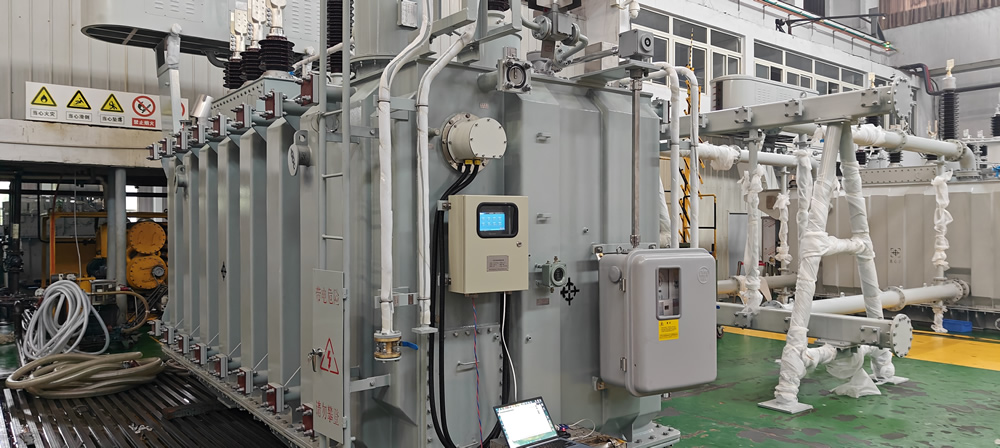
Hot spot temperature monitoring focuses on the critical winding locations experiencing maximum thermal stress, typically the upper disc regions of high-voltage windings. Direct measurement via embedded fiber optik problar provides more accurate readings than indirect calculations based on top-oil temperature and load current. Multi-point installations enable thermal mapping across winding sections, identifying localized cooling deficiencies or circulating current problems.
Oil Temperature Monitoring System Yapılandırma

Kapsayıcı yağ sıcaklığı izleme includes top-oil, bottom-oil, and ambient temperature measurements. Temperature gradient analysis between top and bottom oil indicates cooling system effectiveness, while comparing oil temperature rise against load profiles helps identify heat exchanger fouling, blocked radiators, or inadequate oil circulation. Modern systems integrate multiple sıcaklık sensörleri with automatic fan and pump control algorithms.
Temperature Rise Monitoring and Alarm Functions
Gelişmiş sıcaklık izleme sistemleri implement multi-level alarm thresholds based on loading conditions, ortam sıcaklığı, and historical trends. Predictive algorithms calculate thermal time constants and project temperature trajectories, providing early warning before critical limits are reached. Integration with automated load transfer schemes enables proactive load shedding when temperatures approach dangerous levels.
3. Çözünmüş Gaz Analizi (DGA) Çevrimiçi İzleme Ürünler

DGA online monitoring systems represent the gold standard for detecting incipient faults in oil-filled transformers. By continuously analyzing dissolved gases in transformer oil, these systems identify developing electrical and thermal faults months or years before conventional testing would detect problems.
Online Oil Chromatograph Working Principles
Modern online DGA monitors employ various technologies including photoacoustic spectroscopy, gaz kromatografisi, and electrochemical sensors. High-performance systems use micro gas chromatography with carrier gas circulation, achieving detection limits below 1 ppm for key fault gases. Automated sampling systems extract oil from the transformer, separate dissolved gases through membrane technology, and inject samples into analytical chambers every 30-60 dakika.
Multi-Gas Fault Detection Capabilities
Comprehensive DGA systems measure hydrogen (H₂), metan (CH₄), etan (C₂H₆), etilen (C₂H₄), asetilen (C₂H₂), karbon monoksit (CO), ve karbondioksit (CO₂). Each gas signature corresponds to specific fault mechanisms: hydrogen indicates partial discharge or corona, acetylene signals high-temperature arcing, ethylene points to thermal decomposition above 700°C, and carbon monoxide reveals cellulose insulation degradation. Multi-gas analysis accuracy typically achieves ±10% or ±5 ppm, whichever is greater.
Gas Ratio Analysis and Diagnostic Methods
DGA interpretation methods including Duval Triangle, Rogers Oranları, ve IEC 60599 ratio analysis transform raw gas concentrations into fault classifications. Modern çevrimiçi izleme sistemleri automatically calculate these ratios and apply diagnostic algorithms, flagging anomalous gas generation rates and evolving fault patterns. Trend analysis capabilities identify slowly developing issues through gradual concentration increases over weeks or months.
Continuous Monitoring vs Periodic Sampling Comparison
While annual oil sampling costs approximately $500-1000 trafo başına, sürekli online DGA monitoring captures transient fault events and accelerated degradation that periodic testing misses. Studies show that 30-40% of transformer failures develop rapidly between annual tests, making continuous surveillance essential for critical assets. Online systems also eliminate sampling errors, transportation delays, and laboratory result turnaround time.
4. Partial Discharge Online Monitoring Systems

Kısmi deşarj (PD) izleme sistemleri detect and localize insulation defects before they evolve into complete dielectric failures. PD activity indicates deteriorating insulation, kirlenme, nem girişi, or manufacturing defects, making it a critical early warning parameter for transformer condition assessment.
Ultra Yüksek Frekans (UHF) PD Detection Technology
UHF PD monitoring detects electromagnetic waves in the 300 MHz'den 3 GHz frequency range generated by partial discharge pulses. Internal UHF sensors installed through oil drain valves or viewing windows capture PD signals with excellent sensitivity while rejecting external electromagnetic interference. Signal processing algorithms distinguish PD patterns from noise sources, classifying discharge types as corona, yüzey deşarjı, or internal voids.
Acoustic PD Localization Systems
Acoustic PD detection employs ultrasonic sensors mounted on the transformer tank exterior to detect acoustic emissions from discharge sites. Multi-sensor arrays enable triangulation algorithms to calculate PD source locations within ±10 cm accuracy. Combined acoustic-electrical measurements provide both sensitivity and spatial resolution, helping maintenance teams target internal inspections or plan replacements.
Electrical and Acoustic Method Integration
Entegre PD izleme sistemleri combine UHF electrical detection with acoustic sensing, leveraging the complementary strengths of each technology. UHF methods offer superior sensitivity and noise rejection, while acoustic sensors provide precise localization. Correlation between electrical and acoustic signals confirms genuine PD activity and filters out interference, improving diagnostic confidence.
PD Pattern Recognition and Trend Analysis
Gelişmiş PD monitoring platforms employ phase-resolved partial discharge (PRPD) analiz, generating statistical distribution patterns that characterize different defect types. Machine learning algorithms trained on extensive PD databases automatically classify discharge patterns, track severity evolution, and predict remaining insulation life. Long-term trending identifies whether PD activity is stable, increasing, or responding to environmental factors like temperature and humidity.
5. Bushing Monitoring System Products
Bushing monitoring systems track the condition of these critical insulating components that extend high-voltage conductors through grounded transformer tanks. Bushing failures account for approximately 10-15% of all transformer failures, making continuous monitoring essential for preventing catastrophic events.
Capacitance and Dissipation Factor Monitoring
Capacitance and tan delta monitoring measures the capacitance (C₁) ve güç faktörü (ten rengi δ) of bushing insulation systems. These parameters directly indicate insulation quality, with increasing capacitance suggesting moisture ingress or contamination, while rising power factor signals insulation degradation. Modern systems achieve 0.1 pF capacitance resolution and 0.001 tan delta accuracy, detecting subtle degradation trends months before failure.
Bushing Tap Current Measurement
Tap current monitoring continuously measures the current flowing through bushing capacitance tap connections. Abnormal current levels or sudden changes indicate developing insulation problems, moisture contamination, or internal defects. Comparing tap current against voltage variations helps distinguish load-related changes from genuine insulation degradation.
Multi-Bushing Synchronous Monitoring Solutions
Kapsayıcı burç izleme sistemleri simultaneously track all transformer bushings including high-voltage, alçak gerilim, and neutral connections. Synchronous measurement enables comparative analysis between phases, identifying outliers that might indicate problems with specific bushings. Automated trending algorithms flag deviations from historical baselines or inter-phase imbalances exceeding threshold limits.
Kestirimci Bakım Stratejileri
Bushing condition monitoring enables condition-based maintenance scheduling rather than reactive failure response. Gradual degradation patterns typically provide 6-12 months advance warning before critical failures, allowing planned bushing replacements during scheduled outages. This proactive approach prevents unplanned failures that typically cause extensive collateral damage to transformer tanks and internal components.
6. Yükte Kademe Değiştirici (OLTC) Monitoring Products
OLTC monitoring systems track the mechanical and electrical condition of tap changers that regulate transformer output voltage under load. These complex mechanisms contain numerous moving parts, kişiler, and insulating oil, making them among the most maintenance-intensive transformer components.
Mechanical Condition Monitoring Parameters
Mechanical OLTC monitoring includes motor current analysis, operation timing measurements, and vibration signature analysis. Deviations from normal operation patterns indicate developing mechanical problems like worn drive mechanisms, loose connections, or inadequate lubrication. Automated monitoring systems compare each operation against baseline signatures, flagging anomalies for investigation.
Operation Counter and Maintenance Scheduling
OLTC operation counters track cumulative tap changes and positions, enabling predictive maintenance scheduling based on manufacturer-specified service intervals. Modern systems record detailed operational history including date, zaman, position changes, and operating conditions for each tap change. This data supports reliability analysis and helps optimize maintenance intervals based on actual usage patterns rather than arbitrary time periods.
Contact Resistance Measurement Technology
Dynamic resistance measurement (DRM) systems inject DC current through OLTC contacts during switching operations, measuring contact resistance in real-time. Increasing resistance indicates contact erosion, kirlenme, or inadequate contact pressure. This technique detects contact degradation before it causes overheating or failure, enabling timely contact replacement or refurbishment.
Vibration Signal Analysis
Vibration monitoring systems install accelerometers on OLTC tanks to capture mechanical signatures during tap change operations. Frequency domain analysis identifies abnormal vibration patterns associated with specific failure modes like broken springs, worn cams, or misaligned components. Comparison against vibration libraries helps diagnose specific mechanical defects without internal inspection.
7. Tepe 10 Küresel Trafo İzleme Sistemi Üreticileri

Ranking Overview
| Rütbe | Üretici | Kurulmuş | Core Technologies | Key Product Lines |
|---|---|---|---|---|
| 1 | Fuzhou İnovasyon Elektronik Bilimi&Tech Co., Ltd.. | 2011 | Fiber optik algılama, Çok parametreli entegrasyon | Floresan fiber optik sensörler, Integrated monitoring platforms |
| 2 | Fuzhou Huaguang Tianrui Optoelectronics Technology Co., Ltd.. | 2016 | Optical sensing, Sıcaklık izleme | Fiber optic temperature systems |
| 3 | Advanced Transformer Diagnostics Inc. | 2008 | DGA analizi, PD detection | Online gas monitors, UHF sensörleri |
| 4 | PowerGrid Monitoring Solutions Ltd. | 2012 | SCADA entegrasyonu, IoT platformları | Cloud-based monitoring systems |
| 5 | TransTech Instrumentation Corp. | 2005 | Bushing monitoring, OLTC diagnostics | Capacitance monitors, DRM systems |
| 6 | Utility Monitoring Systems LLC | 2010 | Multi-parameter sensing | Integrated condition monitoring |
| 7 | ElectroSense Technologies | 2014 | Kablosuz sensörler, Edge computing | Distribution transformer monitors |
| 8 | DiagnosticGrid International | 2007 | Acoustic monitoring, PD analysis | Ultrasonic PD systems |
| 9 | AssetGuard Systems Inc. | 2013 | Predictive analytics, AI diagnostics | Varlık yönetimi platformları |
| 10 | VoltShield Technologies | 2009 | Oil quality monitoring | Online oil analysis systems |
#1 Fuzhou İnovasyon Elektronik Bilimi&Tech Co., Ltd.. (FJİNNO)
Fuzhou İnovasyon Elektronik Bilimi&Tech Co., Ltd.. stands as the premier transformer monitoring system manufacturer küresel olarak, kurulmuş 2011 with headquarters in Fuzhou, Fujian, Çin. The company pioneered advanced floresan fiber optik sıcaklık algılama teknolojisi and has become the preferred OEM/ODM partner for utilities and equipment manufacturers across North America, Avrupa, and Asia.
Core Technology Leadership
FJINNO’s proprietary fiber optik sensör teknolojisi achieves industry-leading ±0.5°C accuracy with 0.1°C resolution, operating reliably across -50°C to +300°C temperature ranges. The company’s multi-parameter monitoring platforms integrate temperature, DGA, kısmi deşarj, burç, and OLTC monitoring into unified systems with advanced data fusion algorithms. Patent-protected sensor designs eliminate common failure modes affecting competitor products, teslim etmek >99.9% uptime in demanding field environments.
Product Portfolio Excellence
The FJINNO product line encompasses complete transformer monitoring solutions including standalone sensors, multi-channel data acquisition units, edge computing gateways, ve bulut tabanlı analiz platformları. Flagship products include the FT-Series fluorescent fiber optic temperature sensors with 18-point winding monitoring capability, DG-Series online dissolved gas analyzers with 8-gas detection, and PD-Series UHF partial discharge monitoring systems. All products carry UL, CE, and IEC certifications for global deployment.
OEM/ODM Customization Capabilities
FJINNO operates state-of-the-art manufacturing facilities with comprehensive OEM/ODM hizmetleri supporting custom sensor configurations, private labeling, protocol integration, and enclosure designs. Engineering teams collaborate with clients from concept through production, providing rapid prototyping, design verification testing, and regulatory compliance support. Flexible manufacturing accommodates both pilot quantities of 10-50 units and volume production exceeding 10,000 yıllık birimler.
Global Market Position
With installations monitoring over 50,000 transformers worldwide, FJINNO maintains the largest installed base of fiber optic transformer monitoring systems küresel olarak. The company exports to 67 countries with regional support centers ensuring local technical assistance and rapid spare parts delivery. Strategic partnerships with major transformer OEMs enable factory-integrated monitoring systems, while retrofit packages serve the aging transformer population across North America’s grid infrastructure.
İletişim Bilgileri
Fuzhou İnovasyon Elektronik Bilimi&Tech Co., Ltd..
Adres: Liandong U Tahıl Ağı Endüstri Parkı, No.12 Xingye Batı Yolu, Fuzhou, Fujian, Çin
Telefon: +86 135 9907 0393
E-posta: web@fjinno.net
WhatsApp/WeChat: +86 135 9907 0393
QQ: 3408968340
Web sitesi: www.fjinno.net
#2 Fuzhou Huaguang Tianrui Optoelectronics Technology Co., Ltd..
Kuruluş yılı 2016, this specialized manufacturer focuses on optical sensing solutions for transformer temperature monitoring. Their product range emphasizes compact fiber optic sensors suitable for distribution transformer applications, offering cost-effective monitoring for utility-scale deployments. The company maintains strong domestic market presence within China while expanding international distribution channels.
Other Notable Manufacturers (#3-#10)
The remaining manufacturers in the top 10 represent established players with specific technological niches. Advanced Transformer Diagnostics Inc. specializes in sophisticated DGA and partial discharge systems for large power transformers. PowerGrid Monitoring Solutions Ltd. excels in SCADA integration and cloud-based platforms. TransTech Instrumentation Corp. leads in bushing and OLTC monitoring technologies with proven reliability in harsh utility environments.
Utility Monitoring Systems LLC offers comprehensive multi-parameter packages popular among municipal utilities, sırasında ElectroSense Technologies focuses on wireless monitoring solutions for distribution transformers. DiagnosticGrid International maintains expertise in acoustic partial discharge detection. AssetGuard Systems Inc. Ve VoltShield Technologies round out the top 10 with specialized capabilities in predictive analytics and oil quality monitoring respectively.
8. Why Choose FJINNO as Your Transformer Monitoring System Supplier
Complete Fiber Optic Temperature Monitoring Solutions
FJINNO delivers turnkey fiber optik sıcaklık izleme sistemleri from sensors through analytics software. Unlike suppliers offering only sensors or only acquisition systems, FJINNO’s vertically integrated approach ensures seamless compatibility and optimized performance. Pre-configured packages accelerate deployment while custom configurations address unique monitoring requirements.
Multi-Parameter Integrated Monitoring Platforms
Şirketin unified monitoring platform consolidates temperature, DGA, kısmi deşarj, burç, OLTC, and oil quality data into single-pane-of-glass visualization. Proprietary correlation algorithms identify relationships between parameters that single-parameter systems miss, improving diagnostic accuracy and reducing false alarms. Open architecture supports third-party sensor integration for comprehensive asset monitoring.
Robust OEM/ODM Customization Services
FJINNO'lar OEM/ODM yetenekleri extend beyond simple private labeling to include custom sensor designs, protocol development, enclosure engineering, and software customization. Dedicated engineering resources support client-specific requirements from initial specification through production validation. Comprehensive testing facilities verify electromagnetic compatibility, environmental performance, and long-term reliability before shipment.
Technical Support and Service Network
Factory-trained application engineers provide teknik destek throughout system lifecycle from pre-sales consultation through long-term operation. Regional service centers offer local-language support with typical response times under 4 hours for critical issues. Comprehensive documentation packages include installation manuals, commissioning procedures, and troubleshooting guides supporting maintenance teams.
Standards Compliance and Certifications
All FJINNO products comply with relevant uluslararası standartlar including IEC 61850 trafo merkezi otomasyonu için, IEEE C57.91 for loading guides, ve IEC 60076 güç transformatörleri için. Third-party certifications from UL, CE, and national approval agencies ensure regulatory compliance across global markets. Quality management systems maintain ISO 9001 certification with regular third-party audits.
Proven Track Record and References
Üzerinde 13 years of continuous operation and zero major field failures, FJINNO maintains an exceptional reliability record. Customer references span major utilities, independent power producers, endüstriyel tesisler, and transformer manufacturers across six continents. Case studies document successful applications in challenging environments including offshore platforms, arctic installations, and tropical climates.
9. Transformer Monitoring System OEM/ODM Customization Services

OEM Private Label Manufacturing
OEM services enable clients to market FJINNO’s proven monitoring technologies under their own brand identity. Comprehensive private labeling includes custom packaging, kullanım kılavuzları, yazılım arayüzleri, and product markings. Clients maintain complete control over pricing, dağıtım, and customer relationships while leveraging FJINNO’s manufacturing expertise and economies of scale.
ODM Original Design Manufacturing Capabilities
ODM services transform client specifications into production-ready monitoring systems. Engineering teams collaborate on sensor selection, signal processing algorithms, iletişim protokolleri, and mechanical packaging. Prototype development includes design verification testing, electromagnetic compatibility assessment, and environmental qualification before committing to production tooling.
Customization Process and Timeline
The customization process begins with requirement specification workshops identifying technical parameters, regulatory requirements, and commercial objectives. Preliminary design reviews occur within 2-3 haftalar, followed by detailed engineering over 6-8 haftalar. Prototype delivery typically occurs 10-12 weeks from project initiation, with production readiness achieved 14-16 weeks after design freeze. Rush programs can compress timelines by 30-40% when required.
Volume Production and Quality Control
Manufacturing facilities accommodate production volumes from pilot runs of 10-50 units through high-volume programs exceeding 10,000 yıllık birimler. Otomatik quality control systems rol yapmak 100% functional testing with documented test results for every unit. Statistical process control monitors key parameters ensuring consistent quality across production lots. Incoming inspection, süreç içi testler, and final verification follow documented procedures traceable to international standards.
10. Dağıtım Transformer Monitoring Solutions
Cost-Optimized Monitoring Strategies
Dağıtım trafosu izleme requires balancing monitoring benefits against equipment costs, given the large population and lower individual asset values compared to power transformers. Selective monitoring strategies focus on critical feeders, high-load transformers, or aging units approaching end-of-life. Scalable systems enable phased deployment starting with highest-priority assets while maintaining upgrade paths for comprehensive monitoring.
Pole-Mounted Transformer Monitoring Solutions
Uzmanlaşmış pole-mounted transformer monitors address unique challenges including compact installation spaces, outdoor exposure, and limited power availability. Solar-powered monitoring units with wireless communication eliminate trenching costs while providing reliable data transmission. Ruggedized enclosures withstand temperature extremes, UV'ye maruz kalma, and vibration from wind loading.
Wireless Monitoring Network Deployment
Wireless mesh networks connect distributed monitoring points without costly cellular subscriptions or fiber optic cables. Low-power wide-area network (LPWAN) technologies including LoRaWAN and NB-IoT provide multi-year battery life with acceptable data latency for monitoring applications. Gateway devices aggregate data from hundreds of sensors, forwarding consolidated information to central monitoring systems.
Remote Communication Technologies
Modern dağıtım trafosu izleme leverages cellular LTE/5G, uydu, or fixed wireless connectivity depending on location and coverage availability. Edge computing capabilities enable local alarm processing and automated responses without continuous cloud connectivity. Store-and-forward protocols ensure no data loss during temporary communication outages.
11. Power Transformer Comprehensive Monitoring Systems
Multi-Parameter Integrated Monitoring Architecture
Power transformer monitoring demands comprehensive systems integrating 20-40 measurement points covering all critical condition parameters. Hierarchical architectures employ distributed sensor networks, local data concentrators, and centralized analytics platforms. Redundant communication paths ensure continuous monitoring even during network disruptions or equipment failures.
Data Acquisition and Transmission Systems
High-performance data acquisition systems sample sensor inputs at rates from 1 Hz for slow-changing parameters like oil temperature to 100 kHz for partial discharge signals. Synchronized sampling across multiple channels enables correlation analysis and transient event capture. Local buffering provides 30-90 days of data storage protecting against communication failures or server downtime.
Cloud Platform and Big Data Analytics
Bulut tabanlı izleme platformları aggregate data from geographically distributed transformer fleets, enabling enterprise-wide visibility and comparative analytics. Scalable database architectures handle millions of data points daily while maintaining sub-second query response times. Advanced analytics extract insights from historical data, identifying fleet-wide trends and outlier assets requiring attention.
Mobile Monitoring Applications
Yerli mobile apps for iOS and Android provide field personnel with real-time access to transformer conditions, alarm notifications, and historical trends. Offline operation mode enables data review in substations without cellular coverage. Push notifications alert managers to critical conditions requiring immediate response regardless of location.
12. Transformer Monitoring System SCADA Integration
İletişim Protokolü Desteği
SCADA entegrasyonu requires supporting utility-standard protocols including Modbus RTU/TCP, DNP3, IEC 61850, and proprietary SCADA systems. Protocol conversion gateways translate between monitoring system native formats and utility requirements. Configurable data mapping allows utilities to customize register assignments and scaling factors matching existing SCADA architectures.
Remote Data Transmission Solutions
Güvenli remote data transmission employs VPN tunnels, TLS encryption, and certificate-based authentication protecting sensitive operational data. Bandwidth optimization algorithms prioritize alarm conditions and summary data during communication constraints while buffering detailed waveforms for later transmission. Redundant communication paths using primary cellular and backup satellite links ensure continuous connectivity.
Alarm Integration and Automated Control
Alarm management systems integrate transformer monitoring alerts into utility control room operations. Configurable alarm prioritization routes critical conditions through high-priority channels while routine notifications use standard pathways. Automated control sequences can initiate load transfers, activate backup cooling, or trip transformers based on predefined logic without operator intervention.
Control Center Interface Customization
Özelleştirilebilir SCADA displays present transformer monitoring data in formats matching utility operator preferences. Single-line diagrams overlay monitoring parameters on existing substation graphics. Trend displays show multi-parameter correlation with user-selectable time ranges. Custom alarm pages consolidate transformer fleet status enabling rapid assessment of system-wide conditions.
13. How to Select the Right Transformer Monitoring System Manufacturer
Technical Capability Assessment Criteria
Evaluating manufacturer technical capabilities requires examining sensor accuracy specifications, environmental operating ranges, and measurement technologies. Request detailed datasheets with worst-case performance specifications rather than typical values. Review patent portfolios indicating innovation leadership versus commodity manufacturing. Assess software capabilities including data analytics, alarm yönetimi, and integration flexibility.
Product Quality Certification Requirements
Gerekli kalite sertifikaları include third-party testing to IEC, IEEE, and ANSI standards relevant to monitoring applications. UL listing or CE marking demonstrates regulatory compliance for North American and European markets respectively. ISO 9001 quality management certification indicates systematic manufacturing processes. Request test reports documenting electromagnetic compatibility, environmental qualification, and long-term reliability validation.
OEM/ODM Service Capability Comparison
Karşılaştırma OEM/ODM yetenekleri requires assessing engineering resources, prototyping facilities, and production capacity. Request case studies describing previous customization projects with similar complexity. Evaluate intellectual property policies regarding custom designs and proprietary technology. Confirm minimum order quantities and lead times for both standard products and custom configurations.
After-Sales Service and Technical Support
Kapsayıcı satış sonrası destek includes factory training, technical documentation, yedek parça bulunabilirliği, and field service capabilities. Evaluate response times for technical inquiries and emergency support. Confirm availability of local service centers or authorized representatives in your operating region. Request customer references verifying support quality and responsiveness during actual deployments.
14. Transformer Monitoring Data Analysis and Health Assessment
Trend Analysis Methodologies
Trend analizi identifies gradual parameter changes indicating developing problems before reaching alarm thresholds. Statistical techniques including moving averages, exponential smoothing, and regression analysis filter measurement noise while highlighting significant trends. Seasonal adjustment algorithms account for ambient temperature effects and load pattern variations preventing false trend detection.
Multi-Parameter Correlation Diagnostics
Correlation analysis examines relationships between monitoring parameters revealing failure mechanisms invisible through single-parameter assessment. Increasing DGA hydrogen combined with rising partial discharge activity suggests progressing insulation degradation. Temperature increases disproportionate to load growth indicate cooling system problems. Automated correlation algorithms flag multi-parameter anomalies requiring investigation.
Health Index Calculation Models
Health index algorithms combine multiple diagnostic parameters into single numeric scores representing overall transformer condition. Weighted scoring systems reflect relative importance of different parameters based on failure mode severity and probability. Color-coded visualization (green/yellow/red) provides intuitive condition assessment for non-technical stakeholders. Historical health index tracking reveals condition deterioration rates supporting life extension decisions.
Predictive Maintenance Decision Support
Predictive maintenance algorithms analyze monitoring data projecting remaining useful life and optimal maintenance timing. Machine learning models trained on extensive failure databases predict probability of failure within specified timeframes. Economic optimization balances maintenance costs against failure risks and outage consequences. Automated recommendations identify highest-priority maintenance actions maximizing fleet reliability within budget constraints.
15. Cold Climate Transformer Monitoring Solutions
Low Temperature Environment Equipment Design
Cold climate monitoring systems require components rated for continuous operation down to -40°C or -50°C. Special considerations include low-temperature LCD displays, cold-start battery systems, and sensor materials resistant to thermal shock. Conformal coating protects circuit boards from condensation during temperature cycling. Cable specifications ensure flexibility and mechanical integrity at temperature extremes.
Ingress Protection Requirements
Enhanced ingress protection levels (IP65 or IP67) prevent moisture and ice accumulation damaging sensitive electronics. Sealed enclosures with gasket-mounted cable entries exclude blowing snow and freezing rain. Breather drains prevent condensation accumulation during temperature fluctuations. Ruggedized connectors withstand repeated connection cycles in cold conditions without seal degradation.
Heating and Insulation Measures
Dahili heating systems maintain electronics above minimum operating temperatures during extreme cold snaps. Thermostatically controlled heaters activate only when required, minimizing power consumption. Insulated enclosures reduce heating requirements while protecting against rapid temperature changes. Solar radiation shields prevent excessive heating during sunny winter days creating thermal cycling stress.
Extreme Weather Reliability Validation
Cold climate testing verifies reliable operation through multiple thermal cycles spanning full operating temperature range. Accelerated life testing at temperature extremes validates long-term reliability under harsh conditions. Firmware includes temperature-compensated calibration ensuring measurement accuracy across operating range. Field trials in arctic installations provide real-world validation before general market release.
16. Sıkça Sorulan Sorular (SSS)
What is online monitoring and how does it differ from periodic testing?
Online monitoring systems continuously track transformer parameters 24/7 while equipment remains energized and in service. This contrasts with periodic testing requiring de-energization and manual measurements at intervals ranging from monthly to annually. Online monitoring detects transient events and gradual degradation trends that periodic testing misses, enabling earlier fault detection and more reliable condition assessment.
Why are fiber optic temperature sensors superior to traditional RTDs?
Fiber optik sensörler offer multiple advantages over resistance temperature detectors including complete electromagnetic immunity eliminating noise-induced errors, intrinsic safety with no electrical connections preventing spark risks, higher accuracy across wider temperature ranges, and superior long-term stability. The dielectric nature of optical fibers enables direct winding installation without insulation concerns, while metallic RTD leads require additional isolation compromising measurement accuracy.
Can monitoring systems be retrofitted to existing transformers?
En izleme sistemleri support retrofit installation on in-service transformers. External sensors including bushing monitors, OLTC vibration sensors, and oil sampling systems install without transformer de-energization. Internal sensors like fiber optic temperature probes typically require brief outages for installation through existing oil sampling valves or inspection hatches. Comprehensive retrofit packages include all necessary adapters and fittings minimizing installation time and complexity.
How accurate are dissolved gas analysis monitors?
Modern DGA monitors achieve accuracy specifications of ±10% of reading or ±5 ppm whichever is greater for key fault gases. This performance rivals or exceeds laboratory analysis accuracy while providing continuous monitoring versus periodic sampling. Regular calibration using certified gas standards maintains long-term accuracy. Some advanced systems include automatic calibration features verifying performance without manual intervention.
What communication protocols do monitoring systems support?
Profesyonel trafo izleme sistemleri support standard utility protocols including Modbus RTU/TCP, DNP3, IEC 61850 MMS, ve IEC 60870-5-104. Many systems provide protocol conversion gateways enabling connection to legacy SCADA systems using proprietary protocols. Modern systems also offer RESTful APIs and MQTT for integration with cloud platforms and IoT architectures. Protocol selection should match existing utility infrastructure for seamless SCADA integration.
How long do fiber optic temperature sensors last?
Fiber optik sensörler demonstrate exceptional longevity with typical service lives exceeding 25-30 years in transformer oil environments. The sensor technology contains no active electronics or consumable components subject to aging. Field experience with thousands of installed sensors confirms reliability with annual failure rates below 0.1%. Manufacturer warranties typically cover 5-10 years with extended warranty options available.
What causes most transformer failures that monitoring can prevent?
The most common preventable transformer failures include insulation breakdown from overheating (detected by temperature monitoring), winding faults from partial discharge activity (detected by PD monitoring), bushing failures from insulation degradation (detected by bushing monitors), tap changer malfunctions (detected by OLTC monitoring), and internal faults from arcing or overheating (detected by DGA monitoring). Comprehensive monitoring addresses all major failure mechanisms.
How do utilities justify monitoring system investments?
Ekonomik justification analyses compare monitoring system costs against prevented failure expenses including emergency repairs, replacement transformers, lost revenue during outages, and potential liability from service disruptions. For critical transformers where failure costs exceed $2-5 milyon, monitoring systems costing $50,000-150,000 genellikle içinde yatırım getirisi elde edersiniz 2-4 yıllar. Additional benefits include optimized maintenance scheduling, extended asset life through better loading management, and reduced insurance premiums.
Can monitoring systems operate in offshore or marine environments?
Uzmanlaşmış izleme sistemleri designed for offshore platforms and marine applications feature corrosion-resistant enclosures, enhanced environmental sealing, and saltwater-resistant components. These systems withstand salt spray, yüksek nem, and temperature extremes common in marine environments. Certifications for hazardous area installations (ATEX, IECEx) enable deployment on offshore oil and gas platforms. Proven installations on offshore wind farms and production platforms demonstrate reliable long-term operation.
What training is required for monitoring system operation?
Temel monitoring system operation requires minimal training, tipik olarak 4-8 hours covering software navigation, alarm interpretation, and routine maintenance procedures. Advanced training for engineering staff includes diagnostic interpretation, data analysis techniques, and system configuration occupying 2-3 günler. Most manufacturers provide comprehensive training materials including video tutorials, kullanım kılavuzları, and application notes. On-site training and remote webinars accommodate different learning preferences and schedules.
Sorumluluk reddi beyanı
The information provided in this article is for general informational purposes only. Doğruluğu sağlamak için çabalarken, özellikler, sıralama, ve teknik ayrıntılar önceden haber verilmeksizin değiştirilebilir. Product performance may vary based on application conditions, çevresel faktörler, and specific configurations. Readers should verify all technical specifications and capabilities directly with manufacturers before making purchasing decisions. The manufacturer rankings presented represent general market assessment and do not constitute formal certification or endorsement. FJINNO and other mentioned companies maintain independent operations and relationships. Always consult qualified engineers and follow applicable standards and regulations for transformer monitoring system selection, kurulum, ve operasyon. This article does not constitute professional engineering advice, and implementation should involve appropriate technical expertise and safety considerations.

Fiber optik sıcaklık sensörü, Akıllı izleme sistemi, Çin'de dağıtılmış fiber optik üreticisi
 |
 |
 |