 INNO fiber optik sıcaklık sensörleri ,sıcaklık izleme sistemleri.
The selection of a suitable fiber optic temperature sensor should be based on the specific requirements of the application scenario, taking into account factors such as electromagnetic environment, measurement space limitations, tehlikeli ortamlar, measurement points and layout, measurement temperature range, accuracy and resolution requirements, as well as the working type of the probe, to ensure that the sensor can meet the temperature monitoring needs of specific environments.
1. Türleri Fiber Optik Sıcaklık Sensörleri
1.1 Fiber Bragg Izgara Sıcaklık Sensörü
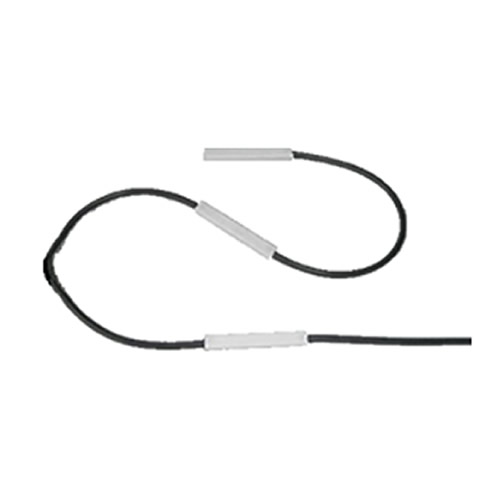
prensip
Fiber Bragg Grating Temperature Sensor uses the photosensitivity of fiber optic materials to form a spatial phase grating in the fiber core for temperature measurement. Örneğin, Bragg fiber grating is a new type of fiber Bragg grating formed by irradiating single-mode germanium doped fiber with ultraviolet light to form a grating technology. After grating, Fiber çekirdeğin kırılma indisi periyodik dağıtım şeritleri gösterir ve Bragg ızgara etkisi yaratır. Temel optik özelliği, rezonans dalga boyuna odaklanan dar bantlı bir optik filtredir., hangisi tatmin eder
Optik denklemler. Uzun periyotlu fiber Bragg ızgarası, ileri iletimin temel modunu ileri iletimin kaplama moduna birleştirir.
karakteristik
Küçük boyut: Genel ışık sıcaklığı sensörleriyle karşılaştırıldığında, Fiber Bragg ızgara sensörleri daha küçük bir boyuta sahiptir, bu da onları bazı alan sınırlı uygulama senaryolarında avantajlı kılar. Örneğin, havacılık alanında, uçakta alanın sınırlı olduğu yerler, küçük boyutlu sensörlerin kurulumu ve kullanımı daha kolaydır.
Algılama miktarı dalga boyu bilgisidir: ışık kaynağı dalgalanmaları gibi faktörlerden etkilenmez, elyaf bükülme kayıpları, bağlantı kayıpları, ve dedektör yaşlanması. Örneğin, in long-distance fiber optic transmission, even if there is a certain degree of bending or connection points in the fiber optic, it will not have a significant impact on the measurement results.
Not sensitive to environmental interference: Dahası, wavelength encoding allows for easy use of wavelength division multiplexing technology, enabling accurate temperature measurement in complex environments. Güç sisteminde, there are complex environmental factors such as electromagnetic interference in places like substations, and fiber Bragg grating temperature sensors can work stably.
Fast measurement speed: The measurement speed of a single optical fiber is generally within tens of milliseconds, and the transmission distance of the fiber can reach more than 10km, which can meet some temperature monitoring requirements with high real-time requirements, such as temperature monitoring of large motors, transformers and other equipment.
1.2 Distributed Fiber Optic Temperature Sensor
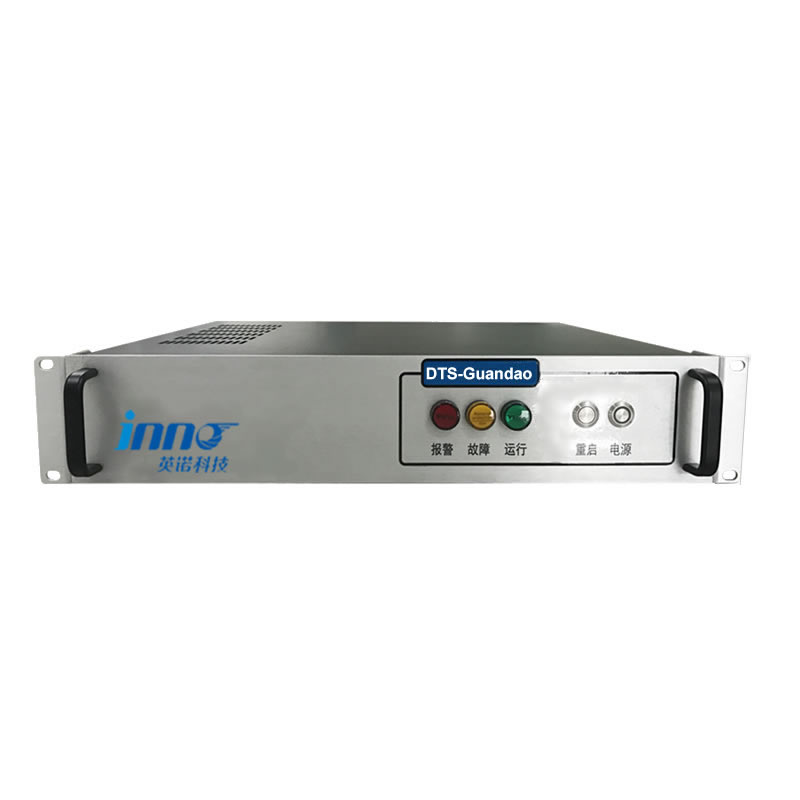
prensip
Mainly based on Raman scattering effect and Optical Time Domain Reflectometer (OTDR) technology to achieve continuous distributed measurement. The reflected light of laser in fiber optic transmission mainly includes Rayleigh scattering, Raman saçılması, and Brillouin scattering. Dağıtılmış fiber optik sensors have gone through the development process from the initial liquid core fiber distributed temperature monitoring system based on backward Rayleigh scattering, to fiber optic temperature measurement system based on optical time-domain Raman scattering, and fiber optic temperature measurement system based on optical frequency-domain Raman scattering.
karakteristik
Distributed measurement capability: It can continuously and real-time measure the temperature at various points along the fiber optic cable within a few kilometers, metreye kadar konumlandırma doğruluğu ve metreye kadar ölçüm doğruluğu ile 1 derece. It is very suitable for applications such as temperature measurement at large-scale intersection points. Örneğin, in oil fields, it can monitor the temperature distribution along oil pipelines and timely detect potential leakage points.
There are many research hotspots: Brillouin scattering time-domain and frequency-domain systems are also hot topics in the field of fiber optic sensors. Several companies have corresponding products, which means that their technology is constantly developing and improving, and the future application prospects are broad.
1.3 Floresan Fiber Optik Sıcaklık Sensörü

prensip
It is a sensor that uses fluorescent materials to undergo changes in fluorescence intensity or wavelength under temperature changes, ve sıcaklık algılamayı sağlamak için sinyalleri optik fiberler aracılığıyla iletir. Tipik bir floresan fiber optik sıcaklık sensörü bir ışık kaynağı içerir, fiber optik, floresan malzeme, ve bir spektral analizör. Işık kaynağı belirli bir dalga boyunda uyarım ışığı üretir, bir fiber optik aracılığıyla floresan malzemeye iletilen. After the fluorescent material absorbs the excitation light, it emits a fluorescence signal with a specific wavelength, which is transmitted back to the spectrometer for detection through the optical fiber. Sıcaklık değiştiğinde, the fluorescence characteristics of the fluorescent material will change, which may be a change in fluorescence intensity or a shift in fluorescence wavelength. Sıcaklık değeri, floresans sinyalinin yoğunluğu veya dalga boyu ölçülerek belirlenebilir..
karakteristik
Yüksek hassasiyet: Floresan malzemeler özellikle sıcaklık değişimlerine karşı hassastır, making fluorescent fiber temperature sensors have high measurement accuracy and can be used in medical diagnostic fields that require high temperature measurement accuracy, such as temperature monitoring in some high-precision biomedical research.
Hızlı yanıt: capable of real-time monitoring of temperature changes and immediate response, suitable for scenarios that require high response speed to temperature changes, such as temperature monitoring in some chemical reaction processes.
Multi point temperature detection capability: It can monitor the temperature of multiple locations simultaneously through a fiber optic temperature transmitter, which is very useful in situations where multiple points need to be monitored. Örneğin, in the temperature monitoring of server rooms in large data centers, the temperature of multiple servers can be monitored simultaneously.
Güçlü anti-parazit yeteneği: not affected by interference signals, able to work normally in complex electromagnetic environments. In industrial environments, such as places with a large number of electrical equipment generating electromagnetic interference, temperature can still be accurately measured.
Uzun vadeli istikrar: Floresan malzemeler güçlü dayanıklılık ve stabiliteye sahiptir, ve sensörler uzun süreli kullanım sırasında yüksek performans kararlılığını koruyabilir, making them suitable for real-time temperature monitoring and control in energy management and other fields.
Wide environmental temperature range: Çok çeşitli ortam sıcaklıklarına uygundur, alçaktan eksi Baidu'ya, yükseğe ve birkaç yüz dereceye kadar, it can be used for temperature measurement in various extreme temperature environments, such as polar environments or temperature monitoring near high-temperature industrial furnaces.
1.4. Interference type fiber optic temperature sensor
prensip
Örneğin, the fiber Fabry Perot interferometric temperature sensor is based on the temperature sensitive characteristics of the interference fringes of the Fabry Perot interferometer. Sıcaklık değiştiğinde, the position of the interference fringes will move, allowing for accurate temperature measurement. Such sensors typically require fine optical structures to ensure high-precision temperature readings.
karakteristik
High precision measurement: Due to its reliance on the movement of interference fringes to measure temperature, as long as the optical structure design is reasonable and the accuracy is high enough, it can achieve very accurate temperature measurement, which can be used in fields such as scientific research that require extremely high precision.
High requirements for optical structure: Fine optical structure is needed, which means that its manufacturing and installation costs may be relatively high, and there are also certain requirements for the usage environment, such as avoiding the influence of interference factors such as vibration on the optical structure.
1.5. Semiconductor absorption type fiber optic temperature sensor
prensip
This type of sensor utilizes the property of the absorption spectrum of semiconductor materials changing with temperature, and calculates temperature by monitoring changes in light intensity. The selection and processing technology of semiconductor materials have a significant impact on their performance.
karakteristik
Related to the characteristics of semiconductor materials: their performance depends on the selected semiconductor material and its processing technology, and different semiconductor materials may be suitable for different temperature ranges and measurement accuracy requirements.
Light intensity monitoring and measurement: By monitoring changes in light intensity to calculate temperature, this measurement method is relatively direct, but may be affected by factors such as light source stability. If the light intensity of the light source is unstable, it may cause certain errors in the measurement results.
2. Key factors for selecting fiber optic temperature sensors
2.1 Application scenario requirements
elektromanyetik ortam
If there is strong electromagnetic interference in the application scenario, trafo merkezlerinin yakınında olduğu gibi, yüksek gerilim şalt sistemi, or around some large industrial motors in the power system, traditional temperature measurement methods may be severely affected and unable to work properly. Fiber optic temperature sensors have the characteristics of light waves not producing electromagnetic interference and not afraid of electromagnetic interference. Fiber optic grating temperature sensors, floresan fiber optik sıcaklık sensörleri, vesaire. can accurately measure temperature in complex electromagnetic environments.
Measurement space limitations
When the measurement space is small, such as temperature measurement inside aerospace equipment or some precision instruments, a fiber optic temperature sensor with small size, hafif, no charge on the fiber itself, küçük boy, hafif, and easy bending is very suitable. The small size of fiber optic grating temperature sensors meets this requirement.
Dangerous environment
In flammable, patlayıcı, ve aşındırıcı ortamlar, such as refineries in the petrochemical industry and warehouses storing flammable and explosive chemicals, there are special requirements for safety and corrosion resistance. Fiber optik sıcaklık sensörleri iyi bir radyasyon direncine sahiptir ve özellikle yanıcı maddeler gibi zorlu ortamlarda kullanıma uygundur., patlayıcı, alan sınırlı, ve güçlü elektromanyetik girişim. Örneğin, Özel kaplamalı veya malzemeli fiber optik sensörler (belirli yüksek sıcaklık ve korozyona dayanıklı ortamlarda kullanılabilen poliimid kaplı elyaflar gibi) bu tür tehlikeli ortamlarda kullanılabilir
.
2.2 Ölçüm Noktaları ve Düzeni
Tek nokta ve dağıtılmış
Gerekli ölçüm noktası sayısına göre, kullanılıp kullanılmayacağını belirlemek “dağıtılmış” veya “tek nokta” sensörler, tek nokta maliyeti sorunlarını içeren, toplam maliyet, ve kurulum düzeni. Genellikle, daha az olduğunda 50 ölçüm noktaları, A “tek nokta tipi” floresan sensör gibi bir şey kullanılır; Birden fazla olduğunda 50 ölçüm noktaları, “dağıtılmış” Fiber Bragg ızgara sensörleri gibi sensörler genellikle kullanılır. Uzun bir petrol boru hattı boyunca sıcaklık ölçülüyorsa, birden fazla ölçüm noktası gereklidir, ve dağıtılmış fiber optik sıcaklık sensörleri daha uygundur; Yalnızca küçük bir cihazın içindeki önemli bir parçanın sıcaklığı ölçülüyorsa, tek nokta sensörü gereksinimleri karşılayabilir.
2.3 Sıcaklık ölçüm aralığı
Farklı sıcaklık aralıklarının uygulanabilirliği
Sensörün sıcaklık ölçüm aralığı önemli bir faktördür.
Genellikle, the temperature measurement range of sensors is divided into multiple segments, örneğin -40 °C -+80 °C,
-40 °C -+80 ℃ is the measurement range for ordinary environments, and various sensors can be used;
−40℃−+250℃
-40 °C -+250 ℃ can be used for measuring high-temperature industrial environments such as electrical systems, and most sensors are also applicable;
−40℃−+400℃
-40 °C -+400 ℃ belongs to high-temperature environments, and sensors in such environments must be specially treated. Ordinary fiber optic sensors generally do not meet these testing requirements, and transmission fibers must use high-temperature resistant materials such as polyimide. Örneğin, in ordinary indoor environment temperature monitoring, multiple types of fiber optic temperature sensors can be selected, while measuring temperature near high-temperature industrial furnaces requires the selection of special fiber optic temperature sensors that can withstand high temperatures.
2.4 Accuracy and Resolution Requirements
Selection of sensors with different precision levels
Genellikle, temperature measurement accuracy is divided into five levels:
± 0.05 °C, ± 0.1 °C, ± 0.3 °C, ± 0.5 °C, ± 1 °C. High precision sensors generally include fiber Fabry Perot interference type, fluorescence type, semiconductor absorption type, and sensitized fiber Bragg grating temperature sensors. If it is a scenario in biomedical research that requires extremely high temperature accuracy, such as temperature monitoring during certain cell culture processes, gerekli choose fiber optic temperature sensors with high accuracy levels; In some industrial production process monitoring that does not require particularly high temperature accuracy, sensors with relatively low accuracy can be selected to reduce costs.
2.5 Çalışma probları türleri
Immersion type, iletişim türü, medical type, vesaire
Daldırma sensörleri katıların sıcaklığını ölçmek için kullanılabilir, sıvılar, ve gazlar. Daldırma sensörleri özel olarak işlenir, and the optical fibers have strong strength and toughness, sıvı tanklarındaki kimyasal korozyona dayanabilen. Örneğin, in chemical production, immersion sensors can be used to measure the temperature of the liquid inside the reaction kettle. Temas sensörleri nesne yüzeylerinin sıcaklığının ölçülmesinde uzmanlaşmıştır, kuru tip transformatörler gibi yüksek gerilim ekipmanlarının sıcaklığının izlenmesi gibi, yüksek gerilim şalt sistemi, ve yüksek gerilim baraları. Medical sensors are specially designed for life science measurement, küçük ve ince problarla, when combined with dedicated demodulation devices, can achieve fast response speed and very high accuracy. They can be used in medical scenarios such as temperature monitoring of internal tissues in the human body.
3. Selection method of fiber optic temperature sensors in different application scenarios
3.1 Sanayi sektörü
Güç sistemi
In power plants, substations and other places, there are a large number of electrical equipment with strong electromagnetic interference, and temperature monitoring of key parts of the equipment (transformatörler gibi, şalt sistemi, vesaire.) is required. For this scenario, fiber Bragg grating temperature sensors are a more suitable choice. Because of its small size and insensitivity to environmental interference, it can accurately measure the surface temperature of equipment, and multiple sensors can be connected to a single optical fiber to monitor multiple key areas. If monitoring the temperature distribution along the cable, distributed fiber optic temperature sensors are more suitable. They can achieve continuous distributed measurement, timely detect cable hotspots, and prevent cable failures.
Petrokimya endüstrisi
There are hazardous environments such as flammable, patlayıcı, and corrosive gases in refineries, oil storage facilities, ve diğer yerler. Temperature monitoring of equipment such as pipelines and reaction vessels is required here. Fluorescent fiber optic temperature sensors are a good choice, as they have strong anti-interference ability and can work in harsh environments. They can also measure temperature with high accuracy, detect temperature anomalies in equipment in a timely manner, and prevent safety accidents. If monitoring the temperature distribution of long-distance oil pipelines, distributed fiber optic temperature sensors can leverage their advantages in distributed measurement to accurately grasp the temperature conditions along the pipeline.
3.2 Havacılık alanı
Inside the aircraft
Due to the limited internal space of the aircraft, there are strict requirements for the size and weight of sensors, and sensors need to be able to adapt to various complex environments during the operation of the aircraft. Fiber Bragg grating temperature sensors or small fluorescent fiber optic temperature sensors are more suitable. They are small in size, light in weight, and have strong resistance to electromagnetic interference. They can accurately measure temperature in the electromagnetic environment and limited space of aircraft, such as monitoring the internal temperature of aircraft engines or the temperature of aircraft electronic equipment cabins.
3.3. Tıp alanı
Internal measurement of the human body
When measuring the temperature of internal tissues in the human body, such as temperature monitoring in some minimally invasive surgeries or research on organ temperature, medical fiber optic temperature sensors are the best choice. Because its probe is small and thin, it can minimally damage human tissue, and when combined with a dedicated demodulator, it can achieve fast response speed and very high accuracy, accurately obtaining temperature information inside the human body.
Temperature monitoring of medical equipment
For temperature monitoring of some medical equipment in hospitals, such as large X-ray machines, MRI equipment, vesaire., due to the possible electromagnetic interference around these devices, temperature monitoring of key parts of the equipment is required. Fiber Bragg grating temperature sensors or fluorescent fiber optic temperature sensors can meet the requirements. They have strong electromagnetic interference resistance and can accurately measure the surface temperature of equipment, ensuring the normal operation of medical equipment.
3.4. İnşaat alanı
Building structure monitoring
When monitoring the structural safety of buildings, such as monitoring temperature changes inside concrete structures such as bridges and dams, fiber optic grating temperature sensors are easily embedded in materials to measure the internal temperature with high resolution and wide range. It can be combined with building materials to monitor long-term and stable temperature changes inside the structure, providing data support for evaluating the structural performance of buildings.
Building fire warning
Dağıtılmış fiber optik sıcaklık sensörleri can play an important role in fire warning systems for buildings. It can be deployed along the corridors, rooms, and other areas of the building to achieve real-time monitoring of the temperature distribution throughout the entire building. Once an abnormal increase in local temperature is detected, a fire warning signal can be issued in a timely manner.
4. Comparison and Evaluation of Fiber Optic Temperature Sensor Brands
4.1 Fuzhou Yingnuo Teknolojisi
Product features and advantages
The manufacturer’s fiber optic temperature sensor adopts advanced fluorescent fiber optic temperature measurement technology, which has the characteristics of wide temperature measurement range, yüksek doğruluk, ve güçlü anti-parazit yeteneği. Örneğin, its products can accurately measure temperature in complex industrial environments or strong electromagnetic interference environments, and can cover a wide temperature measurement range to meet the needs of different scenarios.
Service advantages
Provide personalized customization services, tailored according to the needs of customers, to meet the application requirements of different fields. This can well meet the sensor requirements for some special application scenarios, such as specific shapes or special functional requirements. In the petrochemical industry, customized services have great advantages in measuring the temperature of reaction vessels with special shapes.
4.2. Huaguang Tianrui
In terms of product performance
Huaguang Tianrui’s fiber optic temperature sensor is renowned for its high precision, istikrar, ve hassasiyet. The accuracy of its products can meet the needs of some industries that require high temperature measurement accuracy, such as high-precision temperature measurement in the medical field or precise temperature control experiments in scientific research. High stability enables sensors to maintain stable measurement performance over long periods of use, reducing the occurrence of measurement errors.
Product diversity and applicability
Its fiber optic temperature sensor has multiple models and specifications to choose from, endüstriyel güç gibi çeşitli uygulama senaryolarına uygun, metalurji, tıbbi, vesaire. In the field of industrial power, suitable types of sensors can be selected according to different equipment and measurement requirements; Tıp alanında, there are also small, high-precision sensors suitable for measuring human body temperature to choose from.
after-sale service
Provide comprehensive after-sales service to ensure smooth and satisfactory user experience during use. This enables timely resolution of issues encountered by users during use, ensuring the normal use of sensors and improving the user experience.
4.3 Comparison with other brands
Compared to traditional temperature sensor brands
Compared with traditional temperature sensor brands such as thermocouples and thermistors, fiber optic temperature sensor brands have unique advantages. Traditional temperature sensors have shortcomings in terms of electromagnetic interference resistance and adaptability to harsh environments, while products from fiber optic temperature sensor brands perform well in these areas. Örneğin, in industrial environments with strong electromagnetic interference, traditional thermocouples may be affected by interference and affect measurement accuracy, while fiber optic temperature sensors can work normally.
Collaborate with internationally renowned temperature sensor brands (non fiber optic)
Some well-known non fiber optic temperature sensor brands internationally have certain advantages in their traditional measurement fields, but fiber optic temperature sensor brands have irreplaceable advantages in some special fields such as flammable and explosive environment measurement, long-distance distributed temperature measurement, vesaire. Örneğin, in long-distance temperature distribution monitoring of oil pipelines, fiber optic temperature sensors can utilize their distributed measurement characteristics, while traditional point temperature sensors cannot achieve this function.
5. Latest selection guide for fiber optic temperature sensors
5.1 Clarify application requirements
Determine the measurement environment
İlk önce, it is necessary to clarify the characteristics of the measurement environment, such as whether there is strong electromagnetic interference, whether it is a hazardous environment (yanıcı, patlayıcı, corrosive, vesaire.), and whether the measurement space is narrow. Güçlü bir elektromanyetik girişim ortamında ise, such as inside a substation, it is necessary to prioritize fiber optic temperature sensors with strong anti electromagnetic interference capabilities, such as fiber optic grating temperature sensors or fluorescent fiber optic temperature sensors; If measuring in a narrow space, such as temperature measurement inside aerospace equipment, it is necessary to choose small-sized sensors, such as fiber Bragg grating temperature sensors.
5.2 Clearly define the number of measurement points and layout
Determine whether single point measurement or distributed measurement is required. If the number of measurement points is small (daha az 50), such as measuring the temperature of a small motor, a single point sensor (such as a fluorescent fiber optic temperature sensor) may be sufficient; If measuring the temperature along a long power cable with a large number of points, a distributed fiber optic temperature sensor needs to be selected.

Fiber optik sıcaklık sensörü, Akıllı izleme sistemi, Çin'de dağıtılmış fiber optik üreticisi
 |
 |
 |