 INNO fiber optic na mga sensor ng temperatura ,mga sistema ng pagsubaybay sa temperatura.
- Sulfur Hexafluoride (SF6) ay isang inert gas na may chemical formula na SF6, malawakang ginagamit sa mataas na boltahe na mga de-koryenteng kagamitan bilang isang insulating at arc-quenching medium
- Ang SF6 gas ay 5 beses na mas mabigat kaysa sa hangin at maaaring magpalit ng oxygen sa mga nakakulong na espasyo, lumilikha ng mga panganib sa asphyxiation kapag ang mga konsentrasyon ay lumampas sa mga limitasyon sa kaligtasan
- Moderno SF6 gas leak detection system subaybayan ang apat na parameter nang sabay-sabay: Konsentrasyon ng SF6 (0-3000ppm), mga antas ng oxygen (0-25%), temperatura, at halumigmig
- Isang kumpleto Sistema ng pagsubaybay sa SF6 ay binubuo ng apat-sa-isang sensor, intelligent control host, awtomatikong kontrol ng bentilasyon, at mga audio-visual alarm device
- Tinitiyak ng katumpakan ng pagtuklas ng ±2% FS para sa SF6 at ±1% FS para sa oxygen ang maaasahang proteksyon sa kaligtasan ng manggagawa sa mga substation at switchgear room
- Sinusuportahan ng multi-point networking hanggang sa 8 detection zone na may RS485/Ethernet na komunikasyon para sa SCADA integration at remote monitoring na kakayahan
Talaan ng mga Nilalaman
1. Ano ang Sulfur Hexafluoride (SF6) Gas?
Sulfur Hexafluoride, karaniwang kilala bilang SF6 gas, ay isang inorganic compound na may kemikal na formula SF6. Ito molekular na formula kumakatawan sa isang sulfur atom na nakagapos sa anim na fluorine atoms sa isang octahedral molekular geometry.
Mga Katangian ng Kemikal at Pisikal
Ang molar mass ng sulfur hexafluoride ay 146.06 g/mol, kinakalkula mula sa atomic na masa ng asupre (32.06) at fluorine (6 × 18.998). Kabilang sa mga pangunahing pisikal na katangian:
- Densidad: 6.17 kg/m³ sa mga karaniwang kondisyon (humigit-kumulang 5 beses na mas mabigat kaysa sa hangin)
- Hitsura: Walang kulay, walang amoy na gas
- Boiling Point: -63.8°C (-82.8°F)
- Katatagan ng Kemikal: Sobrang stable, hindi reaktibo sa ilalim ng normal na mga kondisyon
- Lason: Hindi nakakalason ngunit maaaring magdulot ng asphyxiation sa pamamagitan ng pag-displace ng oxygen
Lewis Structure at Molecular Geometry
Ang sulfur hexafluoride Lewis na istraktura nagpapakita ng sulfur bilang gitnang atom na may anim na fluorine atoms na nakaayos nang simetriko sa paligid nito. Lumilikha ito ng octahedral hugis ng sulfur hexafluoride kasama mga anggulo ng bono ng 90 digri. Ang molekula ay nonpolar dahil sa simetriko na istraktura nito, sa kabila ng mga polar S-F bond, paggawa ng SF6 isang mahusay na insulating gas.
Ay Sulfur Hexafluoride Ionic o Covalent?
Sulfur hexafluoride ay a covalent compound. Ang sulfur at fluorine atoms ay nagbabahagi ng mga electron sa pamamagitan ng covalent bonding kaysa sa paglilipat ng mga electron tulad ng sa mga ionic compound. Ang Istraktura ng Lewis dot inilalarawan ang mga ibinahaging pares ng elektron na ito sa pagitan ng gitnang sulfur atom at nakapalibot na mga atomo ng fluorine.
2. SF6 Gas Application sa Electrical Equipment
Bakit ang SF6 ang Ideal Electrical Insulation Medium?
Sulfur hexafluoride gas nagtataglay ng pambihirang lakas ng dielectric, humigit-kumulang 2.5 beses na mas malaki kaysa sa hangin sa atmospheric pressure. Ang superior insulating capability na ito ay nagbibigay-daan sa mga de-koryenteng kagamitan na maging mas compact habang pinapanatili ang parehong rating ng boltahe. Ang gas ay nagpapakita rin ng mahusay na arc-quenching properties, mabilis na pinapatay ang mga electrical arc sa pamamagitan ng pagsipsip ng mga libreng electron.
SF6 sa GIS at Circuit Breakers
Gas Insulated Switchgear (GIS) umaasa nang husto sa SF6 gas bilang pangunahing daluyan ng pagkakabukod. Sa mga substation na may mataas na boltahe mula 110kV hanggang 500kV, Mga SF6 circuit breaker at switchgear ay nagbibigay ng maaasahang operasyon sa mga compact installation. Ang gas ay umiikot sa loob ng mga selyadong compartment, pag-insulate ng mga live na conductor at pag-abala sa mga fault current sa panahon ng pagpapatakbo ng paglipat.
Mga Bentahe Kumpara sa Alternatibong Insulation Media
Kumpara sa air-insulated o oil-insulated equipment, SF6-insulated system nag-aalok ng pinababang bakas ng paa (hanggang sa 90% pagtitipid sa espasyo), mas mababang mga kinakailangan sa pagpapanatili, pinahusay na kaligtasan sa pamamagitan ng nakapaloob na disenyo, at kaligtasan sa mga kondisyon sa kapaligiran tulad ng kahalumigmigan, alikabok, at polusyon. Ginagawa ng mga benepisyong ito ang SF6 na mas pinili para sa mga substation sa lungsod kung saan limitado ang espasyo at kritikal ang pagiging maaasahan.
3. Mga Panganib at Panganib sa Kaligtasan ng Gas ng SF6
Paano Nagdudulot ang SF6 ng Oxygen Depletion
Bagaman sulfur hexafluoride ay hindi nakakalason, ang densidad nito ay lumilikha ng malubhang panganib sa asphyxiation. Kapag tumagas ang SF6 sa mga nakakulong na espasyo gaya ng mga switchgear room o underground vault, ang mabigat na gas ay naninirahan sa antas ng sahig at pinapalitan ang makahinga na hangin. Ang normal na konsentrasyon ng oxygen sa atmospera ay humigit-kumulang 20.9%, pero kapag naipon ang SF6, ang mga antas ng oxygen ay maaaring bumaba sa ibaba ng kritikal na threshold ng 19.5%, at posibleng nasa mapanganib na antas sa ibaba 18%.
Mga Panganib sa Paglanghap at Asphyxiation
Paghinga ng sulfur hexafluoride sa mga kapaligirang kulang sa oxygen ay maaaring humantong sa mga sintomas kabilang ang pagkahilo, mabilis na paghinga, may kapansanan sa paghatol, kawalan ng malay, at posibleng kamatayan. Hindi tulad ng mga nakakalason na gas na nagbibigay ng babala sa pamamagitan ng amoy o pangangati, Ang SF6 ay ganap na walang amoy, ginagawang imposible ang pagtuklas nang walang instrumentasyon. Mga manggagawang pumapasok SF6 gas Ang mga kapaligiran ay hindi dapat umasa sa kanilang mga pandama para sa pagtatasa ng kaligtasan.
Mga Kritikal na Sitwasyon sa Mga Substation
Mga karaniwang sitwasyon na humahantong sa mapanganib Tumagas ang SF6 gas isama ang pagpapanatili ng kagamitan, mga pagkabigo sa gasket, hindi tamang operasyon ng balbula, at aging seal sa mga circuit breaker. Ang mga switchroom na may hindi sapat na bentilasyon ay nagpapakita ng pinakamataas na panganib, lalo na sa mga instalasyong mas mababa sa antas kung saan ang natural na sirkulasyon ng hangin ay hindi makapagpapakalat ng naipon na gas. Ang mga pambansang regulasyon sa kaligtasan ng kuryente ay nag-uutos ng tuluy-tuloy Pagsubaybay sa SF6 gas sa lahat ng nakapaloob na puwang na naglalaman ng kagamitang SF6.
4. Epekto sa Kapaligiran ng SF6
SF6 bilang isang Greenhouse Gas
Sulfur hexafluoride ay inuri bilang ang pinakamakapangyarihang greenhouse gas na kinokontrol sa ilalim ng Kyoto Protocol, na may Potensyal na Global Warming (GWP) ng 23,500 beses kaysa sa carbon dioxide sa loob ng 100 taon. Ang isang kilo ng SF6 na inilabas sa atmospera ay may parehong epekto ng pag-init gaya ng 23.5 metric tons ng CO2. Ang gas ay mayroon ding atmospheric na buhay ng 3,200 taon, ibig sabihin ang mga emisyon ay nananatili sa loob ng millennia.
Mga Regulasyon at Pagsunod sa Kapaligiran
Ang mga pamahalaan sa buong mundo ay nagpatupad ng mahigpit na kontrol sa SF6 gas paggamit at mga emisyon:
- Regulasyon ng F-Gas ng European Union: Nangangailangan ng taunang pag-uulat ng imbentaryo ng SF6, mga programa sa pagtuklas ng pagtagas, at certified technician handling
- U.S. EPA SF6 Emission Reduction Partnership: Ang boluntaryong programa ay naghihikayat sa mga utility na bawasan ang mga emisyon sa pamamagitan ng pinakamahuhusay na kagawian
- Pambansang Pamantayan ng Tsina: Ang mga pamantayan ng GB/T ay nag-uutos ng SF6 monitoring equipment sa mga substation at mga limitasyon sa leak rate
- International Electrotechnical Commission (IEC): Mga pamantayan para sa paghawak ng SF6, kalidad, at disenyo ng kagamitan upang mabawasan ang pagtagas
Pagbawi at Pag-recycle ng SF6
Ang modernong pangangalaga sa kapaligiran ay nangangailangan Pagbawi ng SF6 gas sa panahon ng pagpapanatili at pag-decommission ng kagamitan. Ang mga dalubhasang vacuum pump at purification system ay kumukuha ng ginamit na gas, alisin ang mga kontaminant sa pamamagitan ng pagsasala at pagproseso ng kemikal, at ibalik ang kadalisayan sa ≥99.8% para sa muling paggamit. Binabawasan ng pag-recycle ng gas ang epekto sa kapaligiran at mga gastos sa pagpapatakbo, bilang ang nabawi na SF6 ay karaniwang nagkakahalaga 30-50% mas mababa sa virgin gas.
5. Paano Matukoy ang Konsentrasyon ng Gas ng SF6
Mga Prinsipyo ng Teknolohiya sa Pagtukoy ng SF6
Ang ilang mga teknolohiya ay nagbibigay-daan sa tumpak SF6 gas detection, bawat isa ay may natatanging pakinabang:
Mga Electrochemical Sensor
Ang mga electrochemical cell ay bumubuo ng de-koryenteng kasalukuyang proporsyonal sa Konsentrasyon ng SF6 sa pamamagitan ng mga reaksyon ng oxidation-reduction. Nag-aalok ang mga sensor na ito ng mahusay na sensitivity, mabilis na mga oras ng pagtugon (T90 <30 segundo), at mababang pagkonsumo ng kuryente. Ang karaniwang hanay ng pagtuklas ay sumasaklaw sa 0-3000ppm na may katumpakan ng ±2% buong sukat.
Infrared Spectroscopy (NDIR)
Sinusukat ng mga non-dispersive infrared sensor ang SF6 sa pamamagitan ng pag-detect ng absorption ng mga partikular na infrared wavelength. Ang teknolohiya ng NDIR ay nagbibigay ng mataas na katumpakan, minimal drift, at kaligtasan sa mga nakakasagabal na gas, ginagawa itong perpekto para sa mga tumpak na analytical na aplikasyon at mga sanggunian sa pagkakalibrate.
Acoustic Leak Detection
Nakikita ng mga ultrasonic sensor ang high-frequency na tunog na ginawa ng naka-pressure SF6 gas tumatakas sa pamamagitan ng pagtagas. Ang teknolohiyang ito ay mahusay sa pagtukoy ng mga lokasyon ng pagtagas sa malalaking substation ngunit nangangailangan ng karagdagang pagsubaybay sa konsentrasyon para sa pagtatasa ng kaligtasan.
0-3000Pagpapatupad ng Saklaw ng Pagtuklas ng ppm
Ang karaniwang hanay ng pagtuklas para sa Pagsubaybay sa kaligtasan ng SF6 umaabot mula sa 0 sa 3000 mga bahagi bawat milyon (ppm), katumbas ng 0-0.3% konsentrasyon ng dami. Sinasaklaw ng hanay na ito ang mga normal na antas ng background (0-50ppm), maagang babala threshold (500ppm), at ang pambansang pamantayang punto ng alarma na 1000ppm, habang nagbibigay ng headroom para sukatin ang matinding pagtagas nang walang sensor saturation.
1000ppm National Standard Alarm Threshold
Ang 1000ppm (0.1%) Ang setpoint ng alarma ay kumakatawan sa isang pinagkasunduan sa pagitan ng kaligtasan at pagiging praktikal sa pagpapatakbo. Sa ganitong konsentrasyon sa isang tipikal na switchroom, nananatiling minimal ang pag-aalis ng oxygen (>19%), pagbibigay ng sapat na oras ng babala para sa paglikas at bentilasyon bago magkaroon ng mga mapanganib na kondisyon. Binabalanse ng threshold ang sensitivity upang matukoy ang mga makabuluhang pagtagas laban sa mga alarma sa istorbo mula sa maliliit na lumilipas na paglabas sa panahon ng normal na operasyon.
6. Bakit Mahalaga ang Pagsubaybay sa Pagkaubos ng Oxygen
Oxygen Concentration at Physiological Effects
Ang pisyolohiya ng tao ay nangangailangan ng pinakamababang antas ng oxygen para sa ligtas na operasyon. Pagsubaybay sa pagkaubos ng oxygen nagbibigay ng kritikal na pangalawang layer ng proteksyon sa Mga kapaligiran ng SF6:
- 20.9% O2 (Normal): Karaniwang konsentrasyon sa atmospera, pinakamainam na physiological function
- 19.5% O2 (OSHA minimum): Regulatory threshold para sa ligtas na trabaho nang walang supply ng hangin
- 18% O2 (Punto ng alarma): Maagang babala ng kakulangan sa oxygen, nagsisimula ang mahinang paghuhusga
- 17% O2: Tumaas na bilis ng paghinga, mahinang koordinasyon, mabilis na pagkapagod
- 15-16% O2: Pagkahilo, mabilis na pulso, may kapansanan sa pag-iisip
- 12-14% O2: Napakahina ng paghuhusga, maling koordinasyon
- <10% O2: Pagkawala ng malay, kamatayan sa loob ng ilang minuto
0-25% Disenyo ng Oxygen Detection Range
Mga sensor ng oxygen sa Mga sistema ng pagsubaybay sa SF6 sukatin ang konsentrasyon ng O2 mula sa 0% (kumpletong pagkaubos) sa 25% (oxygen-enriched na kapaligiran). Ang mas mababang hanay ay nakakakita ng mga panganib sa asphyxiation na nagbabanta sa buhay, habang ang itaas na hanay ay kinikilala ang pagpapayaman ng oxygen mula sa mga pagtagas ng silindro o hindi tamang mga sistema ng bentilasyon, na lumilikha ng mga panganib sa sunog at pagsabog. Tinitiyak ng katumpakan ng ±1% buong sukat ang maaasahang pagkakaiba sa pagitan ng ligtas at mapanganib na mga kondisyon.
Dual Gas Monitoring Safety Mechanism
Sabay-sabay SF6 at pagsubaybay sa oxygen nagbibigay ng pantulong na proteksyon. Nakikita ng mga sensor ng SF6 ang pinagmulan ng panganib (pagtagas ng gas) sa maagang yugto, habang ang mga sensor ng oxygen ay direktang sinusukat ang kahihinatnan (breathable air displacement). Tinitiyak ng dalawahang diskarte na ito ang kaligtasan ng manggagawa kahit na nabigo ang isang paraan ng pagtuklas, pagtatatag ng malalim na depensa na naaayon sa mga prinsipyo ng engineering sa kaligtasan. Ang 18% threshold ng alarma ng oxygen (adjustable) nagti-trigger ng automated ventilation at naririnig/visual na babala bago ang mga kondisyon ay maging agad na mapanganib sa buhay o kalusugan (IDLH).
7. Kinakailangan ang Pagsubaybay sa Temperatura at Halumigmig
-30°C hanggang +99°C Mga Aplikasyon sa Pagsubaybay sa Temperatura
Pagsubaybay sa temperatura sa Mga kapaligiran ng switchgear ng SF6 nagsisilbi ng maraming kritikal na function. Malaki ang pagkakaiba-iba ng density ng SF6 sa temperatura, nakakaapekto sa parehong pagganap ng kagamitan at katumpakan ng pagtuklas ng pagtagas. Ang lapad -30°C hanggang +99°C (-22°F hanggang +210°F) ang hanay ng pagsukat ay tinatanggap ang matinding klima mula sa Arctic installation hanggang sa tropikal na substation. Gumagamit ang mga algorithm ng kompensasyon sa temperatura ng mga real-time na pagbabasa upang gawing normal ang mga sukat ng konsentrasyon ng SF6, pinapanatili ang katumpakan ng ±0.5°C para sa tumpak na dami ng pagtagas na itinama sa density.
10-99% RH Humidity Monitoring para sa Proteksyon ng Kagamitan
Ang sobrang halumigmig ay nagdudulot ng mga flashover ng insulator, nagpapabilis ng kaagnasan ng metal, nagtataguyod ng paglaki ng amag sa kagamitan, at nagpapahiwatig ng potensyal na pagpasok ng tubig sa mga selyadong SF6 compartment. Ang sensor ng kahalumigmigan saklaw ng 10-99% ang relatibong halumigmig na may ±0.3% katumpakan ng RH ay nakakakita ng mga kondisyon na nagpapababa sa pagkakabukod ng kuryente, mag-trigger ng condensation sa malamig na ibabaw, at ikompromiso ang pangmatagalang pagiging maaasahan ng kagamitan. Ang mga pagbabasa ng mataas na kahalumigmigan ay mabilis na pagsisiyasat sa pagganap ng sistema ng bentilasyon, pagbuo ng integridad ng sobre, at potensyal na pagpasok ng tubig sa lupa.
Mga Parameter sa Kapaligiran na Nakakaapekto sa Gawi ng SF6
Malaki ang impluwensya ng temperatura at halumigmig SF6 gas pag-uugali sa mga substation. Binabawasan ng mas maiinit na temperatura ang density ng SF6, na nagiging sanhi ng gas na mas madaling kumalat at nagpapababa ng panganib ng akumulasyon sa antas ng sahig. Ang malamig na temperatura ay nagpapataas ng density, lumalalang stratification at potensyal na paglipat ng oxygen. Naaapektuhan ng halumigmig ang SF6 sa pamamagitan ng kontaminasyon ng moisture ng mga suplay ng gas, na nagpapababa ng dielectric na lakas at gumagawa ng mga kinakaing unti-unting produkto sa panahon ng mga arcing event. Ang komprehensibong pagsubaybay sa kapaligiran ay nagbibigay-daan sa mga operator na iugnay ang mga pagbabasa ng SF6 sa mga kondisyon ng atmospera, makilala ang aktwal na pagtagas mula sa mga pagbabago sa density na dulot ng temperatura, at i-optimize ang mga iskedyul ng bentilasyon batay sa mga real-time na thermal profile.
8. SF6 Monitoring System Pangunahing Arkitektura

Pangkalahatang-ideya ng Four-Component System
Isang kumpleto SF6 gas leak detection at monitoring alarm system isinasama ang apat na functional subsystem sa isang pinag-isang platform:
- Four-in-One Transmitter Unit: Field-mounted sensor na pinagsasama ang SF6, O2, temperatura, at pagtukoy ng halumigmig sa iisang compact enclosure
- Host ng Pagsubaybay: Central controller na may touchscreen interface, pagproseso ng datos, komunikasyon, at pamamahala ng alarma
- Mga Audio-Visual na Alarm Device: Tunog, boses, at strobe light indicator para sa mga multi-sensory na babala
- LED Malaking Display (Opsyonal): Remote visualization screen para sa pagsubaybay sa status mula sa mga control room o mga exterior ng gusali
Mekanismo ng Koordinasyon ng Sensor-Host-Alarm
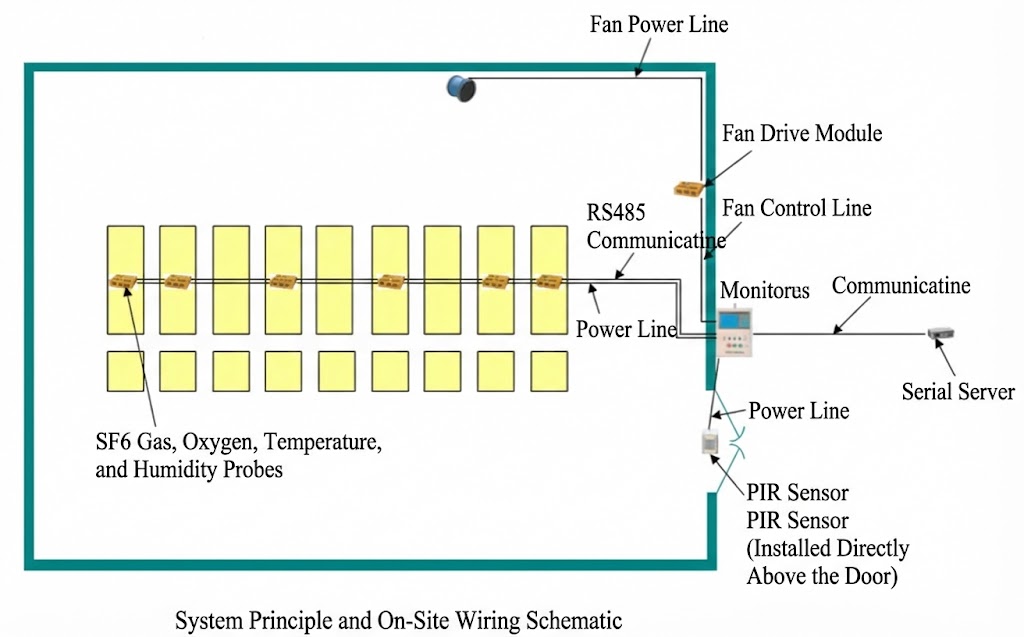
Ang apat-sa-isang transmiter patuloy na nagsa-sample ng mga kondisyon sa paligid at nagko-convert ng mga output ng analog sensor sa mga digital na signal. Ang mga sukat na ito ay nagpapadala sa intelligent monitoring host sa pamamagitan ng RS485 serial communication bawat 1-5 segundo (maaaring i-configure). Inihahambing ng host ang mga pagbabasa laban sa mga threshold ng alarm na tinukoy ng user, nag-log ng data sa panloob na memorya, at nagpapakita ng mga real-time na halaga sa touchscreen. Kapag lumampas ang SF6 sa 1000ppm o bumaba ang oxygen sa ibaba 18%, agad na ina-activate ng host ang mga output ng alarma (mga relay contact, naririnig na sirena, boses na anunsyo) at nagti-trigger ng automated ventilation fan startup. Nagbibigay ang closed-loop system na ito ng detection-to-response times sa ilalim 60 segundo.
Multi-Point Networking Topology
Nasusukat na arkitektura ng network sumusuporta sa pagsubaybay mula sa mga single-room installation hanggang sa mga deployment sa buong pasilidad. Ang nag-iisang host controller ay namamahala ng hanggang 8 malaya mga punto ng pagtuklas, sa bawat transmitter na itinalaga ng isang natatanging address sa RS485 bus. Ang twisted-pair na paglalagay ng kable ay nagkokonekta ng mga sensor sa daisy-chain o star topology, umaabot hanggang sa 1200 metro (4000 paa) mula sa host. Para sa malalaking substation, maraming host na magkakaugnay sa pamamagitan ng Ethernet TCP/IP, paglikha ng mga hierarchical system na pinagsama-sama ang data sa sentralisadong Mga platform ng SCADA o mga sistema ng pamamahala ng gusali. Ang software sa pagmamapa ng GIS ay nagpapakita ng lahat ng mga lokasyon ng sensor, katayuan ng color-coding (berde=normal, dilaw=babala, pula=alarma) para sa intuitive na kamalayan sa sitwasyon.
9. Four-in-One Gas Detection Sensor
Pinagsamang SF6, O2, Temperatura, Disenyo ng Humidity
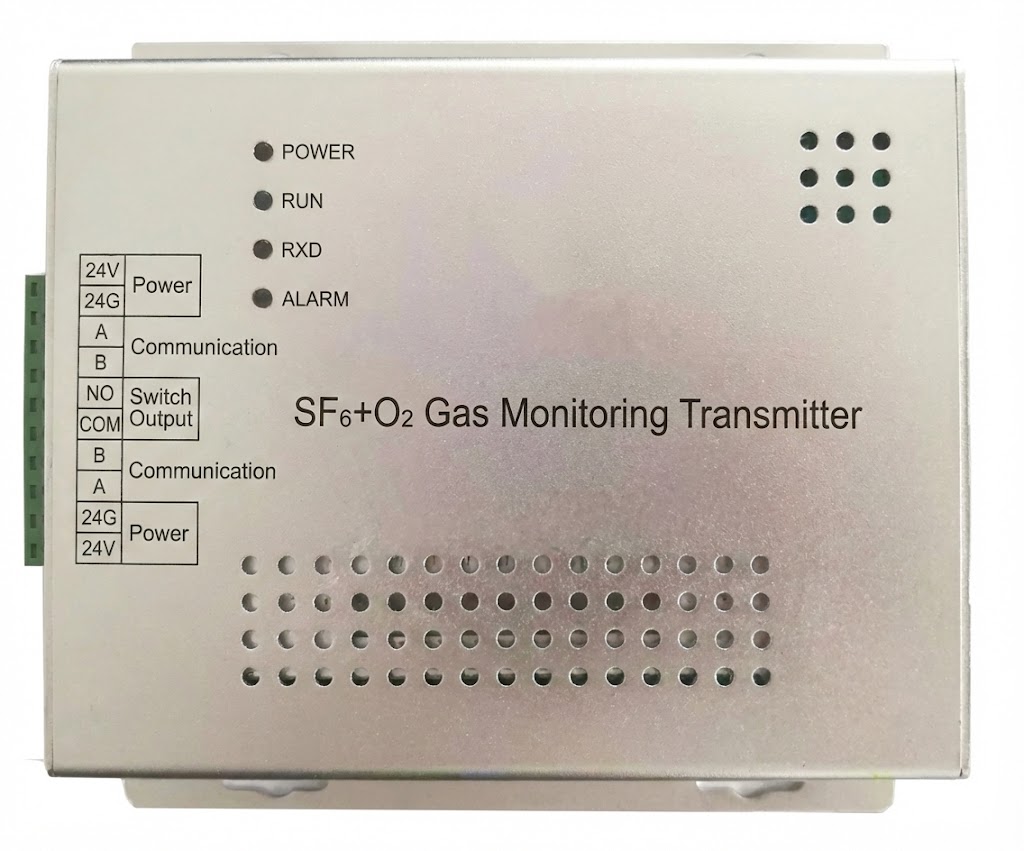
Ang apat-sa-isang transmiter pinagsasama-sama ang maramihang mga teknolohiya ng sensing sa isang 153×150×52mm (6.0×5.9×2.0 pulgada) aluminyo die-cast pabahay. Ang pagsasamang ito ay nag-aalis ng pangangailangan para sa magkahiwalay na mga instrumento, pagbabawas ng paggawa sa pag-install, pagiging kumplikado ng paglalagay ng kable, at mga potensyal na puntos ng pagkabigo. Ang panloob na signal conditioning electronics ay nagpapalakas, linearize, at i-digitize ang mga hilaw na output ng sensor, pagpapadala ng mga naka-calibrate na yunit ng engineering (ppm, %, °C, %RH) sa host controller.
Pagpoposisyon ng Pag-install: Bakit Mababang Pag-mount?
Ang pinakamainam na paglalagay ng sensor ay nakikinabang SF6 gas mga katangian ng density. Para sa 110kV at mas mataas na boltahe na mga silid ng GIS, ang mga alituntunin ay tumutukoy sa pag-install ng 10cm (4 pulgada) sa ibaba ng natapos na antas ng sahig o sa loob ng mga nakataas na plenum sa sahig. Ang 5× air density ay nagiging sanhi ng tumagas na SF6 na lumubog at naipon sa pinakamababang punto, kung saan tinitiyak ng paglalagay ng sensor ang pinakamaagang posibleng pagtuklas. Para sa 35kV switchgear na may mga circuit breaker na nakakabit sa dingding, naka-mount ang mga sensor 10-15cm sa itaas ng base ng kagamitan, pagkuha ng gas bago ang makabuluhang pagpapakalat ng silid. Iwasan ang paglalagay malapit sa sapilitang mga bumagsak ng hangin, Nagbabalik ang HVAC, o mga pintuan kung saan maaaring matunaw ng mga agos ng hangin ang mga pagbasa at maantala ang pag-activate ng alarma.
Proteksyon ng IP54 at Pag-aangkop sa Pang-industriya na Kapaligiran
Ang Rating ng IP54 (protektado ng alikabok, splash water resistant) nababagay sa malupit na kapaligiran ng substation. Ang enclosure ay nagtatakip laban sa pagpasok ng alikabok na maaaring makahawa sa mga sensor o electronics, habang ang mga gasket seal ay lumalaban sa spray ng tubig mula sa paglilinis o hindi sinasadyang pagtagas. Saklaw ng temperatura ng pagpapatakbo mula -25°C hanggang +70°C (-13°F hanggang +158°F) tumanggap ng mga hindi pinainit na kagamitan sa mga silid sa malamig na klima at tropikal na pag-install na walang air conditioning. Para sa partikular na malubhang kapaligiran (maalat na hangin sa baybayin, pagkakalantad sa kemikal, matinding lamig sa ibaba -25°C), Ang mga opsyonal na pinainit na enclosure ay nagpapanatili ng mga sensor sa pinakamainam na temperatura ng pagpapatakbo.
SF6 Sensor >5 Taon ng Buhay ng Serbisyo
Advanced na electrochemical Mga sensor ng SF6 magbigay ng pambihirang mahabang buhay na lampas 5 taon ng patuloy na operasyon. Ang mga matatag na formulation ng electrolyte at mga na-optimize na materyales ng electrode ay nagpapaliit ng drift, karaniwan <±5% bawat taon. Binabawasan ng pinahabang habang-buhay na ito ang mga gastos sa pagpapanatili at downtime ng system kumpara sa mga naunang henerasyong sensor na nangangailangan ng taunang pagpapalit. Mga sensor ng oxygen, gamit ang consumable lead anodes, karaniwang nangangailangan ng kapalit pagkatapos 2-3 taon depende sa pagkakalantad sa mataas na konsentrasyon ng oxygen at pag-ikot ng temperatura. Mga sensor ng temperatura at halumigmig, batay sa solid-state RTD at capacitive na teknolohiya ayon sa pagkakabanggit, madalas na lumampas sa 10-taong habang-buhay na may kaunting pagkakalibrate drift.
10. Intelligent Monitoring Host Unit
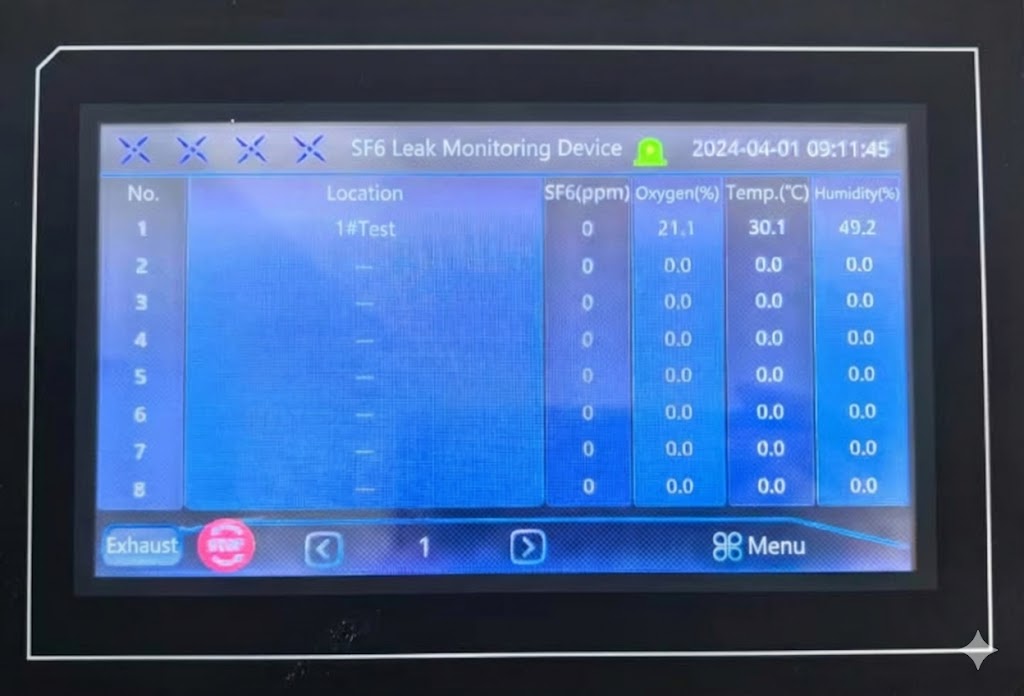
7-Inch Color Touchscreen Interface
Ang host ng pagsubaybay nagtatampok ng industrial-grade 7-inch TFT LCD touchscreen na may 800x480 pixel na resolution at LED backlight para sa visibility sa iba't ibang ambient lighting. Ang intuitive na graphical na user interface ay nagpapakita ng lahat ng konektadong sensor nang sabay-sabay, na may malalaking numeric readout, may kulay na mga tagapagpahiwatig ng katayuan, at mga graph ng trend. Sinusundan ng navigation ng menu ang mga galaw ng pagpindot na tulad ng smartphone, inaalis ang pangangailangan para sa pisikal na mga pindutan at pagpapagana ng operasyon gamit ang mga kamay na may guwantes.
Real-Time na Multi-Point na Pagpapakita ng Data
Ang pangunahing screen ay nagpapakita ng isang live na pagpapakita ng dashboard:
- Pagkilala sa Sensor: Mga pangalan na na-configure ng user (hal., “GIS Bay 1,” “Control Room,” “Transformer Vault”)
- Mga Kasalukuyang Pagbasa: Konsentrasyon ng SF6 (ppm), O2 porsyento, temperatura (°C/°F), kahalumigmigan (%RH)
- Mga Icon ng Katayuan: Berdeng checkmark (normal), dilaw na tatsulok (paunang alarma), pulang tandang (alarma)
- Katayuan ng System: Kalusugan ng komunikasyon, boltahe ng supply ng kuryente, katayuan ng fan relay
- Oras/Petsa: Naka-synchronize na orasan para sa tumpak na timestamping ng kaganapan
100-Araw ng Makasaysayang Data Storage at Query
Ang non-volatile flash memory ay nag-iimbak ng hanggang sa 100 araw ng tuluy-tuloy na mga sukat sa pagitan ng 1 minuto (144,000 mga punto ng data bawat sensor). Ang mga function ng makasaysayang query ay nagpapahintulot sa mga operator na pumili ng mga hanay ng petsa, magpakita ng mga graph ng trend na may zoom/pan, overlay ang maramihang mga parameter para sa pagsusuri ng ugnayan, at mag-export ng mga dataset sa pamamagitan ng USB port. Sinusuportahan ng kakayahang ito ang pagsisiyasat ng insidente, dokumentasyon ng pagsunod, at predictive na pagpapanatili sa pamamagitan ng pagtukoy ng unti-unting pagkasira ng kagamitan o paulit-ulit na isyu.
Mga Interface ng Komunikasyon ng RS485/Ethernet
Ang mga dual port ng komunikasyon ay nagbibigay-daan sa nababaluktot na pagsasama ng system:
RS485 Serial Port
Modbus RTU protocol (pamantayan sa industriya) kumokonekta sa mga PLC, Mga RTU, at mga legacy control system. Nako-configure ang mga baud rate (9600-115200 bps) at ang mga setting ng address ay tumanggap ng magkakaibang kagamitan. Ang maximum na haba ng bus ay umabot sa 1200m na may wastong pagwawakas at proteksyon ng surge.
Ethernet TCP/IP Port
Modbus TCP protocol ay nagbibigay ng modernong network connectivity para sa SCADA integration, web-based na malayuang pag-access, at sistema ng pamamahala ng gusali (BMS) interfacing. DHCP o static na IP addressing, na may HTTP server na nagbibigay-daan sa pag-access ng web browser sa real-time na data at configuration nang walang pagmamay-ari na software.
11. Audio-Visual Alarm at Automatic Ventilation System
Tunog, Boses, at Strobe Light Triple Alarm
Multi-modal abiso ng alarma tinitiyak ang kamalayan anuman ang mga kondisyon sa kapaligiran o mga kadahilanan ng tao:
- Naririnig na Sirena: 85Ang dB @ 1m pulsating tone ay tumatagos sa ingay sa background at proteksyon sa pandinig
- Voice Announcement: Mga naka-record na mensahe (hal., “SF6 Gas Alarm, Lugar ng Lumikas”) magbigay ng malinaw na pagtuturo sa maraming wika
- Strobe Light: High-intensity LED beacon (nakikita 50m+ sa liwanag ng araw) nagpapaalala sa mga tauhan na may kapansanan sa pandinig o may suot na earplug
Ang pagtaas ng alarma ay sumusunod sa maaaring i-configure na lohika: pre-alarm sa 75% ng threshold ay nagpapagana lamang ng strobe (tahimik na babala), buong alarma sa 100% ina-activate ng threshold ang lahat ng mga output, kritikal na alarma sa 150% threshold ay nagdaragdag ng emergency na abiso sa pakikipag-ugnay.
6Isang Relay na Awtomatikong Kontrol ng Fan
Kasama sa host controller 6-mga output ng relay ng amp para sa direct ventilation fan motor control o contactor coil activation (para sa malalaking motor). Sa alarm, ang relay ay nagpapasigla, simula ng mga exhaust fan na naglilinis ng kontaminadong hangin at gumuhit ng sariwang makeup air. Nakamit ng mga karaniwang switchroom 10-15 pagbabago ng hangin kada oras, binabawasan ang konsentrasyon ng SF6 sa ibaba ng threshold ng alarma sa loob 10-30 minuto depende sa dami ng silid at kalubhaan ng pagtagas.
Manual/Awtomatikong Mga Mode ng Operasyon ng Fan
Pinipili ng mga operator ang mga control mode sa pamamagitan ng touchscreen:
Awtomatikong Mode
Pinamamahalaan ng system ang mga tagahanga batay sa mga pagbabasa ng sensor at naka-configure na logic. Magsisimula ang mga fan kapag lumampas ang SF6 sa alarm point o bumaba ang O2 sa ibaba ng threshold, tumatakbo hanggang sa ang mga konsentrasyon ay bumalik sa mga ligtas na antas at isang nako-configure na oras ng pagpigil (karaniwan 15-30 minuto). Tinitiyak ng mode na ito ang pinakamainam na kalidad ng hangin na may kaunting paggamit ng enerhiya.
Manual Mode
Direktang on/off control para sa maintenance, pagsubok, o mga sitwasyong nangangailangan ng tuluy-tuloy na bentilasyon anuman ang pagbabasa ng sensor. Ino-override ng manu-manong operasyon ang awtomatikong lohika ngunit hindi maaaring i-disable ang mga alarma, pinipigilan ang mga operator na patahimikin ang mga babala nang walang pagwawasto.
Infrared Presence Detection Smart Trigger
Passive infrared (PIR) mga sensor makita ang init ng katawan ng tao, awtomatikong ina-activate ang display backlight at mga detalyadong screen ng data kapag lumalapit ang mga tauhan. Ang feature na ito sa pagtitipid ng enerhiya ay nagpapahaba ng habang-buhay ng LCD sa mga pasilidad na hindi pinapatakbo habang tinitiyak ang agarang pagkakaroon ng impormasyon kapag pumasok ang mga operator.. Ang pagtuklas ng PIR ay nag-log din ng mga kaganapan sa pag-access, pagsuporta sa pagsubaybay sa seguridad at pagpapanatili. Gumagamit ang ilang advanced na configuration ng pagtukoy sa presensya upang simulan ang pre-emptive na bentilasyon, tinitiyak na nililinis ang mga silid bago pumasok ang mga technician para sa regular na pagpapanatili.
12. LED Malaking Display Screen (Opsyonal)
Remote Visualization Monitoring Function
Ang opsyonal LED display panel (68.2×20.2×6.8cm / 26.9×8.0×2.7 pulgada) naka-mount sa mga control room, mga istasyon ng seguridad, o mga panlabas na gusali para sa isang sulyap na pagsubaybay nang hindi pumapasok sa mga mapanganib na lugar. Mga LED na may mataas na liwanag (>2000 nits) manatiling nababasa sa direktang sikat ng araw, perpekto para sa mga panlabas na pag-install. Ang display ay umiikot sa lahat ng sinusubaybayang lokasyon, nagpapakita ng mga pangalan ng sensor at kasalukuyang mga pagbabasa sa malalaking character na makikita mula sa 20+ metro.
Disenyo ng Proteksyon sa Panlabas na Pag-install
Kasama sa konstruksyon na hindi tinatablan ng panahon ang IP65-rated na aluminum enclosure, tempered glass na front panel, gasket seal, at mga drainage channel upang maiwasan ang pag-iipon ng tubig. Ang saklaw ng operating temperature na -30°C hanggang +60°C ay nababagay sa karamihan ng mga klima, na may opsyonal na mga elemento ng pag-init para sa matinding lamig. Pinipigilan ng mga coating na lumalaban sa UV ang pagkasira ng plastic sa mga lugar na mataas ang sikat ng araw. Ang display ay nakakabit sa pamamagitan ng mga keyhole o VESA bracket, na may mga conduit entries para sa protektadong mga kable.
485 Komunikasyon ng Bus at Pag-synchronize ng Data
Ang LED display kumokonekta sa monitoring host sa pamamagitan ng parehong RS485 network bilang mga transmitters, daisy-chaining sa bus at pagguhit ng real-time na data bawat 2-5 segundo. Tinatanggal ng arkitektura na ito ang pangangailangan para sa hiwalay na software ng PC o imprastraktura ng network, pagpapasimple ng deployment. Pagpapakita ng gawi (rate ng pag-update, indikasyon ng alarma, mga antas ng liwanag) nagko-configure sa pamamagitan ng host touchscreen o Modbus command.
13. Real-Time na Pagsubaybay at Data Visualization
Sabay-sabay na Multi-Point na Pagpapakita ng Katayuan
Moderno Mga sistema ng pagsubaybay sa SF6 ipakita ang komprehensibong katayuan ng pasilidad sa isang screen. Ipinapakita ang mga naka-tile na layout 4-8 mga lokasyon ng sensor na may mga independiyenteng readout, inaalis ang pangangailangang mag-navigate sa pagitan ng mga pahina sa panahon ng mga kritikal na kaganapan. Mga background na may kulay (berde/dilaw/pula) magbigay ng instant visual na pagtatasa ng pangkalahatang kondisyon ng kaligtasan. Itinatampok ng mga algorithm sa pag-prioritize ng alarm ang pinakamatinding kundisyon, awtomatikong nagdadala ng mga kritikal na alerto sa harapan.
Pagsasama ng GIS Map at Visual Monitoring
Geographic Information System (GIS) pagmamapa nag-o-overlay ng data ng sensor sa mga substation na floor plan o mga drawing ng CAD ng pasilidad. Ang mga interactive na mapa ay nagpapakita ng mga icon ng sensor sa tumpak na mga coordinate sa pag-install, color-coded ayon sa status. Ang pag-click sa isang icon ay nagpapakita ng mga detalyadong pagbabasa, makasaysayang uso, at mga tagapagpahiwatig ng kalusugan ng sensor. Ang spatial visualization na ito ay tumutulong sa mga operator na mabilis na mahanap ang mga problema sa malalaking pasilidad, maunawaan kung aling mga lugar ng kagamitan ang apektado, at mga direktang maintenance crew nang mahusay. Ang ilang mga sistema ay sumasama sa pagbuo ng BIM (Pagmomodelo ng Impormasyon sa Pagbuo) mga database, pag-uugnay ng mga alarma ng sensor sa mga tag ng asset ng kagamitan para sa naka-streamline na pagbuo ng order sa trabaho.
Pagsusuri ng Curve ng Historical Trend
Ipinapakita ng graphical trend ang mga parameter ng plot sa paglipas ng panahon, nagpapakita ng mga pattern na hindi nakikita sa numeric na data. Maaaring makilala ng mga operator:
- Mga Siklo sa Araw: Ang mga pagkakaiba-iba ng temperatura/halumigmig ay nauugnay sa araw/gabi o mga iskedyul ng HVAC
- Unti-unting Paglabas: Dahan-dahang tumataas ang mga baseline ng SF6 na nagpapahiwatig ng talamak na pagkasira ng seal
- Ang pagiging epektibo ng bentilasyon: Ang mga rate ng pagbawi pagkatapos ng alarm ay nagpapatunay sa laki ng exhaust fan
- Mga Isyu sa Kagamitan: Mga biglaang pagbabago na kasabay ng paglipat ng mga operasyon o mga aktibidad sa pagpapanatili
Mag-zoom, pan, at ang mga tool sa pagsukat ng cursor ay nagbibigay-daan sa detalyadong pagsusuri ng mga partikular na yugto ng panahon. Multi-parameter overlay (hal., SF6 vs. temperatura) tumutulong sa paghiwalayin ang aktwal na pagtagas mula sa pagbabagu-bago ng density dahil sa mga thermal effect.
14. Intelligent Alarm at Emergency Response
Multi-Level Alarm Threshold Configuration
Sopistikado pamamahala ng alarma nagpapatupad ng three-tier warning system:
Pre-Alarm (Babala)
Karaniwang nakatakda sa 75% ng alarm threshold (750ppm SF6 o 18.5% O2). I-activate lang ang visual indication (dilaw na katayuan, walang sirena), nag-aalerto sa mga operator na mag-imbestiga nang hindi nagdudulot ng panic o maling paglikas. Kapaki-pakinabang para sa trending patungo sa mga kondisyon ng alarma sa panahon ng pagpuno o pagpapanatili ng kagamitan.
Alarm (Panganib)
Karaniwang setpoint (1000ppm SF6 o 18% O2) nagti-trigger ng buong audio-visual alarm, mga anunsyo ng boses, at awtomatikong bentilasyon. Nangangailangan ng agarang tugon: ilikas ang mga di-mahahalagang tauhan, buhayin ang mga pamamaraan sa pagtugon sa emerhensiya, imbestigahan at tamang pinagmulan.
Mataas na Alarm (Kritikal)
Advanced na babala sa 150-200% ng alarm threshold (1500-2000ppm SF6 o 16% O2) ay nagpapahiwatig ng mabilis na lumalalang mga kondisyon. Nagdaragdag ng mga pang-emergency na abiso (SMS, email, mga tawag sa telepono sa mga itinalagang contact), maaaring mag-trigger ng paglisan sa buong gusali, at nagtatala ng kritikal na kaganapan para sa pag-uulat ng insidente. Ang ilang mga pasilidad ay sumasama sa mga sistema ng alarma sa sunog para sa koordinadong pagtugon.
Automated Ventilation Interlock Control
Intelligent na kontrol ng bentilasyon ino-optimize ang kalidad ng hangin habang pinapaliit ang pagkonsumo ng enerhiya. Kasama sa control logic:
- Simula na Na-trigger ng Alarm: Agad na nag-a-activate ang mga fan kapag lumampas ang konsentrasyon sa threshold
- Conditional Run: Patuloy ang operasyon ng mga fan hanggang bumaba ang mga pagbabasa sa ibaba 50% ng alarm point
- Hold Time: Ang mga tagahanga ay nagpapatakbo ng karagdagang 15-30 minuto pagkatapos mag-normalize ang mga antas upang matiyak ang kumpletong paglilinis
- Fail-Safe Operation: Default ang system fault o pagkawala ng komunikasyon sa tuluy-tuloy na pagpapatakbo ng fan
- Naka-iskedyul na Purge: Pre-emptive na bentilasyon bago pumasok para sa pagpapanatili o sa panahon ng mga operasyong may mataas na peligro
Mga Tala ng Alarm at Traceability ng Kaganapan
Comprehensive event logging captures:
- Timestamp: Tiyak na petsa/oras ng pag-activate at clearance ng alarma (millisecond na resolusyon)
- Uri ng Alarm: Pre/alarm/high, Parameter ng SF6/O2/temperatura/humidity
- Mga Pinakamataas na Halaga: Naabot ang maximum na konsentrasyon sa panahon ng kaganapan
- Tagal: Oras mula alarma hanggang bumalik-sa-normal
- Mga Aksyon ng Operator: Mga manu-manong pagkilala, pagsisimula ng fan, mga pagsasaayos ng threshold
- Mga Tugon sa System: Awtomatikong pag-activate ng bentilasyon, mga pagtatangka sa komunikasyon
Sinusuportahan ng audit trail na ito ang pagsunod sa regulasyon (OSHA record-keeping), pagsisiyasat ng insidente, pagtatasa ng trend para sa predictive na pagpapanatili, at patuloy na pagpapabuti ng mga pamamaraang pangkaligtasan.
15. Remote Communication at System Integration
Hanggang sa 8 Suporta sa Networking ng Mga Detection Point
Ang nasusukat na arkitektura ay tinatanggap ang paglago ng pasilidad mula sa isang silid na pagsubaybay hanggang sa komprehensibong saklaw ng site. Ang bawat isa apat-sa-isang transmiter receives a unique Modbus address (1-247), with a single host managing up to 8 mga sensor (addresses 1-8). RS485 multidrop topology allows sensors at dispersed locations to share a single twisted-pair cable run, dramatically reducing installation costs compared to point-to-point wiring. For facilities exceeding 8 mga zone, additional hosts deploy at different substations, each managing its own sensor network while interconnecting via Ethernet for centralized oversight.
Modbus RTU/TCP Standard Protocol
Modbus protocol universal adoption across industrial automation ensures compatibility with virtually all control systems, data loggers, at mga platform ng SCADA:
Modbus RTU (Serial)
Binary encoding maximizes efficiency on RS485 networks. Karaniwang pagsasaayos: 9600 baud, 8 data bits, 1 stop bit, no parity (8N1). Supports broadcast commands for simultaneous updates to all devices. Ang deterministic na timing ay nagbibigay-daan sa maaasahang operasyon kahit na may mahabang cable run o mataas na electromagnetic interference na karaniwan sa mga substation.
Modbus TCP (Ethernet)
Pinapaloob ang mga utos ng Modbus sa mga TCP/IP packet para sa komunikasyon sa network. Nagbibigay-daan sa koneksyon sa pamamagitan ng karaniwang imprastraktura ng IT (switch, mga router, mga firewall) walang espesyal na pang-industriyang networking hardware. Port 502 (default) o na-configure ng user. Available ang TLS encryption para sa secure na paghahatid sa mga pampublikong network.
Pagsasama ng SCADA at BMS System
Kontrol sa Pangangasiwa at Pagkuha ng Data (SCADA) Pinagsasama-sama ng mga system ang pagsubaybay sa SF6 sa komprehensibong pangangasiwa sa pasilidad. Ang pagsasama ay naghahatid:
- Mga Sentralisadong Dashboard: Pagsamahin ang data ng SF6 sa mga de-koryenteng parameter (boltahe, kasalukuyang, kapangyarihan), katayuan ng kagamitan, lagay ng panahon
- Advanced na Analytics: Nakikita ng mga algorithm ng machine learning ang mga anomalya, hulaan ang mga pagkabigo ng kagamitan, i-optimize ang mga iskedyul ng pagpapanatili
- Mga Automated na Tugon: Mga kumplikadong aksyon sa script (hal., Ibuhos ang mga hindi kritikal na load kung alarma ang SF6 sa panahon ng peak demand)
- Historical Data Warehousing: Pangmatagalang archival (taon) sa mga database ng enterprise para sa pag-uulat ng regulasyon
- Mobile Access: Ang mga smartphone/tablet app ay nagbibigay ng mga field technicians ng real-time na access sa pagsubaybay sa data
Cloud Platform at Mga Kakayahang Malayo sa Pagsubaybay
Moderno Mga system na pinagana ng IoT mag-upload ng data sa mga cloud platform sa pamamagitan ng mga cellular modem o mga koneksyon sa internet ng site. Nagbibigay ang mga solusyon sa ulap:
- Multi-Site Monitoring: Ang mga operator ng utility ay nangangasiwa sa daan-daang substation mula sa mga central control room
- Awtomatikong Pag-uulat: Naka-iskedyul na pagbuo ng mga ulat sa pagsunod, mga buod ng pagpapanatili, mga sukatan ng pagganap
- Mga Serbisyong Nag-aalerto: SMS, email, push notification sa mga on-call na tauhan kapag wala sa oras
- Mga Update sa Software: Mga pag-upgrade ng malayuang firmware nang walang pagbisita sa site
- Pag-benchmark: Ihambing ang pagganap sa mga katulad na pasilidad upang matukoy ang mga outlier
16. Mga Alituntunin sa Pag-install ng SF6 Monitoring System
Pagsubaybay sa Mga Kinakailangan sa Pag-install ng Host
Host mounting lokasyon binabalanse ang accessibility para sa mga operator na may proteksyon mula sa mga panganib sa kapaligiran:
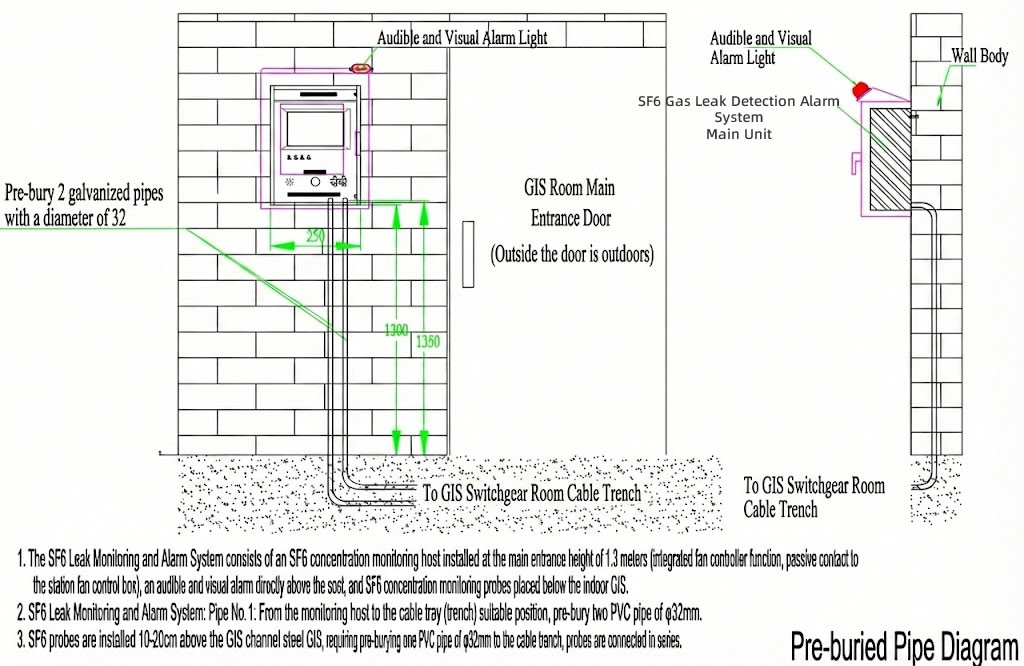
- Posisyon: Malapit sa entrance ng kwarto (panloob o panlabas na dingding) sa 1.2-1.5m (4-5 paa) antas ng mata para sa kumportableng pagtingin at pagpapatakbo ng touchscreen
- Mga clearance: Pinakamababang 0.3m (12 pulgada) lateral space para sa cable routing, 0.5m (20 pulgada) frontal clearance para sa pag-access ng operator
- Kapaligiran: Iwasan ang direktang pagkakalantad sa ulan, niyebe, yelo (kahit para sa “panlabas” mga modelo); protektahan mula sa direktang sikat ng araw na nagiging sanhi ng liwanag ng screen; panatilihin ang ambient temperature sa loob ng -10°C hanggang +50°C para sa maaasahang pagpapatakbo ng electronics
- Pag-mount: I-install ang ibinigay na bracket sa dingding gamit ang naaangkop na mga fastener para sa substrate (kongkretong mga anchor, toggle bolts, kahoy na turnilyo); tiyakin ang level mounting para sa propesyonal na hitsura at katumpakan ng touchscreen; isabit ang host enclosure sa bracket, i-verify ang secure na pakikipag-ugnayan
Four-in-One Transmitter Positioning Strategy
Pinakamainam paglalagay ng sensor sinasamantala ang SF6 physics habang iniiwasan ang mga maling alarma:
Mga High-Voltage GIS Room (≥110kV)
I-install ang transmitter 10cm (4 pulgada) ibaba ng tapos na palapag o sa loob ng nakataas na palapag na plenum. I-mount sa support bracket na naka-angkla sa floor slab. I-ruta ang cable sa pagpasok sa sahig gamit ang fire-stop seal. Ang mababang pagkakalagay na ito ay humahadlang sa paglubog ng SF6 sa pinakamataas na konsentrasyon bago ang pagpapakalat sa buong silid.
Medium-Voltage Switchgear (35kV-66kV)
Wall-mount transmitter 10-15cm sa itaas ng base ng kagamitan o sa pinakamababang punto ng silid kung gear na naka-mount sa sahig. Iwasan ang paglalagay nang direkta sa itaas o ibaba ng mga forced ventilation diffuser (pinakamababang 2m / 6ft offset) na maaaring magpalabnaw ng mga pagbasa.
Mga Common Avoidance Zone
- Agos ng hangin: Hindi malapit sa mga pintuan, nagagamit na mga bintana, Mga supply/pagbabalik ng HVAC na nagdudulot ng magulong daloy
- Pinagmumulan ng init: Pinakamababang 1m mula sa mga transformer, mga resistor, mga heaters na nakakaapekto sa katumpakan ng sensor ng temperatura
- Mga hadlang: Malinaw na line-of-sight sa volume ng kwarto; umiwas sa likod ng mga cable tray, ducts, o kagamitan na humaharang sa pagsasabog ng gas
- Halumigmig: Hindi sa mga lugar na napapailalim sa tumatayong tubig, pumatak ang condensation, o high-pressure washdown
Mga Pamantayan sa Paglalagay ng Kable at Komunikasyon
Pag-install ng elektrikal dapat matugunan ang mga lokal na code (NEC, IEC) at mga pagtutukoy ng tagagawa:
Power Wiring
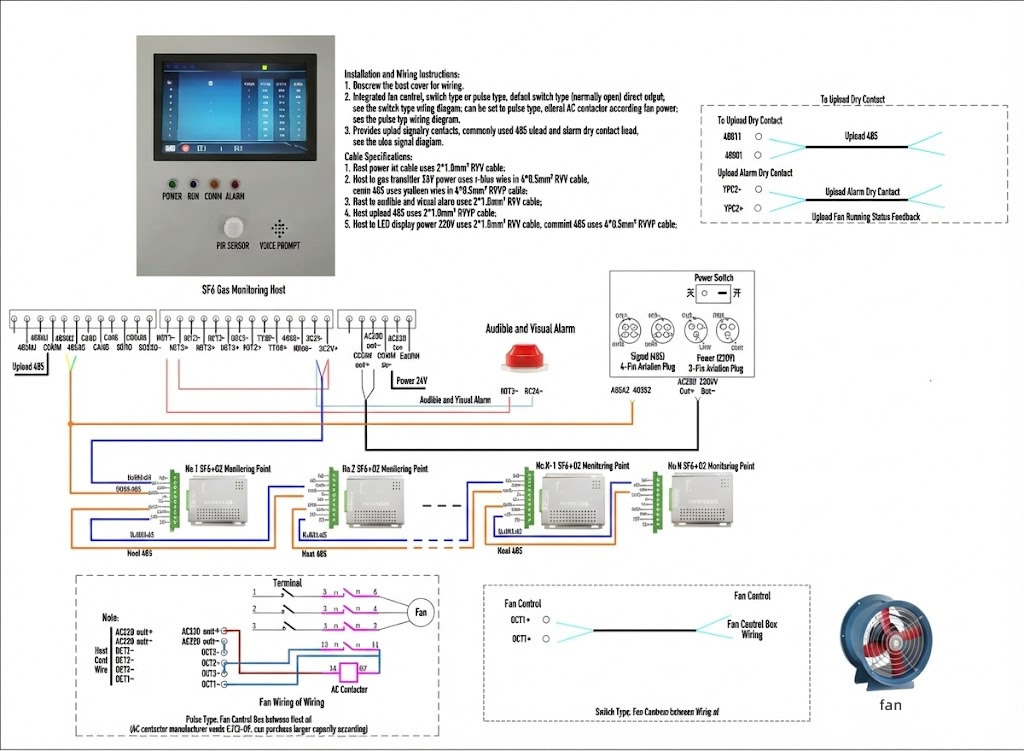
AC/DC 220V ±10%, 50-60Hz supply sa host. Gamitin 14 AWG (2.5mm²) pinakamababang tansong kawad, protektado ng 10A circuit breaker. Isama ang ground conductor na konektado sa protective earth. Power entry sa pamamagitan ng bottom/side conduit knockouts (M20, 3/4″ NPT).
Komunikasyon ng RS485
Twisted-pair na cable, 18-22 AWG (0.75-0.5mm²), indibidwal na pinangangalagaan (palara+tirintas). Panatilihin ang mga twist sa mga terminal ng connector (huwag i-unwist ang higit sa 10mm). Daisy-chain topology: magpatakbo ng cable mula sa host hanggang sa unang transmitter, splice/junction sa pangalawang transmitter, magpatuloy hanggang sa ika-8 na device. Mag-install ng 120-ohm terminating resistors sa bawat dulo ng bus (karaniwang binuo sa host at huling transmitter). Pinakamataas na kabuuang haba ng cable 1200m; gumamit ng mga repeater para sa mas mahabang pagtakbo. Obserbahan ang polarity: A/+ hanggang A/+, B/- kay B/-.
Mga Relay Output (Kontrol ng Fan)
Dry contact relay na may rating na 6A @ 250VAC o 6A @ 30VDC. Para sa mga inductive load (mga contactor ng motor), magdagdag ng snubber circuit (RC network o MOV) upang sugpuin ang mga spike ng boltahe. Gumamit ng hiwalay na pinagmumulan ng kuryente para sa kinokontrol na device; hindi kailanman mag-backfeed ng boltahe sa mga terminal ng relay.
System Commissioning at Proseso ng Calibration
sistematiko pamamaraan ng pagsisimula tinitiyak ang tamang operasyon bago ilabas sa serbisyo:
- Pre-Power Inspection: Visual check ng lahat ng koneksyon, pagruruta ng cable, polarity, bakuran
- Power-Up Sequence: Pasiglahin ang host, i-verify ang boot screen, suriin ang pagsasaayos ng liwanag ng LCD
- Pagsusulit sa Komunikasyon: Kumpirmahin na nakita ng host ang lahat ng transmitters (bilang ng sensor, addresses, lakas ng signal)
- Zero Calibration: Sa malinis na kapaligiran ng hangin (panlabas o well-ventilated na silid), simulan ang zero-point calibration para sa SF6 sensor (nagtatakda ng 0ppm baseline). Ang O2 sensor ay awtomatikong nag-calibrate sa atmospera 20.9%
- Span Calibration: Ilapat ang certified calibration gas (karaniwang 1000ppm SF6 sa air balance) sa transmitter sa pamamagitan ng calibration hood. Isaayos ang span upang tumugma sa halaga ng certificate sa loob ng ±2% tolerance
- Pag-verify ng Alarm: Pansamantalang itakda ang mga threshold sa mababang halaga, ilantad ang sensor sa calibration gas, kumpirmahin ang pag-activate ng mga audio-visual alarm, gumagana ang relay ng bentilasyon
- Dokumentasyon: Itala ang mga resulta ng pagkakalibrate, mga serial number, mga setting ng pagsasaayos sa log ng pagpapanatili ng pasilidad
17. Pang-araw-araw na Pagpapanatili at Haba ng Sensor
Pana-panahong Inspeksyon at Pagsusuri sa Paggana
nakagawian iskedyul ng pagpapanatili tinitiyak ang patuloy na pagiging maaasahan:
Mga Buwanang Gawain
- Visual na Inspeksyon: Suriin kung may pisikal na pinsala, maluwag na koneksyon, pagpasok ng kahalumigmigan
- Display Check: I-verify ang pagiging tumutugon sa touchscreen, pagiging madaling mabasa, walang pixel failures
- Pagsusuri sa Alarm: Gumamit ng bump test gas upang mag-trigger ng alarma, kumpirmahin ang sirena, strobe, boses, pag-activate ng bentilasyon
- Paglilinis ng Sensor: Dahan-dahang punasan ang mga port ng sensor ng transmitter gamit ang tuyong tela upang alisin ang akumulasyon ng alikabok (huwag gumamit ng compressed air o solvents)
Quarterly Tasks
- Pag-download ng Data: I-export ang mga makasaysayang log sa pamamagitan ng USB, archive sa mga talaan ng pasilidad
- Backup ng Baterya: Kung ang sistema ay may kasamang UPS, i-verify ang singil ng baterya, pagsubok sa runtime
- Pagsusuri sa Bentilasyon: Manu-manong i-activate ang mga tagahanga, makinig sa abnormal na ingay, i-verify ang daloy ng hangin gamit ang anemometer
- Pagsusulit sa Komunikasyon: Suriin ang daloy ng data ng SCADA/BMS, kumpirmahin ang remote access functionality
Taunang SF6 Sensor Calibration Requirements
Recalibration ng sensor ng SF6 binabayaran ang normal na electrochemical drift:
- Iskedyul: Isagawa ang bawat 12 buwan mula sa petsa ng pag-install o mas madalas kung gumagana sa malupit na mga kondisyon (mataas na temperatura, kahalumigmigan, kontaminasyon)
- Sertipikadong Gas: Gumamit ng NIST-traceable calibration cylinder (1000ppm SF6 ±2% sa balanse ng hangin) na may kasalukuyang sertipiko ng pagsusuri
- Pamamaraan: I-access ang menu ng pagkakalibrate sa pamamagitan ng touchscreen o Modbus command. Ikabit ang gas cylinder na may regulator sa calibration hood sa ibabaw ng transmitter. Daloy ng gas sa 0.5-1.0 LPM para sa 2-3 minuto hanggang sa maging matatag ang pagbabasa. Ayusin ang span ng sensor upang tumugma ang ipinapakitang halaga sa cylinder certificate. Alisin ang calibration gas, i-verify na bumalik sa 0ppm sa malinis na hangin
- Dokumentasyon: Itala ang mga pagbabasa bago ang pagkakalibrate, numero ng lote ng silindro ng gas, pangalan ng technician, petsa sa maintenance log. Ikabit ang sticker ng pagkakalibrate sa transmitter na may susunod na takdang petsa
Interval ng Pagpapalit ng Oxygen Sensor
Mga electrochemical oxygen sensor may hangganan ang mga lifespan dahil sa consumable na materyal na anode:
- Karaniwang Buhay: 24-36 buwan tuloy-tuloy na operasyon sa normal na kondisyon (15-25°C, 20-80% RH)
- Mga Tagapagpahiwatig ng Pagpapalit: Sobrang drift (>1% kada linggo), maling pagbabasa, pagkabigo sa zero-calibrate, pisikal na pinsala sa lamad
- Pamamaraan: Power down transmitter (o gumamit ng mga modelong may kakayahang hot-swap). Alisin ang singsing na nagpapanatili ng sensor. Alisin ang lumang sensor, susi ng oryentasyon ng tala. Mag-install ng bagong sensor na tinitiyak ang tamang pag-upo at O-ring seal. Power up, payagan ang 30 minutong warm-up, magsagawa ng zero calibration sa sariwang hangin (20.9% O2)
- Pagtatapon: Ang mga ginugol na O2 sensor ay naglalaman ng lead; itapon bilang elektronikong basura ayon sa mga lokal na regulasyon, hindi pangkalahatang basura
Pag-troubleshoot ng Mga Karaniwang Fault
sistematiko diagnosis ng kasalanan niresolba ang karamihan sa mga isyu:
| Sintomas | Posibleng Dahilan | Solusyon |
|---|---|---|
| Offline ang transmiter | Kasalanan ng cable ng komunikasyon, tugunan ang salungatan, pagkawala ng kuryente | Suriin ang pagpapatuloy ng cable, i-verify ang mga natatanging address, kumpirmahin ang 24VDC sa mga terminal ng transmitter |
| Maling pagbabasa ng SF6 | Kontaminasyon ng sensor, pagbabagu-bago ng temperatura, EMI | Malinis na sensor, mga kable ng kalasag, lumipat palayo sa mga pinagmumulan ng interference |
| Hindi tatahimik ang alarm | Ang aktwal na gas ay naroroon, masyadong mababa ang threshold, kasalanan ng sensor | I-verify gamit ang portable na instrumento, ayusin ang setpoint, palitan ang sensor kung may sira |
| Hindi magsisimula ang fan | Kabiguan ng relay, isyu ng contactor ng motor, error sa mga kable | Test relay na may multimeter, i-verify ang 220V sa contactor, suriin ang interlock permissives |
| Hindi tumutugon ang touchscreen | Pag-calibrate drift, hang ng firmware, pagkabigo ng hardware | Magsagawa ng touchscreen re-calibration, host ng ikot ng kuryente, makipag-ugnayan sa tagagawa kung patuloy |
18. Power Utility Application Cases
China State Grid 220kV Substation Network
Saklaw ng Proyekto: Deployment ng 150+ SF6 gas leak detection system sa mga provincial power grid substation na sumasaklaw sa 110kV hanggang 500kV na mga klase ng boltahe.
Teknikal na Pagpapatupad: Nagtatampok ang bawat substation 4-8 apat-sa-isang transmiter pagsubaybay sa mga bay ng GIS, mga silid ng circuit breaker, at mga lugar ng imbakan ng SF6. Ang mga central monitoring host ay kumokonekta sa provincial grid SCADA sa pamamagitan ng fiber optic Ethernet, pagbibigay ng real-time na visibility para makontrol ang mga operator ng center 24/7.
Masusukat na Resulta:
- Zero Personnel Injuries: Walang mga insidente ng pagkakalantad sa SF6 mula noong pag-install ng system (2018-kasalukuyan)
- 40% Pagbawas sa Mga Tugon sa Emergency: Ang maagang pagtuklas ng pagtagas ay nagbibigay-daan sa nakaiskedyul na pagpapanatili sa halip na mga callout pagkatapos ng oras
- Kumpletuhin ang Pagsunod sa Regulasyon: Lumalampas ang patuloy na pagsubaybay sa mga kinakailangan sa kaligtasan ng State Grid, dokumentado para sa taunang pag-audit
- Quantified Leak Reduction: Natukoy ang sistema 23 talamak na pagtagas (mabagal na pagkasira ng selyo), napigilan ng mga pag-aayos ang tinatayang 500kg SF6 emissions
USA California Utility Smart Grid Initiative
Saklaw ng Proyekto: Saklaw ng programa ng modernisasyon ng grid 200+ pamamahagi at paghahatid ng mga substation 1.5 milyong customer sa buong Northern California.
Teknikal na Pagpapatupad: Mga sistema ng pagsubaybay sa SF6 isama sa smart grid infrastructure sa pamamagitan ng IEC 61850 protocol. Pinagsasama-sama ng Cloud-based na analytics platform ang data mula sa lahat ng site, paglalapat ng machine learning upang makakita ng mga abnormal na pattern na nagpapahiwatig ng pagkasira ng kagamitan bago mangyari ang mga sakuna.
Masusukat na Resulta:
- 45% Pagbawas sa mga Kabiguan sa Kagamitan: Natukoy ang predictive analytics 87 mga circuit breaker na nangangailangan ng preventive maintenance
- $2.3M Taunang Pagtitipid: Naiwasan ang pagkasira ng kagamitan, mga pagkaantala ng serbisyo, at overtime na paggawa
- Pamumuno sa Kapaligiran: Nai-publish na imbentaryo ng mga emisyon ng SF6 na nagpapakita 15% pagbabawas taon-sa-taon, kinikilala ng EPA
- Pinahusay na Pagkakaaasahan ng System: ANG SITE (Index ng Average na Tagal ng Pagkaantala ng System) napabuti ng 8% bahagyang naiugnay sa proactive na pamamahala ng SF6
Germany Renewable Energy Wind Farm Network
Saklaw ng Proyekto: Pagsubaybay sa SF6 gas sa kabila 25 wind farm collector substations, pagsasama ng onshore at offshore renewable generation sa pambansang grid.
Teknikal na Pagpapatupad: Ang mga remote na substation ay nangangailangan ng autonomous na operasyon sa malupit na kapaligiran sa baybayin. Tinukoy ang mga system na may mga IP65 na outdoor-rated na enclosure, pinainit na sensor housing para sa sub-zero na operasyon, at cellular M2M connectivity para sa malayuang pag-access. Tinitiyak ng backup ng solar+baterya ang pagpapatuloy ng pagsubaybay sa panahon ng pagkawala ng grid.
Masusukat na Resulta:
- Offshore Reliability: 99.7% uptime sa salt spray, mataas na kahalumigmigan, labis na temperatura (-15°C hanggang +40°C)
- Pagsunod sa Regulasyon: Real-time na pag-uulat ng mga emisyon sa mga ahensyang pangkalikasan sa pamamagitan ng pagsasama ng API
- Pag-optimize ng Pagpapanatili: Binawasan ng mga malalayong diagnostic ang mga pagbisita sa site ng 60%, kritikal para sa mga offshore platform na may access sa helicopter
- Pag-detect ng Leak: Natukoy ng system ang corroded seal sa offshore platform, pinipigilan ang paglabas ng 50kg SF6 sa kapaligiran ng dagat
19. Mga Kaso sa Application ng Rail Transit
India Mumbai Metro Rail Project
Saklaw ng Proyekto: Pag-install ng 45 SF6 leak detection at monitoring system sa buong metro line na mga electrical substation at traction power facility na nagsisilbi 3 milyong pasahero araw-araw.
Teknikal na Pagpapatupad: Ang compact na kapaligiran sa lungsod ay nangangailangan ng mga solusyong matipid sa espasyo. Four-in-one na mga transmiter naka-mount sa mga cabinet ng kagamitan sa tabi ng switchgear, na may mga LED na display na nakikita ng mga superbisor ng platform. Ang Hindi/English bilingual na interface ay tumatanggap ng magkakaibang workforce. Pagsasama sa metro operations control center (OCC) nagbibigay-daan sa sentralisadong pangangasiwa sa kaligtasan.
Masusukat na Resulta:
- Walang Mga Pagkagambala sa Serbisyo: Ang maagap na pagtuklas ng pagtagas ay humadlang sa mga pagkabigo ng kagamitan na nauugnay sa SF6 sa loob ng 5-taong panahon ng pagpapatakbo
- Kahusayan sa Kaligtasan ng Manggagawa: Walang mga insidenteng nakakulong sa espasyo sa mga maintenance crew, lumalampas sa mga pambansang pamantayan sa kaligtasan ng riles
- Nakamit ng Pagsunod: Natupad ang Delhi Metro Rail Corporation (DMRC) teknikal na mga pagtutukoy para sa pagsubaybay sa kapaligiran at kaligtasan
- Paglipat ng Kaalaman: sinanay 120 metro technician sa SF6 handling at monitoring, pagpapabuti ng pangkalahatang kultura ng kaligtasan ng system
UK London Underground Transportation Authority
Saklaw ng Proyekto: Pagsubaybay sa kaligtasan para sa 40+ underground electrical substation sa pinakamatandang sistema ng metro sa mundo, ang ilan ay dating sa imprastraktura noong 1890s.
Teknikal na Pagpapatupad: Retrofitting Pagsubaybay sa SF6 sa mga makasaysayang nakakulong na espasyong pag-install ay nangangailangan ng mga custom na sensor mounting bracket at explosion-proof certification para sa mga lugar na may potensyal na akumulasyon ng methane. Ginamit ng mga RS485 network ang mga umiiral nang signal cable sa mga conduit, pag-iwas sa magastos na paghuhukay. Pinalawak ng mga WiFi mesh repeater ang koneksyon sa Ethernet sa pamamagitan ng mga tunnel patungo sa sentral na kontrol.
Masusukat na Resulta:
- Proteksyon ng Pamana: Ang non-invasive na pag-install ay nagpapanatili ng makasaysayang imprastraktura habang nakakamit ang mga modernong pamantayan sa kaligtasan
- 24/7 Malayong Pagsubaybay: Ang mga operator ng control room ay nangangasiwa sa lahat ng substation mula sa gitnang lokasyon, pagpapadala lamang ng mga maintenance crew kung kinakailangan
- Tugon sa Insidente: 60% mas mabilis na pagtugon sa emergency dahil sa tumpak na impormasyon ng lokasyon ng alarma at awtomatikong abiso
- Pag-apruba sa Regulatoryo: Natugunan ng system ang mahigpit na Health and Safety Executive (HSE) mga kinakailangan para sa mga permit sa pagpasok ng limitadong espasyo
20. Data Center at Kritikal na Imprastraktura
Mga Data Center ng Singapore Marina Bay Financial District
Saklaw ng Proyekto: Comprehensive Pagsubaybay sa SF6 gas sa 8 Tier III+ colocation data center na may 24/7 uptime na mga kinakailangan sa paghahatid ng pagbabangko, pananalapi, at cloud service providers.
Teknikal na Pagpapatupad: Kalabisan mga sistema ng pagsubaybay na may dalawahang host at power supply ay tinitiyak na walang isang punto ng pagkabigo. Pagsasama sa sistema ng pamamahala ng gusali (BMS) iniuugnay ang mga alarma ng SF6 sa pagsugpo sa sunog, HVAC, at kontrol sa pag-access. Ang awtomatikong pag-uulat ay bumubuo ng buwanang mga dokumento ng pagsunod para sa SOC 2 mga pag-audit at pag-verify ng SLA ng customer.
Masusukat na Resulta:
- 99.999% System Availability: Pinapanatili ang pagiging maaasahan ng five-nines sa lahat ng imprastraktura ng elektrikal na sumusuporta sa mga mission-critical na IT load
- 15% Pagbawas ng Gastos sa Paglamig: Naka-optimize na bentilasyon batay sa real-time na data ng temperatura/halumigmig, binabawasan ang runtime ng unit ng CRAC
- Certified Reliability: Nag-ambag sa sertipikasyon ng Uptime Institute Tier III na nagpapakita ng 72-oras na self-sufficiency
- Kumpiyansa ng Customer: Transparent na pagsubaybay sa kaligtasan na nakadokumento sa mga paglilibot sa pasilidad, pagsuporta sa premium na pagpepresyo para sa colocation space
UAE Dubai International Airport Electrical Infrastructure
Saklaw ng Proyekto: Pagsubaybay sa kritikal na kapangyarihan na sumasaklaw 30+ switchgear room at substation na sumusuporta sa mga runway, mga terminal, paghawak ng bagahe, at air traffic control sa pinaka-abalang internasyonal na paliparan sa mundo.
Teknikal na Pagpapatupad: SF6 leak detection system isama sa imprastraktura ng kaligtasan sa buong paliparan kabilang ang alarma sa sunog, access sa seguridad, at kontrol sa operasyon. Ang mga interface ng Arabic/English ay sumusunod sa mga kinakailangan sa regulasyon ng UAE. Ang mga rating na hindi tinatablan ng pagsabog ay nakakatugon sa mga pamantayan sa kaligtasan ng aviation para sa mga lugar na malapit sa mga operasyon ng jet fuel.
Masusukat na Resulta:
- Mga Pagsasara ng Zero Airport: Naiwasan ang mga pagkabigo ng mga de-koryenteng kagamitan na maaaring mag-ground flight o makagambala sa mga operasyon
- Pagsunod sa ICAO: Pinuri ng International Civil Aviation Organization ang safety audit ng mga sistema ng pagsubaybay
- Epekto sa Ekonomiya: Naiwasan ang tinantyang $5M kada oras na pagkawala ng kita mula sa mga potensyal na pagkaputol ng kuryente
- Pagsasama ng Seguridad: Ang mga kaganapan sa alarma ng SF6 ay na-cross-reference sa mga log ng pag-access upang matukoy ang mga error sa pagpapanatili o hindi awtorisadong pagpasok
Australia Sydney Opera House & Landmark na Imprastraktura
Saklaw ng Proyekto: Pagsubaybay sa elektrikal na lugar ng pamana na may mahigpit na aesthetic na mga kinakailangan sa pagsasama para sa proteksyon ng UNESCO World Heritage.
Teknikal na Pagpapatupad: Mga nakatagong installation na may mga sensor sa mga kasalukuyang electrical vault, junction boxes camouflaged sa mga elemento ng arkitektura, at nagho-host sa mga teknikal na espasyo sa likod ng bahay na hindi nakikita ng publiko. Inalis ng low-voltage DC wiring ang pangangailangan para sa pagpapalawak ng conduit na makakasira sa makasaysayang tela. Binawasan ng wireless na komunikasyon ang pagruruta ng cable sa pamamagitan ng mga protektadong espasyo.
Masusukat na Resulta:
- Pangangalaga ng Pamana: Walang permanenteng pagbabago sa iconic na arkitektura ni Jørn Utzon
- Kaligtasan ng Turista: Pinoprotektahan 8.2 milyong taunang bisita mula sa mga panganib sa imprastraktura ng kuryente
- Kahusayan sa Operasyon: 99.2% uptime ng pasilidad para sa 1500+ taunang pagtatanghal sa kabila ng pagtanda (1973) mga sistemang elektrikal
- Pangangasiwa sa Kultura: Ang pagsubaybay ay nagpapakita ng proactive na konserbasyon, pagsuporta sa patuloy na pagtatalaga ng UNESCO
21. Mga Teknikal na Detalye ng SF6 Monitoring System
Kumpletuhin ang Mga Parameter ng System
| Parameter | Pagtutukoy |
|---|---|
| Power Supply | AC/DC 220V ±10%, 50-60Hz pangkalahatan |
| Pagkonsumo ng kuryente | Standby <10W, alarma <15W (matipid sa enerhiya) |
| Klase ng Katumpakan | Klase 5 (pang-industriya na grado) |
| SF6 Gas Detection | |
| Saklaw ng Detection | 0-3000ppm (0-0.3% dami) |
| Katumpakan | ±2% Buong Scale (±60ppm @ 3000ppm) |
| Threshold ng Alarm | 1000ppm (pambansang pamantayan), madaling iakma ng gumagamit |
| Oras ng Pagtugon | T90 <30 segundo |
| Haba ng Sensor | >5 taon patuloy na operasyon |
| Pagsubaybay sa Oxygen | |
| Saklaw ng Detection | 0-25% konsentrasyon ng dami |
| Katumpakan | ±1% Buong Scale (±0.25% @ 25%) |
| Threshold ng Alarm | 18% (OSHA/pambansang pamantayan), adjustable |
| Teknolohiya ng Sensor | Electrochemical lead-anode cell |
| Haba ng Sensor | 24-36 karaniwang buwan |
| Pagsubaybay sa Temperatura | |
| Saklaw ng Pagsukat | -30°C hanggang +99°C (-22°F hanggang +210°F) |
| Katumpakan | ±0.5°C (±0.9°F) |
| Uri ng Sensor | Platinum RTD (Pt1000) |
| Pagsubaybay sa Halumigmig | |
| Saklaw ng Pagsukat | 10-99% Kamag-anak na Humidity |
| Katumpakan | ±3% RH (±0.3% ganap) |
| Uri ng Sensor | Capacitive polymer thin-film |
| Kontrolin ang Mga Output | |
| Fan Control Relay | 6A @ 250VAC / 6A @ 30VDC (SPDT) |
| Relay ng Alarm | 3A @ 250VAC / 3A @ 30VDC (SPDT) |
| Mga Interface ng Komunikasyon | |
| Serial ng RS485 | Modbus RTU, 9600-115200 baud, hanggang 1200m |
| Ethernet | 10/100 Mbps, Modbus TCP, HTTP web server |
| Pinakamataas na Mga Sensor | 8 mga transmiter bawat host (napapalawak sa pamamagitan ng maraming host) |
| User Interface | |
| Uri ng Display | 7-pulgadang kulay TFT LCD touchscreen |
| Resolusyon | 800×480 pixels (WVGA) |
| Backlight | LED, auto-dimming, >50,000 oras na buhay |
| Imbakan ng Data | |
| Kapasidad ng Memorya | 100 araw na tuloy-tuloy na pagre-record @ 1 minutong pagitan |
| Format ng Data | Pag-export ng CSV sa pamamagitan ng USB port o pag-download ng Ethernet |
| Mga Pisikal na Dimensyon | |
| Host ng Pagsubaybay | 300×400×81mm (11.8×15.7×3.2 pulgada) |
| Four-in-One Transmitter | 153×150×52mm (6.0×5.9×2.0 pulgada) |
| LED Display (opsyonal) | 682×202×68mm (26.9×8.0×2.7 pulgada) |
| Mga Rating ng Pangkapaligiran | |
| Operating Temperatura | -25°C hanggang +70°C (-13°F hanggang +158°F) |
| Temperatura ng Imbakan | -40°C hanggang +85°C (-40°F hanggang +185°F) |
| Operating Humidity | ≤95% RH non-condensing |
| Proteksyon sa Ingress | IP54 (tagapaghatid), IP40 (host sa loob) |
| Pag-install | |
| Pag-mount | Nakadikit sa dingding (bracket na ibinigay) |
| Pagpasok ng Cable | M20 / 3/4″ NPT conduit knockouts |
22. Pagsunod sa International Standards
Mga Sertipikasyon ng Produkto
Ang aming SF6 gas leak detection at monitoring system hawak ang mga sumusunod na sertipikasyon na nagpapakita ng pagsunod sa pandaigdigang kaligtasan, kalidad, at mga pamantayan sa kapaligiran:
Pagmarka ng CE (European Conformity)
Pinapatunayan ang pagsunod sa EU Low Voltage Directive (LVD) 2014/35/EU para sa kaligtasan ng kuryente, Electromagnetic Compatibility (EMC) Direktiba 2014/30/EU para sa kaligtasan sa sakit at mga emisyon, at Paghihigpit sa mga Mapanganib na Sangkap (RoHS) Direktiba 2011/65/EU para sa pangangalaga sa kapaligiran. Ang pagmamarka ng CE ay nagbibigay-daan sa libreng kalakalan sa buong European Economic Area.
GB/T Chinese National Standards
Pagsunod sa GB/T 11022 (Mataas na Boltahe Switchgear), GB 3836 (Mga Sumasabog na Atmospera), at GB/T 17626 (EMC immunity) Tinitiyak ng serye ang pagiging angkop para sa China State Grid at mga deployment ng utility sa probinsiya.
IEC International Standards
- IEC 61850: Mga network ng komunikasyon at sistema para sa automation ng power utility, pagpapagana ng interoperability sa SCADA at mga substation automation system sa buong mundo
- IEC 60068: Pagsubok sa kapaligiran (temperatura, kahalumigmigan, panginginig ng boses, pagkabigla) nagpapatunay ng pagiging maaasahan sa malupit na kapaligiran ng substation
- IEC 61010: Mga kinakailangan sa kaligtasan para sa mga de-koryenteng kagamitan para sa pagsukat, kontrol, at paggamit ng laboratoryo
Mga Regulasyon sa Kaligtasan sa Lugar ng Trabaho
OSHA (Pangangasiwa sa Kaligtasan at Kalusugan sa Trabaho)
Ang disenyo ng system ay tumutugon sa mga pamantayan ng OSHA kasama ang:
- 29 CFR 1910.146: Mga nakakulong na puwang na kinakailangan ng pahintulot - patuloy na pagsubaybay sa atmospera bago at habang pumasok
- 29 CFR 1910.134: Proteksyon sa paghinga – ang mga threshold ng alarma ay nag-trigger ng mga kinakailangan ng supplied-air respirator
- 29 CFR 1910.1200: Komunikasyon sa peligro – Dokumentasyon ng MSDS/SDS para sa paghawak ng SF6 gas
EPA (Ahensya ng Pangangalaga sa Kapaligiran)
Sinusuportahan ang pagsunod sa EPA SF6 Emission Reduction Partnership para sa Electric Power Systems, kabilang ang taunang pag-uulat ng imbentaryo ng emisyon (Form 3-1), mga programa sa pagtuklas at pagkumpuni ng pagtagas, at boluntaryong mga target na pagbabawas. Ang patuloy na pagsubaybay ay nagbibigay ng tumpak na data ng dami ng pagtagas para sa mga pagsusumite ng regulasyon.
Mga Pamantayan sa Aplikasyon sa Industriya
IEEE (Institute of Electrical and Electronics Engineers)
- IEEE C37.122: Ang mga gas-insulated na substation na may markang higit sa 52kV – tumutukoy sa mga kinakailangan sa pagsubaybay sa SF6
- IEEE C37.85: Kwalipikadong class 1E protective relays – tinitiyak ang pagiging maaasahan ng sistema ng pagsubaybay para sa mga aplikasyon sa kaligtasan ng nuklear
CIGRE (International Council on Malaking Electric Systems)
Mga rekomendasyon mula sa CIGRE working group sa SF6 handling (WG B3.02) at pamamahala ng asset (WG C1.1) ipaalam ang disenyo ng system para sa pinakamahuhusay na kagawian ng utility kabilang ang mga pamamaraan ng pagkalkula ng leak rate at pamantayan sa pagtanggap.
23. Mga Madalas Itanong (FAQ)
Ano ang gamit ng sulfur hexafluoride?
Sulfur hexafluoride (SF6) pangunahing nagsisilbing electrical insulation at arc-quenching medium sa high-voltage equipment kabilang ang gas-insulated switchgear (GIS), mga circuit breaker, mga transformer, at mga linya ng paghahatid na may rating mula 36kV hanggang 800kV. Ang superyor na dielectric na lakas ng SF6 (2.5× hangin) nagbibigay-daan sa mga compact na disenyo ng kagamitan. Ang mga pangalawang aplikasyon ay kinabibilangan ng mga medikal na ultrasound contrast agent (SF6 microspheres), semiconductor etching, magnesiyo casting cover gas, at laboratory tracer studies.
Ligtas ba ang sulfur hexafluoride?
Ang SF6 gas ay hindi nakakalason at chemically inert sa ilalim ng normal na kondisyon, walang direktang panganib sa pagkalason. Gayunpaman, Ang SF6 ay nagpapakita ng malubhang panganib sa asphyxiation dahil sa mataas na density nito (5× hangin). Sa mga nakakulong na espasyo, Ang tumagas na SF6 ay nagpapalit ng oxygen, lumilikha ng mga kapaligirang kulang sa oxygen na maaaring magdulot ng kawalan ng malay at kamatayan nang walang babala na amoy o pangangati. Bukod pa rito, SF6 decomposition produkto mula sa electrical arcing (sulfur dioxide, hydrogen fluoride, metal fluoride) ay nakakalason at kinakaing unti-unti. Wastong pagsubaybay, bentilasyon, at ang proteksyon sa paghinga ay mahalaga para sa ligtas na paghawak.
Gaano karaming mga silid ang maaaring masubaybayan ng system nang sabay-sabay?
Isang single host ng pagsubaybay sumusuporta hanggang sa 8 independiyenteng mga punto ng pagtuklas (mga silid, mga zone, o mga lugar ng kagamitan) sa pamamagitan ng RS485 multi-drop network. Ang bawat punto ay nangangailangan ng isang apat-sa-isang transmiter. Para sa mas malalaking pasilidad, mag-deploy ng maraming host na magkakaugnay sa pamamagitan ng Ethernet, lumilikha ng nasusukat na arkitektura na sumusubaybay sa dose-dosenang hanggang daan-daang mga lokasyon. Pinagsasama-sama ng mga cloud-based na platform ang data mula sa lahat ng host para sa sentralisadong multi-site na pangangasiwa.
Mawawala ba ang data sa panahon ng pagkawala ng kuryente?
Hindi. Ginagamit ng system non-volatile flash memory na nagpapanatili ng lahat ng makasaysayang data, mga setting ng pagsasaayos, at mga limitasyon ng alarma sa panahon ng pagkawala ng kuryente. Sa pagpapanumbalik, awtomatikong ipagpatuloy ng system ang operasyon nang walang pagkawala ng data o kailangan ng reconfiguration. Para sa mga kritikal na application na nangangailangan ng walang patid na pagsubaybay sa panahon ng mga outage, opsyonal na UPS (walang tigil na supply ng kuryente) pinapanatili ng backup ang buong paggana para sa 4-8 oras depende sa kapasidad ng baterya.
Maaari bang isama ang system sa mga umiiral nang control system?
Oo. Mga karaniwang protocol ng Modbus RTU/TCP tiyakin ang pagiging tugma sa halos lahat ng mga sistema ng kontrol sa industriya kabilang ang SCADA (Kontrol sa Pangangasiwa at Pagkuha ng Data), DCS (Mga Distributed Control System), PLC (Mga Programmable Logic Controller), at BMS (Mga Sistema sa Pamamahala ng Gusali). Ang sistema ay nagmamapa ng mga pagbabasa ng sensor, estado ng alarma, at mga relay na output sa mga rehistro ng Modbus na naa-access ng mga master device. Nagbibigay kami ng dokumentasyon ng protocol at teknikal na suporta para sa pagsasama. Mga custom na protocol (OPC-UA, BACnet, DNP3) magagamit kapag hiniling.
Gaano kadalas ang mga sensor ay nangangailangan ng pagkakalibrate?
Mga sensor ng SF6: Inirerekomenda ang taunang pag-calibrate gamit ang NIST-traceable na certified gas para mapanatili ang ±2% na detalye ng katumpakan. Mas madalas na pagkakalibrate (quarterly o semi-taon) maaaring kailanganin sa malupit na kapaligiran na may matinding temperatura, mataas na kahalumigmigan, o pagkakalantad sa kontaminasyon.
Mga sensor ng oxygen: I-calibrate ang bawat 6-12 buwan o kapag ang mga pagbabasa ay lumampas sa ±1% tolerance. Zero-calibration sa sariwang hangin (20.9% O2) ay simpleng field procedure; nangangailangan ng sertipikadong halo ng gas ang span calibration.
Mga sensor ng temperatura/humidity: Na-calibrate ang pabrika gamit ang karaniwang drift <0.1°C/taon at <1% RH/taon, nangangailangan ng recalibration lamang sa bawat 2-3 taon maliban kung naobserbahan ang pagkasira ng katumpakan.
Anong warranty at suporta ang ibinigay?
Fuzhou Innovation Electronic Scie&Tech Co., Ltd. nagbibigay:
- Karaniwang Warranty: 24 buwan mula sa petsa ng pag-install na sumasaklaw sa mga materyales at mga depekto sa pagkakagawa
- Pinahabang Warranty: Opsyonal 3-5 taon na mga plano na magagamit sa pagbili
- Teknikal na Suporta: Email, telepono, Tulong sa WhatsApp sa mga oras ng negosyo (GMT+8 timezone). Remote system access para sa diagnostics
- Mga ekstrang bahagi: Naka-stock na mga sensor, mga module ng relay, mga cable para sa mabilis na pagpapalit ng pagpapadala
- Mga Serbisyo sa Pag-calibrate: On-site o return-to-factory calibration na may certificate na masusubaybayan sa mga pambansang pamantayan
- Pagsasanay: Pag-install, operasyon, at pagsasanay sa pagpapanatili sa pamamagitan ng video conference o on-site na mga pagbisita
- Preventive Maintenance: Kasama sa mga taunang kontrata ng serbisyo ang pagkakalibrate, inspeksyon, pagpapalit ng mga bahagi, at prayoridad na suporta
Sumusunod ba ang system sa mga electrical code ng North American?
Habang ang aming kagamitan ay pangunahing nagta-target sa mga internasyonal na merkado at sumusunod sa mga pamantayan ng IEC, maraming mga pagtutukoy ang tumutugma sa mga kinakailangan sa Hilagang Amerika. Para sa UL/CSA certification o NEC/CEC compliance verification na kailangan para sa U.S./Canada installation, kumonsulta sa aming technical team tungkol sa mga available na opsyon. Matagumpay naming na-deploy ang mga system sa mga pasilidad ng North American kung saan tinanggap ang pagkakapantay-pantay ng IEC ng mga awtoridad na may hurisdiksyon (AHJ).
24. Pagpili ng Tamang SF6 Monitoring Solution
Pagtatasa sa Iyong Mga Kinakailangan sa Pagsubaybay sa Pasilidad
Epektibo SF6 gas leak detection nagsisimula sa masusing pagtatasa ng mga pangangailangan:
- Imbentaryo SF6 Kagamitan: Kilalanin ang lahat ng mga circuit breaker, switchgear, mga transformer, at iba pang device na naglalaman ng SF6 gas
- Mapa Enclosed Spaces: Mga switchroom ng dokumento, mga vault, mga cable tunnel, at mga nakakulong na lugar na nangangailangan ng pagsubaybay
- Suriin ang Mga Salik sa Panganib: Isaalang-alang ang edad/kondisyon ng kagamitan, kasaysayan ng pagpapanatili, dalas ng access sa limitadong espasyo, tagal ng pagkakalantad ng manggagawa
- Tukuyin ang Saklaw: Kalkulahin ang bilang ng mga punto ng pagtuklas na kailangan (karaniwan 1 transmiter bawat 50-100 m² depende sa geometry ng silid)
- Mga Kinakailangan sa Pagsasama: Kilalanin ang mga umiiral na sistema ng kontrol, mga protocol ng komunikasyon, at imprastraktura ng IT para sa tuluy-tuloy na pagsasama
Pagkakaaasahan ng System at Pagpapalawak sa Hinaharap
Mamuhunan sa mga nasusukat na solusyon na lumalago kasama ng iyong pasilidad:
- Modular na Arkitektura: Ang mga system na sumusuporta sa multi-point expansion ay umiiwas sa magastos na pagpapalit kapag nagdaragdag ng mga sinusubaybayang lugar
- Buksan ang Mga Protocol: Tinitiyak ng Modbus RTU/TCP ang pagiging tugma sa mga pag-upgrade o pagpapalit ng control system sa hinaharap
- Mahabang Buhay ng Sensor: >5 taon SF6 sensor habang-buhay at >2 taon ang buhay ng sensor ng O2 ay nagpapababa ng patuloy na pasanin sa pagpapanatili
- Mga Update ng Firmware: Ang kakayahang malayuang pag-update ay nagdaragdag ng mga bagong feature at tinutugunan ang mga isyu nang walang mga pagbabago sa hardware
- Katatagan ng Tagagawa: Makipagtulungan sa mga itinatag na tagagawa (Fuzhou INNO mula noon 2011) pagtiyak ng pangmatagalang pagkakaroon at suporta ng mga piyesa
Kabuuang Halaga ng Pagsusuri sa Pagmamay-ari
Suriin mga gastos sa lifecycle lampas sa paunang presyo ng pagbili:
| Kategorya ng Gastos | Mga pagsasaalang-alang |
|---|---|
| Kagamitan | Host, mga transmiter, nagpapakita, mga kable, hardware sa pag-install |
| Paggawa sa Pag-install | Oras ng electrician, tubo, alambre, pagkomisyon, pagsasanay |
| Taunang Pag-calibrate | Pag-calibrate ng gas, oras ng technician o kontrata ng serbisyo |
| Pagpapalit ng Sensor | O2 sensors bawat 2-3 taon, SF6 sensors bawat 5+ taon |
| Pagkonsumo ng Enerhiya | <10W standby power = bale-wala na gastos sa pagpapatakbo |
| Mga Iniiwasang Gastos | Pinipigilan ang mga pinsala, pagkasira ng kagamitan, mga multa sa kapaligiran, downtime |
Karaniwang nakakamit ng mga comprehensive system ang payback sa loob 2-4 taon sa pamamagitan ng pinababang mga insidente, na-optimize na pagpapanatili, at pag-iwas sa gastos sa pagsunod sa regulasyon.
Impormasyon sa Pakikipag-ugnayan
Para sa teknikal na konsultasyon, mga kahilingan sa panipi, o na-customize na mga solusyon sa pagsubaybay, contact:
Fuzhou Innovation Electronic Scie&Tech Co., Ltd.
Itinatag: 2011
Espesyalisasyon: Mga sensor ng temperatura ng fiber optic, mga sistema ng pagtuklas ng gas, pagsubaybay sa transpormer
Mga Detalye ng Pakikipag-ugnayan:
Email: web@fjinno.net
WhatsApp/WeChat/Phone: +86 135 9907 0393
QQ: 3408968340
Website: www.fjinno.net
Address ng Pabrika:
Liandong U Grain Networking Industrial Park
Hindi. 12 Xingye West Road
Fuzhou, Lalawigan ng Fujian
People's Republic of China
Nag-aalok kami:
- Libreng teknikal na konsultasyon at application engineering support
- Pasadyang disenyo ng system para sa mga natatanging kinakailangan sa pasilidad
- Mapagkumpitensyang pagpepresyo para sa dami ng mga proyekto at OEM partnership
- Pandaigdigang pagpapadala at internasyonal na teknikal na suporta
- Komprehensibong dokumentasyon sa Ingles at maraming wika
Disclaimer
Pangkalahatang Impormasyon: Ang artikulong ito ay nagbibigay ng pangkalahatang impormasyon tungkol sa sulfur hexafluoride (SF6) gas at mga sistema ng pagsubaybay para sa mga layuning pang-edukasyon. Habang nagsusumikap kami para sa katumpakan, ang impormasyon ay maaaring magbago nang walang abiso. Palaging kumunsulta sa kasalukuyang mga datasheet ng produkto, mga lokal na regulasyon, at mga kwalipikadong propesyonal bago gumawa ng mga desisyon sa pagbili o pag-install.
Teknikal na Pagtutukoy: Lahat ng mga pagtutukoy, mga sukat, data ng pagganap, at ang mga kakayahan na inilarawan ay maaaring magbago bilang bahagi ng patuloy na pagpapabuti ng produkto. Ang mga aktwal na produkto ay maaaring bahagyang mag-iba mula sa nai-publish na mga detalye. Para sa mga kritikal na aplikasyon, i-verify ang mga kasalukuyang detalye sa aming technical team bago bumili.
Kinakailangan ang Propesyonal na Pag-install: Ang SF6 gas detection system ay dapat na mai-install ng mga kwalipikadong electrician at instrumentation technician alinsunod sa mga lokal na electrical code, mga tagubilin ng tagagawa, at mga regulasyon sa kaligtasan sa lugar ng trabaho. Ang hindi tamang pag-install ay maaaring magresulta sa pagkasira ng kagamitan, hindi tumpak na pagbabasa, o mga panganib sa kaligtasan.
Aplikasyon na Kritikal sa Kaligtasan: Habang pinapahusay ng aming mga monitoring system ang kaligtasan sa lugar ng trabaho, hindi nila inaalis ang lahat ng panganib na nauugnay sa SF6 gas. Ang mga employer ay nananatiling responsable para sa mga komprehensibong programa sa kaligtasan kabilang ang wastong pagsasanay, bentilasyon, mga pamamaraan ng limitadong espasyo, proteksyon sa paghinga, at pagpaplano ng pagtugon sa emerhensiya. Supplement ng mga sistema ng pagsubaybay, ngunit huwag palitan, wastong mga kasanayan sa kaligtasan.
Walang Warranty ng Fitness: Ang impormasyong ibinigay ay hindi bumubuo ng isang warranty na ang mga produkto ay angkop para sa anumang partikular na layunin o aplikasyon. Dapat independyenteng i-verify ng mga user ang pagiging angkop ng system para sa kanilang mga partikular na kinakailangan, mga kondisyon sa kapaligiran, at mga obligasyon sa regulasyon.
Limitasyon ng Pananagutan: Fuzhou Innovation Electronic Scie&Tech Co., Ltd., mga empleyado nito, at ang mga kinatawan ay hindi mananagot para sa anumang direktang, hindi direkta, nagkataon, kinahinatnan, o mga parusang pinsala na nagmumula sa paggamit o maling paggamit ng impormasyon sa artikulong ito o mga produktong inilarawan dito. Ang pinakamataas na pananagutan ay limitado sa presyo ng pagbili ng kagamitan.
Pagsunod sa Regulasyon: Ang mga gumagamit ay tanging responsable para sa pagtiyak na ang mga pag-install ay sumusunod sa lahat ng naaangkop na lokal, pambansa, at mga internasyonal na regulasyon kabilang ang ngunit hindi limitado sa mga electrical code (NEC, IEC), mga pamantayan sa kaligtasan sa lugar ng trabaho (OSHA, HSE), at mga regulasyon sa kapaligiran (EPA, EU F-Gas). Ang artikulong ito ay hindi bumubuo ng payong legal o pang-regulasyon.
Impormasyon ng Third-Party: Mga sanggunian sa mga produkto ng third-party, mga organisasyong pamantayan, pag-aaral ng kaso, o mga panlabas na mapagkukunan ay ibinigay para sa impormasyon lamang at hindi nagpapahiwatig ng pag-endorso. Hindi kami mananagot para sa katumpakan ng impormasyon ng third-party o patuloy na pagkakaroon ng mga panlabas na mapagkukunan.
Intelektwal na Ari-arian: Mga pangalan ng produkto, mga trademark, at ang mga logo na nabanggit ay pagmamay-ari ng kani-kanilang mga may-ari. Ang paggamit ay hindi nagpapahiwatig ng kaakibat o pag-endorso. Nilalaman © 2011-2026 Fuzhou Innovation Electronic Scie&Tech Co., Ltd. Lahat ng karapatan ay nakalaan.
Huling Na-update: Pebrero 2026

Sensor ng temperatura ng fiber optic, Intelligent na sistema ng pagsubaybay, Ibinahagi ang tagagawa ng fiber optic sa China
 |
 |
 |