 INNO fiber optic na mga sensor ng temperatura ,mga sistema ng pagsubaybay sa temperatura.
What Are Transformer Windings & Their Core Function?
Transformer windings are the vital energy-conversion components at the heart of any transformer, made from insulated copper or aluminum wires. They’re split into high-voltage (HV) at mababang boltahe (LV) paikot-ikot, and their primary role is to use electromagnetic induction to step voltage up for long-distance power transmission or down for safe end-user use. The thermal health of these windings directly affects their insulation lifespan and the overall safety of the transformer—unexpected temperature spikes are often early warning signs of serious failures.
Common Transformer Winding Failure Types
Most issues with transformer windings are linked to temperature irregularities. The key failure modes to watch for include:
- Winding short circuits: These can be turn-to-turn (between adjacent wire loops) or phase-to-phase (between HV and LV windings), usually caused by insulation wear, overvoltage surges, or mechanical damage. They create sudden localized overheating that can burn through windings if not detected quickly.
- Insulation degradation: Prolonged exposure to high temperatures breaks down the winding’s insulation layer, making it brittle or leaky. This reduces dielectric strength and increases the risk of short circuits.
- Winding deformation: Short-circuit currents, transportation jolts, or poor installation can bend or shift windings. This disrupts the transformer’s electromagnetic balance and creates hidden hotspots that worsen over time.
- Poor connection points: Loose or oxidized lead joints (where windings connect to external cables) dagdagan ang paglaban sa pakikipag-ugnay. This resistance generates steady heat, which can melt insulation and spread to the main winding.
Key Heat-Generating Spots in Transformers
Sa panahon ng operasyon, transformers produce heat in several critical areas—and windings are the most important to monitor for thermal issues:
- Paikot-ikot: “Copper loss” (heat from electrical resistance as current flows through wires) is the biggest heat source here. The more power the transformer handles (i.e., higher load), the more heat the windings generate.
- Transformer core: The core (made of stacked iron laminations) produces “iron loss” from hysteresis (magnetic field changes) and eddy currents (small electrical currents in the core). This heat is less intense than winding heat but still contributes to overall temperature.
- Lead connection points: As noted earlier, poor connections create resistance-based heat that can become a hotspot if ignored.
- Cooling systems: If radiators, mga bomba ng langis, or fans fail, heat can’t escape the transformer. This doesn’t generate heat directly, but it traps existing heat—making winding temperatures rise rapidly.
As the core of power conversion, windings are the most likely to cause catastrophic failures if overheated. That’s why targeted temperature monitoring here is non-negotiable.
Why Do Transformer Winding Temperatures Rise?
Winding overheating happens when “heat generation outpaces heat dissipation.” The most common causes include:
- Electrical overloading: Running the transformer above its rated current (hal., during peak power demand) makes copper loss skyrocket. This creates more heat than the cooling system can handle.
- Mga malfunction ng cooling system: Clogged radiators (from dust or oil sludge), broken fans, or failed oil pumps stop heat from being carried away from windings.
- Internal faults: Issues like turn-to-turn shorts or damaged insulation create tiny “hot zones” in the winding—these can raise local temperatures far above safe levels even at normal loads.
- Environmental factors: Hot outdoor conditions (hal., summer in industrial areas) or enclosed spaces (without proper ventilation) reduce the transformer’s ability to release heat.
- Aging insulation: Sa paglipas ng panahon, insulation becomes less effective at conducting heat. This traps heat inside the winding instead of transferring it to the cooling system.
Popular Transformer Winding Temperature Sensing Methods
There are several widely used techniques for tracking winding temperatures, each with pros and cons:
- Mga wireless na sensor ng temperatura: These use LoRa, Bluetooth, or Wi-Fi to send data, making installation easy (no wiring needed). Gayunpaman, transformers produce strong electromagnetic fields that interfere with signals, leading to inaccurate readings.
- Infrared thermography: This non-contact method uses a thermal camera to scan the transformer’s exterior and estimate winding temperatures. It works for quick surface checks but can’t measure internal heat—plus, tank walls or oil can block or distort readings.
- PT100 platinum resistance sensors: These use changes in metal resistance to measure temperature and need to be placed near windings. But their metallic design makes them vulnerable to electromagnetic interference, and they age quickly at high temperatures (typically lasting only 2–3 years).
- Surface-mounted sensors: These stick to the outside of the transformer tank to indirectly measure winding heat. They’re cheap and easy to install but have a big lag (they don’t reflect real-time winding temps) and can’t detect internal hotspots.
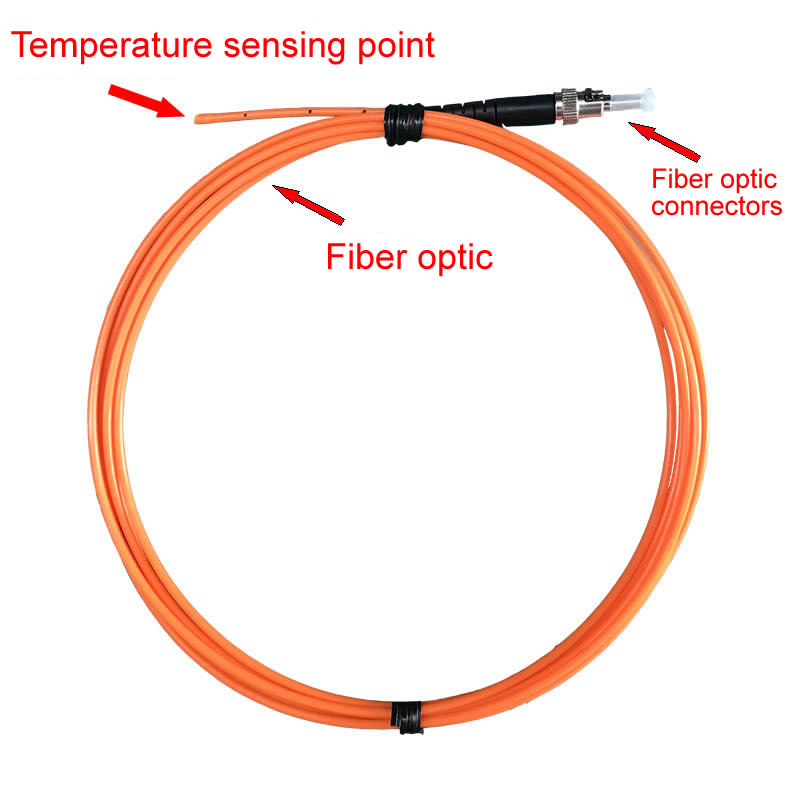
- Mga fluorescent fiber optic sensor: These are contact-based systems, with one probe dedicated to each winding hotspot. They use fluorescent materials (whose “lifetime” changes with temperature) and fiber optics to transmit data. They’re highly resistant to high voltage, fully insulated (no electrical conductivity), and have compact transmitters. A single unit can support up to 64 mga channel (so you can monitor 64 mga hotspot), with a maximum transmission distance of 80 metro.
Installation Methods for Fluorescent Fiber Optic Sensors

Fluorescent fiber optic sensors are flexible enough to work with both new transformers and ones already in service. The two main installation approaches are:
- Pre-embedded installation (for new transformers): During the transformer’s manufacturing process, sensors are inserted directly into the winding gaps—right where hotspots are most likely to form. Fiber optic cables are then routed to a compact transmitter mounted outside the transformer. This method ensures perfect contact between probes and windings (for accurate readings) and requires no post-installation modifications.
- Pag-install ng Retrofit (for in-service transformers): This is done during scheduled maintenance outages. Technicians use existing tank ports or small, dedicated openings to insert probes near key winding hotspots. Fiber cables are run along the tank’s interior (or pre-existing channels) to the external transmitter. This process doesn’t damage the transformer’s insulation or core, so it won’t disrupt long-term performance.
Fluorescent Fiber Optics vs. Other Monitoring Methods: A Comparison
| Paraan ng Pagsubaybay | Sensing Type | Electromagnetic Interference Resistance | High-Voltage Resistance | Katumpakan | Max Channels per Unit | Distansya ng Transmisyon | Transmitter Size | Pinakamahusay Para sa |
|---|---|---|---|---|---|---|---|---|
| Mga Wireless Sensor | Hindi makipag-ugnayan | Mababa (easily disrupted) | Katamtaman | ±3°C | Flexible (add as needed) | Varies by module | Katamtaman | Temporary checks, low-accuracy needs |
| Infrared Thermography | Hindi makipag-ugnayan | Katamtaman | Not applicable | ±5°C | 1 (per camera) | Hanggang sa 10 metro | Malaki | Surface hotspot scans, no internal access |
| PT100 Sensors | Makipag-ugnayan | Mababa (metallic design) | Mababa | ±1°C | 1 | Maikli (wired) | Katamtaman | Low-electromagnetic, room-temperature use |
| Surface-Mounted Sensors | Hindi direkta (hindi makipag-ugnayan) | Katamtaman | Katamtaman | ±4°C | 1 | Maikli (wired) | Maliit | Budget-friendly, rough temperature checks |
| Fluorescent Fiber Optics | Direct Contact | Mataas (fully insulated) | Mataas | ±0.5°C | Hanggang sa 64 | Hanggang sa 80 metro | Compact | High-accuracy, mataas na boltahe, long-term use |
Why Choose Fluorescent Fiber Optics for Transformer Winding Temperature Monitoring?
Fluorescent fiber optic sensors stand out as the best option for transformer winding temperature tracking—here’s why:
- Direkta, accurate readings: Unlike infrared or surface sensors, they touch the winding (or sit just millimeters away), so they capture real-time, precise temperatures (error margin of ±0.5°C).
- Mataas na boltahe & electromagnetic immunity: Fully insulated fiber optics mean they’re safe to use in high-voltage transformers (no risk of short circuits) and won’t be disrupted by strong electromagnetic fields.
- Mahabang buhay & mababang maintenance: They’re made from durable, heat-resistant materials that last 10+ years—far longer than PT100 or wireless sensors. Plus, they don’t need regular calibration (saving time and cost).
- Flexible scaling: With up to 64 mga channel bawat yunit, you can monitor every critical hotspot in large transformers. They also work for small to industrial-scale units.
- Wide application range: Beyond transformers, they’re used in switchgear, large hydroelectric turbines, mga stator ng generator, cable joints, mga pangunahing yunit ng singsing, IGBT modules, GIS switches, and even non-power sectors like medical equipment (RF thermotherapy machines, Mga scanner ng MRI) and semiconductor tools (ICP plasma etchers, reactive ion etchers).
Standard Configuration List for Transformer Winding Fluorescent Fiber Optic Temperature Sensing Devices
The standard configuration of fluorescent fiber optic temperature sensing devices for transformer windings is adjusted based on the number of monitoring points, uri ng transpormer (oil-immersed/dry-type), and installation scenario. The core configuration includes the following components:
-
Fluorescent Fiber Optic Probes: Configured according to the number of winding hotspots, with one probe corresponding to one monitoring point. Made of high/low temperature resistant (-40℃~200℃) and oil-resistant insulating materials, they ensure stable temperature measurement after contacting the windings and are suitable for installation in different winding gaps.
-
Special Fluorescent Fiber Optic Cables: Used to connect probes to transmitters. Karaniwan, single-mode/multi-mode high-voltage resistant fibers are selected, with a transmission distance meeting requirements within 80 metro. The outer layer is covered with an oil-resistant and anti-aging sheath, adapting to wiring environments inside or outside the transformer tank.
-
Signal Transmitters: Core control units that support up to 64 channels of signal input. They feature real-time temperature data processing and over-temperature alarm (relay/acoustic-optical) functions, and are equipped with RS485/Ethernet communication interfaces for connection to upper computers or SCADA systems. Their compact size facilitates cabinet installation.
-
Installation Sealing Accessories: Include flange plates (for sealing cable penetration through the tank, compatible with different tank thicknesses), through-hull seals (preventing oil leakage or moisture ingress), and probe fixing clamps (avoiding probe displacement caused by winding vibration to ensure stable contact).
-
Connection and Debugging Accessories: Comprise fiber fusion splicing kits (for fiber connector processing), mga kable ng kuryente (compatible with industrial-grade voltages), and communication cables (such as shielded RS485 cables for anti-electromagnetic interference). Some configurations also include portable test terminals for on-site debugging.
-
Supporting Software and Display Units: The basic configuration includes a local data display panel (for real-time viewing of temperature in each channel). Optional remote data management software is available, supporting temperature curve storage, historical data query, and alarm record export to meet the needs of operation and maintenance data analysis.
For adaptation to special transformers (hal., ultra-high voltage, large-capacity models), additional customized components such as extended-length fibers, explosion-proof transmitters, or redundant power modules can be provided to ensure the device fully matches the equipment operating conditions.
Mga Madalas Itanong (Mga FAQ)
1. Do fluorescent fiber optic sensors need direct contact with windings?
Yes—they use direct contact (or very close proximity) to capture accurate temperatures. This ensures readings reflect the winding’s actual heat, not just ambient or surface temps.
2. Will installing these sensors disrupt my transformer’s operation?
Hindi. For new transformers, installation happens during manufacturing (no impact). For in-service units, work is done during scheduled maintenance outages—so your transformer won’t need unscheduled downtime.
3. Do I need to calibrate the sensors regularly?
Hindi. All sensors are pre-calibrated at the factory, and their stable design means they maintain accuracy over time—no regular calibration is required.
4. Do you have global application cases for these sensors?
Talagang. Our fluorescent fiber optic sensors are used in transformers across North America, Europa, Asya, and Australia—including utility substations, pang-industriya na halaman, and renewable energy facilities (solar, hangin). We can share case studies tailored to your industry upon request.
5. Can these sensors be used in other equipment besides transformers?
Yes—they’re highly versatile. Common non-transformer uses include: switchgear, large hydro turbines, mga stator ng generator, cable joint monitoring, pangunahing yunit ng singsing (RMU) plug monitoring, enclosed busbar systems, IGBT modules, circuit breaker static contacts, GIS switch hotspots, RF thermotherapy machines, Mga scanner ng MRI, ICP plasma etchers, reactive ion etchers, electric initiators (EEDs), microwave digestion systems, and high-energy particle environments.
Get in Touch for Your Custom Solution
Whether you need to monitor windings in new transformers, retrofit existing units, or explore uses in other high-temperature/high-voltage equipment, we’re here to help.
Our team will work with you to design a fluorescent fiber optic monitoring system that fits your needs—keeping your equipment safe and efficient for years to come.

Sensor ng temperatura ng fiber optic, Intelligent na sistema ng pagsubaybay, Ibinahagi ang tagagawa ng fiber optic sa China
 |
 |
 |