 INNO fiber optic na mga sensor ng temperatura ,mga sistema ng pagsubaybay sa temperatura.
Ang mga sakuna na pagkabigo ng power transformer—partikular ang mga sunog at pagsabog—ay napakaraming naka-localize sa dalawang magkaibang architectural zone.: ang mataas na boltahe na bushings at ang panloob na paikot-ikot na mga hot spot. Tinatrato ng mga legacy na diskarte sa pagsubaybay ang mga ito bilang hiwalay, madalas na maluwag na tinantyang mga parameter. Binabalangkas ng teknikal na gabay na ito kung paano pinag-iisa ang mga kritikal na sonang ito sa pamamagitan ng ganap, direkta pagsukat ng fiber optic tinatanggal ang mga thermal blind spot, iniiwasan ang pagsabog na dielectric breakdown, at nagtatatag ng isang mathematically purong pundasyon para sa pagpapalawig ng buhay ng asset.
Pangunahing Direktiba: Sa ultra-high-voltage na kapaligiran, hindi sapat ang mga thermal estimation algorithm. Direkta, 100Ang kV-immune optical na pagsukat ay ang mandatoryong pamantayan ng engineering para sa pag-iwas sa sakuna.
Talaan ng mga Nilalaman
- 1. Ang Kritikal na Kahinaan ng isang Transformer Bushing
- 2. Ang Paikot-ikot na Hot Spot: Ang Silent Destroyer
- 3. The Failure of Indirect Thermal Calculation
- 4. Direktang Pagsukat ng Fiber Optic: The Unified Solution
- 5. Dielectric Immunity (100kV+) in Extreme Electric Fields
- 6. Enduring the Thermal Envelope (-40°C hanggang 260°C)
- 7. Zero-Drift Reliability over a 25-Year Lifespan
- 8. Tender Specifications for Advanced Monitoring Procurement
- 9. Custom Engineering with FJINNO
1. Ang Kritikal na Kahinaan ng isang Transformer Bushing

Ang bushing ng transpormer acts as the critical bridge, routing thousands of volts from the internal windings, through the grounded transformer tank, and out to the power grid. Because of the immense voltage gradients compressed into a small physical area, bushings are subjected to extreme electrical and thermal stress.
A degrading bushing core (whether OIP, RIP, or RIS) typically begins with localized partial discharge and microscopic thermal anomalies. If this localized heating is not detected instantly, it accelerates the degradation of the internal insulation paper and resin. Ang thermal runaway na ito ay direktang humahantong sa mga sakuna na pagsabog ng bushing, na madalas na nag-aapoy sa pangunahing tangke ng langis ng transpormer, na nagreresulta sa kabuuang pagkasira ng pasilidad.
2. Ang Paikot-ikot na Hot Spot: Ang Silent Destroyer

Kasabay ng bushing stress, ang panloob na copper o aluminum coils ay bumubuo ng napakalaking halaga ng I²R (lumalaban) pagkalugi. Ang absolute peak temperature sa loob ng mga coil na ito ay kilala bilang hot spot.
Epektibo pagsubaybay sa hot spot ng transpormador ay ang banal na kopita ng pangangalaga sa buhay ng asset. Ang selulusa na papel na nakakabit sa mga paikot-ikot na ito ay lumalabag nang husto sa init. Ang tuluy-tuloy na pagpapatakbo ng isang transformer na may mainit na lugar na ilang degree lang sa itaas ng rating ng thermal class nito ay maaaring magtanggal ng mga taon sa buhay ng operasyon nito. gayon pa man, dahil ang mainit na lugar na ito ay nakabaon nang malalim sa loob ng mga concentric na layer ng tanso at epoxy, ito ay ganap na hindi nakikita sa panlabas na inspeksyon.
3. The Failure of Indirect Thermal Calculation
Sa loob ng ilang dekada, utilities attempted to secure these blind spots using indirect calculation models. By measuring the ambient temperature and the top-oil temperature with standard PT100 sensors, SCADA software would “guess” the internal hot spot and bushing core temperatures based on the current electrical load.
During grid stability, these algorithms perform adequately. Gayunpaman, during rapid dynamic overloading, intense harmonic distortion from solar/wind integration, or sudden cooling system failures, the algorithms fail completely. The internal copper and bushing cores heat up drastically faster than the surrounding insulating oil (thermal lag). By the time the algorithm calculates a dangerous condition, the physical asset is already experiencing irreversible thermal damage.
4. Direktang Pagsukat ng Fiber Optic: The Unified Solution
To eliminate the thermal lag and algorithmic blind spots, engineers must capture data directly from the source. Fiber optic measurement represents a paradigm shift, allowing utilities to physically embed sensors deep within the high-voltage architecture.
By utilizing ultra-thin (2mm to 3mm) optical probes, engineers can safely position sensors directly against the internal bushing conductors and woven precisely into the calculated thermal apex of the winding coils. This multi-channel approach guarantees that the facility’s SCADA system receives instantaneous, mathematically absolute thermal data, completely independent of complex estimation algorithms.
5. Dielectric Immunity (100kV+) in Extreme Electric Fields
The primary reason metallic sensors cannot be used for internal pagsubaybay sa hot spot ng transpormador is basic high-voltage physics. Placing a conductive copper or platinum wire near a 220kV bushing or winding introduces a fatal stress concentrator, agad na tinutulay ang dielectric clearance at nagti-trigger ng explosive short circuit.
Ang mga premium na fiber optic probe ay ginawa mula sa 100% purong silikon dioxide (baso ng kuwarts) nakapaloob sa espesyal na Teflon (PTFE) o Polyimide sheathing. Dahil mayroon silang zero free electron, ang mga ito ay perpektong insulator. Ang advanced na materyal na agham na ito ay nagbibigay ng ganap na dielectric na kaligtasan sa paglampas 100kV, pinahihintulutan ang probe na maupo nang direkta sa mga sangkap na may enerhiya nang hindi binabaluktot ang patlang ng kuryente o hinihimok ang bahagyang discharge.
6. Enduring the Thermal Envelope (-40°C hanggang 260°C)
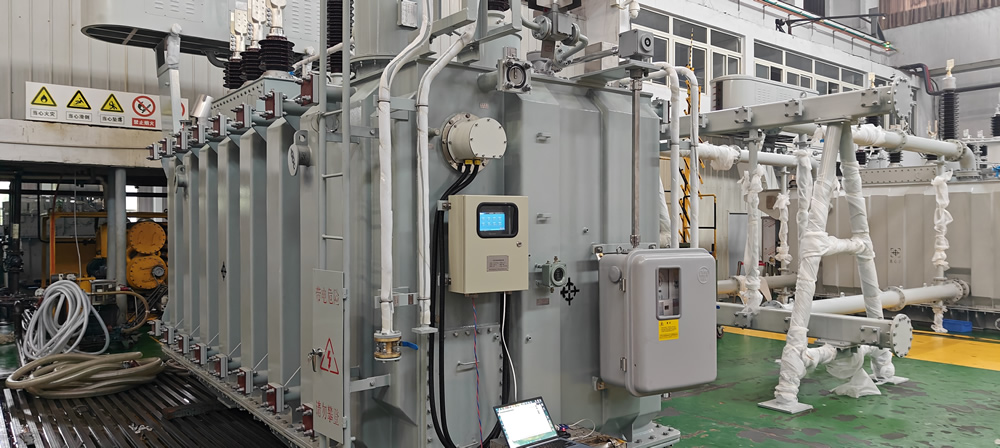
Ang mga transformer ay ginawa sa pamamagitan ng isang brutal na Vacuum Pressure Impregnation (VPI) proseso, kinasasangkutan ng napakalaking presyon at temperatura ng pagbe-bake na higit sa 140°C. Kapag na-deploy, maaari silang gumana sa nagyeyelong arctic substation o magtiis ng matinding overload sa tag-init.
Commercial-grade na plastic optical fibers (POF) matutunaw, outgas, o makabasag sa ilalim ng mga kondisyong ito, destroying the transformer’s oil chemistry. True utility-grade fiber optics are engineered to maintain structural and signal integrity across a massive thermal envelope of -40°C hanggang 260°C. This ensures the probe survives both the manufacturing process and decades of extreme grid fluctuations.
7. Zero-Drift Reliability over a 25-Year Lifespan
A power transformer is a generational asset. The condition monitoring technology protecting it must not require constant maintenance or recalibration, which is impossible once the tank is sealed.
By relying on the fluorescent decay time of a rare-earth phosphor—a universal atomic constant—advanced optical probes are mathematically immune to metallurgical drift. They deliver guaranteed ±1°C accuracy with absolutely zero recalibration required, perfectly matching the 25-taon ng buhay ng pagpapatakbo of the heavy electrical asset they protect.
8. Tender Specifications for Advanced Monitoring Procurement
When drafting technical specifications for a new grid asset, procurement engineers must mandate absolute physical tolerances to prevent sub-contractors from supplying inferior, algorithmic-based monitoring alternatives.
Essential Tender Clauses:
- Direct Measurement Protocol: The system must utilize direct pagsukat ng fiber optic embedded physically at the winding hot spots and internal bushing interfaces, expressly forbidding the use of indirect thermal calculation algorithms.
- Dielectric Withstand: Optical probes must be constructed of 100% metal-free quartz/Teflon, certified to provide dielectric immunity exceeding 100kV to prevent partial discharge.
- Thermal Resilience: The optical sensors must guarantee continuous operation without mechanical degradation across a temperature envelope of -40°C hanggang 260°C.
- Longevity & Pag-calibrate: The sensing technology must utilize zero-drift fluorescent decay physics, expressly requiring zero calibration over a minimum 25-taon habang-buhay.
9. Custom Engineering with FJINNO
Eliminating the most dangerous thermal blind spots in your electrical infrastructure requires more than standard components; it demands expert optoelectronic engineering. FJINNO specializes in designing bespoke, utility-grade fiber optic temperature sensing networks for the world’s most critical high-voltage assets.
By partnering with our engineering team, transformer OEMs and substation operators can seamlessly integrate ultra-thin, highly customized optical probes directly into their equipment. Coupled with our intelligent, multi-channel RS485 digital gateways, we provide the flawless, EMI-immune data necessary to calculate real-time Loss of Life (LoL) and safely maximize grid capacity.
Huwag iwanan ang iyong mga pinaka-kritikal na asset sa pagtatantya.
Makipag-ugnayan sa FJINNO engineering team ngayon sa arkitekto ng isang direktang, 100kV-immune optical monitoring solution para sa iyong mga transformer at bushing.

Sensor ng temperatura ng fiber optic, Intelligent na sistema ng pagsubaybay, Ibinahagi ang tagagawa ng fiber optic sa China
 |
 |
 |