 INNO fiber optic na mga sensor ng temperatura ,mga sistema ng pagsubaybay sa temperatura.
Halos lahat ng mga materyales ay nagpapakita ng fluorescence sa ilalim ng naaangkop na mga kondisyon. Ang fluorescence ay maaaring maiikling tukuyin bilang ang paglabas ng liwanag kapag ang isang materyal ay nalantad sa electromagnetic radiation. Kasunod ng paunang paggulo, ang paglabas na ito ay maaaring magpatuloy sa loob ng mahabang panahon. Ang yugtong ito ng oras ay produkto ng maraming pakikipag-ugnayan na nagaganap sa antas ng atomic at ang dami ng hinihigop na enerhiya.. Ang parehong paggulo at emission intensity ay nagpapakita ng mga exponential na pagbabago sa paglipas ng panahon. Ang dual time-dependent na pag-uugali na ito ay isang natatanging pag-aari na maaaring magamit upang ipahiwatig ang estado ng mga fluorescent na mga molekula ng materyal..
Scientists have discovered various types of fluorescent materials that can be doped with specific elements to make their behavior highly dependent on certain physical characteristics, which hold practical significance for sensing applications. Halimbawa, it was found that the fluorescent properties of certain crystal matrices can be used to measure temperature, presyon, kahalumigmigan, oxygen, at carbon dioxide. All these physical properties can be gauged by accurately determining the exponential time constants of unique fluorescent materials. A series of cost-effective fiber optic temperature sensors have been developed that utilize these principles. A notable advantage of fiber optic sensors over competing sensing technologies is their inherent immunity to electromagnetic noise and interference, as they do not have metal conductors serving as antennas transmitting current and voltage. This renders fluorescent fiber optic sensors particularly suitable for application in high-voltage power transmission, microwave, and plasma environments. Bukod pa rito, fiber optic thermometry technology allows for the use of inexpensive large-core polymer plastic fibers in applications below 150°C. These plastic fibers are highly robust and durable, and have been widely used in the automotive, pang-industriya, and telecommunications sectors.
Fiber Optic Temperature Sensor Solutions
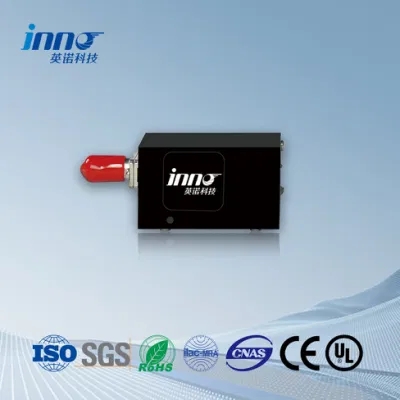
Fiber optic temperature sensors consist of one or more fiber optic probes connected to electronic devices known as temperature transmitters (also called signal conditioners). Multi-channel fiber optic temperature sensors have been developed for applications such as power transmission and distribution. Different from previous fiber optic temperature transmitters, which were bulky and expensive laboratory devices, fiber optic signal conditioners are similar in appearance and installation to thermocouples or RTD (Detektor ng Temperatura ng Paglaban) mga transmiter. They are DIN rail-mounted and include standard 4-20mA analog outputs, as well as industrial RS-485 serial bus MODBUS for daisy chain device communication. The optical probes of fluorescent fiber optic temperature sensors also share a similar appearance and feel to standard thermocouples and RTDs. The cost of fiber optic temperature sensors is comparable to commercial RTDs and transmitter combinations.
The accuracy and stability of fiber optic sensors surpass traditional thermocouples and can approach PRT (Platinum Resistance Thermometers) in calibration applications. Solutions are available with long-term stability of ±1°C, as well as products with absolute accuracy of ±0.1°C.
Transformer Winding Hot Spot Temperature Monitoring
Mga sensor ng temperatura ng fiber optic, completely unaffected by EMI/RFI and high-voltage environments, are the ideal choice for monitoring transformer winding hot spots. tumpak, real-time, intelligent grid temperature monitoring solutions have been developed for power and distribution equipment.
Fiber optic temperature sensors have proven to be an excellent solution for high-voltage dry-type transformer temperature measurement and are now considered the preferred method for transformer monitoring. The benefits that fiber optic sensors bring to Transmission and Distribution (T&D) companies are economically significant. By monitoring the temperature of each transformer winding hot spot, utility companies can operate dry-type transformers at peak capacity without stretching into overload conditions that could significantly shorten the transformer’s lifespan. This efficiency in transmission throughput and lifespan can save significant funds annually, making direct winding temperature capability a necessity.
Cost-effective fiber optic temperature sensing technology makes intelligent grid transformer temperature monitoring more compelling. Fiber optic temperature probes are designed with high dielectric strength materials, such as PTFE and polyimide-coated quartz fibers, so they can withstand long-term immersion in transformer oil and kerosene desorption during the manufacturing process. Fiber optic sensors using special optical temperature transmitters transmit signals to probes directly installed at transformer winding hot spot locations. The fiber optic temperature transmitter is mounted in an external control cabinet, and the temperature output is input into real-time monitoring software. With optical temperature sensors installed, operators can monitor the load in real-time,
Pagsubaybay sa Temperatura ng Switchgear
Economical fiber optic temperature sensors provide continuous, real-time monitoring of switchgear temperatures at critical contact points, enabling the rapid detection of overloads and faults. Temperature transmitters provide analog output and RS-485 Modbus communication, which can be easily integrated with existing PLCs (Mga Programmable Logic Controller) and master monitoring software. Optical temperature sensors provide years of accurate sensing, ensuring safe and efficient switchgear operation.
Power switchgear manufacturers around the world are using fiber optic sensors for smart grid temperature monitoring of critical media and high-voltage switch equipment. These sensors provide real-time temperature data, allowing operators to maximize load efficiency and balance thermal stresses that could lead to catastrophic failures. Sa paglipas ng panahon, switchgear contact points, mga busbar, and critical connection points develop slowly corroding hot spots, resulting in increased resistance. If left unchecked, even a small increase in resistance can quickly become uncontrolled, as higher resistance produces hotter conductors, which in turn generate higher resistance. Samakatuwid, T&D companies often specify the requirement for continuous switchgear temperature monitoring to optimize maintenance schedules and extend equipment life.
Gayunpaman, one challenge is finding cost-effective technology for high-voltage sensing applications. Various RF (Radio Frequency) wireless and IR (Infrared) thermometers have been used, but each has its shortcomings. RF transmitter/receiver sensors suffer from inherent noise and interference present in high-voltage environments and may lose signal or display temperature spikes during switch operation, which can lead to false alarms. At saka, since these sensors use electronic components, their temperature range is typically limited to below 120°C for long-term use. Remote infrared temperature sensors are similar, as they require shielding of wires and special installation points, and precise spatial alignment with the surface of the object being sensed. Infrared thermometers are known to report temperature changes due to dust accumulation and emissivity changes caused by minor surface corrosion, especially on bright metal surfaces like copper busbars. The reported temperature can be distorted by infrared energy reflected from surrounding objects, and sudden changes in ambient temperature can also cause measurement errors.
Fiber optic temperature sensors do not encounter any of the technical challenges associated with wireless and infrared thermometers. Fiber optic sensors can be directly routed to critical switchgear monitoring points. Optical temperature sensors are rigidly connected to hot spot locations and are completely unaffected by electromagnetic interference and noise bursts caused by high-voltage switches. Fiber optic sensors are robust and durable, can be manufactured in various lengths, and work like traditional thermocouples. Ang pinakamahalaga, each optical temperature sensor transmitter can monitor three phases, providing analog output and digital RS-485 Modbus RTU communication. Fiber optic temperature probes are highly suitable for smart grid switchgear temperature monitoring.
Generator Winding Temperature Monitoring
Now, online fiber optic temperature monitoring is common for both low-voltage and high-voltage generator equipment. Fiber optic sensors provide an economical and efficient solution for real-time temperature monitoring, allowing equipment to operate at optimal performance and extend its lifespan.
Fiber optic temperature sensors are now commonly installed in large motor and generator equipment to provide real-time monitoring and thermal protection of critical stator windings and bearings. The safe operating temperature of rotating machine windings is limited by the amount of heat that the insulation material can withstand before it ultimately degrades. This temperature and the rate of degradation vary with different categories of insulation materials. Insulation degradation at a given temperature is roughly proportional to the length of time the temperature exceeds a critical threshold. Until recently, Mga RTD (Mga Detektor ng Temperatura ng Paglaban) were typically embedded in windings to provide continuous monitoring, though inaccuracies caused by EMI/RFI interference were present. Now, economical fiber optic temperature sensors can be installed where high voltage and alternating electromagnetic fields pose problems for traditional RTD winding sensors. Fiber optic sensors can be inserted between the windings of motors and generators for continuous temperature measurements to protect insulation and extend maintenance schedules. By installing optical temperature sensors, operators can monitor the load in real-time and maximize energy and economic efficiency. Better energy efficiency is advantageous for businesses and beneficial for the environment.
Pagsubaybay sa Temperatura ng MRI
Various life sciences and patient monitoring applications require high-precision fiber optic temperature sensing. Single and multi-channel fiber optic temperature probes are offered for MRI (Magnetic Resonance Imaging), NMR (Nuclear Magnetic Resonance Imaging), and RF (Radio Frequency) kapaligiran, kabilang ang murang disposable temperature probes na may mabilis na pagtugon at mahusay na katumpakan.
Ang iba't ibang mga application ng life science ay umaasa sa fiber optic temperature sensors para sa high-precision sensing sa mga environment na hindi pabor sa mga karaniwang thermometer at RTD. (Mga Detektor ng Temperatura ng Paglaban). Ang isang paggamit ng fiber optic sensor ay sa MRI, NUMBER, at mga kapaligiran ng MRT para sa pagsubaybay sa pasyente, kung saan ang napakataas na magnetic field na sinamahan ng pulsed RF (Radio Frequency) ipinagbabawal ng enerhiya ang paggamit ng mga sensor ng metal. Ang mga fiber optic sensor ng OSENSA ay gawa sa mga non-metallic na materyales at lubos na angkop para sa pagsubaybay sa temperatura ng katawan ng pasyente upang matiyak na ang tiyak na rate ng pagsipsip ng tissue ay hindi lalampas sa mga mapanirang antas.. Ang mga sensor ng temperatura ng fiber optic ay maaari ding gamitin upang subaybayan ang mababang temperatura ng paglamig ng superconducting magnet.
A variety of high-precision fiber optic temperature sensors in different sizes and materials are available, highly suitable for MRI and CT (X-ray Computed Tomography) studies. Fiber optic probes are made of X-ray transparent materials and non-magnetic connectors, fully compatible in MRI and CT scanning rooms. Bilang karagdagan, mabilis na tugon, ultra-small diameter fiber optic probes are available, designed to meet the requirements of many demanding applications.
Semiconductor Chuck Temperature and Process Control
High-precision fiber optic temperature sensors are engineered to meet the stringent requirements of semiconductor process control applications. Custom OEM solutions that offer rapid response for dielectric and conductor etching applications are provided for both contact and non-contact optical temperature sensing. Fiber optic sensors are embedded within multiple zones of electrostatic chucks to deliver maximal control and thermal uniformity.
Many semiconductor wafer processing applications rely on temperatura ng fiber optic sensors for precise process control in high RF (Radio Frequency) and plasma environments. In typical processing applications, silicon wafers are placed on an electrostatic chuck that is rapidly heated and cooled within a plasma environment. Fiber optic temperature sensors are embedded at the base of the electrostatic chuck, offering high precision and rapid response for stringent process control. Each electrostatic chuck is divided into multiple zones, necessitating multiple fiber optic temperature sensors to maximize temperature uniformity across the wafer surface. Semiconductor applications that typically employ this type of setup are dielectric and conductor etching processes.
For enhanced plasma chemical vapor deposition (EPCVD) mga proseso, showerhead reactors are employed to disperse reaction gases throughout the processing chamber while applying strong RF power. In these applications, fiber optic temperature sensors are used to control the showerhead temperature and monitor sidewall temperatures to minimize deposition on the chamber surfaces. Fiber optic temperature sensors are developed to support various cutting-edge semiconductor processes. The sensors feature a non-contact geometric structure, with sensing materials embedded at the base of the electrostatic chuck, while the fiber optic is positioned remotely. This method maximizes response times and eliminates stem conduction losses. It also simplifies the replacement and refurbishment of electronic collets.
Microwave and Inductive Heating Control
Multi-channel fiber optic temperature sensors provide an economical and convenient solution for temperature monitoring in industrial microwave processes, including microwave-assisted chemistry, microwave sterilization, and microwave sintering. Optical temperature probes for microwave environments are constructed from materials that offer maximum chemical and biological compatibility, or from robust stainless steel and high-temperature ceramics.
Fiber optic temperature sensors are inherently immune to microwave radiation and high-frequency electromagnetic fields. Microwave environments using fiber optic temperature sensors include industrial microwave ovens for food processing and drying, microwave kilns for glass melting, and for drying paper, textiles, or timber. Other applications include microwave sintering of ceramics and dental instruments, microwave sterilization, and microwave pest control.
Developed fiber optic temperature probes can be customized for a variety of industrial microwave oven and kiln applications. The technology also allows for short-range non-contact optical temperature measurements and can measure temperatures exceeding very high thresholds.
Induction heaters and furnaces use high-power alternating electromagnetic fields to rapidly heat conductive objects. An example is the use of barrel and in-mold induction heating for injection molding equipment. These heaters operate at frequencies ranging from 5 to 100kHz and can consume power from 10 to 40kW. Pang-industriya-grade fiber optic temperature sensors ay partikular na angkop sa mga application na ito dahil sa kanilang tibay laban sa malakas na electromagnetic energy, mataas na pagiging maaasahan, at mabilis na mga oras ng pagtugon. Multi-channel temperature transmitters (mga signal conditioner) na may 4-20mA analog na output ay madaling maisama sa mga kagamitan sa pagkontrol sa proseso ng paghubog ng iniksyon.
Pananaliksik at Edukasyon Mga Fiber Optic Temperature Sensor
Mga aktibidad sa pananaliksik at pagpapaunlad na nangangailangan ng tumpak na fiber optic na mga solusyon sa pagdama ng temperatura. Maaaring i-customize at i-calibrate ang software at fiber optic probes para sa iba't ibang laboratoryo at testing application. Ang mga sensor ng temperatura ng fiber optic ay kadalasang pinipili para sa mga aplikasyon ng pananaliksik dahil sa kanilang kaligtasan sa malakas na mga electromagnetic field, nuklear, at X-ray radiation. Dahil sa kanilang flexibility at kadalian ng paggamit, Ang mga fiber optic sensor ay ang perpektong pagpipilian para sa mga aplikasyon ng pananaliksik. Simply install the software and connect the USB cable to begin optical monitoring of temperature. Application support engineers will provide friendly assistance, and for more demanding applications, engineering consulting services can be offered.
Fiber optic temperature sensors are also highly suitable for student laboratory work and provide unique educational activities for teachers of physics, kimika, biology, electronics, and instrumentation. Advanced software facilitates simple temperature logging and calibration at a low cost.

Sensor ng temperatura ng fiber optic, Intelligent na sistema ng pagsubaybay, Ibinahagi ang tagagawa ng fiber optic sa China
 |
 |
 |